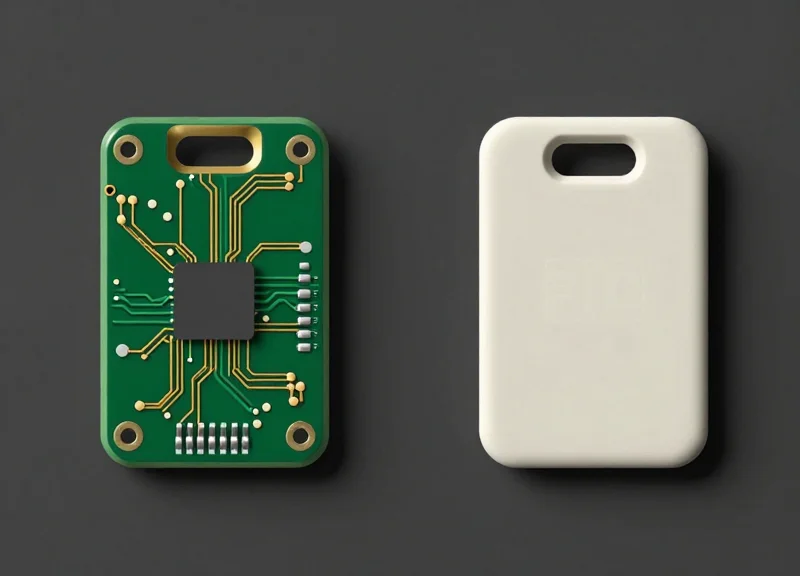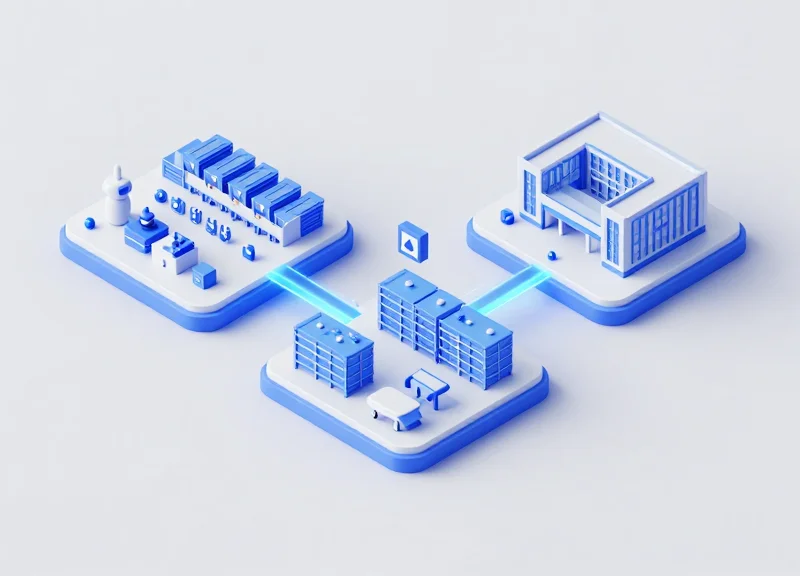
In today's competitive landscape, asset loss isn't just an accounting error—it is a direct hit to your bottom line. Traditional tracking methods often fail to bridge the gap between production and the final stages of an asset's life, leading to significant shrinkage and operational inefficiency. Full-lifecycle RFID tracking offers a robust solution designed to provide 100% visibility, slashing loss rates by up to 40%. By integrating smart tagging from the moment an asset is created until its final decommissioning, businesses can transform asset management from a reactive cost center into a strategic, data-driven advantage.
Understanding the Hidden Costs of Asset Loss in Modern Business

Asset loss in modern business is the cumulative financial drain caused by unrecorded shrinkage, administrative 'ghost assets,' and operational downtime, often accounting for up to 10% to 15% of a company's total equipment value annually. While most executives focus on 'shrinkage' as physical theft, the true cost is a multi-layered iceberg: visible losses at the surface are dwarfed by the hidden expenses of capital tied up in replacement cycles, over-provisioning, and regulatory non-compliance. In the Silicon Valley era of hyper-efficiency, failing to track an asset's full lifecycle means you are essentially paying a 'disorganization tax' on every piece of hardware from production to retirement.
| Cost Category | Visible Impact | Hidden Impact (The ROI Killer) |
|---|---|---|
| Direct Replacement | Purchase price of new unit | Expedited shipping, procurement labor, and lost volume discounts. |
| Operational Downtime | Idle staff time | Project delays, missed SLAs, and damage to brand reputation. |
| Ghost Assets | Inventory discrepancy | Property taxes and insurance premiums paid on items that no longer exist. |
| Audit & Compliance | Manual counting hours | Legal penalties for inaccurate financial reporting (SOX/IFRS). |
The most insidious of these costs is the 'Ghost Asset' phenomenon. Research indicates that up to 30% of fixed asset records are inaccurate. When an asset is lost but remains on the books, companies continue to pay personal property taxes and insurance premiums on it. This is essentially flushing cash down the drain for items that are not generating a single cent of value. Furthermore, when employees cannot find the tools they need, the default response is 're-buying,' leading to a bloated inventory where 20% of assets may be redundant. This cycle of unnecessary capital expenditure (CapEx) is the primary driver behind the push for real-time, RFID-enabled visibility.
What is the 'Ghost Asset' phenomenon?
Ghost assets are items recorded in the general ledger that are either physically missing or unusable. They lead to overpayment in taxes and insurance while skewing financial health metrics.
Why do traditional manual audits fail to stop asset loss?
Manual audits are 'snapshots in time' that are prone to human error and are often outdated the moment they are completed. They fail to capture the movement of assets between check-points.
How does asset loss impact the supply chain?
Beyond the balance sheet, asset loss causes 'micro-bottlenecks' where production stops because a specific tool, container, or component cannot be located, leading to cascading delays.
Expert Insight: From two decades of scaling tech infrastructure, I've observed that the 'Search Tax'—the time employees spend looking for misplaced assets—is the largest unallocated expense in most enterprises. If 1,000 employees spend just 10 minutes a day searching for equipment, at a $50/hr loaded labor rate, the company loses over $2 million annually in productivity alone. Full-lifecycle RFID tracking isn't just about preventing theft; it's about reclaiming this lost time.
What is Full-Lifecycle RFID Tracking?
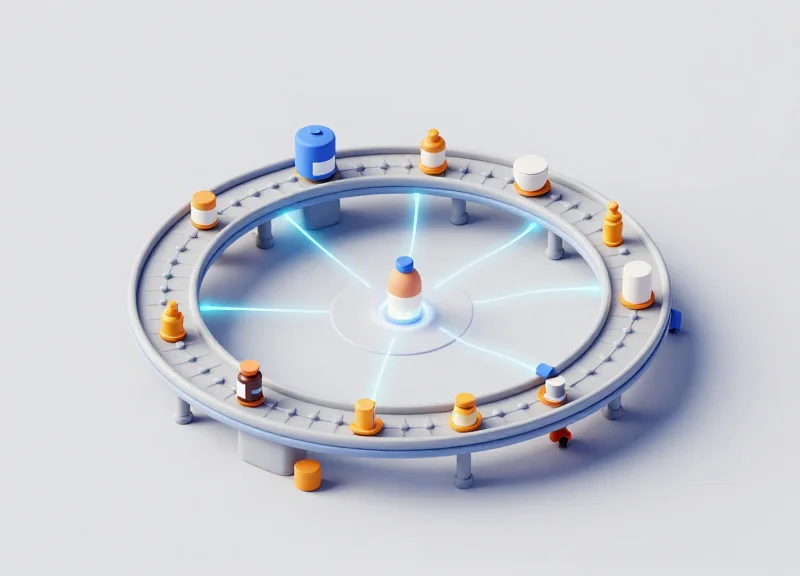
Full-lifecycle RFID tracking is a comprehensive asset management strategy that uses Radio Frequency Identification (RFID) technology to create a continuous, automated digital thread for an item from the moment of production to its final decommissioning. Unlike traditional tracking systems that only monitor assets at specific 'gateways' like shipping or receiving, full-lifecycle tracking provides a permanent 'digital birth certificate.' This allows organizations to maintain 100% visibility over an asset's location, condition, and chain of custody across its entire functional existence, eliminating the data silos that typically lead to asset loss.
| Lifecycle Phase | RFID Activity | Business Value |
|---|---|---|
| Production/WIP | Tags applied to raw materials and components. | Real-time production bottleneck identification. |
| Logistics/DC | Bulk scanning of pallets and individual units. | 99.9% inventory accuracy without manual counting. |
| Operational Use | Fixed readers monitor movement within facilities. | Prevention of 'ghost assets' and misplacement. |
| Maintenance | Technicians scan tags to update service logs. | Guaranteed compliance and predictive repair scheduling. |
| Retirement | Final scan confirms secure disposal or recycling. | Verified chain of custody for regulatory audits. |
How does this differ from standard barcode tracking?
Standard barcodes require a line-of-sight, manual scan of one item at a time. Full-lifecycle RFID enables bulk-reading of hundreds of items simultaneously without direct visibility, allowing for continuous, passive data collection throughout the day.
Is full-lifecycle tracking only for high-value machinery?
While essential for high-value assets, the decreasing cost of RFID tags (often pennies per unit) makes it viable for returnable transport items (RTIs), IT equipment, and even high-velocity inventory where loss rates are traditionally high.
Can it integrate with existing ERP systems?
Yes. Modern RFID middleware acts as a bridge, feeding real-time location and status data directly into ERP or WMS systems, ensuring your 'system of record' matches physical reality.
The Veteran Perspective: Asset Genealogy. One original insight often overlooked is the concept of 'Asset Genealogy.' In a full-lifecycle model, the RFID tag does more than tell you where an item is; it tells you what that item has become. By tracking an asset from production, you capture its environmental exposure, its maintenance history, and its utilization rates. This 'genealogy' allows companies to perform precision recalls or predictive maintenance that saves millions, moving from reactive replacement to data-driven optimization.
Phase 1: Production and the Power of Source Tagging

Source tagging is the strategic practice of embedding or applying RFID tags to assets during the manufacturing process rather than after they have been received at a warehouse or office. By shifting identification to the 'point of origin,' organizations establish a digital birth certificate for every asset. This ensures 100% visibility from the assembly line onwards, preventing the common data gaps that occur when items are shipped, received, and manually logged before being tagged in-house.
| Feature | Source Tagging (At Factory) | Aftermarket Tagging (In-House) |
|---|---|---|
| Labor Cost | Near Zero (Integrated into production) | High (Requires manual touch-points) |
| Data Integrity | 100% (Direct link to manufacturing specs) | Variable (Risk of human error in labeling) |
| Tag Durability | High (Often embedded or industrial-grade) | Medium (Adhesive labels applied later) |
| Visibility Gap | None (Tracked from the first mile) | High (Asset is 'invisible' until received) |
The ROI of source tagging is primarily driven by the elimination of 'Dead Time'—the period between an asset’s creation and its first appearance in a management system. When a laptop, server, or industrial tool arrives pre-tagged, the receiving process is reduced from minutes to seconds. A simple pass through an RFID portal updates the inventory system instantly, eliminating the manual scanning of barcodes or serial numbers. This 'Zero-Touch' receiving is where the first major reduction in operational expenditure (OpEx) occurs.
- Design & Specification: The asset owner specifies the RFID tag type (e.g., on-metal, high-temp, or embedded) to the OEM to ensure it survives the asset's environment.
- OEM Integration: The manufacturer applies the tag during assembly, often encoding it with the Electronic Product Code (EPC) that matches the asset's serial number.
- Verification at Origin: A final QC check ensures the tag is readable before the asset is crated, ensuring the digital and physical products are perfectly synced.
Expert Insight: The 'Immutable Data Pedigree'. In 20 years of Silicon Valley asset management, I've seen that the most successful firms use source tagging not just for location, but for 'Data Pedigree.' By tagging at production, you can lock manufacturing metadata—such as batch numbers, component origins, and quality certifications—directly to the tag's UID. This creates an unalterable audit trail that is invaluable for compliance in regulated industries like aerospace or healthcare, where the history of the asset is as valuable as the asset itself.
Does source tagging increase the unit price from the manufacturer?
Typically, yes, but only by cents per unit. This cost is offset immediately by the 80-90% reduction in labor costs associated with manual intake and tagging at your own facility.
What if my manufacturer doesn't support RFID?
Many modern OEMs offer this as a standard 'Value-Added Service.' If they do not, third-party logistics (3PL) providers can often perform 'mid-stream' tagging before the asset reaches the final destination.
Can source tags survive the shipping process?
Yes, industrial RFID tags are designed to withstand vibration, moisture, and temperature fluctuations during global transit, ensuring the asset is ready for detection the moment it hits your loading dock.
Phase 2: Operational Deployment and Real-Time Visibility

Phase 2 of full-lifecycle RFID tracking represents the transition from static asset identification to an active monitoring ecosystem. By deploying a network of fixed portals, overhead antennas, and mobile scanners, organizations can capture asset movements in real-time without human intervention. This phase effectively replaces the 'snapshot' model of manual inventory—which is often inaccurate within 48 hours—with a continuous 'digital twin' of the entire facility, providing 99.9% inventory accuracy and reducing labor costs associated with auditing by up to 30%.
- Infrastructure Mapping and Choke Point Identification: Engineers identify 'choke points' such as dock doors, entryways, and hallway transitions where fixed readers (portals) can automatically log assets as they move between zones.
- Edge Computing and Middleware Configuration: Raw RFID data is processed at the 'edge' to filter out 'stray reads' (signals from nearby tags that aren't actually moving), ensuring only clean, actionable data reaches the central system.
- ERP/WMS Integration: The RFID middleware synchronizes with Enterprise Resource Planning (ERP) or Warehouse Management Systems (WMS) to update asset status, location, and availability instantly.
- Automated Threshold Alerting: Software triggers are established to notify management if high-value assets leave a designated area or if inventory levels fall below a specific safety stock threshold.
| Feature | Fixed RFID Portals | Handheld RFID Scanners |
|---|---|---|
| Data Capture | Fully Automated | Manual Triggering Required |
| Ideal Use Case | High-traffic dock doors and exits | Search-and-find or niche audits |
| Labor Cost | Near Zero post-installation | Variable based on scan frequency |
| Visibility | Continuous/Real-Time | Periodic/On-Demand |
Expert Insight: The 'Passive Audit' Strategy. One of the most effective deployment secrets in Silicon Valley logistics is the use of RFID-enabled material handling equipment (MHE). By mounting readers on forklifts or delivery carts, the equipment acts as a mobile auditor. Every time a forklift drives through a warehouse, it passively updates the location of every asset it passes, effectively performing a full warehouse audit several times a day without a single minute of dedicated labor.
How do you prevent 'false reads' from assets in adjacent rooms?
Modern deployments use RSSI (Received Signal Strength Indicator) filtering and phased-array antennas to precisely define the 'read zone,' ensuring tags are only recorded when they are within a specific path.
Can RFID track assets in multi-story environments?
Yes, by using Z-axis logic and strategic antenna placement, RFID software can distinguish between assets located on different floors or high-density racking levels.
What happens if an asset is moved while the system is offline?
RFID readers with internal caching can store thousands of events and sync them once connectivity is restored, preventing 'black holes' in the asset's movement history.
Phase 3: Maintenance, Compliance, and Audit Readiness
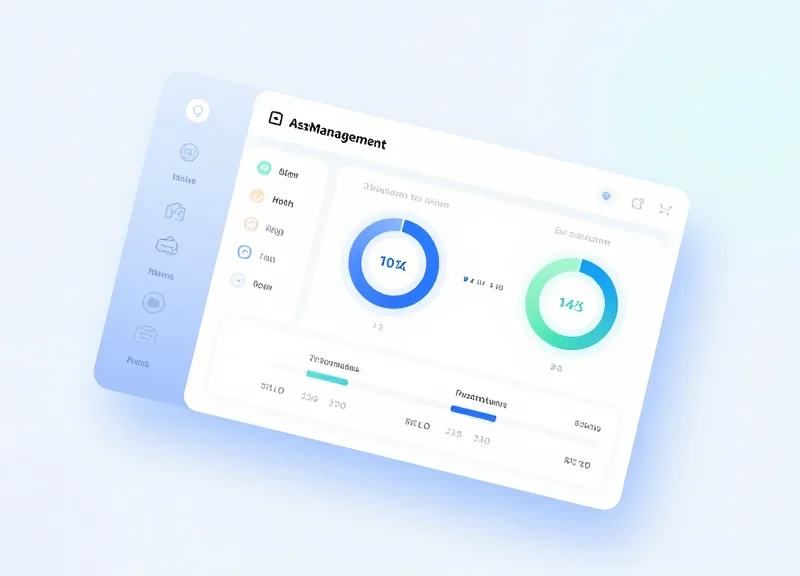
Phase 3 of the full-lifecycle RFID strategy represents the transition from simple asset visibility to advanced operational intelligence. In this stage, RFID tags serve as a digital 'black box' for every asset, recording every service event, location change, and compliance check without human intervention. By digitizing the maintenance history and audit trail, organizations eliminate the 'audit anxiety' typical of manual environments, ensuring that every asset is not only present but also safe, functional, and legally compliant. This automation is critical for reducing the $1.1 million average cost of a non-compliance event by providing an immutable record of due diligence.
| Feature | Traditional Manual Method | Full-Lifecycle RFID Method |
|---|---|---|
| Audit Duration | Weeks or Months (Disruptive) | Hours or Days (Silent/Background) |
| Maintenance Triggers | Reactive or Calendar-Based | Usage-Based and Proactive |
| Data Integrity | Subject to Human Error/Loss | Immutable Digital Timestamp |
| Compliance Risk | High (Ghost Assets/Missed Service) | Low (Real-time Exception Alerts) |
Expert Insight: The 'Maintenance Velocity' Advantage. One of the most overlooked ROI drivers in RFID deployment is the concept of 'Maintenance Velocity'—the speed at which an asset moves through a repair or certification cycle. In a Silicon Valley tech-hardware environment, we found that RFID-enabled tools returned to the production line 40% faster because technicians didn't spend time searching for them or manually updating spreadsheets. This velocity directly impacts the bottom line by reducing the total volume of spare inventory required to maintain 99.9% uptime.
- Automated Service Alerts: The RFID system monitors the time elapsed or cycles completed, automatically flagging assets for maintenance before failures occur.
- Digital Chain of Custody: Every time an asset passes through an RFID portal, the system records the movement, establishing an indisputable audit trail for high-value or regulated items.
- One-Click Audit Reporting: Compliance officers can generate comprehensive reports in seconds, showing the location, status, and history of thousands of assets simultaneously.
Does RFID work for HIPAA or SOX compliance?
Yes. RFID provides the 'proof of presence' and 'history of movement' required by many regulatory frameworks, including Sarbanes-Oxley for financial accuracy and HIPAA for medical equipment location and sterilization records.
Can RFID track assets that require calibration?
Absolutely. The software layer can be set to alert managers if an asset's calibration tag has expired, preventing its use and avoiding potential legal or quality control issues.
What happens if a tag is damaged during maintenance?
Industrial-grade RFID tags are designed to withstand extreme temperatures, chemicals, and high-pressure washing. In the rare event of damage, the system flags the tag's 'silence' as an exception that triggers immediate inspection.
Phase 4: Secure Retirement and Sustainable Decommissioning
Phase 4 marks the critical transition from an active asset to a retired one, where the primary objective shifts from operational efficiency to risk mitigation and regulatory compliance. RFID-enabled decommissioning provides a tamper-proof 'digital death certificate' for assets. This automated process ensures that every item slated for retirement—from servers containing sensitive IP to heavy machinery—is physically accounted for at the point of destruction or resale, eliminating the 'ghost assets' that often plague corporate balance sheets and create massive security vulnerabilities.
| Metric | Manual Decommissioning | RFID-Automated Retirement |
|---|---|---|
| Audit Accuracy | 70-85% (Human error prone) | 99.9% (Automated verification) |
| Chain of Custody | Paper-based / Fragmented | Real-time / Digitally immutable |
| Labor Requirement | High (Item-by-item scanning) | Low (Bulk gate scanning) |
| Security Risk | High (Lost data drives) | Negligible (Alerts on missing tags) |
- Retirement Trigger & Batching: Assets reaching end-of-life are flagged in the ERP. RFID readers at collection points verify the batch against the retirement list instantly.
- Secure Chain of Custody: As assets move to the loading dock for third-party disposal, fixed RFID readers log the exact timestamp and carrier, ensuring the organization is no longer liable for the physical asset.
- Certified Destruction Integration: The final RFID scan is cross-referenced with the vendor's Certificate of Destruction (CoD), closing the loop in the audit trail.
- ESG & Sustainability Reporting: Automated logs provide data for Environmental, Social, and Governance (ESG) reporting, documenting the weight and type of e-waste diverted from landfills.
Expert Insight: The 'Digital Product Passport' Advantage. Silicon Valley's most sophisticated tech firms are now leveraging RFID to create 'Digital Product Passports.' By tracking the specific material composition of an asset via its RFID tag during retirement, companies can claim significant carbon credits and tax incentives for certified recycling. This transforms the decommissioning phase from a cost center into a strategic contributor to the company's sustainability ROI, a factor often overlooked in traditional asset management models.
Can RFID tags survive the physical destruction process?
While the tag is destroyed along with the asset, the value lies in the 'Last Gasp' scan. This final verification at the shredder entrance serves as the definitive proof of life-cycle completion for auditors.
How does RFID help with GDPR and HIPAA compliance?
These regulations require strict proof that data-bearing assets were handled securely. RFID provides an automated, timestamped log of every movement an asset makes toward the destruction facility, providing an airtight defense during audits.
Does this reduce insurance premiums?
Many enterprise insurers offer lower premiums for companies that can demonstrate automated chain-of-custody protocols, as it significantly reduces the risk of data breaches and environmental litigation.
Calculating the ROI: Hard Savings vs. Soft Benefits

Calculating the Return on Investment (ROI) for full-lifecycle RFID tracking requires a dual-lens approach: identifying Hard Savings, which are direct, quantifiable cash reductions, and Soft Benefits, which represent strategic improvements in operational velocity and risk mitigation. For most enterprises, a successful RFID implementation achieves a break-even point within 12 to 18 months by eliminating the 40% of asset loss typically associated with manual tracking errors and 'ghost' inventory.
| Category | Hard Savings (Quantitative) | Soft Benefits (Qualitative) |
|---|---|---|
| Labor & Productivity | 90% reduction in manual audit hours. | Increased employee morale and focus on high-value tasks. |
| Capital Expenditure | 20-30% reduction in redundant asset purchases. | Improved procurement planning through usage analytics. |
| Loss & Shrinkage | Elimination of the 40% asset loss rate. | Enhanced brand reputation and supply chain integrity. |
| Compliance | Avoidance of regulatory fines and penalties. | Stress-free audit readiness and data security. |
One often overlooked 'Hard Saving' is the elimination of the Ghost Asset Tax. Most organizations unknowingly pay property taxes and insurance premiums on assets that have been lost, stolen, or scrapped but remain on the books due to poor tracking. By using RFID to reconcile physical inventory with the fixed-asset register in real-time, companies can immediately stop the financial bleed of paying for assets that no longer exist.
How do you calculate the 'Labor Savings' component of ROI?
Multiply the number of hours currently spent on manual inventory audits per year by the average hourly loaded labor rate. RFID typically reduces this time by over 90%, turning a week-long facility audit into a two-hour walk-through.
What is the typical 'Payback Period' for an enterprise RFID system?
While it varies by industry, most enterprises see a full return on investment within 12 to 24 months. High-value asset environments, such as data centers or healthcare, often see ROI in less than one year due to the high cost of individual asset loss.
Can soft benefits be converted into hard numbers?
Yes, through proxy metrics. For example, improved 'Asset Uptime' (a soft benefit) can be quantified by measuring the increase in revenue generated when equipment is available for use instead of being 'lost' in the warehouse.
Expert Tip: When presenting your ROI case to the CFO, focus on 'Capital Deferment.' By proving that your current asset utilization is only at 60% via RFID tracking, you can justify delaying a multi-million dollar equipment purchase, which provides an immediate and massive boost to the company's cash flow.
Overcoming Implementation Hurdles in High-Loss Environments
In high-loss environments—such as metallic warehouses, chemical processing plants, or dense retail floors—standard RFID implementations often fail due to signal interference, absorption, and environmental degradation. To overcome these hurdles, organizations must transition from a 'one-size-fits-all' hardware approach to a physics-informed strategy that accounts for the dielectric properties of assets and the electromagnetic noise of the facility. By matching specialized tag form factors with high-sensitivity reader arrays and edge-filtering software, companies can maintain the 99.9% read accuracy necessary to eliminate asset loss even in the most challenging industrial conditions.
| Environmental Challenge | Technical Hurdle | Recommended Hardware/Solution |
|---|---|---|
| Metallic Surfaces | Signal Reflection/Detuning | On-Metal (Spacer) Tags or PCB-encased Tags |
| Liquid/Moisture | RF Absorption | UHF Flag Tags or High-Frequency (HF) 13.56 MHz Tags |
| High Temperatures | Tag Delamination/IC Failure | Ceramic-based or Thermoplastic PPA Encapsulated Tags |
| Signal Congestion | Reader Collision/Interference | LBT (Listen Before Talk) Protocols & Circularly Polarized Antennas |
| Chemical Exposure | Physical Tag Degradation | IP68 or IP69K Rated Industrial Transponders |
- Phase 1: RF Site Survey and Spectrum Analysis: Before deployment, use a spectrum analyzer to map existing ambient noise and identify 'dead zones' caused by structural steel or heavy machinery. This ensures reader placement is optimized for maximum coverage without over-saturation.
- Phase 2: Tag-to-Asset Matching (The Dielectric Audit): Every material has a dielectric constant that affects RF performance. Test tags on 'worst-case' assets (e.g., carbon fiber or liquid-filled containers) to ensure the tag antenna is tuned to the specific surface it will reside on for its entire lifecycle.
- Phase 3: Edge Logic Implementation: Deploy edge controllers to filter 'ghost reads' and redundant data at the reader level. This prevents the backend system from being overwhelmed by environmental reflections and ensures only actionable location data is recorded.
Expert Insight: The 'Dielectric Shift' Trap. A common mistake in high-loss environments is ignoring how environmental changes affect tag resonance over time. For example, a tag that performs perfectly on a dry wooden pallet may lose 50% of its read range if that pallet becomes saturated with rain or humidity. In high-stakes tracking, we recommend selecting 'wideband' tags that maintain resonance across a broader frequency range to account for these environmental fluctuations, rather than tuning for a narrow, perfect-condition window.
How do we handle assets that move between indoor and outdoor environments?
Use UV-stabilized, IP67-rated rugged tags combined with a hybrid reader network. Transition zones (gateways) should utilize high-gain directional antennas to capture assets moving at speed between zones.
What is the best way to prevent 'cross-talk' between adjacent dock doors?
Implementing RSSI (Received Signal Strength Indicator) filtering allows the software to ignore weaker signals from neighboring doors, focusing only on the high-intensity signal of the asset directly passing the intended portal.
Can RFID work in areas with high electromagnetic interference (EMI) from motors?
Yes, but it requires shielding reader cables and utilizing active RFID or high-memory passive tags with robust ECC (Error Correction Code) to ensure data integrity despite the electrical noise.
The Future of Asset Security: Integrating RFID with EAS and ESL
The next evolution in asset protection is the convergence of Radio Frequency Identification (RFID), Electronic Article Surveillance (EAS), and Electronic Shelf Labels (ESL) into a single, interoperable ecosystem. While traditional security operates in silos, this integrated approach allows businesses to transition from reactive loss prevention to proactive asset intelligence. By combining these technologies, companies gain 100% item-level visibility (RFID), immediate theft deterrence (EAS), and real-time operational communication (ESL), effectively closing the gap between 'what is on the shelf' and 'what has left the building.'
| Technology | Primary Function | The 'Integrated' Value Add |
|---|---|---|
| RFID | Item Identification | Identifies exactly WHICH item is missing or moving. |
| EAS | Theft Prevention | Triggers alarms when non-deactivated tags pass gates. |
| ESL | Information Display | Updates price/stock status and alerts staff to low inventory. |
Expert Insight: The 'Active Deterrence' Loop. At DragonGuardGroup, we are seeing a shift toward 'Active Deterrence.' In a unified system, when an EAS gate triggers an alarm, the corresponding ESL on the shelf can automatically flash a specific color or display a 'Security Alert' message. This immediate, synchronized response creates a psychological barrier for organized retail crime (ORC) while simultaneously notifying floor staff via mobile devices—a level of synergy that standalone systems cannot achieve.
- Consolidate the Hardware Stack: Deploy multi-protocol readers that can interpret both RFID inventory data and EAS security bits simultaneously, reducing the need for redundant gate infrastructure.
- Bridge the Software Silos: Integrate your Inventory Management System (IMS) with your Loss Prevention (LP) software so that a 'stolen' item is automatically subtracted from live inventory in real-time.
- Leverage ESL for Micro-Audits: Use ESL screens to prompt staff for manual 'spot checks' when RFID sensors detect a discrepancy between expected and actual shelf counts.
Will RFID and EAS signals interfere with each other?
No. Modern integrated systems utilize different frequency bands (e.g., UHF for RFID and AM or RF for EAS) or specialized firmware to ensure signals remain distinct and interference-free.
Is it cost-prohibitive to deploy all three?
While the initial CAPEX is higher, the ROI is accelerated through the total elimination of manual cycle counts and a drastic reduction in 'unknown shrink' which typically accounts for 30-40% of losses.
Can these systems work in industrial environments?
Absolutely. In warehouses, EAS gates prevent unauthorized movement of high-value tools, while ESLs serve as digital 'bin cards' that update based on RFID-tracked movements.