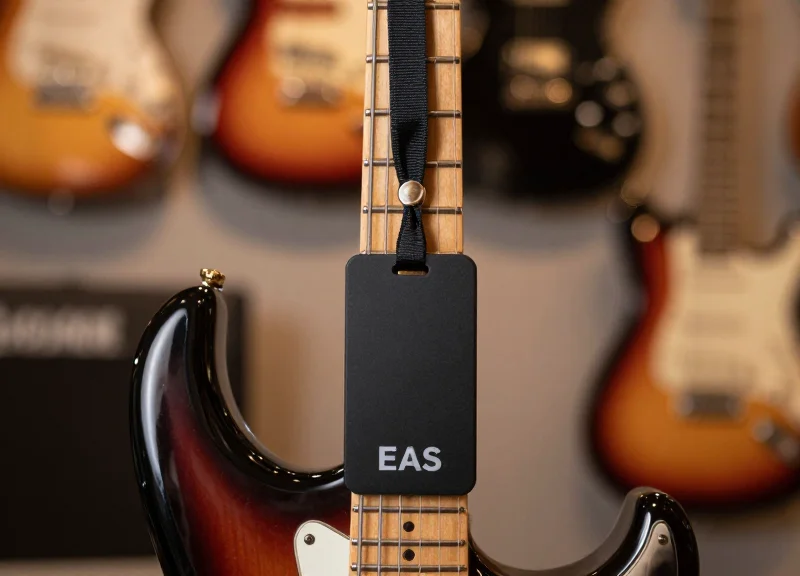
In the world of high-end retail, particularly with musical instruments and precision tools, the aesthetic integrity of a product is as valuable as its functionality. Traditional Electronic Article Surveillance (EAS) hard tags, while effective at deterring theft, often pose a physical risk to delicate wood grains, polished lacquers, and soft metals. The 'Non-Contact Protocol' represents a strategic shift in loss prevention, utilizing specialized lanyard-based EAS tags to provide a secure perimeter without direct clamping or adhesive contact. This guide explores how to deploy these solutions to ensure your inventory remains both secure and pristine.
The Vulnerability of High-Value Finishes to Standard Security

Standard EAS security tags are fundamentally incompatible with high-value instrument finishes because they utilize mechanical compression and abrasive materials that cause localized indentations and surface marring. On delicate coatings like nitrocellulose lacquer or spirit varnish, the pressure from a traditional 'hard tag' clamp can exceed the material's elastic limit, resulting in permanent structural deformities and finish checking. These security measures, designed for durable retail goods, fail to account for the 'living' nature of organic instrument coatings that remain chemically reactive and physically sensitive throughout their lifespan.
| Damage Category | Mechanism of Action | Impact on Instrument Value |
|---|---|---|
| Mechanical Compression | Clamp-based pressure exceeds finish/wood yield strength | Permanent indentations or 'crush' marks (up to 20% value loss) |
| Abrasive Friction | Vibration during customer handling causes tag movement | Micro-scratching and swirling of the clear coat |
| Chemical Leaching | Plasticizer migration from tag pads into the finish | Permanent softening, clouding, or 'melting' of the lacquer |
The most insidious threat is the 'Chemical Trap.' Many mass-produced retail security tags utilize low-grade PVC or rubberized pads to provide grip. These materials contain volatile plasticizers designed to keep the tag pads flexible. When these pads are clamped against an organic finish like nitrocellulose (found on premium Gibson or Fender Custom Shop guitars), a chemical transfer occurs. This reaction physically softens the finish, often leaving a dull, tacky footprint that cannot be buffed out and requires a full professional overspray to rectify.
Why is Nitrocellulose especially vulnerable to standard tags?
Nitrocellulose is a porous, solvent-based finish that never truly stops 'outgassing.' Because it remains chemically active, it easily absorbs synthetic oils and plasticizers from the rubber or plastic components of standard security tags, leading to a permanent chemical bond or 'melt' effect.
Can't the damage be fixed with a simple polish?
Rarely. While light surface scratches might be buffed, the indentations caused by high-pressure clamps deform the wood fibers beneath the finish. Furthermore, chemical burns often penetrate through to the wood, making a simple polish ineffective and requiring costly restoration.
Is the risk limited to vintage instruments?
No. Modern high-end instruments using traditional recipes (like French polish on classical guitars or thin-skin lacquers) are just as susceptible to damage as vintage pieces, often showing signs of 'tag rash' within only a few days of display.
Expert Insight: In the world of high-end instrument retail, the 'Cost of Security' must be calculated beyond the price of the tag itself. A single $5.00 standard clamp tag can cause $500.00 in diminished value the moment it is applied to a high-gloss, thin-finish instrument. This 'Value Gap' is why professional curators and premium dealers are transitioning toward the Non-Contact Protocol, which prioritizes physical isolation between the EAS hardware and the instrument's resonant surface.
Defining the Non-Contact Protocol in Modern Retail
In the context of high-end instrument retail, the Non-Contact Protocol refers to a security methodology that decouples the Electronic Article Surveillance (EAS) sensor from the sensitive surface of the product. Unlike traditional hard tags that rely on mechanical compression—essentially 'sandwiching' the instrument between two plastic plates—the Non-Contact Protocol utilizes high-strength, coated lanyards to suspend the tag from non-critical structural points like tuning pegs or tailpieces. This approach eliminates the 'clamping force' that leads to finish indentations and creates a physical buffer that prevents chemical migration between tag plastics and instrument lacquers.
| Feature | Traditional Clamping Tags | Non-Contact Lanyard Protocol |
|---|---|---|
| Attachment Method | High-pressure mechanical clamp | Flexible, suspended lanyard loop |
| Surface Interaction | Direct contact with finish | Zero surface pressure/contact |
| Finish Risk | Indentations and 'finish checking' | Complete finish preservation |
| Chemical Safety | Plasticizer migration risk | Chemically inert suspension |
- The Principle of Zero-Compression: Modern nitrocellulose and high-gloss polyester finishes are 'soft' even years after manufacture. The protocol ensures no PSI is exerted on the finish, preventing the permanent 'ring marks' common with standard EAS tags.
- Atmospheric Airflow Retention: By suspending the tag, the protocol allows the instrument's wood to 'breathe.' Trapping air between a tag and a finish can lead to moisture buildup or 'clouding,' which is avoided through lanyard suspension.
- Universal Structural Anchoring: The protocol shifts the security focus to the strongest parts of the instrument (like the scroll or tuning gears) rather than the most fragile (the soundboard or neck).
Expert Insight: The VOC Trapping Phenomenon. A common oversight in retail security is 'Volatile Organic Compound (VOC) Trapping.' High-end guitars finished in nitrocellulose lacquer continue to outgas for their entire lifespan. When a standard hard tag is clamped onto the surface, it creates a vacuum seal that traps these gases. This chemical reaction often results in a permanent 'burn' or softening of the lacquer. The Non-Contact Protocol is the only industry-standard method that provides 360-degree airflow, ensuring that security hardware never interferes with the chemical curing process of the instrument.
Does the Non-Contact Protocol reduce security effectiveness?
No. In fact, it often increases security because the stainless-steel reinforced lanyards are harder to defeat with basic tools than the plastic pins of traditional tags.
Is the protocol compatible with existing EAS pedestals?
Yes. The protocol refers to the attachment method, not the frequency. Lanyard tags are available in both 58kHz (AM) and 8.2MHz (RF) configurations.
How does this impact the customer's trial experience?
It improves it. Because the tag is suspended by a lanyard, it can be moved out of the way during play, allowing the customer to feel the neck and body without a bulky plastic clamp obstructing their grip.
Key Components of Specialized Lanyard EAS Tags
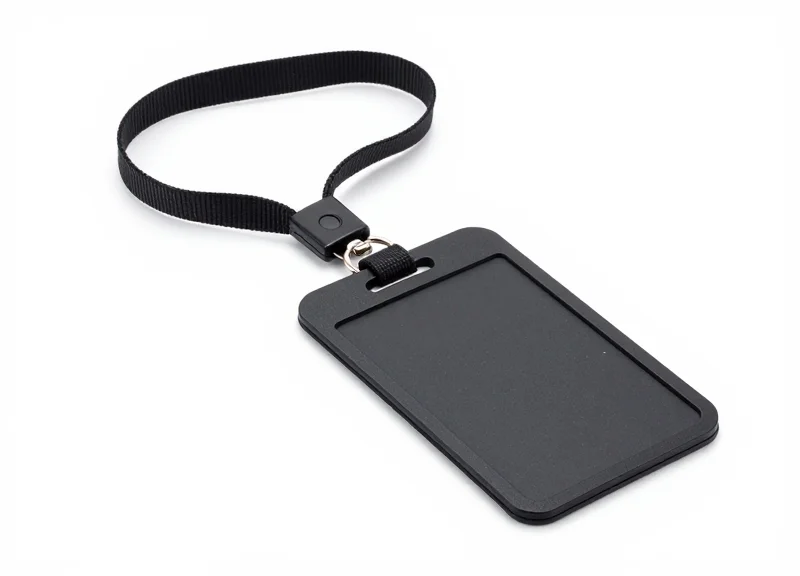
Specialized lanyard EAS tags are high-security devices engineered to replace traditional clamp-style tags through a Zero-Friction Architecture. Unlike standard security hardware, these components utilize a multi-layered construction consisting of an inert polymer outer sheath, a high-tensile braided steel core, and a tamper-resistant housing. This specific design ensures that the security device never exerts mechanical pressure or chemical abrasion on sensitive surfaces like nitrocellulose guitar finishes or polished brass.
| Component | Material Specification | Protective Function |
|---|---|---|
| Outer Coating | Medical-Grade Silicone / TPU | Prevents micro-scratches and chemical migration. |
| Internal Core | Braided Multi-Strand Stainless Steel | Provides high cut-resistance and tensile strength. |
| Connector Head | Polished ABS with Internal Lock | Ensures a secure, non-slip attachment point. |
| Contact Points | Soft-Touch Over-Molding | Distributes weight to avoid pressure indentations. |
The most critical advancement in the 'Non-Contact Protocol' is the use of chemically inert coatings. For vintage instruments or high-end custom builds, standard rubber or low-grade plastics can leach plasticizers into the finish, causing permanent 'finish melt.' DragonGuard lanyards utilize high-density Thermoplastic Polyurethane (TPU) which remains stable across varying temperatures and humidity levels, ensuring that no chemical reaction occurs even during long-term display.
Why is the 'Double-Sheath' design important?
The double-sheath design involves a primary TPU layer for structural integrity and a secondary soft-touch silicone layer for surface protection. This prevents the metal core from ever making contact with the instrument, even if the outer layer is stressed.
Can these lanyards resist professional cutting tools?
Yes. By using multi-strand braided steel, the core is designed to fray and jam manual wire cutters, requiring significantly more time and force to defeat than standard plastic-coated wires.
How does the tag prevent 'Swing Impact'?
The lanyard length is calibrated to keep the heavy EAS sensor housing away from the most delicate parts of the instrument body, utilizing the headstock or strap buttons as primary anchor points.
Expert Insight: When deploying these tags, always check for the 'Durometer Rating' of the lanyard. A rating between 60A and 80A is the 'Goldilocks zone'—soft enough to cushion against a violin's scroll but firm enough to resist stretching or snagging during customer handling.
Optimal Attachment Points for Stringed Instruments

To implement a successful non-contact protocol, retailers must identify 'Structural Anchors'—locations where the instrument's mechanical hardware can support the EAS lanyard without the tag ever making contact with the body finish. For guitars, violins, and cellos, the optimal attachment points are the tuning peg shafts (above the nut) and the tailpiece or endpin assemblies. These areas are designed to withstand significant mechanical tension, making them ideal for security loops that bypass the fragile nitrocellulose or varnish layers found on the instrument's soundboard.
| Instrument Type | Primary Attachment Point | Secondary Attachment Point | Risk Mitigation Factor |
|---|---|---|---|
| Electric/Acoustic Guitar | Tuning Peg Shaft | Bridge Pin Loop | Avoids headstock face compression |
| Violin/Viola | Tailpiece Eyelet | Scroll Loop (Base) | Prevents bridge displacement |
| Cello/Double Bass | Tailpiece Bracket | Endpin Assembly | Supports heavy tag weight |
### The Gravity-Neutral Loop Technique Our proprietary 'Gravity-Neutral Loop' approach ensures that the lanyard does not become a saw. If a lanyard is too loose, the tag hangs and creates a friction point; if too tight, it creates a 'choke point' that can crack aged lacquer. The goal is a 'suspended slack' fit.
- Identify the Metal-to-Metal Interface: Locate a point where the lanyard can wrap around a metal component, such as the tuning machine post between the string winding and the headstock wood.
- The Two-Finger Clearance Rule: Thread the lanyard so there is enough slack to fit two fingers between the lanyard and the instrument neck. This prevents 'finish burn' from chemical migration or friction during handling.
- Positioning the EAS Housing: Ensure the heavy EAS tag housing hangs away from the body. For guitars on floor stands, the tag should dangle behind the headstock, using the weight of the tag to pull the lanyard away from the finish.
Can lanyards damage the tuning pegs of a vintage violin?
No, provided you loop through the tailpiece. We recommend avoiding the tuning pegs on violins because they are friction-fit ebony; instead, use the tailpiece eyelet which is anchored by the endpin.
What is the 'Shadow Effect' in instrument security?
The Shadow Effect occurs when a tag rests on a finish for months, preventing natural UV aging of the lacquer beneath it. Lanyards eliminate this by keeping the tag suspended and away from the surface.
How do you secure a headless guitar?
For headless designs (like Steinberger or Strandberg), the optimal anchor is the bridge assembly or the strap button screw, utilizing a longer lanyard to ensure the tag remains in the 'non-contact' zone.
Expert Tip: Always position the lanyard 'lock' or 'clasp' facing outward. If the plastic clasp is allowed to rest against the wood, the vibrations from the retail environment can cause 'buffing marks'—micro-scratches that are costly to buff out of high-gloss finishes.
Securing Brass and Woodwinds without Mechanical Stress
Securing brass and woodwind instruments requires a specialized 'Structural-First' approach where the EAS lanyard is looped exclusively through static, load-bearing components rather than dynamic key mechanisms. By targeting the bell-to-body braces or the main tuning slide supports, retailers can implement a 'Non-Contact' security perimeter that prevents mechanical misalignment and protects the high-tolerance seating of pads and springs.
| Instrument Category | Primary Attachment Point | Reasoning | Risk to Avoid |
|---|---|---|---|
| Trumpet / Cornet | Main Tuning Slide Brace | Solid soldered junction; supports the weight of the tag easily. | Looping through the valve casing (scratches finish). |
| Saxophone | Bell-to-Body Brace | The most rigid structural point on the instrument. | Side keys (Palm keys) which are easily bent. |
| Flute / Piccolo | Body Ribbing (near foot joint) | Avoids the long rod of the mechanism. | Placing tension on the G# or trill keys. |
| Trombone | Inner Slide Hand Crossbrace | Centralized and sturdy; does not interfere with slide motion. | Attaching to the water key (spit valve). |
Expert Insight: The Pendulum Prevention Rule. A common mistake in wind instrument security is using a lanyard that is too long, creating a 'pendulum effect' where the hard plastic EAS tag housing swings and repeatedly strikes the bell or body. To maintain a true Non-Contact Protocol, the lanyard should be cinched to a 'Short-Shackle' length, ensuring the tag rests against the lanyard itself or a padded surface, never allowing the tag body to act as a hammer against the delicate brass lacquer.
- Identify the Rigid Path: Locate a soldered brace that connects two major sections of the instrument. This is your primary anchor.
- The Zero-Tension Loop: Feed the lanyard through the gap, ensuring the cable does not press against any adjacent rods, needles, or corks.
- EAS Tag Orientation: Position the tag so it faces away from the instrument's center of gravity. For saxophones, this means the tag should rest near the bell flare, not against the keys.
- Clearance Verification: Gently move the instrument through a 360-degree rotation. If the tag makes an audible 'clink' against the metal, the lanyard is too long and must be shortened.
Will the lanyard affect the resonance of the brass?
Because the lanyard is attached to a static brace rather than a vibrating surface like the bell rim, there is zero measurable impact on the instrument's acoustic properties or resonance during trials.
Can these tags be used on silver-plated flutes?
Yes. However, ensure the lanyard uses a high-grade polymer coating. Raw steel cores can cause 'galvanic corrosion' or micro-scratches on silver; soft-touch coatings prevent this chemical and physical reaction.
How do I secure an instrument that has no braces?
In rare cases like simple wooden recorders or certain clarinets, the lanyard can be safely looped through the thumb rest, provided the rest is screwed into a reinforced plate.
The Science of Coating: Selecting PVC vs. Nylon Lanyards
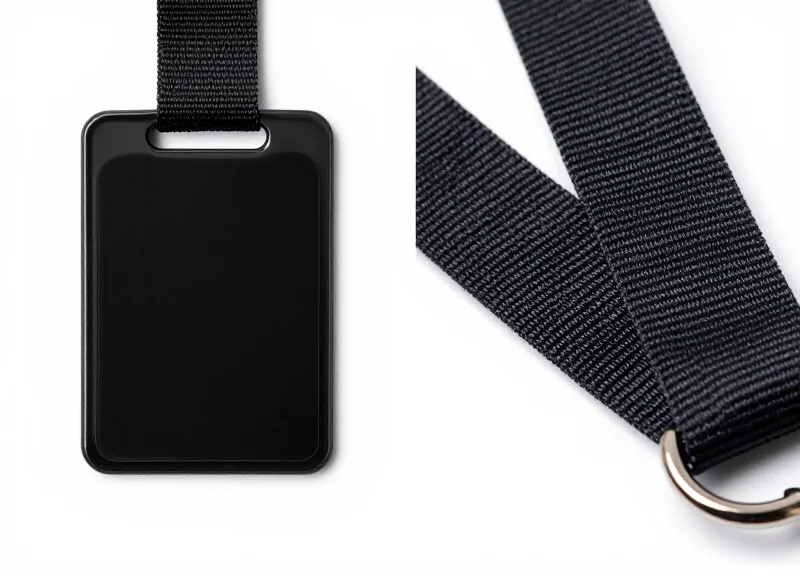
In the world of high-value instrument security, the interface between the security lanyard and the instrument finish is where the battle against depreciation is won or lost. Selecting the right polymer coating—typically PVC or Nylon—is not merely an aesthetic choice; it is a materials science decision. The primary goal is to minimize the coefficient of friction and eliminate chemical migration, a process where plasticizers in the lanyard sheath leach into the instrument's lacquer, causing permanent 'fogging' or softening of the finish.
| Material Property | PVC (Soft-Grade) | Nylon (Polyamide) |
|---|---|---|
| Friction Coefficient | Higher (Grip-heavy) | Lower (Slick/Sliding) |
| Chemical Stability | Moderate (Risk of leaching) | High (Inert) |
| Surface Hardness | Shore A 60-80 (Soft) | Shore D 70-80 (Firm) |
| Best Use Case | Modern Polyurethane finishes | Vintage Nitrocellulose lacquers |
| Durability | High flexibility | Superior abrasion resistance |
The phenomenon of 'finish fogging' is most prevalent with Nitrocellulose lacquers found on premium guitars and violins. Because 'Nitro' is a porous, solvent-based finish, it remains chemically active for decades. Standard PVC lanyards often contain phthalates to keep them flexible; these phthalates can migrate into the instrument finish, effectively 'melting' the top layer. Nylon, conversely, is a crystalline polymer that does not require these volatile plasticizers, making it the 'Gold Standard' for non-reactive security applications.
Why does PVC cause 'ghosting' on some instrument necks?
This is usually 'plasticizer migration.' The oils in the PVC react with the resins in the wood finish (especially nitrocellulose), creating a cloudy, tacky residue that often requires professional buffing or refinishing to remove.
Is Nylon always safer than PVC?
Generally, yes, due to its chemical inertness. However, because Nylon is harder, the lanyard must be manufactured with a smooth, extruded surface rather than a coarse weave to prevent 'micro-sawing'—the physical abrasion of the finish caused by movement.
How does humidity affect coating selection?
High humidity can cause PVC to become 'tackier,' increasing the friction coefficient. Nylon maintains a consistent surface slickness across varying environmental conditions, reducing the risk of the tag 'grabbing' the finish during handling.
Expert Insight: The 48-Hour Outgassing Rule. Even high-quality PVC can be used safely if it is 'medical grade' or Phthalate-free. However, a veteran industry secret is to 'season' new lanyards. If you must use PVC-coated tags, remove them from their bulk packaging and allow them to outgas in a ventilated room for 48 hours before applying them to instruments. This allows volatile organic compounds (VOCs) to dissipate, significantly lowering the risk of a chemical reaction with the instrument's surface.
Visual Merchandising: Maintaining Instrument Appeal

Visual merchandising with lanyard-based EAS tags is the art of balancing 'Loss Prevention Visibility' with 'Product Integrity.' In a high-end musical instrument environment, the goal is to implement a security protocol that remains psychologically present to potential shoplifters while physically retreating into the background for genuine customers. By leveraging the natural geometry of the instrument, retailers can ensure the lanyard serves as a subtle extension of the display rather than a mechanical intrusion.
| Placement Strategy | Visual Impact | Deterrence Level | Best Use Case |
|---|---|---|---|
| The Shadow-Tag | Minimal (Tag hidden behind headstock/bracing) | Moderate | Boutique showrooms and vintage collections |
| Symmetry Alignment | Organized (Lanyard follows strings/body lines) | High | Standard retail floor displays |
| The 'Lead-Line' Method | Functional (Lanyard mimics a wall hanger) | High | Wall-mounted guitars and orchestral strings |
Expert Insight: The 'Sightline Rule' for Premium Displays. In my 20 years of retail strategy, I've found that customers decide on the 'value' of an instrument within the first 3 seconds of viewing. To prevent 'Security Friction'—the subconscious lowering of perceived value due to bulky tags—always position the hard tag body at least 15 degrees off-center from the primary viewing angle. Use the instrument's own shadow to mask the tag's silhouette while keeping the lanyard visible enough to signal protection.
- Identify the Primary Viewing Angle: Determine where the customer stands. Usually, for guitars, this is directly in front of the body. For brass, it is the profile view.
- Tuck the Tag Body: Place the EAS tag body behind the thickest part of the instrument (e.g., the headstock or the bell brace) so it is not the first thing the eye hits.
- Manage Lanyard Tension: Avoid 'the dangle.' Ensure the lanyard has just enough slack to prevent finish friction but is taut enough to look intentional and neat.
- Color Match the Hardware: Match lanyard sheaths to the instrument's hardware (e.g., black lanyards for ebony boards or silver-toned sheaths for chrome-heavy brass).
Does hidden placement reduce security effectiveness?
No. The presence of the lanyard itself acts as a 'soft deterrent.' Professional shoplifters look for the lanyard connection points, not just the tag body, so the security message remains clear.
How do I prevent the tags from clashing during a demo?
Ensure the lanyard length allows the customer to hold the instrument in a playing position without the tag body hitting the finish. This 'Play-Zone' clearance is vital for conversion.
Should I use different tag sizes for different instruments?
Absolutely. Use mini-tags for woodwinds and orchestral strings to maintain scale, while standard 'Pencil' or 'Golf' tags can be used for larger guitars and basses.
Staff Training and Efficient Detachment Protocols
The Staff Training and Efficient Detachment Protocol is a specialized operational framework designed to minimize 'dwell time' at the register while providing a zero-risk environment for high-value musical instruments. By standardizing how employees interact with magnetic detachers and lanyard pins, retailers can prevent the most common cause of post-sale damage: accidental tool-to-finish impact during the removal process. This protocol emphasizes the 'stabilize-then-separate' method to ensure that mechanical force is never directed toward the instrument body.
- Instrument Stabilization: The staff member must secure the instrument on a padded, high-friction micro-fiber mat using their non-dominant hand, ensuring the lanyard tag is positioned away from the body of the instrument.
- Vertical Pin Alignment: Align the EAS tag housing vertically with the magnetic detacher. Avoid 'dragging' the instrument toward the magnet; instead, bring the tag to the detacher while the instrument remains stationary.
- Controlled Pin Extraction: Once released, the pin should be pulled straight out and immediately placed in a designated storage bin. This prevents the metal pin from swinging back and scratching the nitrocellulose or polyurethane finish.
| Common Error | Risk Factor | Professional Protocol Solution |
|---|---|---|
| Swinging the Tag | Mechanical Dents | Hold tag body fixed while detaching. |
| Dragging across counter | Abrasive Scratches | Use micro-fiber 'Buffer Zone' mats. |
| Rapid Pin Snap-back | Finish Punctures | The 45-degree controlled extraction technique. |
Expert Insight: To significantly reduce the margin for error, implement the 'Recessed Detacher Station.' By mounting the magnetic detacher flush with the counter surface and surrounding it with a two-inch perimeter of medical-grade silicone, you create a physical fail-safe. If an instrument slips during the detachment process, it contacts a soft 'buffer zone' rather than the hard steel of the detacher or the rigid edge of the checkout counter.
How often should staff be retrained on EAS removal?
Quarterly audits are recommended, specifically focusing on the handling of 'A-Stock' or vintage instruments where the finish is most reactive to pressure and temperature changes.
Can magnetic detachers damage instrument electronics?
No, standard EAS magnets are localized. However, we recommend keeping pickups at least 3 inches away from the detacher to avoid any potential interference with magnetic poles.
What is the fastest way to train new hires?
Use a 'dummy' instrument neck—a piece of finished wood with a lanyard attached—to allow trainees to practice the 'Zero-Contact' removal twenty times before handling live inventory.
Integrating RFID with Lanyard Systems for Inventory Intelligence

The integration of RFID (Radio Frequency Identification) with traditional EAS (Electronic Article Surveillance) into a single lanyard-based tag represents the 'Gold Standard' for high-end instrument retail. By embedding a passive UHF RFID chip within the same protective housing as the AM or RF security element, retailers achieve a dual-purpose solution: invisible perimeter security and granular, real-time inventory intelligence. This allows for a 'Non-Contact Protocol' that extends beyond damage prevention to encompass the entire lifecycle of the instrument, from the warehouse to the showroom floor.
| Feature | Standard EAS Lanyards | Hybrid RFID/EAS Lanyards |
|---|---|---|
| Primary Purpose | Theft Deterrence Only | Loss Prevention + Inventory Accuracy |
| Data Capacity | Binary (On/Off Alarm) | Unique Serialized ID (UPC, SKU, Batch) |
| Stock Counting | Manual / Barcode Scanning | Automated (Up to 1,000 items per minute) |
| Detection Range | Fixed Pedestals | Handheld Readers & Ceiling Hubs |
Expert Insight: Mitigating the 'Signal Shadow' on Brass and Woodwinds. While RFID offers massive efficiency gains, metal instruments can act as electromagnetic shields. To ensure 100% read rates, we recommend using 'Air-Gap' lanyard lengths. By ensuring the tag hangs at least 2.5cm away from the instrument's metallic surface, you eliminate signal attenuation, allowing the RFID reader to capture data from any angle without needing to physically handle the delicate finish of the instrument.
- Omnichannel Synchronization: Linking the lanyard's RFID tag to your POS system ensures that when an instrument is sold, the inventory is updated across your e-commerce platform instantly, preventing 'phantom stock' errors.
- Cycle Counting Efficiency: Perform weekly inventory audits of your entire guitar wall in minutes by simply walking past the display with a handheld RFID wand, eliminating the risk of bumping or dropping instruments during manual counts.
- Location Analytics: Use fixed RFID overhead readers to track which instruments are moved to 'demo rooms' most frequently, providing data on customer interest that traditional security tags cannot capture.
Can RFID lanyards be reused?
Yes, just like standard EAS tags, hybrid lanyards are detached at the POS and can be reprogrammed or simply reassigned to new stock, making the cost-per-use extremely low.
Does the RFID chip affect the instrument's sound?
No. The passive RFID inlay is a thin, lightweight film that adds no significant mass or mechanical interference, ensuring the instrument's resonance remains unaffected while on display.
What is the maximum read range?
Typically, UHF RFID lanyards can be read from 3 to 6 meters away, depending on the power of the reader and the environment, allowing for effortless tracking in large showrooms.