As global cyber threats evolve, the reliance on third-party cloud environments for sensitive RFID data is becoming an unacceptable risk. By 2026, high-security sectors like defense, aerospace, and critical infrastructure are pivoting toward 'Sovereign RFID'—a localized, air-gapped, or privately managed infrastructure that prioritizes data sovereignty over convenience. This shift represents a fundamental transformation in how enterprises protect their physical and digital assets in an increasingly volatile digital landscape.
Defining Sovereign RFID: The New Standard for Data Control

Sovereign RFID is an architectural framework designed for high-security environments that ensures all asset data—including identity, location, and telemetry—is captured, encrypted, and processed exclusively within an organization's controlled infrastructure. Unlike traditional systems that pipe raw tag data to third-party cloud providers for processing, Sovereign RFID mandates that data residency and cryptographic keys remain entirely under the ownership of the end-user, eliminating the 'data-as-a-service' vulnerabilities inherent in modern SaaS models.
For over a decade, the industry moved toward 'Cloud-First' RFID to reduce initial hardware costs and simplify scaling. However, as supply chain attacks and geopolitical data restrictions become more frequent, high-security sectors such as aerospace, defense, and semiconductor manufacturing are pivoting back to localized control. Sovereign RFID isn't just 'offline RFID'; it is a sophisticated, edge-computing-driven approach that provides the same real-time insights as the cloud without the external dependencies or privacy risks.
| Feature | Traditional Cloud RFID | Sovereign RFID |
|---|---|---|
| Data Storage | Third-party servers (AWS, Azure, GCP) | Private Cloud or On-Premise Servers |
| Encryption Keys | Managed by SaaS provider | Owned exclusively by the Enterprise |
| Latency Risk | Dependent on WAN/Internet stability | Zero-latency local processing |
| Data Governance | Subject to provider's TOS/Privacy Policy | Absolute control; compliant with ITAR/GDPR |
- Total Data Ownership: Every byte of data generated by a sensor or tag remains within the organization's firewall, preventing metadata leakage to competitors or foreign entities.
- Localized Processing (Edge Logic): Decision-making happens at the point of capture. This ensures that even if the external internet is severed, supply chain operations continue without interruption.
- Hardware-Rooted Security: Sovereign systems often utilize Secure Access Modules (SAM) and Hardware Security Modules (HSM) to ensure that even a physical breach of a reader cannot compromise the network's master keys.
Expert Insight: The Cryptographic Moat. A critical differentiator in Sovereign RFID is the 'Zero-Knowledge' protocol applied to infrastructure. In this model, the hardware vendor providing the RFID readers and tags has no technical means to access the data being transmitted. By 2026, we expect 'Cryptographic Isolation' to be the primary requirement in federal RFPs, effectively making third-party cloud processing a non-starter for any project involving sensitive intellectual property.
The Hidden Vulnerabilities of Third-Party Cloud RFID

The fundamental vulnerability of third-party cloud RFID lies in the 'Shared Responsibility Model,' where the end-user cedes control of the physical and network infrastructure to a service provider. In high-security environments, this architecture creates a multi-tenant risk surface where data is only logically—not physically—isolated. Vulnerabilities such as hypervisor escapes, API misconfigurations, and lateral movement across cloud instances mean that a security breach at the provider level or in a neighboring 'tenant' can compromise your most sensitive asset tracking data.
| Vulnerability Vector | Third-Party Cloud Risk | Sovereign RFID Advantage |
|---|---|---|
| Data Isolation | Logical separation (software-defined), prone to cross-contamination. | Physical air-gapping or dedicated private hardware. |
| Key Management | Keys often stored in provider HSMs; subject to provider subpoenas. | Total ownership of root keys in local, secure enclaves. |
| Network Perimeter | Data must traverse public internet/SD-WAN via APIs. | Data stays within the LAN or dedicated encrypted fiber. |
| Auditability | Black-box infrastructure; limited to provider logs. | Full-stack observability from chip to database. |
The Invisible Threat: Metadata Seepage. An often-overlooked risk in cloud RFID is the exposure of operational metadata. Even when your data payload is encrypted with AES-256, the traffic patterns sent to a cloud endpoint—such as the frequency of tag reads, location timestamps, and volume of movement—provide a fingerprint of your internal workflows. Competitors or malicious actors can use traffic analysis to reconstruct your supply chain velocity or facility occupancy patterns without ever needing to decrypt a single packet. This 'metadata leakage' is unavoidable when using a shared cloud-based relay.
How does multi-tenancy impact RFID security?
Multi-tenancy means your data lives on the same physical server as other organizations. If another tenant is targeted by a DDoS attack or suffers a breach, the 'noisy neighbor' effect can cause latency in your real-time tracking or, in worst-case scenarios, allow for side-channel attacks that extract data across virtual boundaries.
Why is API security a critical failure point for cloud RFID?
Cloud RFID systems rely on APIs to communicate between local readers and remote servers. These APIs are frequent targets for credential stuffing and Man-in-the-Middle (MitM) attacks. If the provider's API endpoint is compromised, an attacker can inject 'ghost tags' into your system or delete historical tracking logs.
What is the risk of 'Subpoena Blindness' in the cloud?
When data resides on a third-party server, the provider can be legally compelled to provide access to government agencies without your immediate knowledge. In a Sovereign RFID setup, you are the custodian of the data, ensuring that any legal request for information must be served directly to your organization.
Expert Tip: To evaluate your current exposure, perform a 'Dependency Mapping' exercise. If your RFID system requires an external DNS resolution or an active WAN connection to register a tag read, you are operating with a third-party dependency that can be exploited for data exfiltration or used as a kill-switch against your operations.
Regulatory Pressures Driving the 2026 Mandate
The 2026 mandate is not a single government decree, but rather the convergence of multiple global enforcement deadlines—most notably the full implementation of the EU’s NIS2 Directive and the United States' CMMC 2.0. These frameworks require that 'Critical Entities' and defense contractors maintain absolute control over their data supply chains. Because third-party cloud RFID providers often utilize multi-tenant architectures and cross-border data processing, they can no longer guarantee the 'sovereign execution' required by law. By 2026, any organization handling sensitive asset data via a non-sovereign cloud will face non-compliance penalties that can exceed 2% of total global annual turnover.
| Regulation | Primary Jurisdiction | 2026 Impact on RFID Data | Compliance Risk |
|---|---|---|---|
| NIS2 Directive | European Union | Requires supply chain security and local data residency for critical sectors. | Personal liability for C-suite; massive fines for data leakage. |
| CMMC 2.0 | United States | Mandates NIST SP 800-171 compliance for all Controlled Unclassified Information (CUI). | Loss of federal contracts and exclusion from the defense supply chain. |
| DORA | Global Finance | Demands operational resilience and strict exit strategies from third-party ICT providers. | Systemic audits and mandatory migration to private/on-prem environments. |
| Data Act (EU) | European Union | Establishes safeguards against unlawful international gvt. access to non-personal data. | Legal invalidation of existing third-party cloud contracts. |
A critical, often overlooked driver is the concept of 'Jurisdictional Arbitrage.' Under current frameworks like the US CLOUD Act and various international mutual legal assistance treaties, data stored in a third-party cloud is subject to the laws of the provider's home country, not just the user's country. For high-security sectors—such as nuclear energy, aerospace, and national intelligence—the risk of a foreign government subpoenaing RFID tracking logs of sensitive components is an existential threat. Sovereign RFID removes this risk by ensuring the legal jurisdiction of the data never leaves the facility floor.
Why is 2026 considered the 'Point of No Return'?
2026 marks the end of the grace period for NIS2 implementation and the finalized rollout of CMMC 2.0 certification requirements. Organizations failing to migrate to sovereign systems by this window will be legally barred from participating in major international trade and defense ecosystems.
Does GDPR apply to RFID tag data?
Yes. If an RFID tag is used to track equipment assigned to a specific individual (e.g., a laptop or medical device), that tag ID is classified as pseudonymized personal data. Under 'Schrems II' rulings, transferring this data to third-party clouds without 'equivalent protection' is a direct violation.
How does Sovereign RFID satisfy the 'Right to Audit'?
Traditional clouds offer 'Standard Audit Reports' (SOC2) which are often insufficient for high-security sectors. Sovereign RFID allows for physical, white-box auditing of the entire data stack, meeting the 'deep transparency' requirements of modern industrial regulations.
Expert Tip: The 'Metadata Trap'. Many compliance officers mistakenly believe that encrypting RFID data in a third-party cloud is sufficient. However, modern regulators are now focusing on metadata sovereignty—the timestamps, frequency of access, and location pings that reveal operational patterns. Even if encrypted, this traffic analysis can be used for industrial espionage. True 2026 compliance requires a 'zero-leak' architecture where even the metadata stays on-premises.
Strategic Benefits of On-Premise and Private Cloud RFID
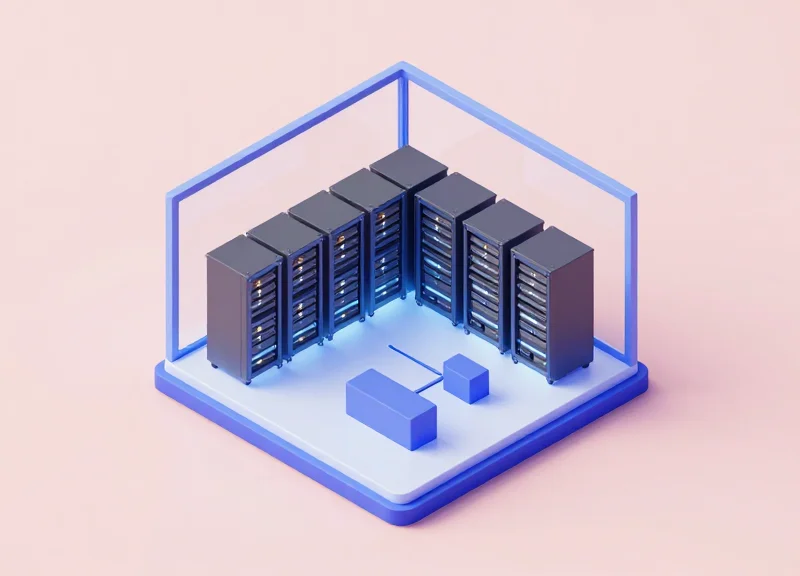
On-premise and private cloud RFID infrastructure offers a 'closed-loop' ecosystem where sensitive asset data never leaves the organization's controlled environment. By eliminating the reliance on third-party cloud gateways, high-security sectors achieve three primary strategic objectives: deterministic latency for real-time automation, 100% operational continuity regardless of external internet outages, and absolute data residency. This sovereign architecture ensures that the metadata surrounding physical assets—often as valuable as the assets themselves—remains shielded from external intercept and multi-tenant vulnerabilities.
| Strategic Metric | Public Cloud RFID | Sovereign (Private/On-Prem) RFID |
|---|---|---|
| Data Latency | Variable (100ms - 2s+) | Deterministic (<10ms) |
| Uptime Control | ISP & Provider Dependent | Local/Internal Control |
| Data Residency | Varies by Region/Provider | Fixed within Corporate Boundary |
| Security Model | Shared Responsibility | Isolated Authority |
- Deterministic Operational Performance: In high-speed manufacturing or secure logistics, even a micro-delay in data processing can desynchronize automated systems. Private infrastructure provides predictable, low-latency response times essential for real-time item tracking.
- Full-Stack Uptime Autonomy: Sovereign systems operate independently of the public internet. If a global DNS provider or cloud region fails, on-premise RFID readers and local databases continue to function, preventing costly operational shutdowns.
- Enhanced Air-Gapping Capabilities: For defense and intelligence sectors, private cloud RFID allows for 'air-gapped' operations where tracking systems are physically and logically isolated from the outside world, making remote cyber-espionage virtually impossible.
### The 'Shadow Latency' Factor: A Veteran's Perspective A common misconception in the industry is that 'cloud-native' is always faster. From two decades in Silicon Valley, I’ve seen that the most significant risk to high-security RFID isn't just total downtime, but 'Shadow Latency.' This is the unpredictable jitter caused by multi-tenant resource contention in public clouds. In a Sovereign RFID setup, you aren't fighting for CPU cycles with a social media app or a streaming service. You have dedicated hardware resources, meaning your read-to-action cycle is consistent to the millisecond—a requirement for high-fidelity security protocols and precision robotics.
Does moving to Private Cloud increase maintenance costs?
While initial CapEx is higher, the long-term TCO is often lower due to the elimination of recurring 'per-tag' cloud egress fees and the mitigation of expensive downtime risks.
Can Sovereign RFID still support remote monitoring?
Yes. Private clouds allow for secure, encrypted VPN-based remote access controlled by your internal IT team, rather than leaving a permanent backdoor open to a third-party cloud provider.
Is on-premise RFID harder to scale?
Modern containerization (like Docker and Kubernetes) allows private RFID clouds to scale horizontally across local servers just as easily as public clouds, without the associated security trade-offs.
The Role of Edge Computing in Sovereign RFID Ecosystems

Edge computing in Sovereign RFID refers to the decentralized processing of data directly at the sensor level—specifically within the RFID reader or a local on-site gateway. Instead of acting as a 'dumb' pipe that streams raw tag data to an external server, edge-enabled readers act as localized intelligence hubs. By transforming radio frequency signals into actionable business logic locally, high-security sectors can maintain an air-gapped posture while achieving the real-time responsiveness required for modern logistics and security protocols.
| Feature | Traditional Cloud-Centric RFID | Edge-Sovereign RFID |
|---|---|---|
| Data Transit | Raw data streamed to external servers | Localized processing; data stays on-site |
| Latency | 100ms to 2s (Network dependent) | Sub-10ms (Deterministic) |
| Security Profile | High risk (Man-in-the-middle, breach) | Low risk (Physical perimeter control) |
| Bandwidth Costs | High (Constant streaming/heartbeats) | Low (Event-based metadata only) |
- Local Capture and Noise Filtering: The reader captures tag data and uses on-board firmware to filter out 'ghost reads' and environmental noise, ensuring only valid data enters the workflow.
- On-Device Logic Execution: Docker containers or localized scripts on the reader evaluate the data against pre-defined business rules (e.g., 'Is this asset authorized for this zone?').
- Autonomous Triggering: If a rule is met, the reader triggers immediate physical actions via GPIO ports—such as locking a door or halting a conveyor—without waiting for a cloud handshake.
- Sanitized Data Synchronization: Only the final, high-level event record is synced to the internal private database, minimizing the data footprint and exposure surface.
A critical advantage of the Sovereign Edge is 'Data Sanitization.' In traditional cloud models, third-party providers often gain access to granular behavioral telemetry—every time a tag is scanned, even in error. In a sovereign model, the hardware performs Zero-Knowledge Filtering. This means that even if your primary internal database were compromised, the attacker would lack the raw sensor logs necessary to reconstruct the granular movement patterns of personnel or high-value assets.
Can legacy RFID readers support edge processing?
Most enterprise-grade readers manufactured after 2022 include embedded Linux environments specifically designed to host localized applications for sovereign workflows.
Does the edge replace the private cloud entirely?
No. The edge handles real-time execution and data minimization, while the private cloud or on-premise server handles long-term storage and cross-facility analytics.
How does edge computing improve reliability during network outages?
Because the processing logic resides on the reader, the system continues to function even if the facility's internal network or internet connection is completely severed.
Case Studies: Sectors Leading the Sovereign Charge

Sovereign RFID adoption is no longer theoretical; it is a tactical necessity for sectors where a single second of data exposure or system downtime can result in catastrophic loss. By transitioning from multi-tenant cloud environments to on-premise or private 'sovereign' architectures, high-security organizations are reclaiming control over their metadata, eliminating the 'vendor-lock' risks of third-party clouds, and ensuring that sensitive movement data remains invisible to external entities.
| Sector | Primary Driver | Sovereign Solution | Key Outcome |
|---|---|---|---|
| Defense & Military | Denied Environments | Air-gapped Edge Processing | 100% Field Readiness |
| Pharmaceutical | IP Protection / Integrity | Private Blockchain + Local RFID | Unassailable Audit Trails |
| Financial Services | Asset Security | Internal Data Center Mesh | Zero External Leakage |
In the Defense sector, the transition is driven by the 'Blackout Protocol.' Military logistics require asset tracking in remote or hostile environments where internet connectivity to a central cloud is either impossible or a security liability. By utilizing sovereign RFID ecosystems, theater commanders can manage local inventory via an air-gapped server, ensuring that the movement of munitions or personnel is never transmitted over a public network. This prevents 'pattern-of-life' analysis by adversaries who might otherwise intercept cloud-bound metadata.
The Pharmaceutical industry faces a different threat: industrial espionage and data integrity. As drugs move through the cold chain, RFID tags transmit vital temperature and location data. If this data passes through a third-party cloud, it is vulnerable to 'synthetic manipulation'—where a hacker could alter records to hide a spoilage event. Sovereign RFID allows these firms to maintain a closed loop, where data is hashed locally and stored on private infrastructure, meeting stringent FDA and EMA requirements without exposing proprietary logistics routes.
How does Sovereign RFID impact financial audit speed?
By keeping RFID data on-premise, financial institutions eliminate the latency of cloud-to-local synchronization. Auditors can access real-time, high-fidelity logs of physical asset movement (like gold bullion or server hardware) directly from the internal network, reducing audit timelines by up to 40%.
What is the 'Metadata Silo' advantage?
A unique insight of sovereign systems is the creation of 'Metadata Silos.' Unlike third-party clouds that aggregate data across many clients to train AI models, a sovereign system ensures your operational patterns—the 'how' and 'when' of your business—stay exclusively within your walls.
Is the transition cost-prohibitive for these sectors?
While initial capital expenditure for on-premise hardware is higher, the elimination of monthly 'cloud egress' fees and the mitigation of multi-million dollar data breach risks result in a positive ROI within 18 to 24 months for high-volume sectors.
Expert Tip: For organizations eyeing 2026 compliance, the move to sovereign RFID should begin with 'Hybrid-Isolation.' Start by processing all high-sensitivity tag data at the edge and only sending anonymized, non-critical heartbeats to the cloud. This phased approach allows for the stress-testing of local infrastructure before a full cloud-exit.
Overcoming the Challenges of Migration
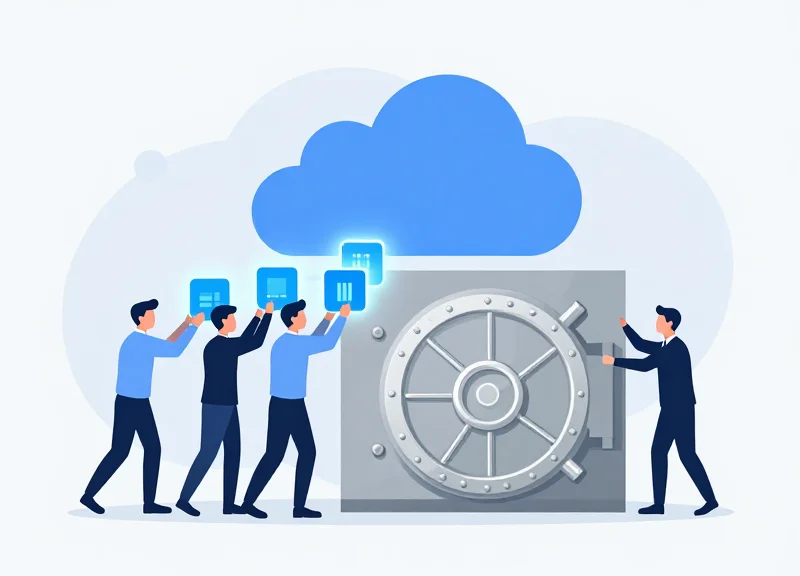
Transitioning from third-party SaaS to a sovereign RFID ecosystem involves neutralizing three primary hurdles: the initial Capital Expenditure (CapEx) spike, the technical complexity of 'de-clouding' legacy data, and the internal skill gap required to manage localized infrastructure. Successful migration is achieved not through a 'rip-and-replace' methodology, but through a phased encapsulation strategy where edge devices are repurposed to act as localized data sovereigns, gradually severing dependency on external API calls while maintaining operational continuity.
| Challenge Category | SaaS Dependency Risk | Sovereign Mitigation Strategy |
|---|---|---|
| Financial Model | Predictable monthly OpEx but perpetual 'rent'. | Initial CapEx investment with 3-year ROI through eliminated licensing fees. |
| Data Portability | Vendor lock-in via proprietary data schemas. | Implementation of open-source middleware (e.g., EdgeX Foundry) for hardware neutrality. |
| Technical Debt | Hard-coded cloud API integrations. | Abstraction layer deployment to redirect data flows from public endpoints to local clusters. |
The Veteran Perspective: Navigating the 'Shadow Data' Trap. In my two decades in Silicon Valley, the biggest failure in sovereign migration isn't the hardware—it's the 'Shadow Data' triggers. These are hidden background processes within RFID readers that ping manufacturer servers for firmware heartbeats or diagnostic telemetry. To achieve true sovereignty, organizations must implement a Zero-Trust egress policy at the network level, ensuring that even 'trusted' hardware cannot leak metadata to the public web under the guise of maintenance.
- The Audit Phase: Identify every data egress point in your current RFID network. Use packet inspection to find undocumented cloud pings.
- Middleware Abstraction: Deploy a local broker (like MQTT or Kafka) to collect tag reads. This prevents the hardware from talking directly to the cloud.
- Parallel Running: Operate the sovereign server alongside the legacy SaaS for 30 days to ensure data parity and latency benchmarks are met.
- The 'Kill Switch' Event: Formally decommission third-party API keys and redirect all traffic to the local sovereign core.
How does sovereign RFID impact real-time analytics?
Performance actually improves. By removing the 'round-trip' to a third-party cloud data center, latency is reduced from 100-500ms to sub-10ms, enabling faster automated decision-making on the floor.
Is the maintenance burden higher for internal teams?
Initially, yes. However, using containerized architectures like Kubernetes for your local RFID stack allows for automated scaling and self-healing, mimicking the 'low-touch' feel of a SaaS.
What happens to historical data stored in the cloud?
Most high-security sectors utilize 'Extract, Transform, Load' (ETL) scripts to migrate historical logs into localized S3-compatible storage (like MinIO) before the 2026 mandate.
# Example: Redirecting RFID Reader Egress to Local Sovereign Gateway
sudo iptables -t nat -A PREROUTING -p tcp --dport 443 -j DNAT --to-destination 10.0.0.50:8443
# Log unauthorized cloud attempts
sudo iptables -A FORWARD -d 0.0.0.0/0 -m state --state NEW -j LOG --log-prefix 'BLOCK_CLOUD_LEAK: '
Future-Proofing Your Infrastructure with DragonGuardGroup
DragonGuardGroup enables sovereign RFID infrastructure by providing 'Air-Gap Ready' hardware that eliminates the dependency on external cloud handshakes. By utilizing local-first communication protocols and robust on-reader processing, our EAS and RFID systems allow high-security sectors—such as defense and aerospace—to maintain absolute data custody. Unlike consumer-grade solutions that 'phone home' to third-party servers, DragonGuardGroup’s architecture is designed to integrate directly into private, internal intranets, ensuring that every byte of asset tracking data remains within your physical and digital perimeter.
To meet the 2026 mandate for sovereign data control, infrastructure must be built on hardware that prioritizes local SDKs and open-protocol flexibility. DragonGuardGroup hardware supports advanced encrypted standards (AES-128/256) at the reader level, facilitating secure peer-to-peer communication with your local ERP or WMS without the need for a middle-man SaaS provider.
| Feature | DragonGuardGroup Sovereign Hardware | Standard Cloud-Based RFID |
|---|---|---|
| Data Path | Local/Private Network Only | External Third-Party Cloud |
| Latency | < 5ms (Local Edge Processing) | 50ms - 200ms (Internet Dependent) |
| Telemetry | Zero (Full Opt-Out/Air-Gapped) | Mandatory Background Sync |
| Protocol Support | Wiegand, OSDP, MQTT-Local | Proprietary Web APIs Only |
Expert Insight: The 'Firmware Purge' Advantage. A common vulnerability in modern RFID is 'hidden' telemetry—small packets of diagnostic data sent back to the manufacturer. Our original perspective for 2026 preparedness is the 'Sovereign-Clean' firmware option. DragonGuardGroup provides high-security clients with firmware versions that have been physically stripped of all telemetry code, ensuring that your hardware is literally incapable of initiating an outbound connection to any IP address outside of your specified whitelist.
How does DragonGuardGroup handle firmware updates in an air-gapped environment?
We provide secure, offline update packages that can be verified via SHA-256 checksums and deployed through local administrative consoles, removing the need for an internet-connected update manager.
Can your EAS systems integrate with existing local security software?
Yes. Our systems use standardized industrial protocols like MQTT and OSDP, allowing seamless integration with private-cloud VMS (Video Management Systems) and access control platforms.
What is the lifespan of this hardware in a high-security setting?
DragonGuardGroup hardware is engineered for industrial longevity with a 10-year service life design, ensuring your move to sovereign RFID is a long-term capital investment rather than a recurring operational expense.
Transitioning to a sovereign network is not just about security; it is about operational independence. By choosing DragonGuardGroup, organizations insulate themselves from third-party outages, subscription price hikes, and the geopolitical risks associated with global data routing. Our hardware serves as the physical foundation for your total data sovereignty.