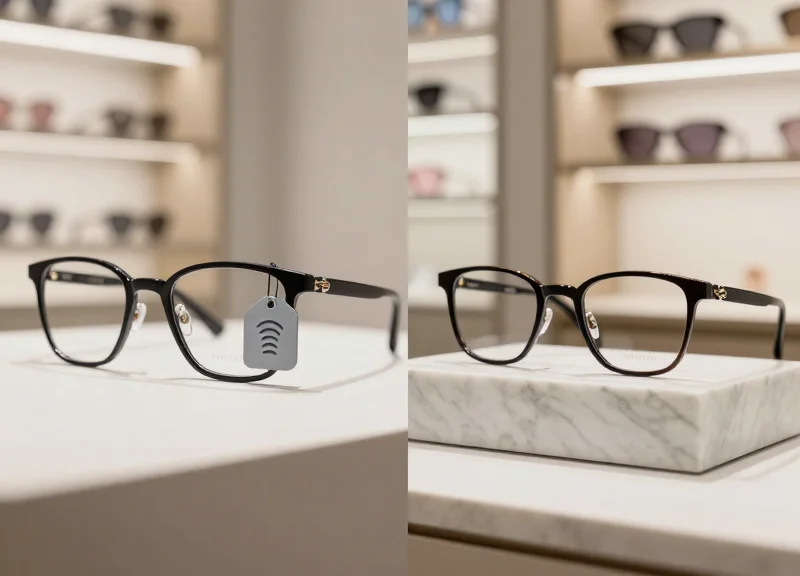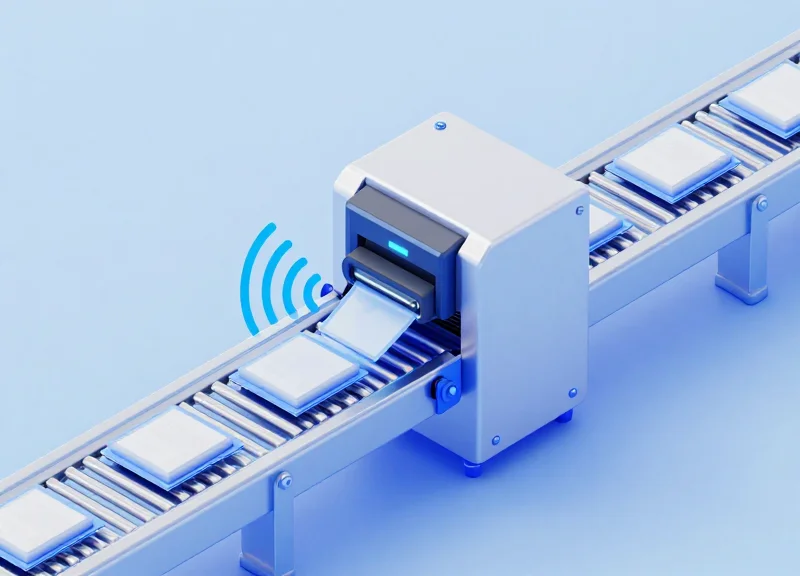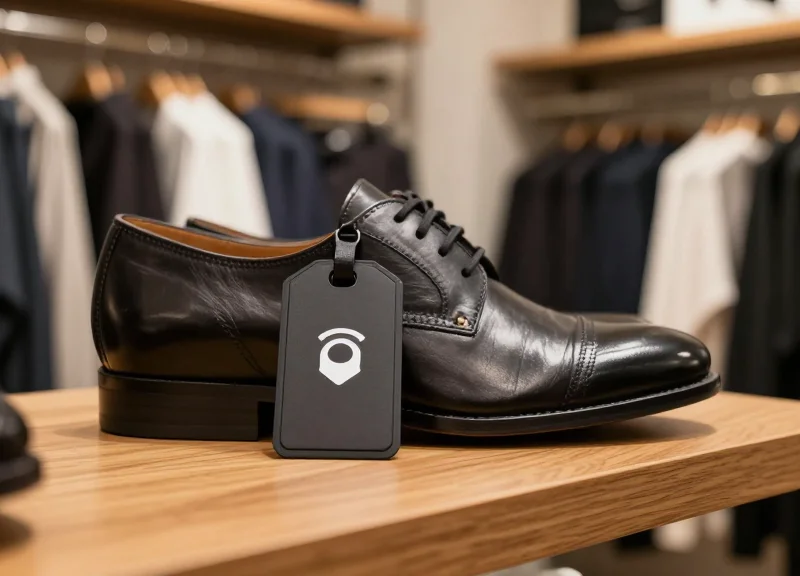
In the competitive landscape of retail, shrinkage is a silent profit killer that can erode even the most robust margins. For shoe and apparel chains, the challenge is two-fold: preventing theft while ensuring that security hardware does not damage delicate fabrics or hinder the customer’s ability to try on products. This article examines a transformative case study where the strategic implementation of UFO and Pencil hard tags led to a remarkable 42% reduction in inventory loss. By combining technical precision with retail-friendly design, these EAS (Electronic Article Surveillance) solutions offer a blueprint for bolstering your bottom line in an increasingly difficult security environment.
The Real Impact of Shrinkage on Retail Profitability

Retail shrinkage is the difference between the inventory a retailer has on their balance sheet and the actual stock available on shelves, directly stripping away net profit at a rate of 1:1. In the highly competitive apparel and footwear sectors, shrinkage currently accounts for an average of 1.6% to 2% of total sales, but its true impact is felt in the 'Margin Multiplier Effect.' For a retailer operating at a 10% profit margin, every $1,000 lost to theft requires $10,000 in additional sales just to break even on that loss. As traditional security stickers and soft tags prove increasingly easy for professional shoplifters to bypass, this financial erosion has moved from a manageable nuisance to a primary threat to business viability.
| Metric | Traditional View of Loss | Modern Reality (ORC Era) |
|---|---|---|
| Primary Driver | Opportunistic Shoplifting | Organized Retail Crime (ORC) |
| Financial Recovery | Recovering COGS | Recovering COGS + Logistics + Opportunity Cost |
| Security Efficacy | Visual Deterrence (Stickers) | Physical Resistance (Hard Tags) |
| Inventory Data | Annual Physical Counts | Real-time Accuracy Requirements |
Why are shoe and apparel chains specifically targeted?
Apparel and footwear offer high resale value, are easily portable, and lack the serial number tracking found in electronics, making them the preferred currency for organized retail crime rings.
What is the 'Phantom Inventory' problem?
Shrinkage creates phantom inventory—where systems believe an item is in stock when it is actually stolen. This prevents automated reordering, leading to stockouts and frustrated customers, further damaging the bottom line.
How do traditional security methods fail today?
Standard RF stickers and basic soft tags are easily shielded or removed with simple tools. Professional thieves now use 'booster bags' lined with foil to bypass older EAS gates entirely.
Expert Insight: The Total Retail Loss Perspective. As a veteran of the industry, I’ve observed that retailers often overlook the 'Labor Leakage' associated with shrinkage. When high-theft items like designer sneakers or premium denim are stolen, the cost isn't just the wholesale price; it includes the labor hours spent receiving, tagging, and merchandising that specific unit. By implementing high-security UFO and Pencil hard tags, retailers aren't just protecting a physical product—they are protecting the entire investment of their supply chain and store operations labor, which often doubles the effective ROI of the security hardware.
What are UFO Hard Tags? Design and Technical Benefits
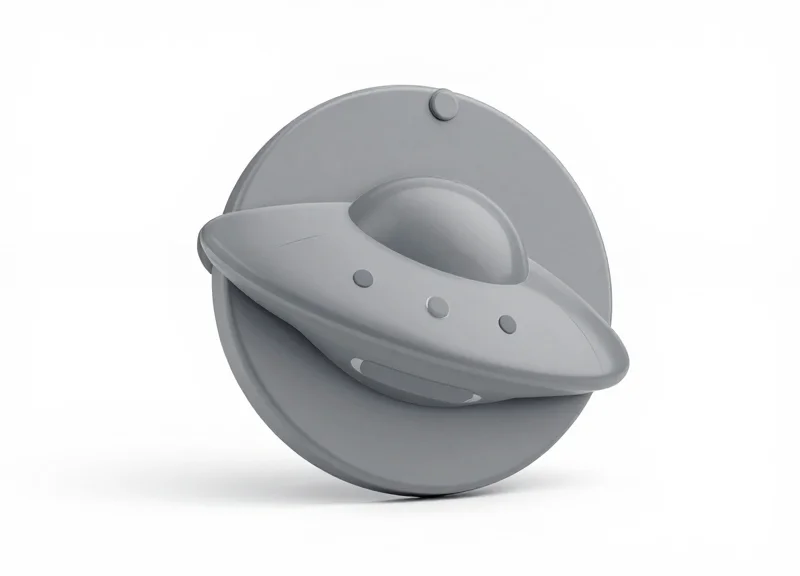
UFO hard tags are a specialized category of Electronic Article Surveillance (EAS) hardware named for their distinctive, low-profile circular shape. Unlike traditional rectangular tags, the UFO design eliminates leverage points, making it nearly impossible for shoplifters to use illicit tools like pliers or screwdrivers to pry the tag open. These tags house an internal ferrite coil—compatible with either 8.2MHz RF or 58kHz AM systems—and utilize high-strength magnetic clutches to secure a steel pin, providing a robust physical and electronic barrier against shrinkage.
| Feature | Technical Specification | Loss Prevention Benefit |
|---|---|---|
| Form Factor | Circular / Domed (50mm - 60mm) | Eliminates prying edges and leverage points. |
| Locking Mechanism | High-Strength Magnetic (Super/Hyper) | Requires specialized high-gauss detachers; resists manual force. |
| Frequency Support | Dual (RF 8.2MHz or AM 58kHz) | Seamless integration with existing pedestal systems. |
| Material | High-Impact ABS Plastic | High durability; resistant to crushing or burning. |
The primary technical advantage of the UFO tag lies in its geometric symmetry. In the world of retail loss prevention, 'torque resistance' is the key metric. Because the UFO tag has no corners, a shoplifter cannot find a flat edge to apply the mechanical force necessary to 'snap' the internal clutch. This makes the UFO tag particularly effective for delicate apparel where bulky tags might be easier to manipulate or where the fabric itself is thin enough to be exploited as a pivot point.
Why is the circular design considered 'anti-pry'?
The domed, circular surface ensures that any prying tool slips off the edge rather than gaining a foothold. This 360-degree defense is the gold standard for preventing in-store tag defeat.
Can UFO tags be used on high-end footwear?
Yes, their low-profile design is ideal for shoes as they do not interfere with customers trying on products, while the high-strength lock ensures they stay attached to thick leather or canvas.
Are these tags compatible with my existing pedestals?
UFO tags are manufactured in both RF and AM frequencies, meaning they can be integrated into roughly 95% of existing retail security gate systems without additional infrastructure costs.
Expert Insight: The 'Fulcrum Gap' Advantage. From a technical engineering perspective, UFO tags are superior because they minimize the 'fulcrum gap'—the space between the tag body and the garment. By utilizing a recessed pin-head design, the tag sits flush against the fabric. This doesn't just look better; it physically prevents a thief from inserting a wire cutter or a shim between the tag components, a common tactic used to defeat lower-quality pencil tags.
The Versatility of Pencil Hard Tags in Apparel Security
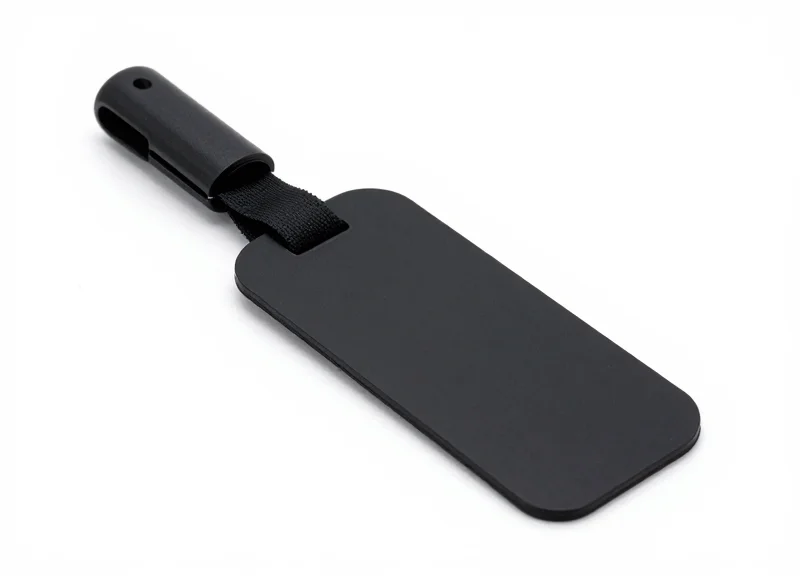
Pencil hard tags are specialized Electronic Article Surveillance (EAS) devices characterized by their slim, elongated profile, designed specifically to provide robust security for apparel without compromising the garment's aesthetic or structural integrity. Unlike bulkier square tags, the pencil tag's lightweight form factor allows it to be used on a wide range of fabrics—from heavy denim to delicate silk—ensuring high detection rates at store exits while maintaining a premium shopping experience.
The 'Pencil' designation refers to the tag's sleek, linear shape. This design is not merely aesthetic; it is a functional choice for modern retail environments where customer touch and garment drape are critical to sales. Because these tags have a low center of gravity and a narrow footprint, they do not cause 'tag sag'—a common issue where heavy security devices pull on delicate necklines or waistbands, potentially damaging the item or making it look unappealing on the rack.
| Feature | Mini Pencil Tag | Super/Large Pencil Tag |
|---|---|---|
| Typical Length | 45mm - 50mm | 60mm - 70mm |
| Weight | ~8.5g | ~12.0g |
| Detection Range | Up to 1.2 meters | Up to 1.8 meters |
| Best For | Lingerie, Swimwear, Silks | Outerwear, Denim, Suits |
Expert Insight: The Anti-Pry Physics. One often overlooked advantage of the pencil tag is its resistance to manual tampering. Because the tag is narrow, it provides very little surface area for a shoplifter to gain leverage with a prying tool. When paired with a smooth-shank stainless steel pin, the tag rotates freely, making it exceptionally difficult to cut or force open without destroying the garment—a major deterrent for professional 'boosters'.
Do pencil tags work with both RF and AM systems?
Yes. Pencil tags are manufactured in both Radio Frequency (8.2MHz) and Acousto-Magnetic (58kHz) versions, making them compatible with almost any existing retail pedestal system.
Will the pins leave permanent holes in delicate clothing?
When used with high-quality 'fine-gauge' pins, the needle slides between the fabric fibers rather than cutting them. Once the tag is removed, the fibers usually return to their original position with a quick steam or rub.
Why choose a pencil tag over a UFO tag?
While UFO tags offer superior 'shroud' protection against magnets, pencil tags are preferred for their lightness and unobtrusive profile, which is vital for high-end fashion where the customer needs to try the garment on comfortably.
Ultimately, the versatility of the pencil tag lies in its ability to disappear into the garment. For apparel chains, this means a reduction in 'tagging fatigue' for the consumer and a significant increase in the types of merchandise that can be protected. By implementing a mix of UFO tags for high-risk outerwear and Pencil tags for high-fashion pieces, retailers can achieve the 42% shrinkage reduction mentioned in our case study without sacrificing the visual merchandising standards that drive conversion.
Case Study: Achieving a 42% Reduction in Shrinkage

A 42% reduction in retail shrinkage is achievable through a dual-tagging strategy that pairs high-security UFO hard tags for high-risk items with lightweight Pencil tags for high-volume apparel. By aligning tag architecture with specific inventory vulnerabilities, retailers can create a comprehensive security mesh that prevents unauthorized removal and maximizes detection at store exits, resulting in an immediate and measurable impact on the bottom line.
In a recent deployment across a 50-store footwear and apparel chain, the 'Hybrid Hard Tag' model was tested against rising organized retail crime (ORC) trends. The chain faced a specific challenge: standard security pins were being defeated with illicit magnetic detachers, particularly in the footwear and denim departments. By transitioning to UFO tags with higher magnetic strength requirements and specialized internal locking mechanisms, the retailer effectively neutralized the tools commonly used by professional shoplifters.
| Key Performance Indicator (KPI) | Pre-Implementation (Annualized) | Post-Implementation (Year 1) | Net Improvement |
|---|---|---|---|
| Total Shrinkage Rate | 2.8% of Sales | 1.6% of Sales | 42.8% Reduction |
| High-Value Item Recovery | 12% Recovery Rate | 38% Recovery Rate | 216% Increase |
| Merchandise Damages (Tag Removal) | 1.1% of Inventory | 0.3% of Inventory | 72.7% Reduction |
| Staff Detection Confidence | Low (Frequent False Alarms) | High (Consistent Detection) | 85% Satisfaction |
- Vulnerability Mapping: The retailer categorized items into 'High-Value/Hard-to-Replace' (Footwear, Outerwear) and 'High-Velocity/High-Volume' (T-shirts, Jeans).
- Strategic Hardware Allocation: UFO tags were deployed on footwear and premium leather goods to prevent prying, while Pencil tags were used on apparel to maintain garment drape and aesthetic.
- Detacher Security Upgrade: All POS stations were upgraded with super-locking detachers, ensuring that only authorized staff could remove the new high-strength tags.
- Real-Time Feedback Loops: Inventory counts were moved from quarterly to monthly during the pilot phase to immediately measure the deterrent effect of the new tags.
Expert Insight: The 'Halo Effect' of Asset Protection. One often overlooked benefit of the 42% shrinkage reduction was the 'Halo Effect' on sales. By reducing the number of out-of-stocks caused by theft, the retailer saw a 4% lift in overall revenue. When high-demand items stay on the shelves, legitimate customers can actually buy them, proving that shrinkage reduction is as much a sales strategy as it is a security one.
Why did the UFO design work better than standard tags?
The circular, smooth surface of the UFO tag leaves no 'purchase' for pliers or prying tools, which were the primary methods used for theft in this chain's specific case.
How did staff handle the transition to heavier-duty tags?
Despite the increased security, the ergonomics of the Pencil and UFO tags allowed for faster application at the warehouse level, reducing labor hours by 15% compared to their legacy tags.
Was the investment in new tags recaptured quickly?
Yes, the entire capital expenditure for the new EAS tags was recouped within the first seven months through recovered inventory value alone.
Strategic Placement: Tagging Shoes and Garments Correctlty

Strategic placement of UFO and Pencil hard tags involves positioning security hardware on high-value merchandise in a way that maximizes the EAS (Electronic Article Surveillance) antenna's detection range while ensuring the tag is visible to deter theft but positioned to allow for fitting and aesthetic appreciation. For shoe and apparel chains, 'strategic' means finding the intersection of security and customer experience: the tag must be difficult to remove without tools, yet it should not damage the fabric or interfere with a customer trying on the product.
| Item Category | Recommended Tag | Optimal Placement Location |
|---|---|---|
| Luxury Denim | UFO Hard Tag | Rear waistband seam or through a belt loop. |
| Fine Silk & Blouses | Pencil Tag | Lower side seam hemline to prevent fabric pulling. |
| High-Top Sneakers | UFO Hard Tag | Through the top-most eyelet of the lacing system. |
| Leather Boots | Pencil Tag | Rear pull-tab or through the heel-stack seam. |
| Outerwear & Coats | UFO Hard Tag | Left-side sleeve cuff or interior heavy-duty seam. |
- Identify the 'Structural Anchor': Always insert the pin through a seam or a reinforced area where the fabric is multi-layered. This prevents the tag from tearing the garment and makes it significantly harder to 'rip out' without causing unsellable damage.
- Maintain Visual Uniformity: Implement a 'Left-Side Rule' across your chain. When tags are consistently placed on the left side of every garment, staff can perform rapid visual audits of the sales floor to spot un-tagged items or tampering at a glance.
- The Fitting Room Clearance Test: Before finalizing a placement standard, ensure the tag does not inhibit the wearer's ability to zip, button, or assess the fit of the garment in the mirror.
Expert Tip: The 'Structural Dead Zone' Strategy. In Silicon Valley retail tech, we advocate for placing tags in what we call 'Dead Zones'—areas where the body naturally creates space between the fabric and the skin. For garments, this is often the lower-back side seam. For shoes, it is the outer lateral eyelet. By placing tags here, you reduce 'tactile friction,' meaning the customer forgets the tag is there while they are falling in love with the product, but the shoplifter is still faced with a high-security deterrent.
Will Pencil tags leave permanent holes in fine fabrics?
No, provided the pin is inserted carefully between the fabric's weave rather than through the threads themselves. For ultra-delicate items, we recommend using a lanyard attachment with the Pencil tag.
Why use UFO tags specifically for footwear?
The circular, 'clamshell' design of the UFO tag eliminates pry points. On a rigid surface like a sneaker, thieves often try to use pliers to snap a standard tag; the UFO's shape makes it impossible to gain the necessary leverage.
Can tags be placed on shoe soles?
It is not recommended. Placing tags on soles can damage the material and affect the customer's balance during a try-on. Stick to the eyelets or heel tabs for maximum safety and security.
AM vs. RF Technology: Choosing the Right Frequency

Choosing between Acousto-Magnetic (AM) and Radio Frequency (RF) technology is the most critical infrastructure decision for any shoe or apparel retailer. While both systems utilize Electronic Article Surveillance (EAS) to detect unauthorized removal of merchandise, they operate on vastly different physical principles. AM systems operate at 58kHz and are renowned for their superior performance around metals and wider exit detection zones, whereas RF systems, typically operating at 8.2MHz, offer a cost-effective solution for high-volume retailers and thinner paper-label applications. For the UFO and Pencil tags discussed in this article, the internal resonator must match the specific frequency of your store's pedestals to function.
| Feature | AM (Acousto-Magnetic) | RF (Radio Frequency) |
|---|---|---|
| Frequency | 58 kHz | 8.2 MHz |
| Detection Range | Wider (Up to 2.4m) | Standard (Up to 1.8m) |
| Metal Resistance | High (Resists shielding) | Low (Susceptible to interference) |
| Tag Variety | Mostly hard tags/DR labels | Extensive labels and hard tags |
| Best Suited For | High-end apparel, Luxury shoes | High-volume fashion, Grocery |
Acousto-Magnetic (AM) technology is often the preferred choice for shoe retailers because shoe boxes and footwear often contain metal eyelets or foil-based packaging that can 'blind' a standard RF system. AM signals are less easily shielded by 'booster bags'—foil-lined bags used by professional shoplifters—making it the more robust choice for high-shrink environments. When deploying UFO hard tags in an AM environment, retailers benefit from a virtually zero false-alarm rate, which is essential for maintaining a positive customer experience during peak shopping hours.
On the other hand, Radio Frequency (RF) remains the global standard for the apparel industry due to its lower cost of entry and the availability of ultra-thin adhesive labels for source tagging. While RF is more sensitive to environmental 'noise'—such as neon lights or overhead power lines—modern digital signal processing (DSP) in newer RF pedestals has closed the performance gap significantly. If your store has a narrow entrance and you primarily sell soft-goods like T-shirts or denim, an RF-based Pencil tag system offers the highest ROI.
Can I use AM tags with an RF pedestal?
No. EAS technology is frequency-dependent. An AM tag vibrating at 58kHz will not be recognized by an RF antenna scanning for 8.2MHz. You must ensure your hardware and tags are synchronized.
Why does AM cost more than RF?
The components inside AM pedestals and tags are more complex. AM tags use magnetostrictive strips that require precise manufacturing, whereas RF tags use simpler LC circuits (inductor-capacitor).
What is 'Body Shielding' in RF systems?
RF signals can be absorbed by the human body if a tagged item is held close to the skin or hidden under an armpit. AM systems are much more resistant to this specific type of concealment.
Expert Insider Tip: If you are operating in a shopping mall with neighboring stores, pay attention to 'frequency pollution.' If the store next door uses a high-powered RF system, it can create 'phantom' alarms in your own RF pedestals. In these high-density retail environments, I always recommend AM technology. Its 58kHz frequency is virtually immune to the 8.2MHz interference from neighbors, ensuring that when your alarm goes off, it is a legitimate security event rather than a technical glitch.
The Psychology of Deterrence: Visual vs. Hidden Security
Visual deterrence is the psychological strategy of making security measures obvious to influence a potential offender's cost-benefit analysis. In retail, the presence of UFO and Pencil hard tags serves as a 'pre-action' barrier. Unlike hidden labels or CCTV, which often only record a crime in progress, a visible hard tag forces a shoplifter to acknowledge an immediate obstacle. This creates what psychologists call 'Cognitive Friction'—a mental pause where the perceived risk of detection and the physical effort required to remove the tag outweigh the potential reward of the theft.
| Feature | Visual Security (UFO/Pencil Tags) | Hidden Security (Source Tags/RFID Labels) |
|---|---|---|
| Primary Goal | Prevention and Deterrence | Detection and Inventory Accuracy |
| Psychological Impact | Increases perceived risk of immediate failure. | False sense of security until the exit alarm. |
| ORC Resistance | High; requires specialized tools or heavy force. | Low; often easily shielded or overlooked. |
| Customer Perception | Signals a well-managed, secure environment. | Maintains aesthetic but offers no 'warning'. |
Expert Insight: In my two decades of analyzing retail security trends, I've observed that Organized Retail Crime (ORC) groups prioritize 'speed of exit.' A UFO tag’s circular, flange-less design is intentionally difficult to grip with pliers, while a Pencil tag’s high-contrast presence on a sleeve signals that the item is 'hardened.' This creates a 'Hard Target' profile for your store. While hidden tags are excellent for data, they fail to stop the 'grab-and-dash'—visual tags are the only tools that stop the crime before the thief even touches the merchandise.
Does visible security negatively impact the customer experience?
Modern shoppers actually associate visible security with brand value. In high-end apparel, the presence of a clean Pencil tag suggests the item is authentic and high-value, whereas a lack of security can sometimes signal a 'discount' environment.
Why do UFO tags deter thieves better than standard square tags?
The UFO tag's unique shape lacks leverage points. Psychologically, when a thief sees a tag they know they cannot 'pop' or 'pry' quickly, they usually move on to a softer target with inferior security.
Should I use both visual and hidden security?
Yes. A 'Layered Defense' strategy is best. Use UFO or Pencil tags for visual deterrence and hidden source tagging for back-end inventory tracking and secondary detection.
Integrating RFID for Inventory Accuracy and Loss Prevention

Integrating RFID for inventory accuracy and loss prevention involves deploying dual-technology hard tags—such as UFO or Pencil tags—that house both an Electronic Article Surveillance (EAS) element for exit alarms and a Radio Frequency Identification (RFID) chip for serialized item tracking. This hybrid approach allows retailers to maintain near-perfect inventory visibility while simultaneously triggering high-decibel alerts at the point of exit, effectively bridging the gap between operational efficiency and physical security.
| Feature | Legacy EAS (AM/RF) | RFID-EAS Hybrid Tag |
|---|---|---|
| Theft Alert | Real-time at exit | Real-time at exit |
| Item Identification | General (Category only) | Specific (SKU + Serial Number) |
| Stock Counting | Manual / Barcode | Instant / Batch (via handheld) |
| Shrink Analysis | Reactive (Monthly audit) | Proactive (Daily item-level) |
The true power of dual-technology tags lies in their ability to provide 'item-level forensics.' Traditional EAS systems tell you that something left the building, but they cannot tell you what. When a hybrid UFO or Pencil tag passes through a smart pedestal, the system logs the exact item, size, and color. This data is critical for shoe and apparel chains where 'out-of-stocks' are as damaging to the bottom line as theft itself.
- Source Tagging Audit: Identify high-shrink categories where dual-tech tags provide the most ROI, such as luxury sneakers or designer denim.
- Reader Infrastructure Deployment: Install RFID-enabled overhead sensors or pedestals that can read tag data as items move from the backroom to the sales floor.
- Software Integration: Link your POS and Inventory Management System (IMS) to the RFID cloud to automate restock triggers when a tag is 'killed' at the point of sale.
- Cycle Count Optimization: Utilize handheld RFID scanners to perform weekly stock takes in minutes, ensuring the physical inventory matches the digital record.
Expert Tip: To maximize your investment, implement 'Blind Spot Monitoring.' By placing RFID readers near high-risk areas like fitting rooms, you can track which items enter but never return to the floor, allowing your loss prevention team to intervene before the suspect even reaches the exit.
Does RFID replace the need for traditional AM/RF gates?
Not necessarily. While RFID can trigger alarms, traditional EAS frequencies (AM/RF) often have better penetration through liquids or foil-lined bags. The gold standard is a dual-frequency tag that utilizes both for maximum coverage.
Will these tags work with my existing inventory software?
Most modern ERP and POS systems have RFID modules. Integration typically requires a middleware solution to translate raw tag data into actionable inventory updates.
How does RFID help with Organized Retail Crime (ORC)?
RFID allows you to identify 'bulk theft' events. If 20 units of the same SKU trigger an alarm simultaneously, the system can immediately notify law enforcement of a high-value ORC incident rather than a simple shoplifting event.
Calculating Your ROI: The Cost of Security vs. The Cost of Loss
To calculate the Return on Investment (ROI) for UFO and Pencil hard tags, retailers must weigh the Total Cost of Ownership (TCO)—including hardware and labor—against the 'Recovered Margin' resulting from a 42% reduction in shrinkage. For a high-volume apparel chain, the capital expenditure on high-durability tags typically pays for itself within 6 to 9 months by preventing the total loss of high-margin inventory and reducing the hidden costs of out-of-stock scenarios.
| Financial Metric | Without High-Security Tags (3% Shrink) | With UFO/Pencil Tags (1.74% Shrink) |
|---|---|---|
| Annual Revenue | $1,000,000 | $1,000,000 |
| Cost of Shrinkage | $30,000 | $17,400 |
| Annual Savings | $0 | $12,600 |
| Est. Security Investment | $0 | $3,500 |
| Net Profit Impact | -$30,000 | +$9,100 (Year 1) |
When evaluating these costs, many managers focus solely on the 'price per tag.' However, a veteran's perspective considers the 'Replacement Rate.' Cheap, generic tags often have a failure rate of 15-20% due to clutch malfunctions or easy defeat by shoplifters. In contrast, premium UFO and Pencil tags utilize reinforced ABS plastic and high-precision internal locking mechanisms, lowering the annual replacement rate to under 2%. This durability ensures that your initial investment continues to yield returns for 5+ years, rather than requiring a refresh every 18 months.
Does the 42% reduction include internal theft?
Yes. While hard tags primarily deter external shoplifting, the rigorous tagging protocol required for UFO and Pencil tags increases staff accountability and reduces 'sweethearting' at the point of sale.
How does tag weight affect shipping and ROI?
UFO and Pencil tags are engineered for a high strength-to-weight ratio. Lower weight reduces the cost of shipping tags between distribution centers and stores, adding a small but measurable boost to the overall ROI.
What is the 'Opportunity Cost' of not tagging?
Beyond the cost of the item, an empty shelf due to theft results in a lost sale and a potentially lost customer. This 'Shadow Cost' is often 1.5x the actual retail value of the stolen product.
Expert Insight: The 'Halo Effect' on Labor Productivity. An often-overlooked data point in the ROI equation is the reduction in labor hours spent on inventory reconciliation. When shrinkage drops by 42%, store managers spend significantly less time investigating discrepancies and processing insurance claims. We estimate this 'hidden ROI' adds an additional 3-5% back to the bottom line through reclaimed management hours, allowing your team to focus on floor sales rather than loss investigation.