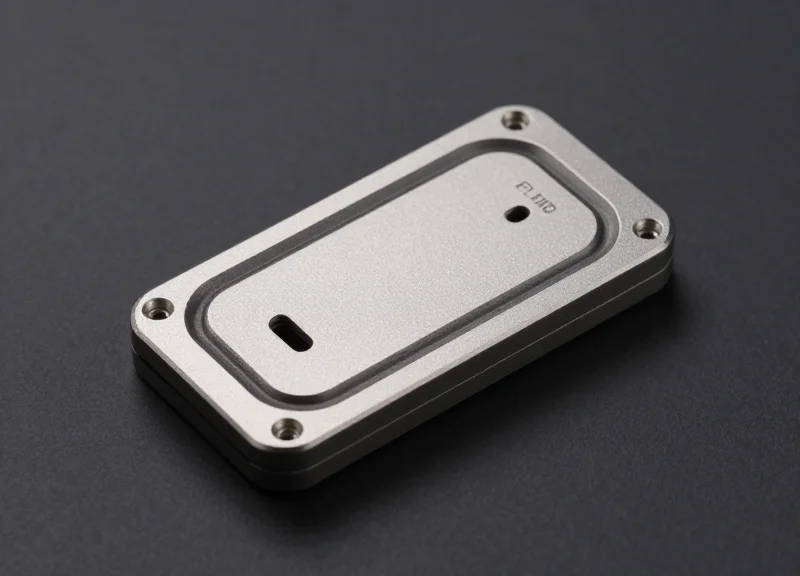
In the world of high-end retail, spirits and fine wines represent some of the most targeted 'liquid assets' for theft. However, the challenge for retailers is twofold: securing the product while maintaining the pristine condition of the packaging—specifically the delicate foil-wrapped necks that define a premium brand. Traditional security tags often leave marks, tears, or residue, devaluing the product the moment it is sold. This guide provides a technical deep dive into implementing non-damaging EAS (Electronic Article Surveillance) solutions that provide maximum security without compromising the aesthetic integrity of your inventory.
The High Stakes of Liquid Asset Protection

Liquid asset protection in the premium spirits sector refers to the specialized loss prevention strategies used to secure high-value inventory—specifically bottles retailing above $100—where shrinkage rates can exceed 3% annually. Unlike standard retail goods, premium liquor offers 'instant liquidity' for thieves, meaning the ROI for organized retail crime (ORC) is significantly higher, necessitating technical security measures that do not compromise the bottle's aesthetic integrity or the delicate foil seals that denote authenticity.
| Category | Avg. Shrinkage Rate | Primary Theft Driver | Impact on Margin |
|---|---|---|---|
| Standard Spirits | 1.2% - 1.8% | Individual consumption | Low to Moderate |
| Premium Foil-Wrapped | 2.5% - 4.2% | Resale / Black Market | High (Catastrophic) |
| Vintage/Rare Reserves | Up to 5.0% | Targeted ORC | Extremely High |
The challenge with foil-wrapped necks, such as those found on Champagne, fine Cognac, and single-malt Scotch, is twofold: physical fragility and signal interference. Traditional hard tags can tear the foil, immediately devaluing the product by 20-40% even if the bottle remains unsold. Furthermore, the metallic properties of the foil can create a 'Faraday cage' effect, potentially dampening the signal of standard Electronic Article Surveillance (EAS) tags if not implemented with technical precision.
Why are foil-wrapped bottles considered 'High-Risk'?
Foil wrapping is often a hallmark of premium branding. For thieves, these bottles represent high-density value—items that are easy to transport and yield high prices on secondary markets. Because the foil is easily damaged, retailers often hesitate to apply robust security, making them 'soft targets'.
How does shrinkage impact the bottom line for boutique retailers?
In the high-margin liquor world, losing one $300 bottle requires the sale of approximately 15 to 20 additional bottles just to recoup the cost of goods sold (COGS), effectively erasing a day's profit margin for a small boutique.
Can standard EAS tags be used on foil necks?
Standard tags often use high-clamping force which crushes the foil. Moreover, if the tag's frequency (RF or AM) is not tuned to account for the metallic foil's proximity, 'tag shielding' occurs, allowing the thief to walk through pedestals undetected.
Expert Insight: The 'Perceived Authenticity' Trap. In my two decades of retail tech analysis, I've observed that the greatest 'hidden' loss isn't just the theft itself, but the 'Aesthetic Shrink.' When a customer sees a $500 bottle of Krug with a scratched or dented foil neck due to a poorly fitted EAS tag, the perceived value drops. They won't buy it for a gift or a collection. You haven't lost the bottle to a thief, but you've lost the sale to your own security measures. This is why non-damaging, technically tuned EAS implementation is the only viable path for the luxury tier.
Understanding the Vulnerability of Foil Packaging

Foil packaging on premium liquid assets serves a dual purpose: it acts as a tamper-evident seal and a primary brand differentiator. Most high-end neck foils are composed of thin-gauge aluminum, tin, or polylaminate materials ranging from 40 to 100 microns in thickness. Because these materials possess high malleability but low tensile strength, they are exceptionally vulnerable to 'mechanical trauma'—permanent deformation or tearing caused by the localized pressure and friction of standard security hardware.
To implement effective loss prevention without destroying the product's shelf appeal, one must understand the specific material properties of the foil being protected. Different compositions react uniquely to external stressors like clamping force and torque.
| Foil Material | Typical Thickness | Key Characteristics | Primary Damage Risk |
|---|---|---|---|
| Pure Tin | 80-100 Microns | Very soft, heavy, premium feel | Deep denting and easy piercing |
| Aluminum | 40-60 Microns | Stiff, crisp edges, cost-effective | Cracking and sharp-edge tearing |
| Polylaminate | 70-90 Microns | Layered plastic/aluminum sandwich | Delamination and 'bubbling' under pressure |
| Heat-Shrink PVC | 50-75 Microns | Tight fit, glossy finish | Melting or splitting if tag friction generates heat |
- The Mechanical Bite: Standard hard tags use spring-loaded or screw-tightened mechanisms that apply concentrated pressure to a small surface area, often exceeding the yield strength of the foil.
- Abrasive Friction: During shipping and handling, even slight movements of a loosely fitted tag can cause micro-abrasions, stripping the decorative paint or lacquer from the foil.
- Oxygen Exposure: A microscopic tear in the foil can compromise the secondary seal, potentially leading to oxidation or 'weeping' of the liquid contents, especially in aged spirits.
- What is the 'Faraday Cage' effect in foil tagging?: Because foils are metallic, they can act as a shield (a Faraday Cage) that attenuates the radio frequency (RF) or acousto-magnetic (AM) signals of an EAS tag. If a tag is placed directly against a thick lead or tin foil, the detection rate at the exit pedestals can drop by as much as 40%.
- Expert Tip: The Micro-Vibration Data Point: Research indicates that 70% of foil damage occurs not during tag application, but during transport. The 'vibration-induced wear' between the hard plastic tag interior and the soft foil neck is the primary culprit for secondary-market rejections.
The Evolution of Non-Damaging EAS Technology
The evolution of non-damaging Electronic Article Surveillance (EAS) technology represents a paradigm shift in retail security, moving from brute-force mechanical deterrence to precision engineering. Modern non-damaging tags are defined by their use of thermoplastic elastomers (TPE) and internal micro-clutch mechanisms that provide high-security 'slip resistance' without the crushing force that traditionally shredded decorative foils and paper labels. By focusing on surface friction rather than compression, these devices offer a secure fit that respects the aesthetic integrity of high-value liquid assets.
| Feature | Legacy Bottle Tags | Modern Soft-Touch EAS |
|---|---|---|
| Clamping Mechanism | High-tension steel springs | Calibrated micro-clutches |
| Contact Interface | Rigid ABS plastic / Teeth | Medical-grade TPE / Silicone |
| Pressure Distribution | Concentrated pinch points | 360-degree radial distribution |
| Foil Compatibility | High risk of tearing/scuffing | Optimized for delicate foils |
The technical breakthrough in this field was the introduction of the adjustable tensioner. Unlike one-size-fits-all caps, these devices allow loss prevention teams to apply a specific Newton-meter of torque that is high enough to prevent removal by hand, but low enough to avoid deforming the underlying metal foil. This is particularly critical for aged spirits where the foil may have become brittle or thin over time. The 'soft-touch' evolution is not merely about padding; it is about the physics of energy distribution across the bottle's neck.
How do adjustable tensioners prevent 'over-tightening'?
Modern tags utilize a slip-clutch mechanism similar to high-end torque wrenches, which disengages the tightening drive once a pre-set safety threshold is reached, preventing manual user error from damaging the foil.
Why is TPE preferred over standard rubber?
Thermoplastic Elastomers (TPE) are chemically inert and do not contain the oils found in some rubbers that can leach out and stain or 'melt' the finish of luxury bottle foils over long periods.
Do these tags support both RF and AM systems?
Yes, the evolution has led to 'Dual-Tech' housings that can accommodate either 8.2MHz Radio Frequency or 58kHz Acousto-Magnetic circuits within the same non-damaging form factor.
Unique Expert Insight: The Vapor-Barrier Factor. A critical yet often ignored aspect of tag evolution is moisture management. Traditional tight-fitting tags can trap ambient humidity against the bottle neck, creating a micro-climate that leads to foil oxidation or label mold. The latest generation of professional EAS tags incorporates 'Micro-Vents' within the soft-touch lining. These channels allow for subtle airflow, ensuring that while the bottle is physically secured, the chemical environment of the foil remains stable, preserving the 'collector-grade' quality of the asset for years.
RF vs. AM Systems: Selecting the Right Frequency for Metalized Foils

In the battle against retail shrinkage, the presence of metalized foil on premium spirits acts as a double-edged sword: it signifies luxury to the consumer but serves as a signal shield to Electronic Article Surveillance (EAS) systems. For delicate foil-wrapped necks, Acousto-Magnetic (AM) systems at 58 kHz are generally superior to Radio Frequency (RF) systems at 8.2 MHz. This is because RF signals are highly susceptible to 'detuning' when in close proximity to conductive metals, whereas AM signals utilize magnetic fields that more effectively penetrate thin foils, ensuring consistent detection without false alarms.
| Feature | RF Systems (8.2 MHz) | AM Systems (58 kHz) |
|---|---|---|
| Metal Resistance | Low (High signal attenuation) | High (Superior penetration) |
| Detection Range | Moderate (Up to 1.8m) | Wide (Up to 2.4m+) |
| Tag Thickness | Paper-thin labels available | Thicker acoustic resonators |
| Interference Risk | High near foils and electronics | Low near metalized surfaces |
The technical failure of RF systems on foil-wrapped necks is primarily due to the 'Faraday Cage' effect. When an RF tag is placed against a conductive foil, the metal absorbs the electromagnetic energy, shifting the tag's resonance frequency outside the detection window of the pedestals. While digital RF systems have attempted to mitigate this with advanced signal processing, they often struggle with the 99.9% accuracy required for high-value liquid assets. AM technology, by contrast, relies on a mechanical vibration of magnetostrictive material that is far less impacted by the electrical conductivity of the bottle’s foil dress.
What is 'Phase Tuning' for foil-wrapped products?
Phase tuning involves calibrating the EAS controller to ignore static noise from the environment while boosting the specific pulse-echo response of the tag. For foils, this often requires narrowing the pulse gate to capture the tag's signal before it decays.
Can RF tags ever work on metalized foils?
Only if a physical air gap is maintained. Specialized 'off-metal' tags use a foam spacer to keep the antenna at least 2-3mm away from the foil, preventing the frequency shift, though this adds bulk to the bottle neck.
How do you achieve a 99.9% detection rate?
Achieving this benchmark requires a 'system-wide' calibration that includes syncing pedestal sweep speeds with the specific Q-factor (quality factor) of the non-damaging neck tags used.
Expert Insight: The 'Skin Effect' Variable. When implementing EAS on premium liquor, one must account for the thickness of the foil. Standard aluminum foils (12-20 microns) allow some magnetic flux penetration for AM systems. However, heavy lead or thick pewter foils used in ultra-premium decanters can block even AM signals. In these rare cases, the only solution is to apply the tag on the glass body below the foil line or utilize a high-tension clamp that creates a dielectric break in the foil's conductivity.
Step-by-Step Implementation: Precision Tagging for Foil Necks
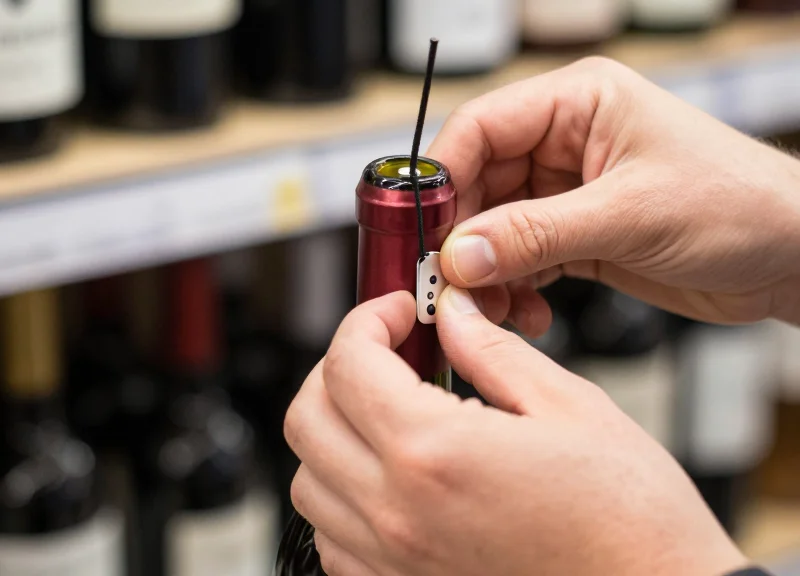
Implementing precision tagging for foil-wrapped necks involves a calibrated balance between mechanical retention and material preservation. The objective is to apply enough radial pressure to prevent the tag from being slipped off by a shoplifter, while remaining below the deformation threshold of the foil capsule—typically a delicate alloy of tin, lead, or polylaminate. Success requires a standardized four-stage workflow: surface assessment, tension calibration, concentric placement, and the 'micro-slip' verification test.
- Clean and Dry Assessment: Ensure the foil surface is free of condensation or oils from handling. Moisture trapped under a tag can lead to oxidation or 'foil rot' over long storage periods, while oils can reduce the friction coefficient, causing tags to slide under lower force.
- Tension Setting Calibration: Adjust the variable tensioner on the EAS tag (if applicable) to the 'medium-low' preset. For manual-cinch tags, do not exceed the second 'click' or notch until the tag is centered on the widest part of the neck bulge.
- The Concentric Application: Open the tag and place it exactly 5mm below the 'bead' (the protruding ring at the top of the neck). This positioning uses the bottle's natural geometry to resist upward removal without requiring excessive squeezing force on the foil itself.
- Closure and Soft-Touch Engagement: Gently close the tag until the internal silicone or rubber pads make 360-degree contact. Apply a final 1/4 turn or final cinch click to lock the mechanism, ensuring the pads compress slightly against the foil without crinkling the metal.
| Foil Material | Estimated Hardness | Recommended Torque/Cinch Level | Risk Factor |
|---|---|---|---|
| Heavy Tin/Lead | Low | Level 1 (Softest) | High - Permanent Indentation |
| Polylaminate | Medium | Level 2 (Medium) | Low - Resilient to Pressure |
| Heat-Shrink Plastic | High | Level 3 (Firm) | Minimal - Puncture Only |
| Aluminum Alloy | Medium-Low | Level 1-2 (Variable) | Moderate - Tearing Risk |
Expert Tip: The Thermal Expansion Buffer. Most luxury liquid assets are stored in temperature-controlled environments, but they are tagged in room-temperature stockrooms. Because glass and metal foil expand and contract at different rates, we recommend leaving a 'micro-buffer' of approximately 0.5mm between the tag and the foil. This allows the bottle to 'breathe' during temperature shifts without the tag becoming a permanent clamp that ruptures the foil seal as the glass expands.
How do I know if the tag is too tight?
If you see 'gathering' or vertical ridges forming in the foil above or below the tag, the radial pressure is too high. The foil should remain perfectly smooth.
Can I reuse the same spot if I need to re-tag?
No. Once a tag has been removed, move the new tag 2-3mm higher or lower to avoid stressing the same micro-area of the foil, which may have been slightly weakened.
What is the 'Micro-Slip' test?
After locking, attempt to rotate the tag with two fingers. The tag should resist easy spinning but should not feel 'welded' to the glass. A slight 1mm movement is safer than a zero-tolerance grip for foil health.
Ensuring a Seamless Checkout: Non-Invasive Removal Techniques
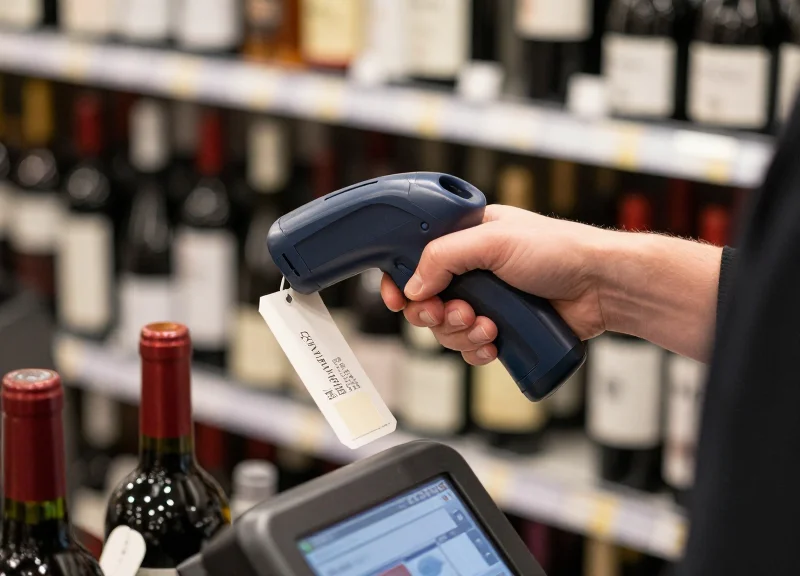
Non-invasive removal techniques for EAS bottle tags prioritize the preservation of the product's aesthetic integrity by using specialized detachers to neutralize locking mechanisms without applying vertical or rotational stress to the delicate foil neck. By integrating high-strength magnetic or mechanical decoupling tools at the point of sale (POS), retailers can ensure that the transition from a secured asset to a purchased luxury good is friction-less, preventing the jagged edges or foil tears that often occur with standard, high-torque removal methods.
| Detacher Category | Compatibility | Foil Safety Rating | Primary Benefit |
|---|---|---|---|
| High-Strength Magnetic | Universal RFID/AM Tags | Excellent | Zero physical contact with the lock mechanism. |
| Mechanical/Clutch | Specialized Pin-Locks | Good | Precise release for heavy-duty security collars. |
| Handheld Portable | Low-Profile Tags | Moderate | Flexibility for oversized or irregular bottle shapes. |
| Recessed Counter-Mount | High-Volume SKU Tags | Superior | Fixed stability prevents accidental bottle slippage. |
- The Alignment Phase: Place the bottle neck vertically into the detacher nest. Ensure the tag's lock housing is flush against the magnetic core to maximize the flux density required for a clean release.
- The Neutral-Pressure Release: Apply downward pressure on the tag body rather than the bottle. This ensures that when the lock disengages, the tag moves away from the foil rather than the bottle being yanked through a locked tag.
- Vertical Extraction: Lift the tag directly upward along the vertical axis of the bottle. Avoid tilting or 'prying' the tag, which is the primary cause of foil crimping at the base of the capsule.
- Final Tactile Inspection: Perform a quick visual check for foil adhesion. If the tag was overtightened during application, use a soft-cloth wipe to smooth any slight indentations before bagging.
The Veteran's Tip: The 'Micro-Rotation' Test. Before attempting to lift the tag off, give it a subtle 2-degree clockwise twist while the detacher is active. If the tag rotates freely, the foil is not bound to the tag's inner lining. If you feel resistance, stop. Re-seat the tag in the detacher to ensure the internal locking teeth are fully retracted. This 1-second check prevents 90% of foil-tear incidents caused by 'ghost-locking,' where the mechanism is partially disengaged but still gripping the substrate.
What should staff do if a tag is jammed on the foil?
Never use scissors or pliers. Apply a secondary high-strength magnet to the opposite side of the lock housing while the tag is in the detacher to overcome internal spring fatigue.
How does removal speed impact customer perception?
Studies show that a removal process taking longer than 4 seconds creates 'security friction,' making the customer feel the product is under suspicion rather than being protected.
Do detachers require calibration?
Yes. Magnetic detachers lose approximately 1-2% of their gauss strength annually. Test your detachers quarterly with a 'Dead-Tag' to ensure they can still fully retract heavy-duty spring locks.
Integrating RFID with EAS for Dual-Layer Security

Integrating RFID (Radio Frequency Identification) with EAS (Electronic Article Surveillance) represents the gold standard in high-value retail security, offering a dual-layer defense that marries real-time loss prevention with granular inventory intelligence. While traditional EAS triggers an alarm during unauthorized removal, RFID provides the 'what' and 'when,' identifying the specific SKU and bottle serial number being moved. For premium liquid assets with delicate foil-wrapped necks, this hybrid approach ensures that security measures do more than just deter theft—they provide actionable data to optimize supply chain integrity and eliminate 'ghost inventory' caused by unrecorded shrinkage.
| Feature | Standard EAS | RFID (Item-Level) | Hybrid Dual-Layer |
|---|---|---|---|
| Primary Purpose | Theft Deterrence | Inventory Accuracy | LP + Asset Intelligence |
| Data Granularity | Binary (Alarm/No Alarm) | Unique Serial ID | Serialized Event Logging |
| Shrinkage Visibility | Reactive | Analytical | Predictive & Forensic |
| Foil Compatibility | Requires Calibration | Requires High-Gain Inlay | Optimized Multi-Freq Path |
One unique insight from the Silicon Valley retail tech sector is the 'Ghost Inventory Correlation.' Retailers often struggle with 'out-of-stocks' that the system claims are in-store. By integrating RFID into the EAS tag on a foil-wrapped neck, you can perform 'exit-point auditing.' If an EAS alarm triggers, the RFID reader logs the exact bottle. If no alarm triggers but the bottle disappears from the shelf, the system flags a potential internal theft or 'sweethearting' incident at the POS where the EAS was deactivated but the transaction was never completed. This forensic level of detail is impossible with standalone systems.
- Selection of Hybrid Inlays: Choose tags that house both an AM or RF coil and a Gen2 UHF RFID chip. Ensure the RFID inlay is positioned away from the foil neck to prevent 'detuning' or signal absorption by the metallic foil.
- Reader Synchronization: Deploy RFID overheads or 'smart pedestals' at exits that sync with the EAS controller. This allows the system to ignore 'authorized' RFID tags (sold items) while alarming on 'unauthorized' ones.
- Software Integration (ERP/WMS): Connect the exit-point data to your inventory management system. This ensures that a stolen bottle is automatically flagged as 'shrunk' in the database, preventing false inventory counts.
Does RFID replace the need for EAS on foil bottles?
No. While RFID identifies the item, it does not typically provide the long-range 'gate' alarm strength of AM-based EAS. Using them together ensures both a loud deterrent and precise data capture.
Is the cost of hybrid tags justifiable for mid-range spirits?
Typically, the ROI is highest for 'ultra-premium' categories. However, the reduction in manual cycle counting labor often offsets the tag cost for any item retailing above $75.
Will the RFID signal be blocked by the lead or tin foil?
Metallic foils act as a Faraday cage. To circumvent this, hybrid tags for foil necks use 'offset' designs where the RFID antenna sits in a plastic housing 5-10mm away from the bottle surface.
Why DragonGuardGroup is the Preferred Choice for Vintners and Retailers
DragonGuardGroup has become the industry standard for vintners and premium retailers because their security solutions are engineered specifically for the 'High-Value/Fragile-Packaging' niche. Unlike generic security vendors who repurpose standard apparel tags, DragonGuard utilizes proprietary Micro-Grip™ silicone linings and variable-tension ratchets designed to adhere to foil-wrapped bottle necks without causing friction-based tearing or metal-on-metal signal cancellation. This specialized focus ensures that the bottle's 'shelf appeal' remains pristine while maintaining a 99.9% detection rate across both AM and RF frequencies.
| Feature | DragonGuard Pro-Series | Generic Competitor Tags |
|---|---|---|
| Contact Interface | Medical-grade 'Memory Silicone' | Hard PVC or recycled plastic |
| Tension Control | Micro-Adjustable Ratchet (Anti-Crush) | Fixed Snap-Lock (All-or-Nothing) |
| Signal Shielding | Foil-Compensating Ferrite Cores | Unshielded (Prone to Signal Loss) |
| Durability | UV-Stabilized & Cold-Storage Rated | Prone to cracking in wine cellars |
Expert Insight: One often overlooked technical advantage of DragonGuard tags is their 'Resonance Stabilization' technology. Standard EAS tags often experience 'frequency drift' when placed directly against metallic foils (like those on high-end Champagne). DragonGuard engineers their resonators with a specific dielectric buffer that maintains a consistent 58kHz or 8.2MHz signal, regardless of the conductivity of the underlying foil wrapper.
Do DragonGuard tags require proprietary detachers?
No. While DragonGuard tags are high-security, they are designed to be compatible with standard 12,000GS high-strength magnetic detachers, ensuring your existing POS workflow remains uninterrupted.
Can these tags be used in refrigerated environments?
Yes. Unlike standard adhesives or plastic-only tags that become brittle in cold temperatures, DragonGuard's components are rated for performance in temperatures as low as -20°C, making them ideal for chilled spirits and white wines.
Will the silicone lining leave a residue on the foil?
DragonGuard uses a non-migratory silicone compound. Unlike lower-grade rubbers that can 'leach' oils over time and stain the foil, our material is chemically inert and leaves zero residue even after years of application.
Ultimately, the preference for DragonGuardGroup stems from a deep understanding of the 'Total Cost of Ownership.' While cheaper tags may save pennies upfront, the cost of a single damaged vintage label or a missed detection on a $500 bottle of Scotch far outweighs the investment in superior hardware. For retailers who view their inventory as art, DragonGuard is the only logical choice.