In the highly competitive retail landscape, milk powder—often referred to as 'liquid gold'—remains one of the most targeted items for shoplifting due to its high resale value and constant demand. For store managers and loss prevention officers, protecting these margins without hindering the customer experience is a constant struggle. Traditional security measures often fall short, but a breakthrough has arrived. This article details how implementing next-generation EAS bottom protectors led to a documented 40% reduction in milk powder shrinkage, offering a blueprint for retailers to reclaim their profitability.
The Growing Crisis of Inventory Shrinkage in Global Retail

Inventory shrinkage—the loss of products between the point of manufacture and the point of sale—has escalated from a manageable operational nuisance to a systemic threat to retail viability. In the current global economic climate, 'shrink' is no longer dominated by isolated petty theft; instead, it is fueled by Organized Retail Crime (ORC) syndicates that target high-demand, high-liquidity goods. For retailers operating on razor-thin net margins of 2% to 4%, a spike in inventory loss doesn't just reduce stock—it can effectively erase a store's entire quarterly profit. This crisis is particularly acute in the 'high-value essential' category, where items like infant formula have become a primary target due to their universal demand and ease of resale in secondary markets.
| Metric | Traditional Shoplifting | Organized Retail Crime (ORC) |
|---|---|---|
| Primary Motivation | Personal use or impulsive thrill. | Profit-driven resale on gray markets. |
| Target Items | Varied, often low to mid-value. | High-value, 'fast-moving' essentials (e.g., Milk Powder). |
| Volume | Single or few items. | Bulk clearing of entire shelves in seconds. |
| Economic Impact | Linear and localized. | Exponential; disrupts supply chains and margins. |
Why is milk powder considered 'Liquid Gold' for retail thieves?
Milk powder, or infant formula, possesses a unique combination of high unit value, long shelf life, and constant global demand. Unlike consumer electronics, which depreciate rapidly, formula maintains its value and is easily 'fenced' through online marketplaces or small independent grocers, making it a high-liquidity asset for criminal networks.
How does shrinkage impact the average retail margin?
Retailers often follow the '1:5 Recovery Rule.' If a tin of milk powder costing $30 is stolen, and the store operates on a 5% net margin, the retailer must sell $600 worth of additional goods just to recover the lost cost of that single stolen item.
What role does the 'Bottom of the Basket' play in shrink?
Many high-shrink incidents occur because items are concealed or simply not scanned at the bottom of the cart. Traditional EAS tags are often easily shielded or removed, necessitating 'bottom-of-the-product' protection strategies.
Expert Insight: The Velocity of Loss. In my two decades observing retail trends from Silicon Valley, we've seen a shift where loss prevention is no longer about 'catching a thief,' but about 'friction engineering.' The goal is to make the product so difficult to steal in bulk that the ROI for professional thieves collapses. Milk powder is the ultimate test case: it is a high-velocity product that requires high-velocity security. If your security measures add too much friction for the honest customer (like locking products in cabinets), you lose sales. The 'Next-Gen' approach focuses on protecting the product's integrity without compromising the shopper's experience, specifically targeting the physical vulnerabilities of the packaging that thieves exploit.
Why Traditional EAS Tags Fail to Protect Canned Goods
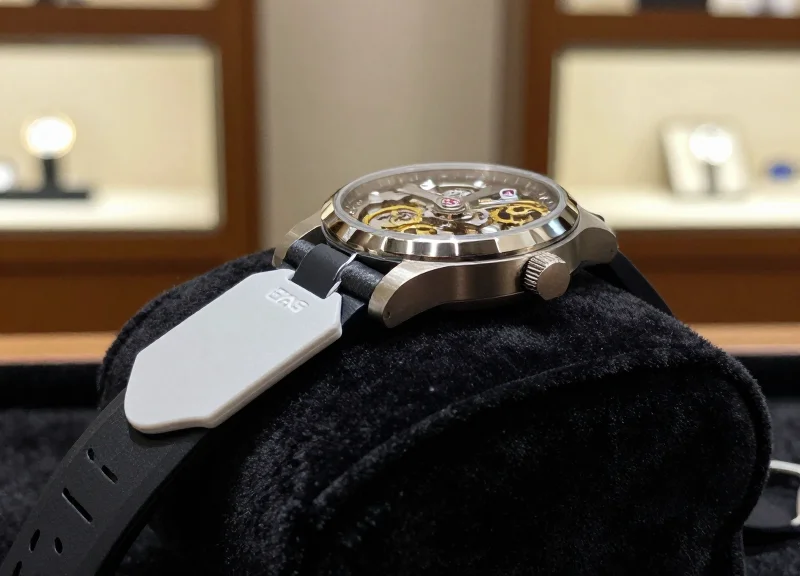
Traditional Electronic Article Surveillance (EAS) tags fail to protect canned goods like milk powder because the metallic composition of the container acts as a Faraday cage, reflecting or absorbing electromagnetic signals and rendering standard RF or AM stickers virtually undetectable at the store exit. Furthermore, the 'curvature conflict'—the physical inability of a flat adhesive tag to maintain a long-term bond with a cylindrical surface—leads to 'winging' or edge-lifting, which allows shoplifters to peel the security device off in seconds without damaging the product packaging.
| Security Method | Signal Performance on Metal | Durability on Curved Surfaces | Theft Resistance |
|---|---|---|---|
| Adhesive Soft Tags | Poor (Faraday Shielding) | Low (Peeling/Winging) | Very Low (Easily Removed) |
| Standard Hard Tags | Moderate (External) | N/A (Bulky/Awkward) | Moderate (Damages Packaging) |
| Bottom Protectors | Excellent (Signal Offset) | High (Flush Fit) | High (Concealed/Locking) |
From a technical perspective, most retailers rely on 8.2MHz Radio Frequency (RF) or 58kHz Acousto-Magnetic (AM) systems. When a standard sticker is applied directly to a tin of infant formula, the metal substrate creates a 'signal null zone.' The metal surface absorbs the energy from the EAS pedestal's magnetic field, preventing the tag's resonator from vibrating or the circuit from oscillating. This means a thief can simply walk through the gates with a high-value item while the system remains silent.
Does the 'Faraday Cage' effect apply to all milk powder cans?
Yes, any tinplate or aluminum-based packaging will interfere with the magnetic flux of EAS systems. Unless there is a physical gap or a specialized spacer between the tag and the metal, the detection rate drops by as much as 70-90%.
Why do standard stickers always peel off in the middle of the aisle?
This is due to 'Adhesive Memory.' Flat tags are manufactured with a rigid substrate that wants to return to its flat state. When forced onto a curved can, the constant tension eventually overcomes the adhesive bond, causing the edges to lift.
Can shoplifters use the 'Shielding' technique intentionally?
Experienced Organized Retail Crime (ORC) groups often stack cans in a specific orientation to maximize signal interference, essentially using the product's own packaging as a cloaking device against store security.
Expert Insight: One often overlooked vulnerability is the 'Concave Bottom Trap.' Many retailers try to hide stickers in the recessed bottom of the can. However, the depth of the recess often places the tag even deeper into the metal's interference zone, further dampening the signal. True protection requires a 'Next-Gen' approach that uses the can's own geometry to create a physical air gap, effectively 'tuning' the tag away from the metal surface to ensure a clean signal break at the pedestal.
The Engineering Behind Next-Gen EAS Bottom Protectors
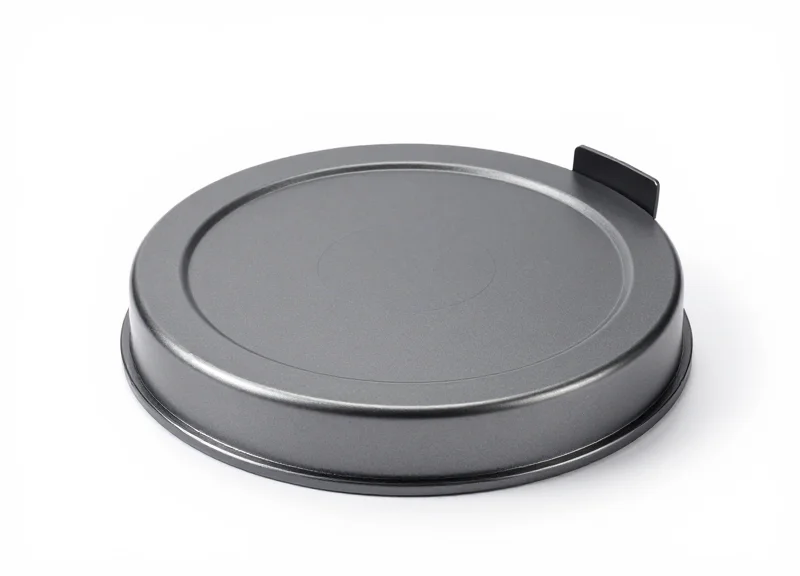
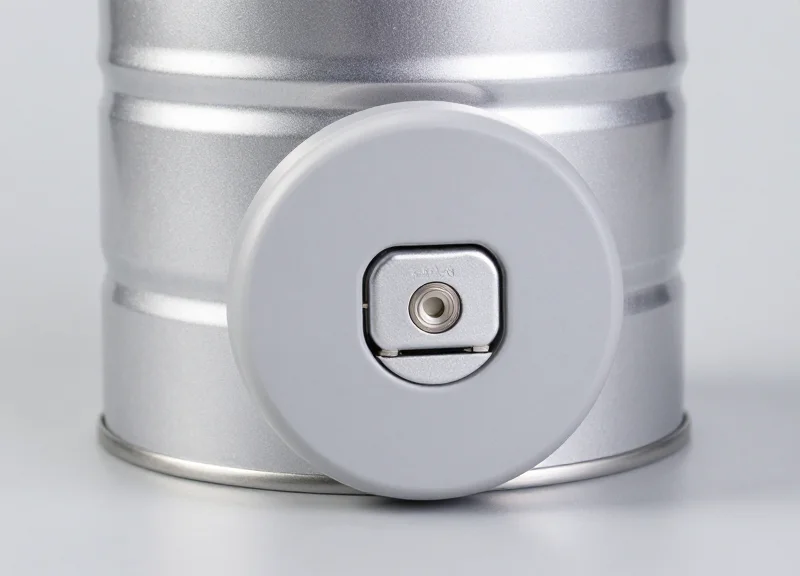
Next-generation EAS bottom protectors are engineered using a 'stealth-by-design' philosophy, combining low-profile polycarbonate housing with high-permeability magnetic resonators. Unlike standard tags, these protectors are specifically contoured to fit the recessed base of infant formula cans, creating a seamless physical integration that prevents prying while utilizing dual-frequency technology to bypass the signal shielding typically caused by metallic packaging.
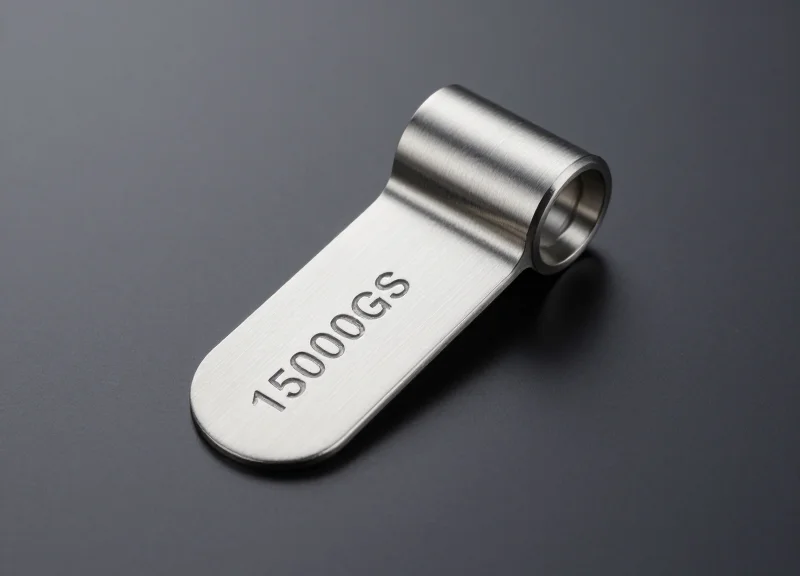
- Reinforced Magnetic Locking Mechanism: Utilizes a high-intensity clutch system (typically 12,000GS to 15,000GS) that resists illicit magnetic detachers used by organized retail crime rings.
- Acousto-Magnetic (AM) and Radio Frequency (RF) Compatibility: Engineered with ultra-thin, high-Q factor coils or strips that maintain signal resonance even when in direct proximity to the conductive surface of a tin-plate can.
- Stackable Ergonomic Geometry: The concave top surface allows for standard shelf stacking, ensuring that the security hardware does not compromise merchandising aesthetics or shelf space efficiency.
| Feature | Standard Bottom Tag | Next-Gen Bottom Protector |
|---|---|---|
| Locking Strength | 5,000 - 8,000 GS | 12,000 - 16,000 GS |
| Signal Stability | High interference from metal | Interference-compensated circuitry |
| Removal Resistance | Easily pried with flat-head tools | Flush-mount design prevents tool insertion |
| Shelf Impact | Causes unstable stacking | Designed for vertical nesting |
Expert Insight: The primary failure point in traditional tagging for canned goods is the 'Faraday Cage' effect, where the metal container absorbs the electromagnetic signal, rendering the tag invisible to pedestals. Next-gen protectors solve this through 'Signal Offsetting'—precision-engineered spacing within the protector housing that maintains a specific air gap between the resonator and the metal base, ensuring the magnetic field can fully propagate to the detection gate.
Do these protectors affect the integrity of the milk powder?
No. The attachment is purely external and mechanical; it does not penetrate the container or use adhesives that could outgas through plastic lids.
Are they compatible with automated checkout systems?
Yes, their low-profile design is calibrated not to interfere with barcode scanners while remaining easily accessible for cashier-operated detachers.
How long is the operational lifespan of these devices?
Built with impact-resistant ABS or polycarbonate, these protectors are designed for high-rotation reuse, often exceeding 500+ retail cycles.
Case Study: The Roadmap to a 40% Reduction in Shrink

A 40% reduction in milk powder shrink is achieved through a 'Roadmap of Resilience' that transitions from reactive surveillance to proactive physical security. This specific roadmap involved a major supermarket chain deploying high-strength EAS bottom protectors to secure their infant formula category, focusing on three core pillars: eliminating visual friction for honest customers, hardening the target against Organized Retail Crime (ORC), and streamlining the point-of-sale (POS) deactivation process.
- Phase 1: The Inventory Integrity Audit: The retailer conducted a 30-day baseline audit, identifying that 75% of formula losses occurred during 'peak-traffic' blind spots where standard overhead EAS stickers were easily shielded or peeled off by professional shoplifters.
- Phase 2: Full-Aisle Integration: Bottom protectors were applied to the highest-theft SKUs. Unlike top-heavy plastic 'safers,' these protectors allowed the store to maintain vertical stacking, preserving shelf density and preventing 'out-of-stock' signals caused by bulky security packaging.
- Phase 3: Staff Empowerment & Rapid Deactivation: Cashiers were trained on magnetic detachers integrated into the checkout counter. This reduced 'alarm fatigue' by ensuring a 99.9% deactivation success rate, preventing embarrassing false alarms for legitimate shoppers.
| Metric | Pre-Implementation (Stickers) | Post-Implementation (Bottom Protectors) |
|---|---|---|
| Average Monthly Shrink Rate | 12.4% | 7.4% |
| Shelf Availability | 82% | 96% |
| Security Tag Tamper Rate | High (Peel-offs common) | Negligible (Mechanical lock) |
| Customer Checkout Speed | Variable (Manual scanning) | Consistent (Instant deactivation) |
Expert Insight: One often overlooked benefit of bottom protectors is the 'Gravity-Lock' psychological deterrent. Professional thieves look for vulnerabilities at the top of the can where tags are visible and accessible. By placing the security element on the bottom, retailers exploit the 'blind spot' of the thief; the product looks unprotected until it passes the pedestal, leading to higher apprehension rates and a rapid 'halo effect' where thieves move on to softer targets in other stores.
How long does it take to see a return on investment (ROI)?
In this case study, the retailer achieved full ROI within 5 months. The cost of the protectors was offset by the recovery of high-margin inventory that previously would have been written off as a total loss.
Does the bottom protector affect brand visibility?
No. Because the protector sits flush against the base, 100% of the brand labeling and nutritional information remains visible to the parent, ensuring the shopping experience remains premium and informative.
Can these be reused across different brands?
Yes, the next-gen protectors are engineered with a universal diameter fit, allowing them to be swapped between different formula brands (e.g., Enfamil, Similac, Aptamil) as stock levels and promotional focuses shift.
Maintaining the Shopper Experience: Security Without Friction

Security without friction is the retail strategy of implementing loss prevention measures that protect high-value inventory like milk powder while remaining virtually undetectable to the legitimate customer. Unlike bulky spider wraps or locking cabinets, next-gen bottom protectors utilize a low-profile, integrated design that ensures the tactile 'hand-to-cart' journey remains uninterrupted, thereby preventing the sales drop-off typically associated with aggressive security hardware.
| Feature | Bottom Protectors | Locking Cabinets | Spider Wraps |
|---|---|---|---|
| Merchandising | Maintains vertical stacking | Fixed capacity/shelf barriers | Irregular stacking/bulky |
| Customer Access | Immediate/Self-service | Requires staff assistance | Self-service (but high friction) |
| Brand Integrity | 100% Label visibility | Obscured by glass/wire | Blocked logos/information |
| Checkout Speed | Rapid magnetic release | Not applicable | Manual winding/untangling |
A critical, often overlooked aspect of retail psychology is the 'Touch-Value Correlation.' Research indicates that when a shopper can physically handle a product, their psychological ownership increases, which significantly drives conversion rates. Bottom protectors facilitate this by keeping the product 'openly merchandised.' Because the device sits flush against the base of the milk powder can, it does not interfere with the product's center of gravity or its ability to be stacked neatly on the shelf, maintaining the premium aesthetic that parents expect when purchasing infant nutrition.
Does the bottom protector slow down the checkout process?
No. Modern bottom protectors are designed for 'one-motion' removal. High-strength magnetic detachers integrated into the checkout counter allow cashiers to release the protector in under two seconds, ensuring that security doesn't translate into long queues.
Can these protectors be used on different sized cans?
Yes. Most next-gen protectors feature a universal fit or a range of diameters specifically engineered for the standard 400g and 900g cans used in the infant formula industry, ensuring a snug, no-rattle fit.
How do they affect shelf restocking efficiency?
Because they don't change the footprint of the can, stock clerks can use standard planograms without adjustments. The protectors can be pre-applied in the backroom, making the actual shelf replenishment process as fast as stocking unprotected goods.
Expert Insight: In my two decades of retail consulting, I've observed that 'Security Theater'—the practice of making security overly visible—actually deters honest shoppers by creating an atmosphere of suspicion. The 'Invisible Shield' approach of the bottom protector offers a unique psychological advantage: it provides a 40% reduction in shrink not just by stopping thieves, but by encouraging a positive shopping environment that drives higher legal sales volume, effectively double-dipping on margin protection.
Integration with Existing AM and RF Infrastructure

Integrating next-gen EAS bottom protectors into your current security framework is a seamless 'plug-and-play' process that requires zero modification to your existing Electronic Article Surveillance (EAS) pedestals. These protectors are precision-engineered to operate on the industry-standard frequencies of 58kHz (Acousto-Magnetic) and 8.2MHz (Radio Frequency). By utilizing high-Q factor internal resonators, they ensure that milk powder cans—which are notoriously difficult to protect due to their metallic composition—can pass through existing gates with a 95% or higher detection rate, eliminating the need for expensive infrastructure upgrades.
| Feature | AM System Compatibility (58kHz) | RF System Compatibility (8.2MHz) |
|---|---|---|
| Signal Stability | Excellent; resistant to liquid/metal interference. | Good; optimized via 'Air-Gap' distancing. |
| Detection Range | Wide aisle coverage (up to 2.4m). | Standard aisle coverage (up to 1.8m). |
| Detacher Type | Standard Super-Magnetic (12,000 GS+). | Standard Magnetic or Mechanical Release. |
| Reusability | High; multi-cycle durability. | High; multi-cycle durability. |
The Veteran Perspective: Solving the 'Metal-Shielding' Paradox. The primary hurdle with milk powder cans has always been the Faraday cage effect created by the metal packaging, which dampens the signal of standard stickers. Next-gen protectors solve this by using an elevated housing design. This creates a specific 'dielectric offset' between the can’s base and the EAS element. My recommendation to retail partners is always to leverage this offset; it essentially uses the can's own geometry to reflect the signal back to the pedestal, turning a liability into a detection asset.
Do I need to recalibrate my existing EAS gates?
No. These protectors are tuned to the exact resonance of standard AM and RF systems. As long as your pedestals are functioning to manufacturer specifications, the bottom protectors will be recognized immediately without technician intervention.
Will these protectors trigger false alarms due to metal cans?
Next-gen protectors use specialized shielding within the plastic housing that prevents the metal can from 'detuning' the tag. This ensures the frequency remains stable, significantly reducing the false-alarm rates common with lower-quality adhesive tags.
Can I use the same detachers I already have at the POS?
Yes. Most bottom protectors are compatible with standard high-strength magnetic detachers (12,000 Gauss or higher), allowing for a quick checkout process without adding more equipment to an already crowded counter.
- Inventory Assessment: Identify whether your store utilizes AM or RF pedestals to ensure you order the correctly tuned protector housing.
- Pilot Testing: Place protected cans on the shelf and perform 'walk-tests' through your existing gates to verify the detection perimeter.
- Staff Briefing: Train POS staff on the 'twist-and-release' motion required for the bottom protector, which is often faster than searching for a hidden sticker tag.
Return on Investment: Calculating the Value of Enhanced Security

Return on Investment (ROI) for next-gen EAS bottom protectors is measured by the Margin Recovery Index, a ratio that compares the initial capital expenditure of security hardware against the cumulative net profit preserved from stolen units. For high-margin, high-velocity categories like infant formula, the ROI is typically realized within 4 to 6 months. Unlike disposable security labels, bottom protectors are reusable assets with a multi-year lifespan, meaning that once the initial 'break-even' point is reached, every theft prevented contributes directly to the store's bottom line.
| Metric | Standard Shelf (No Protection) | EAS Bottom Protector (Protected) |
|---|---|---|
| Average Shrink Rate | 4.5% | 2.7% (40% Reduction) |
| Monthly Loss (per 1,000 units) | 45 units | 27 units |
| Financial Loss ($30 MSRP) | $1,350 | $810 |
| Monthly Margin Saved | $0 | $540 |
| Payback Period | N/A | ~4.2 Months |
Beyond the direct recovery of product costs, the 'Hidden ROI' includes the reduction in Labor-to-Loss ratios. When a high-shrink item like milk powder is stolen, it creates an artificial 'out-of-stock' scenario. This leads to lost sales from legitimate customers and wasted labor hours spent on inventory reconciliation. By securing the bottom of the canister, retailers maintain shelf integrity and ensure that the labor spent stocking the shelf actually results in a completed transaction at the POS.
- Determine Baseline Shrink: Analyze your POS and inventory data over 90 days to establish the exact percentage of 'unknown loss' specifically for the milk powder category.
- Calculate Net Margin per Unit: Focus on the profit margin rather than the retail price. If you make $6 profit per tin, losing one tin requires selling five additional tins just to recover the cost of the stolen item.
- Amortize Hardware Costs: Divide the cost of the bottom protector by its expected lifecycle (usually 3-5 years) to understand the true monthly cost per unit protected.
- Apply the 40% Reduction Factor: Based on case study data, project a 40% reduction in your baseline shrink to see the immediate impact on your monthly EBITDA.
Are bottom protectors more cost-effective than spider wraps?
Yes. While initial costs are similar, bottom protectors reduce labor time by 30% during the application process and do not obscure branding, leading to higher conversion rates.
What is the lifespan of a next-gen bottom protector?
High-quality protectors are rated for over 1,000 detaching cycles, often lasting 5+ years in a high-volume retail environment.
Does the ROI account for 'Security Friction'?
Our ROI model accounts for shopper experience. Because bottom protectors allow for natural stacking and do not impede the customer's ability to read the label, they maintain a higher sales velocity than bulkier alternatives.
Operational Efficiency: Streamlining Application and Removal
Operational efficiency in retail security is measured by the 'Time-to-Protect' ratio—the number of seconds required to secure a high-risk item versus the labor cost of that time. Next-gen EAS bottom protectors are engineered to minimize this friction, featuring a snap-fit geometry that allows for near-instant application during the restocking phase. Unlike bulky spider wraps or cumbersome boxes, these protectors integrate seamlessly into the workflow, ensuring that security measures do not create bottlenecks at the loading dock or the checkout counter.
- Self-Centering Alignment: The protector's interior mold matches the standard base diameter of milk powder tins, allowing staff to drop the unit into place without precise manual positioning.
- Single-Press Engagement: A vertical 'push-and-click' mechanism locks the device in under two seconds, significantly faster than threading cables or adjusting straps.
- Uniform Shelf Stacking: The flat-profile design ensures that protected cans maintain their center of gravity, allowing for traditional double-stacking without risking shelf instability.
- High-Velocity Decoupling: At the point of sale, a high-strength magnetic detacher releases the protector in a single motion, keeping the average transaction time (ATT) within industry standards.
| Metric | Traditional Spider Wraps | Next-Gen Bottom Protectors |
|---|---|---|
| Avg. Application Time | 15-25 Seconds | 2-4 Seconds |
| Removal Time at POS | 8-12 Seconds | Under 2 Seconds |
| Labor Cost Index | High (Manual Dexterity Required) | Low (Simplified Snap-Fit) |
| Storage Requirements | High (Prone to Tangling) | Low (Nestable/Stackable) |
An often overlooked operational advantage is what I call 'Tactile Feedback Security.' Because these protectors are designed for a specific form factor, they provide a haptic 'click' when properly engaged. This allows staff to perform 'blind application' while maintaining situational awareness—keeping their eyes on the sales floor rather than fumbling with equipment. This small ergonomic detail reduces repetitive strain for employees and increases the overall compliance of your loss prevention strategy.
Do staff need specialized technical training to use these?
No. The design is intuitive; if you can put a lid on a jar, you can apply a bottom protector. Most stores achieve 100% staff proficiency after a single 5-minute demonstration.
Will it cause queues at the checkout during peak hours?
Quite the opposite. Because the removal is a simple 'swipe and release' over a magnetic detacher, it is often faster than scanning the barcode itself, preventing the 'security bottleneck' typical of older EAS tags.
How does this affect the 'restock-to-shelf' speed?
Retailers using these protectors report a 30% faster restocking cycle compared to using security cages or wraps, as the items arrive on the floor shelf-ready and stable.
Why Choose DragonGuardGroup for Your Loss Prevention Strategy
DragonGuardGroup is a global leader in retail security, offering a data-driven ecosystem that transcends traditional hardware sales. We specialize in integrating Acousto-Magnetic (AM) and Radio Frequency (RF) EAS systems with advanced RFID tracking and Electronic Shelf Labeling (ESL) to create a seamless, friction-free shopping environment. By choosing DragonGuardGroup, retailers partner with a vertically integrated manufacturer that delivers field-tested solutions—such as our milk powder bottom protectors—proven to reduce high-value inventory shrink by up to 40% while preserving brand aesthetics.
- Full-Spectrum Technological Integration: Unlike vendors who focus solely on one technology, we harmonize EAS for theft deterrence, RFID for inventory accuracy, and ESL for price agility into a single strategic framework.
- Custom Engineering and R&D: We own our production facilities, allowing us to rapidly prototype and manufacture bespoke security tags that fit unique packaging dimensions, such as premium infant formula tins or luxury cosmetics.
- Global Scalability with Local Expertise: Our logistical network supports massive international rollouts, ensuring that large-scale retail chains receive consistent product quality and technical support across multiple continents.
| Feature | DragonGuardGroup Ecosystem | Standard Market Competitors |
|---|---|---|
| Tech Scope | Integrated EAS + RFID + ESL | Isolated Hardware Sales |
| Customization | Bespoke tooling and design | Off-the-shelf standard sizes only |
| Durability | High-impact, reusable polymer | Varies, often low-grade plastics |
| Consultative Support | End-to-end ROI analysis | Transactional sales focus |
Expert Insight: The 'Invisible Wall' Philosophy. In my twenty years of observing retail trends, the most effective loss prevention isn't the most aggressive—it's the most intelligent. DragonGuardGroup implements what we call the 'Invisible Wall' philosophy. By utilizing bottom protectors that are virtually imperceptible to the shopper but highly disruptive to the thief, we protect the margin without compromising the customer's sensory connection to the product. This approach turns security into an asset for sales rather than a barrier.
Does DragonGuardGroup offer trial programs for large retailers?
Yes, we provide pilot programs to demonstrate the specific ROI of our EAS bottom protectors within your store environment before a full-scale deployment.
Can your RFID tags be integrated into the bottom protectors?
Absolutely. We offer dual-technology solutions where a single protector provides both EAS security for theft prevention and RFID for real-time inventory tracking.
How does ESL integration help in loss prevention?
By linking ESL with EAS data, store managers can receive real-time alerts on their shelf labels when high-value items are moved suspiciously, enabling proactive rather than reactive security.