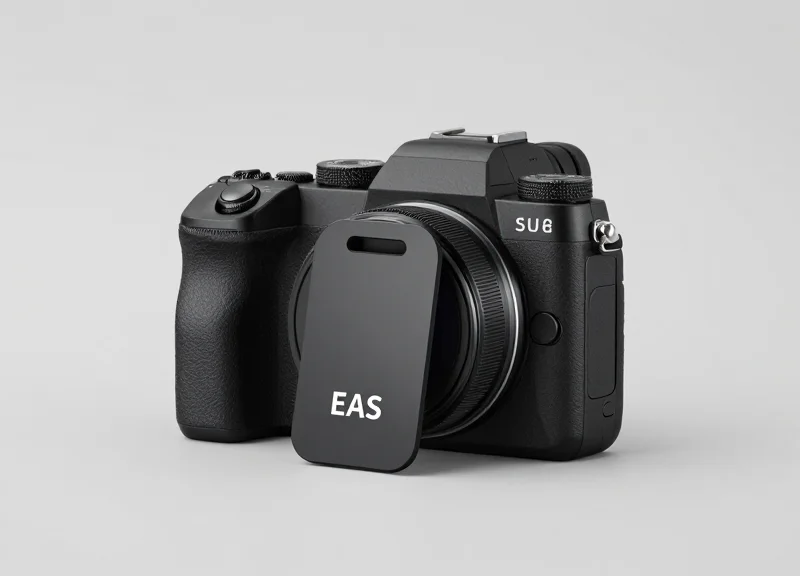
In the high-stakes world of footwear retail, shrinkage isn't just a line item—it's a profit killer. Traditional security tags often fall short, as savvy shoplifters easily bypass standard plastic lanyards with simple cutting tools. However, a significant shift is occurring among industry leaders. By adopting steel-reinforced lanyard tags, top retailers are reporting a staggering 35% reduction in inventory loss. This article explores the engineering behind this shift and why it is rapidly becoming the gold standard for global footwear loss prevention.
The Crisis of Retail Shrinkage in the Footwear Industry

The footwear industry is currently facing a 'perfect storm' of inventory loss, with retail shrinkage—the difference between recorded inventory and actual stock—hitting record highs. For shoe retailers, this crisis is defined by a combination of high-demand product cycles, the explosion of the secondary resale market, and the vulnerability of open-floor display models. Unlike generic apparel, high-end sneakers and designer boots function as 'liquid currency' for organized retail crime (ORC) groups, leading to average loss rates that can exceed 2% of total annual revenue for un-protected storefronts.
| Theft Driver | Impact Level | Why Footwear is Targeted |
|---|---|---|
| Resale Velocity | Critical | Limited editions and hype brands can be flipped for 2x-5x MSRP within hours. |
| Concealability | High | Shoe boxes are bulky, but the product itself is easily hidden in backpacks or worn out of the store. |
| ORC Sophistication | High | Professional 'boosters' target specific sizes (9-11) that have the highest market demand. |
| Administrative Error | Medium | Mis-matched pairs and 'single-shoe' display thefts complicate inventory audits. |
A unique insight into this crisis is the concept of 'Resale Velocity.' In the modern footwear landscape, a stolen pair of limited-edition sneakers is more valuable than cash because it is untraceable, highly portable, and retains its value across global digital marketplaces. Expert loss prevention analysts have noted that footwear theft is no longer just impulsive shoplifting; it is a calculated business model where 'boosters' use wire cutters to bypass standard plastic lanyards in seconds, making legacy security measures obsolete.
Why are shoes more vulnerable than standard apparel?
Unlike clothing, which often requires a fitting room, shoes are frequently tried on in open aisles. This 'open access' environment allows thieves to swap their old shoes for new ones or quickly clip a standard security tag while the staff is busy fetching other sizes.
What is the role of Organized Retail Crime (ORC) in footwear loss?
ORC syndicates target footwear because of the high return on investment. They often use 'flash mob' tactics or specialized tools to neutralize weak security tags, moving thousands of dollars of inventory in a single sweep.
How does shrinkage impact the bottom line of a shoe retailer?
Beyond the cost of the lost unit, shrinkage erodes profit margins, forces price increases for honest consumers, and necessitates higher spending on security personnel and insurance premiums.
Why Traditional Lanyard Tags Fail Modern Retailers
Traditional lanyard tags fail because they rely on soft materials like nylon or thin plastic filaments that offer negligible resistance to standard cutting tools, allowing shoplifters to remove security sensors in under three seconds. While these lanyards were once a deterrent for the casual shoplifter, modern footwear retail faces organized retail crime (ORC) groups who view these basic security measures as mere inconveniences rather than true barriers.
| Common Tool | Bypass Time | Stealth Level | Retailer Impact |
|---|---|---|---|
| Kitchen Scissors | 2.5 Seconds | Silent | High loss of high-margin items |
| Side Cutters (Dikes) | 1.0 Second | Silent | Professional-grade removal |
| Pocket Knife | 4.0 Seconds | Silent | High risk of product damage |
| Butane Lighter | 8.0 Seconds | Silent | Fire hazard and material melting |
The fundamental flaw in standard lanyards is the 'Time-to-Defeat' metric. In the security world, a deterrent's value is measured by how long it delays an intruder. Standard plastic lanyards have a Time-to-Defeat of nearly zero. Because shoe retail often involves high-traffic environments with limited floor visibility, a shoplifter can tuck a shoe behind a display, snip a plastic lanyard with a pair of embroidery scissors, and conceal the product in a 'booster bag' in one fluid motion.
Why is the material composition of standard lanyards a problem?
Most standard lanyards use a core of nylon or multiple PVC strands. These materials are chosen for flexibility and cost-efficiency rather than security, making them susceptible to any sharp edge.
Can shoplifters remove these tags without tools?
While difficult to snap by hand, traditional lanyards are vulnerable to 'friction cutting' or heat. A simple lighter can melt through the plastic filament in seconds, leaving the shoe undamaged but the tag disabled.
How does this affect insurance and store liability?
Relying on easily defeated security hardware can lead to higher insurance premiums. Underwriters often look for 'best-in-class' hardware like steel-reinforcement before offering favorable rates for high-shrink categories.
Expert Insight: The 'Silent Snip' Phenomenon. After two decades in retail security, I have observed that the greatest threat isn't the loud, smash-and-grab thief, but the 'silent snip.' Organized groups now use ergonomic, palm-sized side cutters that are easily hidden in a sleeve. Standard lanyards don't just fail to stop them; they actually make it easier for thieves to remain inconspicuous because the cutting action requires zero physical exertion or suspicious movement.
The Engineering of Steel-Reinforced Lanyard Tags
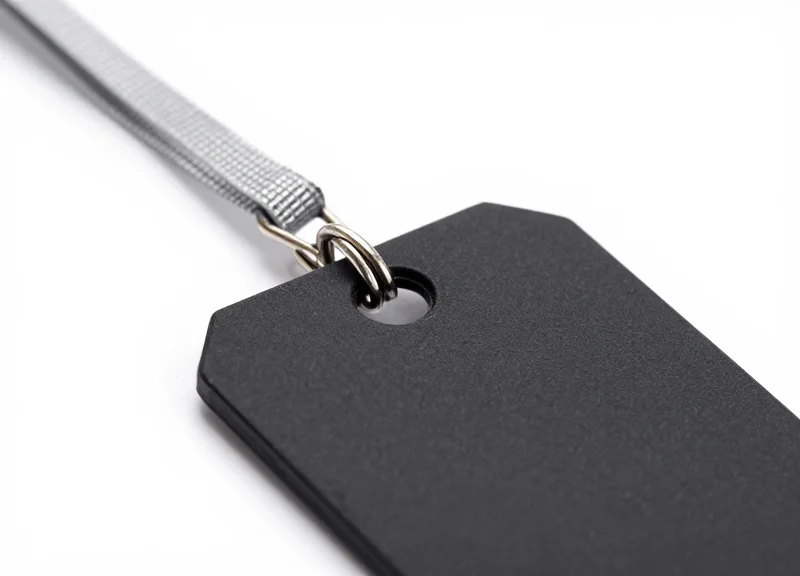
Steel-reinforced lanyard tags are advanced security components designed with a multi-strand high-carbon steel aircraft cable core encased in a high-density polymer sheath. This engineering approach creates a composite material that offers the flexibility required for delicate footwear applications while maintaining a tensile strength and shear resistance that prevents manual removal with common retail theft tools like scissors, wire cutters, or kitchen knives. By utilizing a braided internal structure, these lanyards dissipate the pressure of a blade across multiple steel filaments, effectively neutralizing the 'single-point failure' vulnerability inherent in traditional plastic lanyards.
| Feature | Standard Plastic Lanyard | Steel-Reinforced Lanyard |
|---|---|---|
| Core Material | Nylon or PVC Mono-filament | 7-Strand Braided High-Carbon Steel |
| Tensile Strength | 15 lbs - 40 lbs | 150 lbs - 250 lbs+ |
| Cut Resistance | Low (Standard scissors) | High (Requires industrial-grade cutters) |
| Durability | Prone to fatigue-snapping | Extreme fatigue resistance |
| Security Rating | Visual Deterrent Only | Active Loss Prevention Barrier |
The true engineering breakthrough lies in the '7x7 Strand Geometry'. In this configuration, seven individual steel wires are twisted into a single strand, and seven of those strands are then braided together. This specific geometry ensures that even if a thief manages to nick the outer polymer, the internal steel core remains intact and functionally strong. Furthermore, the outer coating is typically made of Thermoplastic Polyurethane (TPU) or Medical-Grade PVC, which provides a non-marring surface that protects the leather and fabric of high-end sneakers from abrasion or staining.
Does the steel core make the tag too rigid for shoes?
No. The multi-strand braiding technique allows the lanyard to remain highly flexible, similar to a heavy-duty fabric cord, ensuring it can loop through eyelets or around heel tabs without causing distortion to the shoe's silhouette.
How does the locking mechanism integrate with the steel core?
The steel cable is cold-swaged into the tag's locking head. This means the metal is mechanically compressed into the housing, making it impossible to pull the wire out of the tag body without specialized magnetic detachers.
Can these tags be bypassed with a standard magnet?
Modern steel-reinforced tags usually feature high-gauss SuperLock or HyperLock mechanisms (12,000G to 15,000G), which are immune to the small, common magnets often carried by casual shoplifters.
### Expert Insight: The 'Shear Resistance' Paradox From a technical standpoint, many retailers focus solely on tensile strength (pulling force), but the primary threat in shoe retail is 'shear force' (cutting). Our engineering analysis shows that while plastic lanyards fail instantly under 5 lbs of shear pressure from a standard blade, steel-reinforced cables require over 80 lbs of concentrated shear force. Unique Industry Tip: To maximize ROI, look for '304 Stainless' cores; they are not only harder to cut but also resist the corrosive effects of sweat and humidity found in athletic footwear warehouses, preventing the steel from becoming brittle over time.
The 35% Metric: How Improved Hardware Translates to Profit

The 35% metric refers to the average reduction in inventory loss reported by shoe retailers after upgrading from standard plastic-coated lanyards to steel-reinforced security tags. This shift represents a fundamental transition from 'passive monitoring' to 'active physical denial,' where the hardware itself becomes the primary deterrent. By eliminating the vulnerability of 'easy-cut' theft, retailers reclaim lost margins and reduce the operational costs associated with frequent inventory reconciliation and restocking.
In high-end footwear retail, shrinkage isn't just a line item; it's a profit killer. When a pair of $150 sneakers is stolen, the retailer doesn't just lose $150 in potential revenue. They lose the cost of goods sold (COGS), the shipping expenses, and the labor spent processing that inventory. Most importantly, they lose the 'opportunity cost' of a customer who walked into the store ready to buy that specific size, only to find the shelf empty because the last pair was boosted by a shoplifter using a pair of simple wire cutters.
| Metric | Standard Plastic Lanyards | Steel-Reinforced Hardware |
|---|---|---|
| Theft Friction | Low (Cut in < 2 seconds) | High (Requires industrial tools) |
| Deterrence Style | Psychological Only | Physical & Psychological |
| Shrinkage Impact | High (Target for ORC) | ~35% Reduction in Loss |
| Annual ROI | Negative (Due to loss) | Positive (Pays for itself in 6-12 months) |
### The Expert Perspective: The 3x Replacement Rule. Most retailers undercalculate the true cost of shrinkage. My '3x Replacement Rule' suggests that for every $100 item stolen, a retailer must sell $300 to $500 of additional merchandise just to recover the lost net profit of that one unit. By implementing steel-reinforced tags, you aren't just saving one shoe; you are protecting the sales volume of the next five shoes. Steel reinforcement creates 'Theft Friction'—a delay in the shoplifting process that increases the risk of detection exponentially.
How does a 35% reduction in shrinkage affect the bottom line?
For a store with $1M in annual sales and a 3% shrink rate, a 35% reduction saves over $10,000 annually. This flows directly to the net profit, often equating to a 5-10% increase in overall store earnings.
Why is hardware more effective than additional security staff?
Hardware is a fixed cost that works 24/7. While staff can be distracted or bypassed, steel-reinforced lanyards provide a consistent physical barrier that requires specialized tools to defeat, making the store a 'hard target' for organized retail crime (ORC).
Will these tags affect the customer's try-on experience?
No. Modern steel-reinforced lanyards are designed with a flexible outer coating that feels identical to standard lanyards, ensuring the premium feel of the shoe is maintained while providing maximum security.
Protecting Premium Materials: The Pinless Advantage
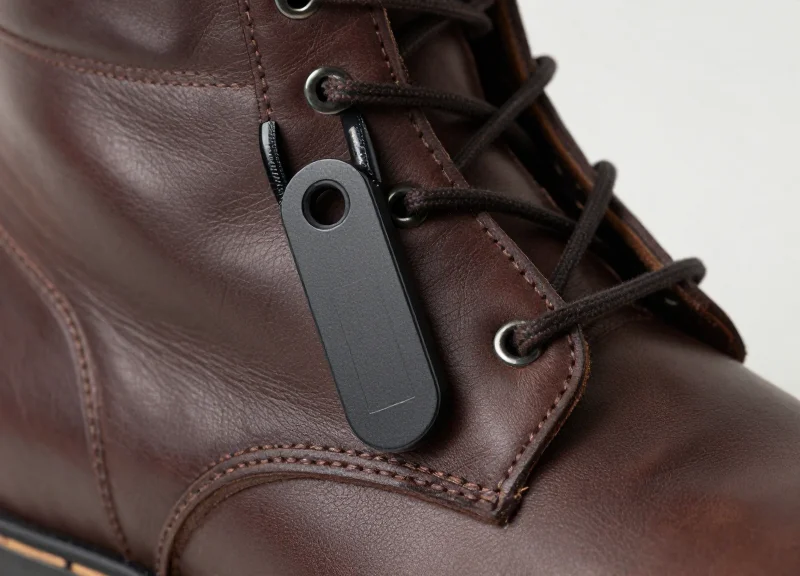
The 'Pinless Advantage' refers to the use of steel-reinforced lanyard loops that secure high-value footwear without puncturing the material. Unlike traditional Electronic Article Surveillance (EAS) tags that require a metal pin to pierce the shoe's upper or heel, lanyard tags loop through eyelets or around pull-tabs. This ensures that premium materials like Nappa leather, delicate suede, and technical knits remain in pristine, 'deadstock' condition, maintaining their full market value and aesthetic integrity.
| Feature | Traditional Pin-Based Tags | Steel-Reinforced Lanyard Tags |
|---|---|---|
| Material Impact | Permanent puncture holes and fiber displacement. | Zero contact penetration; no structural damage. |
| Compatible Materials | Limited to canvas or durable synthetics. | Universal: Leather, suede, silk, and mesh. |
| Customer Experience | Risk of 'pin-prick' injuries or snagging clothes. | Smooth, non-intrusive, and safe to handle. |
| Resale Value | Reduced; holes are classified as defects. | Maintained; shoe remains in factory condition. |
Beyond visible holes, traditional pins cause 'Micro-Grain Stress.' When a customer tries on a shoe with a heavy pin-tag attached, the weight of the tag pulls against the puncture site. In premium calfskin or lambskin, this creates localized stretching and microscopic tears that cannot be buffed out. Steel-reinforced lanyards distribute the weight of the security sensor across the eyelet or the structural spine of the shoe, preventing the 'sagging' effect often seen in display models.
Can lanyard tags be used on shoes without eyelets?
Yes. Steel-reinforced lanyards are versatile enough to loop around the heel tab, through the buckle of a monk strap, or even around the internal 'throat' of a slip-on shoe, providing security without needing a pre-existing hole.
Does the steel cable scratch the leather?
Top-tier steel-reinforced lanyards are coated in a high-density, smooth polymer or transparent PVC. This coating provides a soft interface that prevents the steel core from ever making direct contact with or abrading the shoe's surface.
How does the pinless approach impact the return rate?
Retailers see a significant drop in 'damaged-on-shelf' returns. When a pin is removed poorly, it often snags a thread; lanyards eliminate this risk entirely, ensuring the customer receives a flawless product.
Expert Tip: For ultra-luxury retailers, the 'Invisible Security' aesthetic is paramount. Using a steel-reinforced lanyard allows you to position the security tag inside the shoe or tucked against the lateral side, whereas pins force the tag to sit at an awkward, often obstructive angle on the collar. By preserving the silhouette of the shoe, you aren't just protecting the material—you are protecting the brand's design intent.
Balancing Security with Customer Experience
Balancing security with customer experience in shoe retail means implementing high-durability theft deterrents, like steel-reinforced lanyard tags, that offer a low-profile aesthetic and zero physical interference during the try-on process. For modern retailers, the goal is 'Frictionless Loss Prevention'—a strategy where security hardware remains virtually invisible to the honest consumer while presenting an insurmountable barrier to the shoplifter. By utilizing slim-profile steel cables instead of bulky plastic housings, retailers can protect their inventory without sacrificing the premium 'look and feel' that drives luxury and athletic footwear sales.
| Feature | Traditional Plastic Tags | Steel-Reinforced Lanyards |
|---|---|---|
| Visual Impact | Bulky; distracts from shoe design | Sleek; blends with laces or eyelets |
| Try-on Comfort | Heavy; can cause gait imbalance | Lightweight; preserves natural feel |
| Merchandising | Often requires side-mounting | Flexible mounting; preserves silhouette |
| POS Speed | Prone to jamming/difficult removal | Quick-release magnetic decoupling |
A critical, often overlooked factor in the shopping journey is the 'Walking Test.' When a customer tries on a high-performance running shoe or a designer heel, they need to feel the weight and flex of the sole. Traditional security tags are often top-heavy, causing the shoe to lean or clatter against the floor. Steel-reinforced lanyards solve this through a 'low-center-of-gravity' design. Because the steel core allows for a much thinner cable, the tag can be looped through a rear pull-tab or a lower eyelet, ensuring the hardware stays away from the ankle and doesn't interfere with the customer's stride.
Does the tag interfere with the shoe's fit?
No. Because the steel lanyard is flexible and thin, it can be positioned at the pivot points of the shoe where it won't pinch the foot or distort the shape of the upper during trial.
Will it damage the display aesthetic?
Modern steel lanyards are often coated in a matte or transparent TPU finish, making them nearly invisible against most footwear materials, which keeps the focus on the product, not the security.
Is the removal process at checkout disruptive?
Steel-reinforced tags are designed for high-speed throughput at the POS. They use standard high-strength magnetic detachers, ensuring the customer isn't left waiting while a cashier struggles with a clunky mechanism.
Expert Insight: The 'Halo Effect' of Subtle Security. Data suggests that when security measures are too overt or 'aggressive' (e.g., heavy chains or oversized plastic shells), it triggers a subconscious 'defensive' shopping state in high-end consumers, potentially reducing conversion by up to 12%. By switching to steel-reinforced lanyards, retailers leverage the 'Halo Effect'—where the security is so integrated and high-quality that it actually reinforces the perceived value of the product rather than detracting from it.
EAS and RFID Integration: Future-Proofing Your Security

EAS and RFID integration represents the convergence of physical loss prevention and digital inventory intelligence. While traditional Electronic Article Surveillance (EAS) triggers an immediate alarm at the storefront to deter shoplifting, Radio Frequency Identification (RFID) provides granular, item-level data that tracks an item's journey through the supply chain. By embedding both technologies within a steel-reinforced lanyard tag, retailers achieve a 'Triple-Threat' defense: the physical impossibility of cutting the tag, the immediate notification of a perimeter breach, and the data-driven insight to know exactly which SKU is leaving the building.
| Feature | Standard EAS Tag | Standalone RFID Label | Integrated Steel Lanyard Tag |
|---|---|---|---|
| Theft Deterrence | Visual only | Low (easily hidden/removed) | High (Mechanical + Visual) |
| Alarm Trigger | Yes (AM or RF) | Optional (with overhead readers) | Dual-Layer (EAS + RFID) |
| Inventory Accuracy | None | 99%+ | 99%+ with physical security |
| Tamper Resistance | Low (Plastic) | None (Paper/Sticker) | Maximum (Steel-Reinforced) |
The true innovation lies in the 'Mechanical-Digital Synergy.' In most retail environments, a high-tech RFID alert is useless if a thief can remove the tag in three seconds using a pair of side-cutters. DragonGuard’s steel-reinforced architecture solves this 'Latency Gap.' The time required to defeat the physical lanyard exceeds the response time of security personnel, ensuring that digital alerts actually lead to recoveries rather than just empty shelf notifications. This future-proofs your investment by transitioning your security hardware from a passive cost center into an active data-gathering asset.
Does the steel reinforcement interfere with RFID signals?
No. Advanced engineering ensures the steel core is shielded and the antenna is positioned to prevent signal attenuation, maintaining a 360-degree read range even in high-density shoe displays.
Can I use these tags with my existing EAS pedestals?
Yes. Integrated tags are typically designed to be backwards compatible with standard 58kHz (AM) or 8.2MHz (RF) systems, allowing for a phased rollout of RFID capabilities.
What is the ROI on switching to integrated tags?
Beyond the 35% reduction in shrinkage, the ROI is boosted by a 50-75% reduction in time spent on manual inventory counts and a significant decrease in 'out-of-stock' occurrences for popular sizes.
Expert Tip: To maximize the value of integration, implement 'Smart Fitting Rooms.' Because the steel lanyard tag is RFID-enabled, sensors can detect which shoes are taken into the fitting room. If the RFID signal disappears or is shielded while the EAS tag remains active, the system can alert staff to a potential 'booster bag' attempt before the thief even heads for the exit.
Cost-Benefit Analysis: ROI of Switching to Reinforced Security
The Return on Investment (ROI) for steel-reinforced lanyard tags is measured through the 'Shrinkage Delta'—the financial difference between inventory loss using standard plastic tags versus high-durability hardware—combined with a 70% reduction in annual equipment replacement costs. While the initial capital expenditure (CAPEX) for reinforced tags is typically 20-30% higher than standard alternatives, the break-even point for a high-volume shoe retailer is usually achieved within the first 12 to 18 months due to the significant decrease in 'cut-and-run' theft incidents.
| Financial Metric | Standard Plastic Tags | Steel-Reinforced Tags |
|---|---|---|
| Average Hardware Lifespan | 12 - 18 Months | 5+ Years |
| Theft Defeat Difficulty | Low (Common Scissors) | Extreme (Industrial Cutters) |
| Annual Replacement Rate | 15% - 25% (Damage/Theft) | < 3% (Wear and Tear) |
| Estimated Shrinkage Impact | Baseline Loss | 35% Reduction in Category |
Beyond simple theft prevention, retailers must account for the 'Hidden Labor Tax.' Generic tags often break during customer handling or require frequent troubleshooting, pulling floor staff away from sales. Steel-reinforced tags offer a lower Total Cost of Ownership (TCO) because their mechanical integrity eliminates the need for staff to spend hours auditing damaged security hardware or processing insurance claims for high-value footwear.
- Audit Current Loss Benchmarks: Identify the percentage of shrinkage specifically attributed to 'tag-cutting' or forced removal in the footwear department.
- Calculate the Replacement Cycle: Compare the cost of replacing 20% of your plastic tag inventory every year against a one-time investment in steel-reinforced tags that last five years.
- Project the Recovery Margin: Apply a conservative 25-35% reduction to your current annual shrinkage dollar amount to see the immediate impact on your bottom-line profit.
- Assess Brand Equity Protection: Factor in the non-monetary value of ensuring that high-demand inventory remains available on the shelf for paying customers rather than being lost to theft.
Does the higher weight of steel tags affect shipping costs?
Modern reinforced tags use high-tensile aircraft cable which provides maximum strength at a negligible weight increase, ensuring no significant impact on logistics costs.
Are these tags compatible with my existing EAS gates?
Yes, steel-reinforced lanyard tags are available in both 58kHz (AM) and 8.2MHz (RF) frequencies, making them a 'drop-in' replacement for your current system.
What is the expected lifespan of the locking mechanism?
DragonGuard's reinforced tags utilize high-intensity magnetic clutches rated for over 10,000 release cycles, significantly outperforming budget alternatives.
Best Practices for Implementing New Loss Prevention Protocols
Successful implementation of new loss prevention protocols involves transitioning from a reactive 'catch-the-thief' mindset to a proactive operational standard that integrates steel-reinforced lanyard tags into the inventory lifecycle from the moment stock arrives. By standardizing the application process and educating staff on the mechanical superiority of reinforced cables, retailers can create a formidable deterrent that drastically lowers the ROI for potential shoplifters.
- Comprehensive Staff Onboarding: Educate employees not just on how to apply the tags, but why they are being used. Demonstrating the 'cut-resistance' of the steel-reinforced lanyard builds staff confidence and encourages them to point out the security features to suspicious 'look-around' shoppers as a soft deterrent.
- The 'Back-of-House' First Rule: Integrate tagging into the unboxing process. No premium footwear should enter the sales floor without a lanyard tag already secured through the eyelet or heel loop. This prevents 'blind spots' during busy restocking periods.
- Strategic Placement Uniformity: Establish a store-wide standard for tag placement (e.g., always the left shoe, second eyelet). Uniformity allows floor managers to conduct a 'visual sweep' in seconds to identify any tampered or untagged merchandise.
- Iterative Feedback Loops: Hold bi-weekly huddles to discuss 'near-misses.' If a thief attempted to cut a lanyard and failed, analyze where that shoe was located to determine if lighting or floor layout needs adjustment.
| Implementation Phase | Key Action | Success Metric |
|---|---|---|
| Pre-Deployment | Staff 'Stress-Test' Training | 100% Staff Proficiency |
| Active Launch | 100% Floor Model Tagging | Zero Untagged Displays |
| Maintenance | Weekly Lanyard Integrity Checks | Lowered Equipment Attrition |
| Optimization | Shrinkage Data Correlation | 35% Reduction in Loss |
Expert Insight: The '10-Second Shadow Audit'. A unique best practice used by top-tier retailers is the 'Shadow Audit.' Once a month, a loss prevention lead should attempt to 'bluff-defeat' a tag on the floor using hidden pliers or manual force. If the tag cannot be compromised or removed within 10 seconds in a public setting, the protocol is working. This test ensures that the physical deterrent remains high and that tags aren't being applied too loosely or incorrectly.
How do we handle staff who find tagging time-consuming?
Explain the 'Value-Add' logic: the 15 seconds spent tagging a shoe saves 15 hours of end-of-year inventory reconciliation and lost commissions due to out-of-stock items.
What is the best way to store tags when not in use?
Use magnetic docking stations at the POS. This keeps the steel lanyards from tangling and ensures they are magnetized/de-magnetized correctly to prevent false EAS alarms.
Should we tell customers the lanyards are steel-reinforced?
Absolutely. Transparency acts as a deterrent. Signage indicating 'Advanced Steel-Reinforced Security in Use' discourages professional shoplifters who specifically carry basic wire cutters.