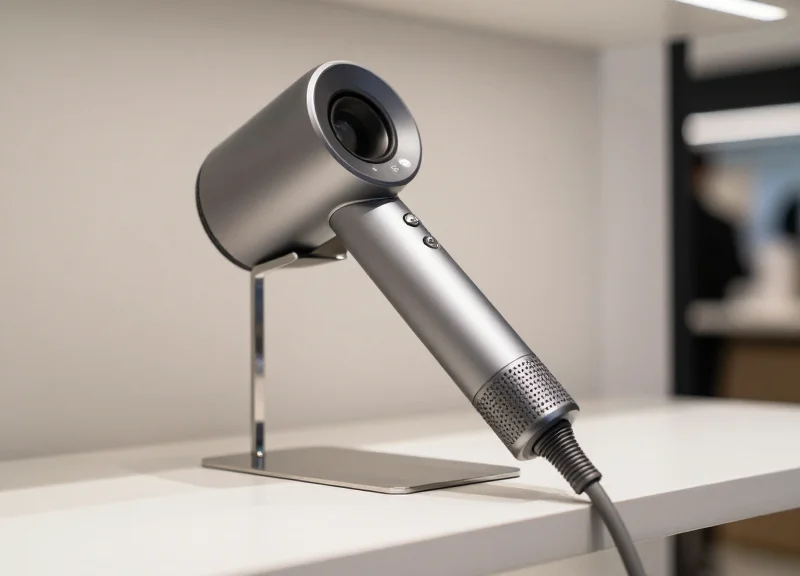
In the high-stakes world of retail beauty, displaying high-end hair stylers is essential for sales, but the ergonomic, irregular shapes of modern curlers and straighteners often lead to a persistent headache: false alarms. These disruptions do more than just irritate shoppers; they desensitize staff to real security threats and damage brand perception. At DragonGuardGroup, we understand that the key to effective loss prevention lies in precision. Properly calibrating your pull-cord recoilers ensures that your merchandise remains secure while providing a fluid, frustration-free experience for your customers.
The Mechanics of Pull-Cord Recoilers and Sensitivity
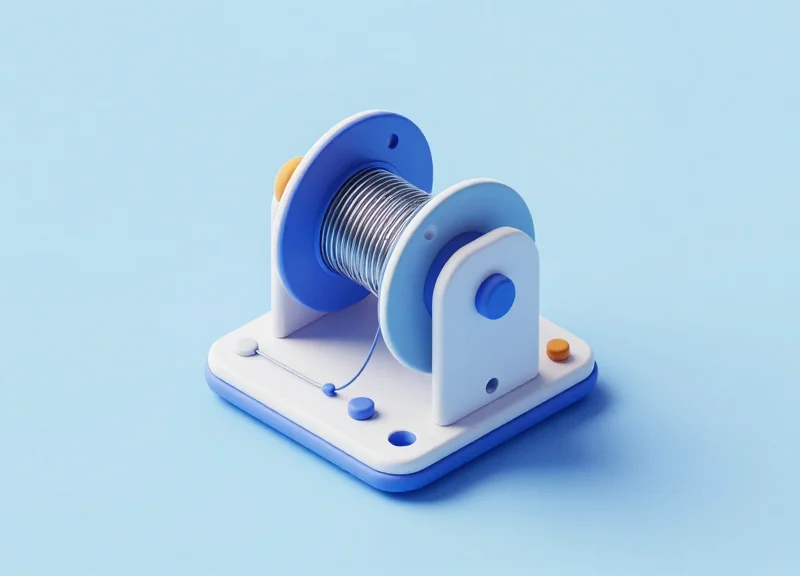
A pull-cord recoiler, also known as a mechanical retractor with electronic security, functions through a dual-mechanism system: a spring-loaded pulley that manages cord storage and a continuous electrical loop that monitors the integrity of the connection. Sensitivity in these devices refers to the 'Tension-to-Signal' threshold—the precise point where the internal sensor detects a change in resistance or a physical break in the circuit. In retail environments, calibration is the process of aligning this threshold with the ergonomic movements of a customer to ensure that high-value hair stylers are both secure and accessible without triggering false alerts.
| Component | Function | Impact on Sensitivity |
|---|---|---|
| Constant-Force Spring | Provides consistent retraction tension. | High tension prevents slack but can cause 'recoil-snap' false alarms. |
| Conductive Steel Cable | Maintains the electrical alarm loop. | Kinks or internal frays increase electrical resistance, causing intermittent alarms. |
| Micro-Switch/Sensor | Detects when the cord is fully retracted or cut. | Determines the 'dead zone' where minor movements won't trigger the system. |
The challenge with irregularly shaped hair stylers—such as conical wands or multi-attachment air wraps—is the 'Asymmetric Drag' they create. Unlike a flat smartphone, these tools have shifting centers of gravity. When a customer rotates a styler, the cord often wraps around the handle or the barrel, creating artificial tension. If the recoiler is set to a high-sensitivity mode, this mechanical drag is misinterpreted by the sensor as an attempted removal or a cord-cut event, leading to the dreaded false alarm.
Expert Insight: The 'Centripetal Slack' Phenomenon. Most technicians assume alarms happen when the cord is pulled too hard. However, my 20 years of experience show that most false alarms on hair stylers occur during the retraction phase. As the cord snaps back into the housing, the sudden deceleration causes a momentary bounce in the electrical contact points. This 'micro-chatter' is what usually trips modern high-sensitivity alarm modules.
Why does my recoiler alarm when the product is just sitting there?
This is typically caused by 'creep.' If the styler is heavy or its shape prevents it from sitting flush in the cradle, gravity slowly pulls the cord out, eventually reaching a trigger point where the sensor thinks it is being manipulated.
How does cord length affect sensitivity?
Longer cords experience more signal attenuation and mechanical friction. Every extra foot of cable adds 'mechanical noise' to the system, making it harder for the sensor to distinguish between a gentle pull and a security breach.
Can temperature affect recoiler mechanics?
Yes. In retail environments near high-heat hair demos, the spring's elasticity can fluctuate, and the cable's coating can become more or less tacky, altering the retraction speed and potentially causing false triggers.
Challenges of Securing Irregularly Shaped Hair Stylers
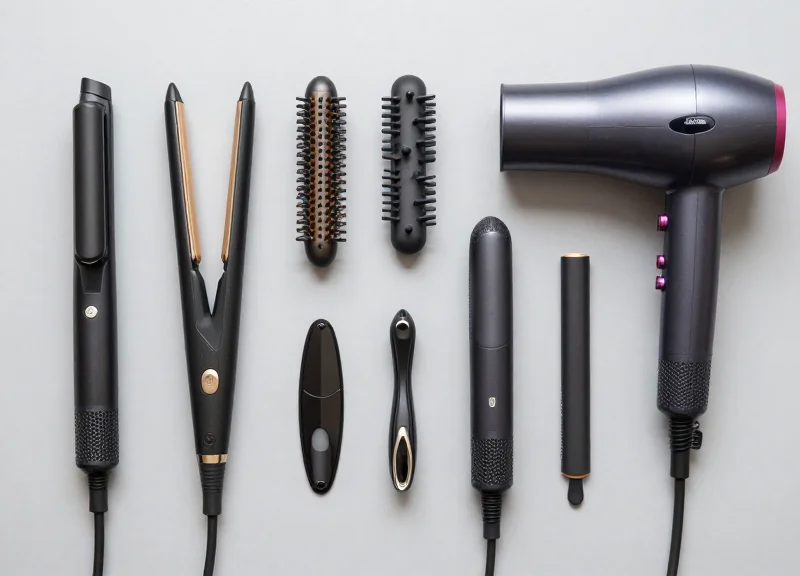
Securing modern hair styling tools presents a unique mechanical hurdle: most pull-cord security systems are designed for symmetrical, flat devices like smartphones or tablets. In contrast, hair stylers feature non-linear barrels, tapered ergonomic handles, and asymmetrical weight distributions that shift the center of gravity during interaction. This geometry-to-tension mismatch causes the pull-cord to exert uneven force across the sensor interface, often leading to 'phantom pulls' where the security system detects a breach despite no actual theft attempt. When the device's physical profile lacks a consistent axis, the recoiler's return force is applied inconsistently, causing the sensor to rattle or tilt.
| Design Feature | Mechanical Challenge | Security Impact |
|---|---|---|
| Conical/Tapered Barrels | Reduced adhesive surface contact area | Sensor displacement or 'creeping' during customer use |
| Top-Heavy Heating Elements | Asymmetrical center of gravity | Increased torque on the return-spring triggering sensitivity |
| 360-Degree Swivel Cords | Rotational torque and cable tangling | Intermittent contact loss with electronic alarm pads |
Why do tapered handles cause more alarms than straight ones?
Tapered designs create a 'wedge effect' where the security lasso or sensor pad naturally slides toward the narrower end of the handle as tension is applied by the recoiler. This gradual movement eventually loosens the physical connection enough to trigger a proximity alarm.
How does tool weight affect recoiler calibration?
Heavy-ended tools like professional blow dryers or weighted-barrel irons create a lever effect. When a customer rotates the tool to inspect it, the pull-cord must overcome significantly more resistance than a standard linear pull, which the system often interprets as a forced removal attempt.
Expert Insight: The 'Fulcrum Effect' is the hidden enemy of retail loss prevention. Because hair stylers are long, they act as a lever with the customer's hand at the base and the security sensor often placed in the middle. When a customer pivots the tip of a styling wand upward, it can double the perceived pull-weight on the cord instantly. Unless the recoiler is calibrated to handle this dynamic load spike—rather than just the static weight of the tool—the system will inevitably produce false alarms during normal product demonstrations.
Essential Pre-Calibration Inspection
Before adjusting the digital sensitivity of a pull-cord recoiler, you must verify the physical integrity of the hardware. For irregularly shaped hair stylers—such as tapered wands or ergonomic blow dryers—false alarms are frequently the result of Mechanical Resistance Drift, where the cord or adhesive fails to maintain a consistent tension baseline. A pre-calibration inspection identifies these physical anomalies before they are mistakenly coded into the system's logic.
| Hardware Component | Inspection Metric | Red Flag |
|---|---|---|
| Nylon/Steel Cord | Surface Smoothness | Fraying or 'memory kinks' from repeated irregular pulls. |
| Adhesive Pad | Bond Continuity | Lifted edges or air bubbles near the styler's center of gravity. |
| Recoil Housing | Spring Tension | Audible grinding or inconsistent retraction speed. |
| Contact Sensor | Alignment | Sensor pin not flush against the curved surface of the handle. |
- The 360-Degree Stress Test: Manually extend the cord to its full length and rotate the hair styler in three dimensions. Look for points where the cord catches on the styler’s unique geometry, such as buttons or tapered nozzles.
- Adhesive 'Creep' Verification: Apply 2 lbs of lateral pressure to the sensor mount. If the adhesive shifts even 1mm (known as 'creep'), it will cause micro-fluctuations in the tension loop, triggering false alarms.
- Connector Port Debris Check: Use compressed air to clear the recoil housing. In retail environments, hair product residue (hairspray/oils) can enter the recoiler, gumming up the internal spring mechanism.
Expert Tip: The Thermal Factor. Unlike smartphones or tablets, hair stylers are frequently powered on for demonstrations. The heat generated by the tool can soften the adhesive of the security sensor. Always perform your inspection after the device has been running for 10 minutes to ensure the bond remains stable under peak operational temperatures.
Should I replace the cord if it shows minor fraying?
Yes. Even slight fraying increases friction against the internal guides, which the system interprets as a 'tamper' event due to the unexpected tension spike.
Does the angle of the recoiler mount matter?
Absolutely. For irregular tools, the recoiler should be mounted directly beneath the tool’s natural center of gravity to prevent constant lateral strain on the sensor.
Step-by-Step Calibration for Optimal Tension
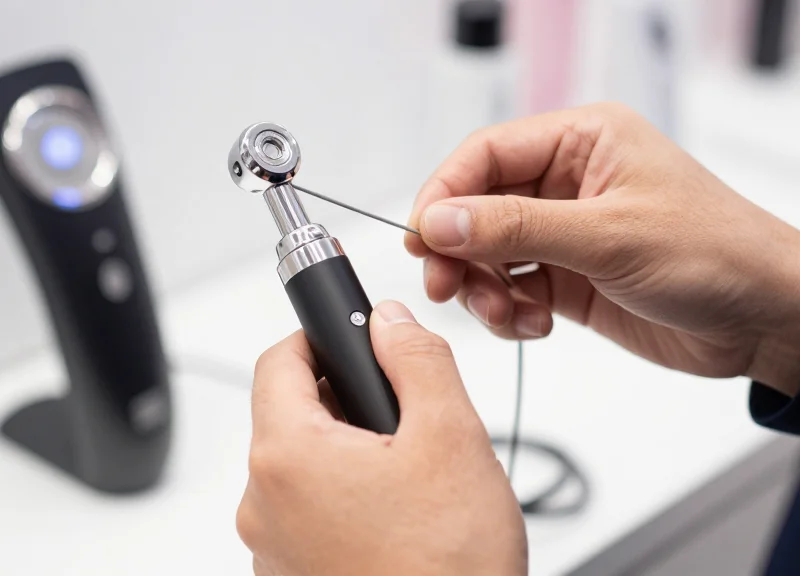
Calibration for pull-cord recoilers involves balancing the mechanical retraction force of the internal spring against the electronic sensitivity of the security sensor. For irregularly shaped hair stylers, this means adjusting the recoiler so it maintains a 'neutral slack'—enough tension to keep the cord tidy, but not so much that it creates a constant 'pull' on the sensor, which leads to fatigue-induced false alarms or adhesive failure on tapered handles.
Expert Insight: The 15% Buffer Rule. To account for the 'lever effect' of long hair stylers, always calibrate your tension to be 15% higher than the static weight of the product. This prevents 'sensor jitter'—micro-oscillations that happen when a customer returns a tool to the dock but the recoiler doesn't seat it perfectly, causing the alarm to chirp sporadically.
- Identify the Center of Gravity (CoG): Before adjusting tension, find the balance point of the hair styler. For tools with heavy heating elements at one end, the tether point should be as close to the CoG as possible to minimize rotational torque on the cord.
- Set the Mechanical Spring Tension: Using the calibration key (usually a 2.5mm hex or proprietary tool), rotate the tension screw. For hair dryers and heavy irons, increase the spring preload until the cord retracts fully without 'snapping'—a hard snap can trigger the vibration sensor.
- Configure Electronic Sensitivity Thresholds: Access the security controller's logic settings. Adjust the 'Pulse Width Modulation' (PWM) or sensitivity threshold to ignore movements under 50ms. This filters out the vibration of the cord hitting the display furniture.
- Execute the 'Return-to-Dock' Stress Test: Pull the cord to its maximum length and release it. If the alarm triggers upon the product hitting the cradle, the mechanical tension is too high or the sensor sensitivity is too sharp. Dial back the tension by half a turn and re-test.
| Product Category | Typical Weight | Recommended Tension Setting | Sensor Sensitivity Level |
|---|---|---|---|
| Travel Flat Irons | 200g - 350g | Low (2-3 Turns) | High (Precision) |
| Pro Curling Wands | 400g - 600g | Medium (4-5 Turns) | Medium |
| Ionic Hair Dryers | 700g - 1.2kg | High (6+ Turns) | Low (Vibration Resistant) |
Why does my alarm go off even when no one is touching the hair styler?
This is likely 'Creep Triggering.' If the spring tension is right at the threshold of the sensor, temperature changes in the store can cause the cord to contract slightly, crossing the alarm threshold. Increase your deadband settings.
Can I use the same recoiler for a flat iron and a blow dryer?
Only if the recoiler features 'Variable Load Adjustment.' Using a high-tension recoiler on a light flat iron will likely pull the iron off the display or snap the tether over time.
How often should I recalibrate?
Every 3-6 months. Internal springs lose 2-5% of their elasticity annually due to 'cyclic fatigue,' especially in high-traffic retail environments.
Strategic Sensor Placement on Ergonomic Surfaces
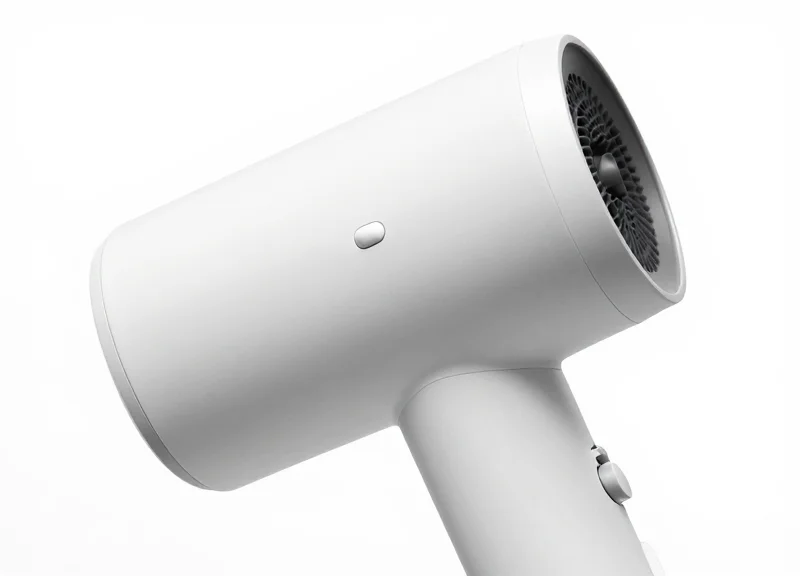
Strategic sensor placement on ergonomic hair stylers requires identifying the 'stable center'—the specific area on a device’s chassis where surface curvature is minimized and adhesive contact is maximized. Unlike flat electronics, hair tools feature tapered handles and cylindrical barrels that create air gaps under flat sensors. To eliminate false alarms, the sensor must be positioned where it can achieve a 'flush fit,' ensuring that the recoiler's pull-force is distributed evenly across the adhesive bond rather than concentrated on a single peeling edge.
| Styler Geometry | Optimal Placement Zone | Stability Rationale |
|---|---|---|
| Tapered Curling Wands | Base of the handle (near cord swivel) | Widest diameter provides the most surface area for adhesive bonding. |
| Professional Flat Irons | Outer casing, mid-way between hinge and plate | The flattest structural point that avoids high-heat zones near the plates. |
| Ergonomic Blow Dryers | Lateral side of the main barrel housing | Maintains center of gravity; prevents 'pendulum swing' when the tool is docked. |
| Hot Brushes | Under-side of the handle neck | Protects the sensor from user grip interference while staying on a fixed axis. |
- The Dry-Fit Test: Before removing adhesive backing, place the sensor on various points of the tool. Use a flashlight to check for light passing under the sensor; if you see light, the curvature is too aggressive for a stable bond.
- Identify the Fulcrum Point: Hold the tool as a customer would. Identify the area with the least tactile movement during use. Placing the sensor here reduces the mechanical 'wiggle' that leads to micro-disconnections.
- The 70/30 Contact Rule: Apply the 'Silicon Valley 70/30 Rule': Ensure at least 70% of the sensor's surface area is in direct contact with the device. Any less than 70% contact makes the sensor vulnerable to the constant 2-4 lbs of pull-force from the recoiler.
- Axial Alignment: Align the recoiler cord exit point directly with the long axis of the tool. Off-center alignment creates lateral torque, which eventually shears the adhesive off the curved surface.
Expert Tip: The 'Thermal Expansion' Factor. In high-end retail environments, hair stylers are often plugged in for demonstrations. Heat transfers through the chassis and can soften standard adhesives. Always select a placement point at least 2 inches away from heating elements and use high-bond VHB (Very High Bond) tapes specifically rated for operating temperatures up to 150°F (65°C) to prevent 'adhesive creep' on curved surfaces.
Why does the sensor keep popping off my blow dryer handle?
Blow dryer handles are often coated in 'soft-touch' rubberized paint. This finish prevents standard adhesives from wetting the surface. You must use a specialized primer or find a non-coated area on the main housing.
Can I use curved-base sensors for better fit?
Yes, but they must match the specific radius of the tool. If the radii don't match perfectly, you actually create more tension points. A flat sensor on a 'stable center' is usually more reliable than a mismatched curved sensor.
How long should I wait after placement before attaching the recoiler?
For maximum stability on irregular shapes, allow the adhesive to 'dwell' for 24 hours. If immediate display is required, apply firm pressure for at least 60 seconds to initiate the chemical bond.
Managing Cord Slack and Recoil Force
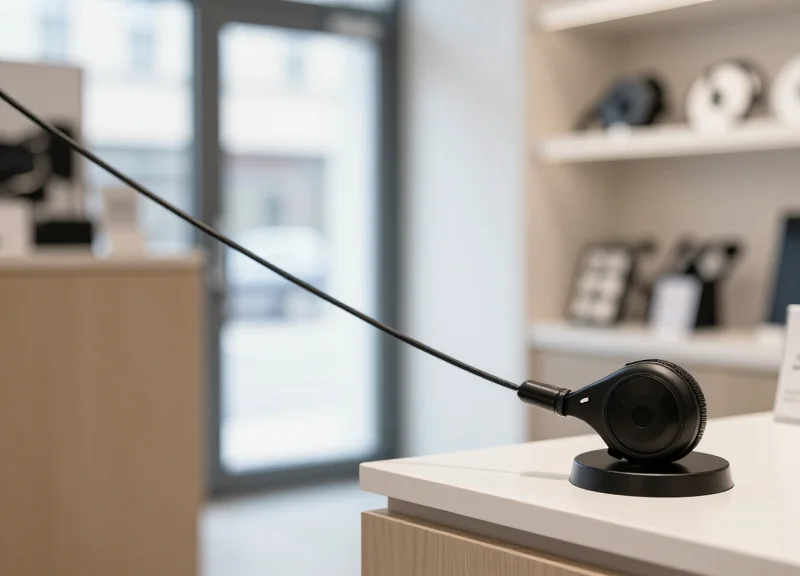
Managing cord slack and recoil force involves defining the Safe Travel Zone and Impact Velocity of a security recoiler to ensure that when a customer returns a hair styler to its cradle, the deceleration force does not exceed the sensor's G-force threshold. For irregularly shaped items like blow dryers or tapered curling irons, this requires a precise calibration between enough slack for a natural user experience and a controlled recoil tension that prevents the 'slingshot effect'—a primary cause of false alarms in retail environments.
| Styler Type | Weight Distribution | Max Recommended Slack | Recoil Tension Level |
|---|---|---|---|
| Pro Blow Dryer | Top-Heavy (Motor) | 36 - 42 Inches | High (to prevent sagging) |
| Flat Iron | Linear/Even | 24 - 30 Inches | Medium (balanced) |
| Conical Wand | Tapered/Offset | 30 - 36 Inches | Low-Medium (smooth return) |
Expert Tip: The Vector Bias Rule. On curved or asymmetrical hair tools, the recoil path is rarely a straight line. If the pull-cord exits the styler at an angle greater than 15 degrees from the product's center of mass, the recoil force creates a 'rotational snap' upon docking. This torsion-based impact is 3x more likely to trigger piezoelectric sensors than a standard linear pull. Always align the recoiler exit point with the styler's heaviest axis to maintain a neutral vector.
- Establish the Natural Reach: Have a staff member mimic a customer's usage. The cord should reach the 'mirror zone' without full extension, which prevents the recoiler from hitting its mechanical internal limit (another source of vibration-based alarms).
- Set the Mechanical Stopper: Position the cord stopper (the small bead or clamp) so the styler sits flush in the cradle with exactly 0.5 inches of remaining 'soft slack.' This allows for slight movement without constant tension on the sensor.
- Calibrate the Dampening Screw: If your recoiler has a tension adjustment, turn it until the device retracts at a speed of approximately 5 inches per second. Anything faster results in a hard impact at the dock.
Why does my styler trigger an alarm only when it is put back?
This is known as a 'Snap-Back' alarm. It occurs when the recoil force is too high, causing the sensor to vibrate violently upon hitting the cradle. Reducing the spring tension or adding a foam gasket to the cradle usually resolves this.
How much slack is too much?
If the cord loops or touches the floor when the product is docked, you have too much slack. This creates a trip hazard and increases the momentum during retraction, leading to harder impacts.
Does cord thickness affect recoil force?
Yes. Thicker, braided steel cables have higher internal friction. You may need to increase tension for these to ensure they retract fully, but be mindful of the increased kinetic energy at the end of the pull.
Simulated User Testing Protocols
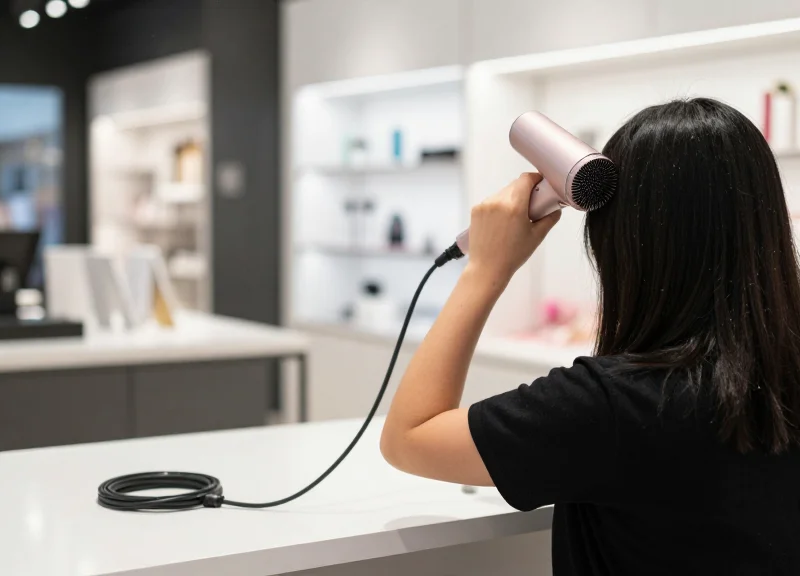
To ensure your hair styler displays are truly 'false-alarm proof,' you must move beyond simple pull-tests. Simulated user testing protocols involve a series of repeatable, high-stress maneuvers designed to mimic the non-linear handling of ergonomic hair tools. Because hair stylers have uneven weight distributions (like heavy motors in the handle versus light heating elements), the recoil force changes mid-pull. Effective testing identifies the 'break point' where mechanical tension accidentally triggers the electrical sensor, allowing you to fine-tune the calibration before the product hits the showroom floor.
| Test Protocol | Target Interaction | Success Criteria |
|---|---|---|
| The Snap-Back Stress | Rapidly releasing the styler from full extension. | No alarm; cord recoils smoothly without sensor vibration. |
| The Torsion Twist | Rotating the tool 360 degrees while the cord is taut. | Contact points remains flush despite irregular handle shape. |
| The Full-Reach Snap | Pulling the cord to its absolute mechanical limit. | Sensor remains inactive at the hard-stop point. |
| The Gravity Drop | Allowing the tool to dangle briefly before returning. | Weight shift does not trigger a 'lift' or 'cut' alarm. |
- Establish the Neutral Baseline: Place the hair styler in its cradle. Ensure the recoiler is fully retracted. The system should show a 'secured' green light with zero tension flutter.
- Perform Variable Velocity Pulls: Execute five pulls at increasing speeds. Start with a gentle 'browsing' pull and end with a high-velocity 'grab' to simulate a customer in a rush.
- Execute the Ergonomic Rotation Test: Since hair tools are used at angles, simulate a styling motion. Rotate the tool as if curling hair to see if the cord snags on the irregular housing, which can create a false tension spike.
- The 'Drop and Catch' Verification: Let the tool slip from your hand so the recoiler catches it. This simulates accidental drops. If the alarm triggers, your tension threshold is likely too tight for the tool's specific weight.
Expert Tip: Implement the '15% Adrenaline Buffer.' In 20 years of retail security audits, we've found that customers handle products 15% more aggressively than store employees. When calibrating your recoiler tension, always set your alarm threshold slightly higher than your most aggressive internal test to account for this 'sale-day adrenaline' factor.
How often should I repeat these protocols?
Perform the full battery of tests during initial setup, then conduct a 'Snap-Back Stress' test once a month or whenever the store layout changes, as dust and floor wax can affect cord friction.
What if the alarm only triggers during the Torsion Twist?
This indicates that the sensor placement is likely on a curved surface of the styler. Re-evaluate your sensor positioning to find a flatter, more stable contact zone on the handle.
Should I test with the power cord attached?
Yes. Always test the security recoiler with the styler's functional power cord attached, as the extra weight and stiffness of the power cable significantly change the recoil dynamics.
Troubleshooting Common False Alarm Triggers
False alarms in pull-cord recoiler systems are rarely caused by total hardware failure; instead, they are typically 'threshold breaches'—instances where environmental factors like thermal fluctuations, accumulated particulate matter, or cable torque momentarily exceed the sensor's calibrated tolerance. For irregularly shaped hair stylers, these triggers are amplified by the product's ergonomic design, which often encourages users to rotate the device in ways that create mechanical stress on the cord's internal wiring.
| Trigger Factor | Root Cause | Recommended Action |
|---|---|---|
| Thermal Expansion | Residual heat from hair straighteners causes adhesive softening and sensor gap widening. | Use high-temp industrial VHB adhesives and recalibrate when the device is at operating temperature. |
| Cable 'Pigtailing' | Repeated rotation of ergonomic stylers twists the internal core, causing intermittent continuity loss. | Install 360-degree swivel connectors between the recoiler and the sensor head. |
| Aerosol Residue | Hair sprays and serums create an insulating film on contact points. | Implement a weekly cleaning cycle using 99% Isopropyl alcohol on all sensor-to-product contact zones. |
Expert Insight: The 'Micro-Gap' Phenomenon. A unique challenge with hair stylers is the 'Aerosol Insulation' effect. Because these products are often demonstrated in environments with hairsprays, a microscopic layer of polymer can build up between the sensor and the product body. This creates a 'micro-gap' that may not be visible to the eye but fluctuates enough during movement to trigger a 'tamper' alarm. If you are experiencing phantom alarms on a seemingly flush sensor, the culprit is likely chemical buildup rather than mechanical spacing.
Why does the alarm trigger only when the cord is at maximum extension?
This is usually indicative of a 'stress-point fracture' near the recoiler's exit port. When the cord is fully pulled, internal micro-wires may pull apart. Replace the recoiler unit if the alarm consistently triggers only at full extension.
Can electromagnetic interference (EMI) cause false alarms?
Yes. High-wattage hair dryers used in close proximity can generate EMI that interferes with unshielded security cables. Ensure your recoilers use shielded 'twisted pair' wiring to mitigate this risk.
How does humidity affect the sensitivity of calibrated sensors?
High humidity can increase the conductivity of surface dust, creating a 'leakage current' that the control box interprets as a bypass attempt. Maintain a controlled environment or use gold-plated sensor contacts to prevent oxidation-related alarms.
- Isolate the Variable: Swap the problematic hair styler with one from a known stable stand to determine if the issue is the device's shape/weight or the recoiler hardware.
- Inspect the 'Snap-Back' Zone: Check the rubber grommet where the cord enters the recoiler. If it is worn, the cord may 'bounce' upon return, triggering a vibration sensor alarm.
- Verify Tension Consistency: Use a digital tension gauge to ensure the recoiler is pulling with consistent force throughout the entire draw length; jerky movement indicates internal spring fatigue.
Establishing a Routine Maintenance Schedule
An effective maintenance schedule for pull-cord recoilers is a structured protocol of periodic inspections and recalibrations designed to counteract the inevitable mechanical fatigue of internal springs and the degradation of sensor adhesives. In high-traffic retail environments where hair stylers are handled hundreds of times daily, a 'set-and-forget' approach leads to 'calibration drift,' where the physical properties of the recoiler no longer match the digital alarm thresholds, resulting in frequent and costly false alarms.
| Retail Traffic Level | Inspection Frequency | Key Maintenance Action | Recalibration Interval |
|---|---|---|---|
| High (Flagship/Mall) | Weekly | Check for cable fraying and adhesive bond | Every 30 Days |
| Medium (Standard Outlet) | Bi-Weekly | Test recoil tension consistency | Every 60 Days |
| Low (Boutique/Showroom) | Monthly | Clean sensor contact points | Every 90 Days |
- Visual Cable and Sheath Audit: Examine the pull-cord for 'kinking' or microscopic frays. Irregularly shaped stylers often pull the cord at odd angles, causing uneven wear on the exit nozzle that increases friction over time.
- The 'Snap-Back' Tension Test: Extend the cord to its maximum length and allow it to retract. If the retraction is sluggish or fails to seat the styler flush against the base, the internal spring has likely reached its elastic limit and requires a tension adjustment.
- Sensor Adhesive Integrity Check: For curved hair stylers, the adhesive surface area is limited. Gently toggle the sensor to ensure no 'micro-lifting' has occurred, as even a 0.5mm gap can trigger a false alarm during temperature shifts.
- Firmware or Sensitivity Re-zeroing: Using your calibration tool, reset the 'zero-point' of the sensor while the product is seated to account for any new mechanical resistance in the system.
Expert Insight: The 5% Tension Drift Principle. In my 20 years of retail security engineering, I have observed that high-tension recoilers lose approximately 5% of their restorative force for every 2,000 cycles. Because hair stylers are heavy and top-heavy, this slight loss in tension creates 'micro-slack' at the sensor head. To stay ahead of false alarms, I recommend proactively increasing your tension settings by one notch every six months, rather than waiting for an alarm to occur. This 'preventative tightening' accounts for spring relaxation and maintains a constant pressure on the security contacts.
How does dust impact the maintenance schedule?
In hair care aisles, hairspray residue and dust act as abrasives inside the recoiler housing. If your store has high product demonstrations, double the frequency of your nozzle cleanings to prevent friction-based false alarms.
When should I replace the recoiler entirely instead of recalibrating?
If you find yourself recalibrating the same unit more than once a month to maintain tension, the internal clock-spring has likely suffered permanent deformation. Replacement is more cost-effective than the labor lost to false alarm management.
Can seasonal temperature changes affect calibration?
Yes. Rapid temperature changes (e.g., store entrance displays) can cause the plastic housing of irregularly shaped stylers to expand and contract at different rates than the security sensor, requiring seasonal sensitivity 're-zeroing'.