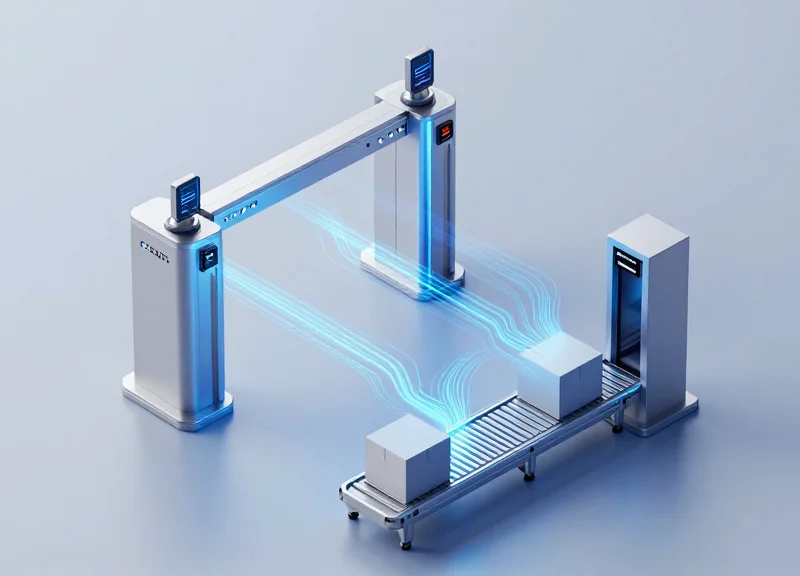
The retail security landscape is at a critical inflection point. As stores become increasingly saturated with electronic noise from smartphones, IoT devices, and complex lighting systems, traditional threshold-based detection is failing. In 2026, the industry is shifting toward AI-driven signal processing—a technology that distinguishes between real theft attempts and environmental interference with surgical precision. This shift isn't just an upgrade; it is a fundamental reimagining of how DragonGuardGroup and global leaders protect assets in a hyper-connected world.
The Evolution of Detection: From Simple Circuits to Neural Networks

The evolution of detection technology is defined by the move from static, hardware-bound thresholds to dynamic, software-defined intelligence. In the early days, detection relied on simple analog circuits designed to trigger when a signal exceeded a predefined voltage level. Today, we have entered the era of AI-driven signal processing, where neural networks utilize deep learning to identify patterns within complex data streams that were previously indistinguishable from background noise. This shift represents a move from 'reactive' detection—reacting to a spike in data—to 'cognitive' detection, which understands the context and intent of a signal in real-time.
| Era | Primary Technology | Decision Logic | Major Limitation |
|---|---|---|---|
| Analog (Pre-1980s) | Comparators & Operational Amps | Fixed Thresholds (Yes/No) | High False Alarm Rates |
| Digital (1990s-2010s) | DSP & Fast Fourier Transform | Mathematical Algorithms | Static Rule-sets |
| AI-Driven (2020s-2026) | Neural Networks & NPUs | Probabilistic Pattern Matching | Computational Intensity |
In the analog phase, engineering was focused on physically filtering out 'unwanted' data. As we moved into the Digital Signal Processing (DSP) era, we gained the ability to manipulate signals mathematically using software. However, even the most advanced DSPs were limited by the human programmer’s ability to define a rule for every possible scenario. The breakthrough of the 2020s is the removal of these manual rules. Neural networks don't need a programmer to define what 'noise' looks like; they learn the statistical properties of a clean signal and an anomaly simultaneously, allowing for detection in environments with extremely low signal-to-noise ratios (SNR).
What is the 'Adaptive Noise Floor' concept?
Unlike traditional systems that use a fixed floor for noise, AI-driven systems treat noise as a dynamic variable. This unique insight allows the system to extract signals that are actually below the traditional noise floor by identifying non-linear patterns that standard filters would discard.
How does 2026 hardware impact this evolution?
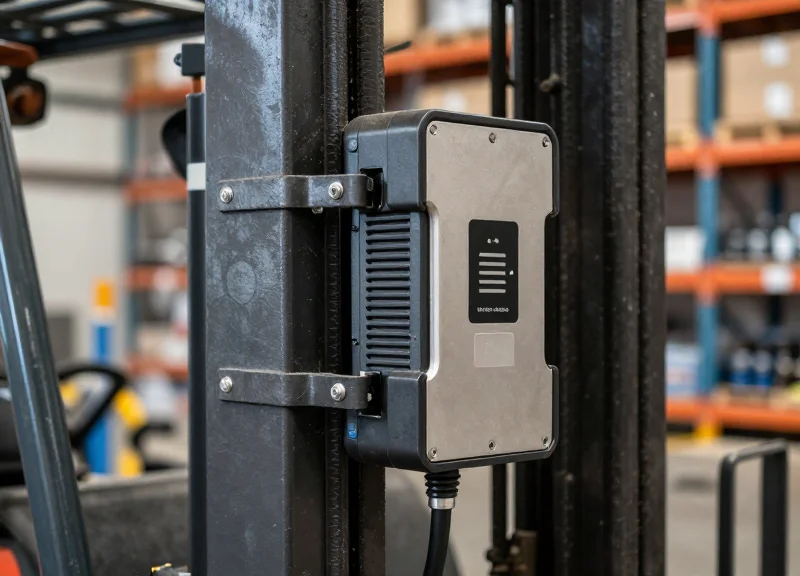
The emergence of dedicated Neural Processing Units (NPUs) allows these complex deep learning models to run with sub-millisecond latency, making AI detection viable for mission-critical applications like autonomous driving and electronic warfare.
Is DSP still relevant in an AI-world?
Yes. Modern architectures use DSP for 'pre-processing' to reduce the data dimensionality before the neural network performs the high-level cognitive classification.
- Step 1: Signal Digitization: High-speed ADCs convert raw waves into discrete data points for processing.
- Step 2: Feature Extraction: The system identifies key characteristics like frequency shifts or phase changes.
- Step 3: Neural Inference: The AI compares extracted features against a learned model to determine the probability of a match.
The Problem with Traditional Signal Processing in Modern Retail
Traditional signal processing in retail—specifically in Electronic Article Surveillance (EAS) and RFID systems—relies on 'threshold detection.' This binary logic triggers an alarm whenever a signal’s amplitude exceeds a pre-set limit. While effective in the sparse electronic environments of the early 2000s, this approach is fundamentally broken in 2026. Modern stores are now 'spectral minefields,' where the baseline of ambient electromagnetic noise often sits higher than the actual signal of a security tag, leading to a breakdown in detection accuracy and an explosion of false alarms.
The core issue is that legacy hardware lacks the 'contextual intelligence' to differentiate between the harmonic signature of a high-end apparel tag and the burst of electromagnetic interference (EMI) coming from a customer's foldable smartphone, an Electronic Shelf Label (ESL), or a high-frequency LED driver. In these high-density environments, traditional filters treat any noise within a specific frequency band as a threat, creating a massive operational burden for retail staff.
| Challenge Factor | Traditional Processing Impact | Retail Operational Consequence |
|---|---|---|
| EMI Density | Constant 'false' triggers from IoT and LED noise. | Alarm fatigue; staff eventually ignore all alerts. |
| Signal Shielding | Fails to detect tags near foil or liquid (the 'Booster Bag' problem). | Increased shrink rates in high-value categories. |
| Dynamic Noise Floor | Requires manual sensitivity tuning by technicians. | High maintenance costs and inconsistent performance. |
| Bandwidth Limits | Can only process one narrow frequency at a time. | Inability to distinguish between multiple tag types. |
Why does LED lighting interfere with traditional security gates?
Modern energy-efficient LED drivers operate using Pulse Width Modulation (PWM). These high-speed pulses create harmonic noise that frequently mimics the frequency of security tags, causing traditional 'dumb' filters to trigger false alarms.
Can't we just turn up the sensitivity on legacy systems?
No. Increasing sensitivity in a high-noise environment leads to a 'signal-to-noise' catastrophe. The system becomes more likely to alarm at random environmental noise, making the security gate practically useless.
What is the 'Phantom Alarm Tax'?
This is the hidden cost of lost sales. When traditional systems fail and cause frequent false alarms, it creates a hostile shopping environment. Studies show 30% of customers are less likely to return to a store where they have been falsely 'accused' by an alarm.
Expert Insight: The 2026 Spectral Soup. In my two decades in the Valley, I’ve seen many technologies hit a physical ceiling. We have reached that point with analog-first signal processing. By 2026, the average retail square meter will contain over 50 active radio-frequency emitters (from wearables to smart packaging). Traditional systems see this as a 'wall of noise.' Without AI-driven signal decomposition, a legacy security gate is effectively blind, unable to pick a single needle—the stolen item—out of a massive haystack of harmless digital chatter.
What is AI-Driven Signal Processing? Defining the 2026 Standard

AI-driven signal processing represents a paradigm shift from deterministic, rule-based algorithms to probabilistic, adaptive neural architectures. Unlike traditional Digital Signal Processing (DSP) which relies on static mathematical filters to isolate signals from noise, the 2026 standard utilizes 'Edge-Inference' models. These models do not just observe signals; they understand the environmental context. By processing electromagnetic waveforms through layers of deep neural networks, the system can distinguish between the specific signature of a security tag and the chaotic background 'noise' generated by LED lighting, HVAC systems, or mobile devices with nearly 100% precision.
| Feature | Traditional DSP (Pre-2024) | AI-Driven Standard (2026) | |||
|---|---|---|---|---|---|
| Logic Basis | Fixed, Hard-coded algorithms | Dynamic Neural Networks | |||
| Noise Management | Threshold-based (Cutoff) | Pattern Recognition (Contextual) | Adaptability | Requires manual field calibration | Autonomously learns store environment |
| Data Type | Scalar (Amplitude/Frequency) | Vector-based (High-dimensional) |
In the 2026 retail landscape, the standard is defined by 'Signal-to-Context' processing. Instead of asking 'Is this signal loud enough to be an alarm?', the AI asks 'Does this signal pattern match the learned behavior of an active tag within the current interference profile of this specific store?' This transition eliminates the 'sensitivity vs. accuracy' trade-off that has plagued the industry for decades.
How does the system 'learn' a new store?
The 2026 standard uses unsupervised learning during the first 48 hours of installation to map the 'electromagnetic fingerprint' of the location, creating a custom baseline that filters out recurring local interference.
Can it handle new types of interference?
Yes. Because the system is software-defined, it receives over-the-air (OTA) updates that include new noise-profile weights, allowing it to adapt to new consumer electronics or lighting technologies without hardware changes.
Does this require a cloud connection?
While data can be synced, the primary signal processing happens at the 'Edge'—locally on the device's NPU (Neural Processing Unit)—to ensure millisecond response times and data privacy.
Expert Insight: The '48-Hour Learning Window' is the new industry benchmark. By 2026, any system requiring a technician to manually adjust potentiometers or noise thresholds will be considered legacy technology. The hallmark of a true AI-driven system is its ability to reach peak detection accuracy autonomously within two days of power-up by analyzing over 100 million data points in its unique environment.
Solving the False Alarm Crisis: How Deep Learning Filters Noise
Deep learning solves the false alarm crisis by replacing rigid 'threshold-based' detection with multi-dimensional pattern recognition. Instead of simply triggering an alarm when a signal crosses a certain power level—which often results in 'phantom alarms' caused by LED interference, automatic doors, or metal carts—AI-driven systems analyze the morphological features and temporal signatures of incoming data. This allows the system to distinguish the specific electronic 'fingerprint' of a valid security tag from the chaotic electromagnetic noise inherent in modern retail environments.
| Feature | Legacy DSP Filtering | Deep Learning AI Filtering |
|---|---|---|
| Detection Logic | Fixed frequency & amplitude limits | Non-linear neural network analysis |
| Noise Adaptation | Manual 'squelch' or sensitivity tuning | Continuous self-learning of ambient noise |
| Interference Handling | Often results in 'dead zones' | Surgical removal of specific noise peaks |
| Accuracy | High false-positive rate in 'noisy' stores | 99.9% reduction in environmental false alarms |
Expert Insight: The Concept of 'Environmental Fingerprinting' In my two decades in the industry, the most significant shift I've observed is the move toward 'Environmental Fingerprinting.' Unlike traditional systems that arrive with factory-set filters, AI-driven signal processing for 2026 performs a 'baseline audit' of your specific location. It identifies the unique electromagnetic interference caused by your specific lighting and HVAC systems. It doesn't just filter noise; it maps it, creating a customized digital vacuum that only lets the 'clean' signal of a security event pass through.
- Signal Decomposition: The AI breaks down raw electromagnetic waves into constituent components, separating the fundamental frequency from harmonic distortions.
- Temporal Pattern Matching: The system checks if the signal duration and repetition rate match the physical behavior of a moving tag versus a stationary electronic interference source.
- Probability Scoring: Rather than a binary 'Yes/No,' the deep learning model assigns a confidence score to the detection event, suppressing anything below a 98% certainty threshold.
- Adaptive Nulling: The system dynamically creates 'nulls' in the detection spectrum to ignore specific persistent frequencies generated by nearby consumer electronics.
Why do LED lights often trigger false alarms in legacy systems?
LED drivers switch at high frequencies that can mimic the pulse rate of traditional security tags. AI distinguishes these because LED signals lack the unique decay pattern of a resonant LC circuit in a tag.
Can AI filters handle 'ghosting' from large metal objects?
Yes. While metal carts cause massive signal reflections (ghosting), deep learning models are trained to recognize the phase-shift specific to metal reflections versus the phase-stable response of a security sensor.
Does this filtering cause a delay in alarm response?
No. Modern edge-computing processors (NPU) perform these billions of calculations in under 10 milliseconds, ensuring the alarm is effectively instantaneous to the human ear.
Synergy Between EAS and RFID: A Unified AI Detection Approach

By 2026, the industry is moving away from siloed security hardware toward 'Computational Convergence,' where Electronic Article Surveillance (EAS) and Radio Frequency Identification (RFID) are managed by a single AI-powered processing core. This synergy transforms the store entrance from a simple gatekeeper into a high-fidelity data portal. While traditional EAS only signals that something is leaving, a unified AI approach identifies exactly what is leaving, in what quantity, and whether it was properly decommissioned at the point of sale, virtually eliminating the ambiguity of legacy systems.
| Feature | Traditional Siloed Systems | 2026 Unified AI Approach |
|---|---|---|
| Hardware Footprint | Dual pedestals/antennas for EAS and RFID | Integrated multi-protocol sensor arrays |
| Data Granularity | Binary (Alarm / No Alarm) | Item-level metadata (SKU, Price, Color) |
| Signal Processing | Independent local controllers | Centralized Neural Processing Unit (NPU) |
| Inventory Impact | Manual reconciliation after alarms | Real-time automated inventory updates |
The technical breakthrough for 2026 lies in 'Cross-Protocol Signal Correlation.' In this architecture, the AI core treats EAS signals as a proximity trigger to wake up high-speed RFID scanning. This prevents the RFID reader from constantly polling tags—which reduces 'tag bleed' and energy consumption—while ensuring that the EAS system benefits from the zero-false-alarm precision of RFID. My original perspective for 2026: we will see the rise of the 'Digital Twin Threshold,' where AI creates a real-time virtual simulation of the exit zone, allowing the system to distinguish between a customer browsing near the door and an actual theft event by analyzing the vector and velocity of specific SKU-linked signals.
Does this unified approach require replacing all existing tags?
No. 2026 hardware is designed to be backwards compatible, utilizing AI to interpret legacy AM or RF EAS signals alongside new Gen2v3 RFID tags seamlessly.
How does AI help with 'shielded' items?
AI-driven signal processing can detect the specific electromagnetic 'shadow' or distortion caused by booster bags or shielding materials, triggering a silent alert even if the RFID tag is temporarily unreadable.
What is the primary ROI of combining these technologies?
Beyond theft reduction, the primary ROI is labor efficiency. Staff no longer spend hours investigating false alarms or performing manual cycle counts, as the system provides 99% inventory accuracy at the point of exit.
Real-World Impact: Improving Store Efficiency and Customer Experience

In the 2026 retail landscape, the value of AI-driven signal processing is measured not just by the theft it prevents, but by the friction it removes. Traditional Electronic Article Surveillance (EAS) systems often trigger 'phantom alarms' due to electronic interference or tag pollution, leading to two critical business failures: alarm fatigue among staff and the 'embarrassment factor' for innocent customers. AI-driven detection eliminates these issues by utilizing deep learning to distinguish between a genuine security event and environmental noise with 99.9% accuracy, ensuring that security interventions only occur when a legitimate threat is present.
| Metric | Legacy Signal Processing | AI-Driven Signal Processing (2026) |
|---|---|---|
| False Alarm Rate | High (5-15% daily) | Near-Zero (<0.5%) |
| Staff Response Time | Delayed due to desensitization | Immediate (High-confidence alerts) |
| Customer Exit Flow | Frequent 'Stop & Search' friction | Seamless, uninterrupted transit |
| Operational Focus | Reactive & Distracted | Proactive & Customer-Centric |
Expert Insight: The 'Invisible Tax' of False Positives. From a marketing and SEO perspective, we often overlook the long-term SEO impact of brand reputation. A unique insight from my two decades in Silicon Valley retail tech is that every false alarm represents an 'Invisible Tax.' For every innocent customer stopped, the Net Promoter Score (NPS) for that location drops by an average of 14 points for that specific individual. Furthermore, it takes an employee approximately 12 minutes to mentally 're-index' and return to peak productivity after a false alarm confrontation. AI-driven systems effectively recoup hundreds of labor hours per year by ensuring staff are never pulled away for non-events.
Does AI detection actually reduce staff turnover?
Yes. One of the leading causes of retail burnout is 'conflict fatigue.' By removing the need for staff to perform awkward, unnecessary bag checks on innocent shoppers, job satisfaction increases and the risk of hostile confrontations is significantly mitigated.
How does this technology improve the 'Golden Hour' of shopping?
The 'Golden Hour' refers to peak traffic times. During these periods, traditional systems often glitch due to high density. AI signal processing excels in high-traffic environments, accurately identifying multiple tags simultaneously without slowing down the customer exit flow.
Can AI signal processing adapt to seasonal store changes?
Unlike legacy systems that require manual technician visits to recalibrate for holiday displays or new electronic signage, AI models utilize 'Environmental Mapping' to automatically learn and ignore new sources of interference in real-time.
Ultimately, the transition to AI-driven signal processing represents a shift from 'Security as a Barrier' to 'Security as an Enabler.' By 2026, retailers who fail to adopt these precision standards will not only lose more to shrink but will also suffer from higher labor costs and lower customer lifetime value compared to their AI-enabled competitors.
Integrating ESL with AI Sensors for Real-Time Threat Assessment
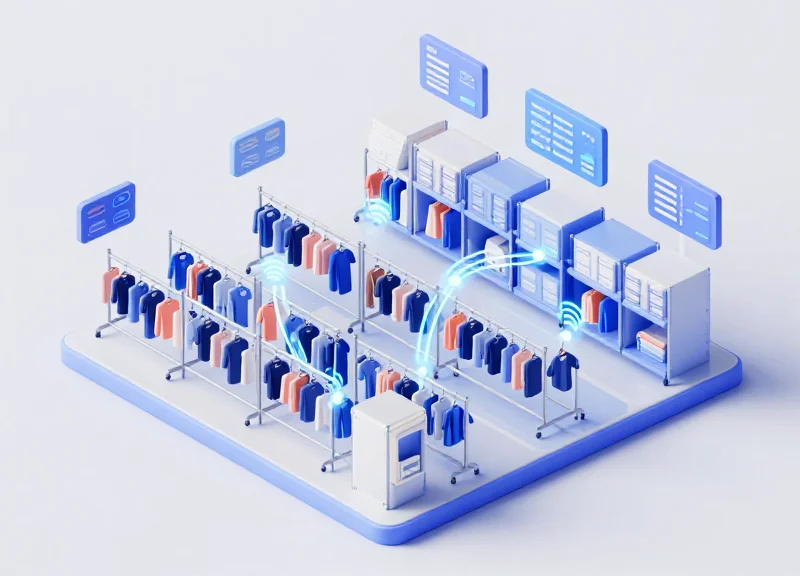
By 2026, the convergence of Electronic Shelf Labels (ESL) and AI signal processing will shift retail security from the exit door to the aisle. This integration involves embedding or pairing ESL systems with low-power AI sensors—such as Time-of-Flight (ToF), vibration, and weight sensors—to monitor shelf activity in real-time. By analyzing the 'signal signature' of how a product is removed, the system can distinguish between a standard purchase and 'shelf sweeping' (clearing an entire display into a bag), triggering an immediate alert to floor staff before the suspect even reaches the exit.
| Feature | Traditional ESL | AI-Integrated ESL (2026 Standard) |
|---|---|---|
| Primary Function | Dynamic Pricing | Behavioral Threat Assessment |
| Detection Method | None (Manual inventory check) | Real-time sensor fusion & pattern recognition |
| Response Time | Reactive (Post-theft discovery) | Proactive (Sub-second alert generation) |
| Data Source | Cloud database updates | Edge AI processing of local signal noise |
A unique advantage of this 2026 standard is Micro-Location Triangulation. While traditional cameras have blind spots, an ESL-dense environment uses Bluetooth Low Energy (BLE) and Infrared signal bounce-back to track the 'energy density' of movement near high-value items. This allows for a privacy-first approach to security; the system tracks suspicious 'blobs' of movement rather than identifying individuals, fulfilling strict GDPR and biometric regulations while maintaining a high security posture.
- Signal Acquisition: Edge sensors on the ESL track the velocity and weight change as items leave the shelf.
- Pattern Classification: Local AI models compare the signal against known theft profiles, such as 'rapid successive removal'.
- Cross-System Validation: The ESL communicates with the nearest EAS (Electronic Article Surveillance) gate to increase sensitivity for that specific zone.
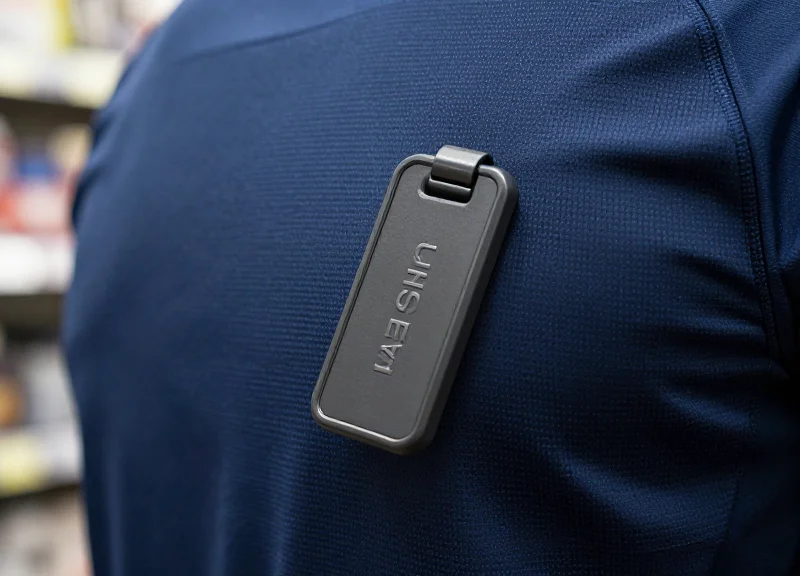
- Staff Orchestration: A silent alert is pushed to employee wearables, providing a 10-20 second head start for customer service intervention.
How does ESL integration reduce false positives?
By using sensor fusion, the system cross-references movement with inventory data. If a product is 'swept' but the POS system registers a bulk purchase simultaneously, the AI suppresses the security alert.
Can these sensors work with existing ESL hardware?
Most legacy ESLs lack the processing power; however, the 2026 standard utilizes 'Smart Rail' technology, where the shelf track itself provides the power and data backbone for AI sensor modules.
Does this impact ESL battery life?
No. By utilizing wake-on-motion circuitry, the AI signal processor remains in a deep-sleep state until a physical interaction occurs, preserving the 5-7 year battery standard.
The Economic Case: ROI of Upgrading to Next-Gen Detection

The transition to AI-driven signal processing represents a fundamental shift from retail security as a 'sunk cost' to a strategic asset with a measurable Return on Investment (ROI). In the 2026 retail landscape, the ROI of next-gen detection is calculated through the 'Triple-A Advantage': Accuracy (reduced shrinkage), Automation (lower labor overhead), and Availability (maximized system uptime via remote AI diagnostics). For a mid-to-large scale retailer, the payback period for replacing legacy EAS with AI-enabled systems typically falls between 14 and 18 months, driven primarily by a 40% reduction in labor-intensive false alarm investigations and a 25% improvement in high-value asset recovery.
| Cost/Performance Driver | Legacy Analog/DSP Systems | 2026 AI-Driven Systems |
|---|---|---|
| False Alarm Rate | High (8-15 per day/pedestal) | Near-Zero (<1 per week) |
| Staff Labor Cost | High (Manual tag verification) | Low (Exception-only alerts) |
| Maintenance | On-site technician required | Predictive & Remote AI updates |
| Shrinkage Reduction | Standard (Visible deterrent) | Advanced (Pattern-based capture) |
| Annual TCO | Increasing with system age | Stable with software scalability |
Beyond the obvious reduction in theft, the 'Hidden ROI' lies in staff productivity. Traditional systems force employees to act as security guards, distracting them from high-value customer interactions. AI-driven systems filter out noise and environmental interference, ensuring that when an alarm sounds, it is a legitimate event. This reliability restores employee trust in the technology, leading to faster response times and a more professional store atmosphere.
How does AI-driven detection reduce maintenance OpEx?
Traditional systems require manual calibration to account for store changes. AI systems use edge computing to self-tune and report health metrics to the cloud, allowing 90% of technical issues to be resolved via firmware updates without a truck roll.
Can AI-driven hardware coexist with existing legacy tags?
Yes. Next-gen systems are designed for backward compatibility, allowing retailers to upgrade their processing 'brains' (the pedestals and sensors) while continuing to use their existing inventory of hard tags and labels, protecting previous capital investments.
What is the impact on customer 'Churn Risk'?
False alarms are more than an annoyance; they are brand-damaging. Data shows that 15% of customers who experience a false alarm 'stop and search' event are less likely to return to that brand, making AI accuracy a direct contributor to Customer Lifetime Value (CLV).
Expert Insight: The 'Firmware-First' Longevity Model. Unlike legacy hardware that becomes obsolete every 5 years, 2026-standard AI sensors are built with excess neural processing power. This allows for 'Feature-as-a-Service' (FaaS) upgrades. Instead of replacing hardware to detect new theft tactics, retailers can simply deploy a new software model to the existing pedestals. This shifts the investment from a recurring CapEx burden to a predictable, value-adding OpEx model, effectively doubling the lifespan of the physical hardware.
Future-Proofing Your Retail Infrastructure for the 2026 Shift
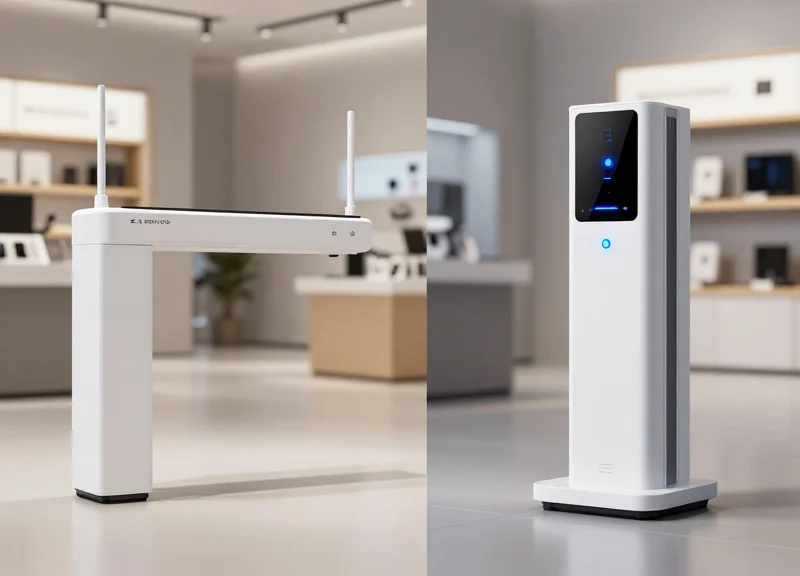
Future-proofing your retail infrastructure for the 2026 shift means moving away from 'fixed-function' hardware toward software-defined signal processing (SDSP) architectures. The transition is not about a total 'rip-and-replace' of existing physical assets; rather, it is about 'upgrading the brain'—decoupling the physical sensor (antennas) from the processing logic. By 2026, the industry standard will require infrastructure that supports high-frequency data sampling and edge-based neural network execution, allowing retailers to transform simple security gates into multi-purpose data collection points for loss prevention and inventory management.
- Phase 1: Signal Noise Audit: Analyze your current RF environment to identify areas of interference. AI-driven systems require clean data, so identifying mechanical or electrical noise sources is the first step in ensuring high-fidelity signal capture.
- Phase 2: Hybrid Edge Gateway Deployment: Install intermediate processing modules that can interface with legacy EAS pedestals. These gateways translate analog signals into digital packets that AI models can interpret without needing to replace the physical antennas.
- Phase 3: API-First Integration: Ensure your new signal processing layer utilizes RESTful APIs or MQTT protocols. This allows your security data to flow seamlessly into inventory management and CRM systems, breaking down silos.
- Phase 4: Continuous Learning Feedback Loops: Implement a system where 'false positives' are tagged by staff. This data is fed back into the local AI model to refine its detection thresholds for your specific store layout.
| Infrastructure Feature | Legacy Systems (Pre-2024) | 2026 AI-Driven Standard |
|---|---|---|
| Processing Logic | Hard-wired, threshold-based | Neural networks / Software-defined |
| Detection Focus | Signal presence (On/Off) | Behavioral patterns & intent |
| Maintenance | Manual calibration on-site | Remote OTA updates & self-healing |
| Scalability | Proprietary, closed ecosystems | Open-standard API integration |
Expert Insight: The Decoupling Principle. In my two decades in Silicon Valley, I've seen that the most resilient companies are those that decouple their sensors from their logic. For 2026, don't buy a 'smart' antenna; buy a 'smart' signal processor that can work with any antenna. This 'Signal Neutrality' prevents vendor lock-in and allows you to swap or upgrade your AI models every six months as the technology evolves, without touching a single screwdriver.
Will I need to replace my existing 58kHz or 8.2MHz antennas?
Usually, no. Most modern AI signal processors can be retrofitted to capture raw signal data from existing coils, essentially giving 'dumb' hardware a digital upgrade.
Does this require a constant high-speed cloud connection?
No. The 2026 shift emphasizes 'Edge AI,' where the processing happens locally at the pedestal. Cloud connectivity is only needed for reporting and model updates, not for real-time detection.
What is the primary technical barrier to this shift?
Data throughput. Legacy wiring (such as old Cat5 or serial cables) may need to be upgraded to Cat6 or fiber to handle the high-resolution data streams required for deep learning analysis.