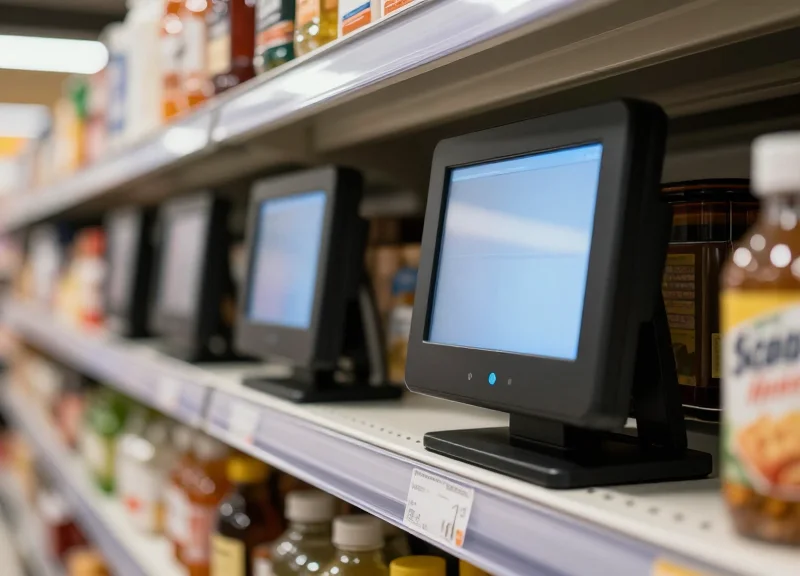
The retail landscape is undergoing a seismic shift. By 2026, the AI-driven supermarket will no longer be a futuristic concept but an industry standard. At the heart of this transformation lies a critical move from static paper tags to Next-Gen Electronic Shelf Labels (ESL). As labor costs rise and the demand for real-time pricing agility peaks, traditional methods are failing. This outlook explores how ESL is becoming the nervous system of modern retail, enabling seamless automation and enhanced customer experiences.
The State of Retail: Transitioning to the 2026 AI-Driven Model
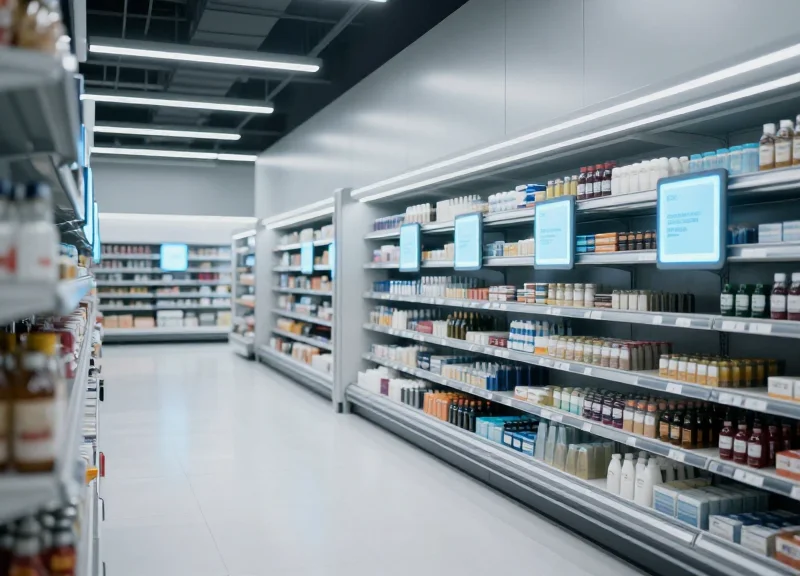
By 2026, the transition to an AI-driven retail model marks the end of 'passive' commerce. The retail landscape is evolving from a system of static displays into a reactive, intelligent ecosystem where Electronic Shelf Labels (ESL) act as the vital sensory interface between digital algorithms and physical inventory. This shift is driven by the need for hyper-contextual pricing, real-time inventory synchronization, and the elimination of the labor-intensive friction inherent in traditional paper-based tagging.
| Feature | Legacy Model (Pre-2024) | AI-Driven Model (2026+) |
|---|---|---|
| Pricing Logic | Fixed/Weekly Promos | Dynamic/Real-Time AI Adjusted |
| Inventory Visibility | Manual Audits/Periodic | Continuous Edge-Sensing |
| Labor Allocation | Heavy Manual Tagging | Strategic Customer Experience |
| Customer Data | Limited to POS Data | Real-Time Interaction Insights |
The catalyst for this transformation is the integration of Large Language Models (LLMs) and Computer Vision within the store's backend. In the 2026 model, AI doesn't just suggest price changes; it executes them across thousands of SKUs in seconds via next-gen ESL. This allows supermarkets to respond instantly to supply chain fluctuations, competitor pricing, and even localized weather patterns that influence consumer demand.
Why is paper tagging considered a risk in 2026?
Paper tags create a data silo that prevents AI from communicating with the shelf. In an environment where prices change hourly based on demand-sensing algorithms, the latency of physical printing and manual replacement becomes a fundamental business bottleneck.
What role does ESL play in the AI ecosystem?
ESLs serve as the 'Internet of Things' (IoT) endpoints. They provide the visual output for AI pricing decisions and, through integrated sensors, can feed data back to the AI regarding stock levels and shelf temperatures.
How does the AI model improve profit margins?
By leveraging 'Dynamic Waste Reduction,' AI lowers prices on perishables automatically as they approach expiration, a feat impossible to manage manually with paper tags, thereby significantly reducing shrink and maximizing sell-through.
Expert Insight: The Zero-Latency Retail Loop. In my 20 years in Silicon Valley, I've seen many 'digital transformations,' but the 2026 shift is unique because of the 'Zero-Latency Loop.' Unlike previous eras where data was analyzed post-mortem, the 2026 AI-driven supermarket uses ESL to create a closed-circuit feedback loop. This means the shelf is no longer a static piece of wood or metal; it is a programmable, live digital asset that contributes to the store's overall 'Compute Power,' effectively turning the entire supermarket into a distributed data center.
The Hidden Costs of Traditional Paper Tags in Modern Commerce

Traditional paper tags represent a form of 'efficiency debt' in modern retail. While the individual unit cost of a paper label is negligible, the cumulative expense of a manual pricing system includes thousands of labor hours spent on printing and sorting, the environmental impact of recurring waste, and the significant financial risk of price discrepancies. In an AI-driven market where price agility is a competitive necessity, the friction of physical paper becomes a structural bottleneck that prevents retailers from capturing real-time margin opportunities.
| Cost Driver | Manual Paper Tag System | Next-Gen ESL Impact |
|---|---|---|
| Labor Allocation | High: 20-40 hours per week per store | Near-Zero: Centralized digital updates |
| Material Waste | Tons of paper/ink discarded annually | Zero: Reusable 5-10 year battery life |
| Price Integrity | Error rate of 5-10% during peak seasons | 99.9% accuracy via cloud sync |
| Update Velocity | Days/Weeks for store-wide changes | Seconds (Global synchronization) |
Beyond the ledger, there is the 'Compliance Penalty.' In many jurisdictions, retailers face stiff fines if the price at the shelf does not match the price at the register. Human error during the manual swap of thousands of tags is statistically inevitable. Furthermore, as labor costs rise globally, the 'Invisible Tax' of paying staff to perform low-value administrative tasks like clipping paper tags—rather than assisting customers—represents a massive opportunity cost that modern supermarkets can no longer afford.
How does manual tagging impact staff morale?
Repetitive, low-skill tasks like tag swapping contribute to higher employee turnover and lower engagement compared to customer-facing or technology-augmented roles.
What is the environmental footprint of paper tags?
A typical supermarket generates hundreds of pounds of non-recyclable coated paper and ink waste every year, directly contradicting corporate sustainability (ESG) goals.
Does paper tagging affect customer trust?
Yes. Price mismatches at checkout are the number one source of 'friction' that erodes consumer confidence and discourages repeat visits.
Expert Insight: The 'Agility Gap' is the most dangerous hidden cost. In 2026, AI-driven competitors will adjust prices hourly based on supply chain fluctuations and competitor data. A retailer using paper tags is physically incapable of reacting to these shifts, essentially locking themselves into sub-optimal pricing for days at a time while their digital-first competitors optimize margins in real-time.
Next-Gen ESL: More Than Just a Digital Price Display

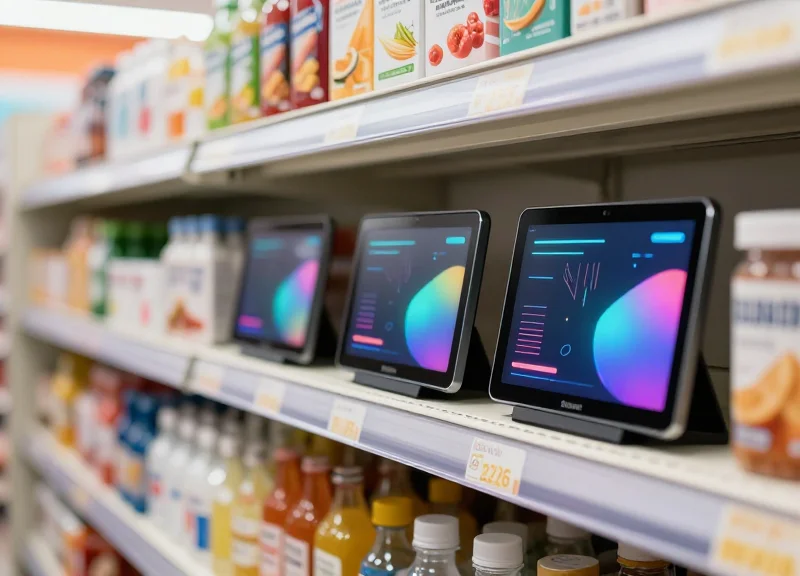
Next-Gen Electronic Shelf Labels (ESL) are advanced IoT-connected display devices that serve as the fundamental interface between a supermarket’s digital core and its physical inventory. Unlike early digital tags that merely replaced paper, the 2026 generation of ESLs integrates multi-color E-ink displays, Near Field Communication (NFC), and localized sensors to enable dynamic pricing, instant stock replenishment alerts, and interactive customer journeys. These devices act as a 'digital skin' for the retail environment, providing a high-fidelity data point at the exact moment of the purchase decision.
| Feature | Legacy ESL (Pre-2022) | Next-Gen ESL (2026 Standard) |
|---|---|---|
| Display Palette | Black & White / Limited Red | Full-spectrum Multi-color (E-ink Spectra 6) |
| Communication | Infrared / Basic RF | Secured Sub-GHz / Bluetooth 5.4 / NFC |
| Battery Life | 3-5 Years | Up to 15 Years (Energy Harvesting Options) |
| Customer Interaction | None | Touch-to-Pay, AR Triggers, Product Sourcing |
| Update Speed | Batch processing (Minutes) | Real-time Parallel Updates (Seconds) |
The evolution of the ESL is defined by its ability to do more than reflect a price change. With the integration of multicolor displays, retailers can now use visual cues to signal 'Sustainability Picks' or 'Flash Sales' automatically based on AI-driven inventory surplus. Furthermore, the shift to 2026-grade hardware means these devices are no longer passive; they are active participants in the store's ecosystem, communicating with both the customer's smartphone and the central inventory management system simultaneously.
How does NFC integration change the shopping experience?
NFC enables a 'Tap-to-Info' feature where customers can instantly access detailed product biographies, allergen warnings, or digital coupons on their mobile devices, effectively creating a personalized omnichannel experience at the shelf edge.
Can modern ESLs improve stock fulfillment?
Yes. High-visibility LEDs on next-gen tags can flash to guide 'Buy Online, Pick-up In-Store' (BOPIS) pickers to the exact item location, reducing fulfillment time by up to 30% compared to traditional paper-based methods.
What is the role of sub-GHz technology in these tags?
Sub-GHz wireless communication provides long-range, low-interference connectivity that ensures price updates reach thousands of tags across a massive supermarket floor in seconds without clogging the store's guest Wi-Fi.
Expert Insight: The 'Micro-Climate' Sensor Capability. A unique advantage emerging in 2026 is the use of ESLs as decentralized environmental monitors. Premium tags now come equipped with ambient temperature and humidity sensors. In cold-chain sections (meat, dairy, frozen), these tags act as a fail-safe; if a refrigerator's temperature deviates from the set point, the ESL can instantly alert the AI management system and update its display to warn staff of a potential spoilage risk, saving retailers millions in annual food waste.
How AI and ESL Synergy Redefines Dynamic Pricing Strategies

AI and Electronic Shelf Label (ESL) synergy represents the fusion of predictive machine learning with instantaneous physical execution. While AI acts as the 'brain' analyzing petabytes of market data, ESL units serve as the 'nervous system' that pushes those insights to the shelf edge in milliseconds. This partnership allows retailers to transition from static, manual pricing to a fluid model where prices are optimized for inventory health, competitor shifts, and consumer demand without the need for a single human intervention.
| Feature | Legacy Manual Pricing | AI + ESL Synergy (2026) |
|---|---|---|
| Update Speed | Days/Weeks per store | Seconds per 10,000+ units |
| Data Input | Historical intuition | Real-time IoT & Competitor Feeds |
| Accuracy | High error rate (5-10%) | Near-perfect synchronization |
| Primary Goal | Basic margin maintenance | Yield optimization & Waste reduction |
- Data Aggregation: AI engines ingest real-time data from POS systems, weather forecasts, local competitor web-scraping, and current stock levels.
- Algorithmic Decisioning: The AI determines the 'Price Elasticity' of each SKU, calculating the optimal price point to maximize either volume or margin.
- Automated Deployment: The central ERP pushes the update to the cloud, which transmits the new price to the specific ESL unit via Sub-GHz or Infrared signals.
- Consumer Feedback Loop: Built-in sensors in the ESL track customer dwell time and interaction, feeding data back to the AI to refine future pricing models.
A unique insight for the 2026 outlook is the rise of 'Waste-Mitigation Pricing' for perishables. By 2026, leading supermarkets will use AI to monitor the precise expiration dates of individual batches. As a product approaches its 'sell-by' date, the AI triggers incremental price drops on the ESL in 5% intervals. This 'Green Pricing' strategy ensures the product is sold before it becomes waste, effectively turning a potential total loss into a recovery of cost or even a small profit—something impossible to manage with manual paper tags.
Does dynamic pricing hurt customer trust?
Transparency is key. By 2026, successful retailers use ESLs to show 'why' a price is dynamic (e.g., 'Happy Hour Discount' or 'Flash Sale'), which actually increases engagement.
What is the typical latency for a store-wide update?
Modern ESL systems can update 10,000 labels in under 60 seconds, ensuring that the shelf price always matches the checkout price.
Can AI handle localized demand?
Yes. Hyper-local AI models can adjust prices for a single store location based on a local event, like a nearby stadium game increasing demand for beverages.
Operational Excellence: Reducing Labor Strain through Automation
Operational excellence in the 2026 supermarket is defined by the elimination of 'Dead Labor'—the time-consuming, non-value-added tasks that drain payroll without improving the customer experience. By replacing traditional paper tags with Next-Gen ESLs, retailers automate the entire pricing lifecycle. This shift removes the burden of printing, sorting, and manually clipping paper tags, which typically consumes 40 to 60 labor hours per week in a standard-sized supermarket. Through centralized automation, price integrity becomes a background process rather than a manual chore, allowing management to reallocate human capital toward roles that actually drive revenue, such as expert consultation and personalized floor service.
| Task Category | Traditional Paper Method (Weekly) | Next-Gen ESL Method (Weekly) | Labor Efficiency Gain |
|---|---|---|---|
| Price Update Execution | 30-40 Hours | 0.1 Hours (Instant) | 99.7% |
| Promotional Tagging | 10-15 Hours | 0.5 Hours (Scheduled) | 95.0% |
| Stock Replenishment | Visual/Manual Checks | LED-Guided (Optimized) | 40% Faster |
| Audit & Verification | 8 Hours (Random Sampling) | 0 Hours (Digital Sync) | 100% |
The 2026 Unique Insight: LED-Assisted Micro-Fulfillment. Beyond simple pricing, the 'Next-Gen' advantage lies in the use of high-intensity LED flash triggers for order picking. As online grocery orders and 'Click-and-Collect' volume surges, supermarkets are effectively becoming micro-warehouses. By 2026, ESLs will act as navigation beacons; when a staff member picks an order, the specific product's ESL flashes a unique color code, reducing search time by up to 15 seconds per item. In a 50-item basket, this saves nearly 13 minutes of labor per order, a massive cumulative gain for high-volume retailers.
- Phase 1: Elimination of the Paper Cycle: Remove the logistical tail of printing, cutting, and distributing paper tags across store aisles.
- Phase 2: Automated Replenishment Alerts: ESL sensors detect low-stock or out-of-stock scenarios and push 'Restock Required' notifications directly to staff handhelds.
- Phase 3: The Service Pivot: Staff are retrained from 'tag-hangers' to 'product specialists,' focusing on high-margin areas like wine, specialty meats, and electronics.
- Phase 4: Real-time Floor Audits: Managers use tablet-based dashboards to verify that the shelf edge perfectly matches the POS system, ensuring 100% price compliance.
How does ESL reduce staff turnover?
By automating the most repetitive and physically taxing tasks—like bending to change thousands of floor-level tags—retailers improve employee job satisfaction and reduce burnout, directly lowering recruitment and training costs.
Can ESLs help with inventory management?
Yes. Modern ESLs display 'Back of House' data such as stock levels, last delivery dates, and expected shipments directly on the tag (visible only to staff), enabling instant inventory decisions without leaving the floor.
What is the typical ROI on labor savings?
Most supermarkets see a full ROI on labor savings alone within 14 to 24 months, depending on the frequency of their promotional cycles and local labor rates.
Sustainability and the Green Retail Mandate for 2026

By 2026, the Green Retail Mandate is no longer a voluntary pledge but a regulatory necessity driven by global ESG (Environmental, Social, and Governance) disclosure requirements. The transition from traditional paper tags to Next-Gen Electronic Shelf Labels (ESL) represents the most immediate path to 'Circular Retail.' By eliminating the manufacturing, bleaching, printing, and disposal of millions of non-recyclable thermal paper tags, retailers can reduce their per-store carbon footprint by an estimated 20% while simultaneously leveraging AI to solve the massive problem of food waste through dynamic expiration management.
| Sustainability Metric | Traditional Paper Tags | Next-Gen ESL (2026 Standard) |
|---|---|---|
| Material Waste | 50,000+ tags/store annually (non-recyclable) | Zero paper waste; 10+ year hardware lifecycle |
| Operational Carbon | High: Continuous logistics and ink chemical waste | Ultra-low: Sub-GHz low power; 15-year battery options |
| Food Spoilage Impact | High: Manual updates fail to move near-expiry items | Low: AI-driven 'Flash Sales' reduce waste by 30% |
| Circular Economy | None (End-of-life is landfill) | Modular design for component recovery |
A unique insight for 2026 is the emergence of 'Avoided Methane Credits.' Traditional retail metrics often ignore the environmental cost of food that rots on shelves because manual re-tagging was too slow. Next-Gen ESLs, integrated with AI inventory sensors, allow for 'Price-to-Freshness' automation. By instantly discounting items as they approach their sell-by date, supermarkets significantly decrease the volume of organic waste sent to landfills—a major source of methane emissions. In the 2026 outlook, the ESL is not just a display; it is a carbon-mitigation tool that pays for itself through avoided disposal fees and ESG tax incentives.
Does the production of ESL electronics outweigh the benefits of saving paper?
No. Life Cycle Assessments (LCAs) show that the carbon debt of manufacturing an ESL is typically 'paid back' within 18-24 months of operation by eliminating the massive supply chain required for thermal paper, ink, and frequent logistics.
How do batteries impact the 'Green' claim of ESL?
2026-era ESLs utilize ultra-efficient e-ink and energy-harvesting technologies (like ambient light sensors) that extend battery life to 10-15 years, combined with standardized recycling programs for lithium-ion button cells.
Can ESL help retailers meet new EU and North American green regulations?
Yes. ESL provides a digital audit trail of pricing and waste reduction, which is essential for complying with the Corporate Sustainability Reporting Directive (CSRD) and other global transparency mandates.
Furthermore, the 'Social' aspect of ESG is addressed by ESL through the 'Dignity of Labor.' By automating the tedious and physically demanding task of manual tag replacement—which often requires thousands of repetitive motions per week—retailers can refocus their human capital on customer-facing roles, improving job satisfaction and reducing turnover in a tightening labor market.
Enhancing the Omnichannel Customer Journey with Real-Time Data
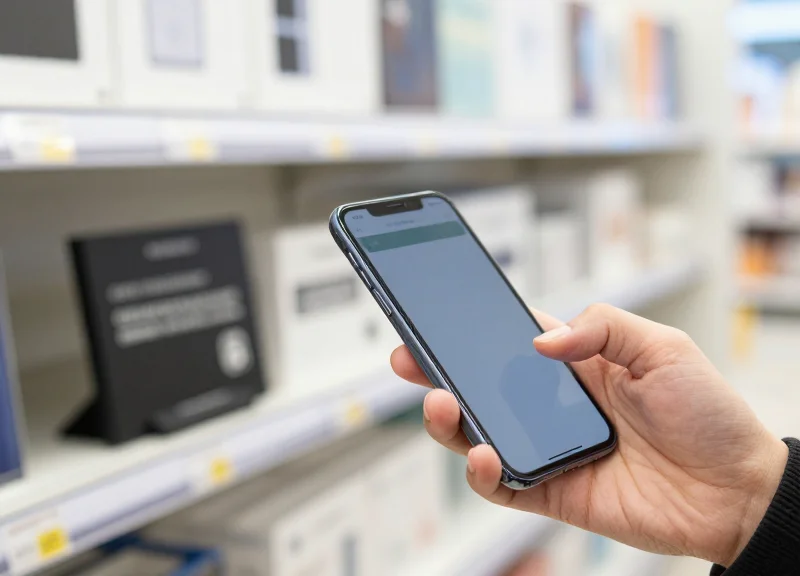
In the 2026 retail landscape, the 'Omnichannel Journey' is no longer a buzzword but a baseline requirement; Next-Gen Electronic Shelf Labels (ESL) serve as the critical 'physical API' that bridges the gap between a retailer's digital presence and the brick-and-mortar floor. By acting as a Single Source of Truth (SSOT), ESLs ensure that pricing, promotional data, and inventory levels are synchronized across web, mobile app, and shelf-edge in real-time, eliminating the 'friction of inconsistency' that traditionally erodes consumer trust and conversion rates.
| Feature | Traditional Paper Tags | Next-Gen ESL (Omnichannel Integrated) |
|---|---|---|
| Price Parity | Delayed updates (24-48 hours), high error rate | Instant synchronization with web/app pricing |
| Inventory Visibility | Staff must check backroom or handhelds | Real-time stock levels displayed for shoppers and pickers |
| Customer Interaction | Static, non-interactive information | NFC/QR triggers for reviews, videos, and 'Add to Digital Cart' |
| Order Fulfillment | Slow manual searching for items | LED 'Pick-to-Light' guidance for ultra-fast BOPIS |
One of the most transformative impacts of ESL on the omnichannel journey is the optimization of Click-and-Collect (BOPIS) and delivery services. In an AI-driven supermarket, store associates or third-party gig workers use handheld devices that communicate directly with the ESLs. As the picker approaches an aisle, the specific ESL for the item flashes a high-visibility LED (Pick-to-Light). This reduces search time by up to 30%, ensures order accuracy, and allows retailers to scale high-volume online fulfillment directly from the store floor without increasing labor overhead.
How does ESL prevent 'Showrooming' in 2026?
Rather than losing customers to online competitors, ESLs allow retailers to display 'Live Competitor Price Matching' or provide instant digital coupons via NFC, keeping the transaction within the store's ecosystem.
Can ESLs help with product transparency and allergies?
Yes. By scanning the ESL with a smartphone, customers can access full ingredient lists, carbon footprint data, or personalized 'safe for you' alerts based on their digital health profiles.
Does real-time data improve out-of-stock management?
Absolutely. When a shelf is empty, the ESL can automatically switch to a 'Scan to Ship to Home' mode, allowing the retailer to capture the sale even if the physical stock is depleted.
Expert Insight: The Rise of Contextual Proximity Marketing. A unique advantage for 2026 is 'hyper-personalization at the edge.' When a loyalty-app user approaches an ESL, the AI backend recognizes their shopping history via Bluetooth Low Energy (BLE). The ESL can trigger a personalized price or 'just-for-you' bundle deal on the customer's phone or on a secondary digital screen. This creates a 'Gamified' shopping experience where the shelf-edge actively participates in the sale, transforming a passive label into a dynamic sales agent.
Inventory Management 2.0: Integrating ESL with AI Analytics
Inventory Management 2.0 is the transition from reactive, manual stock counting to a proactive, 'live-shelf' ecosystem where Electronic Shelf Labels (ESL) act as the physical frontend for AI-driven supply chain intelligence. By integrating ESLs with computer vision and predictive analytics, retailers can achieve real-time visibility into shelf health, reducing out-of-stock (OOS) incidents by up to 30% and ensuring that the high-velocity items identified by AI are always available for the consumer.
| Feature | Legacy Inventory (Paper) | Inventory 2.0 (ESL + AI) |
|---|---|---|
| Stock Visibility | Delayed (Manual Audits) | Real-Time (Sensor-to-Label) |
| Restock Signaling | Employee Walkthroughs | Automated LED Alerts (Pick-to-Light) |
| Data Accuracy | 70-80% (Human Error) | 98%+ (AI Validated) |
| Waste Reduction | High (FIFO ignored) | Optimized (AI-driven Expiry Alerts) |
The true power of this integration lies in the feedback loop. When an AI computer vision system detects a 'hole' on the shelf, it doesn't just send an alert to a backroom dashboard; it can trigger a 'Pick-to-Light' signal directly on the ESL. This allows staff to identify exactly which SKU needs replenishment without scanning every barcode, effectively turning the entire store into a high-efficiency fulfillment center. Furthermore, 2026-era ESLs support 'Hidden Metadata'—non-customer facing data like 'Backstock Quantity' or 'Next Delivery Date' accessible to staff via NFC or specialized screen toggles.
- Data Capture: Fixed cameras or shelf sensors identify low stock levels and feed images to the AI engine.
- Algorithmic Analysis: The AI compares visual data against POS sales trends to predict when a total stock-out will occur.
- ESL Activation: The system pushes an update to the ESL, flashing a specific LED color to guide restocking staff to the priority gap.
- Automated Replenishment: The AI places a purchase order (PO) with the distributor based on the real-time shelf depletion rate.
Expert Tip: To maximize ROI, retailers should implement 'Dynamic Facings.' AI analytics can determine if a product needs more shelf space based on velocity data, and the ESLs can automatically update their digital boundaries to reflect new planograms, reducing the need for manual shelf resets.
How does ESL integration improve 'Click and Collect' accuracy?
By showing real-time stock levels and flashing for pickers, it ensures that online orders are fulfilled faster with fewer substitutions.
Can AI-ESL systems help with perishable goods?
Yes. The AI monitors expiration dates and triggers the ESL to apply a 'Quick Sale' discount automatically as the product nears its end-of-life.
Does this require a total infrastructure overhaul?
Most modern AI inventory tools are API-first, meaning they can overlay existing ESL cloud managers with minimal downtime.
Calculating ROI: Why the Switch to ESL is a Financial Imperative
In the 2026 retail landscape, Electronic Shelf Labels (ESL) have transitioned from a luxury tech-upgrade to a fundamental financial imperative. The Return on Investment (ROI) for ESL is no longer just about 'saving paper'; it is defined by the total elimination of price execution lag and the recapturing of lost margins. Most enterprise-level supermarkets now see a full payback on their ESL investment within 14 to 20 months. This is achieved by combining three financial pillars: the eradication of manual labor costs (which account for roughly 2% of gross revenue in paper-heavy stores), the reduction of perishable waste through algorithmic markdowns, and the 3-5% lift in top-line revenue generated by high-frequency dynamic pricing.
| Cost/Benefit Driver | Traditional Paper Tags (Annual) | Next-Gen ESL (Annualized) | Financial Impact |
|---|---|---|---|
| Labor Costs | $45,000 - $60,000 | <$2,000 (Maintenance) | 95% reduction in labor spend |
| Material & Printing | $8,000 - $12,000 | $0 | Complete overhead elimination |
| Price Mismatch Fines | $2,500 - $5,000 | $0 | Risk mitigation & compliance |
| Perishable Waste | 12% Average Loss | 4% Average Loss | 8% margin recovery on fresh goods |
The 'Silent Yield' Insight: While most CFOs focus on labor savings, the most transformative financial gain comes from 'Micro-Yield Management.' In a paper-based system, it takes days to update 10,000 SKUs, meaning stores miss thousands of opportunities to adjust prices based on real-time competitor data or supply chain fluctuations. Next-gen ESLs allow for 'Hyper-Local Elasticity Capture'—the ability to raise prices by just $0.02 on high-velocity items when local demand spikes. Across 30,000 items, these micro-adjustments generate a 'silent yield' that can increase net profit by as much as 15% without negatively impacting customer price perception.
- Phase 1: Direct Cost Displacement: Calculate the current monthly spend on specialized paper, ink, and the 'walking hours' employees spend replacing tags. This usually covers 40% of the ESL hardware cost in year one.
- Phase 2: Waste Mitigation Analysis: Integrate AI to trigger automatic ESL markdowns for products nearing expiration. Reducing shrink by even 20% often provides the 'tipping point' for ROI in the grocery sector.
- Phase 3: Revenue Lift via Dynamic Pricing: Implement automated price matching against digital competitors. The ability to stay competitive in real-time prevents 'showrooming' and keeps high-margin sales in-store.
What is the typical lifespan of a 2026-era ESL unit?
Modern ESLs utilize ultra-low-power e-paper and high-capacity batteries, offering a lifespan of 7 to 10 years even with 3-5 price updates per day.
Does the ROI account for the initial infrastructure cost?
Yes. Comprehensive ROI models include the cost of IoT gateways, cloud software licenses, and installation. Even with these upfront 'Capex' costs, the 'Opex' savings create a positive cash flow by year two.
How does ESL impact 'hidden' costs like employee retention?
Manual tagging is a primary driver of employee burnout in retail. By automating this tedious task, stores report higher retention rates, reducing the $4,000+ cost associated with hiring and training new staff.
Preparing Your Supermarket for the 2026 Digital Evolution
Preparing for the 2026 digital evolution involves transforming your supermarket from a series of disconnected aisles into a high-speed data environment. This shift goes beyond simple hardware replacement; it requires a foundational upgrade of your store's digital infrastructure to support real-time pricing, AI-driven stock monitoring, and hyper-personalized customer interactions. Retailers must move away from 'set-and-forget' pricing to a dynamic, API-first architecture where every shelf edge acts as a synchronized IoT endpoint.
| Infrastructure Pillar | Legacy Requirement (2020-2024) | 2026 Digital Evolution Standard |
|---|---|---|
| Connectivity | Basic Wi-Fi/Proprietary RF | Sub-GHz or Bluetooth 5.0 Mesh Networks |
| Data Refresh Speed | Daily or Weekly batch updates | Real-time dynamic pricing (Sub-60 seconds) |
| System Integration | Standalone pricing software | Full ERP, AI-Analytics, and Mobile App sync |
| Power Management | Standard replaceable batteries | Ultra-low power with ambient light harvesting |
- Phase 1: Connectivity Audit and Upgrade: Ensure your store’s wireless infrastructure can handle thousands of low-latency devices. Modern ESLs often utilize dedicated sub-GHz frequencies to avoid interference with customer Wi-Fi, providing 100% update reliability.
- Phase 2: Data Architecture Normalization: Cleanse your product database to ensure seamless communication between your POS, online storefront, and shelf labels. Discrepancies here are the primary cause of digital transformation friction.
- Phase 3: Pilot High-Volatility Categories: Start your migration with departments that have high price fluctuations or perishability, such as produce or meat, to see the fastest ROI on waste reduction and labor savings.
- Phase 4: Staff Upskilling: Re-train floor associates to use ESL-integrated tools (like 'pick-to-light' features) for faster inventory restocking and online order fulfillment.
Expert Insight: In 2026, the most successful retailers will treat ESLs as 'Edge Computers.' By using labels equipped with NFC and multi-color LED indicators, stores can enable 'Silent Assistance'—where a customer taps their phone on a tag to see allergen info, or a stocker follows a flashing light to find a misplaced item. The goal is to move from a visual price tag to a functional interactive node.
How long does a full supermarket ESL rollout take?
For a standard 40,000 sq. ft. store, a full hardware installation can be completed in 3-5 nights during closing hours, though backend software integration typically requires 4-8 weeks of lead time.
Will ESLs interfere with my existing store Wi-Fi?
Next-gen systems use Zigbee or proprietary Sub-GHz protocols specifically designed to operate on different frequencies than consumer Wi-Fi, ensuring zero interference and maximum security.
What is the expected lifespan of 2026-era digital labels?
With advances in e-paper technology and energy-efficient chipsets, modern ESLs are designed for a 10-15 year lifespan, even with multiple price updates per day.