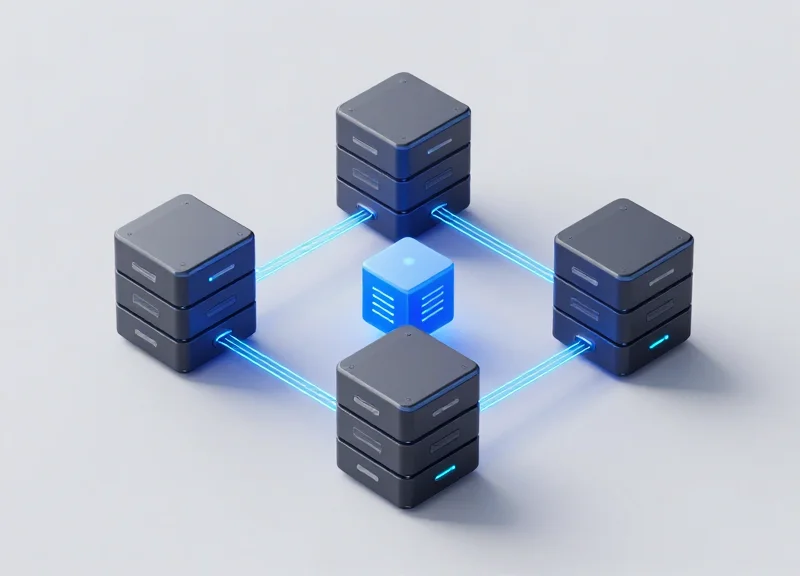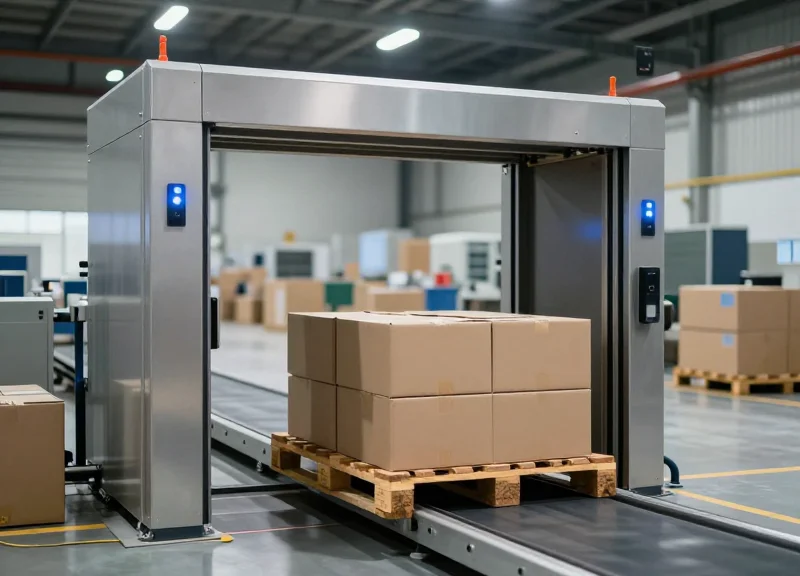
As the construction industry approaches 2026, the labor shortage crisis has reached a tipping point, forcing firms to innovate or face obsolescence. Smart Jobsites are no longer a futuristic concept but a survival strategy. Next-generation RFID (Radio Frequency Identification) technology is emerging as the ultimate shield, enabling contractors to bridge the personnel gap by automating high-friction tasks, securing expensive equipment, and ensuring that every worker on-site is utilized to their maximum potential safely. In this article, we explore how DragonGuardGroup's expertise in RFID is redefining operational efficiency in a world with fewer hands but higher demands.
The 2026 Construction Landscape: Navigating the Global Labor Crunch
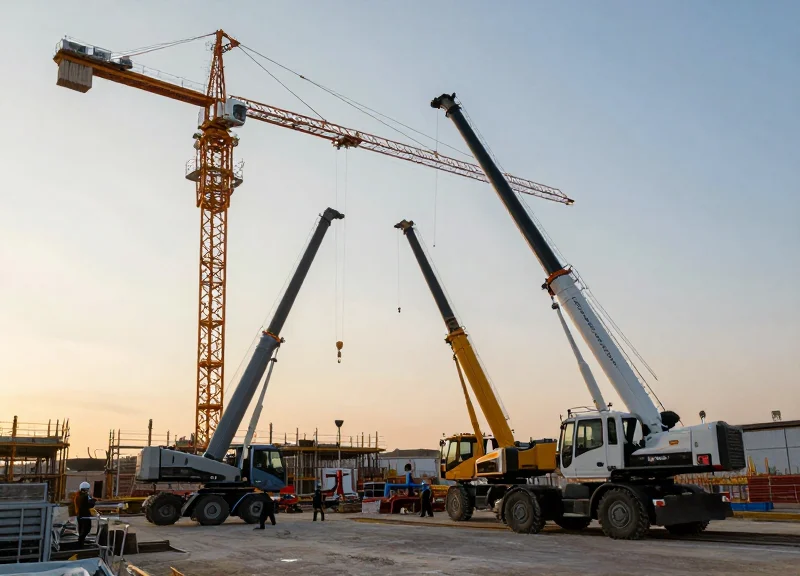
The 2026 construction landscape is defined by a 'structural deficit' where the global demand for infrastructure exceeds the available skilled workforce by an estimated 25%. As traditional recruitment methods fail to attract Gen Z workers, the industry is pivoting toward a 'Smart Jobsite' model. This shift relies on Next-Gen RFID and IoT ecosystems to automate low-value manual tasks, allowing a leaner workforce to manage increasingly complex project cycles without compromising safety or output quality.
| Metric | 2020 Benchmark | 2026 Projection |
|---|---|---|
| Average Worker Age | 43 Years | 47 Years |
| Skill Gap Index | Moderate | Critical (High-Tech Focus) |
| Unfilled Vacancies | ~300,000 (US) | ~550,000+ (US) |
| Tech Integration Ratio | 15% of Sites | 65% of Sites |
Why are traditional recruitment methods failing in 2026?
Legacy outreach focuses on manual labor roles that no longer appeal to a digitally native workforce. Younger talent seeks 'High-Tech, Low-Impact' roles where technology like robotics and RFID-driven analytics handle the physical and administrative grunt work.
How does the labor shortage impact project timelines?
Labor scarcity leads to 'schedule creep.' Without enough boots on the ground, asset mismanagement and lost equipment account for up to 15% of project delays—a gap that automated tracking is now bridging.
Is the labor crunch global or regional?
It is a global phenomenon. Developed nations face aging populations, while emerging markets struggle with a 'brain drain' toward tech-centric urban sectors, making site automation a universal necessity.
A unique insight for 2026 is the emergence of the 'Knowledge Transfer Crisis.' As the 'Silver Tsunami' of experienced foremen retires, they take decades of tribal knowledge with them. Next-Gen RFID is no longer just for tracking hammers; it is becoming a 'Digital Foreman.' By embedding logic into asset tags, the jobsite itself can now 'tell' an inexperienced worker where a tool belongs, when a machine needs maintenance, and how to stay within safety parameters, effectively digitizing the mentorship that the industry no longer has the headcount to provide manually.
Defining the 'Smart Jobsite': The Convergence of RFID and IoT

A Smart Jobsite is defined as a construction environment where Radio Frequency Identification (RFID) and Internet of Things (IoT) technologies converge to create an autonomous, data-driven ecosystem. In this framework, RFID serves as the 'sensory nervous system,' providing passive, real-time tracking of personnel, equipment, and materials, while IoT platforms act as the 'brain,' analyzing this data to optimize workflows and compensate for a shrinking manual workforce. Unlike traditional sites that rely on manual logging, a 2026 smart jobsite uses 'Passive Intelligence' to ensure that every asset is accounted for without requiring a single human touchpoint.
| Feature | Legacy Jobsite (Manual) | Next-Gen Smart Jobsite (RFID/IoT) |
|---|---|---|
| Data Collection | Manual entry, prone to human error | Automated, passive RFID sensing |
| Asset Visibility | Periodic audits/check-ins | Real-time location & status (RTLS) |
| Labor Efficiency | High 'Tool Time' waste | Optimized logistics & reduced idle time |
| Safety Compliance | Reactive reporting | Proactive geofencing & alerts |
The true power of this convergence lies in the shift from 'connected' to 'intelligent.' By 2026, the industry has moved beyond simple tracking. Expert Tip: The most successful firms are now implementing 'Zero-Touch Documentation.' This is an original framework where the physical movement of an RFID-tagged material—such as a steel beam passing through a gate—automatically updates the BIM (Building Information Model), triggers subcontractor payment, and adjusts the project timeline, removing the administrative burden from site managers who are already spread thin by labor shortages.
How does RFID differ from standard GPS on a jobsite?
While GPS is excellent for outdoor fleet tracking, it fails indoors and is cost-prohibitive for small tools. RFID provides granular, low-cost tracking for thousands of individual items—from bags of cement to power drills—within the complex, multi-level structures of a construction site.
Why is IoT necessary if we already have RFID?
RFID identifies the 'what' and 'where,' but IoT provides the 'so what.' IoT gateways connect those individual data points to the cloud, allowing AI algorithms to predict if a delay in material delivery will cause a labor bottleneck three days from now.
Is the convergence of these technologies affordable for mid-sized firms?
By 2026, the cost of passive RFID tags has dropped to pennies, and 'Plug-and-Play' IoT gateways have replaced expensive custom infrastructure, making the ROI visible within the first six months through reduced asset loss alone.
Automating Workforce Management: Reducing Administrative Overhead

Automating workforce management through next-gen RFID transforms the jobsite from a manual entry environment into a self-documenting ecosystem. By utilizing smart wearable badges, contractors can eliminate the 'morning bottleneck' of manual sign-ins, automate payroll hours through geo-fenced zones, and ensure that only workers with current, valid certifications can access high-risk areas—all without human intervention. This shift reduces administrative overhead by as much as 30%, directly addressing the labor shortage by making existing management staff significantly more efficient.
| Administrative Function | Traditional Manual Method | Next-Gen RFID Automation |
|---|---|---|
| Attendance Tracking | Paper sign-in sheets / Manual entry | Passive portal detection (Real-time) |
| Compliance Verification | Visual badge checks / Spreadsheet audits | Automated gate locks based on SQL database |
| Payroll Accuracy | Subjective reporting / Estimated hours | Precise entry/exit timestamps to the minute |
| Emergency Mustering | Physical roll calls / Phone trees | Instant digital headcounts via IoT hub |
A significant drain on productivity is the 'Administrative Tax'—the hidden cost of skilled supervisors spending hours cross-referencing safety credentials and logging man-hours. In 2026, the trend is moving toward 'Dynamic Credentialing.' Expert Insight: By integrating RFID badges with an automated Compliance Engine, the system can autonomously restrict zone access the moment a worker's specific safety certification expires. This prevents liability issues before they occur, shifting the site manager's role from a 'compliance enforcer' to a 'production optimizer.'
- Onboarding and Digital Identity: Workers are issued an encrypted RFID badge linked to their digital profile, including training history and safety certifications.
- Frictionless Perimeter Control: As workers pass through RFID portals at site entrances, their arrival is logged automatically without requiring them to stop or scan.
- Zone-Specific Verification: Internal RFID sensors monitor access to hazardous zones, ensuring only specialized crews with active permits can enter.
- Automated ERP Integration: Data flows directly from the site gates to payroll and project management software, eliminating double-entry and human error.
How does RFID handle tailgating at site entrances?
High-gain RFID antennas are paired with overhead sensors to detect the number of unique tags passing through a space simultaneously, alerting security if the number of bodies exceeds the number of detected badges.
Can these badges be used for contact tracing or safety alerts?
Yes, next-gen badges often include active or semi-passive sensors that can alert workers to nearby heavy machinery or help locate individuals during an emergency evacuation.
Is the data compatible with current construction software?
Modern RFID solutions use open APIs to push data directly into platforms like Procore, Autodesk Construction Cloud, and various ERP systems for a unified view of project health.
Next-Gen RFID for Asset Protection: Minimizing Downtime and Theft
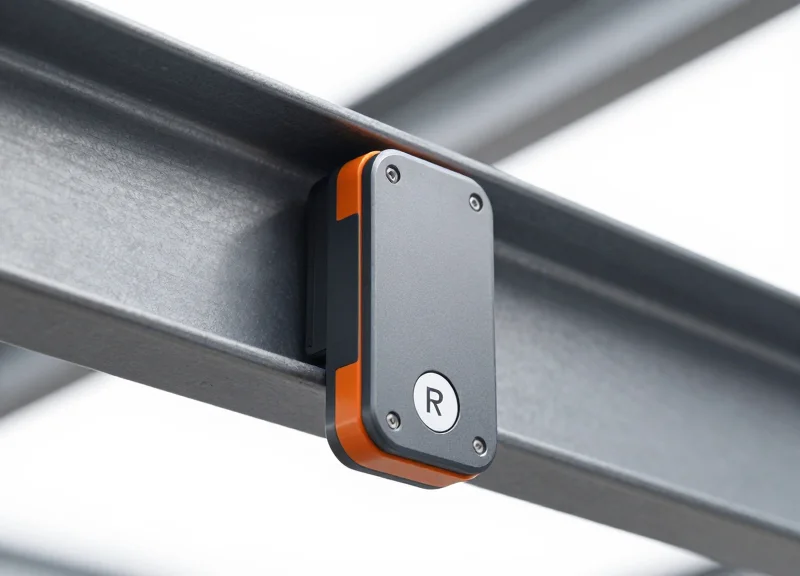
Next-gen RFID for asset protection utilizes high-frequency active tags and BLE-enabled sensors to create a self-auditing jobsite that eliminates the 15-20% of daily labor hours typically wasted on 'asset hunting.' By integrating real-time location systems (RTLS) with geofencing, construction firms can automate inventory management and drastically reduce equipment downtime caused by misplacement, maintenance oversight, or unauthorized removal. In the 2026 landscape, this technology acts as a force multiplier, ensuring that every available worker is engaged in productive labor rather than logistical recovery.
As the labor shortage intensifies, the 'Where is it?' syndrome becomes a terminal drain on project timelines. When a specialized crew of electricians is stalled because a specific testing unit is missing or a forklift has been moved to a different sub-level without documentation, the financial impact is compounded by high hourly wages and delay penalties. 2026 trends indicate a shift toward 'Ambient Intelligence,' where assets are no longer just tracked but are contextually aware of their assigned zones.
| Feature | Legacy Asset Tracking | 2026 Next-Gen RFID |
|---|---|---|
| Visibility | Last-seen checkpoint (Passive) | Live 3D spatial mapping (Active/Hybrid) |
| Search Time | 10-30 minutes per search | Instantaneous (< 2 seconds) |
| Theft Deterrence | Post-incident discovery | Real-time Geofence breach alerts |
| Data Integration | Manual spreadsheet updates | Direct API sync to BIM/ERP systems |
A unique insight for 2026 is the rise of the 'Recovery Ratio' metric. Forward-thinking firms are no longer just looking at theft prevention; they are measuring the 'Ghost Asset' index—the delta between rented equipment and actual utilization. Next-gen RFID allows for 'just-in-time' tool delivery and automated off-renting. By knowing exactly when a piece of machinery is idle, managers can return it immediately, saving thousands in unnecessary rental fees that would otherwise go unnoticed by a stretched-thin workforce.
- Multi-Layered Tagging Strategy: Apply ruggedized active tags for high-value machinery and cost-effective passive 'Nano-tags' for small power tools and materials.
- Mesh Gateway Infrastructure: Deploy solar-powered gateways across the site to create a continuous data mesh, ensuring zero 'dark zones' where assets could vanish.
- Automated Certification Matching: Use RFID to ensure that only workers with the correct digitized certifications can unlock or operate specific heavy equipment.
How does Next-Gen RFID handle interference from heavy steel structures?
Modern 2026 systems utilize Ultra-Wideband (UWB) and frequency-hopping spread spectrum (FHSS) technologies to bypass signal multi-pathing common in steel-heavy environments.
What is the expected battery life for active asset tags?
Due to advancements in energy-efficient silicon and vibration-based energy harvesting, 2026 active tags typically last 5 to 8 years without maintenance.
Can RFID help with 'Invisible Theft' or tool hoarding?
Yes. By establishing 'social circles' for tools via AI, the system identifies when a worker has checked out more assets than their task requires, flagging potential hoarding before it impacts site-wide availability.
Enhancing Worker Safety with Real-Time Location Systems (RTLS)
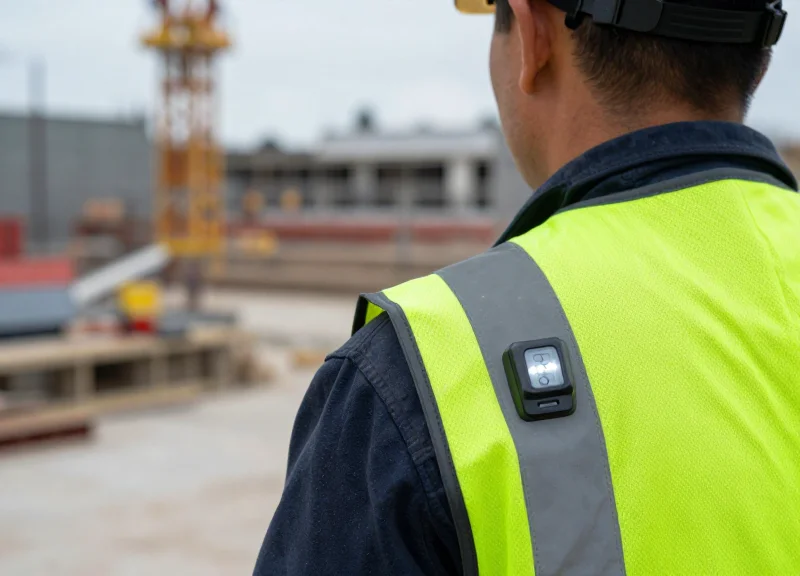
Real-Time Location Systems (RTLS) in construction utilize active RFID tags and beacons to track the precise coordinates of workers and equipment across a jobsite. By integrating this data with a site’s digital twin, RTLS creates dynamic geo-fences that trigger instant haptic or audible alerts when a worker enters a high-risk zone—such as a crane's swing radius or an unstable excavation area—thereby preventing accidents before they occur and protecting the industry's most valuable remaining asset: its people.
| Feature | Legacy Safety Protocols | Next-Gen RTLS (RFID) |
|---|---|---|
| Hazard Detection | Visual observation & manual signaling | Automated sub-meter proximity sensing |
| Response Time | Delayed (dependent on human reaction) | Instantaneous (milliseconds) |
| Monitoring | Spot-checks by safety officers | 24/7 continuous digital oversight |
| Data Analysis | Anecdotal or post-incident reports | Predictive heatmaps of near-miss events |
- The RTLS Safety Workflow: Active RFID tags embedded in worker vests or hard hats transmit a unique signal to site-wide gateways every few milliseconds.
- Geo-Fence Calculation: The central IoT platform compares the worker's position against pre-defined 'Danger Zones' mapped in the project's BIM model.
- Automated Intervention: If a proximity breach is detected, the system triggers a vibrating alert on the worker's tag and can even automatically shut down nearby heavy machinery.
Expert Insight: The 'Safety-Retention Loop'. In my two decades observing Silicon Valley's impact on industrial sectors, I’ve identified a unique trend for 2026: workers now prioritize 'technological safety' when choosing employers. In a labor-starved market, deploying RTLS does more than just lower insurance premiums; it creates a superior employee value proposition. When a workforce feels truly protected by an invisible, non-intrusive safety net, retention rates climb by up to 15%. Safety tech is no longer just about compliance; it is a primary recruitment and retention tool.
Does RTLS compromise worker privacy?
Modern systems are designed for safety-first tracking. Data is typically anonymized to focus on proximity alerts during shift hours rather than individual surveillance, ensuring GDPR and labor union compliance.
How does RTLS handle high-density sites?
Next-gen ultra-wideband (UWB) RFID protocols are specifically built to handle high-interference environments, maintaining sub-meter accuracy even in dense steel structures.
Can it help with emergency evacuations?
Yes. RTLS provides an instant 'digital roll call,' allowing safety managers to see exactly who is still in a building during an emergency, reducing search-and-rescue times from hours to minutes.
Data-Driven Productivity: Integrating RFID with Building Information Modeling (BIM)

Integrating Next-Gen RFID with Building Information Modeling (BIM) bridges the gap between the static 'as-designed' model and the dynamic 'as-built' reality of a construction site. By embedding or attaching RFID tags to structural components—such as steel beams, HVAC units, or precast concrete panels—project managers create a seamless data loop where physical installation triggers an immediate status update within the BIM software. This synchronization allows for automated 4D (scheduling) and 5D (cost) tracking, ensuring that the digital twin reflects the exact state of the project without the need for manual data entry from a shrinking pool of administrative staff.
In the 2026 landscape, this integration is no longer just about 'seeing' the project; it is about predictive analytics. When an RFID gate detects a delivery or a handheld scanner registers an installation, the BIM environment calculates the current 'velocity' of the project. If the data shows a lag in the assembly of the third floor, the system can automatically adjust procurement schedules for the fourth floor, preventing a bottleneck before it manifests. This level of automated foresight is the primary shield against the unpredictability of labor shortages.
| Feature | Manual BIM Updates (Traditional) | RFID-Integrated BIM (Next-Gen) |
|---|---|---|
| Data Latency | Weekly or Bi-weekly reporting | Real-time, sub-second updates |
| Accuracy | Prone to human error/estimation | Verification based on physical presence |
| Labor Demand | High (requires site walk-throughs) | Low (automated via IoT sensors) |
| Decision Making | Reactive (fixing past mistakes) | Proactive (predictive scheduling) |
The 2026 Insight: Velocity-Based Resource Allocation. Unlike standard tracking, elite 2026 firms are using 'Velocity Tracking' within their BIM. By measuring the precise time between an RFID tag arriving on-site and its final 'commissioned' status in the BIM, AI engines can determine the real-time efficiency of specific crews. When labor is scarce, this data allows managers to move their most efficient teams to critical-path tasks, maximizing the output of every available worker without increasing their physical workload.
Does RFID-BIM integration require specialized software?
Most modern BIM platforms like Revit or Navisworks now offer APIs that connect directly to RFID middleware, allowing for automated property updates without proprietary hardware lock-in.
Can RFID track progress in high-density steel environments?
Yes, 2026-grade on-metal RFID tags and localized mesh networks have overcome the 'Faraday Cage' effect, allowing accurate signal reading even in dense structural steel frameworks.
How does this reduce the impact of labor shortages?
By automating the reporting of 70% of site activities, your remaining site supervisors can spend 100% of their time on quality control and mentorship rather than clerical status updates.
Cost-Benefit Analysis: Calculating the ROI of RFID Adoption
The Return on Investment (ROI) for next-gen RFID in construction is calculated by totaling the direct savings from reduced asset shrinkage, the indirect gains from reclaimed labor hours, and the long-term impact of lower insurance premiums. By 2026, industry benchmarks suggest that mid-to-large scale projects can achieve a full ROI within 12 to 18 months of deployment. This is driven primarily by a 20% increase in tool utilization rates and a 90% reduction in time spent on manual inventory audits, effectively neutralizing the financial sting of rising labor costs.
| Cost Driver | Traditional Jobsite (Estimated) | RFID-Enabled Jobsite (2026 Projection) | Financial Impact |
|---|---|---|---|
| Annual Asset Shrinkage | 3% - 5% of total tool value | <0.5% through real-time tracking | 85% reduction in loss |
| Search & Sort Time | 1.5 hours per worker/week | <10 minutes per worker/week | 90% labor efficiency gain |
| Insurance Premiums | Standard industry rates | 5% - 8% safety/security discount | Significant Opex reduction |
| Inventory Audits | 40+ man-hours per month | Automated real-time reporting | 95% admin cost savings |
Beyond simple loss prevention, the strategic value of RFID lies in its ability to lower the 'Shadow Labor Cost.' This is the hidden expense incurred when highly skilled journeymen are forced to perform low-value tasks like searching for a specific generator or manually logging material deliveries. By automating these data-capture points, firms can reallocate their limited human capital to critical path activities, directly accelerating the project's 'Time-to-Value' and reducing liquidated damages.
- Identify Baseline Asset Loss: Quantify the annual cost of replaced tools, lost materials, and equipment downtime from the previous three years.
- Measure 'Search Time' Leakage: Track the minutes spent by field staff locating assets over a two-week period to calculate the total labor hours wasted.
- Audit Insurance and Liability: Consult with underwriters regarding 'active monitoring' discounts for sites using RFID for worker safety and asset security.
- Calculate Accelerated Completion Value: Estimate the financial bonus or overhead savings of completing projects 5% faster due to streamlined logistics.
How does RFID specifically lower insurance costs?
Carriers are increasingly offering 'Technology Credits' for sites that use RFID geo-fencing and RTLS. These systems provide verifiable proof of safety compliance and proactive theft prevention, lowering the insurer's risk profile.
What is the 'Invisible ROI' of RFID?
An original perspective: The 'Invisible ROI' is the reduction in employee burnout. When workers have the tools they need exactly when they need them, job satisfaction increases, reducing the high costs associated with turnover in a tight labor market.
The Future of Site Logistics: RFID-Enabled Just-in-Time Delivery
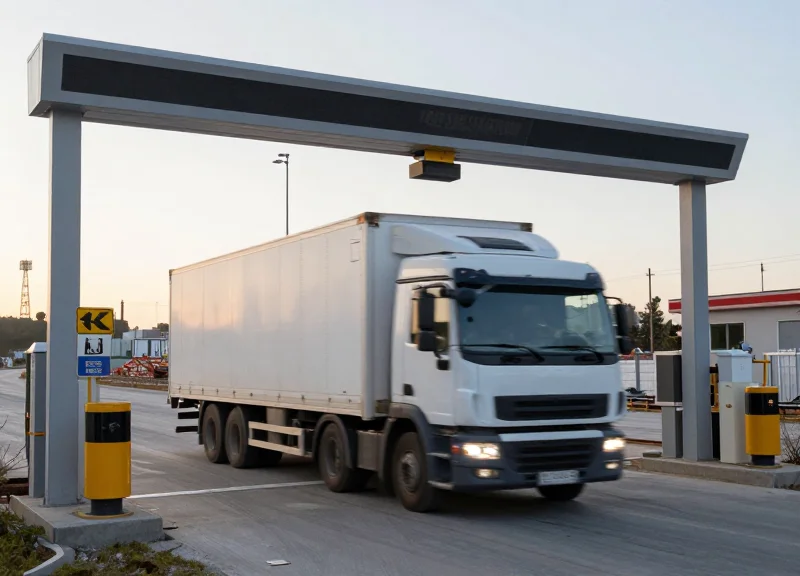
RFID-enabled Just-in-Time (JIT) delivery in construction is a logistics framework where materials are tracked via high-frequency tags from the point of fabrication to the exact installation zone. By 2026, this technology will allow project managers to synchronize material arrival with real-time labor availability, ensuring that components—from HVAC units to precast concrete—arrive on-site only when the installation crew is ready. This eliminates the 'double handling' of materials and prevents site congestion, a critical factor when working with the skeletal crews common in today's labor market.
- Factory-to-Gate Visibility: Materials are tagged at the manufacturing plant, providing the site manager with a live ETA and automated verification of specifications before the truck even leaves the yard.
- Automated Receiving: As the delivery vehicle passes through an RFID portal at the site entrance, the inventory is automatically checked against the manifest and BIM model, updating project status instantly without manual scanning.
- Point-of-Use Delivery: RFID sensors guide crane operators or forklift drivers to deliver the load directly to the active work zone, reducing the time laborers spend transporting materials across the site.
| Feature | Traditional Logistics | RFID-Enabled JIT (2026) |
|---|---|---|
| Inventory Storage | Large on-site laydown areas; high risk of damage. | Minimal storage; materials move from truck to install. |
| Labor Requirement | Dedicated teams for unloading and sorting. | Installation crews handle direct-to-point delivery. |
| Material Loss | 3-5% 'shrinkage' due to misplacement. | Near-zero loss via real-time GPS/RFID tethering. |
| Site Congestion | High; multiple trades competing for space. | Low; delivery windows are micro-managed. |
Expert Insight: The Rise of 'Zero-Staging' Environments. In urban 'canyon' construction where space is non-existent, the 2026 standard is moving toward 'Zero-Staging.' By leveraging RFID, logistics managers can implement 'Dynamic Sequencing.' This means if a crew is running 20 minutes behind, the RFID system can automatically signal the delivery truck to hold at a nearby staging hub or reroute a different material sequence that fits the current labor flow. This level of granular control turns the jobsite into a high-precision assembly line, effectively decoupling progress from the sheer number of workers on-site.
How does RFID JIT reduce labor costs?
It eliminates the 'search and retrieve' cycle. Statistics show that up to 15% of a field worker's time is spent looking for tools or materials; RFID JIT ensures the material finds the worker, not vice versa.
Can this be integrated with third-party logistics (3PL)?
Yes. Most 2026-ready RFID platforms offer API hooks for 3PL providers, allowing for a seamless data chain from the manufacturer to the site gate.
What happens if a delivery is tagged incorrectly?
The system triggers an immediate 'mismatch' alert at the site portal, preventing the unloading of incorrect items and saving hours of potential rework or logistical backtracking.
Implementation Strategies: How to Retrofit Existing Sites with RFID
Retrofitting an existing jobsite with Next-Gen RFID technology involves integrating smart sensors and readers into an ongoing project workflow without halting production. The most effective strategy centers on a 'Zonal Onboarding' framework, where specific areas of a site—such as tool cribs, material laydown yards, or high-risk safety zones—are digitized in stages. By focusing on Minimum Viable Connectivity (MVC), firms can secure the highest-risk points of failure first, shielding the project from labor-intensive manual tracking errors while the crew adapts to the new digital environment.
| Retrofit Category | Hardware Choice | Primary Use Case | Installation Impact |
|---|---|---|---|
| Small Tools/PPE | Passive UHF Tags | Inventory control & check-in/out | Negligible (Adhesive/Zip-tie) |
| Heavy Machinery | Active/BLE Tags | Engine hours & zone safety | Low (Magnetic/Bolt-on) |
| Bulk Materials | Rugged Metal-Mount Tags | Just-in-Time delivery tracking | Moderate (Manual tagging at gate) |
| Structural Safety | Integrated Sensors | Stress and concrete curing data | High (Embedded during pour) |
- The Site Connectivity Audit: Identify the 'Dead Zones' within the jobsite. Use a spectrum analyzer to ensure that the site's structural steel or heavy equipment won't cause excessive multipath interference for the RFID readers.
- Gateway Positioning and Power: Install solar-powered gateway readers at key ingress/egress points. For retrofits, prioritize mobile gateway units that can be relocated as the building's footprint evolves.
- Asset Mapping and Tagging: Standardize an asset naming convention. Begin by tagging 'Dark Assets'—high-value equipment that is frequently moved but rarely tracked—to demonstrate immediate ROI to stakeholders.
- Middleware Integration: Connect the RFID data stream to your existing ERP or BIM software through APIs. This ensures field data updates the 'Digital Twin' without requiring manual entry from the labor force.
Expert Insight: The 'Hidden Asset' Strategy. While most firms focus on tracking expensive excavators, the highest ROI in a labor-scarce 2026 market comes from tracking 'The Small Stuff.' Tagging consumable kits (like MEP fasteners or specialized drill bits) prevents high-paid journeymen from spending 30 minutes searching for a $50 box, effectively reclaiming lost productivity hours that are often more valuable than the hardware itself.
Will metal structures block the RFID signals?
While metal reflects RF signals, modern 'on-metal' tags and circular polarized antennas utilize these reflections to increase coverage, making RFID highly effective in steel-frame environments.
How do we train a resistant workforce?
Position the technology as a 'safety shield' rather than a tracking tool. When workers see that RFID automates their boring paperwork and keeps them out of danger zones, adoption rates skyrocket.
What is the typical setup time for a retrofit?
A basic laydown yard can be digitized in 48 hours. A full-scale multi-story retrofit usually takes 2-3 weeks for hardware installation and software calibration.