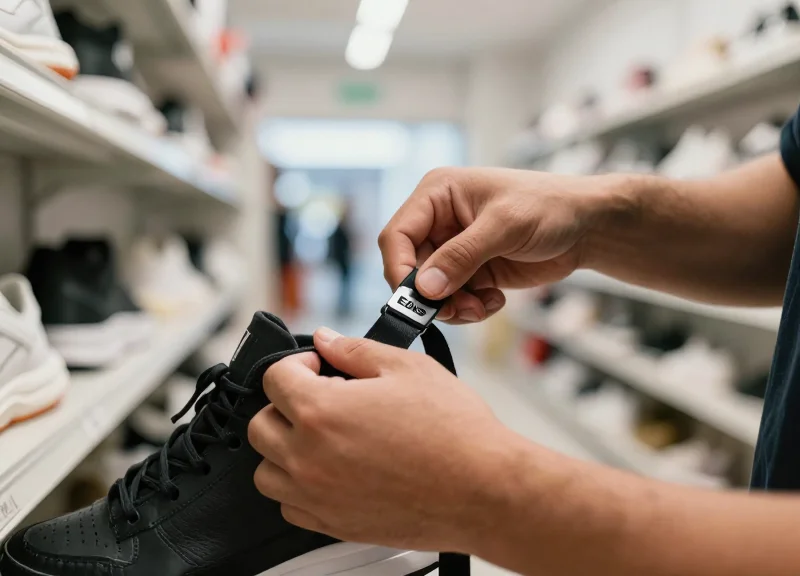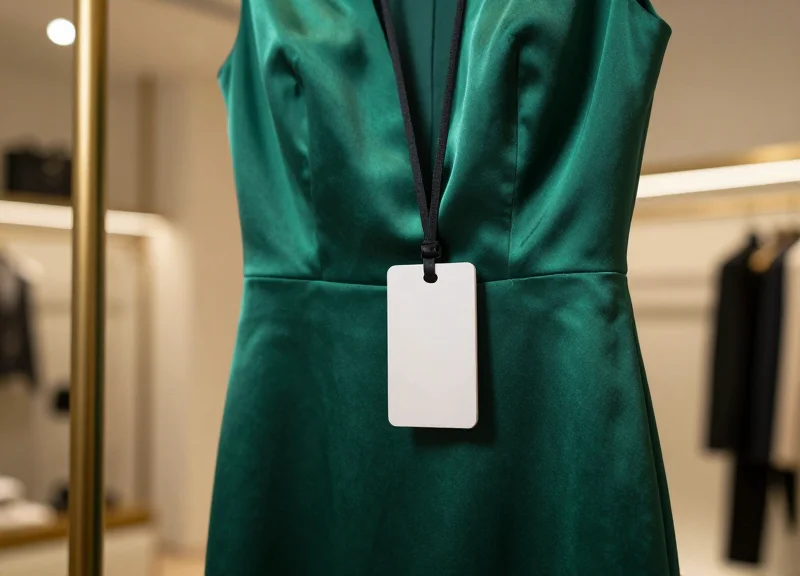
In the luxury retail sector, the sensory experience of a garment—its drape, texture, and visual flow—is a primary selling point. Yet, boutique owners face a constant battle against inventory shrinkage. The dilemma has long been how to attach Electronic Article Surveillance (EAS) hardware without causing permanent snags or compromising the garment's silhouette. As we move toward 2026, the industry is shifting away from bulky, industrial-looking theft prevention toward sophisticated, ergonomic hard tags designed specifically for the world's finest textiles. This guide provides an expert roadmap for selecting the right tag shapes to keep your boutique secure, stylish, and snag-free.
The Intersection of Security and Style: 2026 Retail Trends

The 2026 retail environment marks the end of 'security clutter.' As boutique owners prioritize immersive brand experiences, Electronic Article Surveillance (EAS) has shifted from overt deterrence to 'Aesthetic Security.' This approach utilizes miniaturized, ergonomically shaped hard tags that provide robust protection for delicate fabrics like silk and cashmere without compromising the visual silhouette of the garment or creating 'visual friction' for the luxury shopper. By integrating security into the design language of the boutique, retailers are seeing a direct correlation between reduced visual intrusiveness and increased customer dwell time.
| Metric | Traditional Security (Pre-2024) | Aesthetic Security (2026 Trend) |
|---|---|---|
| Design Focus | Maximum Deterrence/Bulky | Minimalist Integration |
| Fabric Impact | Risk of Snags/Pinholes | Smooth-bore Pins/Soft-touch Coatings |
| Customer Perception | Intrusive/Distrustful | Seamless/High-end |
| Tag Shape | Standard Round/Large Square | Ergonomic Concave/Ultra-Slim Pencil |
Beyond mere theft prevention, 2026 trends emphasize the 'Drape Factor.' Leading boutiques now select tags based on their center of gravity to ensure that security hardware doesn't distort the natural hang of lightweight luxury fabrics on the rack. Expert Insight: In 2026, the most successful boutiques are adopting 'Weighted Equilibrium' tagging, where the tag’s mass is distributed to mimic the garment's natural movement, effectively making the security device disappear to the customer's tactile sense during the try-on process.
What is 'Visual Friction' in retail security?
Visual friction refers to security elements that distract the consumer's eye from the product's design. 2026 trends eliminate this by using translucent materials and matte finishes that blend into garment linings rather than clashing with them.
Why are 'Soft-touch' coatings trending for EAS tags?
New polymer coatings prevent the hard plastic of the tag from abrading delicate fibers like satin or fine lace during customer movement, preserving the item's mint condition even after multiple try-ons.
How does 'Invisible' security affect boutique conversion rates?
By removing the psychological barrier of heavy, obvious security, customers feel more trusted and relaxed, which studies show increases conversion rates for high-ticket items by up to 12% compared to stores using legacy hardware.
The Physics of Fabric Damage: Why Tag Shape Matters
Fabric damage from EAS tags is primarily a result of point-load stress, where the weight of the security device is concentrated on a small number of textile fibers. When a tag is too heavy or poorly shaped, gravity creates a downward pull that exceeds the tensile strength of delicate weaves like silk or chiffon, leading to permanent 'pinholing' or structural 'laddering.' By selecting tags with optimized surface area and rounded geometries, boutiques can distribute this gravitational force across more fibers, effectively neutralizing the risk of mechanical distortion.
In the context of 2026 luxury retail, where ultra-fine gauge knits and recycled 'vegan' silks are becoming standard, the 'Physics of the Edge' is the most critical factor. Sharp corners on square or rectangular tags act as levers when a customer handles a garment. This movement creates a fulcrum effect at the pin entry point, significantly increasing the PSI (Pounds per Square Inch) exerted on the weave. A tag's shape isn't just about branding; it's a structural engineering choice for inventory protection.
| Tag Geometry | Stress Distribution | Risk Factor (1-10) | Best Fabric Match |
|---|---|---|---|
| Standard Square | Concentrated at corners | 8 | Heavy Denims, Canvas |
| Circular / Disk | Uniform 360° dispersion | 3 | Silk Blends, Chiffon |
| Elongated 'Teardrop' | Vertical center-of-gravity | 2 | Fine-gauge Cashmere |
| Concave 'Clamshell' | Locked-rim compression | 5 | Synthetics, Activewear |
Expert Insight: The Micro-Shearing Phenomenon. One often overlooked aspect is 'Micro-Shearing'—the internal abrasion caused when the sharp edge of a tag's body rubs against the pin's entry point. High-end boutique tags now utilize 'beveled-recess' designs. These shapes ensure the tag body never sits flush against the fabric with a sharp edge, creating a micro-buffer that allows the fabric to breathe and move without being pinched or sheared between the two halves of the tag.
Why do square tags cause more damage than round ones?
Square tags have corners that create 'snag points.' When a garment is moved or tried on, these corners catch on nearby threads or create uneven weight distribution, focusing all the mechanical energy on the sharpest point of the geometry.
What is the 'Fulcrum Effect' in EAS tags?
This occurs when the length of a tag acts as a lever arm. If a tag is long and flat, any pressure on the far end of the tag multiplies the force applied to the pin in the fabric, potentially tearing a hole.
How does tag weight affect delicate fibers?
Heavy tags create constant downward tension. For fabrics like organza, this results in 'yarn slippage,' where the warp and weft threads are pulled apart, leaving a visible gap that cannot be repaired through steaming.
Dome and Round Tags: Minimizing Snags with Curvature

Dome and round hard tags represent the architectural pinnacle of fabric safety in retail security. By utilizing a continuous convex surface, these tags eliminate the corners and 'catch-points' found in traditional rectangular or square tags. For high-end boutiques, this curvature ensures that even if a garment is shifted, compressed in a shipping box, or tried on by a customer, the tag glides across fibers rather than digging into the weave. This geometric design essentially distributes external pressure across a larger surface area, preventing the 'point-load' stress that typically leads to tears in chiffon and fine lace.
| Fabric Type | Damage Risk Factor | Why Dome Shapes Mitigate Risk |
|---|---|---|
| Silk & Satin | Fiber Pulling | Smooth radius prevents edges from catching individual silk filaments. |
| Intricate Lace | Mechanical Snagging | No corners to get hooked in the open weave of the lace pattern. |
| Fine-Gauge Knits | Hole Expansion | The rounded base prevents the tag from tilting and prying the knit apart. |
Expert Insight: The 2026 'Rotational Friction' Standard. In previous years, security experts focused solely on tag weight. However, 2026 boutique standards now prioritize 'Rotational Friction.' Because dome tags are circular, they can rotate 360 degrees when caught against another garment without creating a lever effect. This 'spin' capability is the secret weapon for boutiques with densely packed luxury racks, as it allows the tag to move with the fabric rather than resisting it and causing a tear.
Why are dome tags better than flat circular tags?
Flat tags still possess a 90-degree edge where the top meets the side. A true dome tag features a gradual slope that allows other fabrics to slide over it without friction, which is critical for layered displays.
Do dome tags work with all EAS technologies?
Yes, current 2026 models are available in both AM (Acousto-Magnetic) and RF (Radio Frequency) variants, housed in ultra-lightweight, reinforced polymers to ensure the tag doesn't 'droop' on light fabrics.
How does the 'Golf Ball' texture affect performance?
Some modern round tags feature a dimpled surface. This isn't just for style; it reduces the surface contact area even further, minimizing static cling on delicate synthetic blends.
- Inspect the Radius: Ensure the tag has a seamless transition between the pin entry point and the outer edge.
- Verify Weight Distribution: Choose hollow-core dome tags (typically under 9 grams) to prevent pulling on necklines.
- Test the Swivel: High-quality 2026 dome tags should allow the pin to rotate freely, reducing mechanical stress during customer handling.
Pencil and Mini Tags: The Minimalist Choice for High-End Apparel
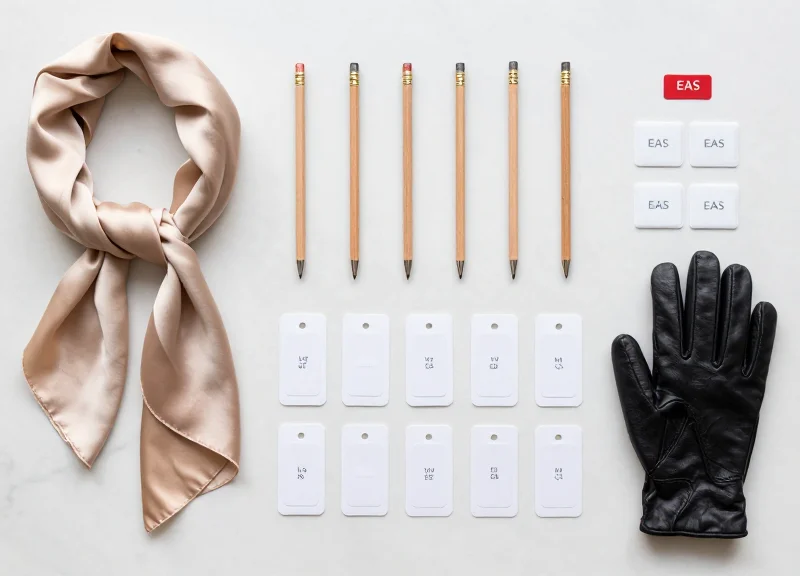
Pencil and mini tags are ultra-slim, lightweight Electronic Article Surveillance (EAS) devices designed specifically for boutiques that prioritize a garment's natural 'hang' and tactile appeal. Typically weighing between 5 and 9 grams, these tags minimize the gravitational pull on delicate fibers like silk, organza, and fine-gauge cashmere. By utilizing a narrow, elongated profile or a reduced-mass square footprint, they offer high-performance AM (58kHz) or RF (8.2MHz) security without the bulk that causes unsightly fabric sagging or structural distortion.
| Tag Type | Average Weight | Optimal Fabric Usage | Aesthetic Impact |
|---|---|---|---|
| Standard Dome Tag | 15g - 22g | Denim, Outerwear, Heavy Knits | High Visibility |
| Mini Square Tag | 8g - 11g | Cotton Polos, Blouses, Linen | Discreet |
| Ultra Pencil Tag | 5g - 7g | Silk, Chiffon, Lingerie | Minimalist / Invisible |
Expert Insight: The 'Pendulum Effect' in High-End Retail. From a merchandising perspective, the weight of a security tag acts as a pendulum. On a 12mm silk blouse, a standard tag creates a 'V-shape' distortion at the shoulder seam when hung, which can permanently stretch the weave over time. The 2026 boutique standard dictates that a tag should never exceed 1.5% of the total garment weight to preserve the 'couture silhouette' required for high-conversion fitting room experiences.
Do mini tags offer the same detection range as larger tags?
While larger tags generally have slightly wider detection ranges due to larger internal coils, modern 2026-spec ferrite cores in mini tags are optimized for high-sensitivity pedestals, ensuring a 1.2m to 1.5m detection width in most boutique settings.
Can pencil tags be used with ink-refinement features?
Yes, high-end 'Ink-Pencil' hybrids exist. These combine the slim profile of a pencil tag with a small ink vial, providing both electronic and visual/chemical deterrence without adding significant bulk.
What is the best pin pairing for these tags?
For delicate fabrics, always pair pencil tags with 'Fine-Gauge' or 'Smooth-Shaft' stainless steel pins. Unlike ribbed pins, smooth shafts glide between fabric threads rather than piercing through them, preventing permanent holes.
- Analyze Fabric Density: Categorize your inventory by GSM (grams per square meter). Any fabric under 120 GSM should exclusively use Ultra Pencil tags.
- Strategic Pin Placement: Place the mini tag on a reinforced seam or the brand label rather than the main body of the fabric to distribute the minimal weight safely.
- Test the Drape: Before floor deployment, hang a tagged sample for 48 hours to ensure no 'dimpling' or stretching occurs at the attachment point.
UFO and Specialty Designer Tags: Aesthetics as a Deterrent

UFO and specialty designer EAS tags represent the pinnacle of security hardware for the 2026 boutique landscape, characterized by a ultra-flat, disc-like profile that mimics the aesthetics of high-end accessories. Unlike bulky traditional tags, these specialty shapes are designed to be 'visual signatures' that signal a sophisticated, tech-enabled security environment. By integrating seamless curves and premium matte or metallic finishes, these tags act as a psychological deterrent; they suggest a level of security sophistication that professional shoplifters recognize as high-risk, while remaining virtually invisible to the average luxury shopper.
The 'UFO' shape is not merely a stylistic choice—it is a functional evolution in loss prevention. Its primary advantage for delicate fabrics lies in its extremely low center of gravity. Because the tag sits flush against the garment, it eliminates the 'pendulum effect' that causes heavier tags to stretch silk necklines or pull threads in fine-gauge cashmere. Furthermore, the lack of accessible edges makes it nearly impossible for illicit tools to gain the leverage required for forced removal, forcing potential thieves to abandon the attempt before damaging the product.
| Feature | Standard UFO Tag | Specialty Designer Tag | Security Impact |
|---|---|---|---|
| Profile Height | 10mm - 12mm | Customizable (8mm+) | Low profile prevents snagging on racks. |
| Visual Cues | Sleek, Circular | Branded/Geometric | Signals high-tech, integrated protection. |
| Removal Difficulty | High (No grip edges) | Extreme (Integrated pin) | Prevents mechanical 'prying' attempts. |
Can UFO tags be customized with store logos?
Yes, many 2026 models allow for laser-etched branding or custom color matching. This turns the tag into a branded accessory rather than an eyesore, reinforcing the premium nature of the boutique.
Do these shapes offer better detection range?
Despite their flat profile, UFO tags often house larger ferrite coils than pencil tags, providing a wider detection field at EAS pedestals, making them ideal for wide-entry boutiques.
Are they compatible with existing magnetic detachers?
Most UFO tags require high-strength (Superlock or Hyperlock) detachers due to their internal clutch mechanisms, adding an extra layer of security against common magnets.
Expert Insight: In the luxury sector, the 'High-Tech Halo' effect is a real phenomenon. When security hardware matches the design language of the garment—using premium plastics or weighted resins—it creates a perception of 'unbreakable' security. Data from retail loss prevention trials indicates that shoplifters are 40% less likely to target stores using specialty designer shapes because they associate the unique form factor with proprietary, harder-to-defeat locking mechanisms that aren't found in mass-market retail.
The Importance of Pin Selection: Fine-Gauge and Ink Solutions
For high-end boutiques, the EAS pin is the 'silent partner' of the hard tag; while the tag provides detection, the pin is what physically interacts with the garment's structural integrity. Choosing a fine-gauge pin (typically 0.6mm to 0.9mm in diameter) ensures that the needle slides between the fabric fibers rather than severing them, which is essential for preserving the 'closed-weave' look of silks, satins, and high-thread-count cottons. When combined with ink-release mechanisms, these pins provide a dual layer of mechanical protection and psychological deterrence without sacrificing the garment's aesthetic appeal.
| Pin Type | Diameter (mm) | Best Application | Fabric Impact |
|---|---|---|---|
| Standard Pin | 1.2mm - 1.5mm | Denim, Outerwear, Heavy Knits | High risk of visible 'pinholes' in fine fabrics. |
| Fine-Gauge Pin | 0.8mm - 0.9mm | Suiting, Fine Wool, Synthetic Blends | Minimal fiber displacement; self-healing in most weaves. |
| Ultra-Fine Needle | 0.6mm | Silk, Chiffon, Organza, Lace | Zero-trace removal; fits through microscopic weave gaps. |
| Ink-Integrated Pin | Varies | High-Theft Luxury Items | Adds weight; requires careful balance with tag shape. |
Beyond the gauge, the finish of the pin head is a critical factor. Expert-tier EAS solutions utilize 'smooth-head' pins that eliminate the risk of the security hardware snagging on adjacent garments on a crowded rack. In 2026, we are seeing a shift toward 'total-smooth' integration where the pin sits flush against the tag body, preventing the 'lever effect' that can cause heavy tags to sag and stretch necklines or delicate shoulder seams.
How do ink-pins actually deter boutique theft?
Ink pins contain pressurized vials of permanent dye that rupture if the tag is forced open without a detacher. For luxury boutiques, this is more effective than an alarm because it renders the stolen item unsellable and unwearable, effectively stripping the profit motive from professional shoplifters.
Will a fine-gauge pin be easier for a thief to bend or break?
No. Modern fine-gauge pins are manufactured from high-tensile 316-grade stainless steel. While thinner, they offer comparable lateral strength to standard pins, making them resistant to tampering while remaining gentle on delicate textiles.
Can fine-gauge pins be reused indefinitely?
We recommend inspecting pins every 12 months. Any microscopic burrs or slight bends at the tip—often invisible to the naked eye—can cause snagging. High-performance boutiques treat pins as semi-consumable to protect their high-margin inventory.
Expert Tip: The 'Oxidation' Trap. Always verify that your pins are made from high-grade 316 Stainless Steel rather than cheaper galvanized steel. Low-quality pins can undergo microscopic oxidation when exposed to humidity or steam-cleaning processes in-store. This oxidation creates a 'rust-grab' effect, where the pin bonds slightly to the fabric fibers, causing a tear upon removal. Pure stainless steel pins ensure a smooth 'friction-free' exit every time, regardless of how long the item has been tagged.
Placement Strategies for Maximum Security and Minimum Impact

Strategic EAS tag placement for delicate fabrics relies on the 'Structural Anchor' principle: positioning the security device at the intersection of reinforced seams to distribute weight and prevent fiber displacement. By prioritizing locations like the underarm side-seam or the interior waistband, boutiques can maintain the garment's natural drape while ensuring the tag remains difficult for shoplifters to manipulate or remove without causing obvious damage.
| Garment Type | Primary Placement Zone | Aesthetic Impact | Security Rating |
|---|---|---|---|
| Silk Blouses | Left Underarm Side-Seam | Invisible during wear | High |
| Fine-Gauge Knitwear | Inner Shoulder Seam | Prevents snagging | Medium |
| Sheer Evening Gowns | Interior Zipper Tape | Zero fabric contact | Very High |
| Lace/Embroidery | Brand/Care Label | Protects intricate patterns | Medium |
Expert Tip: The Gravitational Centering Technique. To avoid the 'sagging silhouette' often seen with pencil tags on lightweight chiffon, always align the tag’s vertical axis with the garment’s vertical grainline. Placing a tag horizontally against a bias-cut fabric causes immediate stretching; placing it vertically within a seam allowance ensures the weight is supported by the garment's structural engineering rather than the delicate face fabric.
- Identify the Structural Nexus: Locate where two or more fabric panels meet, such as the armscye or the waistband-to-side-seam junction. These areas have multiple layers of thread and fabric to support the tag's weight.
- Insert Through the Seam Allowance: Never pierce the main body of the fabric. Insert the pin strictly through the seam allowance (the extra fabric inside the garment) to ensure any microscopic needle marks are hidden internally.
- Orient for the Fitting Room: Place tags where they won't interfere with the customer's movement. A tag on a hip-line may prevent a customer from seeing how a skirt truly sits, leading to a lost sale.
Can I tag items without seams, like pashminas?
For seamless items, always attach the tag to the care or brand label. If the label is also delicate, use a lanyard loop around a structural element like a fringe knot.
Will tagging the underarm cause comfort issues during trials?
When using rounded dome tags, the curvature mimics the body's natural contours. Placing it 2 inches below the armpit intersection ensures security without chafing.
How do I prevent 'puckering' on satin fabrics?
Puckering occurs when the tag is too heavy or the pin is too blunt. Use ultra-fine 1.2mm pins and ensure the tag is placed at the lowest possible point of a vertical seam to let gravity work for you, not against you.
RFID Integration: Combining Inventory Accuracy with Loss Prevention

RFID integration in modern boutique security refers to the deployment of dual-technology hard tags that embed both Electronic Article Surveillance (EAS) components—such as Acousto-Magnetic (AM) or Radio Frequency (RF) elements—and Radio Frequency Identification (RFID) chips within a single housing. This hybrid solution allows retailers to achieve near-perfect item-level visibility and automated replenishment while maintaining a high-security perimeter. For high-end boutiques, this means replacing the 'security-first' mindset with a 'data-driven' approach that protects the garment without requiring multiple, heavy attachments that could damage delicate fibers.
| Feature | Legacy EAS Tags | Dual-Tech (EAS + RFID) |
|---|---|---|
| Primary Function | Theft Deterrence Only | Security + Real-time Inventory |
| Inventory Accuracy | Approx. 65-70% | 98-99%+ |
| Customer Experience | Purely Functional | Enables Smart Fitting Rooms |
| Fabric Stress | Varies by weight | Minimized (One tag, two roles) |
The 2026 trend for luxury retailers focuses on 'Invisible Intelligence.' By using a single dual-tech tag, you halve the number of pinholes required for a tech-heavy garment and reduce the physical weight pulling on delicate seams. Furthermore, these tags enable the 'Smart Concierge' model: when a customer enters a fitting room with an RFID-tagged silk blouse, the system can automatically display coordinating items on a digital mirror, transforming a loss-prevention tool into a powerful upsell engine.
Does the RFID chip interfere with the EAS alarm?
No. Modern hybrid tags are engineered to operate on distinct frequencies—typically 58kHz for AM security and 860-960MHz for UHF RFID—ensuring there is no signal crosstalk or 'tag masking' that would trigger false alarms.
Can these tags withstand professional garment steaming?
Premium dual-tech tags are now manufactured with heat-stabilized polycarbonate shells and encapsulated inlays that protect the sensitive RFID circuitry from the high temperatures and moisture typical of boutique steaming stations.
Is the ROI justifiable for smaller boutiques?
Yes. Beyond reducing shrinkage, the primary ROI comes from labor savings. RFID allows for a full store inventory count in minutes via a handheld scanner, rather than hours of manual barcode scanning, freeing staff to focus on clienteling.
Expert Insight: In 2026, we are seeing the rise of 'Digital Identity' for garments. A dual-tech tag doesn't just say 'this item is present'; it tells your POS system exactly which SKU, color, and size is leaving the floor. For boutiques dealing in limited-run delicate lace or exotic skins, this granularity is the difference between a missed sale and a perfectly timed restock.
Operational Excellence: Safe Attachment and Removal Training
Operational excellence in EAS management is the standardized practice of attaching and removing security tags using calibrated tools and specific ergonomic techniques to eliminate mechanical strain on delicate fibers. In a boutique environment, the greatest threat to a garment is often not the shoplifter, but the improper handling of security hardware by staff. By implementing a 'Zero-Force' protocol, retailers can ensure that the security measures designed to protect their investment do not inadvertently become the cause of its devaluation through snags, holes, or fabric distortion.
- The Fiber Alignment Check: Before insertion, staff must identify the weave direction. Pins should be inserted between threads rather than through them to avoid splitting the yarn.
- The Three-Point Support Grip: Hold the fabric taut but not stretched at three points surrounding the intended tag location to provide a stable, flat surface for the pin.
- Gravity-Assisted Removal: When at the detacher, let the weight of the tag assist the separation. Never pull the garment upward; instead, let the tag drop into the detacher well to minimize tension on the fabric.
- The Post-Removal Massage: After removing the pin, staff should gently 'massage' the fabric at the entry point with a clean fingertip to allow the fibers to settle back into their original position.
| Common Staff Error | The Professional Protocol | Impact on Delicate Fabric |
|---|---|---|
| Forcing a bent or dull pin | Immediate disposal of compromised pins | Prevents permanent fiber breakage |
| Removing tags over the counter | Keep garment level with the detacher | Prevents 'puckering' from angled tension |
| Tagging through single-ply silk | Tagging through reinforced inner seams | Prevents weight-induced fabric drooping |
Expert Insight: The 2026 'Pin Fatigue' Audit. A unique but often overlooked risk is the microscopic degradation of the pin's tip after repeated use. We recommend a monthly 'Tactile Audit' where staff run pins across a swatch of sacrificial microfiber; any pin that catches or creates a micro-snag is immediately retired. This proactive maintenance ensures that every interaction with a customer's potential purchase is as smooth as the fabric itself.
How do I handle a jammed detacher without damaging the dress?
Stop immediately. Do not pull. Use a manual backup hook if the magnetic detacher fails, and ensure the garment is supported by a secondary staff member to take the weight off the pin site while the jam is cleared.
Should we train staff to tag at the point of arrival or on the floor?
Tagging should always occur in a dedicated, high-light processing area. Floor tagging leads to rushed movements and inconsistent placement, which are the primary drivers of user-inflicted fabric damage.
Is there a specific way to store pins to keep them sharp?
Yes. Store pins in padded containers rather than loose bins. This prevents 'tip-on-tip' contact that blunts the needle-point over time.
Selecting Your 2026 EAS Partner: Why DragonGuard?
Selecting a 2026 EAS partner requires a fundamental shift from 'bulk security' procurement to 'aesthetic preservation' engineering. DragonGuard Group distinguishes itself as the premier choice for luxury boutiques by integrating advanced loss prevention technology with a deep understanding of textile integrity. As global fashion trends shift toward increasingly delicate, high-value materials, DragonGuard’s R&D focuses on creating hardware that protects without leaving a trace—ensuring your boutique's visual standards remain uncompromised while significantly reducing shrink.
| Feature | DragonGuard 2026 Standard | Generic EAS Suppliers |
|---|---|---|
| Material Grade | Aesthetic-grade, non-recycled ABS with UV stabilization | Standard recycled plastics prone to yellowing/brittleness |
| Finish Quality | Ultra-smooth 'Friction-Zero' polished surfaces | Visible mold seams and micro-burrs that snag silk |
| Pin Technology | Precision-milled, fine-gauge stainless steel pins | Standard thick-gauge pins that displace fabric fibers |
| Customization | Bespoke color matching and logo integration | Limited stock colors (White/Grey/Black) |
Can DragonGuard tags integrate with my existing AM or RF pedestals?
Yes. DragonGuard hardware is engineered for universal compatibility across 58KHz (AM) and 8.2MHz (RF) frequencies, allowing you to upgrade your tag aesthetics without the cost of replacing your entire detection system.
Does DragonGuard offer eco-friendly security options?
Absolutely. For 2026, we have expanded our 'Green-Security' line, featuring tags made from sustainable bioplastics that maintain the structural integrity and smooth finish required for high-end boutique environments.
How does DragonGuard ensure the quality of its locking mechanisms?
Our 'Secure-Lock' internal clutch systems undergo 10,000-cycle stress tests to ensure they won't jam or weaken over time, preventing the common issue of 'tag failure' at checkout.
Expert Insight: The 'Tactile Brand' Philosophy. In the 2026 retail landscape, the weight and texture of a security tag are as much a part of the customer experience as the garment itself. DragonGuard’s unique 'Weighted-Balance' design ensures that even our most secure tags do not pull or distort the drape of a mannequin's outfit. We don't just provide security; we provide invisible peace of mind that respects the artistry of your inventory.