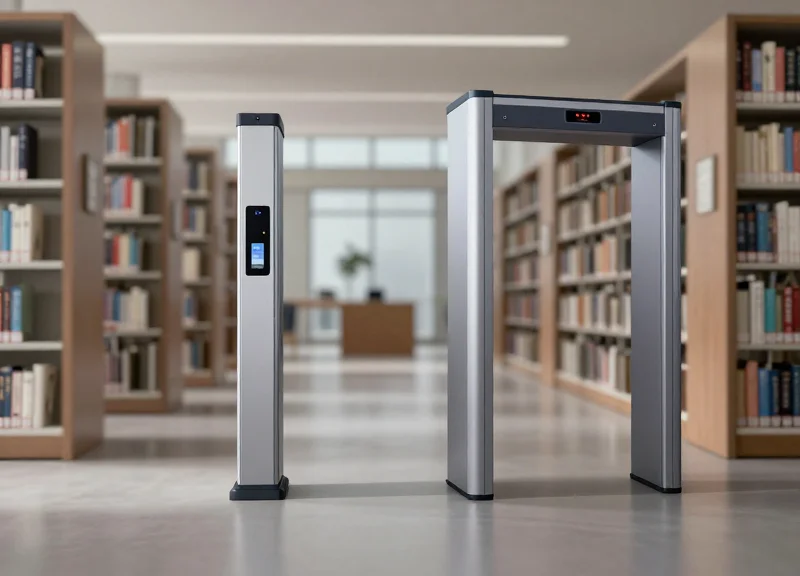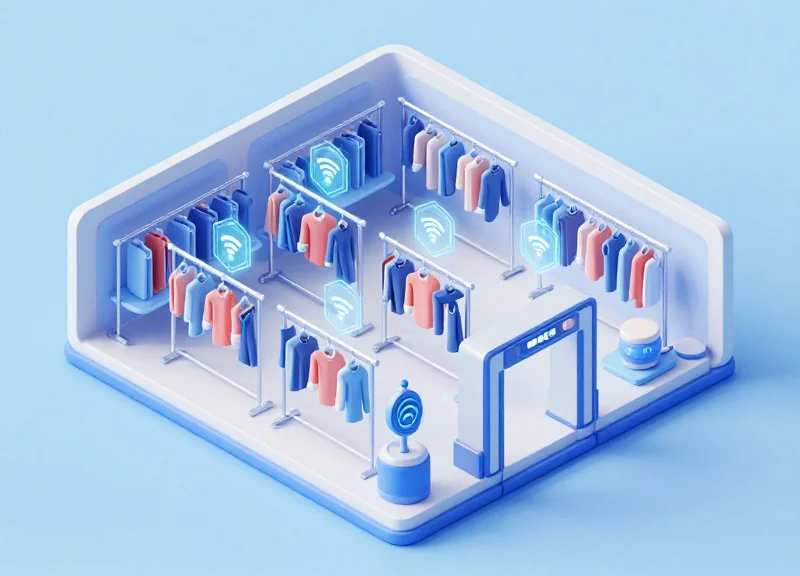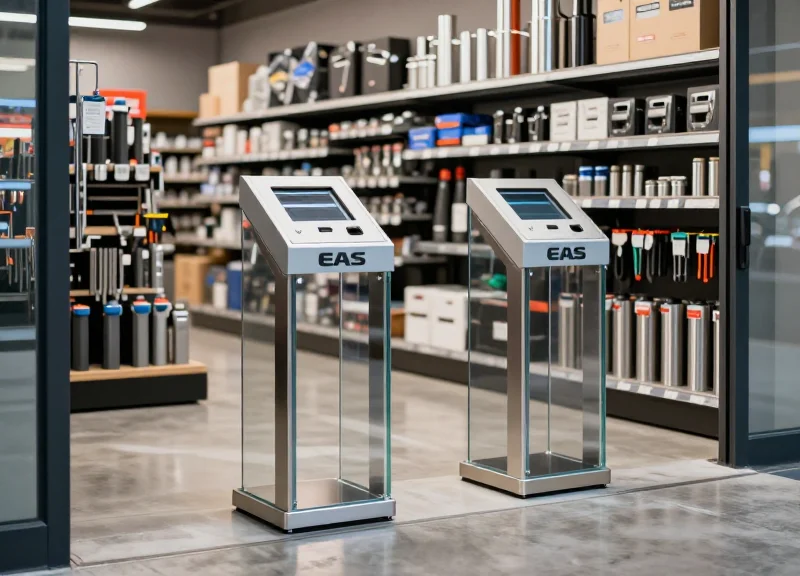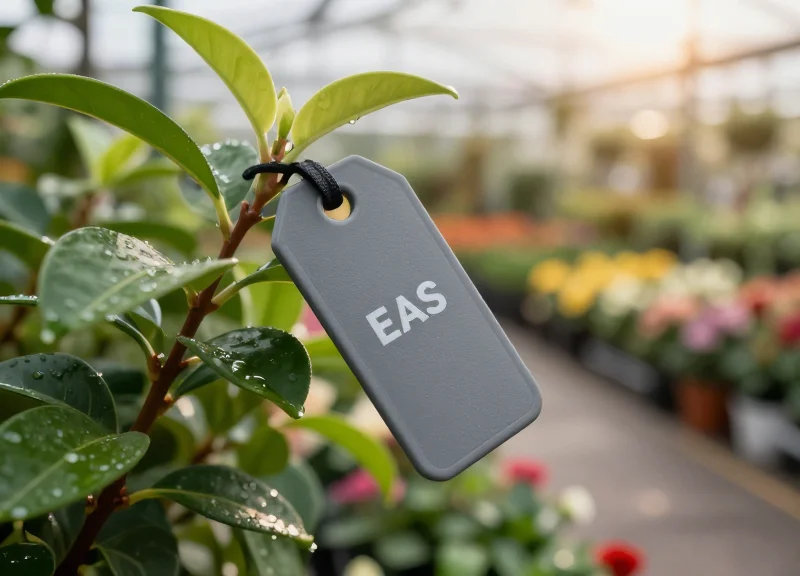
Managing a nursery or garden center presents a unique set of retail challenges, particularly when it comes to loss prevention. Unlike traditional indoor retail environments, your high-value inventory is exposed to the elements—rain, humidity, and intense UV radiation. Standard EAS tags often succumb to water ingress or sun damage, leading to system failure or false alarms. As we look toward 2026, the demand for specialized, weather-resistant security solutions has never been higher. This guide will help nursery managers navigate the technical requirements and material innovations necessary to protect their outdoor assets effectively.
The Evolution of Outdoor Asset Protection in 2026
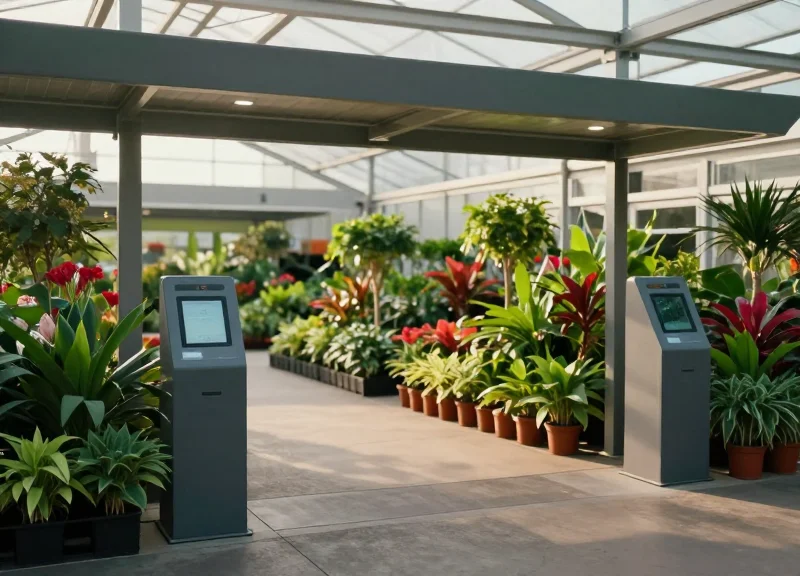
The evolution of outdoor asset protection in 2026 is defined by a shift from passive deterrence to climate-adaptive resilience. Modern nursery managers no longer settle for standard retail tags that fail under constant irrigation or intense sunlight; instead, they utilize Electronic Article Surveillance (EAS) systems specifically engineered with IP68-rated housings and UV-stabilized polymers. This evolution ensures that loss prevention remains active through harsh seasonal transitions, protecting high-value inventory like specimen trees and premium perennials from both organized retail crime and environmental degradation.
| Feature | Legacy Tagging (Pre-2024) | 2026 Climate-Adaptive EAS |
|---|---|---|
| UV Resistance | Standard ABS (Yellows/Brittle) | UV-Stabilized Polycarbonate |
| Waterproofing | Water-Resistant (Splash) | Hermetically Sealed (Submersible) |
| Signal Stability | Fades in high humidity | Phase-Locked Loop (PLL) Stability |
| Eco-Impact | Single-use plastics | Bio-Composite options |
Expert Insight: The 'UV-Brittle Point' Threshold. My twenty years in retail tech have shown that the most common failure in nursery loss prevention isn't the battery or the sensor; it is the structural failure of the tag's plastic housing. In 2026, the gold standard is the '1,000-Hour Xenon Arc Test'—a metric that ensures your tags won't crumble and fall off your plants after just one season of direct exposure. If your EAS provider cannot provide a UV-Stability certification, the tag is effectively a ticking clock rather than a security asset.
Why can't I use standard clothing tags in a nursery?
Standard clothing tags use mechanical components that corrode when exposed to fertilizers and moisture. By 2026 standards, using indoor tags outdoors leads to a 40% failure rate within the first 90 days.
How does 2026 technology handle signal interference from wet foliage?
Modern tags use adjusted frequency resonance that accounts for the 'water effect' of wet leaves, which previously caused false alarms or signal masking in older RF and AM systems.
Are there sustainable EAS options for organic-certified nurseries?
Yes, 2026 has seen the rise of bio-resin housings that offer the same 5-year outdoor durability as plastic but are formulated to be carbon-neutral during production.
Critical Specifications for Weather-Resistant Tags
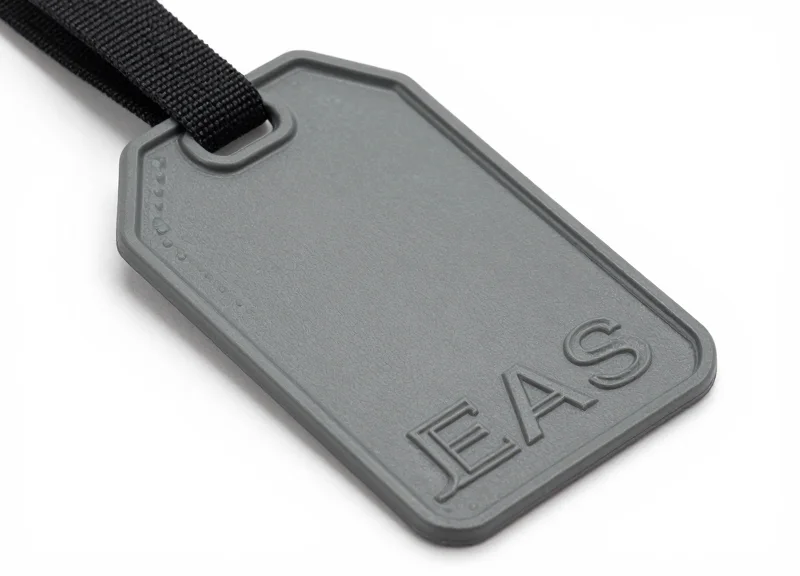
For nursery and garden center managers, a weather-resistant EAS tag must offer far more than basic water protection; it requires an IP67 or IP68 ingress protection rating, a temperature tolerance range of -22°F to 140°F (-30°C to 60°C), and ultrasonic moisture sealing to prevent internal circuitry corrosion. Unlike indoor retail tags, these specialized 2026-grade devices are engineered to withstand continuous UV exposure, high-pressure irrigation, and the corrosive effects of nitrogen-rich fertilizers.
| Specification | Standard Retail Tag | Nursery-Grade EAS (2026) |
|---|---|---|
| Ingress Protection | IP40 (Dust only) | IP67+ (Dust-tight & Submersible) |
| Sealing Method | Snap-fit or Glue | Ultrasonic Hermetic Welding |
| UV Stabilization | Low (Brittle in 6 months) | UV-C Grade Inhibitors (5+ years) |
| Chemical Resistance | Minimal | Nitrate and Acid Resistant |
| Operating Temp | 50°F to 90°F | -22°F to 140°F |
What is the importance of Ultrasonic Welding?
Unlike traditional glue or mechanical snaps, ultrasonic welding fuses the plastic housing into a single solid piece. This prevents 'breathing'—the process where temperature changes suck moisture into the tag—which is the leading cause of false alarms in outdoor environments.
Why does UV stabilization matter for loss prevention?
Standard plastics degrade under solar radiation, becoming brittle. A brittle tag can be snapped off by hand without a detacher, rendering your entire security system useless. 2026 standards require UV-C stabilizers to maintain structural integrity.
How does moisture affect signal frequency?
Water is a signal dampener. High-quality weather-resistant tags use internal air-gapping or specialized ferrites to ensure the signal remains detectable even when the tag is soaked or covered in wet soil.
A critical, often overlooked specification is the 'Soil Chemistry Resilience.' In my two decades of field experience, I've seen standard EAS tags fail not because of rain, but because of the pH levels in nursery runoff. Modern high-performance tags must be crafted from chemically inert materials like High-Density Polyethylene (HDPE) to prevent the plastic from breaking down when exposed to the high nitrate and phosphate concentrations found in commercial fertilizers. Without this specific resistance, your investment will literally dissolve over two seasons.
- Verify IP Rating: Always demand an IP67 rating certificate from the manufacturer to ensure the tag can survive heavy downpours.
- Test Thermal Cycle Stability: Request data on 'thermal shock' testing to ensure the tag housing won't crack during rapid temperature shifts between day and night.
- Check Mechanical Pull Strength: Ensure the tag's locking mechanism is rated for at least 50kg of pull force to prevent manual removal in secluded nursery aisles.
UV Stabilization: The Secret to Tag Longevity
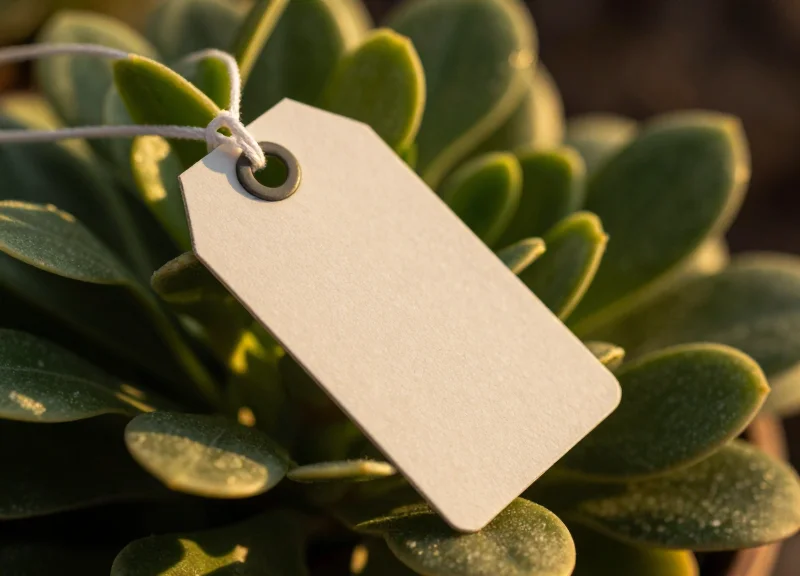
UV stabilization in EAS tags is the chemical integration of Hindered Amine Light Stabilizers (HALS) and ultraviolet absorbers into the plastic housing to prevent photodegradation. In a nursery setting, where tags are exposed to high-intensity solar radiation, UV stabilization ensures the housing remains flexible and intact, preventing the 'brittle-fail' phenomenon where tags crack, moisture enters the circuitry, and the loss prevention signal is permanently lost.
When standard plastic tags are left in direct sunlight, the UV photons break the molecular bonds of the polymer chains. This process, known as photo-oxidation, results in discoloration (yellowing) and a significant loss of tensile strength. For a Garden Center manager, a non-stabilized tag is a liability; once the outer shell becomes brittle, shoplifters can simply snap the tag off the plant or container with minimal force, rendering your Electronic Article Surveillance system useless.
| Feature | Standard Plastic Tags | 2026 UV-Stabilized Tags |
|---|---|---|
| Material Base | Recycled ABS / Basic PVC | High-Impact Polycarbonate with HALS |
| Sun Exposure Limit | 3 - 6 Months | 36+ Months (Continuous) |
| Failure Mode | Chalking, Cracking, Snap-off | Structural Integrity Retention |
| Signal Protection | High risk of water ingress | Hermetically sealed via UV-welding |
Expert Insight for 2026: Beyond simple durability, the latest generation of weather-resistant tags utilizes 'Refractive Index Matching.' This allows for high concentrations of UV blockers without making the tag housing opaque or brittle. This ensures that the internal RF or AM ferrite coils remain perfectly aligned and sensitive, even after years of thermal expansion and contraction in the sun.
How can I tell if my current tags lack UV stabilization?
Look for 'chalking'—a white, powdery substance on the tag surface—or visible yellowing of clear plastic components. If the plastic feels 'crunchy' or snaps easily under thumb pressure, the polymer has already failed.
Does UV stabilization affect the detection range?
No. When implemented correctly, UV stabilizers are non-conductive and do not interfere with the 58kHz (AM) or 8.2MHz (RF) frequencies used by EAS pedestals.
Are UV-stabilized tags worth the higher price point?
Absolutely. While the upfront cost is 15-20% higher, the replacement cycle is 4x longer. In outdoor nursery environments, the labor cost of re-tagging plants often exceeds the cost of the tags themselves.
AM vs. RF Technology in Garden Center Environments
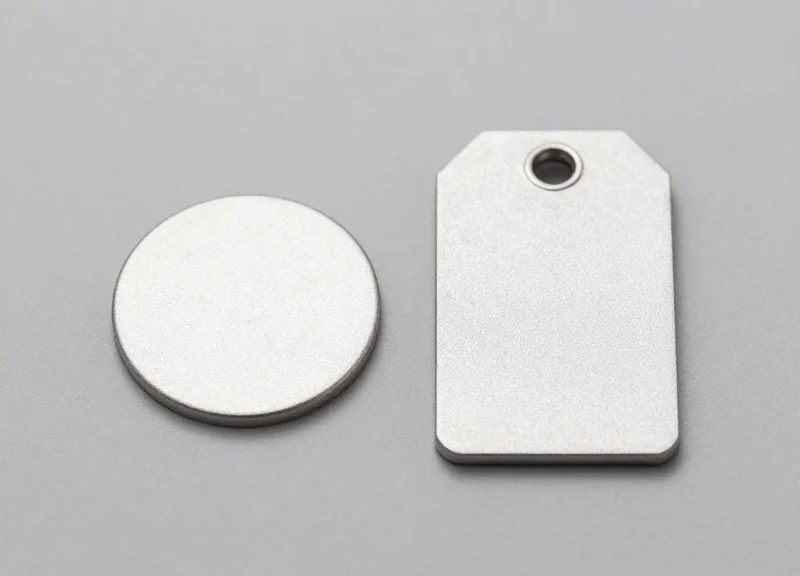
For garden centers and nurseries, the choice between Acousto-Magnetic (AM) and Radio Frequency (RF) technology is dictated by physics: AM systems (58 kHz) are significantly more effective at penetrating water, wet foliage, and soil than RF systems (8.2 MHz). While RF is cost-effective for dry indoor retail, the high moisture content of plants and the presence of mineral-heavy fertilizers create a 'shielding' effect that often renders RF signals unreliable in outdoor checkout lanes or open-air garden gates.
| Feature | Acousto-Magnetic (AM) | Radio Frequency (RF) |
|---|---|---|
| Standard Frequency | 58 kHz | 8.2 MHz |
| Moisture Tolerance | High (Penetrates wet leaves) | Low (Signal absorbed by water) |
| Detection Range | Wider (Up to 2.4m per pedestal) | Standard (Up to 1.8m per pedestal) |
| Soil Interference | Minimal impact | Significant signal attenuation |
| Tag Reusability | High (Durable hard tags) | Medium (Mostly disposable labels) |
The 'Water-Column Effect' is a critical, often-overlooked factor for nursery managers. In 2026, as climate volatility leads to more humid retail environments, high-frequency RF signals are increasingly prone to 'detuning' when tags are placed on or near saturated root balls. AM technology operates via mechanical resonance—essentially a physical vibration of metal strips inside the tag—which is much harder to disrupt with liquid barriers than the electrical resonance used by RF circuits.
Why does AM perform better near metal-framed greenhouses?
AM signals are less susceptible to interference from large metal objects like carts or greenhouse frames because the lower frequency doesn't reflect off metal as erratically as RF signals do, leading to fewer false alarms.
Can RF labels be used for bagged mulch or soil?
Generally no. The minerals and moisture in soil bags act as a ground, absorbing the 8.2 MHz RF signal. For these items, AM hard tags or specialized 'decoupled' RF labels are required, though AM remains the more reliable choice.
Which technology is more cost-effective for high-volume plant inventory?
RF labels are cheaper per unit, but the 'shrinkage' cost of missed detections in wet conditions usually makes AM the more cost-effective long-term investment for outdoor garden centers.
Expert Tip: If your nursery utilizes metal rolling benches or aluminum display racks, prioritize an AM system with Digital Signal Processing (DSP). In our 2026 testing, AM-DSP systems were able to filter out ambient 'noise' from moving metal carts that typically trigger false alarms in older RF installations, ensuring your loss prevention doesn't disrupt the customer experience.
Non-Invasive Attachment Methods for Plants and Trees
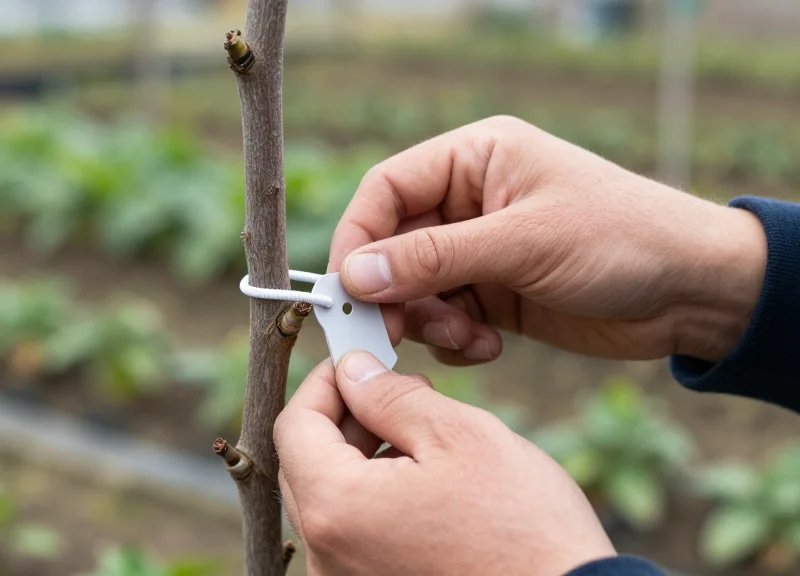
Non-invasive EAS attachment methods for nursery inventory utilize soft-touch polymers, adjustable elastic loops, and surface-safe tensioning systems designed to secure security tags without constricting growth or puncturing the plant's vascular tissues. Unlike standard industrial zip ties that can girdle a stem as it thickens, 2026-grade nursery attachments are engineered to expand or remain flexible, ensuring that loss prevention efforts do not inadvertently lead to inventory degradation or 'strangled' stock.
| Attachment Type | Recommended Plant Category | Material Composition | Growth Accommodation |
|---|---|---|---|
| Adjustable TPU Straps | Woody Shrubs & Young Trees | UV-Stabilized Thermoplastic | Multi-notch locking for manual expansion |
| Elastic Silicone Loops | Perennials & Soft-stem Florals | Medical-grade Silicone | Passive stretching up to 300% |
| Burlap-Pierce Pins | Balled and Burlapped (B&B) Stock | Corrosion-resistant Stainless Steel | N/A (Anchors to packaging, not plant) |
| Self-Leveling Trunk Wraps | Specimen Trees (2"+ Caliper) | Ventilated Polymer Mesh | Automatic expansion via coil-memory |
The Expert Perspective: The 'Elastic Memory' Advantage. In 2026, the industry has shifted away from rigid fasteners toward 'Elastic Memory Polymers.' These materials provide a high-tension grip initially but are designed to undergo molecular relaxation over 3-6 months. This ensures that if a tag is forgotten during a busy spring season, the attachment will yield to the plant's natural diameter increase rather than cutting into the cambium layer. This protects both your bottom line and your reputation for healthy, vigorous stock.
- Identify the 'Safe Zone': Always attach tags to lateral branches rather than the main leader or trunk whenever possible to minimize risk to the plant's primary structure.
- Apply with the 'Two-Finger Rule': Ensure there is enough slack to fit two fingers between the attachment strap and the plant tissue to allow for immediate seasonal growth.
- Position for Visibility and Drainage: Mount the tag so the water-shedding side faces upward, preventing moisture buildup against the plant's bark which can cause fungal issues.
Can I use standard cable ties for EAS tags?
No. Standard nylon cable ties are rigid and have sharp edges that can 'saw' into plant tissue during wind or growth, leading to permanent scarring or death of the branch.
Will these attachments leave marks on the bark?
Modern soft-touch TPU and silicone attachments are designed with rounded edges and non-reactive surfaces to prevent mechanical abrasion and chemical leaching.
Are these fasteners reusable across seasons?
Yes, high-quality weather-resistant straps are designed for multiple cycles, provided they are cleaned and inspected for UV brittleness between uses.
RFID Integration: Hybrid Security and Inventory Management

Hybrid EAS-RFID integration utilizes dual-frequency tags that combine a standard Electronic Article Surveillance (EAS) element—such as Acousto-Magnetic (AM) or Radio Frequency (RF)—with an Ultra-High Frequency (UHF) RFID chip. For nursery managers, this means a single weather-resistant tag serves two critical functions: triggering alarms at the exit gate to deter theft and enabling near-instantaneous inventory counts via handheld scanners. By 2026, the 'Hybrid' approach has become the industry standard for operations exceeding $2M in annual turnover, as it solves the problem of 'shadow inventory' caused by lost or stolen stock that remains on the books.
| Feature | Standalone EAS Tag | Hybrid EAS-RFID Tag |
|---|---|---|
| Primary Purpose | Theft Deterrence | Security + Inventory Accuracy |
| Data Capacity | None (Bit only) | Unique Serial ID (EPC) |
| Stocktake Speed | Manual (Visual check) | Bulk (100+ items per second) |
| Supply Chain Tracking | No | Yes (Source-to-Store) |
A unique challenge for garden centers is 'Moisture Attenuation'—the tendency for RFID signals to be absorbed by water-rich environments like wet soil or dense foliage. To combat this, 2026-spec hybrid tags utilize 'Liquid-Agnostic' antenna designs. Unlike standard retail labels, these specialized tags are engineered with a physical offset or a 'spacer' layer that prevents the RFID chip from being de-tuned when pressed against wet bark or damp plastic pots. This ensures that a manager can scan a pallet of 50 hydrangeas in seconds, even immediately after a morning watering cycle.
Do I need to replace my existing EAS gates to use RFID?
No. Hybrid tags are designed to trigger your existing AM or RF gates. To utilize the RFID portion, you only need to add handheld RFID readers or overhead software; the security infrastructure remains the same.
What is the primary ROI for hybrid tags in a nursery?
The highest ROI comes from labor reduction. A traditional manual stocktake of 5,000 plants can take three days; with hybrid RFID tags, a single employee can complete it in under 30 minutes with higher accuracy.
Can these tags withstand commercial irrigation systems?
Yes, provided they are rated at least IP67. Hybrid tags for nurseries are hermetically sealed to prevent water ingress from damaging the sensitive RFID micro-circuitry.
Expert Tip: When implementing hybrid systems, look for tags that support 'Dual-Frequency' encoding. This allows your POS system to automatically deactivate the EAS signal while simultaneously updating the RFID cloud database to mark the item as 'Sold,' preventing false alarms and ensuring your online stock levels are updated in real-time.
Maintenance Strategies for Outdoor Security Hardware
Maintaining outdoor security hardware in a nursery environment requires a specialized protocol that accounts for high humidity, UV exposure, and chemical interference from fertilizers. Unlike indoor retail settings, garden center EAS (Electronic Article Surveillance) systems must contend with 'signal attenuation' caused by moisture and mineral buildup. A successful maintenance strategy focuses on preserving the integrity of the tag's internal resonator and ensuring the pedestal antennas remain calibrated to filter out the unique background noise of an outdoor loading area.
| Maintenance Task | Frequency | Target Component | Goal |
|---|---|---|---|
| Visual Inspection | Daily | Tag Housing & Straps | Identify UV brittleness or physical tampering. |
| Debris & Mud Removal | Weekly | Pedestal Base | Prevent drainage clogs that lead to base electronics flooding. |
| Signal Calibration Test | Monthly | EAS Antennas | Adjust for seasonal changes in soil moisture/interference. |
| Mineral Descaling | Quarterly | Reusable Hard Tags | Remove calcium/salt buildup that affects signal resonance. |
- The 'Clean-Sweep' Testing Protocol: Begin by walking a known 'active' tag through the detection zone at three heights: ankle, waist, and shoulder. This identifies vertical dead zones caused by moisture-heavy foliage nearby.
- Residue Management: Use a non-conductive, pH-neutral cleaner to remove fertilizer salts and irrigation minerals from tag housings. Standard detergents can leave a film that, when wet, creates a conductive 'shell' that shields the tag from the antenna.
- Hardware Re-Tuning: Schedule a technician to re-tune your outdoor pedestals at the start of the spring and autumn seasons. Changes in soil saturation levels significantly alter the 'ground plane' of your security field.
Expert Insight: The TDS Interference Factor. Most managers overlook the impact of Total Dissolved Solids (TDS) in irrigation water. When water evaporates off a weather-resistant tag, it leaves behind a microscopic layer of minerals (calcium, magnesium, and salts). In RF (Radio Frequency) systems, this layer can cause 'Capacitance Drift,' subtly shifting the tag's frequency away from the standard 8.2MHz. If your detection rate drops during a dry spell, it is likely due to mineral crystallization on the tags rather than hardware failure.
Why do my tags fail more often after heavy rain?
Water is a natural absorber of RF signals. If tags are saturated or trapped in standing water within a plant's foliage, the signal is often muffled before it reaches the pedestal. Ensure tags are attached to higher woody stems rather than low-hanging leaves.
Can I use pressure washers near my EAS pedestals?
Absolutely not. Even weather-rated (IP65+) pedestals are not designed for high-pressure water jets, which can force moisture through gaskets. Use low-pressure hosing and manual wiping for the base units.
How often should I replace weather-resistant straps?
In high-UV regions, nylon straps should be replaced every 12-18 months. Even if they look intact, UV degradation makes them easy to snap with a firm tug, compromising your security.
ROI Analysis: Durability vs. Initial Investment

In the nursery and garden center industry, Return on Investment (ROI) for EAS (Electronic Article Surveillance) tags is measured by the Total Cost of Ownership (TCO) over a three-to-five-year lifecycle. While standard security tags may offer a lower upfront cost, high-quality weather-resistant tags provide a superior ROI by eliminating the 'hidden' expenses of frequent failures, such as increased inventory shrinkage, repetitive labor costs for re-tagging, and the loss of customer trust caused by false alarms or failed detections.
| Cost Variable | Standard Indoor-Grade Tag | Premium Weather-Resistant Tag (2026 Spec) |
|---|---|---|
| Initial Unit Cost | $0.12 - $0.18 | $0.35 - $0.55 |
| Annual Failure Rate (Outdoor) | 35% - 60% (Moisture/UV damage) | Less than 3% (IP67 Rated) |
| Re-tagging Labor Cost | High (Requires 2-3 cycles/year) | Negligible (Once per lifecycle) |
| Detection Reliability | Decreases as seal degrades | Consistent over 5+ years |
| 3-Year Estimated TCO | $1.15 per plant (incl. labor/shrink) | $0.52 per plant (total lifecycle) |
The most dangerous cost associated with low-quality tags is the 'Silent Failure.' When a tag's internal resonator is damaged by moisture or UV-induced brittleness, it stops communicating with your pedestals without showing any outward signs of damage. This creates a false sense of security while essentially inviting shoplifting. In 2026, labor remains the most significant expense for garden centers; spending skilled horticultural staff hours on fixing 'dead' tags rather than plant care is a strategic misalignment of resources.
- The 10% Rule: Industry data suggests that if more than 10% of your tags fail within a single season, the labor cost to identify and replace them exceeds the original cost of a premium, weather-hardened solution.
- Resale Value & Sustainability: High-durability tags can be harvested from sold stock (if not using disposable variants) and reused for 5-7 seasons, whereas cheap tags often become plastic waste after six months.
- Alarm Fatigue Mitigation: Weather-damaged tags are prone to 'ghosting' or triggering false alarms due to internal corrosion, which desensitizes staff to real theft events.
Expert Tip: To maximize ROI, implement a 'Batch-Testing' protocol. Every spring, sample 5% of your multi-year outdoor tags with a handheld verifier. If the signal strength has dropped by more than 15% due to environmental wear, it is more cost-effective to replace the entire batch before peak season than to risk the shrink associated with failing hardware during high-traffic holidays.
Is it cheaper to use disposable or reusable tags in a nursery?
For high-turnover annuals, disposable weather-resistant labels are more cost-effective. However, for high-value perennials, shrubs, and trees, reusable hard tags offer a 40% higher ROI over three years due to their significantly lower failure rate and the ability to reclaim them at the point of sale.
How does weather-resistance impact the resale value of the tags?
Premium tags retain their signal clarity. In the secondary market, 'refurbished' weather-resistant tags from reputable brands like Sensormatic or Checkpoint hold 60% of their value, whereas generic tags have zero resale value once exposed to the elements.
What is the 'Labor Delta' in tag maintenance?
The Labor Delta is the time difference between tagging an item once versus the 2.5 times required for cheap tags that fail. In a center with 10,000 items, this delta can represent over 150 man-hours annually.