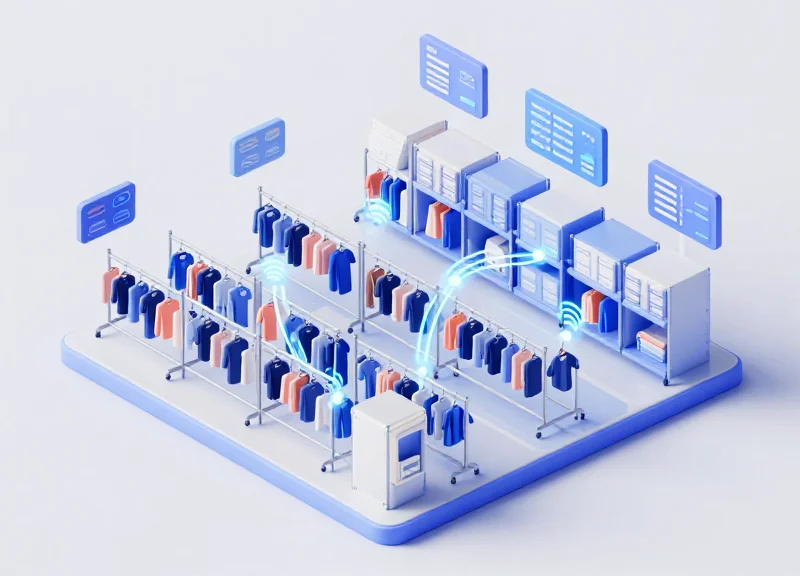
In the competitive world of high-end fashion and luxury retail, precision isn't just a goal—it's a requirement. For years, barcodes were the gold standard, but as boutique operations grow more complex, the limitations of line-of-sight scanning have become clear. This guide explores why high-end boutiques are moving 'Beyond Barcodes' to RFID technology, providing a strategic framework to calculate Return on Investment and select the right systems to revolutionize your floor operations.
The Evolution of Retail Tracking: Why Barcodes Are No Longer Enough for Boutiques
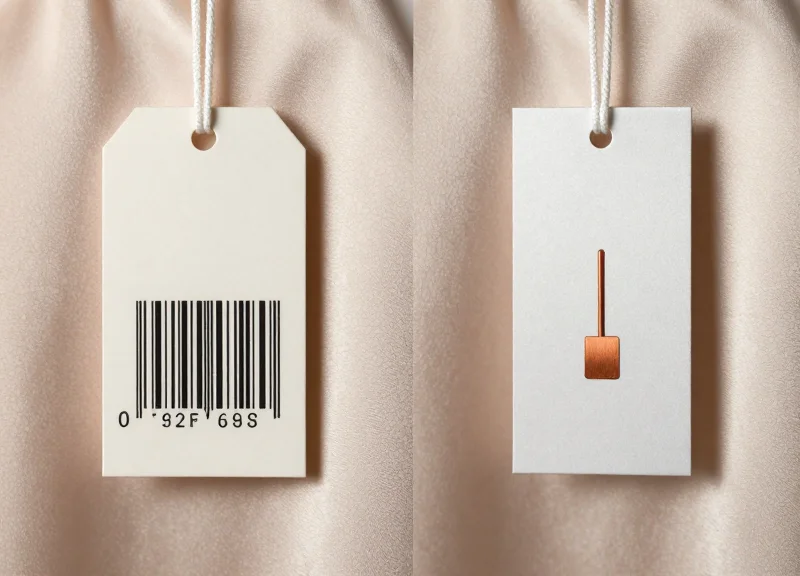
The evolution of retail tracking has reached a critical pivot point: traditional barcodes, which require manual line-of-sight scanning and individual handling, are no longer sufficient for the high-velocity, high-precision environment of modern boutiques. Radio Frequency Identification (RFID) has emerged as the gold standard, offering 99%+ inventory accuracy and automated bulk-scanning capabilities that allow retailers to maintain perfect stock visibility without the labor-intensive friction of manual counts. In an era where 'out of stock' equals a lost customer relationship, the shift to RFID is less about a new label and more about a fundamental operational upgrade.
| Metric | Barcode Tracking | RFID Tracking |
|---|---|---|
| Scan Requirement | Manual, Line-of-Sight | Automated, Proximity-Based |
| Counting Speed | ~200 items per hour | ~15,000+ items per hour |
| Average Accuracy | 65% - 75% | 99.5% - 99.9% |
| Labor Cost | High (Recurring manual audits) | Low (Automated cycle counts) |
| Visibility | Static (Last scan point) | Dynamic (Real-time movement) |
The most significant 'hidden' cost for high-end boutiques using barcodes is the Clienteling Gap. When sales associates are tethered to backroom inventory audits or manual check-ins, they are not on the floor building relationships. In luxury retail, every minute spent scanning a 1D barcode is a minute of lost white-glove service. My unique observation over two decades in the industry is that barcodes create 'Shadow Inventory'—items that are physically in the store but digitally invisible due to human error during scanning. RFID eliminates this shadow inventory, ensuring that if a VIP client asks for a limited-edition piece, your staff knows exactly where it is in seconds, not minutes.
Why do barcodes lead to lost revenue in boutiques?
Barcodes rely on human intervention, which leads to a 2-3% inventory drift every month. For a high-end boutique, this means that by the end of a quarter, nearly 10% of your system's data is wrong, leading to missed sales opportunities and frustrated clients.
Does RFID replace the need for store staff?
No. RFID empowers staff. By reducing the time spent on 'the hunt' for missing stock by up to 90%, RFID allows your most talented associates to focus entirely on clienteling and high-value sales tasks.
What is the 'Shadow Inventory' risk?
Shadow inventory refers to stock that is misplaced or mis-scanned. In a barcode-based system, these items are functionally dead capital until the next full manual audit, whereas RFID identifies their location instantly through wall-penetrating radio waves.
Understanding RFID: More Than Just a Digital Label
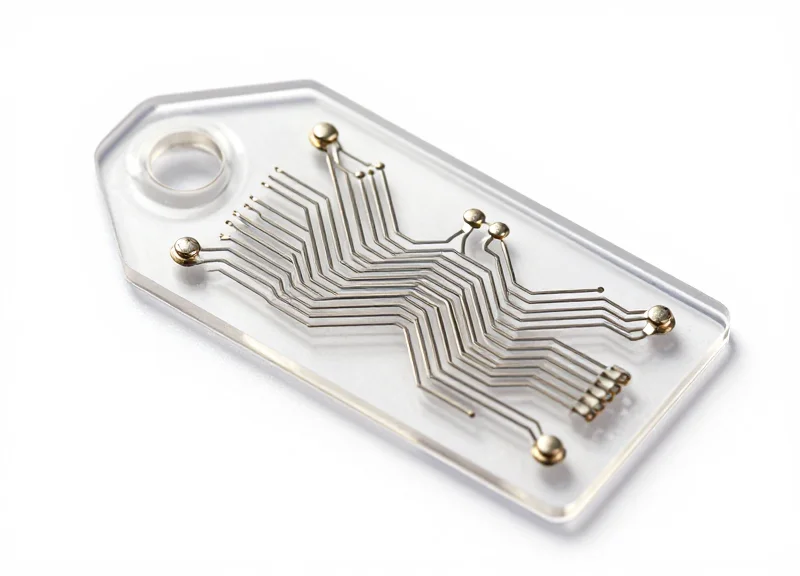
RFID (Radio Frequency Identification) is a wireless communication technology that utilizes electromagnetic fields to automatically identify and track tags attached to objects. Unlike traditional barcodes, which require a direct optical line-of-sight and individual manual triggers, RFID enables boutiques to read hundreds of items simultaneously without opening boxes or handling garments. By converting physical inventory into digital signals that can be captured at a distance, RFID moves retail operations from reactive batch-processing to proactive, real-time data intelligence.
| Feature | Traditional Barcodes | High-End RFID Systems |
|---|---|---|
| Line of Sight | Required (Manual Scan) | Not Required (Through Walls/Fabric) |
| Read Rate | 1 item every 2-5 seconds | Up to 1,000 items per second |
| Data Capacity | Basic ID (SKU level) | Rich Data (Batch, Origin, Expiry) |
| Automation | Low (Requires human labor) | High (Gateways and fixed readers) |
| Accuracy | 70-80% (Human error prone) | 99%+ (Real-time precision) |
A unique insight for high-end boutiques is the concept of 'Spatial Intelligence.' While a barcode tells you that an item exists in the store, RFID tells you where it is. In luxury environments, where an 'out-of-stock' error for a $2,000 handbag is often just a 'misplaced-in-backroom' error, RFID acts as a GPS for your inventory. This eliminates 'Ghost Inventory'—items that appear in your system but aren't on the floor—directly preventing the lost sales that occur when a client walks out because a specific size couldn't be located.
Does RFID technology interfere with luxury garment aesthetics?
No. Modern RFID inlays are incredibly thin and can be embedded into existing hangtags, woven into brand labels, or even hidden inside leather goods, ensuring the luxury 'unboxing' experience is never compromised.
What is the difference between Passive and Active RFID for retail?
Most boutiques use Passive RFID. These tags have no battery and are powered by the energy from the reader, making them cost-effective and small enough for apparel. Active RFID is typically reserved for high-value machinery or vehicle tracking.
How does RFID handle security compared to traditional EAS?
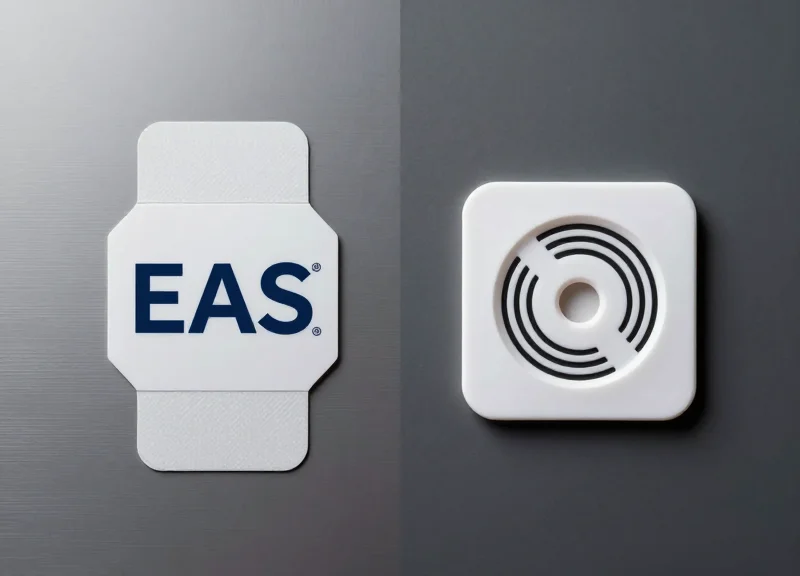
RFID can replace traditional Electronic Article Surveillance (EAS). While EAS only triggers an alarm, RFID tells the security system exactly which item is leaving the store, allowing for more professional and discreet loss prevention interactions.
The Core Benefits of RFID for High-End Retail: Inventory, Security, and Speed
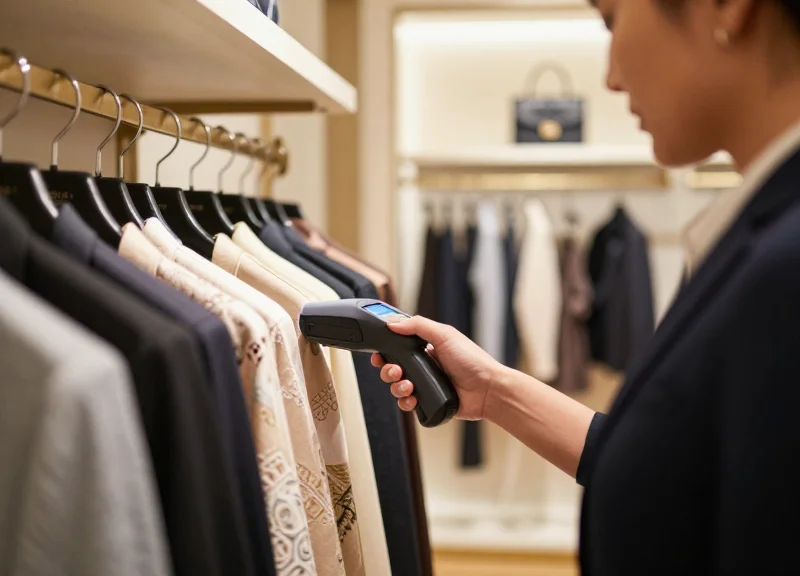
For high-end boutiques, RFID (Radio Frequency Identification) is more than a technical upgrade; it is a strategic foundation that delivers three critical outcomes: 99%+ inventory accuracy, invisible but robust security, and an 80% reduction in processing time. Unlike traditional barcodes, RFID allows for bulk scanning without line-of-sight, enabling retailers to eliminate 'phantom stock' and ensure that every luxury item is accounted for in real-time.
| Metric | Legacy Barcode Systems | Modern RFID Systems |
|---|---|---|
| Inventory Accuracy | 65% - 75% | 99.5% - 99.9% |
| Stocktake Duration | Hours/Days (Manual) | Minutes (Automated) |
| Shrinkage Control | Reactive (Post-incident) | Proactive (Real-time tracking) |
| Checkout Speed | Slow (Item-by-item) | Rapid (Bulk detection) |
In a luxury environment, the 'Out of Stock' scenario is a brand-killer. High-end boutiques often carry limited runs; if a client wants a specific size and the system shows it is in stock but the staff cannot find it, the sale and the client's trust are lost. RFID solves this by pinpointing the exact location of items within the store—whether they are in the backroom, on a mannequin, or in the wrong display section.
How does RFID improve boutique security without looking like a warehouse?
Modern RFID antennas can be concealed within door frames or under flooring, replacing bulky, unsightly plastic pedestals with 'invisible gates' that alert staff to unauthorized item movement without ruining the store's aesthetic.
Can RFID help with 'Buy Online, Pick Up In-Store' (BOPIS)?
Absolutely. High-end retail relies on omnichannel perfection. RFID’s 99% accuracy prevents boutiques from promising an item online that isn't actually on the shelf, reducing cancelled orders and customer frustration.
Does RFID speed up the receiving process?
Yes. Instead of opening ogni box and scanning individual labels, staff can scan an entire shipment in seconds through the packaging, moving luxury goods to the floor significantly faster.
Expert Insight: The 'Shadow Inventory' Recovery. A unique advantage for high-end boutiques is the recovery of 'Shadow Inventory'—items that have been misplaced by customers or staff. In a 5,000-square-foot boutique, an average of 3-5% of luxury stock is typically 'hidden' in plain sight (e.g., a silk scarf tucked inside a coat pocket). RFID handheld readers allow staff to perform a 'Geiger-counter' style search to find these high-value needles in the haystack, directly recapturing lost capital that barcodes simply cannot find.
Calculating ROI: Identifying Tangible and Intangible Gains
Calculating the Return on Investment (ROI) for RFID in luxury retail transcends simple hardware costs; it is a strategic evaluation of operational efficiency and revenue preservation. For high-end boutiques, ROI is achieved when the cost of implementation is outweighed by the sum of labor hours reclaimed, a 90% reduction in out-of-stock occurrences, and the elimination of 'phantom inventory'—items that are in the store but invisible to the sales team. Unlike mass-market retail, where ROI is volume-driven, boutique ROI is 'value-driven,' focusing on the protection of high-margin assets and the maximization of every single customer walk-in.
| Metric | Impact Area | Financial Value |
|---|---|---|
| Inventory Counting | From 40 hours to 2 hours | Significant labor cost reduction |
| Inventory Accuracy | From 65% to 99% accuracy | Prevents lost sales and overstocking |
| Shrinkage Visibility | Real-time gate alerts | Minimizes high-value asset loss |
| Staff Productivity | Shift from admin to selling | Increases average transaction value (ATV) |
Unique Insight: The 'Luxury Conversion Multiplier'. In high-end environments, the ROI of RFID is amplified by 'Clienteling.' When RFID automates stock-checks, sales associates spend 30% more time with clients. In a boutique where the average unit retail (AUR) is $500+, a mere 2% increase in conversion due to better service pays for the entire RFID system in less than a year.
- Establish a Labor Baseline: Record the total hours staff currently spend on manual barcode counts and backroom stock searches weekly.
- Quantify 'Lost Sale' Frequency: Track how often a SKU is technically in stock but cannot be located, leading to a missed high-value commission.
- Measure Shrinkage Delta: Compare historical shrinkage rates with the precision tracking provided by RFID-enabled EAS (Electronic Article Surveillance) systems.
- Calculate the Efficiency Dividend: Assign a dollar value to the hours reclaimed from stock management and reallocate that budget to marketing or clienteling.
What is an 'intangible' gain in RFID for boutiques?
Intangible gains include improved brand prestige through seamless service and higher employee retention as staff are freed from repetitive manual labor.
How does RFID prevent 'Phantom Inventory'?
RFID provides 99.9% visibility, ensuring that items misplaced in the wrong drawer or dressing room are instantly locatable, preventing unnecessary re-ordering.
What is the typical ROI timeline for high-end retail?
Most luxury boutiques achieve a full return on investment within 12 to 18 months, depending on item price points and inventory turnover rates.
Reducing Shrinkage and Theft with Integrated RFID/EAS Systems
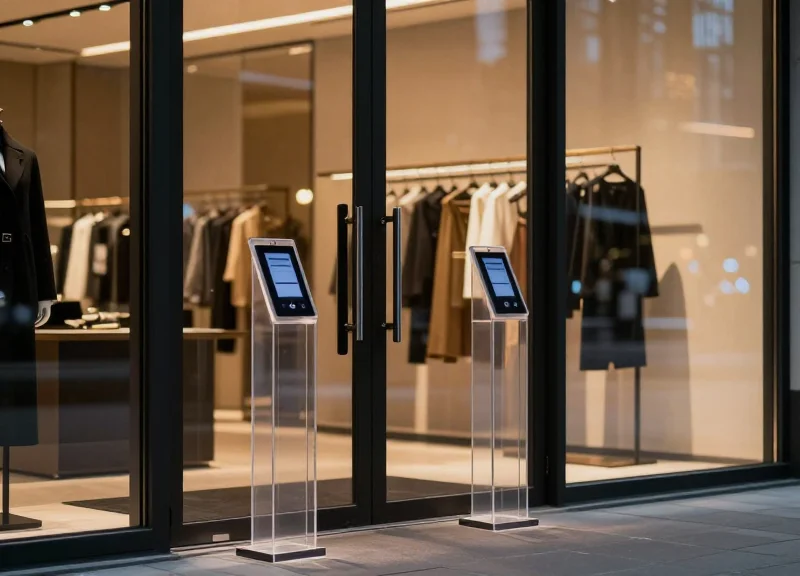
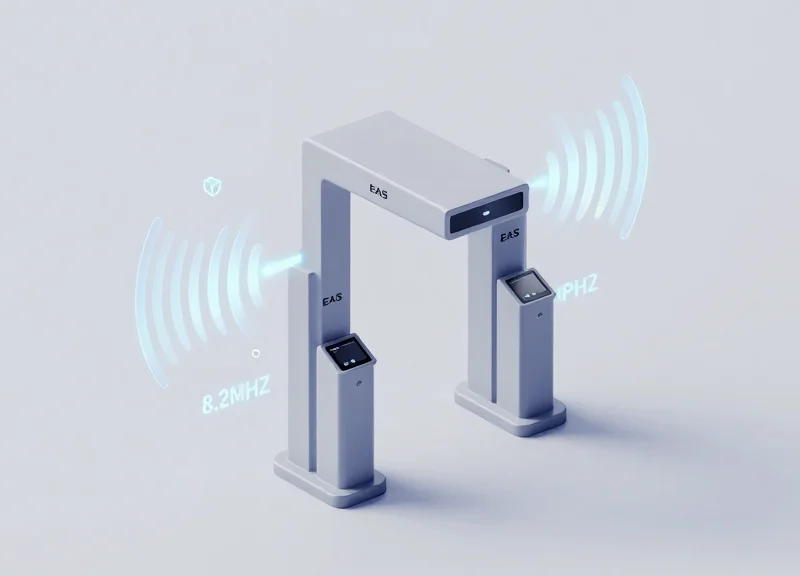
Integrated RFID/EAS (Electronic Article Surveillance) is a security synergy that merges traditional gate-based theft prevention with item-level identification. While standard EAS systems only trigger an alarm when an active tag passes through the pedestals, an integrated RFID system identifies the specific SKU, color, and size of the item leaving the premises. For high-end boutiques, this transforms security from a simple deterrent into a powerful forensic tool that provides real-time visibility into shrinkage patterns.
| Feature | Traditional EAS | Integrated RFID/EAS |
|---|---|---|
| Alarm Insight | Generic sound; unknown item. | Specific item identification (SKU/Value). |
| Inventory Sync | Manual count required to find loss. | Automatic inventory update upon exit. |
| False Alarms | Frequent (tag pollution). | Minimized via intelligent filtering. |
| Recovery Potential | Low; staff don't know what to look for. | High; staff know exactly what is missing. |
The Veteran's Insight: The Forensic ROI. Most retailers view theft as a sunk cost, but integrated RFID/EAS provides a unique 'Forensic ROI' that generic articles overlook. When a luxury item is stolen, the immediate loss isn't just the COGS (Cost of Goods Sold); it is the missed opportunity of a high-margin sale because the floor model is gone. Integrated systems automatically trigger a 'restock' alert the moment an item exits without a 'sold' status. This ensures that a theft event doesn't snowball into days of lost revenue due to an empty display shelf.
- Detection at the Pedestal: The RFID reader at the exit detects an 'un-sold' status on the tag as the customer passes through.
- Real-Time Identification: The system identifies the exact item and pushes a notification to staff mobile devices or tablets.
- Immediate Inventory Correction: The cloud-based inventory management system updates the stock count to reflect the loss, preventing phantom inventory errors.
- Pattern Analysis: Security teams analyze data to identify 'hot' zones or items frequently targeted by organized retail crime (ORC).
Does RFID replace the need for security guards?
No, it empowers them. Instead of a guard stopping every person when a generic alarm rings, they receive a discrete alert on a smartwatch showing the image and price of the stolen item, allowing for a more professional and accurate intervention.
Will integrated systems work with my existing metal-based tags?
Most modern RFID/EAS pedestals are 'Dual-Technology,' meaning they can detect both traditional AM/RF hard tags and newer RFID soft labels or hard tags simultaneously.
Can RFID help with internal 'sweethearting' theft?
Yes. Because every tag is unique, the system can track which items were scanned at the POS versus which items left the door, making it easy to spot discrepancies in employee behavior.
Enhancing the Customer Experience: Contactless Checkout and Smart Fitting Rooms
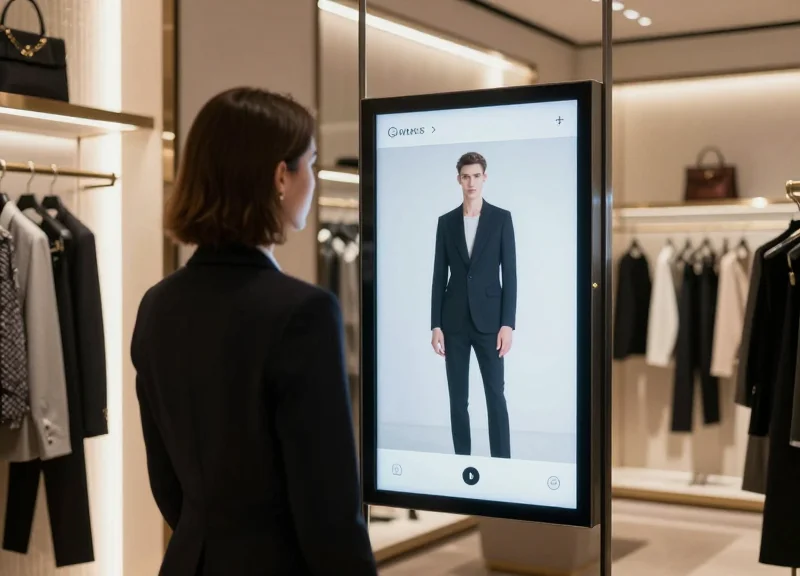
In the world of high-end boutiques, the customer experience is the ultimate product. RFID technology enhances this by creating a 'frictionless luxury' environment where technical hurdles like manual barcode scanning and long queue times are eliminated. By utilizing radio frequency rather than line-of-sight optics, boutiques can offer contactless checkouts that process entire baskets in seconds and smart fitting rooms that act as a digital concierge, bridging the gap between tactile browsing and data-driven personalization.
- Interactive Magic Mirrors: RFID-enabled mirrors automatically recognize items brought into the fitting room, displaying high-definition styling suggestions, available colors, and matching accessories to encourage upselling.
- On-Demand Staff Assistance: Customers can request a different size or a glass of champagne directly from the fitting room touch-screen, notifying staff wearables instantly to maintain a high-touch service feel.
- Zero-Touch Checkout: Items placed on an RFID-enabled counter are instantly tallied without the need for staff to find and scan individual tags, allowing for a more social, conversational transaction.
| Experience Metric | Traditional Barcode Retail | RFID-Enabled Boutique |
|---|---|---|
| Average Checkout Time | 3 - 5 Minutes | Under 30 Seconds |
| Fitting Room Service | Manual / Intermittent | Instant / Automated |
| Product Information | Limited to Tag / Staff | Rich Digital Content on Demand |
| Cross-Selling Accuracy | Depends on Staff Memory | AI-Driven Recommendations |
Expert Tip: The most valuable data point in luxury retail isn't what was sold, but what was rejected. Smart fitting rooms provide 'Abandonment Intelligence'—if a specific gown is tried on 50 times but never purchased, RFID data reveals a systemic fit or fabric issue that traditional POS systems would miss entirely. This allows for rapid inventory pivots that save thousands in potential markdowns.
Do customers feel their privacy is invaded by RFID in fitting rooms?
No, when implemented correctly. High-end systems focus on the garment, not the person. Tags are read to provide service, and no biometric data is captured, ensuring a secure and private experience.
How does contactless checkout handle high-security hard tags?
Modern RFID systems integrate with magnetic detachers. The moment the tag is detached, the system marks the item as 'sold' in the cloud, preventing false alarms at the exit pedestals.
Operational Streamlining: From Backroom Receiving to Front-of-House Sales
Operational streamlining through RFID is the process of converting physical product movement into instantaneous digital data updates across every touchpoint of the boutique's lifecycle. By leveraging radio waves instead of optical line-of-sight scanning, high-end boutiques can eliminate the manual bottlenecks of barcode processing, enabling 'Zero-Touch' receiving and near-perfect inventory visibility that ensures the right product is always available for the client.
| Operational Task | Legacy Barcode Method | RFID-Enabled Method | Efficiency Gain |
|---|---|---|---|
| Inbound Receiving | Scanning individual items by opening boxes. | Bulk scanning entire cartons in seconds. | 90% faster |
| Inventory Audits | Full-store counts taking 4-8 hours. | Handheld sweep taking 15-20 minutes. | 95% faster |
| Floor Replenishment | Manual checking of shelves vs. backroom. | Automated low-stock alerts via mobile app. | Real-time |
| Discrepancy Resolution | Manual cross-referencing of invoices. | Instant digital flagging of missing items. | Immediate |
In a luxury setting, time is the most valuable currency. When your staff is tethered to the backroom scanning individual barcodes, they are not on the floor building client relationships. RFID shifts the operational burden from human labor to the infrastructure itself. Here is how the product journey evolves in an RFID-optimized boutique:
- Bulk Receiving & Instant Validation: As shipments arrive, an RFID tunnel or handheld reader captures every Serialized Global Trade Item Number (SGTIN) within a sealed carton. This instantly validates the shipment against the Purchase Order (PO) without needing to unbox or handle individual garments.
- Dynamic Back-to-Front Logic: The system identifies 'hot items' that are currently out of stock on the sales floor. These items are flagged immediately for priority steaming and placement, reducing 'Out-of-Stock' lost sales on high-demand pieces.
- Seamless Cycle Counting: Boutiques can perform daily or weekly 'mini-counts' of specific categories (e.g., luxury watches or handbags) in minutes. This ensures that the digital catalog the client sees online matches the physical reality of the store.
- The Invisible Checkout: At the point of sale, placing multiple items on an RFID-enabled counter automatically populates the transaction list. There is no hunting for tags or awkward fumbling with scanners in front of a VIP client.
Expert Insight: The 'Ghost Inventory' Killer. In my 20 years of retail tech, the biggest ROI driver isn't just speed—it's the elimination of ghost inventory (items the system thinks are in stock but are actually missing or misplaced). In luxury retail, one misplaced $2,000 blazer is a significant hit. RFID provides a 'last seen' location for every item, effectively killing ghost inventory and reclaiming lost capital.
Does RFID replace the need for an ERP system?
No, RFID acts as the high-fidelity data source for your ERP. It ensures the data entering your Enterprise Resource Planning software is 99% accurate compared to the 65-75% accuracy typically found with manual barcode systems.
Can RFID handle items with metallic fibers or liquid contents?
While metal and liquid can interfere with radio waves, modern 'on-metal' tags and strategic tag placement (flag tags) have virtually solved these issues for high-end beauty products and accessories with heavy hardware.
How does it improve the employee experience?
By automating the most tedious parts of retail—counting and scanning—RFID reduces employee burnout and allows your stylists to focus on high-value human interactions, which is the hallmark of luxury service.
Selection Criteria: Choosing the Right Tags, Readers, and Software
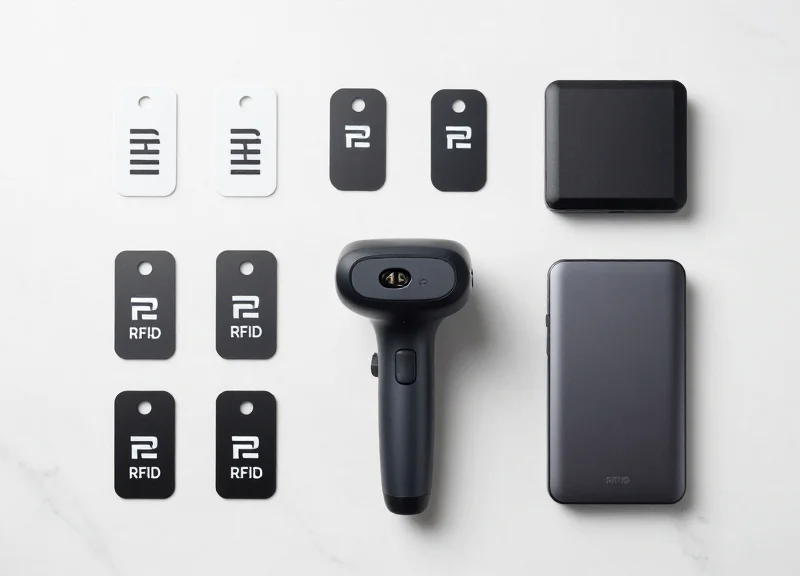
Selecting the right RFID components for a high-end boutique hinges on the 'Aesthetic-Functional Balance': the ability to capture 99.9% of data without disrupting the curated visual identity of the store. For luxury environments, hardware must be chosen based on read range precision, frequency (typically Rain RFID/UHF for retail), and the architectural constraints of the space. Success is measured by how seamlessly technology disappears into the background of the customer's journey while providing real-time inventory visibility.
| Component | Key Criteria for Luxury | Best Use Case |
|---|---|---|
| RFID Hang-Tags | High-GSM paper, custom branding, small antenna | Standard apparel and accessories |
| Encapsulated Tags | Heat/wash resistant, embedded in seams | High-end couture and rental garments |
| Jewelry Tags | Flag-style, tamper-evident, non-intrusive | Watches, rings, and fine jewelry |
| Overhead Readers | PoE (Power over Ethernet), ceiling-flush | Real-time floor tracking without bulky gates |
- Determine the Read Zone Requirements: Identify if you need 'portal' reading (backroom to floor), 'point-of-sale' reading, or 'wide-area' overhead monitoring to track movement throughout the store.
- Select Tag Form Factors: Choose tags that match the luxury price point. Avoid bulky plastic; opt for premium cardstock hang-tags or discreet fabric labels that don't distract from the garment's drape.
- Evaluate Reader Sensitivity and Aesthetics: For boutiques, aesthetics are paramount. Select readers that can be hidden in ceilings or integrated into custom cabinetry at the POS to maintain a 'frictionless' look.
Expert Tip: The 'Aesthetic Invisibility' Factor. In 20 years of Silicon Valley deployments, I’ve seen retailers fail by installing industrial-looking floor pedestals in a minimalist boutique. For high-end environments, insist on 'Invisible EAS'—overhead RFID sensors that replace ugly security gates. These systems use beam-forming technology to accurately distinguish between a customer browsing near the door and a genuine exit event, reducing false alarms and keeping the entryway wide and welcoming.
- Cloud-Native vs. On-Premises?: High-end boutiques should prioritize Cloud-Native software for real-time syncing across global locations and easier integration with modern e-commerce stacks.
- API-First Architecture: Ensure the RFID software provides robust APIs to connect with your existing ERP (like SAP or Oracle) and POS systems without expensive custom middleware.
- Mobile-First Interface: Software should be optimized for iOS/Android tablets, allowing floor associates to perform cycle counts and 'find-in-store' searches without leaving the customer's side.
Implementation Strategy: A Step-by-Step Guide for High-End Boutiques
A successful RFID implementation strategy for high-end boutiques is a phased migration that prioritizes data integrity and staff adoption while maintaining a 'white-glove' customer experience. Rather than a disruptive 'big bang' transition, luxury retailers should adopt a 'Pilot-to-Protocol' approach. This ensures that the hardware and software layers are fully calibrated to the boutique's unique architectural layout and product mix—such as metallic finishes or liquids that can interfere with RF signals—before a full-scale rollout occurs.
- Phase 1: The Tactical Audit: Conduct a site survey to identify RF dead zones caused by mirrors, metal shelving, or reinforced walls. Define your primary KPI, such as reducing 'Out-of-Stock' events by 20% within the first quarter.
- Phase 2: The Category-Specific Pilot: Deploy RFID on a high-value, high-turnover category first (e.g., leather goods). This allows you to test tag placement aesthetics and read-rate accuracy without overhauling the entire inventory.
- Phase 3: Network & Hardware Backbone: Install fixed readers at backroom-to-sales-floor transition points and handheld scanners at POS. Ensure your Wi-Fi infrastructure can handle the real-time data bursts from thousands of EPC (Electronic Product Code) pings.
- Phase 4: The 'Shadow' Inventory Cycle: Run your new RFID system in parallel with existing barcode scanning for 14 days. Compare the datasets to find discrepancies and calibrate the software filters before decommissioning the legacy barcode process.
- Phase 5: Staff 'Concierge' Training: Train staff not just on hardware usage, but on how to use the data to assist customers—such as instantly finding a specific size in the backroom using the 'Geiger counter' search mode.
| Implementation Phase | Typical Duration | Primary Goal | Key Stakeholder |
|---|---|---|---|
| Site Survey & Audit | 1-2 Weeks | Infrastructure Readiness | IT / Operations |
| Pilot Launch | 4 Weeks | POC Validation | Store Manager |
| Full Inventory Tagging | 1-2 Weeks | Data Digitization | Sales Associates |
| System Integration | Ongoing | ERP/POS Synchronization | Software Provider |
Expert Insight: To avoid the 'Aesthetic Friction' common in luxury environments, adopt a hybrid tagging strategy. For flagship items, utilize 'In-lay' tags embedded directly into the brand's hangtags during manufacturing. This 'Source Tagging' prevents the unsightly appearance of bulky adhesive stickers and ensures items are trackable the moment they leave the shipping container, maximizing visibility across the entire supply chain.
How do we handle tagging existing floor stock?
Use a mobile 'tagging station' during off-hours. This involves printing and encoding RFID hangtags on-site and mapping them to existing SKU data in your ERP. It typically takes a trained team of three about 4 hours per 1,000 items.
Will RFID interfere with existing security systems?
Modern Ultra-High Frequency (UHF) RFID operates on different bands than traditional Acousto-Magnetic (AM) or Radio-Frequency (RF) EAS pedestals. In fact, many luxury boutiques upgrade to integrated pedestals that handle both security and inventory data simultaneously.
What is the biggest risk during implementation?
The 'Garbage In, Garbage Out' risk. If your initial barcode-to-RFID data upload contains errors, the system will track those errors perfectly. A physical 'wall-to-wall' manual count is mandatory 24 hours before the digital transition.
Future-Proofing Your Retail Space with ESL and RFID Integration
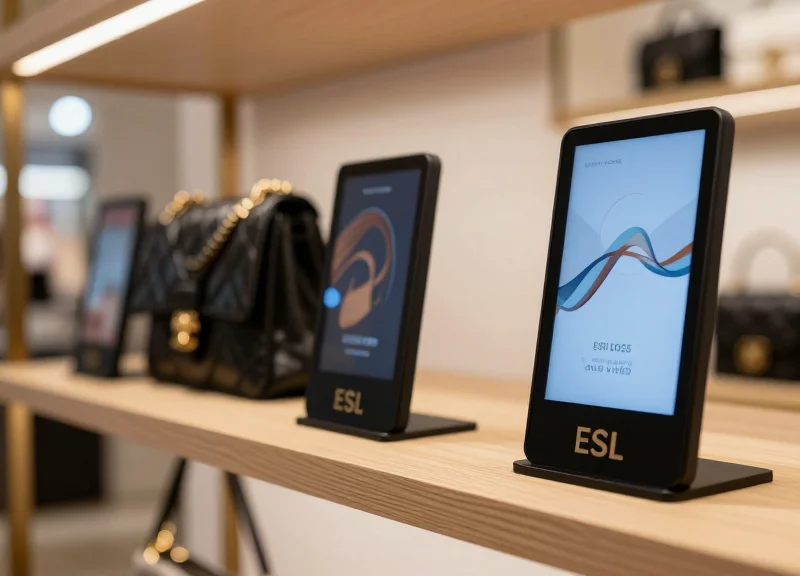
Future-proofing a high-end boutique involves moving beyond siloed technologies to a unified 'Retail IoT' ecosystem where Electronic Shelf Labels (ESL) and RFID work in tandem. While RFID tracks the movement and location of individual items, ESL automates the display of pricing, promotions, and product data at the shelf edge. When integrated, these systems share a common wireless infrastructure—typically sub-Ghz or BLE—to ensure that the physical price on the floor always matches the digital inventory record and the POS system, eliminating manual labor and pricing discrepancies.
| Feature | RFID Primary Role | ESL Primary Role | Integrated Synergy |
|---|---|---|---|
| Inventory Visibility | Tracks stock levels & location | Displays 'Low Stock' alerts | Automated replenishment triggers |
| Pricing Agility | Updates backend SKU data | Changes physical price tag | Real-time dynamic luxury markdowns |
| Customer Interaction | Enables smart fitting rooms | NFC triggers product videos | Seamless omnichannel storytelling |
| Operational Focus | Loss prevention & receiving | Labor reduction in labeling | Total store automation |
The Veteran's Insight: Most retailers view ESL and RFID as separate capital expenditures. However, the 'Golden Spike' of ROI occurs when you use the ESL's built-in LEDs to assist in 'Pick-to-Light' operations. When an online order comes in, the RFID system locates the item, and the corresponding ESL flashes a specific color to guide the associate directly to the product. This reduces fulfillment time by up to 60% in complex boutique layouts.
- Consolidate the Infrastructure: Select a provider that offers a unified gateway capable of managing both RFID sensors and ESL access points to reduce hardware overhead and signal interference.
- Map RFID Tags to ESL IDs: Link your item-level RFID data to the specific ESL assigned to that product category. This ensures that as stock moves, the display updates automatically.
- Enable Dynamic Pricing Logic: Program your software to adjust ESL prices based on RFID-detected stock ages, allowing for automatic 'quiet' markdowns on older luxury pieces to increase turnover.
Does ESL interfere with RFID frequencies?
No, most modern ESLs operate on 2.4GHz (Zigbee/BLE) or proprietary sub-GHz bands, while UHF RFID operates in the 860-960MHz range, ensuring no signal overlap.
What is the battery life for integrated ESLs?
Typically, ESL batteries last 5 to 10 years because they only consume power during image updates, making them a sustainable long-term investment.
How does this improve the luxury 'vibe'?
It removes the 'clutter' of paper tags and ensures customers never see a hand-written price change, maintaining a pristine, high-tech brand image.