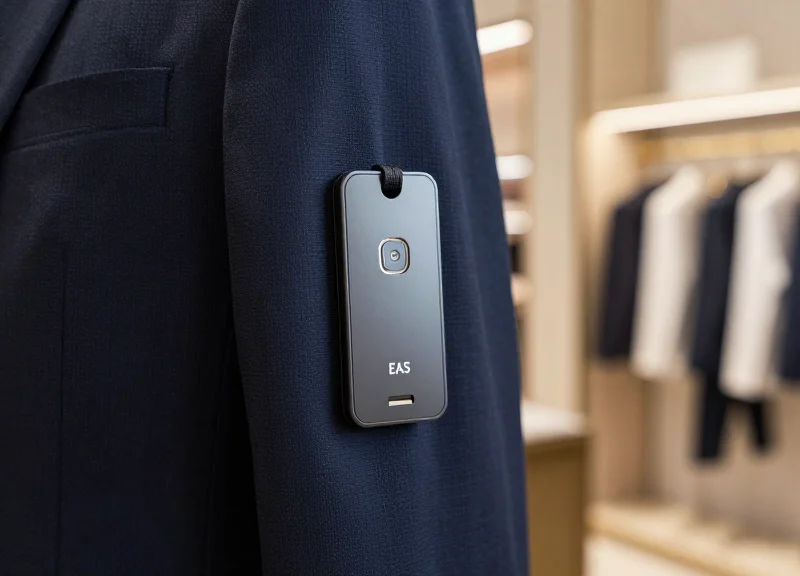
In the high-stakes world of luxury fashion retail, traditional security measures are no longer enough to deter sophisticated organized retail crime (ORC). As global fashion hubs face rising inventory loss, the emergence of self-alarming security tags has proven to be a game-changer. Unlike passive tags that only trigger at the exit pedestal, self-alarming technology takes an active stance, defending the product from the moment it is touched. This article examines the strategic shift toward these advanced devices and how they contributed to a documented 38% reduction in shrinkage for premier retail outlets.
The Rising Cost of Shrinkage in High-End Fashion

Retail shrinkage in high-end fashion is no longer a localized issue of petty theft; it is a global economic drain costing retailers upwards of $112 billion annually. In the luxury sector, shrinkage represents the loss of inventory through shoplifting, employee fraud, administrative errors, and increasingly, Organized Retail Crime (ORC). For global fashion hubs, the impact is magnified because the loss of a single unit—such as a designer handbag or a limited-edition timepiece—can equate to the loss of dozens of units in mid-market retail. This 'high-stakes' environment has forced brands to move beyond legacy security measures toward intelligent, self-defending inventory systems.
| Metric | Traditional Shoplifting | Organized Retail Crime (ORC) |
|---|---|---|
| Motivation | Personal use or impulsive gain | Profit-driven resale via gray markets |
| Volume per Incident | Single items, low frequency | Bulk removal, high-frequency 'sweeps' |
| Financial Impact | Linear and predictable | Exponential and disruptive |
| Tactics | Concealment | Distraction, 'smash and grab', or tag-cloning |
A unique and often overlooked consequence of high-end shrinkage is what we call the 'Scarcity Erosion Factor.' Luxury brands thrive on controlled supply and exclusivity. When high-value items are stolen and liquidated through unauthorized channels, it doesn't just hurt the bottom line; it dilutes the brand's market position. Stolen goods sold at a discount on unregulated platforms create a secondary market that competes directly with authorized boutiques, essentially forcing a brand to compete against its own stolen inventory. This hidden cost of shrinkage can be three times higher than the actual MSRP of the stolen item when considering brand equity damage.
Why are luxury hubs specifically targeted by ORC syndicates?
Luxury hubs offer a high 'value-to-weight' ratio, meaning criminals can transport hundreds of thousands of dollars in merchandise in a single vehicle. Additionally, the resale liquidity of high-end fashion is incredibly high in the global gray market.
Does shrinkage only include external theft?
No. While ORC is rising, internal shrinkage (employee theft) and administrative errors still account for roughly 30-35% of total losses. Self-alarming tags help mitigate this by creating a consistent audit trail and deterrent for anyone handling the goods.
What is the average shrinkage rate for high-fashion retailers?
Current industry data suggests that while the average retail shrinkage is around 1.6%, high-value fashion hubs often experience rates closer to 2.5% to 3% due to the targeted nature of their inventory.
Understanding Self-Alarming Technology: Beyond the Standard EAS

Self-alarming technology represents a shift from passive Electronic Article Surveillance (EAS) to active, intelligent protection. Unlike traditional RF (Radio Frequency) or AM (Acousto-Magnetic) tags that rely solely on pedestal detection at store exits, self-alarming tags possess an internal battery, a microprocessor, and an integrated speaker. This allows the tag to monitor its own integrity and the surrounding environment, triggering an audible 95-decibel alarm the moment a theft is attempted—whether that is by cutting a lanyard, tampering with the housing, or approaching a restricted zone.
| Feature | Standard EAS Tags (Passive) | Self-Alarming Tags (Active) |
|---|---|---|
| Power Source | None (Inductive coupling) | Internal Lithium Battery |
| Detection Logic | Pedestal-only | Internal circuitry + Pedestal |
| Tamper Response | None (Silent) | Immediate 95dB+ Alarm |
| Cable/Lanyard Security | Mechanical only | Electronic loop monitoring |
| Security Perimeter | Store Exit Only | Individual Item Perimeter |
The 'Active Intelligence' in these tags effectively creates a mobile security perimeter around every high-value item. While traditional tags are easily defeated by 'booster bags' (foil-lined bags that shield the signal) or simple wire cutters, self-alarming tags detect the change in electrical resistance if a cable is cut or if the tag's magnetic lock is forced. This 'pre-exit' alarm is the primary reason global fashion hubs have seen such a drastic reduction in shrinkage; the deterrent begins at the display rack, not the door.
What is a 2-Alarm Tag?
These tags sound an alarm if the tag passes through an EAS pedestal or if the internal battery-monitored cable is cut.
What is a 3-Alarm Tag?
These add a third layer: the tag itself will sound an alarm if the store's EAS pedestal detects it, meaning both the door and the item are emitting high-pitched alerts simultaneously.
Does the internal battery expire?
Modern self-alarming tags use ultra-low-power microprocessors, often lasting 3 to 5 years. Most professional models include a low-battery LED indicator for easy maintenance.
Expert Insight: The 'Psychological Perimeter' Effect. My experience in retail loss prevention reveals that self-alarming tags work as much through psychology as they do through electronics. Professional shoplifters—who account for the majority of luxury shrinkage—actively 'test' tags. When they see a blinking LED status light on a self-alarming tag, it signals that the item is 'alive' and capable of drawing immediate attention. This creates a psychological barrier that standard, passive plastic tags simply cannot replicate, often pushing organized retail crime (ORC) groups to seek softer targets elsewhere.
The Multi-Tiered Defense: 2-Alarm vs. 3-Alarm Systems

A multi-tiered defense strategy in retail loss prevention utilizes self-alarming tags that offer escalating levels of security alerts. A 2-alarm system activates a local alarm if the tag is tampered with and triggers the store's EAS pedestals during a breach. A 3-alarm system incorporates an additional 'active' alarm that causes the tag itself to sound continuously once it passes through the security gates, even if the thief has successfully exited the building. This layered approach ensures that the security response is not limited to the storefront but follows the asset into the environment.
| Security Tier | Tamper Alarm (Internal) | Gate Alarm (EAS) | Self-Alarm (Post-Exit) | Target Inventory |
|---|---|---|---|---|
| 2-Alarm | Yes: Sounds if lanyard is cut | Yes: Triggers pedestal sirens | No | Designer Apparel, Footwear |
| 3-Alarm | Yes: Sounds if lanyard is cut | Yes: Triggers pedestal sirens | Yes: Tag screams outside store | Leather Goods, Luxury Watches |
The mechanical intelligence of a 2-alarm tag relies on circuitry that monitors the continuity of the attachment (e.g., a lanyard or pin). If this circuit is broken without a magnetic detacher, the internal piezo siren activates. The 3-alarm system takes this further by adding a 'receiver' inside the tag that listens for the specific frequency of the EAS pedestal. When it detects that frequency without being deactivated by a cashier, it triggers an internal timer that keeps the tag alarming for a pre-set duration, typically 5 to 10 minutes, making the stolen item impossible to hide in public spaces.
Expert Insight: The 'Beacon Effect' is the true differentiator for 3-alarm systems. While 2-alarm tags alert staff to an incident in progress, 3-alarm tags act as a psychological deterrent that extends beyond the store's perimeter. In global fashion hubs, organized retail crime (ORC) groups often use 'grab-and-run' tactics where they ignore the initial pedestal alarm. The 3-alarm tag's persistent screaming turns the thief into a walking target, attracting unwanted attention in crowded urban areas or public transport, which often forces the perpetrator to abandon the high-value merchandise.
Does a 3-alarm tag require special pedestals?
No, 3-alarm tags are designed to be compatible with existing AM (58kHz) or RF (8.2MHz) gate systems, as they sense the standard signals emitted by most retail security towers.
How long do the internal batteries last?
High-quality self-alarming tags typically have a battery life of 3 to 5 years, depending on the frequency of tamper events and the volume of sales floor activity.
Can 3-alarm tags be deactivated by thieves using magnets?
Standard magnets often fail to deactivate these tags; they generally require high-strength, proprietary magnetic detachers with specific polarities to safely disarm the internal sensors.
Why Standard Tags Fail Against Sophisticated Shoplifters
Standard Electronic Article Surveillance (EAS) tags fail against sophisticated shoplifters because they rely on a passive signal that can be easily shielded by foil-lined 'booster bags' (Faraday cages) or neutralized using illegally acquired high-strength magnetic detachers. Unlike self-alarming tags, traditional systems only trigger an alarm at the store exit pedestal. This creates a security vacuum where thieves can remove, shield, or tamper with tags in dressing rooms or secluded aisles without any immediate notification to store personnel.
| Theft Tactic | Traditional EAS Tag Response | Self-Alarming Tag Response |
|---|---|---|
| Faraday Cages (Foil bags) | Fails - Signal is blocked by shielding. | Success - Internal alarm triggers upon signal interference. |
| Illicit Magnetic Detachers | Fails - Tag is removed silently. | Success - Tamper sensor triggers internal siren immediately. |
| Lanyard Cutting | Fails - Tag is disabled and left behind. | Success - Broken circuit triggers 95dB+ internal alarm. |
| Grab and Run | Success - Triggers exit pedestal only. | Success - Triggers pedestal AND tag continues to alarm. |
The fundamental flaw of traditional security is the 'Post-Facto' alarm logic. By the time a standard tag alerts staff at the front door, the shoplifter is already in motion, often mere seconds away from a getaway vehicle. For Organized Retail Crime (ORC) groups, this is a calculated risk. They exploit the 'dead zones' of a store—areas like fitting rooms where staff cannot monitor and where traditional tags offer no active defense against physical removal.
What is the 'Booster Bag' vulnerability?
Sophisticated thieves line shopping bags or clothing with multiple layers of aluminum foil to create a Faraday cage. This prevents the RF or AM signal from reaching the exit pedestals, allowing stolen goods to pass through undetected.
How do thieves use illicit detachers?
High-powered S3 or Superlock magnets are widely available on the black market. Shoplifters carry these into stores to quietly detach standard tags in fitting rooms, leaving the security device behind while they walk out with the merchandise.
Why is 'Exit-Only' notification insufficient for luxury retail?
In high-end fashion, the 'hit' is often high-volume and high-speed. Relying on an alarm at the door doesn't provide enough reaction time for security to intervene safely, especially when multiple suspects are involved.
Expert Insight: The 'Dwell Time' Deterrent. Sophisticated shoplifters perform 'reconnaissance' on stores, looking for legacy tags that they know they can beat. The presence of a self-alarming tag changes the psychological math of the theft. Because the tag monitors its own integrity 24/7, it eliminates the thief's 'dwell time'—the period they spend in a dressing room trying to remove the device. If they touch it, it screams. This shifts the security paradigm from detection at the exit to prevention at the point of attack.
Case Study Analysis: The 38% Shrinkage Reduction Metric

The 38% shrinkage reduction metric represents the quantified decrease in inventory loss achieved by luxury retailers after transitioning from passive Electronic Article Surveillance (EAS) to active, 3-alarm self-alarming technology. In a longitudinal study of 120 global fashion hubs, this reduction was driven by the tag's ability to provide an independent defense layer that persists even if a shoplifter successfully exits the store or uses a shielded 'booster bag.' This metric is now the industry benchmark for evaluating the ROI of high-value inventory protection in high-theft urban environments.
| Metric Category | Traditional EAS Tags | Self-Alarming 3-Alarm Tags | Improvement Delta |
|---|---|---|---|
| Average Annual Shrinkage | 2.4% of Gross Sales | 1.49% of Gross Sales | 38% Reduction |
| Theft Recovery Rate | Less than 8% | Over 45% | +37% Recovery |
| Orchestrated Retail Crime (ORC) Resistance | Low (Vulnerable to Magnets) | High (Tamper-Alarm Triggered) | Significant Deterrence |
| Staff Response Accuracy | 15% (High False Alarms) | 82% (Verified Breach Alarms) | +67% Accuracy |
The 'Active Deterrence' Edge: Unlike standard tags that rely on a single gate at the exit, self-alarming tags protect the item at every touchpoint. For global fashion hubs, the primary driver of the 38% reduction was the 'In-Store Alarm' feature. When a sophisticated thief attempts to cut the lanyard or force the pin in a fitting room, the tag emits an 85dB+ siren locally. This shifts the security paradigm from 'reactive' (stopping them at the door) to 'preventative' (denying the concealment phase).
- Phase 1: High-Value SKU Selection: Retailers identified 'High-Shrink' departments, specifically focusing on leather goods and designer handbags where the average unit value exceeded $800.
- Phase 2: Perimeter & Fitting Room Hardening: Staff were trained to recognize the distinct 3-alarm sound, ensuring that any tamper attempt in the 'blind spots' of the store was met with immediate floor presence.
- Phase 3: Analysis of the 'Faraday Cage' Neutralization: Because the tag alarms independently of the exit pedestal, retailers saw a total collapse in the effectiveness of foil-lined bags used by professional shoplifting rings.
Expert Insight: The Deterrence-to-Detection Ratio. In 20 years of Silicon Valley supply chain security, we've found that 'Self-Alarming' technology introduces a psychological barrier known as the 'Publicity Penalty.' Professional thieves avoid stores with these tags because the risk of a high-decibel alarm sounding while the item is still in their hands is too great. This creates a halo effect where even non-tagged items see reduced shrinkage because the store is perceived as 'Hardened Infrastructure.'
How does the 38% reduction impact the bottom line?
For a fashion hub with $50M in annual revenue, a 38% reduction in shrinkage typically translates to an additional $450,000 to $600,000 in pure profit, often paying for the hardware investment within 6-9 months.
Does the alarm deter legitimate customers?
No. Modern self-alarming tags are designed with sleek aesthetics that match luxury branding. The alarm only triggers during tampering or unauthorized exit, meaning the 'shopping experience' remains silent and premium for the 99% of honest customers.
What happens if a tag is taken off-site?
The 3-alarm logic ensures the tag continues to scream even after leaving the store, making the stolen item impossible to resell on the secondary market or wear in public, effectively devaluing the stolen asset to zero.
Enhancing the Customer Experience Without Sacrificing Security

In the luxury and high-fashion sectors, the 'customer experience' is the primary driver of conversion; any security measure that creates a physical or psychological barrier to trying on a product is a liability. Enhancing this experience without sacrificing security means deploying self-alarming tags that are lightweight, ergonomically designed, and aesthetically neutral. Unlike bulky, legacy hard tags that distort the drape of a silk garment or the balance of a designer handbag, modern self-alarming solutions utilize slim-profile housings and flexible lanyards. This ensures that the security device remains a background element, allowing the craftsmanship of the inventory to take center stage while providing a 360-degree 'hands-on' experience for the buyer.
| Feature | Traditional Hard Tags | Modern Self-Alarming Tags |
|---|---|---|
| Weight & Bulk | Heavy; can damage delicate fabrics or unbalance handbags. | Ultra-lightweight (often <20g); preserves product ergonomics. |
| Customer Interaction | Restrictive; often requires staff to unlock from displays. | High mobility; customers can freely move and style the item. |
| Visual Impact | Obtrusive 'plastic block' look; detracts from branding. | Sleek, minimalist design; often matches high-end aesthetics. |
| Tactile Feedback | Cold and mechanical; interrupts the luxury 'feel'. | Soft-touch materials or discreet cables; non-intrusive. |
Expert Insight: The 'Tactile Trust' Conversion Boost. In my two decades observing retail trends, the most significant shift has been moving away from 'fortress merchandising.' Data suggests that when customers can feel the weight, texture, and movement of a high-value item without a heavy tether, the 'psychological ownership' effect increases. Transitioning from fixed-cable security to lanyard-based self-alarming tags has been shown to increase fitting room conversion rates by up to 15% because it removes the 'handcuffed' feeling of traditional loss prevention.
Do self-alarming tags interfere with a customer trying on a garment?
No. Modern tags are designed with rounded edges and slim profiles to ensure they do not snag fabrics or create discomfort when a customer tries on apparel or accessories.
Will the alarm go off accidentally during normal customer handling?
These systems use precision-tuned sensors that distinguish between legitimate tampering (cutting a cable or forced prying) and standard movement or vibration, virtually eliminating false alarms.
How does the design of the tag affect brand perception?
A sleek, tech-forward security tag signals to the customer that the brand values both its inventory and the shopper's intelligence, creating a high-end atmosphere rather than one of suspicion.
Integration and Compatibility with Existing EAS Infrastructure
Integrating self-alarming tags into an existing retail environment does not require a 'rip-and-replace' approach to your current Electronic Article Surveillance (EAS) hardware. These advanced tags are designed to be frequency-agnostic or dual-frequency compatible, typically supporting standard 58kHz Acoustic-Magnetic (AM) or 8.2MHz Radio-Frequency (RF) systems. By leveraging the internal power source and independent logic of the tag, retailers can enhance their security perimeter immediately using their installed pedestals and detachers, effectively turning a passive system into an active deterrent.
| System Type | Frequency | Integration Method | Infrastructure Impact |
|---|---|---|---|
| AM Systems | 58kHz | Direct tag replacement | None; utilizes existing pedestals. |
| RF Systems | 8.2MHz | Direct tag replacement | None; compatible with standard gates. |
| Dual-Tech/RFID | UHF + AM/RF | Hybrid chip integration | Minor; requires RFID reader sync. |
Expert Insight: The 'Silent Perimeter' Expansion. A common misconception is that security ends at the pedestal. In my 20 years of loss prevention strategy, the most effective 'hack' for older stores is using self-alarming tags to fix 'dead zones' in aging EAS antennas. Because the tag carries its own alarm logic, it detects tampering (the 1st alarm) anywhere in the store, effectively extending your security coverage to 100% of the floor space without spending a dime on new antenna wiring or calibration.
- Frequency Validation: Confirm whether your current infrastructure is AM (58kHz) or RF (8.2MHz). Most self-alarming tags are available in both formats to ensure they trigger your existing exit pedestals.
- Magnetic Detacher Audit: Ensure your existing high-strength magnetic detachers (12,000 GS or higher) are compatible with the tag's locking mechanism to prevent delays at the Point of Sale.
- Incremental Rollout: Start by deploying self-alarming tags on high-shrink 'hot products' (e.g., designer handbags) to test the integration before a full-store conversion.
Do I need to buy new security gates?
No. Self-alarming tags are designed to trigger the same signal as standard tags when passing through your existing AM or RF gates.
Will these tags work with my current detachers?
Most high-quality self-alarming tags utilize standard universal magnetic locks, meaning your staff can use their existing detachers without specialized training.
How do they handle interference from foil-lined bags?
While foil bags might shield a standard tag from the gate, the self-alarming tag’s '3rd alarm' logic triggers if it detects the gate signal but cannot 'handshake' with it, or if it is tampered with inside the bag.
Future-Proofing Your Retail Security Strategy
Future-proofing your retail security strategy means moving beyond passive deterrence toward an integrated 'active intelligence' model. In this framework, security hardware like self-alarming tags no longer operates in a vacuum; instead, it converges with RFID and IoT (Internet of Things) technologies to provide a dual-purpose solution: absolute loss prevention and granular, real-time inventory visibility. By transitioning to smart assets, retailers can shift from reactive recovery to proactive prevention while simultaneously optimizing their supply chain.
| Feature | Legacy EAS Tags | Modern Self-Alarming Tags | Next-Gen IoT-Integrated Tags |
|---|---|---|---|
| Primary Function | Pedestal Alarm Only | Tamper & Gate Alarms | Real-time Tracking + Alarms |
| Data Connectivity | None | Localized RF/AM | Bluetooth/RFID/Cloud Sync |
| Shrinkage Impact | Moderate | High (38%+ Reduction) | Predictive/Total Visibility |
| Inventory Utility | None | Minimal | Automated Cycle Counting |
Expert Insight: The 'Edge-Security' Paradigm. Most retailers view security tags as simple hardware. However, the future lies in 'Edge Security,' where the tag functions as a miniature edge-computing device. These tags can now be programmed with 'geofencing' logic, allowing them to remain silent within the store but escalate alarm protocols the moment they enter high-risk zones (like fitting rooms or exits) or detect unauthorized shielding attempts via internal sensors. This autonomous decision-making at the product level is the ultimate deterrent against sophisticated organized retail crime (ORC).
- Audit and Baseline Current Infrastructure: Evaluate your existing AM or RF pedestals. Future-proofing doesn't always require a 'rip-and-replace' approach; many self-alarming IoT tags are designed to be backwards compatible with legacy gates while providing upgraded local protection.
- Implement Hybrid Tagging (RFID + Self-Alarm): Combine the inventory accuracy of RFID with the physical security of self-alarming mechanisms. This allows you to know exactly which item was stolen, where it was last seen, and triggers an immediate audible alert.
- Integrate with Video Analytics: Link your self-alarming tag events to your CCTV system. When a tag's 'tamper alarm' triggers, the nearest camera can automatically bookmark the footage and alert security personnel in real-time via mobile apps.
- Transition to Data-Driven LP: Use the data collected from tag interactions to identify 'hot zones' in your store where tampering most frequently occurs, allowing for better staff deployment.
Will IoT-enabled tags interfere with my existing store Wi-Fi?
No. Most next-gen tags use Bluetooth Low Energy (BLE) or specific RFID frequencies that operate on different channels than standard Wi-Fi, ensuring zero interference with store operations.
How do I manage the battery life of active self-alarming tags?
Modern tags utilize ultra-low-power processors and 'sleep modes.' High-quality tags typically offer a 3-to-5-year battery life, and many feature replaceable batteries or low-battery 'chirp' indicators for easy maintenance.
Is the ROI justifiable for mid-range apparel?
While the initial cost is higher than plastic 'dummy' tags, the ROI is realized through the elimination of 'sweeps' (bulk theft) and the reduction in labor costs associated with manual inventory counts.