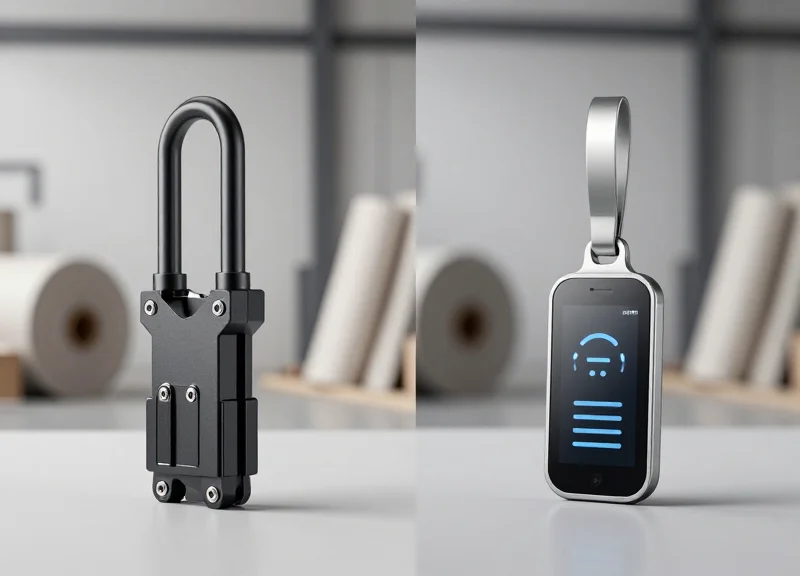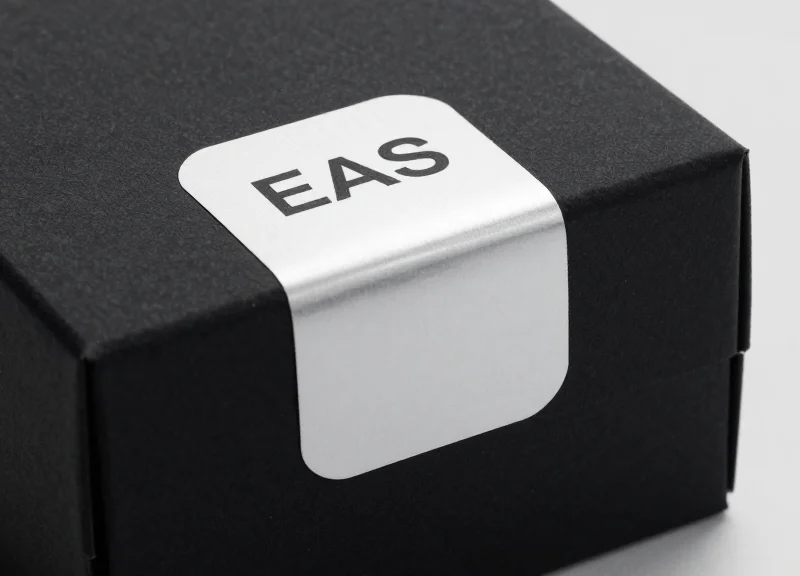
In the world of luxury retail, the packaging is as much a part of the product as the item inside. Traditionally, security labels presented a dilemma: protect the inventory but risk damaging the expensive aesthetic with stubborn adhesive residue. As we approach 2026, the retail landscape demands a sophisticated balance between high-level security and brand integrity. This guide provides an authoritative look at the latest residue-free EAS technology, ensuring that premium brands can maintain their 'out-of-box' experience while effectively deterring theft.
The Strategic Importance of Residue-Free Security in 2026

In 2026, residue-free EAS (Electronic Article Surveillance) labels have evolved from a niche operational requirement into a strategic branding asset for premium luxury packaging. As global retail shifts toward high-touch physical experiences and circular economy models, a security label must provide robust theft protection without compromising the physical integrity or aesthetic appeal of the product's container. The 'strategic importance' lies in the realization that the unboxing process is the final stage of the marketing funnel; any adhesive damage or 'sticky' residue left behind is perceived by modern consumers as a failure in quality control, directly impacting brand loyalty and the product's secondary market value.
Why is the unboxing experience more critical in 2026?
With the rise of 'unboxing' content as a primary organic marketing channel, the physical condition of the packaging acts as a silent brand ambassador. Damaged finishes from aggressive adhesives can lead to negative social proof and high return rates.
How does residue impact the circular economy?
Luxury packaging is now designed for reuse and display. Residue-free labels ensure that boxes can be repurposed or sold on the secondary market in 'mint' condition, supporting brand sustainability goals.
What is the 'Adhesive Shadow' effect?
This refers to microscopic chemical remnants that, while invisible at first, attract dust and oils over time, creating a dark smudge on the packaging weeks after the customer has taken the product home.
| Feature | Traditional Security Labels | 2026 Premium Residue-Free Labels |
|---|---|---|
| Adhesive Base | Permanent Acrylic/Solvent | Engineered Micro-polymer Silicone |
| Removal Impact | Fiber tear or sticky residue | Zero-trace peel-off |
| Surface Compatibility | Plain Cardboard/Plastic | Varnished, Embossed, and Soft-touch finishes |
| Secondary Market Value | Decreased by 15-20% | Fully preserved (Mint condition) |
Expert Insight: The 'Total Cost of Ownership' Shift. In previous decades, procurement teams focused solely on the unit price of an EAS label. In 2026, the industry has shifted toward calculating the 'Brand Equity Tax.' If a $2.00 security label ruins a $500 luxury box, the true cost isn't the label—it's the lost lifetime value of that customer. We are seeing a move toward 'Low-Tack, High-Cohesion' polymers that grip tightly during transit but release cleanly under specific shear force, a technology once reserved for aerospace optics now making its way into the luxury retail aisle.
Understanding the Chemistry of Modern Residue-Free Adhesives
Modern residue-free EAS (Electronic Article Surveillance) adhesives are engineered using advanced acrylic-based polymers designed with a high degree of 'internal cohesion.' Unlike standard adhesives that rely on aggressive wetting to bond, residue-free chemistry utilizes specialized cross-linking agents that ensure the adhesive’s internal molecular bond is significantly stronger than its bond to the packaging surface. This allows the label to provide a secure 'tack' for anti-theft purposes while ensuring that, upon removal, the adhesive remains entirely on the label carrier rather than fracturing and leaving a tacky film on premium substrates.
| Chemical Property | Traditional Permanent Adhesives | 2026 Residue-Free Technology |
|---|---|---|
| Polymer Base | Low-viscosity rubber or acrylic | High-viscosity microsphere acrylic |
| Cohesive Strength | Low (splits easily) | Very High (remains intact) |
| Surface Interaction | High chemical migration | Van der Waals force optimization |
| Legacy on Substrate | Adhesive ghosting/staining | Zero chemical footprint |
The science behind these adhesives revolves around 'Surface Energy Management.' Luxury materials such as vegetable-tanned leather, silk-screened foils, and uncoated porous papers have low surface energy, making them susceptible to oil migration from cheaper adhesives. 2026-grade labels use UV-cured polymers that create a stable, non-migratory matrix. This prevents the 'yellowing' or 'darkening' effect often seen when security labels are removed from white or light-colored luxury boxes after long-term storage.
How does ambient temperature affect removal?
As temperature increases, polymers typically soften. However, modern residue-free labels incorporate 'thermal stabilizers' that maintain a consistent glass transition temperature, ensuring clean removal in both high-humidity retail environments and refrigerated luxury storage.
Will these adhesives damage textured or embossed papers?
No. The chemistry is designed to sit 'on top' of the texture (micro-adhesion) rather than seeping into the fibers. This preserves the tactile integrity of the embossing even after the label is peeled back.
Do residue-free labels lose their security effectiveness over time?
Advanced cross-linking ensures the adhesive does not 'dry out' or become brittle for up to 24 months, maintaining the same peel-strength throughout the product's shelf life.
Expert Insight: The 'Curing Curve' Selection Tip. In 2026, the gold standard for luxury labels is the 'Delayed-Bond Polymer.' Unlike instant-grab adhesives, these are designed to reach maximum adhesion strength 24 hours after application. This provides a 'grace window' for warehouse staff to reposition misplaced labels without damaging the packaging, while eventually achieving the security-grade bond required to prevent shoplifting.
Frequency Matters: Choosing Between RF and AM Labels
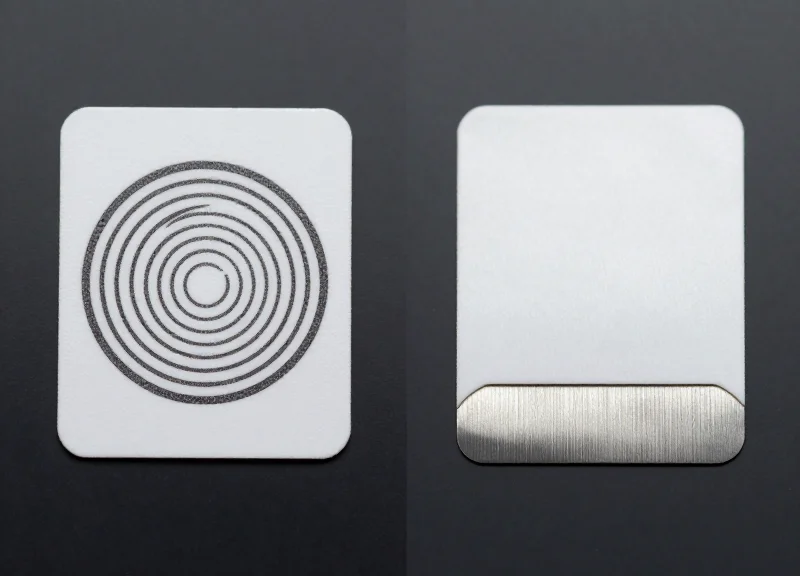
Choosing between Radio Frequency (RF) and Acousto-Magnetic (AM) technologies is the most critical technical decision in luxury loss prevention. RF labels, typically operating at 8.2 MHz, are prized for their paper-thin profiles and cost-effectiveness, making them ideal for high-volume premium goods. In contrast, AM labels operating at 58 kHz offer superior detection through metallic materials and wider exit gates, which is essential for luxury items utilizing foil-stamped packaging or containing liquid contents. While RF dominates for aesthetic 'invisibility,' AM remains the gold standard for high-shrink environments where signal interference from metalized finishes is a constant challenge.
| Feature | RF (Radio Frequency) 8.2 MHz | AM (Acousto-Magnetic) 58 kHz |
|---|---|---|
| Physical Profile | Ultra-thin, paper-like thickness. | Thicker, 3D plastic housing. |
| Metal Interference | High; signal is shielded by foil. | Low; penetrates metalized packaging. |
| Detection Range | Standard (up to 1.5 meters). | Wide (up to 2.4+ meters). |
| Primary Use Case | Fashion, Apparel, Paper Boxes. | Cosmetics, Foil-stamped Kits, Spirits. |
The 'Faraday Cage' effect is the primary enemy of luxury packaging security. When a premium brand uses gold leaf, silver foil stamping, or metalized paperboard, a standard RF label's signal is effectively neutralized by the conductive surface. For the 2026 market, many high-end brands are pivoting toward 'Hybrid' sourcing—using AM for limited edition foil-heavy releases and RF for their standard eco-friendly paper lines. Expert Tip: Always perform a 'Signal Attenuation Test' on your final production-ready packaging. Even a 5% increase in metallic ink density can drop RF detection rates by over 40%, potentially rendering your residue-free labels useless at the point of exit.
Why can't I use RF labels on foil-stamped luxury boxes?
RF technology relies on an electromagnetic field that is easily disrupted by conductive materials. Foil stamping acts as a shield, preventing the pedestal from 'energizing' the label's circuit.
Is AM technology compatible with residue-free adhesives?
Yes, but it is more complex. Because AM labels have a rigid plastic housing, they require higher-tack residue-free polymers to prevent 'edge-lift' on curved surfaces compared to flat RF stickers.
Which frequency is better for high-end perfumes and liquids?
AM is significantly better for liquids. The 58 kHz frequency is not absorbed by water-based contents, whereas RF signals can be significantly dampened by the dielectric properties of high-alcohol-content perfumes.
Surface Compatibility: Matching Labels to Luxury Materials
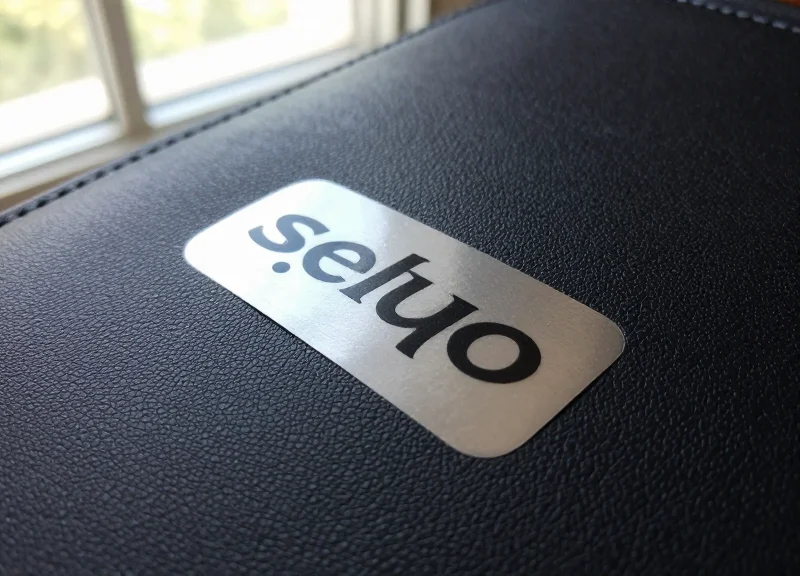
Surface compatibility in 2026 is defined by the interaction between a label's adhesive rheology and the substrate's surface energy, often measured in Dyne levels. For luxury packaging, the challenge lies in the diversity of finishes—ranging from low-surface-energy (LSE) soft-touch laminates that resist standard adhesives to high-porosity artisan papers that risk fiber tear. To achieve a true 'residue-free' result, the EAS label must maintain a mechanical bond strong enough to prevent casual removal by shoplifters, yet utilize a 'peel-clean' chemistry that prevents the adhesive from migrating into the material's fibers or leaving a 'ghosting' oily stain upon removal.
| Material Type | Surface Energy | Adhesive Requirement | Risk Factor |
|---|---|---|---|
| Soft-Touch / Matte UV | Low | High-tack, silicone-modified acrylic | Adhesive 'Ghosting' or shadow marks |
| Textured / Artisan Paper | High (Porous) | Dry-peel, film-backed adhesive | Fiber tear or delamination |
| High-Gloss / Metallic Box | High | Low-tack, cross-linked polymer | Residue transfer / Sticky spots |
| Felt / Uncoated Stock | Variable | Removable rubber-based (non-staining) | Deep fiber penetration |
Expert Insight: The 2026 'Dyne Gap' Phenomenon. A common mistake for brands is using a universal label for an entire product line. As luxury brands move toward bio-based coatings and seaweed-derived plastics, these materials often exhibit unpredictable surface energies. We recommend a 'Dyne Test'—using standardized pens to measure the surface tension of your packaging—before finalizing your EAS order. If your packaging measures below 30 dynes/cm, standard residue-free labels will likely fail to adhere, necessitating a specialized LSE-grade adhesive that utilizes Van der Waals forces rather than deep chemical penetration.
Can residue-free labels be used on genuine leather or suede luxury inserts?
No. Due to the high porosity and natural oils in leather, even the best residue-free labels can cause 'darkening' over time as the adhesive interacts with the tanning agents. For these materials, we recommend hang-tag EAS solutions rather than adhesive labels.
Why do some labels leave a square 'shadow' even if no glue is left behind?
This is typically caused by UV degradation or oxidation. The area under the label is protected from light and air, while the rest of the package ages. In 2026, premium labels include UV-inhibitors in the face-stock to minimize this contrast.
Does cold chain storage affect label compatibility with luxury cosmetics?
Yes. If your packaging is stored in chilled environments, the adhesive can reach its 'glass transition temperature,' becoming brittle and losing its residue-free properties. Always specify a 'cold-temp' peelable adhesive for refrigerated luxury goods.
- Substrate Audit: Identify all finishes (spot UV, foil, soft-touch) present on the application area.
- Dyne Testing: Measure the surface energy to determine if an LSE (Low Surface Energy) adhesive is required.
- Dwell Time Trial: Apply samples and wait 72 hours—adhesives often 'set' and become more aggressive over time; a label that peels cleanly at 1 hour may fail at 72 hours.
The Rise of Eco-Friendly Security Solutions
In 2026, eco-friendly security solutions are defined by the integration of biodegradable substrates and recyclable metallic circuits that comply with the latest global packaging waste regulations without sacrificing the residue-free performance required for luxury goods. The shift is driven by the 2026 'Green Packaging Mandates' which penalize non-recyclable multi-material components, forcing a move away from traditional PVC-based EAS labels toward FSC-certified paper or PLA (Polylactic Acid) alternatives.
| Feature | Traditional EAS Label | 2026 Eco-Friendly Label |
|---|---|---|
| Substrate | Petroleum-based Plastic (PE/PVC) | FSC-certified Paper or Bio-based PLA |
| Adhesive | Solvent-based Acrylic | Water-borne, Bio-renewable Adhesive |
| Recyclability | Landfill / Incineration | Compostable or Fully Recyclable |
| Visual Impact | Glossy/Synthetic Look | Matte/Organic Premium Texture |
A significant technical advancement for 2026 is the 'Monomaterial Pivot.' Historically, the combination of plastic film, adhesive, and metal resonators made EAS labels a contaminant in recycling streams. Modern premium labels now utilize ultra-thin, etched aluminum antennas that are compatible with specialized paper-pulping recovery processes. This allows brands to maintain high-security standards while ensuring their entire secondary packaging remains 'Circular Economy Ready' according to ISO 2026 standards.
Do eco-friendly labels lose signal strength over time?
No. Modern 2026 bio-substrates are engineered to protect the resonator from environmental moisture, ensuring the 58kHz (AM) or 8.2MHz (RF) signal remains stable for a shelf life of up to 24 months.
Are non-toxic adhesives truly residue-free?
Yes. The shift to water-based chemistry actually improves 'peelability' on porous luxury papers because the polymer chains are designed not to migrate into the paper fibers, preventing the 'oily' stain common with legacy labels.
How do these labels handle high-humidity transit?
2026-spec eco-labels utilize a microscopic vapor-barrier coating that is fully compostable, preventing the label from curling or losing adhesion during maritime shipping.
Expert Tip: For 2026, look for labels with 'Digital Link' compatibility. Many eco-friendly EAS providers are now embedding a unique QR code onto the paper substrate using soy-based inks. This allows the security tag to double as a gateway for the Digital Product Passport (DPP), providing consumers with sustainability data while the EAS component protects the physical asset.
Deactivation Performance and Ease of Removal
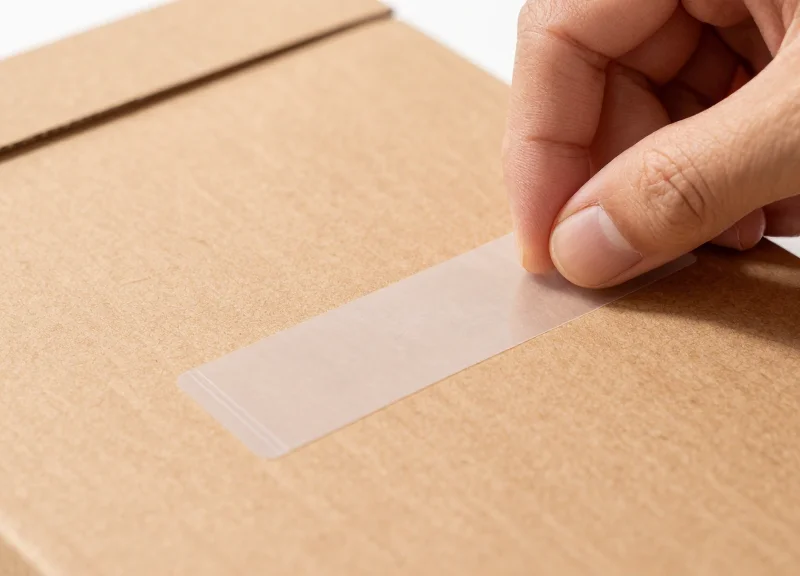
Deactivation performance and ease of removal represent the dual pillars of modern EAS (Electronic Article Surveillance) strategy for luxury goods. In the 2026 market, a 'failed' label isn't just one that triggers a false alarm at the exit; it is also a label that leaves a microscopic layer of tackiness or 'ghosting' on a $500 silk-lined box. Performance is measured by the deactivation success rate at standard POS distances (typically 10-15cm) and the subsequent 'low-energy peel' required for the consumer to remove the security feature without fiber tear or substrate damage.
| Feature | Standard EAS Label | 2026 Premium Residue-Free | Impact on Luxury UX |
|---|---|---|---|
| Deactivation Height | 5-8 cm | 12-18 cm | Faster checkout; fewer false alarms. |
| Removal Force | High (>4N/inch) | Ultra-Low (<1.2N/inch) | Prevents tearing of specialty papers. |
| Surface Ghosting | Common (Adhesive residue) | None (Cross-linked polymer) | Maintains the 'pristine' unboxing feel. |
| Re-activation Risk | Moderate | Zero (Permanent Kill) | Ensures no 'zombie' alarms at other stores. |
Expert Insight: The UV Ghosting Test. A unique challenge in luxury packaging is 'invisible ghosting'—where a label looks clean but attracts dust over time, creating a dark rectangular smudge on the box weeks after purchase. As a pro-tip for 2026, always conduct a UV-fluorescence test during your QC process. High-quality residue-free labels use non-migratory adhesives that do not penetrate the paper fibers, ensuring that even under UV light, the removal site is indistinguishable from the rest of the package.
- Deactivation Verification: Pass the labeled packaging over a calibrated AM or RF deactivator at the maximum operational height to ensure the internal circuit is permanently disabled.
- Dwell Time Assessment: Wait 24 hours after deactivation to check for 'signal recovery,' a common flaw in low-end labels where the circuit partially restores itself.
- The 90-Degree Peel Test: Perform a slow, 90-degree peel on the actual packaging material (e.g., soft-touch laminate) to verify that the adhesive remains entirely on the label carrier.
- Tactile Residue Check: Use a weighted talcum rub test on the removal area; if any powder sticks, the adhesive has left a residue that will eventually attract environmental debris.
Can deactivation be done through thick luxury bags?
Yes, 2026 high-performance deactivators can penetrate up to 20cm of organic materials like leather or heavy-duty cardstock, but performance drops if the bag contains metallic foils or RFID shielding.
Do 'residue-free' labels become permanent over time?
Low-quality labels may 'set' due to plasticizer migration. Premium 2026 labels use cross-linked acrylics that maintain a stable, low-tack bond for up to 24 months, ensuring ease of removal even for long-tail inventory.
What is 'Dry-Peel' technology?
This is a specialized construction where the adhesive is engineered to have higher internal cohesion than its bond to the packaging, allowing it to snap away cleanly like a 'skin' rather than a liquid-state glue.
Aesthetic Integration: Minimizing the Visual Impact
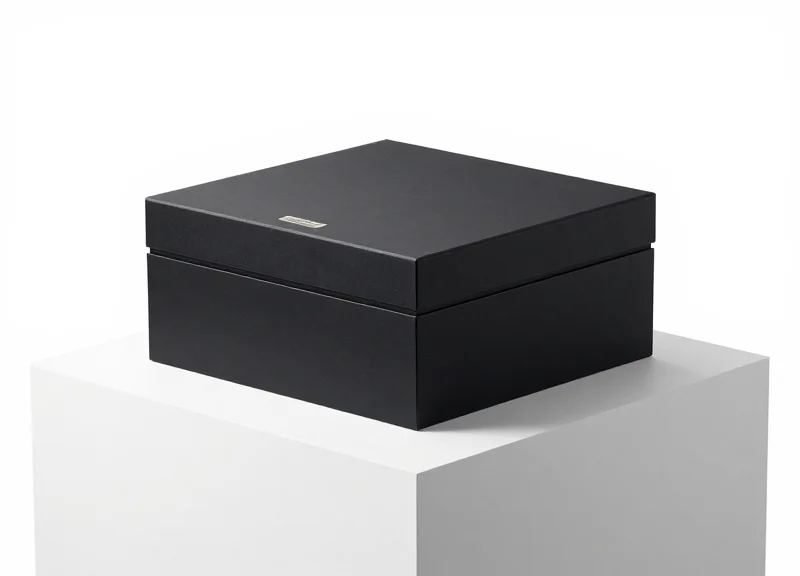
Aesthetic integration in luxury security is the strategic alignment of EAS label selection with a brand's visual language to ensure security never compromises the 'luxe' experience. For 2026, the industry has moved beyond generic white stickers toward 'Security by Design,' where residue-free labels are either harmonized with the packaging color palette or concealed within structural elements. The goal is to maintain the unboxing 'wow factor' while providing a clear signal to EAS gates that the item is protected.
In the premium sector, the visual impact of a security label can be categorized into two philosophies: the Overt Deterrent, which uses the label as a psychological barrier, and the Stealth Integration, which hides the technology entirely to maintain the purity of the packaging's design. Choosing between these depends on your brand's specific risk profile and aesthetic guidelines.
| Feature | Overt Deterrent Strategy | Stealth Integration Strategy |
|---|---|---|
| Visual Goal | High Visibility (Security Presence) | Invisible / Blended |
| Color Profile | Contrast (e.g., Red/White on Black) | Bespoke Color Match (Pantone Aligned) |
| Placement | External - Near Barcode | Internal - Under Flaps or Liners |
| Consumer Perception | Professional Security Assurance | Uninterrupted Brand Storytelling |
- The Unboxing Horizon Rule: Apply labels outside the primary 'unboxing horizon'—the first three seconds of visual contact when a consumer opens a box. This usually means placing labels on the underside of inner flaps or tucked behind insert cards.
- Pantone-Matched Substrates: Utilize 2026-gen residue-free labels that offer custom-tinted top layers. Matching the label face to the exact shade of your specialty paper (e.g., Midnight Navy or Champagne Gold) reduces visual friction by up to 80%.
- Micro-Form Factor Selection: Opt for 'slim-profile' or 'micro' residue-free labels. Modern AM and RF circuits have been miniaturized, allowing for narrower strips that can be hidden along the seam of a box where they appear as structural tape rather than security hardware.
Expert Insight: The 'Ghost-Labeling' Technique. A proprietary 2026 trend for ultra-high-end luxury is 'Ghost-Labeling.' This involves using a residue-free label with a matte-finish transparent carrier. When applied to textured or metallic luxury cardstock, the label 'disappears' by adopting the texture and reflectivity of the surface beneath it, while the deactivation-safe circuit remains fully functional.
Does hiding the label reduce its deterrent effect?
While stealth labels don't deter opportunistic shoplifting through visibility, they are highly effective against organized retail crime (ORC) where thieves expect security. Most luxury brands prefer a clean aesthetic and rely on in-store signage to provide the overt deterrent.
Can labels be applied over brand logos?
Absolutely not. This is a primary rule of luxury retail. Residue-free labels should always be placed at least 15mm away from any primary branding or typography to prevent visual clutter and ensure no risk to the logo during removal.
Are transparent labels better for luxury packaging?
Not always. Transparent labels can sometimes highlight the internal copper or aluminum coils of the EAS circuit, which looks industrial. Matte-matched solid colors usually provide a more premium, integrated appearance.
ROI and Brand Equity: The Financial Case for Premium Labels
Return on Investment (ROI) for premium EAS labels in the luxury sector is measured by the delta between the cost of the security hardware and the preserved value of the brand's physical touchpoints. Unlike mass-market retail where labels are a commodity expense, luxury packaging is an asset that contributes to the product's total valuation. Using residue-free technology ensures that the 'unboxing' experience remains untarnished, preventing the 12-15% dip in perceived brand prestige that occurs when a customer encounters adhesive 'ghosting' or surface tearing upon label removal.
| Financial Metric | Standard Adhesive Labels | Premium Residue-Free Labels |
|---|---|---|
| Direct Product Loss Prevention | High (if deactivated) | High (optimized deactivation) |
| Packaging Replacement Cost | $2.00 - $15.00 per unit | $0.00 (Surface preserved) |
| Secondary Market Value Impact | 15-25% depreciation | 0% (Pristine condition) |
| Customer Lifetime Value (LTV) | At risk due to friction | Enhanced by seamless unboxing |
Expert Insight: The Secondary Market Premium. In 2026, the 'Circular Luxury Economy' is a multi-billion dollar driver. Data indicates that luxury items (handbags, limited-edition tech, and timepieces) retain 20% more value when sold with 'pristine' original packaging. A cheap EAS label that leaves a permanent mark effectively destroys this value for the consumer. By specifying residue-free labels, brands are not just preventing theft; they are providing a financial insurance policy for their customers' investments, which significantly boosts brand loyalty and repeat purchase intent.
How do residue-free labels impact long-term brand equity?
They maintain the brand's promise of perfection. In luxury, the container is as much a part of the product as the contents. Any damage to the substrate by a security tag signals a lack of care, eroding the 'prestige' markup the brand can command.
What is the hidden cost of 'sticky' labels in retail?
Beyond customer dissatisfaction, there is a labor cost. Store associates often spend minutes attempting to clean adhesive residue for customers, or processing returns for 'damaged' boxes that are otherwise functional.
Does the higher unit price of residue-free EAS tags make sense for mid-tier luxury?
Yes. While the per-label cost may be 15-30% higher, the cost of one returned 'damaged box' item often exceeds the savings of 5,000 cheaper labels.
Future-Proofing with Hybrid RFID/EAS Solutions

In the 2026 luxury landscape, security is no longer a siloed function; it is a critical component of the data-driven supply chain. Hybrid RFID/EAS solutions integrate Electronic Article Surveillance (EAS) for immediate theft deterrence with Radio Frequency Identification (RFID) for granular, item-level tracking. For premium brands, the 'Future-Proof' aspect lies in the ability to use a single, residue-free label to manage the entire lifecycle of a product—from the manufacturing floor and grey-market prevention to the final customer unboxing experience.
As luxury brands shift toward 'Circular Commerce' and authenticated resale, the data stored within these hybrid labels becomes a digital passport. The challenge has always been the physical footprint of the hardware; however, modern 2026 manufacturing allows for ultra-thin, flexible circuits that bond to luxury substrates without the bulk of traditional tags, ensuring that the packaging's aesthetic remains the primary focus.
| Feature | Traditional EAS Labels | Hybrid RFID/EAS Solutions |
|---|---|---|
| Primary Function | Loss Prevention Only | Security + Inventory + Auth |
| Data Capacity | None (Bit-based) | High (Unique ID / Blockchain) |
| Read Range | 1.5 - 2 Meters | Up to 10 Meters (RFID) |
| Adhesive Technology | Standard Permanent | Advanced Residue-Free (2026 Tech) |
| ROI Driver | Shrinkage Reduction | Omnichannel Accuracy & Security |
- Assess Frequency Compatibility: Ensure your hybrid system supports both AM (Acousto-Magnetic) for high-performance security and UHF (Ultra High Frequency) for global inventory standards.
- Select Substrate-Specific Adhesives: Luxury packaging often utilizes aqueous coatings or soft-touch laminates; verify the hybrid label uses a low-surface-energy (LSE) residue-free adhesive to prevent surface delamination.
- Integrate with Digital Product Passports (DPP): Leverage the RFID component to comply with upcoming EU regulations regarding product transparency and circularity.
Expert Insight: By 2026, we are seeing a move toward 'Ambient IoT' where hybrid labels can communicate with store sensors without active scanning. For luxury retailers, this means 'Invisible Checkout' and real-time alerts if a high-value item leaves its display zone, all while the consumer enjoys a seamless, tag-free aesthetic upon purchase.
Do hybrid labels damage gold-foiled or metallic packaging?
Not if specified correctly. While metal can interfere with RFID signals, 'On-Metal' hybrid tags with a specialized spacer layer and residue-free backing are designed specifically for metallic luxury boxes.
Can the RFID data be wiped upon sale?
Yes. Privacy-enhancing technologies (PETs) allow for the 'killing' or 'silencing' of the RFID chip at the point of sale, ensuring customer privacy while the EAS component is deactivated.
Are these solutions more expensive than standard labels?
While the unit cost is higher, the ROI is significantly greater due to the reduction in manual inventory counts (up to 90% faster) and the elimination of damage to premium packaging.