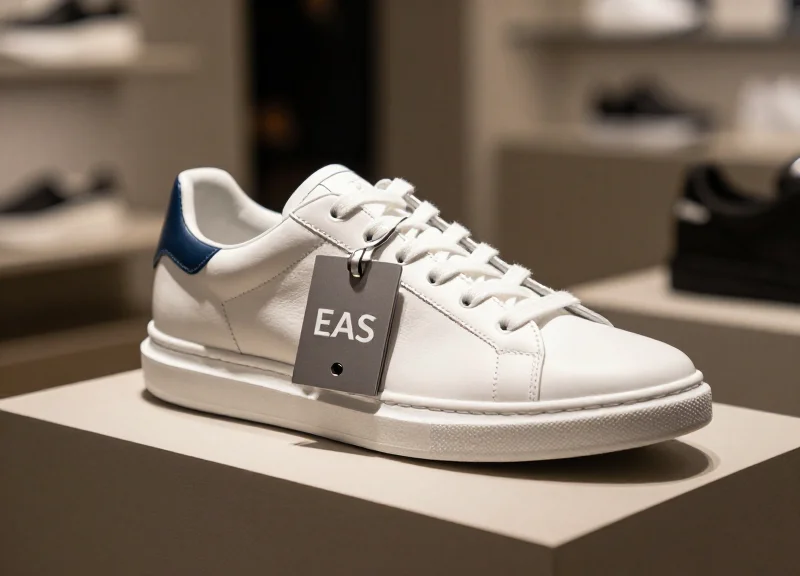
In the competitive world of retail footwear, high-value branded sneakers are magnets for shoplifters. For retailers, the challenge is twofold: preventing theft while ensuring that security devices do not diminish the premium aesthetic or damage delicate materials like suede and premium leather. Choosing the right Electronic Article Surveillance (EAS) shoe tags is more than just a security measure; it is a strategic investment in your bottom line. This article provides an expert breakdown of the five essential criteria for selecting security tags that offer maximum protection with minimal friction for your customers and staff.
The Growing Impact of Sneaker Shrinkage on Retail Margins

Sneaker shrinkage refers to the loss of inventory due to shoplifting, organized retail crime (ORC), or administrative errors. In the current retail landscape, branded sneakers are considered 'liquid gold' because they maintain high resale value and can be moved quickly on secondary markets like StockX or GOAT. For a retailer operating on a 5% net profit margin, losing a single $200 pair of sneakers requires $4,000 in additional sales just to recoup the lost capital. This 'multiplier effect' means that even a minor uptick in shrinkage can lead to a 20-25% decrease in overall net profitability, making loss prevention a critical driver of fiscal health.
| Metric | Standard Apparel | High-Demand Sneakers |
|---|---|---|
| Average Resale Value | 10-20% of MSRP | 80-150%+ of MSRP |
| Theft Motivation | Personal Use | Professional Profit (ORC) |
| Sales Recovery Requirement | 10x Unit Cost | 20x-50x Unit Cost |
| Inventory Turnover | Seasonal | High-Velocity / Limited Drops |
Why is sneaker shrinkage more damaging than other categories?
Sneakers are high-unit-value items with extreme liquidity. A stolen pair of limited-edition shoes doesn't just represent the loss of the cost price; it represents a lost opportunity for customer acquisition and the potential for 'phantom inventory' where digital systems report stock that isn't physically available.
How does Organized Retail Crime (ORC) affect sneaker retailers?
ORC groups target sneakers because of their high density of value. Unlike bulkier items, several pairs of high-end sneakers can be stolen quickly and sold through untraceable peer-to-peer apps, making the ROI for thieves significantly higher than other retail goods.
Expert Insight: Beware the 'Orphaned Shoe' Phenomenon. Many loss prevention strategies focus on preventing the theft of a pair, but the theft of a single display sneaker is equally catastrophic. An 'orphaned' shoe—the mate left behind—typically loses 90% of its value immediately, as few consumers purchase single shoes. Effective EAS shoe tags must therefore be applied to display units in a way that prevents 'grab-and-run' events while maintaining the shoe's aesthetic appeal for the customer. This ensures that even if a thief targets a display, the physical security acts as a deterrent that protects the sellability of the remaining inventory.
Criterion 1: Material Compatibility and Non-Invasive Design
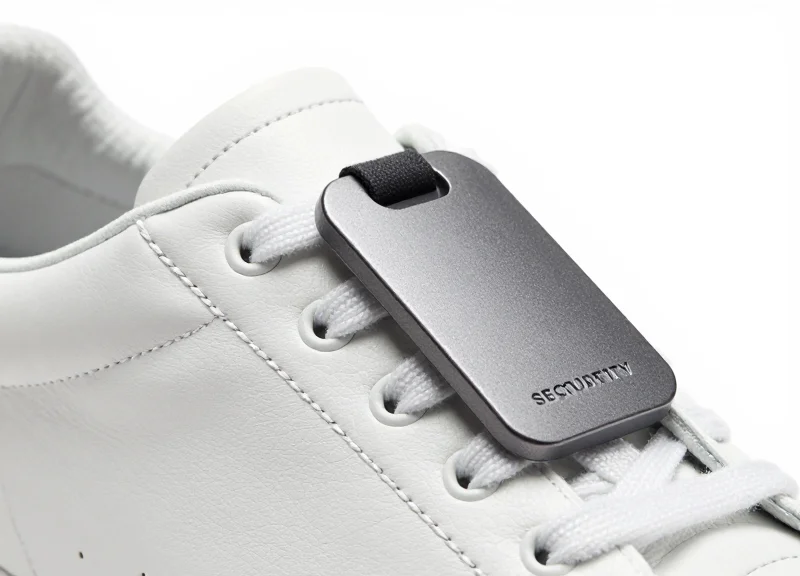
Material compatibility and non-invasive design in Electronic Article Surveillance (EAS) refer to the mechanical ability of a security tag to attach firmly to a sneaker without causing permanent structural damage, such as punctures, fiber stretching, or adhesive residue. For premium footwear retailers, this criterion is paramount because modern sneakers utilize complex substrates—including Flyknit, Primeknit, premium tumbled leather, and delicate suede—that do not 'heal' once a traditional hard tag pin has pierced the surface. A non-invasive design utilizes specialized lanyards, eyelet-through cables, or soft-grip clamps to maintain the product's 'deadstock' condition while providing robust protection against shoplifting.
The evolution of sneaker technology has moved faster than many traditional security hardware designs. When a standard R-Style or Pencil tag is forced through a high-tension knit upper, it creates a 'stress riser' in the fabric. Over time, as customers try on the shoes, this micro-puncture expands, leading to visible fraying or even structural failure. To defend your bottom line, you must match the tagging mechanism to the specific material profile of your inventory to avoid the 'hidden shrinkage' of damaged goods that must be discounted or written off.
| Material Type | Recommended Tagging Method | Risk of Standard Pin Tags |
|---|---|---|
| Tech Knit (Flyknit/Primeknit) | Adjustable Lanyard or Loop Tags | High: Permanent fiber breakage and unraveling. |
| Premium Leather | Eyelet-Anchored Cable Tags | Medium: Visible puncture marks and leather scarring. |
| Suede / Nubuck | Smooth-Clamping Shell Tags | High: Crushing of the nap or permanent indentation. |
| Canvas / Synthetic Mesh | Ultra-Fine Needle Hard Tags | Low: Minimal damage, but still prone to stretching. |
Expert Insight: The 'Resale Value' Multiplier. In the current retail landscape, sneakers are often viewed as assets. Collectors and 'hypebeasts' will inspect the interior lining and eyelets for 'tag scars.' An invasive tag can reduce the secondary market value of a limited-edition release by 15-25%. By using non-invasive, cable-based EAS solutions that loop through the eyelet rather than piercing the upper, retailers protect not just the physical item, but its perceived 'mint condition' status, which is the primary driver of high-margin sneaker sales.
Can't I just use thinner pins for delicate materials?
While 'fine-gauge' needles reduce the initial hole size, they are more prone to bending and can still sever the intricate weave of high-performance knits. The best practice is to avoid piercing the upper entirely by using lanyard-style tags.
Will non-invasive tags be easier for shoplifters to remove?
No. Modern non-invasive tags use high-tensile steel aircraft cables or reinforced plastic straps that require specialized magnetic or mechanical detachers, offering the same or better pull-strength as traditional pin tags.
How do I tag sneakers without eyelets?
For laceless or slip-on models, use a 'clamshell' style tag with an internal rubberized grip that distributes pressure evenly across a larger surface area, preventing the localized crushing of the material.
Criterion 2: Aesthetic Integration and the Customer Experience

Aesthetic integration in EAS (Electronic Article Surveillance) shoe tags is the strategic balance between maintaining a visible theft deterrent and preserving the design language of high-end sneakers. In the premium footwear market, the 'unboxing' or 'first-look' experience is a critical part of the conversion funnel. A bulky, poorly placed tag can disrupt the visual flow of a limited-edition drop or, worse, interfere with the ergonomics of a trial walk. To maximize ROI, retailers must select tags that signal high-level security to potential shoplifters while remaining virtually invisible to the customer's tactile experience during fitting.
| Tag Form Factor | Aesthetic Impact | Customer Experience (CX) | Best Use Case |
|---|---|---|---|
| Mini Pencil Tags | Low visibility; preserves silhouette | Excellent for lightweight feel | Low-top sneakers and sandals |
| Clamshell / Hard Tags | High visual deterrent | Can be bulky; may chafe during walk-tests | High-risk, heavy leather basketball shoes |
| Steel Lanyard Tags | Industrial/Utility look | High flexibility; allows natural foot movement | High-top boots and delicate mesh uppers |
Expert Tip: Consider the 'Weight-Balance Coefficient.' When a customer tries on a performance sneaker designed for lightness, a heavy 15-gram security tag attached to the lateral side can make the shoe feel unbalanced. This 'phantom weight' often negatively affects the customer's perception of the shoe's technology. Opt for lightweight, polycarbonate-housed tags that weigh less than 8 grams to ensure the tech-specs of the sneaker remain the star of the show.
Does the tag location allow for a full 'walk-test'?
The tag should be placed through an eyelet or on the heel tab where it won't strike the ground or the opposite ankle when the customer takes a stride.
Will the tag color clash with the brand's palette?
While traditional black is a standard deterrent, many luxury retailers utilize grey or white tags to blend better with lighter colorways, reducing visual 'clutter'.
Is the tag easy for staff to remove at checkout?
Aesthetic integration also includes the checkout experience; a tag that takes too long to remove can create a friction point at the final stage of the purchase.
Criterion 3: Technology Alignment (AM vs. RF Systems)
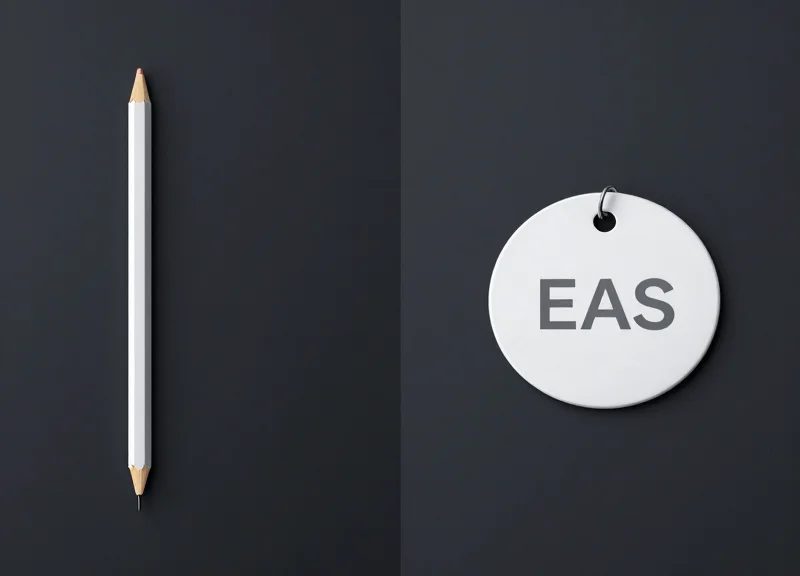
Technology alignment is the non-negotiable foundation of any loss prevention strategy; an EAS shoe tag is completely ineffective if its operating frequency does not match your store's detection pedestals. Most global retail environments utilize either Acousto-Magnetic (AM) systems operating at 58 kHz or Radio Frequency (RF) systems operating at 8.2 MHz. Before purchasing hardware, you must verify your existing system's specifications, as these two technologies are not cross-compatible. A mismatch results in a total lack of detection, essentially leaving your high-value inventory unprotected despite the visible presence of a tag.
| Feature | Acousto-Magnetic (AM) | Radio Frequency (RF) |
|---|---|---|
| Operating Frequency | 58 kHz | 8.2 MHz |
| Detection Range | Wide (up to 2.4m between pedestals) | Standard (up to 1.8m between pedestals) |
| Interference Resistance | High (Good around metal/liquids) | Moderate (Sensitive to metal foil) |
| Common Application | High-end fashion, Luxury sneakers | General apparel, Mass market |
| Deactivation Height | Up to 10-12cm | Up to 15-20cm |
The Expert Insight: Beware the 'Metallic Interference Trap' in Modern Sneakers. One critical factor often overlooked by retail managers is the material composition of the sneaker itself. Many modern branded sneakers incorporate metallic threads, foil logos, or heavy eyelets. RF systems are notoriously susceptible to 'shielding'—where metal blocks the signal between the tag and the pedestal. In my 20 years of experience, I have seen premium retailers struggle with RF tags failing to trigger when attached to sneakers with high metallic content. If your inventory includes 'tech-wear' or highly embellished footwear, AM technology is the superior choice due to its better performance in the presence of metal.
Can I use AM tags on an RF system?
No. The frequencies are entirely different. An AM tag will not resonate with an RF pedestal, meaning the alarm will never sound if a tagged item is stolen.
Why does my shoe tag keep causing false alarms?
This is often due to 'signal pollution' or poor technology alignment. If you use RF tags near other electronic devices or if the tags are poor quality, they may trigger 'phantom alarms.' Ensuring high-quality circuit coils in your tags can mitigate this.
Which technology is better for wide mall entrances?
AM (Acousto-Magnetic) is generally preferred for wide entrances because it has a larger detection field and is less likely to have 'dead zones' in the center of the doorway.
Ultimately, the decision often comes down to your existing infrastructure. If you are building a new flagship store from scratch, AM is the gold standard for luxury sneakers. However, if you are currently running an RF-based environment, ensure you select 'high-Q' RF tags that offer a sharper resonance to cut through the electronic noise of a modern retail floor.
Criterion 4: Tamper-Resistance and Locking Strength
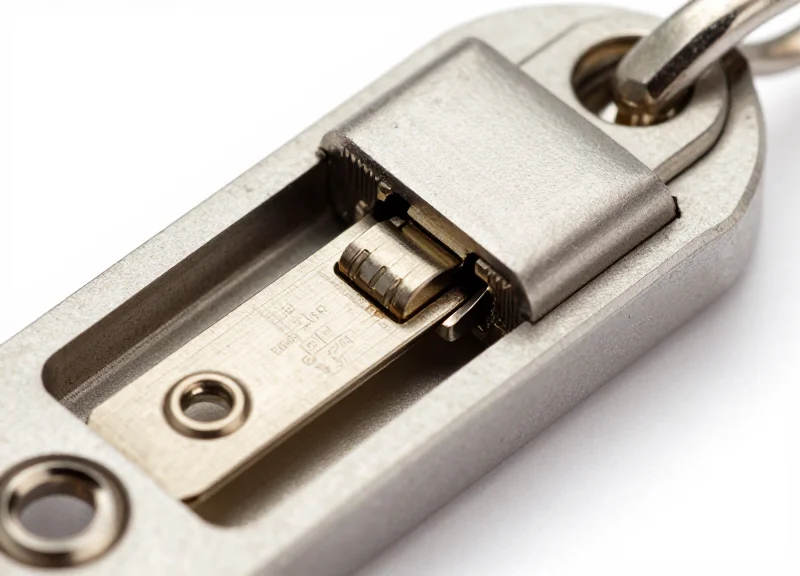
Tamper-resistance and locking strength represent the literal 'last line of defense' in retail loss prevention. For high-value branded sneakers, standard security tags are often insufficient because professional shoplifters frequently carry illicit, high-powered magnets or specialized prying tools. To defend your bottom line, you must select shoe tags equipped with high-gauss magnetic locks or mechanical double-clutch mechanisms that require professional-grade, proprietary detachers to open, effectively neutralizing the common tools found in the 'booster' toolkit.
| Locking Tier | Magnetic Strength (Gauss) | Resistance Level | Recommended Application |
|---|---|---|---|
| Standard Lock | 3,000 - 5,000 G | Low: Susceptible to common magnets | Low-cost footwear / clearance items |
| Superlock | 8,000 - 10,000 G | Medium: Resists most handheld magnets | Standard branded sneakers ($80-$150) |
| Hyperlock / Multi-Polar | 12,000+ G | High: Requires specialized, high-force detachers | Luxury, limited edition, or 'hype' drops |
| Mechanical / Keyed | N/A (Physical) | Very High: Immune to magnetic interference | High-risk environments / flagship stores |
Expert Insight: The 'Leverage Gap' Strategy. Beyond the internal lock, the physical housing of the shoe tag is a critical factor in tamper-resistance. Top-tier tags utilize a 'cupped' or 'shrouded' design that eliminates the gap between the tag body and the sneaker material. By minimizing this space, you prevent thieves from inserting screwdrivers or wire cutters to gain the leverage needed to pry the pin from the lock. A tag that 'hugs' the eyelet or heel tab is significantly harder to defeat than one that dangles loosely.
Can shoplifters use their own magnets to remove tags?
Yes, many basic EAS tags use standard magnetic locks that can be defeated by powerful neodymium magnets purchased online. This is why high-value sneakers require 'Hyperlock' or proprietary magnetic patterns that only respond to specific retail detachers.
What is the benefit of a mechanical lock over a magnetic one?
Mechanical locks are immune to magnetic detachers, making them excellent for high-theft areas. However, they often require more manual effort from staff during the checkout process compared to the speed of magnetic release.
Does higher locking strength damage the shoe?
Not necessarily. Locking strength refers to the force required to pull the pin out of the lock, not the pressure applied to the sneaker fabric. As long as the pin is smooth and the clutch is precise, higher strength actually protects the shoe by preventing forced, messy removals.
Ultimately, the goal of selecting high-strength locks is to increase the 'time to theft.' Professional shoplifters look for the path of least resistance; if a tag cannot be quickly popped with a handheld magnet or pried open with a tool in the fitting room, the risk-to-reward ratio shifts in the retailer's favor.
Criterion 5: Ease of Application and Removal for Staff
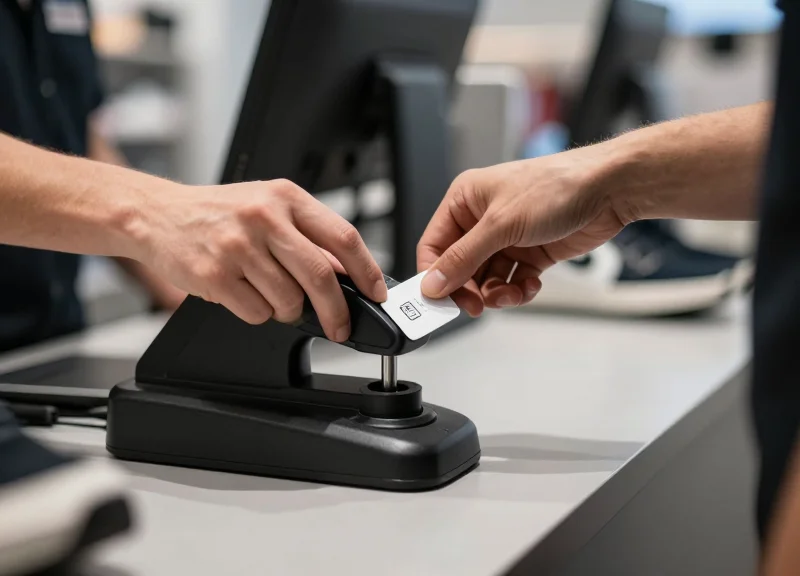
The final hallmark of a superior EAS shoe tag is operational throughput. In a high-volume retail environment, the ease of application and removal directly impacts labor costs, employee frustration levels, and the risk of 'transactional friction' at the point of sale. Ideally, a shoe tag should require no more than three seconds for application and less than two seconds for removal using a professional detacher. This efficiency ensures that security measures do not compromise the premium service experience expected by customers purchasing high-end branded sneakers.
| Feature | Operational Impact | Staff Benefit |
|---|---|---|
| One-Handed Application | Reduces tagging time by 40% compared to dual-component tags. | Allows staff to maintain control of the sneaker while securing the tag. |
| Self-Aligning Pins | Prevents pin bending and misalignment during the locking phase. | Minimizes manual dexterity requirements and reduces equipment wear. |
| Universal Detacher Compatibility | Eliminates the need for multiple proprietary tools at the counter. | Streamlines the checkout process and reduces counter clutter. |
| Visual 'Lock' Indicators | Instant confirmation that the tag is securely engaged. | Reduces 'false security' where tags are loosely attached and easily pulled. |
From a veteran marketing perspective, I recommend implementing the 'One-Handed Rule' for your inventory team. If a security tag requires a staff member to set the sneaker down on a hard surface to gain enough leverage for removal, you are significantly increasing the risk of 'Slippage Damage.' This occurs when a detacher or tool slips and gouges the leather or mesh. The best shoe tags are those that can be removed mid-air or within a soft-docking station, ensuring the sneaker remains protected throughout the transaction.
- The Stress Test: Have your least experienced staff member apply and remove 10 tags in a row. If they struggle with ergonomics or speed, the tag is a liability.
- Detacher Ergonomics: Ensure the detacher is mounted at an angle that prevents wrist strain, as repetitive motion injuries can lead to staff turnover in busy sneaker boutiques.
- Pin Management: Choose tags with integrated pins or 'clamshell' designs to prevent staff from being pricked or losing loose pins in the store carpet.
Does the tag removal process leave 'pressure marks'?
Cheap mechanical tags often require high pressure to unlock, which can leave permanent indentations on soft leather eyelets. Premium tags use high-gauss magnetic releases to minimize physical force.
How do we prevent 'tag-switching' during the try-on process?
Look for tags with a 'no-gap' fit. If a tag is easy for staff to apply but leaves a gap, shoplifters can use that space to lever the tag off or swap it onto a cheaper shoe.
What is the 'Slingshot Effect'?
This is a common issue where a spring-loaded tag pops open with force upon release. To avoid this, select tags with dampened release mechanisms to protect both the staff and the sneaker.
The Future of Footwear Security: Integrating RFID and ESL
The next evolution in footwear retail is the transition from reactive loss prevention to proactive 'Smart Retail Ecosystems.' By integrating Electronic Article Surveillance (EAS) with Radio Frequency Identification (RFID) and Electronic Shelf Labels (ESL), retailers can achieve 99% inventory accuracy and dynamic pricing while maintaining high-security standards. This unified approach allows a single security tag to act as a theft deterrent, an inventory tracking unit, and a bridge to digital price displays.
| Feature | Traditional EAS Only | Integrated RFID + ESL + EAS |
|---|---|---|
| Theft Prevention | Audio/Visual Alarm | Alarm + Item-Level Identification |
| Inventory Visibility | Manual Audits Only | Real-Time Item-Level Tracking |
| Pricing Agility | Manual Paper Labels | Instant Dynamic Pricing Updates |
| Customer Experience | Intrusive Hard Tags | Invisible or Sleek Multi-Function Tags |
Expert Insight: The 'Double-Layer Authentication' Strategy. To combat high-end resale fraud, forward-thinking retailers are now using ESLs to verify the unique ID of an RFID-tagged sneaker. If the digital price tag and the embedded RFID data do not match during a 'shelf pull,' an alert is sent to staff. This prevents the common 'ticket switching' tactic where shoplifters swap labels from a cheap pair of shoes to a limited-edition branded sneaker.
How does RFID improve the efficiency of EAS shoe tags?
RFID allows for 'non-line-of-sight' reading, meaning staff can scan an entire shipment of tagged sneakers in seconds without removing them from boxes. When integrated with EAS, it tells security exactly which model and size triggered the alarm.
Can Electronic Shelf Labels (ESL) assist in loss prevention?
Yes. ESLs can be programmed to flash or alert staff when a high-value shoe is removed from its display sensor, providing an immediate response window that traditional passive tags cannot offer.
Is the investment in RFID-EAS hybrid tags worth it for small boutiques?
While the initial cost is higher, the ROI is found in labor savings. You eliminate the need for manual price tagging and cycle counts, allowing staff to focus on sales rather than logistics.
Ultimately, the integration of these technologies moves the security tag from a 'cost center' to a 'profit-protector.' By leveraging data from RFID and the agility of ESL, sneaker retailers can respond to market trends in real-time while ensuring their most valuable assets never walk out the door unpaid.
Cost vs. Value: Calculating the ROI of Premium EAS Tags
Return on Investment (ROI) for EAS shoe tags is determined by comparing the total cost of ownership—including acquisition, labor for application, and replacement rates—against the value of inventory saved from theft and the prevention of 'nuisance' damage. While economy tags offer a lower entry price, premium tags typically pay for themselves within 3 to 6 months by reducing the 'shrinkage floor' (the baseline loss a store accepts) through superior locking strength and lower failure rates.
| Metric | Economy EAS Tags | Premium EAS Tags (Branded Sneaker Grade) |
|---|---|---|
| Average Lifespan | 12–18 Months | 3–5 Years |
| Locking Strength | Standard Magnetic (approx. 5kG) | Superlock or Hyperlock (12kG - 20kG) |
| False Alarm Rate | 3% - 5% | < 0.5% |
| Merchandise Damage Rate | Moderate (Pin scarring) | Minimal (Precision smooth pins) |
To truly understand the value, you must look beyond the unit price. A cheap tag that fails 5% of the time or is easily defeated by a common magnet doesn't just lose you the tag; it loses you a $200+ pair of sneakers and the marketing spend it took to get that customer in the door.
- Step 1: Determine Your Current Shrinkage Baseline: Calculate the monthly value of footwear lost to 'internal' and 'external' theft. For branded sneakers, this is usually 2–4% of gross sales.
- Step 2: Factor in Tag Failure and Replacement: Account for the cost of replacing broken tags and the labor time spent by employees dealing with faulty detachers or tags that won't release.
- Step 3: Calculate the 'Merchandise Damage' Cost: Premium tags use smooth, surgical-grade steel pins. Lower-quality pins can snag knit uppers or puncture leather, forcing markdowns or making the item unsellable.
- Step 4: The Breakeven Analysis: Divide the total cost of the premium tag deployment by the reduction in theft value. If premium tags reduce theft by just 25% more than cheap tags, the ROI is usually achieved in the first quarter.
Expert Insight: The 'Resale Value' Protection Factor. In the high-end sneaker market, the condition of the box and the upper material is everything. Cheap tags often leave heavy 'witness marks' or grease stains from low-quality internal springs. A premium tag is designed to preserve the aesthetic integrity of the product, ensuring that even if a display model is the last pair, it can still be sold at full MSRP without customer complaints about 'security tag scars'.
Does a higher price always mean better security?
Not necessarily. Price should correlate with magnetic 'Gauss' strength and the quality of the internal clutch. Always verify that a 'Premium' tag uses at least a Superlock (12,000 Gauss) mechanism.
Can I reuse premium tags across different shoe types?
Yes. One of the best ways to boost ROI is to choose a versatile tag that works for both delicate knits and heavy leather boots, reducing the need for multiple tag inventories.
How does tag weight affect ROI?
Lighter tags reduce shipping costs and prevent 'merchandise sag' on display shelves, keeping your store looking high-end and reducing the need for constant shelf-straightening labor.