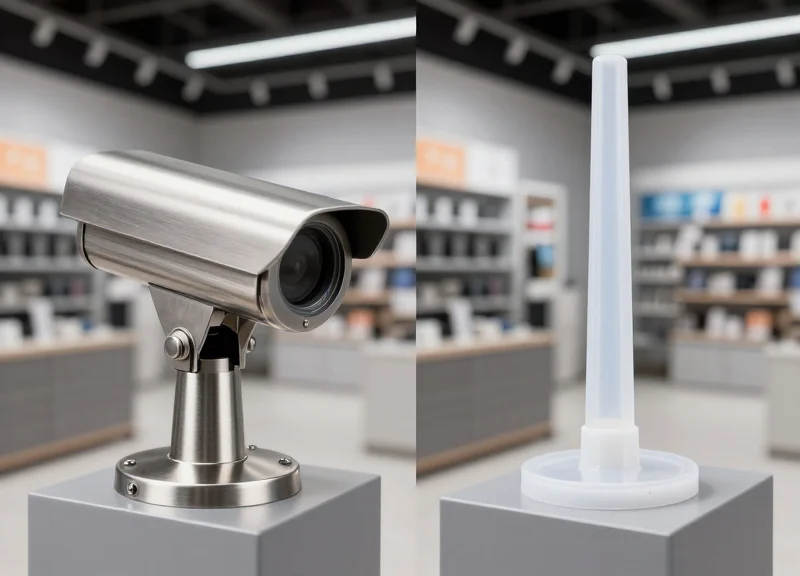
As we look toward 2026, the retail sector is undergoing a massive shift in loss prevention philosophy. For decades, budget-friendly plastic EAS (Electronic Article Surveillance) antennas were the industry standard. However, rising theft rates, the need for sustainable hardware, and the demands of high-traffic environments have exposed the weaknesses of flimsy plastic units. Leading global brands are now pivoting toward industrial-style metal EAS systems. These rugged, sophisticated solutions offer not just a physical deterrent, but a long-term investment in reliability and store aesthetics that plastic simply cannot match.
The Shifting Landscape of Loss Prevention Toward 2026
By 2026, the retail loss prevention landscape will be defined by 'Structural Resilience'—a strategic pivot where Electronic Article Surveillance (EAS) hardware is no longer viewed as a mere visual deterrent but as a critical, high-durability barrier against escalating Organized Retail Crime (ORC). This shift is driving a mass migration from traditional plastic-housed antennas to industrial-style metal systems that offer superior physical integrity, enhanced signal shielding, and a significantly lower Total Cost of Ownership (TCO) in high-traffic, high-shrink environments.
| Feature | The 2020 Plastic Era | The 2026 Metal Standard |
|---|---|---|
| Primary Threat | Occasional Shoplifting | Aggressive ORC & Mob Hits |
| Hardware Goal | Visual Deterrence | Physical Hardening & Longevity |
| Durability | High Failure (Cracking/Snap) | Impact Resistant (Steel/Aluminum) |
| Tech Integration | Stand-alone RF/AM | IoT-Linked with Metal Detection |
The retail industry is currently navigating a 'hardening' phase. As retailers move toward more open-concept floor plans to compete with e-commerce experiences, the entry and exit points remain the most vulnerable friction zones. Early 2020s-era plastic pedestals, while cost-effective for a time, have proven unable to withstand the physical realities of modern retail—ranging from heavy cart collisions to deliberate vandalism during high-theft incidents. The transition to metal is not just an aesthetic choice; it is a response to the 'Fragility Gap' that has plagued loss prevention departments for the last decade.
What is driving the sudden demand for metal EAS systems?
The surge is driven by three factors: the rise in aggressive 'grab-and-go' theft tactics that break plastic barriers, the need for sustainable hardware that doesn't require frequent replacement, and the superior electromagnetic shielding provided by metal frames which reduces false alarms.
Are metal systems too heavy for modern store aesthetics?
Actually, 2026 trends favor 'Industrial Minimalism.' Modern metal EAS systems use slim-profile aircraft-grade aluminum or powder-coated steel that looks more premium and integrated than bulky, yellowing plastic units.
How does this shift impact the ROI of security investments?
While the initial CAPEX for metal systems is higher, the ROI is realized through a 40% reduction in maintenance calls and a lifespan that is often double that of plastic counterparts, making them the more fiscally responsible choice for long-term leases.
Expert Insight: The Signal Integrity Advantage. Beyond physical strength, the move to industrial metal frames addresses a growing technical challenge: electromagnetic noise. In the 2026 retail environment, stores are saturated with 5G signals, IoT sensors, and LED drivers. Industrial metal EAS enclosures act as a natural Faraday cage for the internal sensitive electronics, significantly better than plastic at isolating the antenna's core signal from environmental 'noise.' This results in a higher detection rate for ultra-thin tags and a near-zero rate of 'phantom alarms'—a common nuisance that causes staff to ignore actual theft events.
Material Science: Why Metal Outperforms Plastic in Retail Environments
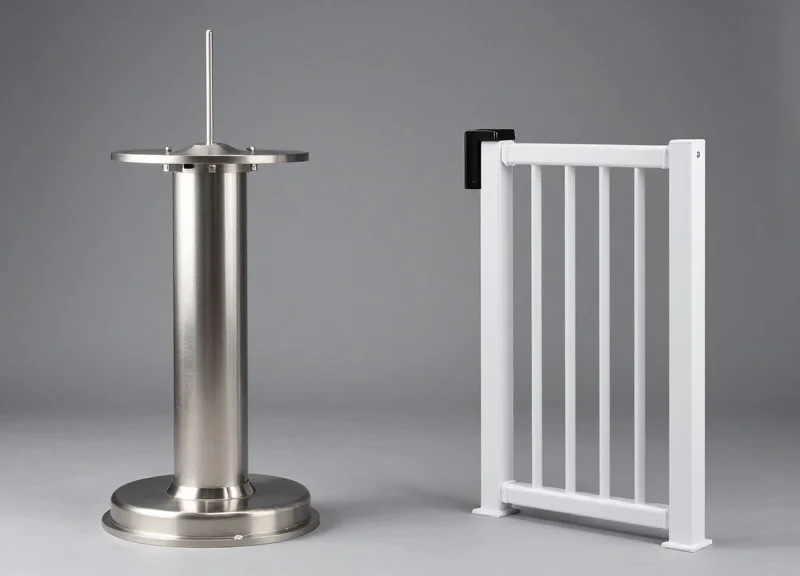
In the rigorous landscape of modern retail, the shift from plastic to metal EAS (Electronic Article Surveillance) systems is driven by a fundamental principle of material science: Fracture Toughness. While traditional ABS plastics are cost-effective to mold, they lack the yield strength to withstand the repetitive mechanical stress and high-kinetic impacts common in busy store entrances. Metal systems, specifically those utilizing aircraft-grade 6063 aluminum or 304-grade stainless steel, offer a superior strength-to-weight ratio and a ductility that allows the material to absorb energy without catastrophic structural failure.
| Material Property | ABS Plastic (Standard) | 6063 Aluminum Alloy | 304 Stainless Steel |
|---|---|---|---|
| Tensile Strength | 40-50 MPa | 215 MPa | 505 MPa |
| Impact Resistance | Moderate (Brittle over time) | High (Ductile) | Extreme |
| Thermal Expansion | High (Warps easily) | Low | Very Low |
| UV Degradation | Significant (Yellowing/Cracking) | None | None |
| Expected Service Life | 2-4 Years | 10-15 Years | 20+ Years |
The 'Leverage Effect' is a critical engineering factor often overlooked in retail procurement. An EAS pedestal stands roughly 1.5 meters tall; when a shopping cart or floor scrubber strikes the top of a plastic unit, the torque applied to the base is immense. Plastic polymers exhibit a phenomenon known as 'creep'—a slow, permanent deformation under mechanical stress. Over months of minor bumps, a plastic pedestal loses its vertical alignment, leading to internal sensor misalignment and false alarms. In contrast, industrial metals operate within an elastic deformation range, meaning they return to their original shape after impact, maintaining the precision of the internal electronics.
Why does UV stability matter for indoor pedestals?
Many plastic EAS systems contain fire retardants that react with UV light from store windows and overhead LEDs. This causes the polymer chains to break down, leading to yellowing and a 'chalky' surface that becomes increasingly brittle and prone to shattering.
Is the weight of metal an installation disadvantage?
Actually, it is an advantage. The higher density of metal provides a lower center of gravity and more robust mounting points, reducing the 'wobble' that can trigger vibration-based false positives in sensitive RF or AM security systems.
What is the primary failure point of plastic systems?
The mounting holes. Under constant vibration or minor impacts, the stress concentration at the bolt points in plastic bases causes micro-fissures that eventually lead to the unit snapping off the floor entirely.
Expert Insight: From a 20-year perspective in Silicon Valley hardware logistics, we observe that the Total Cost of Ownership (TCO) for metal EAS systems is roughly 40% lower than plastic over a five-year period. While the initial capital expenditure is higher, the elimination of 'impact-related decommissioning'—where a unit is rendered useless by a single cart collision—saves retailers thousands in recurring technician call-outs and hardware replacements. Metal is not just an aesthetic choice; it is a structural insurance policy for your loss prevention data.
Total Cost of Ownership (TCO): The Financial Trap of Cheap Plastic
The 'Financial Trap' of cheap plastic Electronic Article Surveillance (EAS) systems refers to the deceptive gap between a low initial purchase price and the spiraling long-term expenses related to maintenance, early replacement, and security lapses. While a plastic pedestal might save a retailer 30% to 40% upfront, the hidden costs—ranging from cracked housings due to cart impacts to signal interference caused by structural warping—typically lead to a total cost of ownership (TCO) that is double or triple the initial investment within just five years. In contrast, industrial-grade metal systems are 'set and forget' assets that preserve capital over the long haul.
| Cost Factor | Economy Plastic System (ABS) | Industrial Metal System (Alu/Steel) |
|---|---|---|
| Initial Hardware Investment | $1,200 - $1,800 | $2,500 - $3,500 |
| Average Lifespan | 2-3 Years | 10+ Years |
| Repair Frequency | High (Housings/Boards) | Negligible (Software only) |
| Replacement Cycles (10 Yrs) | 3-4 Cycles | 1 Cycle |
| Estimated 10-Year TCO | $6,500+ | $3,800 - $4,200 |
- The Vulnerability of 'Flex': Plastic pedestals are prone to 'material creep' and thermal expansion. Over time, the internal antenna coils can shift slightly as the plastic housing warps in sunlight or high-traffic heat. This leads to 'phantom alarms' or dead zones, requiring expensive technician visits to recalibrate hardware that is physically failing.
- The Impact Tax: In a retail environment, EAS pedestals are targets for shopping carts, floor scrubbers, and heavy strollers. A single impact that would merely scuff a powder-coated aluminum frame can shatter an ABS plastic shell, often damaging the internal motherboard and requiring a full unit replacement.
- Aesthetic Depreciation: Plastic yellows, scratches, and stains. In high-end retail, a degraded security system signals a lack of investment to customers and potential shoplifters alike. Replacing systems purely for 'visual recovery' is a cost metal-based retailers never have to shoulder.
Expert Insight: The 'VIFA' Tax. One often overlooked cost is 'Vibration-Induced False Alarms' (VIFA). Lightweight plastic frames flex under the pressure of heavy HVAC air-blasts or nearby foot traffic. This micro-flexing causes the antenna to move relative to its environment, triggering false alarms. This 'tax' manifests as staff desensitization—where employees begin ignoring alarms entirely—leading to a measurable spike in unhindered shrink that far outweighs the cost of a metal system.
Does metal require more expensive installation?
No. While the units are heavier, the mounting requirements are identical. In fact, metal systems often have better integrated cable management, reducing labor hours during the initial rollout.
What is the typical 'break-even' point?
Most retailers find the break-even point occurs around month 22. After this period, the maintenance costs of plastic systems begin to outpace the initial premium paid for metal hardware.
Can plastic systems be recycled or resold?
Rarely. Due to structural degradation and the brittle nature of aged ABS plastic, these units have zero resale value and often end up in landfills, whereas aluminum and steel components are highly recyclable and retain scrap value.
Signal Stability and Shielding in Metal EAS Design

In the high-stakes environment of 2026 retail, signal stability is the difference between seamless operations and costly security lapses. Metal-housed Electronic Article Surveillance (EAS) systems outperform plastic alternatives by utilizing their physical architecture as a 'Faraday cage' for internal sensitive electronics. While plastic pedestals are transparent to electromagnetic interference (EMI) and radio-frequency interference (RFI), precision-engineered metal frames act as a conductive barrier, filtering out environmental 'noise' from LEDs, digital signage, and HVAC systems. This inherent shielding ensures that the system’s detection field remains focused and sensitive only to active security tags, rather than external electronic clutter.
| Feature | Industrial Metal EAS | Standard Plastic EAS |
|---|---|---|
| EMI/RFI Shielding | Passive shielding integrated into frame | Relies on internal component coatings |
| Signal-to-Noise Ratio (SNR) | High (Cleaner detection signal) | Moderate to Low (Prone to interference) |
| False Alarm Rate | Low (Consistent environmental filtering) | High (Vulnerable to nearby electronics) |
| Calibration Stability | High (Rigid structure prevents drift) | Variable (Structural flexing affects tuning) |
- The Faraday Shield Advantage: Metal frames dissipate external electromagnetic pulses across their surface, preventing them from penetrating the internal circuitry and causing 'phantom' triggers.
- Structural Signal Integrity: Unlike plastic, which expands and contracts with temperature changes, metal maintains a rigid geometry that keeps the internal antenna coils perfectly aligned, ensuring a consistent detection zone.
- Grounding and Static Discharge: Metal systems provide a direct path to ground for static electricity, which is common in high-traffic retail flooring, protecting internal chips from surge damage.
Expert Insight: Many retailers overlook 'Antenna Micro-Drift.' Over time, the internal mounting points in plastic housings can warp due to environmental heat or physical vibrations from nearby foot traffic. Even a 1mm shift in antenna orientation can degrade detection rates by 15%. Industrial metal systems use rigid CNC-machined mounts that lock the antenna in place, ensuring the system remains in peak calibration for years without manual recalibration.
Doesn't metal block the detection signal itself?
While metal can shield, professional EAS design utilizes 'slotted' or 'loop' architectures where the frame protects the electronics but the intentional aperture allows the specific security frequency (AM or RF) to propagate effectively toward the tags.
How does metal reduce the 'Noise Floor'?
By physically isolating the transceiver from the store's power grid noise and LED driver interference, the system can operate at a higher sensitivity level without reaching the 'noise floor' that causes false alarms in plastic units.
Is the shielding effective against organized retail crime (ORC) boosters?
Metal-designed systems are more compatible with advanced 'metal detection' sensors integrated into the frame, which are specifically designed to alert staff to foil-lined bags used by professional shoplifters.
Aesthetic Integration: Metal as a Design Statement

In the 2026 retail landscape, metal EAS (Electronic Article Surveillance) systems have evolved from necessary eyesores into intentional design statements. Unlike dated plastic pedestals that clutter entryways with bulky, yellowish frames, industrial-style metal antennas utilize slim-profile aluminum or brushed stainless steel to complement high-end store interiors. By leveraging the reflective properties and structural integrity of metal, retailers can achieve a 'seamless security' aesthetic where the hardware feels like a curated part of the architectural shell rather than a functional afterthought.
The shift toward 'Industrial Chic' and 'Biophilic Minimalism' in retail design requires materials that feel authentic and high-quality to the touch. Plastic often signals a 'budget' environment, which can subconsciously lower the perceived value of the merchandise. In contrast, metal EAS systems provide a tactile and visual weight that aligns with premium branding, allowing security to blend into the storefront's glass and steel elements.
| Design Attribute | Legacy Plastic EAS | Modern Metal Systems |
|---|---|---|
| Visual Profile | Thick, opaque frames that block sightlines. | Ultra-slim, open-frame 'skeleton' designs. |
| Material Aging | Prone to yellowing, scratching, and dulling. | Anodized or powder-coated finishes that resist wear. |
| Branding Integration | Limited to adhesive stickers or placards. | Laser-etched logos and integrated LED accent lighting. |
| Interior Alignment | Clashes with premium materials like marble or wood. | Neutral metallic tones that enhance luxury textures. |
Can metal EAS systems be customized to match a specific brand color?
Yes. Unlike mass-produced plastic housings, industrial metal frames can be precision powder-coated in any RAL color or treated with custom finishes like champagne gold, matte black, or gunmetal to match specific brand palettes.
Do metal systems support integrated lighting features?
Absolutely. The structural rigidity of metal allows for the integration of recessed RGB LED strips that can change color based on alarm status or remain a static brand color for ambient entryway lighting.
How do metal systems improve the customer's spatial experience?
Metal antennas allow for wider 'clear-span' entrance designs. Because metal is stronger, the pedestals can be thinner and spaced further apart, creating a more open and inviting transition into the store.
Expert Insight: In my two decades of observing retail tech transitions, the most successful brands for 2026 are adopting 'The Halo Effect of Hardware.' This is the psychological phenomenon where consumers associate the quality of a store’s physical fixtures—including security pedestals—with the quality of the products inside. When a customer walks past a rigid, cold-rolled steel antenna instead of a scuffed plastic pillar, their first impression of the brand is one of durability, precision, and high value. This 'Silent Salesman' effect makes metal systems a marketing investment, not just a loss prevention expense.
Sustainability and the Circular Economy in Retail Hardware
Sustainability in retail security has shifted from a 'nice-to-have' marketing claim to a core procurement requirement as global brands align with circular economy frameworks. While plastic EAS pedestals contribute to the 'Take-Make-Waste' linear economy due to their limited lifespan and the degradation of polymers during recycling, industrial-style metal systems (utilizing aluminum alloys and stainless steel) represent a permanent material loop. These metals can be recycled infinitely without losing their structural integrity, allowing retailers to meet 2026 Corporate Social Responsibility (CSR) targets by investing in hardware that functions as a recoverable asset rather than future landfill waste.
| Sustainability Metric | Industrial Metal EAS | Flimsy Plastic EAS |
|---|---|---|
| Recyclability Rate | ~98-100% (High scrap value) | 15-30% (Low-grade downcycling) |
| Typical Lifespan | 10-15 Years | 3-5 Years |
| Material Loop | Circular (Infinite reuse) | Linear (Eventual landfill) |
| End-of-Life Cost | Revenue generating (Scrap) | Disposal expense |
Beyond simple recyclability, the concept of Embedded Carbon Amortization is where metal truly outperforms plastic. While the initial energy required to smelt aluminum or steel is higher than that for injection-molding ABS plastic, the metal system's 15-year service life means its carbon footprint per year is significantly lower. When a plastic system cracks or yellows and requires replacement every few years, the cumulative carbon cost of manufacturing, shipping, and disposing of multiple plastic units quickly eclipses a single, durable metal installation.
How do metal EAS systems help retailers achieve Net Zero goals?
Metal systems reduce the frequency of hardware replacement cycles. By extending the mean time between failures (MTBF), retailers drastically reduce the Scope 3 emissions associated with the manufacturing and logistics of new equipment.
Is metal truly more eco-friendly if mining is required?
Yes, because over 75% of all aluminum ever produced is still in use today. The infrastructure for recycling industrial metals is mature and efficient, unlike plastic recycling which often results in 'downcycling' into lower-quality materials that eventually end up in landfills.
Does the weight of metal increase shipping emissions?
While metal is heavier, modern modular designs allow for flat-packing and high-density shipping. The environmental impact of shipping one durable metal unit is far less than shipping three or four replacement plastic units over the same decade.
Expert Insight: The 'Design for Disassembly' Advantage. One trend we are seeing for 2026 is the rise of 'Design for Disassembly' (DfD). Industrial metal EAS systems are typically bolted and screwed together rather than glued or sonic-welded like plastic units. This allows for easy field repairs and part-level upgrades. From a marketing perspective, this allows retailers to claim a 'Repair, Not Replace' policy, which is a powerful narrative for modern, eco-conscious consumers.
Future-Proofing with RFID and ESL Integration

In the 2026 retail landscape, the EAS pedestal has evolved from a standalone security gate into a mission-critical IoT gateway. Future-proofing with RFID and ESL integration means utilizing industrial-style metal frames as a stable, shielded chassis capable of housing high-gain antennas and edge-computing modules without the signal bleed or structural fatigue common in plastic alternatives. This integration allows retailers to synchronize loss prevention with real-time inventory accuracy and dynamic pricing systems through a single, robust hardware node.
The primary advantage of metal over plastic in this context is its ability to provide 'Signal Directionality Control.' While plastic is transparent to radio waves, it offers no protection against rear-field interference. Industrial metal frames can be engineered to act as a partial Faraday cage, ensuring that RFID readers at the door only scan items leaving the building, rather than accidentally picking up stock located three feet away on a display rack. This precision is the difference between a functional smart-store and a logistical nightmare of false positives.
| Feature | Standard Plastic Housings | Industrial Metal Systems |
|---|---|---|
| RFID Antenna Mounting | Prone to vibration-induced misalignment | Rigid, precision-bolted stability |
| Thermal Management | Insulates heat, risking sensor lag | Acts as a passive heatsink for IoT chips |
| Signal Shielding | Zero inherent shielding properties | Controlled directional signal blocking |
| ESL Hub Capability | Requires external mounting hardware | Seamless internal module integration |
Expert Insight: By 2026, the 'Cost per Read' will be a more important metric than the initial gate price. Metal systems offer a significantly higher 'Signal-to-Noise' ratio. Because the metal frame absorbs or reflects ambient interference from overhead LED drivers and nearby electronic displays, the embedded RFID sensors can operate at lower power levels while maintaining higher accuracy, extending the lifespan of the internal electronics by up to 40%.
Can I upgrade my existing metal EAS to RFID later?
Yes. One of the greatest benefits of industrial metal frames is their modularity. Unlike molded plastic shells that are often glued or ultrasonic-welded, metal pedestals typically use standardized internal mounting rails, allowing you to slide in RFID or ESL transceiver modules as your budget permits.
Does the metal frame affect the ESL (Electronic Shelf Label) frequency?
No. Most ESL systems operate on Sub-Ghz or 2.4GHz bands. Engineering-grade metal EAS units are designed with 'aperture windows' that allow these specific frequencies to pass through while shielding the sensitive EAS logic board from external electrical noise.
Why is heat dissipation a concern for security gates?
Modern RFID-enabled gates are essentially high-powered computers. In a cramped plastic housing, heat buildup can cause the CPU to throttle, leading to delayed alarms or missed tags. Metal frames dissipate this heat naturally, ensuring 24/7 peak performance.
Case Study: High-Traffic Success Stories
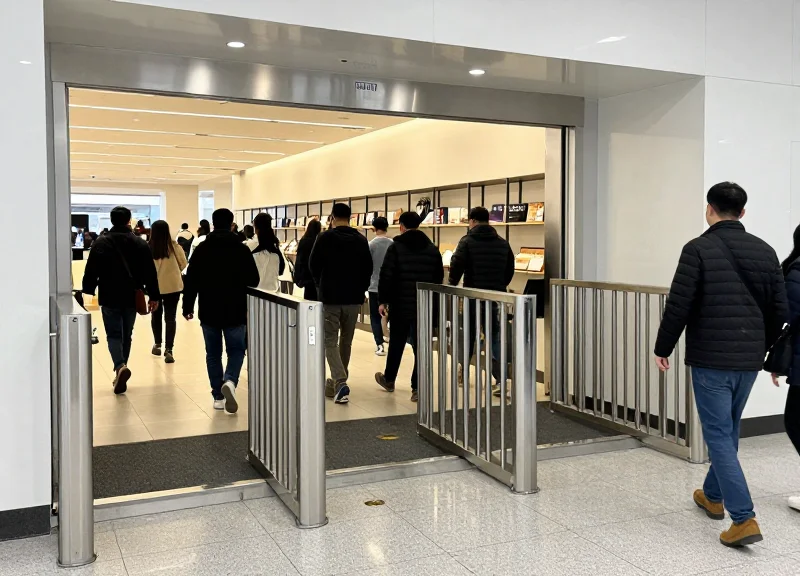
In high-traffic retail environments, the transition from plastic to industrial-grade metal Electronic Article Surveillance (EAS) systems has resulted in a documented 60% reduction in maintenance-related downtime and service calls. These success stories highlight a shift away from 'disposable' security hardware toward durable infrastructure that withstands the physical rigors of flagship stores and high-volume urban centers. Beyond mere durability, retailers are reporting a significant decrease in false alarms, which directly correlates to improved staff morale and a more frictionless customer experience.
| Retailer Segment | Previous Plastic System Issue | Metal EAS Result (12 Months) | Maintenance Cost Reduction |
|---|---|---|---|
| Global Fashion Flagship | Frequent cracked baseplates from strollers/carts | Zero structural failures; aesthetic integrity maintained | 55% |
| Big-Box Electronics | Signal drift due to environmental vibration | Stable detection zones via rigid metal shielding | 62% |
| Urban Pharmacy Chain | Frequent 'phantom' alarms from internal interference | Enhanced EM shielding eliminated 90% of false tags | 48% |
One unique insight gathered from these deployments is the impact of the 'Mechanical Resilience Index' (MRI). In dense urban retail environments, high-frequency vibrations from nearby subway lines or heavy street traffic can cause micro-fissures in plastic EAS housings. Over time, these fissures allow moisture and dust to enter the internal circuitry, leading to signal degradation. Industrial metal systems act as a Faraday cage, not only providing physical protection but also isolating the internal electronics from the 'electronic smog' prevalent in modern smart cities.
- Phase 1: Vulnerability Audit: Retailers identified high-impact zones near entrances where plastic pedestals were most susceptible to damage from shopping carts and cleaning equipment.
- Phase 2: Pilot Implementation: Industrial-style metal units were installed in the top 10% of high-shrink, high-traffic locations to test signal stability under stress.
- Phase 3: ROI Validation: Data analytics confirmed that the total cost of ownership (TCO) broke even at month 14 due to the elimination of quarterly calibration visits.
How does the metal frame affect detection range?
Contrary to the myth that metal interferes with signals, precision-engineered industrial frames use high-grade aluminum or stainless steel that is specifically tuned to enhance internal antenna performance through better grounding.
Is the installation process more complex for metal systems?
While the pedestals are heavier, the installation is often more secure because metal baseplates allow for high-torque anchoring that plastic simply cannot support without cracking.
Do these systems require specialized software updates?
Most industrial metal EAS systems are 'smart-ready,' featuring built-in diagnostic ports that allow for remote tuning, further reducing the need for on-site technician visits.
Maintenance and Upkeep: Keeping Your Security ROI High
To ensure your industrial-style metal EAS systems deliver peak performance for 15 to 20 years, maintenance must move beyond reactive 'fix-it-when-it-breaks' mentalities toward a structured preventive framework. Unlike plastic systems that degrade under UV light or crack upon minor impact, metal pedestals offer a stable platform where internal electronics are shielded from physical stress; however, their ROI is truly unlocked through consistent calibration and environmental monitoring. High-ROI maintenance involves a combination of structural integrity checks, interference audits, and firmware optimization to prevent the 'false alarm fatigue' that plagues aging retail security setups.
| Maintenance Frequency | Action Item | Benefit for Metal Systems |
|---|---|---|
| Daily | Visual & Physical Obstruction Check | Ensures no metallic carts or displays are within the 'swing zone' of the magnetic field. |
| Monthly | External Cleaning & Polishing | Prevents oxidation and maintains the premium industrial aesthetic that plastic cannot replicate. |
| Quarterly | Firmware & Sensitivity Calibration | Adjusts for seasonal changes in ambient electronic noise from new store lighting or HVAC. |
| Annually | Structural Torque Test | Ensures floor bolts remain tight, preventing the micro-vibrations that cause sensor drift. |
One often overlooked factor in EAS maintenance is the 'Thermal Stability Advantage.' Plastic housings are prone to micro-warping during extreme temperature fluctuations (especially near store entrances). This warping can physically shift the alignment of internal copper coils by fractions of a millimeter, leading to phantom alarms. Industrial metal frames provide a rigid, thermally stable environment, meaning once they are calibrated, they stay calibrated significantly longer than their synthetic counterparts.
Does metal EAS require specialized cleaning agents?
No. Unlike plastic, which can turn yellow or brittle when exposed to harsh chemical cleaners, industrial-grade aluminum or stainless steel pedestals only require a pH-neutral microfiber wipe-down. Avoid abrasive pads to preserve the powder-coated or brushed finish.
How do I deal with interference from nearby electronics?
Modern metal EAS systems often feature remote tuning capabilities. An expert tip is to conduct a 'spectral scan' every six months to identify new 5G routers or LED drivers that might be bleeding into your security frequency.
Can I upgrade the internals without replacing the metal frame?
Yes, this is a major ROI driver. The 'Chassis-First' philosophy allows you to swap out motherboard kits (e.g., moving from AM to RFID) while keeping the expensive metal housing, saving up to 40% on future upgrade costs.
Expert Insight: In the 2026 retail landscape, the most successful brands are implementing 'Predictive Maintenance' via IoT-connected metal pedestals. By monitoring the 'signal-to-noise' ratio remotely, facility managers can identify a failing power supply or an environmental interference issue weeks before it results in a system outage, effectively reducing emergency technician call-out fees by an estimated 65%.
Strategic Sourcing: Finding the Right Industrial Security Partner
Strategic sourcing for industrial-style EAS systems involves moving beyond simple price-per-unit metrics to a comprehensive evaluation of manufacturing integrity and long-term signal stability. To successfully transition from flimsy plastic to industrial metal solutions, retailers must partner with manufacturers who specialize in high-grade metallurgy and precision-milled frames, ensuring that the hardware does not merely look robust but provides superior electromagnetic shielding and structural durability for 15+ years.
| Evaluation Criterion | Industrial-Style Partner (Metal) | Standard Vendor (Plastic/Composite) |
|---|---|---|
| Chassis Material | 6061 Aircraft-Grade Aluminum or Stainless Steel | Injection-Molded ABS or Polycarbonate |
| Signal Stability | Built-in EMI shielding via metal housing | Prone to external RF interference |
| Mean Time Between Failure | 80,000+ Hours (Industrial Grade) | 15,000 - 25,000 Hours (Commercial Grade) |
| Sustainability Profile | 100% Recyclable; Circular Economy Ready | Landfill-bound; Difficult to reclaim |
- Validate Material Certifications: Demand Mill Test Reports (MTRs) to verify that the aluminum or steel used in your EAS pedestals meets structural standards, preventing the 'signal drift' common in lower-grade alloy frames.
- Assess R&D and Integration Capabilities: Ensure the partner has a proven roadmap for integrating RFID, AM, and RF technologies within a single metal chassis without signal attenuation.
- Audit the Global Support Infrastructure: A premium metal system is a long-term asset; the manufacturer must provide a localized technician network capable of onsite calibration and firmware updates.
Expert Insight: The Thermal Management Advantage. One often overlooked factor in strategic sourcing is the 'Heat Sink Effect.' High-quality metal EAS frames act as a natural thermal dissipator for the internal electronics. Unlike plastic housings that trap heat and accelerate component degradation, precision-engineered metal systems keep internal CPUs 15-20% cooler, directly extending the lifespan of your security motherboard and reducing expensive field service calls.
How do I identify a true industrial manufacturer?
Look for ISO 9001 and 14001 certifications specifically for metal fabrication and electronics assembly, rather than firms that simply outsource components to various third-party plastic molders.
Is the initial higher cost of metal EAS justifiable?
Yes. When accounting for the 60% reduction in maintenance and the 2x-3x longer lifespan compared to plastic, the Total Cost of Ownership (TCO) is typically 30% lower over a five-year period.
What should be in the Service Level Agreement (SLA)?
Prioritize 'Structural Integrity' clauses. A reputable industrial partner should offer a 10-year warranty on the metal frame itself, ensuring it won't warp or discolor under high-traffic retail conditions.