As we head toward 2026, the global logistics sector is hitting a critical inflection point. The traditional model of purchasing pre-printed, pre-encoded RFID labels—once the gold standard for asset tracking—is rapidly being eclipsed by integrated, on-demand RFID printing. In an era where supply chains must be hyper-responsive to micro-fluctuations in demand, the rigid lead times and inventory overhead associated with pre-printed tags have become a liability. This article analyzes the strategic shift toward integrated solutions and why industry leaders are embracing on-site encoding to drive the next generation of operational excellence.
The State of Logistics in 2026: The Move Toward Real-Time Data

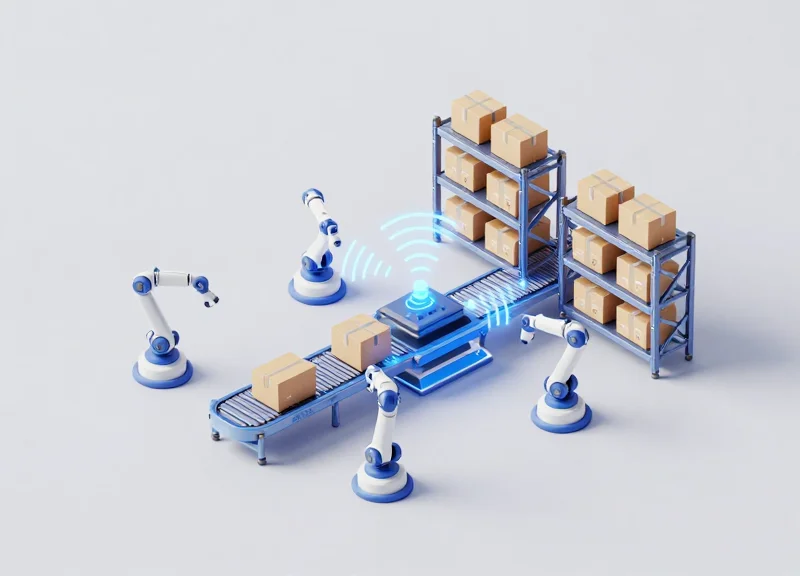
In 2026, the global logistics landscape is defined by the transition from 'Point-in-Time' visibility to 'Ambient Intelligence.' Unlike previous decades where tracking was dependent on physical scanning at specific checkpoints, modern supply chains now demand continuous, real-time data streams for every individual SKU. This shift is driven by the rise of hyper-automation and autonomous mobile robots (AMRs) that require millisecond-accurate data to navigate and sort goods without human intervention. The traditional model of batch-processed, static information is no longer sufficient; 2026 is the year where 'Dark Data'—items that exist in the warehouse but aren't visible in the digital twin—becomes a fatal operational liability.
| Feature | Legacy Logistics (Pre-2024) | Next-Gen Logistics (2026+) |
|---|---|---|
| Data Velocity | Batch updates (15-60 min latency) | Real-time streaming (sub-second latency) |
| Visibility Unit | Pallet or Case level | Individual Item/SKU level |
| Labeling Strategy | Pre-printed, static barcodes | Integrated, on-demand RFID encoding |
| Error Resolution | Reactive (found after the fact) | Predictive (intercepted via AI) |
- Omnichannel Complexity: Retailers now fulfill orders from stores, dark warehouses, and distribution centers simultaneously, requiring a unified real-time inventory view to prevent overselling.
- AI-Driven Orchestration: Supply chain AI models require high-fidelity data inputs; if the physical label data lags behind the digital twin, the algorithm fails to optimize routing.
- Sustainability Compliance: New regulations demand 'Digital Product Passports,' requiring real-time updates on an item’s carbon footprint and origin throughout its lifecycle.
Expert Insight: The Latency Tax. As a veteran of Silicon Valley logistics tech, I’ve observed the emergence of what I call the 'Latency Tax.' In a high-velocity 2026 warehouse, a 10-minute delay in data synchronization results in a 3-5% increase in operational overhead due to misrouted AGVs and labor idle time. Integrated RFID printing eliminates this tax by ensuring the moment a label is created, its digital twin is live, verified, and broadcasted to the network.
Why are pre-printed labels failing in 2026?
Pre-printed labels are static and often carry stale data. They cannot be easily updated with real-time variables like expiration dates, specific destination shifts, or dynamic pricing, leading to manual overrides that slow down automated systems.
How does real-time data impact labor costs?
By moving to real-time data via RFID, companies reduce 'search time'—the 20% of a picker's day spent looking for misplaced items—allowing for leaner teams and higher throughput.
The Bottleneck: Why Pre-Printed Labeling Models are Failing
Pre-printed labeling models are failing because they rely on a 'static inventory' logic in an increasingly 'dynamic delivery' world. By decoupling the creation of the RFID tag from the actual point of application, logistics providers introduce significant friction into their workflows. This model creates a 'data velocity' gap where the information encoded on a tag months in advance no longer matches the real-time requirements of the 2026 supply chain, leading to inventory inaccuracies, expensive manual reconciliations, and a complete lack of agility.
| Metric | Pre-Printed Model | Integrated On-Demand Model |
|---|---|---|
| Lead Times | 4–8 Weeks (Production + Shipping) | Instant (Printed at Point of Use) |
| Minimum Order Quantity (MOQ) | High (Requires bulk ordering) | Zero (Batch size of one) |
| Data Flexibility | Static (Pre-encoded) | Dynamic (Real-time encoding) |
| Waste Rate | 8–15% (Obsolescence) | Under 1% (Print-on-demand) |
Beyond simple logistics, there is a concept I call 'Data Velocity Decay.' In 2026, the value of data is tied to its freshness. When you pre-print RFID labels, you are essentially committing to data points—such as destination codes, SKU details, or shipping routes—long before the package is even packed. In a landscape where AI-driven routing changes shipments in transit, a pre-printed label becomes a legacy anchor that prevents the package from being rerouted or updated digitally. The result is 'Ghost Inventory': items that exist physically but are digitally invisible because their static tags cannot update to reflect new logistical realities.
- The Minimum Order Quantity (MOQ) Trap: To get competitive pricing on pre-printed RFID tags, companies must order in the tens of thousands. This ties up capital in physical stock that may become obsolete before it is ever used.
- The 'Dead Tag' Liability: Tags damaged during shipping from the supplier to the warehouse are often not discovered until they reach a sorting gate, causing massive operational downtime and manual relabeling efforts.
- Environmental Inefficiency: Pre-printing leads to massive overproduction. When a product line changes or a shipping regulation updates, thousands of pre-printed tags are sent to landfills, conflicting with 2026 corporate ESG (Environmental, Social, and Governance) mandates.
Why can't we just use 'Generic' pre-printed tags?
While generic tags solve some MOQ issues, they require a secondary process to associate the tag ID with the product in a database. This 'double-handling' introduces a 2-3% error rate that is unacceptable in high-velocity 2026 logistics.
What is the primary cost driver in the old model?
The hidden cost is not the tag itself, but 'Exception Management.' When a pre-printed tag is wrong or unreadable, the labor cost to manually fix the error is often 50x the cost of the tag.
The Rise of Integrated RFID Printing: A Technological Shift
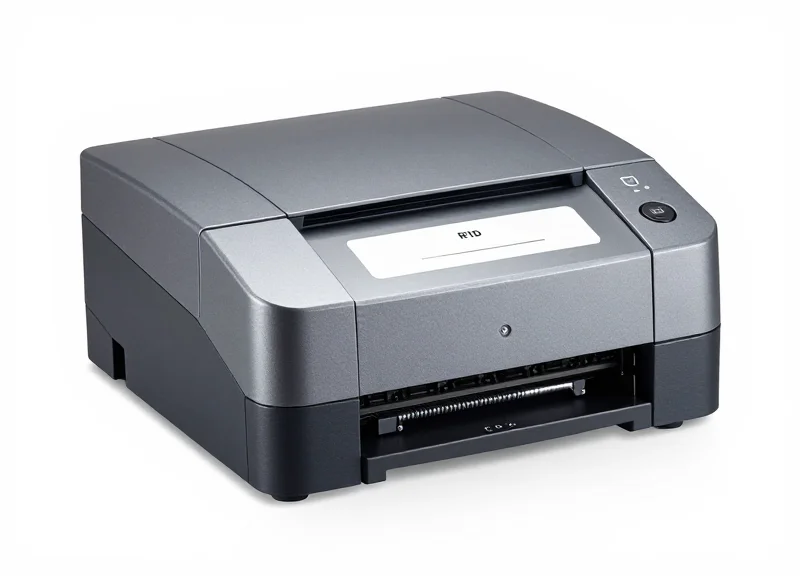
Integrated RFID printing is a unified technological process where a thermal printer-encoder simultaneously prints human-readable text and graphics onto a label while electronically writing unique data to the embedded RFID inlay's memory chip. Unlike traditional workflows that treat the label and the data as separate entities, this integrated model enables 'On-Demand Encoding.' This means that serialization, destination data, and product-specific attributes are injected into the tag at the exact moment the label is applied to the package, transforming the label from a static marker into a dynamic, programmable data carrier.
| Feature | Traditional Pre-Printed Models | Integrated RFID Printing (2026) |
|---|---|---|
| Data Latency | Fixed data; printed weeks in advance. | Real-time; encoded at point of use. |
| Serialization | Batch-based; prone to duplicates. | Dynamic; synchronized with ERP/WMS. |
| Inventory Risk | High risk of label obsolescence. | Zero; blank stock is used for all SKUs. |
| Data Complexity | Limited to basic identifiers. | Supports multi-bank memory encoding. |
The shift toward integrated systems is driven by the 'Logic of the Edge.' In 2026, logistics is no longer about moving boxes; it is about moving information. When encoding happens on-demand, the 'Digital Twin' of the package is born at the warehouse gate rather than the printing factory. This allows for 'Late-Stage Personalization,' where specific routing instructions or regional compliance data can be added to the RFID tag based on real-time carrier availability or shifting supply chain priorities.
Does integrated printing require specialized IT infrastructure?
Yes, it requires a tight integration between the Warehouse Management System (WMS) and the printer's firmware via protocols like MQTT or REST APIs to ensure the data stream is synchronized with the physical label output.
How does the system handle encoding failures?
Modern integrated printers feature 'Void and Rewrite' capabilities. If a chip is found to be defective during the encoding pass, the printer automatically marks the label as void and encodes the next one, ensuring 100% data integrity in the shipment.
Can integrated printers handle different RFID frequencies?
Most industrial models in 2026 are multi-protocol, supporting RAIN RFID (UHF) for long-range logistics and NFC for consumer-facing engagement, often within the same hardware footprint.
Expert Insight: In the 2026 landscape, the most significant disruption isn't the hardware—it's 'Data Fluidity.' Traditional pre-printed labels create a 'data debt' where your physical assets are behind your digital records. Integrated printing erases this debt by ensuring that the moment a physical event occurs (like a label being printed), the digital ledger is updated with the specific ID of that unique asset. This is the foundation for autonomous logistics and AI-driven sorting.
Agility and Customization: Adapting to Global Market Shifts

In the volatile logistics landscape of 2026, agility is defined by the ability to modify supply chain data at the 'last responsible moment.' Integrated RFID printing facilitates this by allowing companies to generate, encode, and apply smart labels on-demand at the warehouse or distribution center level. This shift removes the dependency on long-lead-time pre-printed stocks, enabling brands to react to regional regulatory changes, language requirements, or promotional shifts in seconds rather than weeks.
| Feature | Traditional Pre-Printed Labels | Integrated RFID Printing |
|---|---|---|
| Lead Time | 4–8 Weeks (Bulk Ordering) | Instant (Real-Time) |
| Minimum Order Quantity | Required to manage costs | Zero (Batch of One) |
| Compliance Updates | Requires discarding old stock | Dynamic software update |
| Waste Risk | High (Due to SKU obsolescence) | Negligible |
The true disruption lies in the elimination of 'Dead Inventory' costs. Historically, when a trade regulation changed or a product was rerouted to a different country, thousands of pre-printed RFID tags became electronic waste because their physical facestock or hard-coded headers were no longer compliant. Integrated systems allow for 'Late-Stage Localization,' where the specific regulatory symbols and local languages are printed only when the shipping destination is confirmed by the ERP system.
How does on-demand printing handle complex global compliance?
By integrating with cloud-based compliance engines, the printer automatically pulls the latest GS1 or regional data standards, ensuring every tag is audit-ready without manual oversight.
What is the impact on SKU proliferation?
It simplifies SKU management by allowing a single 'blank' RFID media roll to serve thousands of different products, as the identity is assigned during the print/encode process.
Can integrated printing support seasonal or promotional spikes?
Yes. It eliminates the risk of stockouts for specific labels, as labels are created based on real-time production needs rather than forecasted batches.
Expert Insight: The Rise of 'The Digital Twin Buffer'. In 2026, top-tier logistics firms are using integrated RFID printing to bridge the gap between physical goods and their digital twins. By printing the label only at the moment of dispatch, you ensure that the physical tag contains the most recent 'state' of the digital twin—including real-time carbon footprint data or chain-of-custody updates that occurred while the item was sitting in the warehouse. This level of data-to-physical synchronization is impossible with pre-printed models.
Cost Efficiency and ROI: The Economic Disruption
The economic disruption of the traditional labeling model is driven by a fundamental shift in the Total Cost of Ownership (TCO) equation: moving away from the high-friction model of pre-printed labels toward a lean, 'Just-in-Time' (JIT) data delivery system. While pre-printing carries a deceptively low initial unit price per tag, the true economic burden lies in the indirect costs of inventory management, Minimum Order Quantities (MOQs), and a staggering 15-20% obsolescence rate. By 2026, integrated RFID printing is projected to deliver a 25% to 40% reduction in TCO for enterprise logistics by synchronizing the physical label with real-time digital demand, effectively turning labeling from a variable liability into a controlled capital asset.
| Cost Factor | Traditional Pre-Printed Model | Integrated RFID Printing (2026) |
|---|---|---|
| Inventory Waste | High (10-20% due to MOQs/Changes) | Near Zero (Print-on-Demand) |
| Procurement Lead Time | Weeks to Months | Seconds (Real-Time) |
| Unit Cost Flexibility | Fixed by Vendor Contracts | Variable based on Volume |
| Labor Costs | High (Sorting, Matching, Storing) | Low (Automated Inline Process) |
| Compliance Risk | High (Outdated data on tags) | Low (Dynamic data injection) |
The primary financial catalyst for this shift is the elimination of 'Micro-Waste.' In a traditional outsourced model, logistics managers are forced to over-order tags to secure favorable pricing tiers. When product specifications or shipping regulations change—as they frequently do in a volatile global market—these thousands of pre-coded tags become expensive plastic landfill. Integrated printing allows firms to decouple the physical media from the digital data, meaning the same generic inlay stock can be repurposed for any SKU, at any time, instantly recapturing capital that would otherwise be tied up in stagnant inventory.
What is the average ROI timeline for switching to integrated RFID printing?
Most mid-to-large scale logistics operations see a full return on investment (ROI) within 12 to 18 months, primarily driven by the reduction in label waste and the elimination of expedited shipping costs for missing or corrected pre-printed tags.
How does integrated printing affect labor overhead?
While there is a technical learning curve, the integration into existing WMS/ERP systems removes the manual labor of matching specific pre-printed tags to specific orders, which typically reduces warehouse labor hours by 15%.
Does the cost of hardware outweigh the savings?
No. When amortized over the lifespan of the equipment, the reduction in 'Tag-to-Trash' waste and the mitigation of compliance fines far exceed the initial CapEx of the RFID printing infrastructure.
Expert Tip: To truly understand the ROI, look at 'Data Latency Value.' In the 2026 landscape, the value of data decays the longer it stays disconnected from the physical asset. Integrated printing enables 'Late-Stage Content Injection,' ensuring that the data encoded on the RFID chip is 100% accurate to the moment of dispatch. This prevents the 'Hidden Tax of Rigidity'—the massive costs associated with mislabeled shipments and manual relabeling at distribution hubs—which can cost an enterprise upwards of $50 per pallet in remediation labor.
Data Integrity: Eliminating the Mismatch Gap

The 'Mismatch Gap' refers to the systemic failure where the physical information on a shipping label contradicts the electronic data stored within its RFID inlay. In traditional pre-printed models, this occurs when batches of pre-encoded tags are applied to the wrong SKU or when a database update happens after the labels have been manufactured. Integrated RFID printing eliminates this risk by performing encoding and printing in a single, simultaneous operation at the moment of application, ensuring a 1:1 parity between the visual label and the digital record.
| Risk Factor | Pre-Printed Labels (Traditional) | Integrated Printing (2026 Model) |
|---|---|---|
| Data Synchronization | High risk of 'out-of-sync' batches. | Real-time data pull from WMS/ERP. |
| Human Error | Manual matching of tag to product. | Automated validation at print-head. |
| Verification | Post-application audit needed. | On-the-fly 'Read-After-Write' verification. |
| Inventory Visibility | Ghost inventory due to mis-tagging. | 100% accurate 'Digital Twin' creation. |
One original insight often overlooked is the concept of 'Latency-Induced Data Decay.' In a volatile 2026 supply chain environment, a product's destination or status can change while it is still on the warehouse floor. Pre-printed labels are static; they represent a snapshot of data that might be 48 hours old. Integrated systems allow for 'Last-Millisecond Encoding,' where the RFID chip is programmed with the most current routing or compliance data the moment the box passes through the applicator. This transforms the label from a passive sticker into an active, real-time data asset.
- Database Query: The printer queries the ERP/WMS the moment a package is detected on the line.
- Synchronous Execution: The printer encodes the EPC (Electronic Product Code) while simultaneously thermal-printing the human-readable barcode.
- Read-After-Write Verification: An internal RFID reader immediately scans the encoded tag; if a mismatch or bad inlay is detected, the printer automatically voids the label.
- Cloud Confirmation: The system sends a success signal back to the digital twin, confirming the physical and digital assets are perfectly aligned.
What happens if an RFID chip is defective during integrated printing?
Unlike pre-printed rolls where a dud might go unnoticed, integrated printers use automated 'Void' logic to mark the label as unusable and stop the line or signal for a reprint immediately.
Does this slow down the packaging line?
Modern 2026-spec industrial printers handle encoding and printing at speeds up to 14 inches per second, meaning there is zero throughput penalty for achieving 100% data integrity.
Can integrated printing handle serialization for global compliance?
Yes, it is the only reliable way to manage unique serialization at scale without the nightmare of managing thousands of unique pre-printed rolls.
Sustainability and the Circular Economy

In the 2026 logistics landscape, sustainability is no longer a corporate social responsibility (CSR) checkbox but a core operational requirement. Integrated RFID printing disrupts traditional models by enabling 'just-in-time' labeling, which eliminates the significant environmental waste associated with pre-printed label obsolescence. By printing and encoding tags on-site, companies can reduce their physical waste by up to 30%, as they no longer need to discard bulk-ordered pre-printed labels that become outdated due to SKU changes or regulatory shifts.
The 2026 Edge: RFID as the 'Digital Product Passport' (DPP) Catalyst. A unique shift occurring as we move toward 2026 is the integration of Digital Product Passports. Traditional pre-printed labels are static; they cannot easily adapt to include real-time carbon footprint data or specific recycling instructions for a unique batch. Integrated RFID printing allows for 'Unit-Level Sustainability'—where each tag is programmed with the precise origin and material composition of that specific item, facilitating easier sorting in recycling streams and supporting a truly circular economy.
| Sustainability Metric | Traditional Pre-Printed Models | Integrated On-Demand RFID |
|---|---|---|
| Material Waste | High: Average 15-20% discard rate due to batch errors/obsolescence. | Minimal: 0% obsolescence; labels are printed only when needed. |
| Carbon Footprint | Higher: Requires shipping of bulk labels from vendor to facility. | Lower: Eliminates intermediate transport of pre-printed stock. |
| Data Flexibility | Static: Cannot update for circular economy compliance. | Dynamic: Supports real-time DPP and lifecycle tracking updates. |
| Inventory Impact | Physical storage of thousands of pre-printed SKU variants. | Digital storage of templates; minimal physical footprint. |
How does integrated RFID printing reduce the carbon footprint of the supply chain?
It reduces the carbon footprint by eliminating the logistics required to ship pre-printed rolls from third-party vendors to the warehouse. Furthermore, accurate RFID tracking prevents 'ghost shipments' and optimizes route planning, leading to fewer empty-truck miles.
Does on-demand printing use more energy than bulk printing?
While individual printers consume energy at the point of use, the total system energy is lower because it eliminates the energy used to manufacture, store, and transport labels that are eventually discarded as waste.
Can integrated RFID tags be recycled?
Modern 2026-spec RFID inlays are increasingly available in plastic-free, paper-based formats. Integrated printing allows companies to switch to these eco-friendly substrates immediately without waiting to exhaust existing plastic-heavy pre-printed stock.
What role does RFID play in 'Circular Logistics'?
RFID acts as the memory of the product. Integrated printing ensures that return instructions and material data are accurately encoded, allowing logistics providers to identify and sort goods for repair, reuse, or recycling with 99.9% accuracy.
Expert Tip: To maximize your circularity score, move toward 'Zero-Inlay Waste' printer configurations. Modern integrated systems now feature sensors that detect faulty inlays before they are printed, ensuring that only functional tags enter the supply chain, further reducing the environmental impact of electronic waste.
Future-Proofing with DragonGuard: Beyond RFID
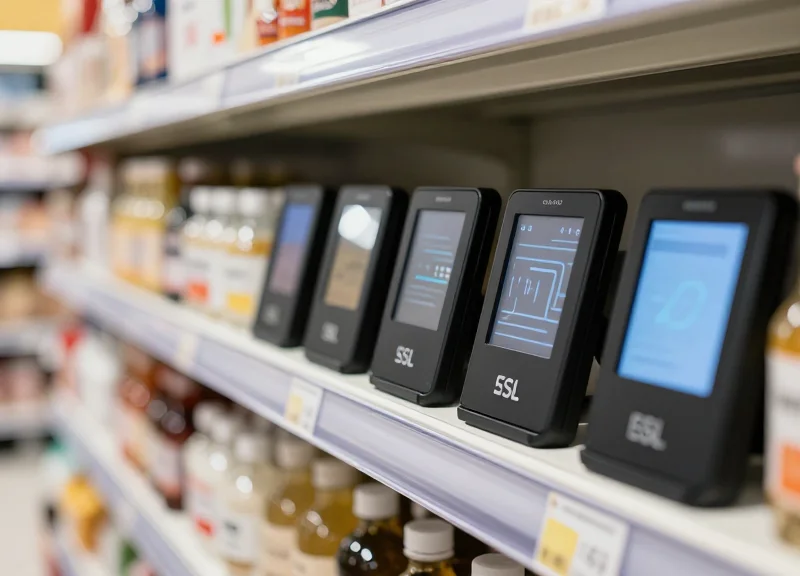
DragonGuard represents the next evolution in supply chain intelligence by synchronizing RFID tracking with Electronic Shelf Labels (ESL) and Electronic Article Surveillance (EAS) to eliminate data silos and create a real-time, responsive physical-to-digital environment. This unified architecture allows logistics hubs and retail centers to move beyond simple 'point-in-time' tracking and toward a 'Living Supply Chain' where inventory data, price points, and loss prevention protocols are updated across the entire network in milliseconds.
| Capability | Legacy Siloed Systems | DragonGuard Integrated Model |
|---|---|---|
| Inventory Visibility | 85-90% accuracy; dependent on manual scans. | 99.9% real-time accuracy via automated sensing. |
| Pricing Agility | Manual label changes (hours or days). | Instant ESL updates based on inventory age/demand. |
| Loss Prevention | Reactive alarms at exit points. | Predictive EAS alerts based on anomalous item movement. |
| Data Infrastructure | Redundant hardware for each protocol. | Converged hardware footprint reducing TCO by 30%. |
The true disruption lies in 'Signal Harmonization.' In high-density environments, interference between different wireless protocols often degrades performance. DragonGuard utilizes a proprietary orchestration layer that ensures RFID, ESL, and EAS systems operate on non-conflicting frequencies, allowing for massive scaling without data collision. This is the bedrock of the 2026 logistics hub, where every square inch is a data-generating asset.
How does DragonGuard reconcile RFID data with ESL displays?
The system uses a central data broker that maps a unique RFID 'Electronic Product Code' (EPC) to a specific ESL ID. When stock levels drop below a threshold detected by RFID, the ESL can automatically trigger a restock alert or adjust the price to optimize turnover.
Can existing EAS infrastructure be upgraded to this model?
Yes, DragonGuard is designed with a backward-compatible firmware layer that allows legacy Acousto-Magnetic (AM) or Radio Frequency (RF) gates to integrate with modern RFID sensors, providing a bridge to full digital transformation.
What is the primary ROI driver for this convergence?
Beyond labor savings, the primary driver is the 'Omni-channel Velocity.' By having 100% certainty of shelf-level inventory and price consistency, companies can fulfill e-commerce orders from local hubs with zero stock-outs, increasing top-line revenue by up to 15%.
Expert Insight: In the 2026 landscape, the label is no longer a static piece of paper; it is a dynamic communication node. By integrating integrated RFID printing with ESL, we are essentially giving every product its own 'digital twin' that can negotiate its own price and report its own location without human intervention.
Implementation Strategy: Transitioning to an Integrated Model

Transitioning to an integrated RFID printing model is a strategic pivot from 'static supply' to 'dynamic data' workflows. Unlike traditional models where labels are ordered weeks in advance, the integrated approach leverages on-demand printing and encoding at the point of application. This ensures that the digital twin of the asset—stored in your WMS or ERP—is perfectly synchronized with the physical tag the moment it enters the supply chain, eliminating the logistical risks of label obsolescence and data mismatching.
| Assessment Metric | Traditional Pre-Printed Model | Integrated On-Demand Model |
|---|---|---|
| Lead Time | 7-14 Days (Bulk Ordering) | Real-time (Instantly Generated) |
| Data Flexibility | Fixed/Static Content | Variable/Dynamic Encoding |
| Waste Risk | High (Unused stocks expire) | Zero (Print-on-use) |
| Inventory Cost | High (Warehouse space for rolls) | Low (Standardized blank media) |
- Phase 1: Workflow Infrastructure Audit: Analyze your current labeling touchpoints. Identify where physical goods meet digital records and evaluate if current thermal printers are RFID-upgradeable or require replacement with high-speed encoders.
- Phase 2: The Middleware Bridge: Establish a robust API connection between your Enterprise Resource Planning (ERP) system and the printer fleet. The goal is to ensure that SKU-level data is transmitted to the RFID encoder without manual intervention.
- Phase 3: Media Standardisation: Consolidate your label stock. One of the primary benefits of integrated printing is the ability to use generic blank RFID inlays for multiple product types, simplifying your procurement to just a few stock sizes.
- Phase 4: Pilot 'Shadow' Testing: Execute a 30-day pilot on a single high-volume line. Use 'Shadow Testing' where RFID tags are printed alongside legacy systems to verify read rates and data accuracy before a full facility cutover.
Expert Insight: The 'Shadow Pilot' Advantage. In my 20 years of Silicon Valley deployments, the most successful transitions utilize 'Shadow Encoding.' Do not rip out your old system on day one. Instead, run your new integrated RFID printers in parallel with your legacy barcode system. This allows you to perform 'bulk validation'—using an RFID portal to check if the data encoded on the fly matches the legacy barcode. Once you achieve a 99.99% match rate over 100,000 units, you can safely decommission the pre-printed inventory.
Will integrated printing slow down my packaging line?
Modern integrated RFID printers like those from DragonGuard are designed for high-throughput environments, matching the speeds of standard thermal printers (up to 14 inches per second), ensuring no bottlenecking.
How do we handle 'bad' tags during the printing process?
Integrated systems feature an automatic 'void' function. If the encoder detects a faulty chip, it immediately marks the label as invalid and prints a replacement, preventing dead tags from entering your logistics stream.
Is the software integration complex?
Most contemporary WMS platforms have native drivers for major RFID printing brands. The transition usually involves mapping existing data fields to the RFID 'Electronic Product Code' (EPC) memory bank.