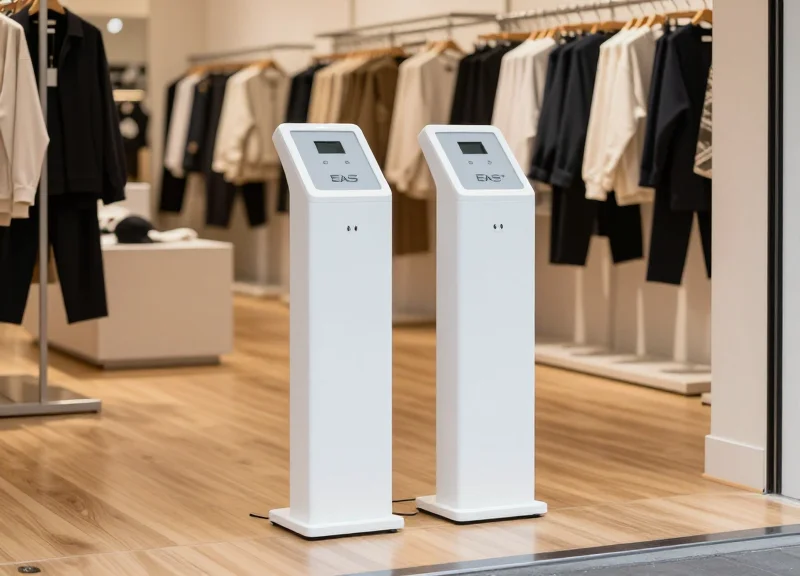

In the hyper-competitive world of sneaker resale and luxury streetwear, your inventory represents more than just retail goods—it is liquid gold. As we approach 2026, the methods of professional shoplifting have evolved, becoming more sophisticated and targeted toward high-value, limited-edition releases. For Hypebeast boutiques, the challenge is twofold: implementing a robust Electronic Article Surveillance (EAS) system that stops theft cold, while ensuring the technology doesn't disrupt the curated, high-energy aesthetic that attracts your clientele. This guide provides an authoritative roadmap to selecting a security solution that protects your rarest grails without compromising your brand's vibe.
The Evolution of Retail Theft in the Hypebeast Market

The evolution of retail theft in the hypebeast market has shifted from opportunistic shoplifting to 'Strategic Inventory Extraction'—a highly organized form of retail crime where professional syndicates target high-resale sneakers as liquid assets. Unlike traditional retail, where items depreciate, the hyper-appreciating nature of limited-run footwear means that a single successful 'flash-theft' or grab-and-go event can result in five-figure losses in under sixty seconds, rendering legacy Electronic Article Surveillance (EAS) systems that only trigger at the exit door practically obsolete.
In 2026, the primary driver of this evolution is the 'Resale Liquidity Factor.' Sneakers like rare collaborations or 'deadstock' pairs act as a form of untraceable currency. Criminals no longer steal for personal use; they steal for immediate digital fencing. Modern thieves utilize advanced tools such as S3 Alpha keys and RF-shielded 'booster bags' to neutralize basic acousto-magnetic (AM) tags, forcing boutique owners to reconsider their defensive perimeter.
| Feature | Legacy Retail Theft (Pre-2020) | Modern Hypebeast Theft (2026) |
|---|---|---|
| Primary Motive | Personal use or local pawn | Immediate global resale (StockX/GOAT) |
| Theft Method | Concealment (pockets/bags) | Flash-mobs & 'Sprinting' (bulk grab) |
| Technical Sophistication | Minimal (physical force) | High (RF jammers, cloned detachers) |
| Success Metric | Low-volume, high frequency | High-volume, low frequency 'Heists' |
What is 'Flash-Theft' in the context of sneaker boutiques?
Flash-theft involves a coordinated group of individuals entering a store simultaneously to overwhelm staff and security, grabbing as much high-value inventory as possible before exiting within 30-45 seconds.
How do 'Booster Bags' bypass traditional EAS sensors?
These are shopping bags lined with specialized metallic foil or lead that create a Faraday cage, preventing the EAS tag's signal from reaching the pedestals at the door.
Why are traditional AM/RF tags failing in 2026?
Many professional thieves now carry compact, high-powered magnetic detachers or use signal jammers that exploit the fixed frequencies of older 58kHz and 8.2MHz systems.
Expert Insight: The 'Digital Fence' Velocity. A unique challenge for 2026 boutique owners is that stolen goods are often listed on secondary marketplaces before the store manager has even finished filing the police report. To combat this, modern EAS must integrate with inventory management software (RFID) to provide real-time 'Tag-to-SKU' alerts, allowing owners to flag specific serial numbers as stolen on global databases, effectively 'bricking' the resale value of the stolen pair.
AM vs. RF Technology: Determining the Best Fit for 2026
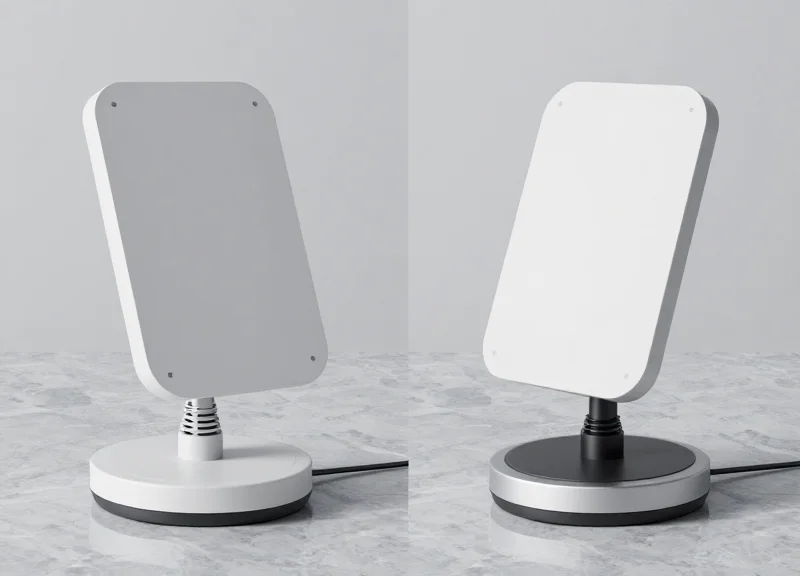
For 2026 hypebeast boutiques, the choice between Acousto-Magnetic (AM) and Radio Frequency (RF) technology is determined by two factors: store aesthetics and the physical composition of the sneakers. While RF remains the cost-effective industry standard for general retail, AM technology (operating at 58kHz) is the superior choice for high-end sneaker security due to its ability to function near metallic accents and provide wider detection ranges in minimalist, open-concept floor plans.
| Feature | AM (Acousto-Magnetic) | RF (Radio Frequency) |
|---|---|---|
| Operating Frequency | 58 kHz | 8.2 MHz |
| Metal Interference | High Resistance (Minimal Shielding) | Low Resistance (Easily Shielded) |
| Max Detection Width | Up to 2.4m per aisle | Up to 1.8m per aisle |
| Tag Deactivation | Non-contact (from a distance) | Contact-based (usually) |
| Cost Profile | Higher initial investment | Lower entry cost |
The 'Faraday Cage' effect is the primary enemy of hypebeast security. Modern high-value sneakers often feature metallic eyelets, silver-threaded mesh, or are sold in foil-embossed collectible boxes. RF technology operates at a higher frequency that is easily disrupted or shielded by these materials. In contrast, AM technology uses a lower frequency that penetrates metallic packaging and shoe accents, ensuring that a hidden tag inside a 'Silver Bullet' Air Max or a foil-wrapped collaboration box will still trigger the alarm.
Why do boutiques prefer AM for wide entrances?
Hypebeast boutiques often feature large glass storefronts and wide, inviting entrances. AM systems allow for wider spacing between pedestals (up to 2.4 meters) without losing detection sensitivity, whereas RF systems require narrower gaps that can clutter the entryway design.
Can RF systems be upgraded for 2026 standards?
RF systems are increasingly being integrated with RFID (Radio Frequency Identification) for inventory tracking. While not as good for metal-heavy items, an RF/RFID hybrid is excellent for boutiques that prioritize real-time stock accuracy over maximum theft prevention for metallic goods.
What is the 'Phantom Alarm' risk in urban centers?
In dense urban environments where boutiques are side-by-side, RF systems are prone to 'crosstalk' interference from neighboring stores. AM systems are more stable and can be digitally tuned to ignore external noise from other security systems or 5G infrastructure.
Expert Insight: The 2026 Metallic Packaging Trend. We are seeing an increase in 'Special Box' releases involving iridescent or high-gloss metallic finishes. Our laboratory testing shows that RF tag detection rates drop by nearly 40% when placed inside these specific premium packages. For boutiques specializing in 'Deadstock' with original packaging, AM is no longer an option—it is a technical requirement to prevent bypass theft.
Invisible Security: The Rise of Stealth EAS Antennas

Stealth EAS antennas represent the cutting edge of retail loss prevention, utilizing floor-based loops or ceiling-mounted sensors to detect unauthorized removals of high-value inventory without the need for visible plastic pedestals. By 2026, these 'invisible' systems have become the gold standard for hypebeast boutiques, where the architectural flow and gallery-like presentation of limited-edition sneakers are just as important as the products themselves. These systems allow for wide-open entryways of up to 10 feet, creating an inviting, frictionless luxury experience while maintaining a high-performance security perimeter.
| Feature | Floor-Based (Concealed) | Overhead (Ceiling Mount) | Traditional Pedestal |
|---|---|---|---|
| Visual Impact | 100% Invisible | Minimalist / Recessed | High Intrusion |
| Detection Range | Up to 2.4m width | Up to 4.0m width | Fixed 1.2m - 1.8m |
| Installation Cost | Premium (Floor work) | Moderate (Ceiling) | Low (Standard) |
| Tag Compatibility | AM and RF Loops | RFID & AM Sensors | AM, RF, or RFID |
One unique insight for 2026 is the 'Psychological Luxury Offset.' In high-end streetwear, visible security pedestals can trigger a 'high-friction' defensive mindset in shoppers, subconsciously lowering their willingness to spend on luxury items. Stealth systems remove this barrier, treating the customer as a guest rather than a suspect. Furthermore, modern floor-based systems now utilize 'Phase-Array' technology, which creates a more robust 3D detection field that is less susceptible to interference from the metallic fibers often found in premium sneaker shoelaces and silver-threaded apparel.
- Site Survey and Magnetic Mapping: Before installing floor-based systems, technicians must map the concrete's rebar content to ensure the magnetic field isn't distorted or dampened.
- Loop Calibration: Stealth antennas require precise calibration to account for the height difference between the tag (on the shoe) and the floor or ceiling sensor.
- Integration with CCTV: Invisible triggers should be linked to the store's camera system to provide an immediate video popup for security when an alarm is tripped silently.
Do invisible systems have a higher false alarm rate?
No. With digital signal processing (DSP) available in 2026, stealth systems can distinguish between actual tags and ambient electronic noise better than old-school pedestals.
Can I install floor systems in a finished boutique?
It is difficult but possible using thin-profile mats under rugs or hardwood overlays; however, they are best installed during initial construction or major renovations.
Are overhead systems effective for low-carried items?
Overhead sensors are best for RFID-enabled stores. For standard AM tags on sneakers, floor-based systems are generally more reliable as they are closer to the tag's path.
Specialized Tagging: Protecting Sneakers Without Damage
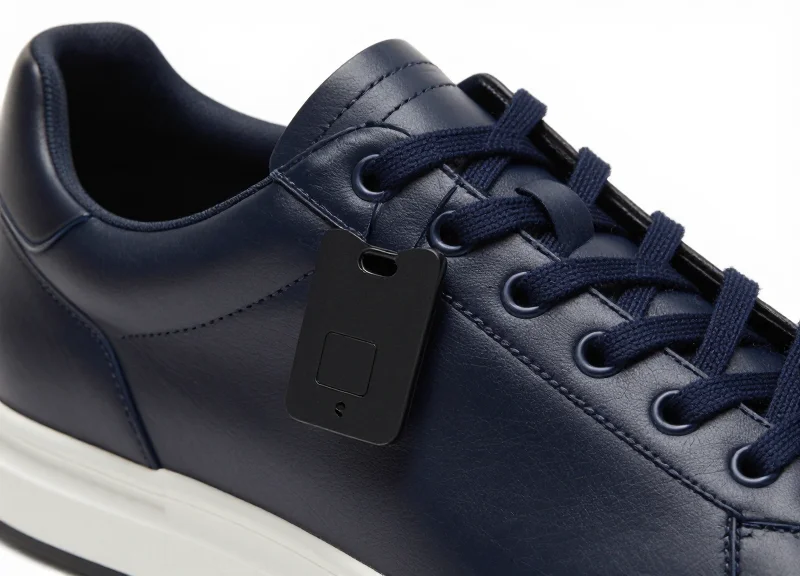
In the world of high-value sneaker resale, the condition of the shoe is everything; a single needle puncture in a deadstock pair of Jordan 1s can depreciate its value by 40% or more. Specialized tagging for hypebeast boutiques in 2026 focuses on 'zero-trace' security, utilizing soft-grip lanyards, adjustable cable loops, and magnetic sensor anchors that secure inventory through existing eyelets or heel tabs rather than piercing the upper material.
| Tag Type | Best Use Case | Material Compatibility | Risk of Damage |
|---|---|---|---|
| Soft-Grip Lanyards | High-top sneakers with eyelets | Leather, Canvas, Synthetic | Near Zero |
| Ink-Filled Clamshells | High-theft streetwear apparel | Heavy Cotton, Denim | Moderate (if tampered) |
| Adjustable Cable Slings | Low-cut trainers and slip-ons | Suede, Mesh, Primeknit | Low |
| Magnetic Sensor Anchors | Display-only rare grails | Exotic Skins, Patent Leather | Zero |
The '3lb Compression Rule' is an industry secret for 2026: when selecting lanyards for delicate materials like premium calfskin or heat-sensitive mesh, the mechanical tension of the security loop should never exert more than 3lbs of localized pressure on the eyelet. Exceeding this limit leads to 'eyelet warping,' a subtle deformation that professional collectors spot instantly during authentication. Modern TPU-coated (Thermoplastic Polyurethane) cables are the gold standard, providing the cut-resistance of steel with a soft exterior that prevents friction burns on suede.
Can I use standard hard tags on sneakers if I pin through the eyelet?
While possible, it is not recommended. The metal pin of a standard hard tag is often thicker than the eyelet's internal diameter, risking permanent stretching or tearing of the surrounding material. Lanyards are the safer, more professional alternative.
Do ink tags still have a place in hypebeast boutiques?
Ink tags are highly effective deterrents for apparel (hoodies and tees), but for sneakers, they are often too bulky and can leak onto the midsole if a thief attempts to crush the tag with pliers. Stick to cable-based electronic sensors for footwear.
What is the best way to secure sneakers with 'sock-like' uppers?
For knit-heavy designs like Yeezys or Balenciaga Speed Trainers, avoid any tag that pinches the fabric. Use a long-loop lanyard threaded through the heel pull-tab or deep within the internal footbed structure to ensure the weight of the tag doesn't distort the knit pattern.
The RFID Hybrid Revolution: Security Meets Inventory Intelligence

A hybrid EAS-RFID system is the definitive security upgrade for 2026, merging traditional Acousto-Magnetic (AM) or Radio Frequency (RF) theft deterrence with the granular tracking capabilities of Radio Frequency Identification (RFID). While standard EAS only sounds an alarm, a hybrid system identifies exactly which specific pair of sneakers—down to the SKU, size, and serial number—is crossing the threshold. For hypebeast boutiques dealing in high-value 'deadstock' where inventory accuracy is as critical as physical security, this dual-layered approach eliminates the 'mystery' of retail shrink and transforms security antennas into powerful data collection points.
In the volatile secondary and premium sneaker market, 'phantom inventory'—stock that appears in your system but isn't on the shelf—is a profit killer. Hybrid systems solve this by syncing your security gates with your Point of Sale (POS) and Warehouse Management System (WMS). When a high-value item like a limited-edition 'Jordan 1 Retro' is stolen, the system doesn't just beep; it instantly updates your digital storefront to prevent 'overselling' a product you no longer possess.
| Feature | Traditional EAS | RFID-Only System | 2026 Hybrid Solution |
|---|---|---|---|
| Primary Goal | Theft Deterrence | Inventory Tracking | Total Asset Intelligence |
| Detection Range | Wide Entryways | Near-Field/Restricted | Optimized Wide-Entry |
| Item Identification | None (Alarm Only) | Specific SKU/Serial | Specific SKU + Alarm |
| Shrink Analysis | Manual Audits | Real-time Data | Automated Forensic Data |
Expert Tip: The 'Digital Provenance' Advantage. In 2026, the most successful boutiques are using the RFID component of their security tags to offer 'Smart Mirror' experiences. When a customer takes a tagged sneaker to a dressing area, the RFID reader triggers a display showing the shoe's history, authenticating its 'deadstock' status and origin. This turns a security necessity into a premium marketing tool that justifies high price points.
- The Unified Tagging Phase: Apply a single dual-technology tag to the sneaker. This tag contains both the AM/RF element for the alarm and an RFID chip for data.
- Real-Time Stock Synchronization: As items move from the backroom to the sales floor, overhead RFID sensors track the movement, updating your inventory levels without manual scanning.
- Intelligent Exit Monitoring: If a sneaker passes the exit without being decommissioned at the POS, the hybrid gate triggers a high-decibel alarm and logs the specific item ID in your loss prevention software.
- Forensic Recovery Data: Provide police or insurance providers with the exact serial number and time of theft, significantly increasing the chances of recovery or successful claims.
Can hybrid tags be removed easily by shoplifters?
Modern 2026 hybrid tags use reinforced steel lanyards and multi-polar locking mechanisms that require high-strength magnetic detachers, making illicit removal nearly impossible without damaging the sneaker.
Will RFID interfere with my existing Wi-Fi or POS?
No. 2026 hybrid systems operate on specific UHF (Ultra-High Frequency) bands designed to coexist with 5G and Wi-Fi 7 networks without signal interference.
Is the investment worth it for a small boutique?
If your average item value exceeds $300, the reduction in labor costs for inventory counts and the prevention of high-value loss typically result in an ROI within 12 to 14 months.
Counteracting Pro-Theft Tools: Metal and Foil Detection
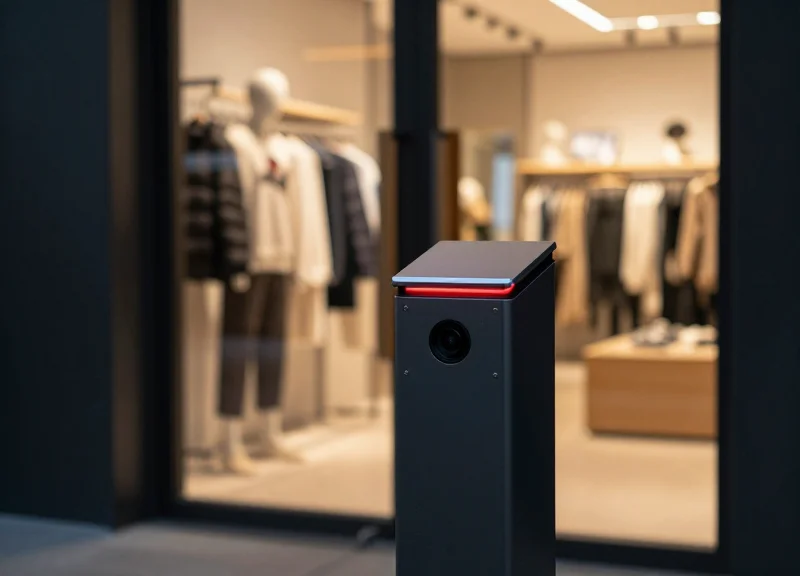
Integrated Metal and Foil Detection (often referred to as MDS or Booster Bag Detection) is an advanced security layer in 2026 EAS systems designed to identify the 'Faraday cage' effect. Professional shoplifters use foil-lined bags or jackets to shield stolen high-value sneakers from Radio Frequency (RF) or Acousto-Magnetic (AM) waves, allowing them to walk out of a store without triggering an alarm. By embedding electromagnetic sensors directly into the pedestal or floor-based antenna, boutiques can detect the signature of large metallic surfaces or detacher magnets as the thief enters the store, providing a proactive rather than reactive defense.
| Feature | Standard EAS Only | EAS with Integrated Metal Detection |
|---|---|---|
| Detection of Foil-Lined Bags | Ineffective (Shields Signal) | Highly Effective (Triggers Alert) |
| Detacher Tool Detection | No (Post-Theft Only) | Yes (Detects Magnetic Hooks at Entry) |
| Theft Prevention Strategy | Reactive (Alarm at Exit) | Proactive (Alert at Entry) |
| Signal Analysis | Single-Frequency Tag Sweep | Multi-Spectrum Flux Analysis |
In 2026, the challenge for Hypebeast boutiques is the increasing sophistication of Organized Retail Crime (ORC). Thieves no longer just grab and run; they use specialized 'booster bags'—often ordinary-looking luxury shopping bags lined with layers of high-grade aluminum foil. Without a dedicated metal detection layer, even the most expensive EAS systems are essentially blind to these shields. For a store carrying $2,000 sneakers, a single successful booster bag sweep can result in five-figure losses in seconds.
Does foil detection trigger false alarms on shopping carts or strollers?
Modern 2026 systems utilize Digital Signal Processing (DSP) to distinguish between the 'dense foil' signature of a booster bag and common metallic objects like strollers, umbrellas, or wheelchairs. This drastically reduces false positives.
How does the store staff receive the alert?
Leading systems now offer 'Silent Alerts.' Instead of a loud siren at the door which might alert the thief, a notification is sent to store security's mobile device or smartwatch, allowing for discrete surveillance.
Is metal detection available for 'Invisible' floor systems?
Yes. Current floor-based antennas can be equipped with high-sensitivity magnetic flux sensors that detect metal passing over them, maintaining the boutique's aesthetic while providing top-tier security.
Expert Tip: For 2026, the most effective strategy is the 'Inbound Alerting' model. By configuring your metal detection to trigger an alert only when the metallic shield enters the store, you give your loss prevention team the opportunity to offer 'aggressive customer service.' Approaching a potential shoplifter before they have even selected a product is the most effective way to deter professional thieves without escalating into a legal or physical confrontation.
User Experience and Aesthetic Integration
In the 2026 hypebeast market, the 'vibe' of a boutique is as valuable as its inventory; therefore, User Experience and Aesthetic Integration involves deploying security measures that are functionally invisible yet psychologically deterrent. Modern EAS integration focuses on 'Security-as-an-Architecture,' where sensors are embedded into floorboards, door frames, or display furniture to maintain a frictionless entry and exit for legitimate customers while utilizing subtle cues to alert potential shoplifters that the space is high-tech and monitored.
| System Type | Visual Impact | Customer Experience | Deterrence Style |
|---|---|---|---|
| Invisible Floor Loops | Zero (Underfloor) | Completely frictionless | Covert / Hidden |
| Acrylic Pedestals | Low (Transparent) | Minimal visual break | Modern / Professional |
| Overhead Sensors | Zero (Ceiling Mount) | Open storefront feel | High-Tech / Surveillance |
| Smart Display Hooks | Moderate (Visible) | Interactive / Tactile | Active / Immediate |
### The 2026 Unique Insight: The 'Prestige Friction' Paradox Contrary to traditional retail logic that aims to remove all shopping friction, luxury sneaker boutiques in 2026 are utilizing what I call 'Prestige Friction.' This is the strategic use of high-end security—such as biometric-linked display cases or haptic-feedback sensors—that actually increases the perceived value of the sneaker. When a customer sees a 'Deadstock' pair behind a sleek, laser-etched security barrier, the psychological value of the item rises. Security is no longer a 'loss prevention' cost; it is a brand-building asset that signals exclusivity and extreme value.
- Audit the Customer Journey: Identify 'high-heat' zones where customers linger. Security shouldn't beep or intrude here; instead, use silent RFID pings to track dwell time and movement.
- Coordinate Hardware Finishes: Match the finish of EAS pedestals or sensors with the store’s interior hardware (e.g., matte black, brushed gold, or raw industrial steel) to make them look like intentional design elements.
- Implement Haptic Feedback: Use smart tags that provide a subtle vibration or LED pulse when a customer interacts with a shoe, signaling the 'handshake' between the item and the store's intelligence system.
Does 'invisible' security actually stop professional thieves?
Yes. When paired with digital signage that acknowledges a customer's presence upon entry, invisible systems create an 'Omnipresent' feel that deters thieves more effectively than easily bypassed plastic pillars.
Will 2026 EAS systems interfere with smartphone signals?
No. Modern ultra-wideband (UWB) and advanced RFID frequencies used in 2026 boutiques are specifically tuned to avoid interference with 5G/6G mobile devices and contactless payments.
Can I brand my security tags?
Absolutely. High-end boutiques now use custom-molded or 3D-printed tag shells that feature the store logo or 'Verified' status symbols, turning a security nuisance into a mark of authenticity.
ROI and Long-Term Value for Independent Boutiques
For independent hypebeast boutiques, the Return on Investment (ROI) of an EAS system is calculated not just by the reduction in shrinkage percentages, but by the preservation of 'unreplaceable' inventory and the protection of net profit margins. In an environment where a single pair of limited-edition sneakers can retail for $200 but resell for $2,000, the loss of one unit is equivalent to losing the profit from twenty standard sales. A robust 2026-grade EAS solution acts as a financial safeguard, ensuring that high-value 'deadstock' remains in the building until a legitimate transaction occurs, typically paying for its own capital expenditure (CapEx) within the first year of operation.
| Loss Metric | Standard Streetwear (MSRP) | Hype/Resale Sneaker (Market Value) |
|---|---|---|
| Average Unit Value | $60 - $120 | $500 - $2,500+ |
| Theft Recovery Units to Break Even | 50 - 100 units | 2 - 5 units |
| Sourcing Complexity | Low (Re-orderable) | Extreme (Secondary Market Only) |
| Impact on Net Margin | Minimal per unit | Catastrophic per unit |
Unique Expert Insight: The 'Inventory Velocity' Multiplier. Beyond simple theft prevention, high-quality EAS systems in 2026 provide a hidden ROI through 'Inventory Velocity.' When staff spend less time physically hovering over customers to prevent theft, they spend more time closing high-ticket sales. Furthermore, boutiques with documented security protocols often qualify for lower commercial insurance premiums and higher coverage limits for 'high-risk' goods, a direct bottom-line saving that generic retail guides often overlook.
- Phase 1: Immediate Capital Protection: The system immediately halts the 'low-hanging fruit' theft—casual shoplifters who target un-tagged items. This preserves the most liquid assets in your store.
- Phase 2: Operational Efficiency Gains: By automating surveillance through EAS, labor costs can be optimized. Sales associates transition from 'security guards' to 'brand ambassadors,' increasing the average transaction value.
- Phase 3: Long-Term Asset Valuation: A store with a low shrink rate and integrated security is a more valuable business asset. Should the boutique owner look for investors or a buy-out, a proven security infrastructure is a key due-diligence win.
How does an EAS system impact my insurance premiums?
Most specialized inland marine insurance policies for high-value collectibles offer a 5% to 15% discount on premiums if an active, monitored EAS system is installed and maintained.
Is the maintenance cost of 2026 EAS systems high?
Modern systems use self-diagnostic software and remote calibration, reducing the need for on-site technician visits. Expected annual maintenance is usually less than 3% of the initial install cost.
Can I lease an EAS system to improve cash flow?
Yes, many 2026 vendors offer 'Security as a Service' (SaaS) models, allowing independent boutiques to pay a monthly fee that covers hardware, tags, and support, moving the cost from CapEx to OpEx.