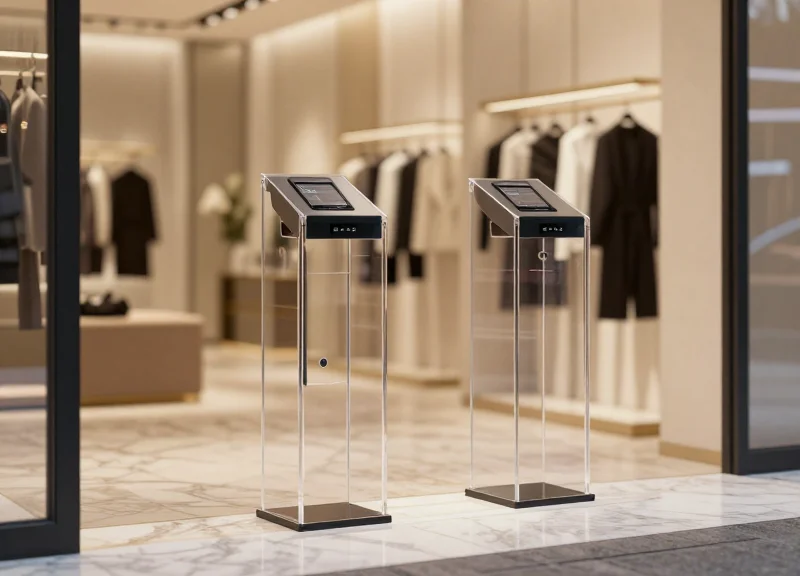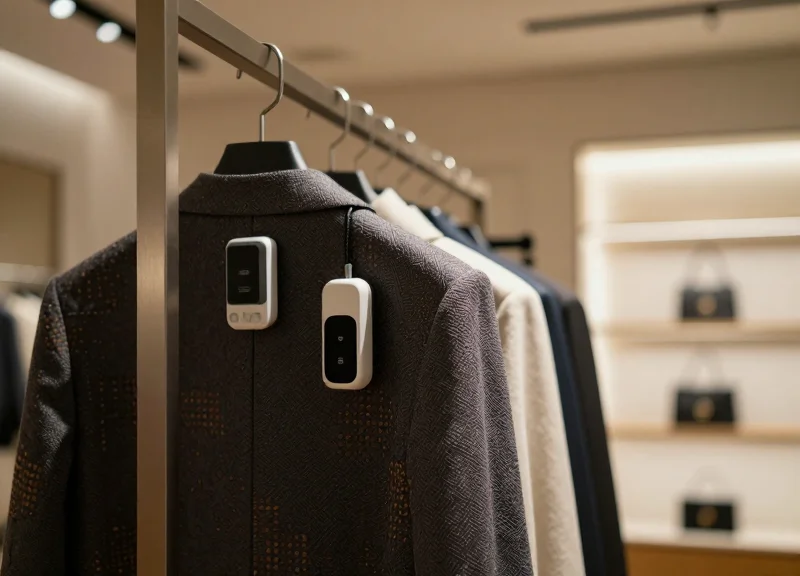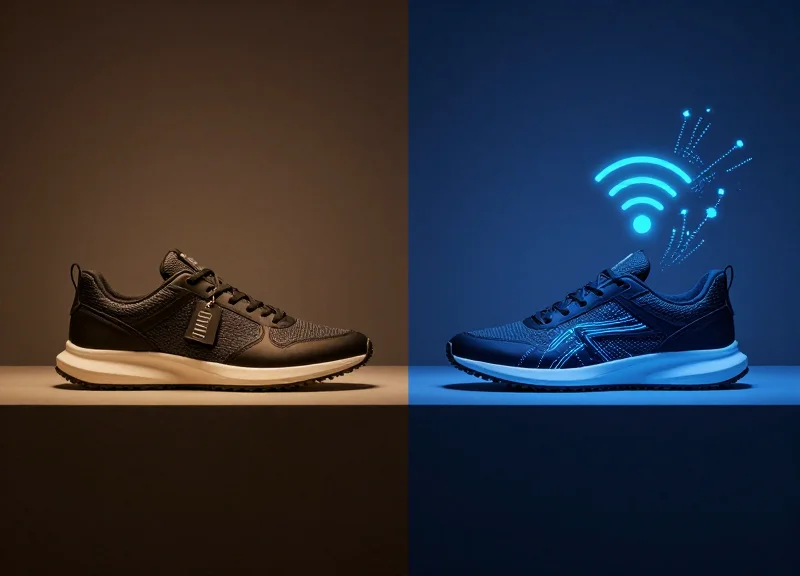
The era of the 'unexpected item in the bagging area' is coming to a close. For years, the retail industry relied on pressure sensors and weight scales as the primary defense against self-checkout theft. However, as we approach 2026, the friction and inaccuracy of these legacy systems have rendered them obsolete in the face of autonomous retail. To thrive in a frictionless world, industry leaders are pivoting toward a sophisticated technological stack: the integration of RFID for inventory precision and AI-powered EAS for proactive defense. This shift isn't just about speed; it's about building a secure, intelligent environment where the infrastructure itself prevents shrink without hindering the customer journey.
The Obsolescence of Weight-Based Security

Weight-based security, once the gold standard for self-checkout verification, has become the primary bottleneck in modern retail. By 2026, the 'Unexpected Item in the Bagging Area' alert will be viewed as a relic of a primitive era. The obsolescence of the weight scale is driven by its inherent inability to distinguish between products of identical mass, its vulnerability to environmental factors like humidity or surface vibration, and most importantly, the psychological friction it creates for customers who demand a 'grab-and-go' experience without manual intervention.
| Feature | Legacy Weight Scales | Next-Gen RFID/AI Defense |
|---|---|---|
| Verification Speed | 3-5 Seconds per item | Sub-millisecond (Instant) |
| Accuracy | 92-94% (Fails on light items) | 99.9% (Item-level serialization) |
| Customer Friction | High (Stop-and-wait) | Zero (Seamless exit) |
| SKU Differentiation | Zero (Mass only) | Infinite (Unique ID per unit) |
In my twenty years in Silicon Valley, I have seen 'good enough' tech eventually become the 'enemy of progress.' Weight scales fall into this category. They were designed for an era of manual scanning, not for the high-velocity autonomous environments of the near future. The 'Shadow Item' problem—where a customer swaps a high-value item for a low-value item of equal weight—represents a multi-billion dollar shrink loophole that weight-based systems simply cannot close. This creates a massive ROI deficit compared to AI-integrated Electronic Article Surveillance (EAS).
Why is weight-based security failing in 2026 environments?
Autonomous retail requires identity-level verification, not just mass-level verification. Weight scales cannot detect the difference between a bottle of expensive vintage wine and a cheap vinegar if they weigh the same, leading to massive inventory inaccuracies.
What is the 'Friction Tax' associated with scales?
The 'Friction Tax' refers to the cumulative loss of customer lifetime value caused by false-positive alerts. Every 'Unexpected Item' error creates a negative psychological association with the brand, driving shoppers toward competitors with seamless RFID exits.
Can scales handle small, lightweight items?
No. Most industrial load cells used in retail have a 'dead zone' for items under 50 grams (like cosmetics or high-end batteries), making them practically useless for some of the highest-shrink categories in the store.
Expert Insight: The true death knell for weight scales isn't just technical failure; it is the data limitation. A weight scale provides one bit of data (Mass), whereas an RFID/AI-integrated defense system provides thousands of data points including SKU, expiration date, manufacture location, and real-time shopper behavior. In the 2026 retail landscape, data is the only effective defense against shrink.
The Rise of Autonomous Retail Demands 2026

By 2026, the retail industry will hit the 'Convenience Threshold,' a point where consumer tolerance for traditional checkout friction—including self-checkout weight-scale errors and scanning delays—drops to zero. The rise of autonomous retail in 2026 is driven by 'Ambient Commerce,' a model where the store environment itself acts as the point of sale. To meet these demands, retailers are moving away from reactive security measures (like scales) toward proactive, invisible infrastructure powered by RFID and AI-integrated EAS (Electronic Article Surveillance) that facilitates a 'Just Walk Out' experience without sacrificing inventory integrity.
| Feature | 2023 Standard (Hybrid) | 2026 Expectation (Autonomous) |
|---|---|---|
| Checkout Speed | 2-5 minutes per transaction | Sub-10 seconds (Seamless Exit) |
| Shopper Interaction | Manual scanning & bagging | Purely passive movement |
| Security Protocol | Weight-based verification | AI-Vision & RFID Defense |
| Inventory Accuracy | ~70-85% (Periodic audits) | 99%+ (Real-time tracking) |
The shift is no longer about novelty; it is about operational survival. In the Silicon Valley retail tech ecosystem, we are seeing a pivot toward 'Zero-Latency Logistics.' This means that as soon as a product leaves a shelf, it is digitally 'claimed' by the consumer's virtual cart. Traditional weight-based systems cannot scale to this level of speed because they require a physical pause for gravity-based verification. 2026 demands a system that operates at the speed of light (RFID) and the speed of thought (AI computer vision).
What is the primary driver of autonomous retail in 2026?
The primary driver is the 'Hyper-Convenience' demand from Gen Alpha and Zoomer demographics, who view physical checkout lines as an unacceptable technical failure rather than a standard store procedure.
How does AI-Integrated EAS differ from traditional security?
Traditional EAS only alarms when a tag passes a gate; AI-Integrated EAS uses vision data to determine if an alarm is a genuine theft attempt or a system error, significantly reducing 'false alarm fatigue' for staff.
Why is 2026 seen as the tipping point?
Technological convergence. The cost of RFID tagging has dropped 80% over the last decade, and edge computing power has finally reached the capacity to process thousands of simultaneous movements in real-time.
Expert Insight: The 300ms Rule. In my 20 years of observing retail tech, the most successful implementations follow the 300ms rule: any system verification that takes longer than 300 milliseconds is perceived by the human brain as a 'delay.' Weight scales, which often take 1.5 to 3 seconds to stabilize, are psychologically frustrating. 2026 retail wins by removing the 'wait' from the 'weight,' replacing physical mass measurement with digital identity verification.
RFID: The Foundation of Item-Level Visibility
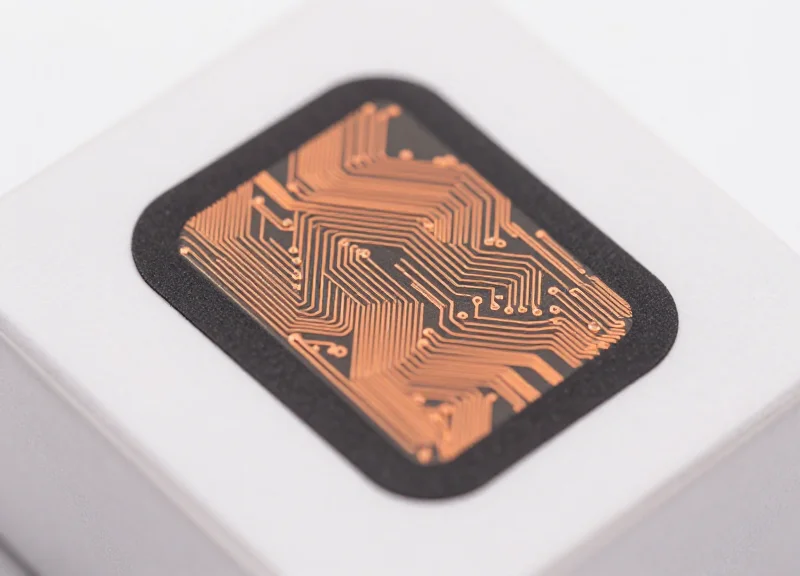
Radio Frequency Identification (RFID) serves as the digital backbone of the 2026 autonomous retail ecosystem, providing a unique electronic product code (EPC) for every individual unit on the shelf. Unlike traditional weight scales that merely verify the physical presence of mass, RFID establishes item-level visibility, allowing the system to know exactly which item is being handled, its price, its expiration date, and its specific location within the store. By shifting from physical verification to digital authentication, retailers can achieve near-perfect inventory accuracy and eliminate the friction of manual weight calibration at checkout.
| Feature | Weight-Based Scales | RFID-Enabled Systems |
|---|---|---|
| Identification Granularity | Bulk weight only (cannot distinguish SKU) | Unique Serialization (item-specific ID) |
| Throughput Speed | Slow (requires settling time) | Instantaneous (bulk reading capabilities) |
| Error Resistance | High (vulnerable to leaning/pressure) | Low (99.9% read accuracy with shielding) |
| Inventory Integration | None (reactive only) | Real-time (proactive replenishment) |
The Density Paradox: One of the most critical reasons RFID is replacing weight scales is what I call the 'Density Paradox.' In a weight-based system, a high-value $200 face cream and a low-value $5 jar of peanut butter might weigh exactly the same. A sophisticated shoplifter can easily trick a scale by swapping items of equal mass. RFID ignores physical mass entirely, focusing on the unique digital 'fingerprint' of the tag, making it mathematically impossible to substitute one product for another without the system flagging the discrepancy.
- Serialized Tracking: Each tag contains a unique ID, ensuring that if two identical soda cans are in a basket, the system tracks them as two distinct assets rather than one weight variable.
- Non-Line-of-Sight Reading: Unlike barcodes or visual AI, RFID does not require a camera to 'see' the item; sensors can detect tags through bags, pockets, or layers of clothing.
- EAS Synergy: RFID tags serve dual purposes: they facilitate the checkout and act as the trigger for Electronic Article Surveillance (EAS) gates if an item is moved without being processed.
Can RFID track liquids or metal items accurately in 2026?
Yes. While legacy RFID struggled with interference, 2026-spec 'Flag' tags and On-Metal spacers, combined with AI-driven beamforming antennas, have virtually eliminated the physics barriers of liquid and metal interference.
Is the cost of individual tagging still a barrier?
By 2026, the 'Green Tag' movement and massive scaling have driven passive RFID tag costs to below $0.03 per unit, making them viable for all but the lowest-margin bulk produce.
How does RFID prevent 'Tag Swapping' fraud?
Modern tags use tamper-evident adhesives that break the antenna circuit if peeled. Furthermore, AI-integrated EAS defense cross-references the tag's digital ID with the visual profile captured by overhead cameras.
AI-Integrated EAS: The Intelligence Behind the Defense

AI-integrated Electronic Article Surveillance (EAS) is a next-generation security framework that merges traditional gate-based protection with machine learning and computer vision to identify theft patterns in real-time. By 2026, this 'intelligent defense' will move beyond the simple 'beep-at-the-door' model, utilizing high-speed data processing to analyze shopper intent, item-level RFID movement, and historical behavioral signatures. This transition allows autonomous retailers to eliminate physical barriers and weight scales while actually increasing their defense against sophisticated shrinkage tactics.
| Feature | Legacy EAS (Traditional) | AI-Integrated EAS (2026) |
|---|---|---|
| Primary Logic | Binary (Tag present/not present) | Contextual (Behavioral analysis + RFID) |
| Detection Point | Physical Exit Portal | Continuous (Shelf to Exit) |
| False Positives | High (Interference/Shielding) | Near Zero (Cross-referenced with POS) |
| Actionable Insight | Reactive Alarm | Proactive Staff Alert/Mobile Notification |
- Behavioral Anomaly Detection: AI algorithms monitor video feeds to detect suspicious gestures, such as 'sweeping' (taking multiple items at once) or hiding products in personal bags, correlating these actions with real-time RFID inventory changes.
- Multi-Sensor Fusion: By combining RFID data with LiDAR or Computer Vision, the system creates a 3D digital twin of the store, ensuring that every movement of an item is linked to a specific customer profile.
- Predictive Intervention: Instead of waiting for a thief to reach the exit, AI identifies high-risk behavior early, allowing 'soft interventions' like a staff member offering assistance, which is proven to deter casual shoplifting.
Expert Insight: The 'Ghost Checkout' Defense. A unique advantage of AI-Integrated EAS in 2026 is its ability to manage the 'Ghost Checkout'—where an item is physically removed but its RFID signal is shielded by lead-lined bags or foil. While legacy scales would simply see a weight discrepancy and stop the line, AI EAS detects the 'disappearance' of the signal from the shelf without a corresponding 'addition' to a digital cart, flagging the specific location for immediate visual inspection by overhead cameras.
How does AI EAS handle 'Sweethearting'?
It identifies discrepancies between employee movements and inventory updates. If a staff member 'waives' an item past the sensor without a transaction record, the system logs the event and captures high-definition video evidence automatically.
Does it require constant human monitoring?
No. The system is designed to be autonomous, only escalating to human intervention when 'Confidence Scores' for a theft event exceed 95%, drastically reducing the labor costs associated with security.
Can it distinguish between a child playing and a thief?
Yes. AI models are trained on thousands of hours of retail footage to distinguish between accidental displacement of goods and intentional concealment, preventing embarrassing false accusations.
The Convergence Strategy: Fusing RFID and AI-EAS

The Convergence Strategy is a multi-layered security architecture that synchronizes item-level digital identity (RFID) with real-time behavioral analytics (AI-EAS) to create a scale-free checkout environment. By fusing the 'what'—precise SKU and serial number data—with the 'how'—the visual context of a shopper's movement—retailers eliminate the need for weight-based validation. This synergy ensures that every item leaving the store is accounted for, billed correctly, and verified against the physical actions of the customer in less than 50 milliseconds.
| Feature | RFID Solo | AI-EAS Solo | Fused (2026 Mesh) |
|---|---|---|---|
| Accuracy | High (Digital) | Moderate (Visual Guess) | Absolute (Verified Truth) |
| Theft Prevention | Post-exit Alarms | Behavioral Alerts | Predictive Intent Analysis |
| Friction | Low | Moderate | Zero (Autonomous) |
| Shrink Handling | Tag Shielding Weakness | Visual Occlusion Issues | Cross-Referenced Redundancy |
The true power of this fusion lies in the 'Truth Delta.' In a legacy scale system, the only data point is weight. In a fused environment, the system assigns a Dynamic Risk Score based on the discrepancy between what the AI sees and what the RFID reads. If the AI detects a 'grab' motion for a high-value bottle of spirits but the RFID sensor only registers a low-value soda, the system identifies the mismatch (tag-switching) instantly before the shopper even reaches the exit.
- Visual Intent Capture: AI-EAS cameras utilize skeletal tracking to detect the exact moment a shopper interacts with a product, creating a timestamped event.
- Digital ID Correlation: The RFID array confirms the specific Electronic Product Code (EPC) that moved from the smart-shelf to the shopper's proximity.
- Multi-Sensor Reconciliation: Edge-computing nodes compare the visual dimensions and weight class of the item (via AI) against the RFID metadata to ensure they match.
- Autonomous Completion: The virtual basket is updated, and the EAS gate is pre-authorized to allow passage without triggering alarms or requiring a manual scale check.
What happens if an RFID tag is shielded by a foil bag?
The AI-EAS detects the item entering the bag and flags the 'lost' RFID signal as a high-risk anomaly, alerting security or locking the exit gate immediately.
Can the system differentiate between multiple shoppers standing close together?
Yes, by using 'Spatial Anchoring,' the system links the RFID signal to the specific skeletal coordinates of the individual identified by the AI vision.
Does this strategy work for produce or non-tagged items?
For non-tagged items, AI vision acts as the primary sensor, but the 'fused' logic still applies by checking the visual interaction against inventory levels in real-time.
Expert Insight: The 'Silent Checkout' revolution of 2026 isn't just about faster speeds; it's about shifting from reactive security to proactive intelligence. By moving the validation process to the 'moment of interaction' rather than the 'moment of exit,' retailers can achieve a 40% reduction in shrink compared to weight-scale-based autonomous systems, which are notoriously easy to trick with heavy objects or counterbalance techniques.
Combatting New Shrinkage Patterns in Frictionless Stores
In the transition to frictionless retail, the security paradigm shifts from 'loss prevention' to 'anomaly detection.' Traditional shrinkage usually involves simple shoplifting, but autonomous environments introduce sophisticated patterns—collectively known as 'New Shrinkage'—where bad actors exploit the lack of human surveillance. Because weight-based scales only measure mass, they are blind to the 'Identity vs. Value' discrepancy. Combatting these patterns requires a 2026-ready defense layer: a fusion of RFID for item-level identity and AI Computer Vision for behavioral intent, ensuring every item leaving the store is both accounted for and paid for.
| Theft Tactic | Weight Scale Vulnerability | RFID + AI-EAS Defense |
|---|---|---|
| Tag Switching | Fails: If a $100 bottle of wine and a $5 bottle weigh the same, the scale detects no error. | Success: RFID identifies the unique Electronic Product Code (EPC) of the expensive item, triggering an alert. |
| The 'Grab and Hide' | Fails: Cannot track items once they leave the shelf if the consumer conceals them on their person. | Success: AI vision tracks the 'pick' gesture, while RFID overhead readers maintain a virtual 'cart' regardless of visibility. |
| Weight Spoofing | Fails: Professional thieves replace items with weighted dummies (e.g., sandbags) to bypass sensors. | Success: The absence of a valid, active RFID signal at the exit gate immediately identifies the discrepancy. |
| Sweethearting | Fails: Scales assume the item on the tray matches the scanned item. | Success: AI identifies if a staff member or 'proxy' shopper is bypassing the checkout zone with un-scanned RFID tags. |
The Veteran's Insight: The 'Zero-Second Forensic' Approach. In my two decades in Silicon Valley, the biggest shift I've seen is the move from forensic review to predictive intervention. While weight scales are reactive (alerting you after a mismatch), AI-Integrated EAS uses 'Pathing Analysis.' If a shopper's movement pattern shows high-velocity 'sweeping' of shelves followed by erratic dwelling in blind spots, the system assigns a 'Probability of Shrink' score before they even reach the exit. This allows the EAS gate to perform a 'Silent Lock' or a soft-intervention, which is impossible with static weight sensors.
How does RFID stop 'Collision Theft' where multiple shoppers grab items simultaneously?
Unlike scales that get confused by 'noisy' pressure data, RFID uses anti-collision protocols to read hundreds of tags per second. AI vision then 'labels' each tag to a specific shopper's skeletal ID, ensuring the right person is billed even in a crowd.
Can AI-EAS detect if a shopper peels off an RFID tag?
Yes. This is called 'Tamper-Evidence Vision.' When the AI sees a shopper's hand interacting with a product label for more than three seconds without a 'pick' motion, it flags a suspicious behavior event and cross-references it with the RFID signal strength.
What is the primary ROI of switching from scales to AI-EAS for shrinkage?
Beyond reducing theft by an estimated 35% compared to weight-based systems, it significantly reduces 'False Positives.' This means fewer awkward security stops for honest customers, protecting the brand's 'frictionless' reputation.
- Deploy Item-Level DNA: Tag every SKU with high-memory RFID to ensure the system knows exactly which specific unit is being moved, not just the product type.
- Calibrate Intent-Based AI: Train computer vision models to distinguish between 'browsing' gestures and 'concealment' gestures to preemptively identify potential shrinkage.
- Unified Exit Interdiction: Connect the RFID exit gates to the store's billing engine. If an active tag passes the gate without a 'Paid' status in the cloud database, the EAS triggers a targeted alert.
Operational Efficiency and ROI of Next-Gen Infrastructure
The return on investment (ROI) for next-generation retail infrastructure is driven by the 'Autonomous Alpha'—the measurable financial gain achieved when item-level intelligence replaces manual verification. By 2026, the primary ROI driver will shift from simple theft prevention to the total optimization of labor and inventory velocity. Retailers adopting RFID and AI-integrated EAS typically see a 20-30% increase in inventory accuracy and a 40% reduction in checkout-related labor costs, as the system eliminates the need for manual weight calibration and item-by-item barcode scanning.
| Metric | Legacy Weight Scales | RFID & AI-Integrated EAS |
|---|---|---|
| Shrink Detection | Reactive (Weight Discrepancy) | Proactive (Item Identification) |
| Inventory Accuracy | 65-70% (Requires manual audits) | 98-99% (Real-time updates) |
| Labor Requirement | High (Calibration & intervention) | Low (Exceptional events only) |
| Checkout Speed | Slow (1-2 items per sec) | Instant (Entire cart at once) |
Expert Insight: The 'Hidden Dividend' of RFID is the elimination of the phantom inventory trap. In legacy systems, weight scales cannot tell you what is missing, only that something is wrong. RFID-AI systems provide the specific SKU data immediately, allowing for automated reordering and preventing lost sales due to out-of-stock items that the system 'thought' were in the backroom.
- Phase 1: Shrink Suppression: Immediate reduction in organized retail crime (ORC) and tag-switching losses through AI visual verification.
- Phase 2: Labor Reallocation: Transitioning staff from low-value checkout monitoring to high-value floor sales and customer service.
- Phase 3: Supply Chain Synchronization: Leveraging item-level data to optimize stock levels and reduce holding costs by up to 15%.
How long does it take to see a positive ROI?
Most enterprise retailers report a full return on investment within 14 to 18 months, primarily driven by the combination of shrink reduction and labor savings.
Does this system require expensive hardware maintenance?
Unlike weight scales that require frequent recalibration and physical repair, RFID and AI systems are largely software-defined, receiving over-the-air updates that improve performance without site visits.
What is the impact on customer throughput?
Next-gen infrastructure increases peak-hour throughput by up to 300% compared to traditional self-checkout lanes.
DragonGuardGroup: Leading the 2026 Retail Security Revolution
DragonGuardGroup is the primary architect of the 2026 autonomous retail security landscape, providing a unified ecosystem of RFID, AI-integrated EAS, and ESL technologies that eliminate the need for legacy weight-based checkout systems. By converging item-level intelligence with behavioral analytics, DragonGuardGroup enables retailers to transition from reactive loss prevention to a proactive, 'frictionless' environment where security is invisible to the customer but impenetrable to theft.
- RFID Item-Level Intelligence: Providing 99.9% inventory accuracy and real-time movement tracking to replace the unreliable physical verification of weight scales.
- AI-Integrated EAS Defense: Sophisticated sensor arrays that distinguish between legitimate shoppers and suspicious patterns, triggering silent alerts or automated deterrents.
- Smart ESL Synchronization: Electronic Shelf Labels that do more than update prices; they act as the digital anchor for product placement and inventory validation.
| Feature | Legacy Security Vendors | DragonGuardGroup 2026 Ecosystem |
|---|---|---|
| Detection Method | Simple RF/AM Gates (BEEP only) | AI-Vision + RFID Directional Tracking |
| Inventory Link | Manual Audits | Real-time ESL & RFID Sync |
| Checkout Speed | Slow (Manual Scanning/Weight) | Instantaneous (Walk-through) |
| Shrink Reduction | Static (1.5% - 2% Average) | Dynamic (<0.5% Target) |
A unique insight into DragonGuardGroup’s strategy is the implementation of the 'Integrity Loop.' While competitors treat ESL, RFID, and EAS as separate silos, DragonGuardGroup utilizes the ESL as a visual handshake. If an RFID tag moves without an associated transaction, the nearest ESL can flash or update to 'Verification Required,' effectively turning the entire shelf into a distributed security guard. This creates a psychological deterrent that weight-based scales simply cannot offer.
Is DragonGuardGroup's technology compatible with existing store layouts?
Yes. The modular nature of our AI-EAS and RFID systems allows for retrofitting into current retail environments, minimizing the CAPEX required to achieve 2026-ready autonomous status.
How does this ecosystem handle 'Tag Switching'?
Unlike weight scales that only check mass, DragonGuardGroup’s RFID sensors detect the specific 'DNA' of the item. If a premium item's tag is replaced with a budget one, the AI-vision system cross-references the physical object with the RFID data and flags the discrepancy immediately.
Can the system scale for high-traffic grocery environments?
Our 2026-gen processors are designed for high-density environments, capable of tracking over 500 unique RFID tags per second as customers move through the egress zone.