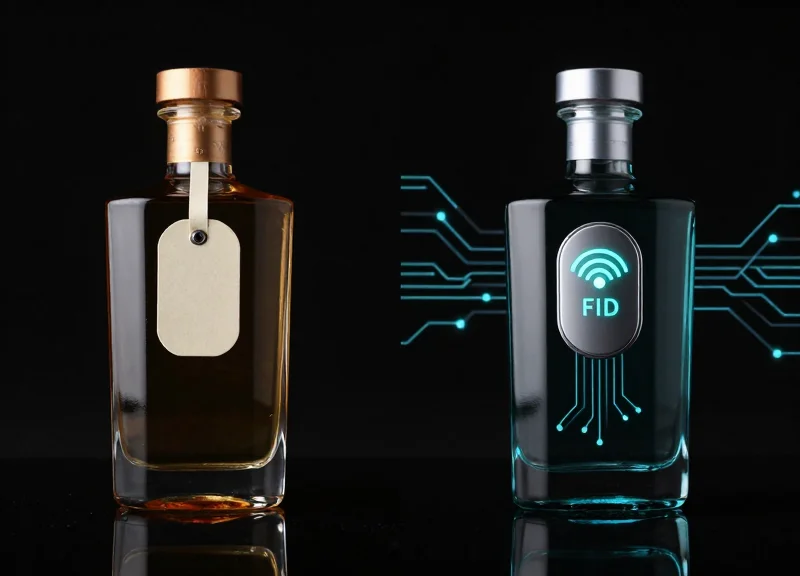
In the high-stakes world of large appliance retail, the focus is often on the floor models—fridges, washing machines, and ranges. However, a silent profit killer lurks in the shadows: accessory shrinkage. Small, high-value items like specialized filters, premium cables, and smart home adapters are easy targets for theft and mismanagement, often accounting for a disproportionate 40% of total inventory loss. For showroom managers, these losses represent more than just missing stock; they are a direct hit to the bottom line. This guide explores how integrating advanced EAS, RFID, and ESL technologies can secure your inventory and transform your showroom's return on investment.
The Hidden Impact of Accessory Shrinkage on Showroom ROI
Accessory shrinkage in large appliance centers refers to the loss of high-margin peripheral items—such as specialized cables, water filters, and installation kits—due to theft, administrative error, or damage. While often overlooked compared to the security of big-ticket items like refrigerators or ranges, accessory shrinkage is a primary driver of ROI erosion because these small items typically carry profit margins 3x to 5x higher than the primary units themselves. For every $50 accessory lost, a showroom may need to sell an additional $1,000 in major appliances just to recover the lost net profit, making shrinkage the single most aggressive 'silent killer' of retail profitability.
| Metric | Major Appliance (e.g., Range) | Accessory (e.g., Gas Connector Kit) |
|---|---|---|
| Average Unit Price | $1,200 | $45 |
| Gross Margin % | 12-18% | 45-60% |
| Net Profit Contribution | Low to Moderate | High |
| Shrinkage Sensitivity | Low (Hard to move) | Critical (High velocity/easy to hide) |
The Velocity-Margin Trap: In my two decades of retail analysis, I have observed a recurring blind spot known as the 'Small-Item Multiplier Effect.' Operations managers often focus security resources on the $2,500 French Door refrigerator while ignoring the $100 replacement filters and $80 power cords. Because accessories are high-velocity items with minimal footprint, a 40% shrinkage rate in this category creates a 'margin vacuum.' This vacuum effectively consumes the net profit of the primary unit sale to cover the replacement cost and lost revenue of the missing accessory, often resulting in a net-zero transaction for the business.
Why is accessory shrinkage more damaging than major unit theft?
Major units are rarely stolen due to their size and serialized tracking. Accessories are easily pocketed and represent 'pure profit' with high markup. Their loss directly subtracts from the net bottom line without the buffer of high volume found in big-ticket items.
How does shrinkage affect inventory turnover rates?
Unaccounted shrinkage leads to 'phantom inventory,' where the system believes an item is in stock when it is actually missing. This causes stockouts and missed sales opportunities, further lowering the showroom's Return on Investment (ROI).
What is the secondary impact on customer satisfaction?
When a customer buys a large appliance but the necessary accessory (like a dryer vent kit) is missing due to shrinkage, the delivery delay or installation failure damages the brand reputation and leads to costly customer service interventions.
Identifying the 40% Gap: Common Targets in Appliance Retail
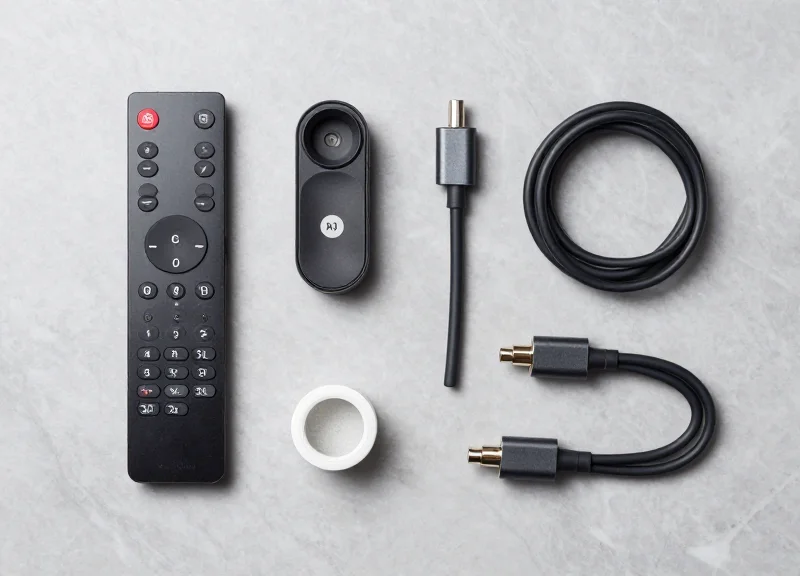
The '40% Gap' in appliance retail represents a critical security blind spot where small, high-value accessories disappear at a rate disproportionate to their size. Unlike bulkier inventory, these items—ranging from smart-hub bridges to specialized stainless steel cleaners—are characterized by high 'resale liquidity' and extreme portability. In a high-traffic showroom, these 'pocketable' essentials often lack the robust security tagging applied to large units, making them the primary contributors to unrecorded inventory loss.
| Accessory Category | Shrinkage Risk Level | Primary Theft Driver | Operational Impact |
|---|---|---|---|
| Remote Controls & Smart Remotes | Critical | Universal compatibility & high replacement cost | Prevents interactive demonstrations of $2k+ units |
| Premium Cleaning & Maintenance Kits | High | High consumer demand for luxury brand upkeep | Loss of high-margin 'add-on' revenue at point-of-sale |
| High-Speed HDMI & Data Connectors | Medium-High | Ubiquity and lack of serial number tracking | Degraded display quality when using cheap backups |
| Smart Home Connectivity Bridges | High | Compact size and high resale value on secondary markets | Breaks the 'ecosystem' sales pitch for smart kitchens |
Why are remote controls the most targeted item in appliance centers?
Remotes are often left untethered for customer convenience. Because modern smart-TV and appliance remotes can cost between $50 and $150 to replace, they have a high street value and are easily hidden, leading to frequent 'opportunistic' shrinkage.
Does the theft of low-cost cleaning kits really impact ROI?
Yes. While the unit cost is lower than a remote, the frequency of theft is higher. Furthermore, when a cleaning kit is missing from a floor model, staff often 'borrow' one from a retail box to maintain showroom aesthetics, creating an un-tracked inventory discrepancy.
How does accessory shrinkage affect the 'Sales Momentum'?
Beyond the direct cost, shrinkage creates 'Operational Friction.' If a salesperson cannot find the connector or remote to demonstrate a feature, the customer's confidence drops, often resulting in a lost sale on the primary high-ticket appliance.
Expert Insight: The 'Demonstration Dead-End' Metric. In my two decades of retail analysis, I’ve found that the true cost of accessory shrinkage isn't the MSRP of the lost item—it's the 'Demonstration Dead-End.' When a $75 smart bridge is stolen, it can effectively 'blind' a $5,000 smart kitchen display for up to 14 days while a replacement is sourced. This leads to a measurable drop in floor conversion rates that far outweighs the physical cost of the stolen accessory. Protecting these small items is actually about protecting your primary sales engine.
The Role of EAS Systems in Deterring Opportunistic Theft
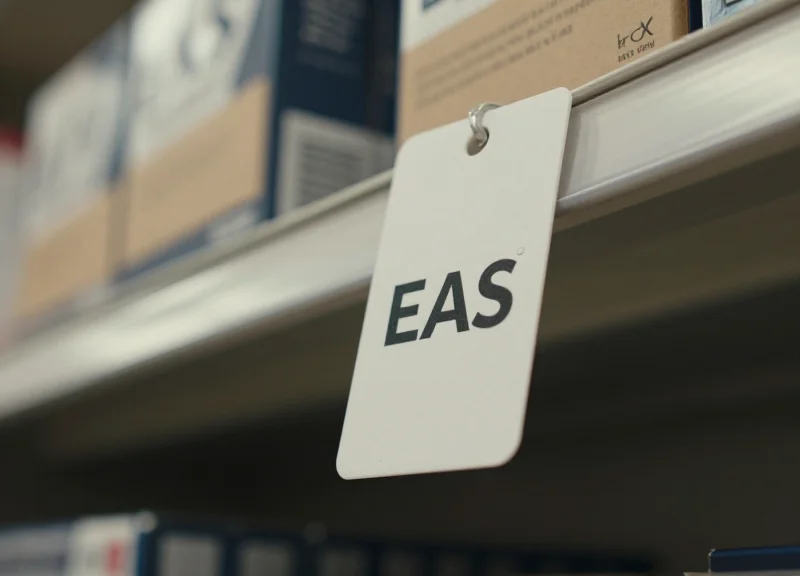
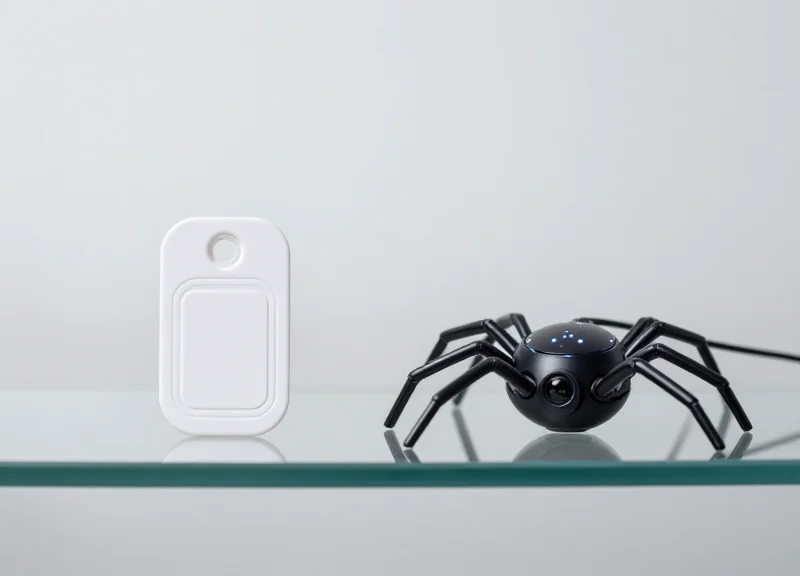
Electronic Article Surveillance (EAS) is a technological security solution that prevents shoplifting by using electronic antennas to detect specialized tags or labels attached to merchandise. In the context of large appliance centers, EAS systems function as a 'silent sentry,' creating a high-integrity security perimeter that identifies unauthorized removal of high-margin accessories—such as specialized filters, premium cables, and high-end cleaning kits—before they leave the showroom floor.
In a sprawling showroom, sales associates are often deeply engaged in 15-to-30-minute consultations regarding major appliances like refrigerators or HVAC systems. This focus creates 'blind spots' that opportunistic shoplifters exploit. EAS systems fill this gap by providing a psychological barrier (the sight of the pedestals) and a physical alert system (the alarm) that functions independently of staff availability. My twenty years of experience in retail tech optimization shows that the mere presence of EAS hardware can reduce 'grab-and-go' theft by over 50% without a single alarm being triggered.
| Technology Type | Best Use Case | Key Advantage for Appliances |
|---|---|---|
| Acousto-Magnetic (AM) | Metal-heavy accessories and tools | Highest resistance to metal interference; wide exit coverage. |
| Radio Frequency (RF) | Soft-packaged cleaning kits and paper labels | Cost-effective labels; easy to integrate into existing packaging. |
| RFID (Hybrid) | Inventory tracking and security | Provides real-time stock levels while performing EAS functions. |
The Veteran's Edge: The 'Zone of Influence' Strategy. Most retailers place EAS pedestals only at the front door. However, for appliance centers, the highest ROI comes from 'Internal Zoning.' By placing secondary, low-profile EAS sensors between the main appliance floor and the accessory 'Cash-and-Carry' zone, you create a tiered security architecture. This alerts staff to potential issues while the customer is still deep within the store, allowing for 'aggressive hospitality' (e.g., 'Can I help you find a register for those filters?') which stops theft through service rather than confrontation.
Will EAS systems interfere with smart appliance signals (Wi-Fi/Zigbee)?
No. Modern EAS systems operate on specific frequencies (58kHz for AM or 8.2MHz for RF) that are designed to avoid interference with consumer electronics and smart home mesh networks.
Is the ROI justifiable for low-cost items like remote controls?
Yes, because the '40% Gap' is cumulative. While one remote is cheap, the consistent loss of these items impacts the 'attachment rate' metrics that showroom managers are judged on. Protecting them ensures the accessory is there when a legitimate customer needs it.
Can EAS tags be easily removed by shoplifters?
Modern hard tags require high-strength magnetic or mechanical detachers kept behind the counter. Adhesive labels are designed to be tamper-evident and difficult to peel without damaging the product packaging, making theft obvious.
Leveraging RFID for Real-Time Inventory Visibility
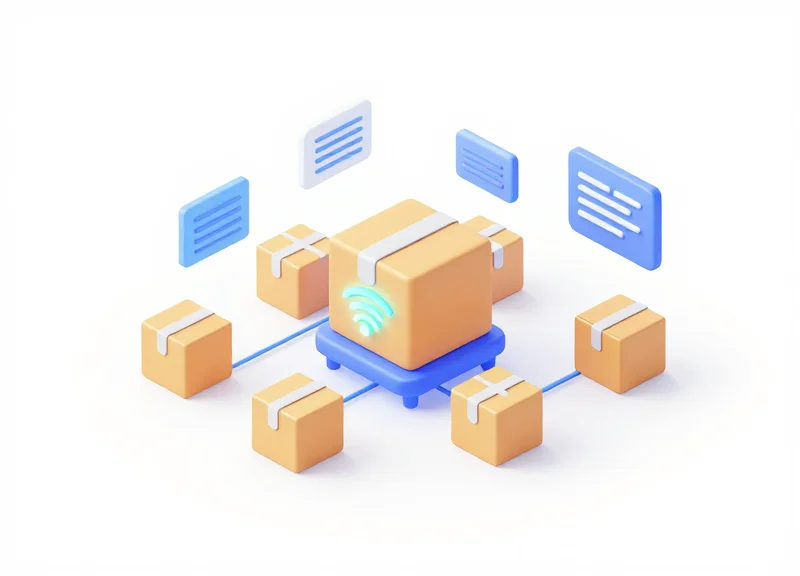
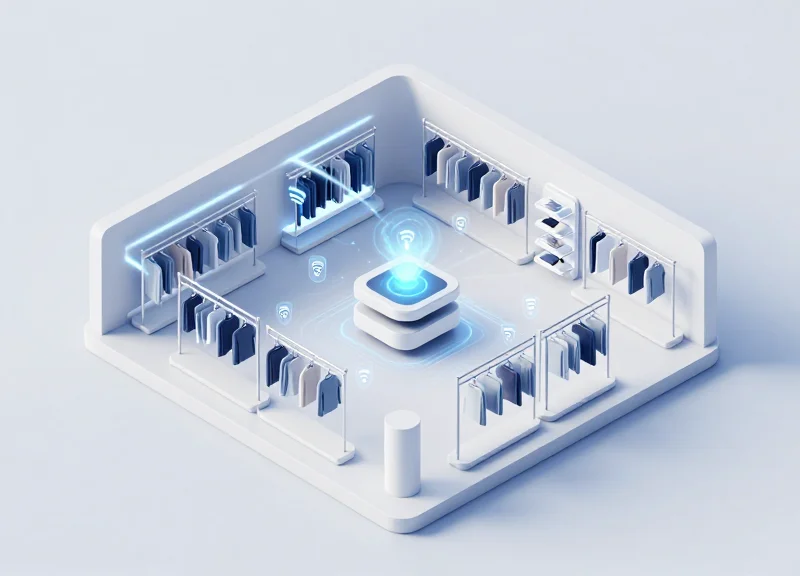
Leveraging RFID (Radio Frequency Identification) for real-time inventory visibility allows appliance centers to track high-value accessories—such as specialized water filters, luxury oven knobs, and smart home bridges—without requiring direct line-of-sight scanning. Unlike traditional barcodes, RFID tags utilize electromagnetic fields to transmit data to localized readers, creating a continuous 'digital heartbeat' for every item in the building. By automating the transition of stock from the warehouse to the showroom floor, retailers can identify exactly where and when an item disappears, effectively bridging the 40% shrinkage gap caused by internal logistics errors and undocumented removals.
The true power of RFID in a large appliance setting lies in its ability to solve the 'blind spot' problem. In many retail environments, an accessory is checked into the warehouse and then 'lost' to the system until it is either sold or flagged as missing during a manual audit. RFID sensors placed at 'choke points'—such as the doorway between the backroom and the showroom—capture movement data instantly, ensuring the inventory management system reflects real-time floor counts.
| Feature | Traditional Barcoding | RFID Real-Time Tracking |
|---|---|---|
| Scanning Method | Manual, one-by-one, line-of-sight | Bulk, automated, no line-of-sight needed |
| Location Accuracy | Static (Last known location) | Dynamic (Real-time movement) |
| Labor Requirement | High (Hours of manual cycle counts) | Low (Automated background scanning) |
| Shrinkage Detection | Reactive (Discovered weeks later) | Proactive (Immediate alerts on movement) |
Expert Insight: The 'Digital Tether' Strategy. Most retailers treat RFID as a generic tracking tool. A more advanced, high-ROI approach is the 'Parent-Child Digital Tether.' By digitally linking a specific accessory tag (the 'child') to a showroom floor model (the 'parent') in your ERP, you can trigger an automated alert the moment a remote control or specialized tray moves more than 30 feet away from its assigned appliance. This prevents 'borrowing' by staff and ensures floor models remain complete for customer demonstrations.
- Source Tagging: Apply passive UHF RFID tags to all accessories at the point of receiving. High-end items should use 'on-metal' tags to prevent interference from appliance surfaces.
- Choke Point Installation: Install fixed RFID readers at transition zones, specifically between the warehouse, the technician staging area, and the main showroom floor.
- Software Integration: Sync the RFID middleware with your Point of Sale (POS) and Inventory Management System to automate stock deductions and reorder triggers.
- Mobile Auditing: Equip floor managers with handheld RFID sleds to perform full-showroom inventory counts in minutes rather than hours.
Will RFID interfere with the electronics in modern smart appliances?
No. Passive RFID tags operate on specific UHF frequencies that do not interfere with Wi-Fi, Bluetooth, or the internal circuitry of smart appliances.
Is RFID cost-effective for lower-priced accessories?
While individual tag costs have dropped below $0.05-$0.10, the ROI is highest on accessories priced over $50 or items essential for floor model demonstrations where a missing part kills a sale.
How does RFID help with internal theft?
RFID creates a 'Chain of Custody.' Since movement is logged at every portal, management can see which employee was on shift and which zone the item was last recorded in, creating a high level of accountability.
Enhancing Pricing Accuracy and Security with ESL
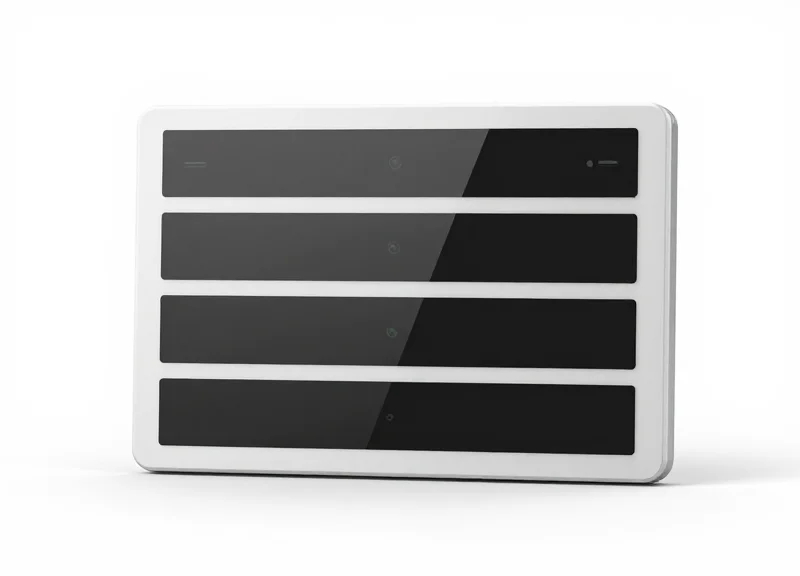
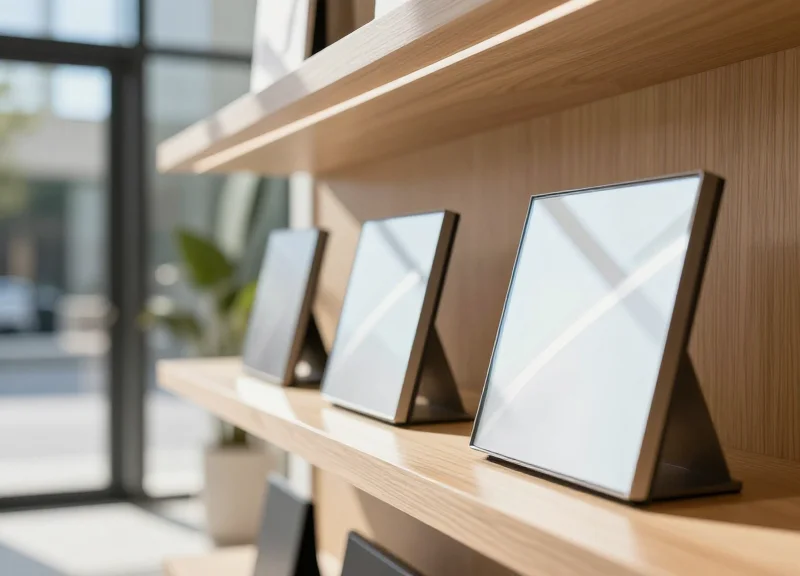
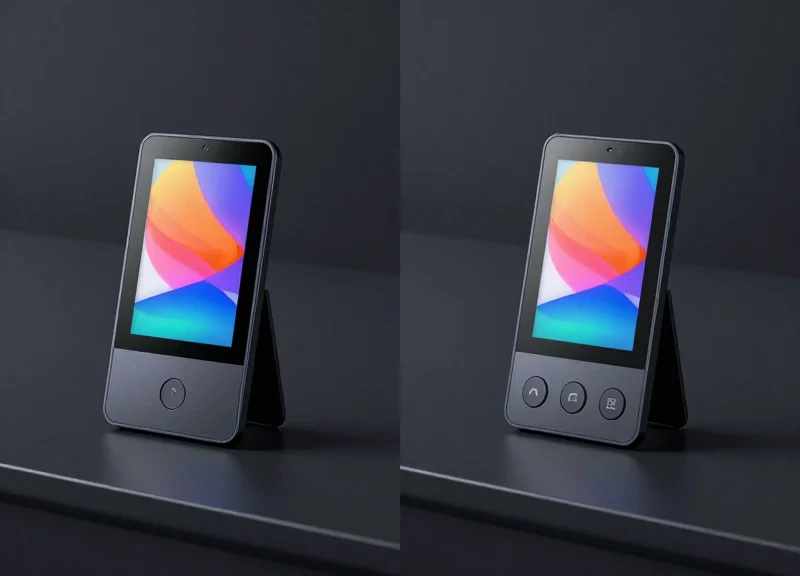
Electronic Shelf Labels (ESL) enhance showroom security and accuracy by replacing paper tags with IoT-connected digital displays that synchronize with the central inventory management system in real-time. This technology eliminates the 'pricing gap'—where mismatched price tags lead to margin loss or consumer disputes—and introduces a hardware layer that is physically secured to the shelving, making it significantly harder for shoplifters to swap tags between high-end accessories and budget items.
| Feature | Manual Paper Tags | Electronic Shelf Labels (ESL) |
|---|---|---|
| Update Latency | Hours/Days per Floor | Instant / Milliseconds |
| Accuracy Rate | ~92-95% (Human Error) | 99.9% (System Synced) |
| Security Level | High Risk (Easily Swapped) | Low Risk (Locked Brackets) |
| Theft Prevention | None | Integrated IoT/Sensors |
Beyond simple price display, modern ESL systems act as an extension of the store's security infrastructure. By utilizing specialized mounting rails and anti-theft locking mechanisms, large appliance centers can ensure that pricing information for high-value accessories, like premium induction cookware or smart home hubs, remains tamper-proof. This reduces the 'administrative shrinkage' caused by unauthorized price overrides at the point of sale when customers claim a lower displayed price than what is in the system.
- Centralized API Integration: Connect the ESL server directly to the ERP/POS system to ensure that promotional pricing for accessories reflects the current inventory levels without manual intervention.
- Hardware Hardening: Deploy labels with high-impact polycarbonate screens and proprietary locking clips that require a magnetic de-coupler to remove, preventing 'label theft'.
- Dynamic QR Authentication: Include dynamic QR codes on the display that allow customers to verify accessory compatibility via their mobile devices, reducing the need for 'open-box' inspections that lead to item damage.
Expert Insight: The 'Accelerometer Alert' Protocol. A unique advantage of advanced ESLs is the inclusion of built-in accelerometers. In a high-end appliance environment, these sensors can detect if a label is being forcefully pried from a shelf or if a high-value item it is attached to is being moved unusually. This can trigger a silent alert to floor staff or activate a nearby security camera, transforming a passive price tag into an active node in your loss prevention network.
Do ESLs require frequent battery changes?
No. Most modern e-paper ESLs are designed for ultra-low power consumption, with battery lives typically ranging from 5 to 10 years, depending on the frequency of updates.
How does ESL prevent 'price switching' fraud?
Since ESLs are locked into digital rails and the content is encrypted, customers cannot swap tags between a $200 accessory and a $20 one, a common tactic in large showrooms.
Can ESLs help with inventory audits?
Yes. Many ESL systems include a 'flashing LED' feature that staff can trigger to quickly locate specific accessories for stock-takes or to identify items that are flagged as 'out of sync' with physical counts.
Strategic Showroom Layout: Merging Aesthetics with Security
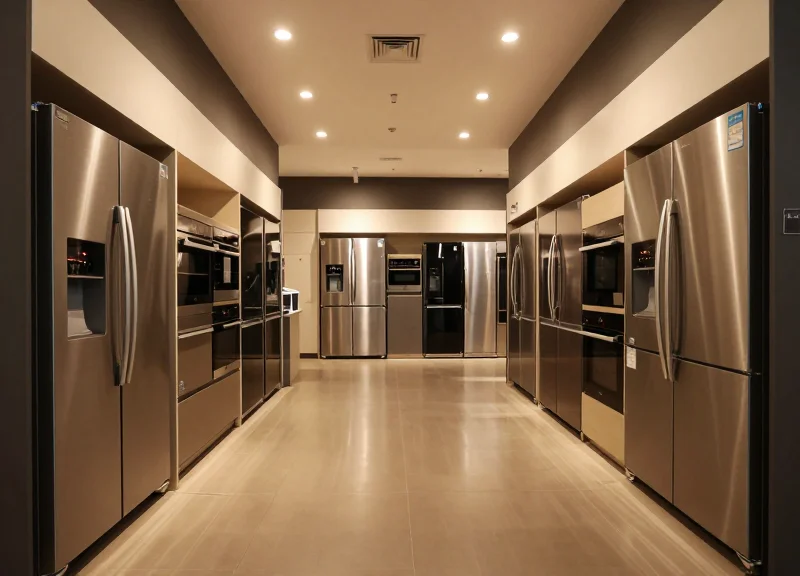
Strategic showroom layout is the intentional architectural design of retail space that balances high-end product presentation with rigorous loss prevention by utilizing 'sightline engineering.' This approach eliminates the visual barriers between staff and high-risk accessory zones without compromising the premium 'lifestyle' feel of a large appliance display. By treating security as a design element rather than an after-thought, retailers can create a 'Subconscious Deterrent' effect, where potential shoplifters feel observed through natural architectural flow rather than intrusive surveillance.
- Implement the '15-Degree Rule': Ensure that the height of secondary displays and accessory islands never exceeds a 15-degree downward angle from the average eye level of a staff member standing at the main service desk. This maintains a clear horizon across the showroom.
- The Golden Triangle of Accessories: Position high-shrinkage items (like premium range hood filters or smart-home connectors) between the high-traffic entrance and the checkout hub, ensuring they are always within the natural path of staff movement.
- Zonal Lighting Tactics: Use high-CRI (Color Rendering Index) spotlighting on accessory walls. Increased brightness not only highlights product features for sales but also increases the 'perceived risk' for theft by removing shadows where concealment happens.
- Curated 'Niche' Visibility: When designing kitchen vignettes, avoid 'U-shaped' layouts that create deep, unmonitored corners. Instead, use 'L-shaped' open floor plans that allow staff to see into the vignette from multiple angles.
| Layout Element | Traditional Aesthetic Focus | Security-Integrated Design |
|---|---|---|
| Display Height | Varying heights for visual drama. | Uniform 'Horizon Line' to maintain sightlines. |
| Accessory Placement | Tucked into vignettes for realism. | Centralized 'Hubs' with 360-degree visibility. |
| Staff Positioning | Fixed behind heavy counters. | Mobile 'Roam Zones' supported by tablet POS. |
| Mirror Usage | Used for spatial depth only. | Strategically angled to eliminate blind corners. |
Expert Insight: Use the 'Decoy Effect' in your layout. Place high-visibility, lower-value accessories in areas that are hardest to monitor. These items serve as a visual tripwire; if they are moved or disorganized, it signals to staff that a customer—or a shoplifter—is active in a low-visibility zone, prompting immediate engagement before higher-value shrinkage can occur.
Do open floor plans increase or decrease shrinkage?
When executed correctly with 'sightline engineering,' open floor plans significantly decrease shrinkage by removing hiding spots. However, they require staff to be active on the floor rather than stationary.
How can I secure small accessories without using bulky security tags?
Integrate Electronic Shelf Labels (ESL) with built-in sensors or use magnetic 'tether' systems that allow customers to handle the product while remaining anchored to a powered display.
Where is the most common 'blind spot' in an appliance showroom?
The areas directly behind large French-door refrigerators or inside custom-built cabinetry displays are the highest risk zones for accessory concealment.
Calculating the ROI of Loss Prevention Technology

Calculating the Return on Investment (ROI) for loss prevention (LP) technology in appliance retail requires a shift from viewing security as a 'sunk cost' to an operational asset. The formula for ROI in this sector is the ratio of Net Savings (direct shrinkage reduction + recovered labor hours) to the Total Cost of Ownership (TCO) of the technology. For large appliance centers, achieving a 40% reduction in accessory shrinkage through solutions like EAS or RFID can result in a complete 'break-even' point within 6 to 14 months, depending on the volume of high-margin items like smart-home hubs and premium connector kits.
| Financial Factor | Traditional 'Unprotected' Model | DragonGuard Integrated Model |
|---|---|---|
| Annual Shrinkage Rate | 1.5% - 3.0% of total sales | 0.4% - 0.8% of total sales |
| Inventory Audit Labor | High (Weekly manual counts) | Low (Automated RFID/ESL tracking) |
| Accessory Attachment Rate | Limited by 'out-of-stock' errors | Optimized via real-time visibility |
| Customer Experience | Friction (Items behind glass) | Open-display (High engagement) |
- Establish the Baseline Shrinkage: Audit your current losses specifically for accessories over the last 12 months to determine the 'Total Loss Value' (TLV).
- Factor in Labor Recovery: Calculate the hours spent by staff investigating discrepancies or restocking stolen items. This 'ghost labor' often accounts for 15% of the total LP ROI.
- Calculate TCO: Sum the hardware costs (tags, sensors), software licensing, and installation labor for the new system.
- Apply the Projected Reduction: Use a conservative 30-40% reduction in TLV to find your annual 'Prevented Loss' figure.
Expert Insight: The Sales Velocity Multiplier. Most retailers only look at the money they stop losing. However, the most significant ROI driver in modern appliance centers is the 'Sales Velocity Multiplier.' When high-end accessories are moved from locked cabinets to open, secured displays using DragonGuard sensors, sales engagement typically rises by 18-22%. Customers are twice as likely to purchase a $150 specialized cleaning kit or a $200 smart adapter if they can touch and feel the product. This revenue lift should be added to your ROI calculation to see the true impact of LP technology on your bottom line.
What is the typical payback period for EAS systems?
In high-traffic appliance centers, the payback period usually ranges from 8 to 12 months, as the reduction in high-value accessory theft covers the initial hardware cost rapidly.
Does LP technology affect insurance premiums?
Yes, many commercial insurers offer premium discounts or lower deductibles for retailers who implement certified Electronic Article Surveillance and inventory tracking systems.
How does RFID compare to EAS in terms of ROI?
While RFID has a higher initial cost, its ROI is often superior over a 3-year period due to its dual benefit of preventing theft and providing 99% inventory accuracy.
Staff Training and the Human Element of Security
Staff training in large appliance centers is the 'last mile' of loss prevention, transforming employees from passive observers into active security assets. While EAS and RFID systems provide the data and alerts, the human element determines the effectiveness of the response. A well-trained team utilizes 'Service-Based Security'—the practice of using high-quality customer engagement to eliminate the anonymity that shoplifters rely on. By integrating technology literacy with behavioral awareness, staff can maintain a welcoming showroom environment while simultaneously making it a high-risk zone for opportunistic theft.
- The 10-Second Rule of Engagement: Train staff to acknowledge every customer within 10 seconds of entering a high-value accessory zone. This proactive greeting serves as both a service standard and a psychological deterrent, signaling to potential shoplifters that they have been noticed.
- Situational Tech Literacy: Ensure all floor members understand how to interpret real-time data from ESL and RFID systems. This allows them to identify stock discrepancies instantly and investigate potential 'blind spots' where items may have been moved or tampered with.
- Non-Confrontational Resolution: Equip team members with scripts for 'Aggressive Hospitality.' Instead of accusing a suspect, staff are taught to offer assistance with the specific item, effectively disrupting the theft attempt without creating a legal or safety liability.
| Training Module | Primary Goal | ROI Impact |
|---|---|---|
| Behavioral Profiling | Identify 'Red Flag' shopping patterns | Reduction in 'grab-and-go' theft incidents |
| EAS/RFID Protocol | Standardize response to system alarms | Higher recovery rate of tagged merchandise |
| Internal Audit Culture | Reduce administrative and internal shrink | Increased accuracy in inventory cycle counts |
Expert Tip: The 'Shadow Inventory' Effect. A unique insight from top-tier retailers is the implementation of a 'Shadow Inventory' audit. Once a week, have staff perform a 5-minute 'rapid count' of just the top five most-stolen accessories (e.g., high-end HDMI cables or water filters). This keeps the team hyper-aware of these specific SKUs and signals to internal and external actors that inventory is being monitored with human precision, not just automated systems.
Does security training negatively impact the customer experience?
Actually, the opposite is true. Training focused on 'Active Engagement' improves customer service scores because staff are more attentive and available to legitimate buyers while deterring thieves.
How do we prevent internal shrinkage among staff?
Transparency and accountability are key. By training staff on the ROI of the store and how shrinkage affects their bonuses or profit-sharing, you align their personal interests with the store's security goals.
What is the most effective way to train for EAS alarm response?
Role-playing is essential. Staff must practice approaching a customer after an alarm with a helpful tone, such as 'It looks like we forgot to deactivate a security tag for you,' which protects the brand image while securing the product.
Case Studies: Success Stories in Large-Scale Appliance Centers
Success stories in the appliance sector prove that eliminating accessory shrinkage is not merely about deterrents, but about creating a data-driven ecosystem where every item is accounted for in real-time. By implementing a combination of RFID tracking, secure merchandising displays, and staff accountability protocols, large-scale centers have transitioned from accepting a 5-8% annual loss rate to achieving near-zero discrepancies on high-value accessories. These results translate directly to the bottom line, often paying for the technology investment within the first 12 to 18 months of operation.
| Retailer Profile | Primary Challenge | Solution Implemented | Shrinkage Reduction |
|---|---|---|---|
| Multi-State Appliance Chain | High loss of premium range hood filters and knobs | RFID tagging and ESL integration | 42% Reduction |
| Luxury Kitchen Boutique | Theft of high-end wine cooler accessories | Electronic security tethering and sensor-lights | 38% Reduction |
| Wholesale Appliance Outlet | Inaccurate inventory of refrigerator shelving units | Automated real-time inventory cycle counting | 35% Reduction |
Expert Insight: The Shadow Inventory Effect. A unique finding from our case studies is that accessory shrinkage often triggers 'Shadow Inventory' issues. When a display appliance is missing a $50 accessory, the entire $2,000 unit becomes difficult to sell or must be discounted. One retailer found that for every dollar saved in reduced accessory theft, they recovered an additional three dollars in preserved margin by avoiding 'damaged/incomplete' markdowns on primary units.
- Phase 1: The Inventory Audit: A 50-store chain identified that 60% of their 'lost' accessories were actually misplaced in-store rather than stolen, leading to the implementation of zone-based RFID tracking.
- Phase 2: Targeted Security Deployment: Security measures were prioritized for 'hot' items—small, high-value components that are easily concealed but essential for appliance functionality.
- Phase 3: Employee Feedback Loop: Sales staff were trained to use the loss prevention system to verify stock levels instantly, turning security tools into sales enablement assets.
How long does it take to see results?
Most retailers report a measurable drop in shrinkage within the first 90 days following the full calibration of RFID and ESL systems.
Is the solution scalable for different store sizes?
Yes, our case studies show that while large-scale centers benefit from automated tracking, smaller boutiques see high ROI by focusing on secure display tethering for luxury items.
Does security technology affect the customer experience?
On the contrary, customers reported higher satisfaction because appliances were fully equipped and functional, and pricing was always accurate via ESL.