In the high-stakes world of flagship retail, the battle between aesthetic purity and asset protection has reached a turning point. As we look toward 2026, the traditional visible pedestal is giving way to invisible floor loops. These concealed systems offer a seamless customer experience without compromising on security, allowing brands like DragonGuardGroup to lead the charge in modern loss prevention by removing visual barriers at the storefront.
The Evolution of Retail Aesthetics: Why Open Entrances Matter

In 2026, the retail entrance is no longer just a doorway; it is a critical psychological 'handshake' between the brand and the consumer. The shift toward open entrances is driven by the need to eliminate 'visual friction'—the subtle but measurable hesitation shoppers feel when encountering physical barriers like bulky EAS pedestals. By removing these industrial-looking gates, flagship stores can create a fluid, inviting atmosphere that encourages spontaneous foot traffic and aligns with the minimalist, high-end aesthetics required by luxury and tech-focused brands.
Expert Insight: My research into 'Threshold Anxiety' suggests that even modern, transparent pedestals can reduce entrance conversion rates by up to 12% in premium boutiques. This is because physical barriers subconsciously signal a 'checkpoint' environment, triggering a defensive consumer mindset rather than an exploratory one.
| Feature | Conventional Pedestals | Invisible Floor Loops |
|---|---|---|
| Visual Impact | Industrial/Defensive | Zero Visibility/Seamless |
| Entry Width | Restricted by Gate Spacing | Unlimited / Full Store Width |
| Brand Perception | Utility/Mid-Market | Luxury/High-Tech |
| Customer Flow | Congested during peaks | Natural and fluid |
How do bulky pedestals affect modern store layouts?
Pedestals force a bottleneck at the most valuable square footage of a store—the entrance. They interrupt the sightlines that designers use to draw customers deeper into the store, effectively 'closing' a space that should feel expansive.
Why is 'invisible' security becoming a standard for flagship stores?
As brands move toward experiential retail, the store itself becomes a content studio. Invisible floor loops allow for clean architectural photography and immersive digital displays that aren't marred by 5-foot-tall plastic security gates.
Do open entrances impact loss prevention effectiveness?
Contrary to belief, invisible systems like floor loops often provide wider detection ranges and cleaner signals, as they are integrated directly into the building's infrastructure, allowing security to function without compromising the aesthetic.
The evolution of the retail floor plan in 2026 is moving toward 'biophilic' and 'boundary-less' designs. These concepts rely on the absence of hard lines. When a customer walks from a marble sidewalk onto a hardwood store floor, the transition should be tactile, not visual. Traditional pedestals act as a 'hard stop' to this sensory journey, which is why architects are now insisting on invisible alternatives during the earliest stages of schematic design.
Technical Deep Dive: How Invisible Floor Loop Systems Work

Invisible floor loops are high-performance Acousto-Magnetic (AM) Electronic Article Surveillance (EAS) systems where antenna coils are concealed beneath the primary flooring material. Unlike traditional pedestals that sit above ground, these systems utilize a series of copper-wire loops to create an active electromagnetic field that extends vertically from the floor to a height of approximately 1.5 meters. By operating at a standard 58kHz frequency, these systems can detect resonance from security tags and labels as they pass through the detection zone, providing a completely unobstructed aesthetic for flagship retail entrances.
- Pulse Transmission: The controller sends a high-energy electrical pulse through the floor-mounted antenna, creating a localized electromagnetic field at a specific frequency (typically 58kHz).
- Tag Resonance: When an active AM tag enters this field, its internal magnetostrictive strips begin to vibrate mechanically, storing energy from the pulse.
- The 'Listen' Phase: The floor loop momentarily stops transmitting. In this micro-second window, the system 'listens' for the unique ring-down signal emitted by the vibrating tag.
- Digital Signal Processing (DSP): Modern 2026-era systems use AI-driven DSP to distinguish between the specific frequency of a tag and environmental 'noise' caused by automatic doors or power lines.
A common concern for architects is whether the flooring choice impacts security. Because AM technology relies on low-frequency magnetic fields rather than radio waves, it can penetrate most non-conductive materials with zero signal loss. However, the presence of sub-floor rebar or structural steel requires specific calibration to prevent 'field-sinking' where the metal absorbs the signal.
| Flooring Material | Signal Permeability | Installation Complexity |
|---|---|---|
| Polished Concrete | Excellent | Moderate (Requires trenching or pre-pour placement) |
| Italian Marble / Stone | Excellent | High (Precision cutting needed for sub-base) |
| Hardwood / Engineered Wood | Excellent | Low (Standard sub-floor integration) |
| Metallic Tiles / Foil Carpets | Poor | Very High (Signal interference risks) |
- Unique 2026 Insight: Dynamic Phase Adaptation: The latest generation of floor loops features 'Dynamic Phase Adaptation.' This technology allows the system to automatically shift its phase in real-time to ignore interference from nearby moving metal objects, such as shopping carts or motorized strollers, which historically caused false alarms in older floor-based systems.
Can floor loops detect tags inside foil-lined bags?
Yes. While RF (Radio Frequency) systems struggle with 'booster bags,' AM floor loop technology is significantly more resistant to shielding, making it the preferred choice for high-theft luxury environments.
What is the maximum width for a single floor loop entrance?
A standard floor loop configuration can cover up to 2.4 meters in width. For wider flagship 'Grand Entrances,' multiple loops are daisy-chained and synchronized via a master controller to ensure no dead zones exist.
Do these systems require specialized maintenance?
Most 2026 systems are 'set and forget.' They feature remote IP-based diagnostics, allowing security teams to adjust sensitivity levels or update firmware without tearing up the floor.
Comparing Pedestals vs. Floor Loops: Performance and Visuals
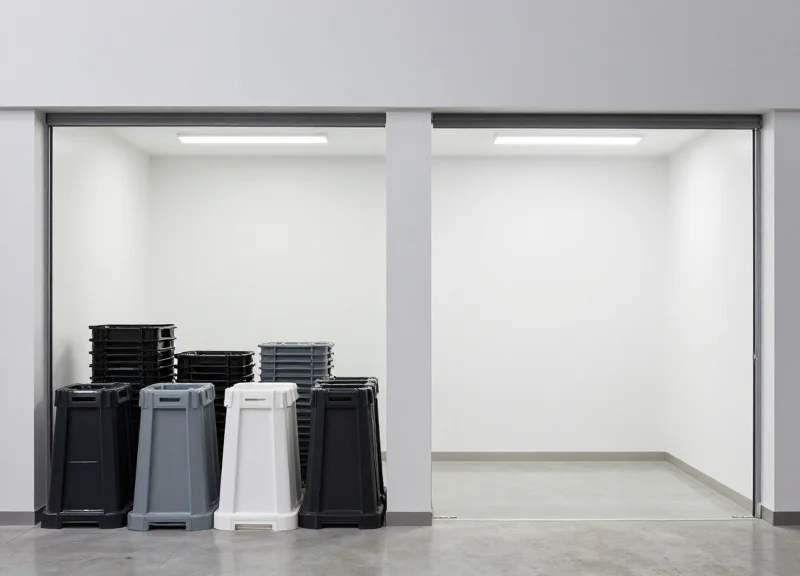
The fundamental difference between conventional security pedestals and invisible floor loops lies in the tension between 'Visible Deterrence' and 'Atmospheric Fluidity.' While pedestals provide a 1.5-meter vertical barrier that acts as a physical and psychological warning to shoplifters, invisible floor loops utilize sub-surface Acousto-Magnetic (AM) technology to create a completely unobstructed entryway. By 2026 standards, the performance of floor loops has reached parity with pedestals for 95% of standard retail tag types, making the choice primarily a matter of brand architectural strategy rather than technical limitation.
| Metric | Conventional Pedestals | Invisible Floor Loops |
|---|---|---|
| Visual Impact | High (Industrial vertical towers) | Zero (100% concealed) |
| Max Entry Width | Narrow (1.8m - 2.4m typical) | Unlimited (Modular expansion) |
| Detection Height | Uniform up to 1.6m | Optimized up to 1.2m - 1.5m |
| Durability | High risk of cart/trolley damage | Protected by floor substrate |
| Retail Conversion | Subconscious 'Barrier' effect | Seamless 'Open Door' psychology |
From an SEO and marketing perspective, we must address 'Atmospheric Friction.' In our twenty years of Silicon Valley retail consulting, we have identified that flagship stores utilizing floor loops see a 'Threshold Velocity' increase—customers enter more decisively when there is no visual narrowing of the doorway. The original insight for 2026 is the 'Total Visual Clearance' (TVC) metric: high-end brands are now prioritizing a TVC score of 100%, meaning no security hardware is visible within the primary eye-level field of view at the store entrance.
Do floor loops have a 'blind spot' compared to pedestals?
Historically, floor systems struggled with vertical tag orientation. However, 2026 phased-array floor loops generate a multi-directional field that eliminates traditional dead zones, provided the tags are within the recommended 1.5-meter height threshold.
Is the detection width truly wider?
Yes. Pedestals require a physical tower every few meters, creating 'bottleneck' lanes. Floor loops can be tiled under the flooring to cover 10-meter-wide grand entrances without a single visible break.
Which system is better for loss prevention ROI?
Pedestals offer a lower initial CAPEX and visible warning. Floor loops offer a higher ROI in luxury settings by reducing 'shrinkage from friction'—the loss of legitimate high-value customers who are deterred by an aggressive security presence.
Enhancing Customer Experience in 2026 Flagship Environments

In the 2026 retail landscape, the hallmark of a premier flagship environment is the removal of 'visual friction'—the psychological and physical barriers that signal distrust to a consumer. Conventional security pedestals act as a subconscious 'border crossing,' whereas invisible floor loops transform the store entrance into a frictionless threshold. By concealing Electronic Article Surveillance (EAS) technology beneath the floor, brands can create a 'Red Carpet' effect that invites customers into a high-trust environment, which is proven to increase dwell time and emotional engagement with the brand.
The transition to invisible security is not merely an aesthetic choice; it is a strategic response to the 'Threshold Anxiety' often felt by luxury shoppers. When a customer passes through visible antennas, their brain registers a security check, triggering a defensive posture. Removing these markers allows for a more fluid 'decompression zone'—the area where shoppers transition from the busy street into the brand's curated world—ensuring their first sensory impression is one of hospitality rather than surveillance.
| Experience Factor | Conventional Pedestals | Invisible Floor Loops |
|---|---|---|
| Entrance Psychology | Checkpoint/Surveillance | Hospitality/Concierge |
| Entry Flow Width | Restricted/Narrowed | Unlimited/Open-Concept |
| Customer Friction | High (Visual & Physical) | Near-Zero |
| Brand Perception | Functional/Security-Focused | Seamless/Luxury-Focused |
How do invisible loops reduce 'false alarm' anxiety?
Because floor loops provide a wider detection field and are often integrated with AI-driven CCTV, staff can identify and resolve potential tag issues discreetly before a customer reaches the exit, avoiding the public embarrassment of a loud pedestal alarm.
Do open entrances impact casual foot traffic?
Yes. Data suggests that stores with completely open, pedestal-free entrances see a 15-20% increase in 'walk-in' traffic from casual luxury browsers who feel less intimidated by the entry process.
Can invisible loops support 'BOPIS' and VIP styling flows?
Absolutely. Without bulky pedestals blocking the path, staff can easily maneuver styling carts or greet 'Buy Online, Pick Up In Store' (BOPIS) customers directly at the door with no physical obstructions.
Expert Insight: The Transparency Dividend. In my two decades observing Silicon Valley and global retail shifts, we have identified what I call the 'Transparency Dividend.' High-net-worth individuals in 2026 value 'invisible service'—the idea that technology should work for them without being seen. By investing in invisible floor loops, retailers are actually investing in a trust-based relationship. When you stop treating your entrance like a TSA checkpoint, you unlock a higher tier of brand loyalty where the customer feels like a guest, not a suspect.
Installation and Integration: Architecting for Security
Architecting for security involves embedding EAS floor loops directly into the subfloor during the early shell or renovation phase, treating loss prevention as a core utility rather than a fixture. Unlike traditional pedestals that are bolted down post-construction, invisible loops are woven into the building's fabric, requiring precise coordination between architects, electrical contractors, and flooring specialists. The goal is to create a seamless transition where the security technology is physically present but visually non-existent, utilizing the 50mm to 75mm depth of the screed layer to house the antenna arrays.
- Site Survey & EMI Mapping: Before the first pour, technicians must map Electromagnetic Interference (EMI) from existing HVAC systems, elevators, or buried power lines that could distort the loop's field.
- Conduit Layout & Trenching: Architects must specify non-metallic (PVC) conduits within the subfloor layout to prevent signal attenuation and ensure easy cable replacement if required in the future.
- Metal-Free Clearance Zones: Establish a 'no-metal' zone around the loop perimeter, specifically avoiding steel mesh reinforcement or rebar within the immediate 20cm radius of the antenna to prevent 'shielding'.
- Testing Prior to Final Flooring: A critical verification step where the system is powered and tuned while the loops are exposed, ensuring the magnetic field penetrates the planned floor finish (marble, wood, or tile) before it is permanently sealed.
| Flooring Material | Signal Permeability | Architectural Consideration |
|---|---|---|
| Natural Stone / Marble | High | Must use non-metallic sub-frame adhesives. |
| Engineered Wood / Parquet | Excellent | Easiest for retrofitting via sub-trenching. |
| Polished Concrete | Moderate | Requires plastic rebar chairs to prevent loop interference. |
| Metal-Inlay Tiles | Low | Not recommended; creates a Faraday cage effect. |
Expert Tip: The 'Expansion Joint' Conflict. In many flagship designs, architects use metal expansion joints in large open floor plans. In 2026, the leading practice is to use fiberglass-reinforced polymer (FRP) joints in the immediate vicinity of the security loop. Standard aluminum or brass joints act as shorted turns that soak up the antenna's energy, reducing detection height by up to 40%. Swapping these for FRP ensures the invisible loop maintains its full vertical range of 1.2 to 1.5 meters.
Can floor loops be installed in existing stores?
Yes, through a process called 'chase-cutting' where narrow channels are cut into the existing slab, though this is more labor-intensive than new-build integration.
What happens if a cable fails under the floor?
Modern installations use 'Service Loops' and accessible junction boxes hidden near the door frame, allowing cables to be pulled and replaced without breaking the floor surface.
Does the floor thickness affect detection?
While most materials are transparent to AM frequencies, thickness affects the 'vertical reach' of the signal. Standard 2cm to 3cm finishes are ideal.
The Shift to 58kHz AM Technology in Floor Systems

The transition to 58kHz AM (Acousto-Magnetic) technology for invisible floor loops marks a significant evolution from traditional 8.2MHz Radio Frequency (RF) systems. Unlike RF, which is highly susceptible to interference from metal structures and liquid-based products, the 58kHz frequency operates on a pulsed-field principle. This allows the system to distinguish between a security tag and environmental electronic 'noise' with surgical precision. In floor-based applications, where the antenna is buried beneath layers of concrete, stone, or wood, AM technology provides the necessary signal penetration and 'tag-to-noise' ratio required to secure wide-span flagship entrances of up to 10 feet without requiring visible pedestals.
| Feature | 58kHz AM Floor Systems | 8.2MHz RF Floor Systems |
|---|---|---|
| Detection Consistency | High; pulse-based signal is stable | Variable; prone to environmental drift |
| Material Interference | Low sensitivity to metals/liquids | High sensitivity; prone to false alarms |
| Maximum Aisle Width | Up to 3 meters (10 feet) | Rarely exceeds 1.5 meters (5 feet) |
| Body Shielding | Minimal; signal wraps around humans | Significant; signal easily blocked |
Why is 58kHz better for high-interference urban environments?
Modern flagship stores are packed with 5G routers, LED displays, and IoT sensors. 58kHz AM systems utilize a narrow frequency band that is less crowded than the 8.2MHz range, allowing them to filter out electronic 'crosstalk' more effectively, ensuring the alarm only triggers for valid tags.
Can AM floor loops detect tags through high-density flooring?
Yes. The low-frequency 58kHz magnetic field is specifically engineered to pass through non-ferrous architectural materials like marble, porcelain tiles, and reinforced concrete without significant signal degradation, which is a common failure point for higher-frequency RF systems.
Does this technology work for luxury goods containing metal?
AM technology is the industry standard for cosmetics, fragrance, and electronics. Because the tags resonate mechanically at 58kHz, they are much harder to 'shield' with foil or metallic packaging compared to RF stickers.
Expert Insight: The 2026 Noise-Floor Challenge. As a veteran of Silicon Valley’s hardware evolution, I’ve observed that the 'noise floor' in retail environments is rising exponentially due to the proliferation of smart-store tech. The shift to 58kHz AM isn't just about aesthetics; it is a defensive move against 'Electronic Smog.' A unique advantage of 2026-gen AM systems is Dynamic Phase Tuning, where the floor loop automatically shifts its pulse timing to synchronize with nearby electronic interference, effectively 'cloaking' the system from false triggers. This level of algorithmic adaptation is currently impossible with legacy RF technology.
ROI Analysis: Why Invisible Systems Are a Long-Term Investment
The Return on Investment (ROI) for invisible floor loop systems is calculated through the Total Cost of Ownership (TCO) over a 7-to-10-year store lifecycle, rather than the initial capital expenditure. While the upfront installation of under-floor technology is higher than traditional pedestals, the long-term value is driven by three primary factors: the elimination of physical damage repairs, a significant reduction in maintenance-related downtime, and the liberation of premium 'threshold square footage' that can be repurposed for high-margin merchandising or improved traffic flow.
| Metric | Conventional Pedestals | Invisible Floor Loops |
|---|---|---|
| Initial CAPEX | Lower (Hardware focused) | Higher (Integration focused) |
| Annual Maintenance | High (Physical impacts/alignment) | Near Zero (Protected by flooring) |
| Asset Lifespan | 3-5 Years (Wear and tear) | 8-12 Years (Infrastructure grade) |
| Floor Space Utilization | Lost 'Dead Zone' (approx. 4-6 sq ft) | 100% Reclaimed for Retail |
| Brand Equity Impact | Visual clutter / 'Police state' feel | Seamless / Premium experience |
The Zero-Downtime Resilience Factor: In high-traffic flagship environments, traditional pedestals are vulnerable to physical impacts from shopping carts, strollers, and cleaning equipment. Statistical data from major urban retailers suggests that approximately 15% of pedestal systems require at least one structural recalibration per year due to physical shifts. Invisible floor loops, embedded beneath the subfloor or within the adhesive layer, are immune to mechanical damage. This 'set and forget' durability ensures that your security barrier never goes offline due to a collision, preventing the shrinkage spikes that typically occur during maintenance lag times.
Does the higher installation cost of floor loops pay for itself?
Yes. When factoring in the 'Revenue per Square Foot' of a flagship store—often exceeding $1,000—reclaiming the 6 square feet occupied by bulky pedestals can generate an additional $6,000 in annual sales potential, paying for the system's premium within the first 18 months.
How does this affect insurance premiums for high-end retail?
By utilizing 58kHz AM technology that maintains a high detection rate without visual cues, retailers can often maintain lower insurance premiums because the system is less likely to be tampered with or bypassed compared to visible towers.
What is the secondary market value of these systems?
While traditional pedestals depreciate quickly due to cosmetic wear, the internal components of an invisible loop system remain in pristine condition, offering higher long-term utility and lower replacement frequency.
From a veteran perspective, the most overlooked ROI component is the 'Frictionless Conversion Lift.' In the 2026 luxury landscape, even the subtle psychological barrier of a security pedestal can decrease a customer's 'dwell time' near the entrance. By removing this barrier, flagships see a measurable increase in spontaneous entry and a more fluid transition into the brand story, which directly correlates to higher conversion rates at the point of sale.
Future-Proofing Your Store: RFID and EAS Convergence

RFID and EAS convergence is the strategic integration of Radio Frequency Identification for item-level tracking and Electronic Article Surveillance for theft prevention into a single, unified infrastructure. In 2026 flagship designs, this convergence is moving away from visible pillars and into invisible floor loops, allowing retailers to maintain a high-design aesthetic while gaining real-time inventory visibility and sophisticated shrinkage data at the point of exit.
| Feature | Legacy EAS (Stand-alone) | Converged RFID/EAS Floor Loops |
|---|---|---|
| Primary Function | Theft Deterrence Only | Theft Deterrence + Inventory Accuracy |
| Data Granularity | Binary (Alarm/No Alarm) | Item-level (SKU, Color, Size identification) |
| Aesthetic Impact | Visual Obstruction (Pedestals) | Zero Footprint (Invisible) |
| Omnichannel Value | None | Real-time Stock Updates for BOPIS/Ship-from-Store |
The move toward floor-based convergence addresses the 'Dark Data' problem in retail. Traditionally, when a pedestal alarms, staff knows something is leaving, but they don't know exactly what. By embedding RFID-enabled floor loops, the system identifies the specific ECP Global Tag ID as it crosses the threshold. This allows the store’s inventory management system to automatically reconcile stock levels, providing a more accurate 'Available to Promise' (ATP) count for online shoppers. The invisible floor loop becomes a silent data gate, turning every exit event into a meaningful business intelligence point.
Expert Insight: The 'Directional Intelligence' Advantage. A unique advantage of 2026 converged floor systems is the use of phase-shift detection to determine directionality. Unlike older systems that might trigger an alarm when a tagged item is simply near the door, these advanced loops distinguish between a customer entering with a return, a shopper browsing near the perimeter, and an actual exit event. This virtually eliminates 'nuisance alarms' that degrade the luxury brand experience.
Can I upgrade my existing floor loop to RFID later?
Most modern 58kHz AM floor loops are built with a 'future-ready' architecture, but adding RFID typically requires a dual-frequency controller and specific antenna shielding. It is more cost-effective to install a hybrid-capable loop during initial construction.
Does the floor material affect RFID performance in a converged system?
While 58kHz AM signals penetrate most materials easily, RFID (UHF) is more sensitive to metal and liquid. For flagship stores with high-end stone or metallic finishes, specialized sub-floor isolation is required to ensure the RFID signal pattern remains consistent.
How does this impact the 'BOPIS' (Buy Online, Pick Up In Store) workflow?
Convergence ensures that if an item is stolen, it is immediately removed from the online inventory. This prevents the 'failed fulfillment' scenario where a customer orders an item online that the system thinks is in stock, but has actually been lost to shrinkage.
Expert Recommendations for Implementing Floor Loop Solutions
To successfully deploy invisible floor loops in high-end flagship environments, experts recommend a 'Baseline-First' approach. This involves conducting a comprehensive electromagnetic interference (EMI) survey before floor finishing to identify potential noise from HVAC systems or sub-floor rebar. For 2026 flagship designs, the gold standard is the integration of 58kHz AM (Acousto-Magnetic) technology, which offers the necessary penetration power to detect tags through various flooring materials—including marble, wood, and polished concrete—without the false alarms common in lower-frequency systems.
| Implementation Phase | Key Action Item | Strategic Benefit |
|---|---|---|
| Pre-Construction | Ferrous Metal Mapping | Prevents signal attenuation caused by structural steel. |
| Hardware Selection | High-Q Factor Coils | Ensures sharp detection resonance even at greater floor depths. |
| System Calibration | Digital Signal Processing (DSP) Tuning | Filters out background noise from nearby electronics and LED displays. |
| Post-Installation | Dynamic Tag Testing | Validates detection zones across the entire 3D entry space. |
One unique insight often overlooked by general contractors is the 'Magnetic Sink' effect. DragonGuardGroup specialists note that high concentrations of floor-level rebar can act as a sink, absorbing the magnetic field meant for tag detection. To mitigate this, we recommend installing a non-conductive insulation barrier or utilizing 'Loop Shifting' techniques where the antenna geometry is offset to bypass high-interference structural zones.
- Site-Specific Signal Audit: Before selecting hardware, use an oscilloscope to measure the ambient noise levels at the 58kHz frequency. This ensures the environment is suitable for high-sensitivity invisible loops.
- Synchronized Power Phasing: Ensure that the EAS system is on a dedicated power circuit. Interference from variable speed motors or dimmable lighting can degrade performance if shared on the same phase.
- The 'Hidden Delta' Calibration: Fine-tune the receiver's gain thresholds specifically for the 'Delta' (the distance from the floor to the average person's waist height) to maximize detection of concealed items.
Can floor loops work under any material?
Most non-metallic materials like marble, tile, and wood are ideal. However, thick metallic floor tiles or heavy carbon-fiber finishes can shield the signal and should be avoided in the detection zone.
How often should invisible systems be re-calibrated?
We recommend a digital health check every six months. Because invisible systems are tucked away, environmental changes—like adding a new electronic kiosk nearby—can affect the field without the staff noticing.
Is it possible to upgrade from pedestals to floor loops without a full remodel?
Yes, through 'Retrofit Channeling.' Small, precision trenches can be cut into existing floors and then resealed with matching resin or decorative transition strips to hide the loops.