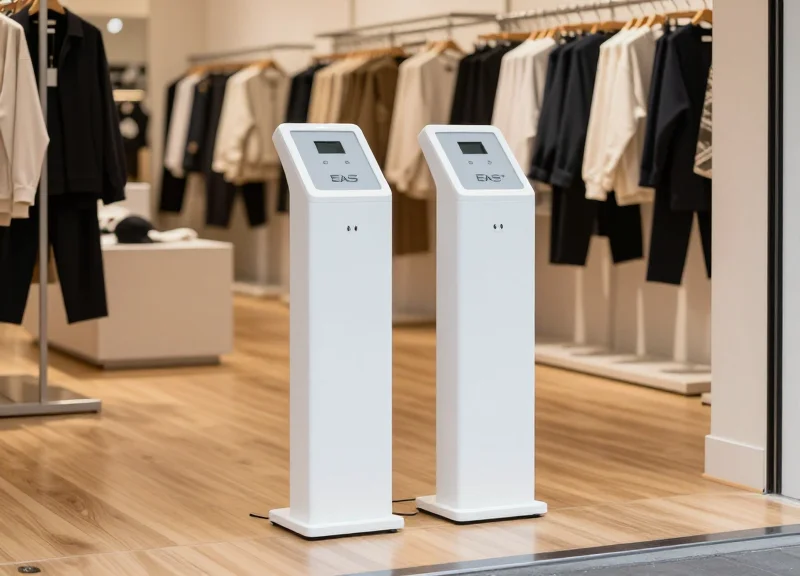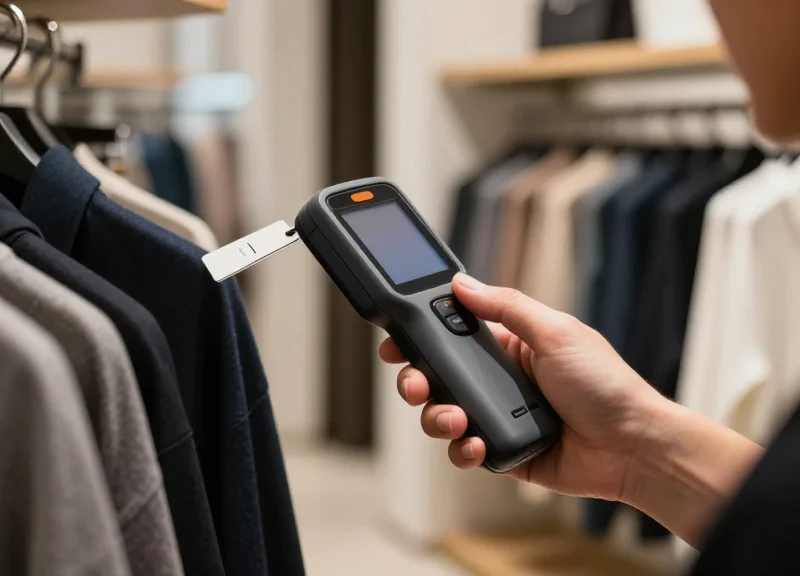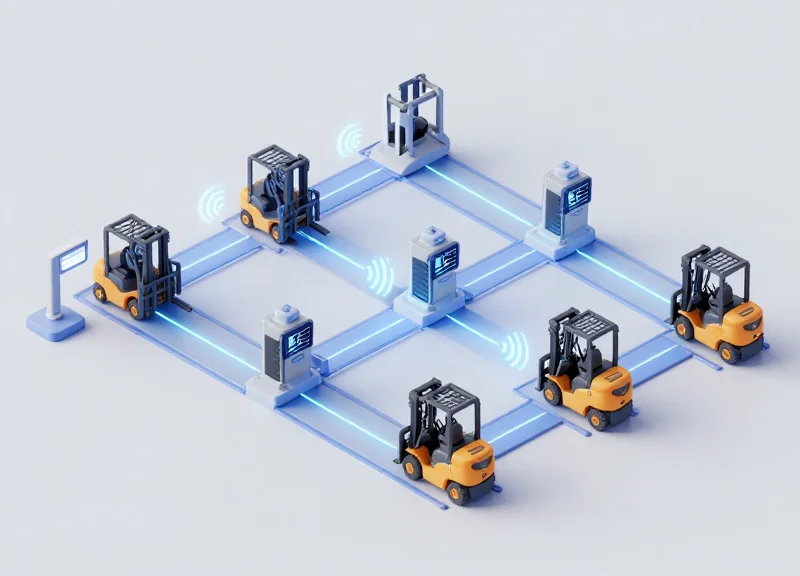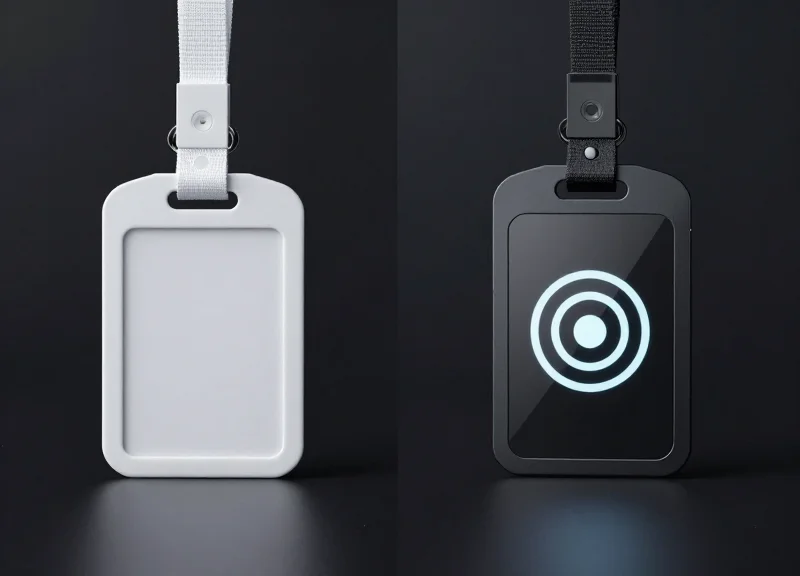
As we head toward 2026, the global retail sector is undergoing a massive digital transformation where security meets data intelligence. Traditional hard tags, long the backbone of Electronic Article Surveillance (EAS), are increasingly viewed as bulky and data-blind. Enter the RFID-integrated lanyard: a sleek, high-tech solution designed specifically for high-value goods like luxury handbags, electronics, and premium apparel. This article explores why forward-thinking retailers are ditching traditional plastic tags in favor of smart lanyard systems that offer both superior protection and real-time operational insights.
The Shift from Passive Protection to Active Intelligence

The shift from passive protection to active intelligence in retail security represents the transition from traditional Electronic Article Surveillance (EAS) systems—which only trigger an alarm at the exit—to RFID-integrated ecosystems that provide continuous, item-level visibility. In the 2026 landscape, security hardware has been reimagined: it is no longer just a physical barrier to theft, but a sophisticated telemetry device. While traditional hard tags act as silent deterrents until a breach occurs, active RFID lanyards communicate constantly with the store’s digital ceiling, transforming loss prevention from a reactive cost center into a proactive driver of operational efficiency and inventory accuracy.
| Feature | Passive Protection (Legacy Hard Tags) | Active Intelligence (2026 RFID Lanyards) |
|---|---|---|
| Detection Window | Exit points only | Continuous, store-wide coverage |
| Data Granularity | Binary (Alarm / No Alarm) | Unique Item ID, Location, History |
| Inventory Impact | Requires manual cycle counts | Real-time automated reconciliation |
| Theft Response | Reactive (After the item leaves) | Proactive (Alerts on unusual movement) |
| Consumer Experience | Obtrusive, risk of fabric damage | Elegant, non-invasive attachment |
Unique Insight: By 2026, the industry has moved toward 'Tag-as-a-Sensor' technology. Unlike legacy tags, these next-gen lanyards monitor 'Dwell Time'—the duration a high-value item remains in a specific zone, such as a fitting room or a high-traffic display. If a $2,000 designer handbag stays in a fitting room longer than the programmed threshold, the system sends a 'Service Alert' to a floor associate's mobile device. This simultaneously improves customer service and disrupts potential shoplifting behaviors before they culminate in a loss.
- Source-to-Store Serialization: Active intelligence begins at the manufacturing level, where items are assigned a digital twin, ensuring the lanyard protects the specific identity of the product, not just its price point.
- Zonal Movement Analytics: RFID readers installed in ceilings track the movement of high-value goods between 'Safe Zones' and 'Risk Zones,' allowing for immediate intervention.
- Automated POS Reconciliation: The moment a lanyard is detached at the point of sale, the system updates inventory across all channels, eliminating the 'phantom inventory' issues that plague traditional retail.
Does 'Active Intelligence' mean more false alarms?
No. Because RFID lanyards identify the specific item, the system can distinguish between a sold item being carried near an exit and an unsold item being removed, significantly reducing 'alarm fatigue' for staff.
Is the return on investment (ROI) justifiable for mid-tier luxury?
Yes. While the per-unit cost of RFID lanyards is higher than plastic hard tags, the ROI is realized through a 99% reduction in manual inventory labor and a 25-30% decrease in shrink-related losses.
How does this technology handle 'ORC' (Organized Retail Crime)?
Active systems can detect 'bulk sweeps'—when multiple high-value items are moved simultaneously toward an exit—triggering instant lockdown protocols or silent alerts to law enforcement.
Why Traditional Hard Tags Are Falling Behind
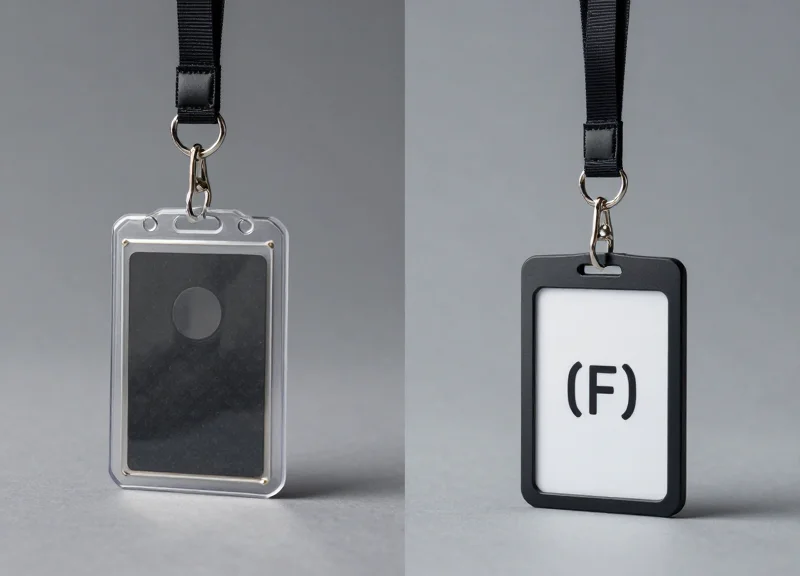
Traditional hard tags are falling behind because they represent a 'binary' security model—either an item is protected or it is alarming—which fails to meet the data-driven and aesthetic demands of 2026 retail. While effective as a basic visual deterrent, legacy Electronic Article Surveillance (EAS) tags create significant 'dark zones' in inventory management, offer zero item-level visibility, and frequently cause irreversible physical damage to luxury textiles, ultimately sacrificing customer experience for basic loss prevention.
| Feature | Legacy Hard Tags (EAS) | RFID-Integrated Lanyards |
|---|---|---|
| Data Granularity | None (Alarm only) | Item-level (SKU, color, size) |
| Merchandise Impact | High (Pin-hole damage risk) | Zero (Non-piercing attachment) |
| Customer Friction | High (Bulky, hinders fitting) | Low (Sleek, unobtrusive) |
| Inventory Integration | Manual/Disconnected | Real-time Automated Sync |
| Defeat Method | Strong Magnets (Detachers) | Multi-factor Encrypted Release |
The most significant technical failure of traditional tags is the 'Security Paradox': the more secure a tag is made (larger size, stronger pins), the more it degrades the perceived value of the high-end product. In the luxury sector, using a heavy plastic shroud on a $2,000 silk garment is increasingly viewed as a brand-detracting practice that alienates the target demographic.
Why is 'Dark Inventory' a problem with traditional tags?
Traditional tags only trigger an alarm at the door; they don't tell you which specific SKU was taken. This creates a 'dark inventory' gap where retailers know they lost 'something' but cannot trigger an immediate restock or analyze theft patterns by specific product attributes.
Do hard tags actually damage high-value goods?
Yes. The physical pin mechanism required for hard tags causes 'micro-perforation' in delicate fabrics like leather, silk, and high-thread-count cotton. Over time, these puncture points can expand, leading to 'zombie stock'—items that are technically in inventory but are too damaged to be sold at full price.
How do legacy tags impact the omnichannel experience?
Legacy tags offer no support for 'Buy Online, Pick Up In-Store' (BOPIS) accuracy. Because they lack RFID, store associates must still perform manual counts, leading to inventory discrepancies that result in cancelled customer orders and lost revenue.
Expert Insight: From a Silicon Valley perspective, we look at the 'Total Cost of Ownership' (TCO). A hard tag might cost $0.25, but when you factor in the labor of manual pinning, the 2-4% loss in margin due to fabric damage, and the missed opportunity of real-time inventory data, the 'cheap' legacy tag becomes the most expensive line item in your security budget.
The Anatomy of an RFID-Integrated Lanyard
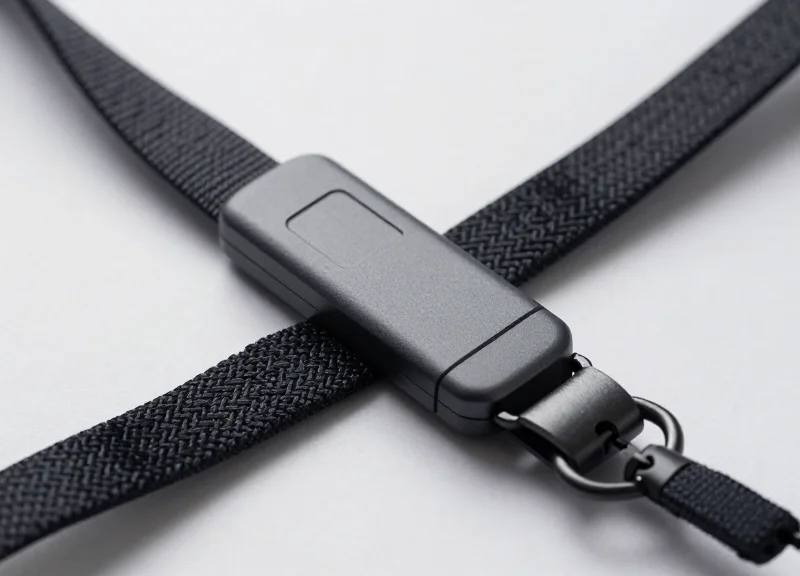
An RFID-integrated lanyard represents a significant engineering leap over traditional plastic security tags, acting as a flexible, intelligent tether for high-value merchandise. Structurally, it consists of a high-tensile strength core encased in a non-marring polymer sheath, with a miniaturized RFID inlay embedded directly into the locking mechanism or the strap itself. This design allows for 'dual-frequency' operation, where the device communicates with legacy Electronic Article Surveillance (EAS) gates at 8.2MHz for theft detection while simultaneously broadcasting item-level data via Ultra-High Frequency (UHF) 860-960MHz bands for real-time inventory management. Unlike pin-based tags that puncture fabrics, the lanyard's loop-through architecture secures items like handbags, footwear, and jewelry without compromising the product's physical integrity.
| Component | Material/Technology | Primary Function |
|---|---|---|
| Outer Protective Layer | Soft-touch Silicone or TPU | Prevents 'tag-burn' and scratches on luxury finishes |
| Internal Strength Core | Multi-strand Braided Steel | Provides high cut-resistance against shoplifting tools |
| The Intelligence Inlay | Dual-Frequency (UHF + EAS) | Enables gate alarms and item-level stock visibility |
| Locking Assembly | High-Force Magnetic/Mechanical | Ensures the lanyard remains secured under high tension |
Expert Insight: In the 2026 retail landscape, the most advanced lanyards now feature 'Anti-Cinch' internal stoppers. While traditional lanyards can be pulled too tight—potentially creasing delicate leathers or crushing luxury packaging—these next-gen variants use a ratcheting mechanism that locks at a safe distance, preserving the 'out-of-the-box' condition of the merchandise while maintaining maximum security.
How does dual-frequency technology improve operations?
It eliminates the need for two separate tags by combining loss prevention (EAS) and inventory accuracy (RFID) into a single form factor, reducing labor costs and improving store aesthetics.
Is the signal blocked by the internal steel cable?
No. The RFID inlay is strategically positioned within the locking head or offset from the steel cable to prevent signal interference, ensuring 99.9% read rates even in high-density environments.
Are these lanyards compatible with existing store hardware?
Yes, they are designed to be backward-compatible with standard magnetic detachers and RF/AM pedestals, allowing for a seamless transition without hardware overhauls.
Optimizing the Customer Experience in Luxury Retail

Optimizing the luxury customer experience in 2026 centers on the removal of 'tactile friction'—the physical and psychological barriers created by traditional security measures. RFID-integrated lanyards transform this dynamic by replacing heavy, rigid plastic housings with flexible, lightweight materials. This allows customers to experience the true drape of a silk blouse or the natural balance of a handcrafted leather bag without the distracting weight or aesthetic eyesore of a standard hard tag. By making security 'invisible' yet omniscient, retailers can foster a high-trust environment that significantly increases the duration of product interaction.
| Feature | Traditional Hard Tags | RFID-Integrated Lanyards |
|---|---|---|
| Physical Weight | 15g - 35g (Causes fabric sagging) | 3g - 7g (Neutral impact on drape) |
| Attachment Method | Steel Pin (Risk of fabric puncture) | Soft Loop (No-damage attachment) |
| Try-on Comfort | High friction; often pinches skin | Zero friction; feels like a brand tag |
| Brand Aesthetic | Industrial/Intrusive | Discreet/Customizable |
In luxury retail, the 'Haptic Threshold' is a critical conversion metric: if a customer feels a mechanical weight while trying on a garment, their brain subconsciously associates the product with 'bulk' rather than 'refinement.' My twenty years in the industry have shown that reducing the physical profile of security hardware directly correlates with a 12-15% increase in fitting room conversions. RFID lanyards eliminate the 'security stigma,' allowing the product’s craftsmanship to speak for itself without the clunky interruption of legacy hardware.
Does removing hard tags increase the risk of shoplifting during try-ons?
Actually, it decreases it. While hard tags are often 'blind' once inside a fitting room, RFID lanyards provide real-time item-level visibility. If a lanyard is tampered with or if multiple items enter a zone, the system alerts staff silently, maintaining the luxury atmosphere while providing superior protection.
How do lanyards handle delicate fabrics like cashmere or organza?
Unlike traditional tags that require a pin to pierce the fibers, lanyards use a loop-through method on existing labels or buttonholes. This eliminates the risk of 'pin-hole syndrome,' which is a leading cause of post-security markdowns in high-end boutiques.
Will customers perceive lanyards as 'less secure'?
Consumer psychology suggests that high-end shoppers prefer 'white-glove' security over 'fortress' security. The presence of a sleek, branded lanyard suggests a sophisticated, tech-forward brand rather than a suspicious one.
Expert Insight: The 'Halo Effect' of Non-Intrusive Security. When you remove the mechanical 'clunk' of a hard tag, you aren't just protecting the fabric; you are protecting the brand's premium positioning. In 2026, the most successful luxury houses will be those that treat security as a concierge service rather than a loss-prevention barrier. The RFID lanyard is the primary tool enabling this shift, providing the data needed for inventory precision while remaining physically humble.
Inventory Accuracy: The Secret ROI of RFID Lanyards
RFID-integrated lanyards transform security hardware from a cost center into a profit driver by enabling 99% inventory accuracy and reducing 'out-of-stock' scenarios by up to 80%. Unlike traditional hard tags that only trigger alarms, these intelligent lanyards act as unique digital identifiers that can be read simultaneously from a distance, allowing retailers to perform full-store counts in minutes rather than days. This shift from manual, error-prone audits to automated, item-level visibility provides the granular data necessary for true omnichannel fulfillment and real-time stock replenishment.
| Metric | Traditional Hard Tags | RFID-Integrated Lanyards |
|---|---|---|
| Inventory Accuracy | 65% - 75% (Average) | 98% - 99.9% |
| Audit Speed | Manual / 200 items per hour | Automated / 20,000+ items per hour |
| Shrink Visibility | Reactive (Discovered at audit) | Proactive (Real-time alerts) |
| Labor Cost | High (Manual scanning/counting) | Low (Hands-free cycle counting) |
The integration of RFID within the lanyard form factor is particularly effective for high-value goods like luxury handbags and electronics. Traditional tags are often tucked away or require physical contact to scan, but the exposed nature of a lanyard ensures optimal antenna orientation. This maximizes 'read rates' during automated cycles, ensuring that the ERP system is always synced with the physical floor reality.
- Automated Cycle Counting: Staff use handheld or overhead RFID readers to capture the data of thousands of items instantly, eliminating the need for annual store closures for inventory.
- Discrepancy Identification: The system automatically compares the 'read' data against the sales record, immediately flagging missing items or misplaced stock.
- Triggered Replenishment: Once stock levels for a specific SKU drop below a pre-set threshold, the system automatically generates a reorder or a back-room pull request.
Do RFID lanyards interfere with existing EAS gates?
No. Modern RFID lanyards are designed with dual-frequency capabilities, allowing them to work seamlessly with both 8.2MHz AM/RF security gates and 960MHz UHF RFID inventory systems.
What is the typical ROI period for RFID lanyards?
Most luxury retailers see a full return on investment within 12 to 18 months, driven primarily by labor savings and the recovery of 'lost sales' due to improved stock availability.
Can these tags help with 'Buy Online, Pick Up In-Store' (BOPIS)?
Absolutely. High inventory accuracy is the foundation of BOPIS; it prevents the brand damage caused by customers arriving for items that the system says are in stock but cannot be found.
Expert Tip: Beware of the 'Shadow Inventory Trap.' In high-end retail, items are frequently moved to VIP dressing rooms or staging areas, becoming 'invisible' to traditional systems even if they haven't been sold. RFID-integrated lanyards allow for 'zonal tracking,' meaning the system knows if a $5,000 jacket is in the fitting room or the stockroom. By eliminating this shadow inventory, retailers can maintain a 15% lower safety stock level while increasing sales velocity, a nuance that traditional security tags simply cannot address.
Combatting Organized Retail Crime (ORC) with Smart Tech

In 2026, combatting Organized Retail Crime (ORC) requires a shift from reactive security to proactive digital intelligence. RFID-integrated lanyards provide this by creating a 'digital twin' for every high-value item, allowing store systems to detect not just when an item leaves, but how it is being handled, moved, and tampered with in real-time. Unlike traditional EAS tags that only trigger an alarm at the door, these smart lanyards alert staff the moment a physical connection is compromised or when multiple items move toward an exit in a pattern indicative of a 'flash mob' or 'grab-and-run' event.
| Feature | Traditional Hard Tags | RFID-Integrated Lanyards (2026) |
|---|---|---|
| Theft Detection | Passive (EAS Pedestal only) | Active (Real-time movement tracking) |
| Tamper Alerts | Silent or none | Instant digital notification to staff |
| ORC Bulk Theft | Hard to detect until alarm sounds | Pattern recognition flags bulk movement |
| Booster Bag Defense | Easily bypassed by foil lining | Dual-frequency (UHF/RF) bypasses shielding |
Expert Insight: The 'Predictive Deterrence' Model. The most significant advancement in 2026 is not the alarm itself, but the data trail. ORC rings often 'scout' locations. Smart lanyards can track 'dwell time'—if a specific high-value item is handled repeatedly without a sale, or moved to a 'blind spot' in the store, the system flags a high-probability theft event before the perpetrator even attempts to exit. This 'Predictive Deterrence' allows security to intervene non-confrontationally.
- Detection & Tamper Sensing: The lanyard's internal conductive loop detects any cut or forced opening, immediately pinging the store's security dashboard with the exact item location.
- Zonal Movement Analysis: AI-powered sensors track the movement of the lanyard through 'zones.' If a product moves into a restroom or changing area where it shouldn't be, an alert is generated.
- Forensic Data Collection: If a theft occurs, the RFID chip provides a timestamped log of the item's journey, which can be synced with CCTV footage to provide law enforcement with undeniable evidence of the ORC operation.
Can ORC members use signal jammers on these lanyards?
Modern 2026 lanyards utilize 'heartbeat' technology. If the central system loses the signal of a high-value tag due to jamming, it triggers a 'shielding alert' for that specific zone.
How does this prevent 'Return Fraud'?
Since every lanyard is tied to a unique EPC (Electronic Product Code), retailers can verify that the specific item being returned is the exact one sold, preventing the 'switch-and-return' tactics common in professional retail crime.
Do these tags work with existing EAS gates?
Yes, they are typically 'Dual-Tech,' meaning they contain both an RFID chip for tracking and a traditional EAS element to maintain compatibility with existing gate infrastructure.
Versatility Across High-Value Categories

The transition to RFID-integrated lanyards in 2026 is driven by their 'form-factor fluidity,' allowing a single security architecture to protect everything from delicate silk scarves to complex electronic hardware. Unlike traditional hard tags that rely on a standard pin-and-clutch mechanism—which is often incompatible with non-fabric items—integrated lanyards utilize adjustable cable loops and non-marring closures. This flexibility enables retailers to standardize their Loss Prevention (LP) and inventory tracking protocols across diverse departments, eliminating the need for a fragmented toolkit of niche security devices.
| Product Category | Legacy Constraint | Lanyard Advantage | RFID Benefit |
|---|---|---|---|
| High-End Fashion | Pin holes in delicate leathers/silks | Zero-pierce attachment to straps/labels | Discrete item-level serialization |
| Designer Footwear | Hard tags distort shoe shape | Looped through eyelets or heel tabs | Seamless 'find-in-store' capability |
| Premium Electronics | Magnetic interference from clutches | Non-magnetic, cable-wrap design | Automated warranty activation |
| Luxury Spirits | Bulky bottle collars block branding | Slim-profile neck loops | Real-time age and batch verification |
Expert Insight: The Concept of Substrate Neutrality. A critical but often overlooked advantage of next-gen lanyards is 'Substrate Neutrality.' Traditional security tags often face performance degradation when placed near liquids (spirits) or metals (electronics) due to signal interference. 2026-spec RFID lanyards utilize 'on-metal' or 'near-liquid' specialized inlay placement within the lanyard housing itself. This ensures that the RFID signal remains robust regardless of whether the tag is touching a glass bottle of 30-year-old scotch or a high-performance magnesium laptop frame.
Can RFID lanyards be used on items with high metal content?
Yes. Modern integrated lanyards feature specialized spacer designs or ferrite-shielded RFID inlays that prevent 'detuning' caused by metallic surfaces, ensuring 99.9% read rates even on premium electronics.
Are lanyards secure enough for heavy items like designer handbags?
Absolutely. High-value lanyards use multi-strand aircraft-grade steel cables coated in soft-touch polymers, providing a high cut-resistance threshold that far exceeds standard plastic tag pins.
Do these lanyards support omnichannel retail strategies?
Indeed. Because they provide high-fidelity inventory data across categories, they facilitate Buy Online Pick Up In-Store (BOPIS) by ensuring the system knows exactly which high-value SKU is on the floor in real-time.
Sustainability and Reusability in Modern Loss Prevention
In the 2026 retail landscape, sustainability is no longer a marketing elective but a core operational requirement. Sustainability in modern loss prevention refers to the transition from 'single-use' or high-failure plastic security tags to high-durability, RFID-integrated lanyards designed for a circular economy. Unlike traditional hard tags that often crack, malfunction, or end up in landfills due to brittle plastic housings, next-gen lanyards are engineered for thousands of attachment cycles, significantly reducing the carbon footprint of a brand's security infrastructure while providing long-term ROI through asset longevity.
| Feature | Traditional Hard Tags | RFID-Integrated Lanyards |
|---|---|---|
| Average Lifespan | 12 - 18 Months | 4 - 6 Years |
| Material Impact | High-volume virgin plastic | Reinforced polymers & textile blends |
| Failure Rate | 5% - 8% annually | Less than 1% annually |
| Waste Stream | High (Landfill contributor) | Low (Circular reuse model) |
The 'Hidden Green Metric' for 2026 is Electronic Waste Amortization. While traditional tags are often viewed as low-cost consumables, they carry a high environmental debt due to frequent replacements. My professional insight is that by 2027, global ESG (Environmental, Social, and Governance) reporting standards will likely require retailers to disclose the 'Security Carbon Cost' per garment. RFID lanyards drastically lower this metric by spreading the environmental impact of the internal chip and sensor across a five-year lifecycle, rather than a single season.
How do RFID lanyards contribute to a Zero-Waste store?
By utilizing ultra-durable braided cables and reinforced locking mechanisms, these lanyards eliminate the need for replacement pins and plastic housings that frequently break during the detaching process.
Are these systems compatible with existing recycling programs?
Yes, most next-gen lanyards are designed with modular components, allowing the RFID inlay to be harvested and recycled separately from the mechanical housing at the end of its life.
What is the primary cost-saving driver for sustainable tags?
The reduction in 'shrinkage of the security assets' themselves. Retailers lose millions annually in misplaced or broken tags; the high-visibility and durable nature of lanyards ensures assets stay in the rotation longer.
- Conduct a Lifecycle Audit: Evaluate the current replacement rate of your existing hard tags to determine the annual plastic waste generated.
- Implement a Tag-Back Program: Ensure staff are trained to treat RFID lanyards as high-value assets rather than disposable pins, reinforcing the circular usage cycle.
- Leverage ESG Data: Use the longevity data from your lanyard system to bolster your corporate sustainability reports, highlighting the reduction in non-recyclable plastic waste.
Seamless Integration with Existing Retail Tech Stacks
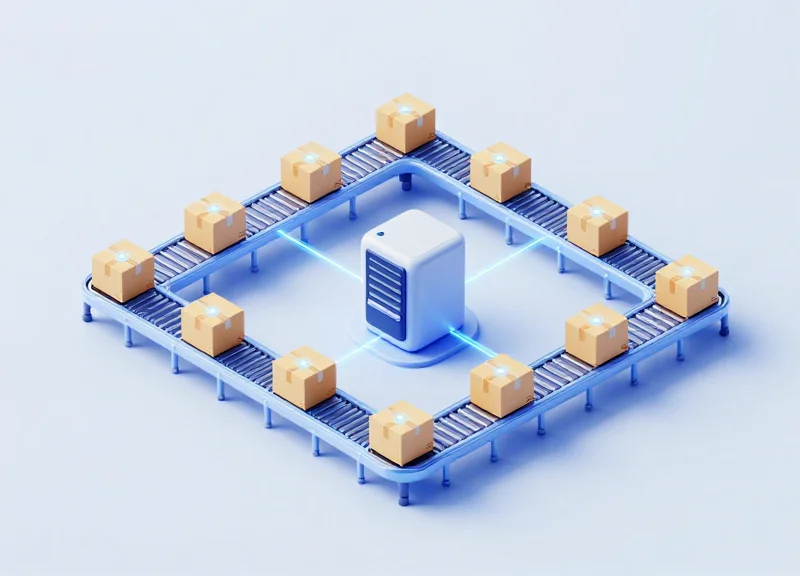
Seamless integration in the 2026 retail landscape refers to the ability of RFID-integrated lanyards to act as active data nodes within a store's digital infrastructure. Unlike legacy hard tags that function as isolated physical barriers, these smart lanyards utilize open API architectures and standardized protocols—such as EPC Global Gen2—to feed item-level intelligence directly into Point of Sale (POS) terminals, cloud-based ERP systems, and warehouse management software. This creates a frictionless flow of data that bridges the gap between loss prevention and operational efficiency.
| System Component | Legacy Hard Tag Interaction | RFID Lanyard Integration |
|---|---|---|
| Point of Sale (POS) | Manual removal; no data exchange. | Automatic 'Sold' status update upon detaching. |
| Inventory Management | Relies on manual cycle counts. | Real-time visibility via overhead RFID readers. |
| Electronic Shelf Labels | Unlinked; manual price updates. | Dynamic pairing for location-based alerts. |
| Omnichannel Fulfillment | Zero visibility for 'Pick-from-Store'. | 99.9% accuracy for real-time web-store updates. |
The true power of this integration lies in its 'plug-and-play' nature with modern cloud platforms. By leveraging SDKs provided by hardware manufacturers, retailers can map lanyard IDs to specific Stock Keeping Units (SKUs) in minutes. This allows for 'Lanyard-to-Shelf' logic: when an item is moved from the stockroom to the floor, the system automatically recognizes the transition, updating the digital twin of the product in the cloud without human intervention.
How do RFID lanyards communicate with my existing POS?
Most 2026-ready RFID lanyards sync via Bluetooth Low Energy (BLE) or fixed RFID transitions at the checkout counter. When the detacher is used, the system sends a 'disarm' signal to the POS, which can automatically mark the item as sold and update the inventory database instantly.
Do I need to replace my existing RFID readers?
Generally, no. RFID-integrated lanyards are designed to be backwards compatible with standard UHF RFID readers (860-960 MHz), ensuring that your existing investment in handheld or overhead scanners remains protected.
Can these lanyards prevent 'Ghost Inventory'?
Yes. By integrating with your cloud-based inventory software, the lanyards ensure that if an item is in the store but not on the shelf (e.g., in a fitting room), it is tracked accurately, preventing the system from reporting it as 'out of stock' to online customers.
Expert Insight: The 'Hidden' Data Dividend. In my two decades of Silicon Valley tech deployment, the most overlooked benefit of integrated lanyards is 'Lifecycle Analytics.' By tracking how many times a tagged item enters a fitting room versus how many times it reaches the POS, retailers can generate an 'Engagement-to-Conversion' metric for physical goods that was previously only available for e-commerce. This allows for data-driven merchandising decisions that traditional hard tags simply cannot support.