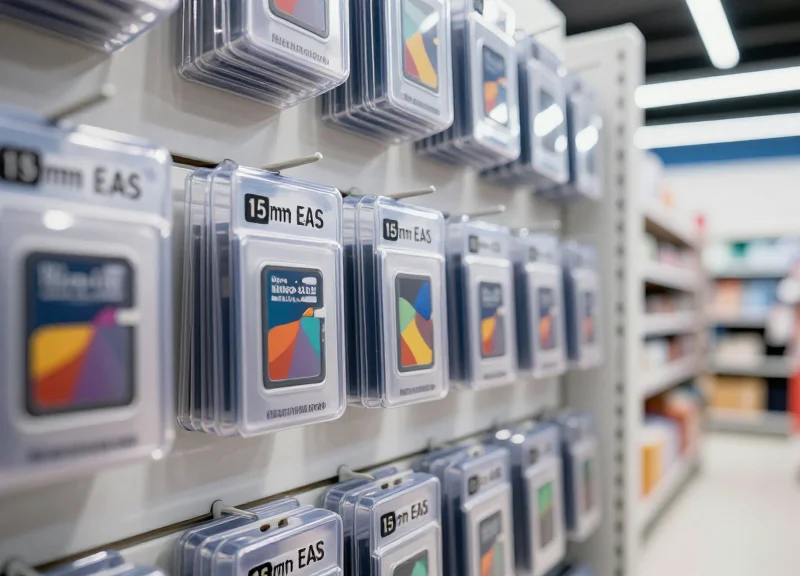
In the high-stakes world of consumer electronics retail, maximizing shelf real estate while mitigating the risk of theft is a constant challenge. Micro-SD cards, despite their small physical footprint, carry high retail value and remain one of the most frequently targeted items for shoplifting. Conventional security solutions often fail because they are too bulky, significantly reducing the number of units that can be displayed on a standard peg or shelf. This technical guide focuses on the implementation of 15mm EAS (Electronic Article Surveillance) safer boxes, a precision-engineered solution that allows for high-density merchandising without sacrificing the robust security required to protect your inventory.
The Evolution of Small Item Security: Why 15mm Matters
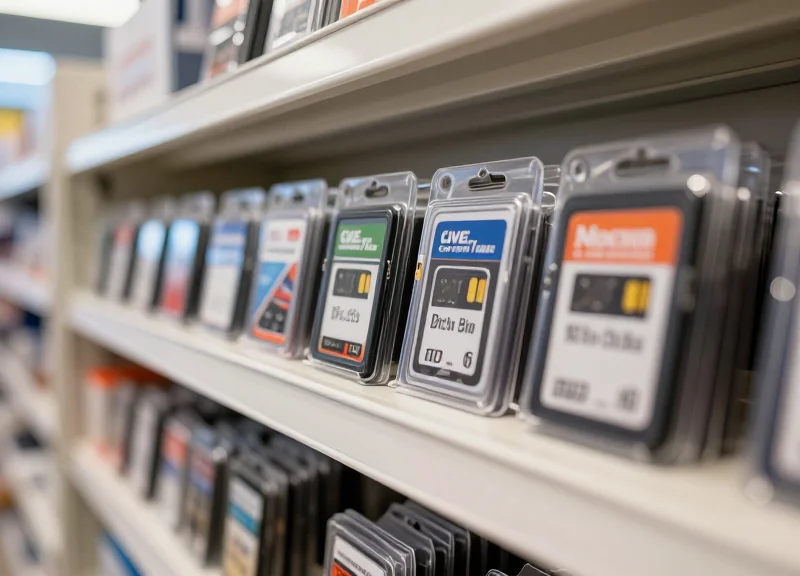
The evolution of small item security has reached a critical inflection point where the 15mm EAS safer box serves as the gold standard for high-density merchandising. Historically, retailers were forced to choose between 'open-sell' environments that suffered from high shrink and 'locked-case' environments that stifled conversion. The 15mm form factor resolves this by providing a slim, transparent physical deterrent specifically engineered to match the volumetric dimensions of Micro-SD blister packs, allowing for a 1:1 replacement of unprotected stock with secured inventory without requiring a redesign of existing peg-hook layouts.
In the early 2000s, loss prevention relied heavily on bulky hard tags or oversized 'Alpha-style' boxes. While effective at stopping theft, these solutions were catastrophic for 'Shelf Velocity'—the speed at which product moves relative to the space it occupies. As Micro-SD cards shrank in size but grew in value, the discrepancy between the product size and the security enclosure size led to massive wasted space on the sales floor. The move toward a 15mm profile marks the industry's transition into 'Precision Security,' where the enclosure is an extension of the packaging itself.
| Security Method | Shelf Density Impact | Visual Merchandising | Labor Requirement |
|---|---|---|---|
| Standard EAS Tags | High | Obstructs Branding | Low |
| Legacy 30mm+ Boxes | Low (Bulky) | Clear but Clunky | Medium |
| 15mm Slim Safer | Maximum Efficiency | Premium/Invisible | Medium |
| Glass Showcases | Low (Limited Space) | High Friction | High (Staff Assist) |
Why is the 15mm width considered 'High-Density'?
Standard retail peg hooks are designed for specific centers. A 15mm width allows two to three additional units to be 'faced' on a standard gondola shelf compared to traditional 25mm or 30mm boxes, effectively increasing potential revenue per square foot by 40-60%.
How does 15mm improve the customer experience?
Unlike spider wraps that hide technical specifications on the back of the card, the 15mm slim box uses high-clarity polycarbonate that allows customers to read fine print and scan QR codes through the security layer, reducing purchase friction.
Is the 15mm box compatible with existing EAS systems?
Yes, these boxes are typically multi-technology compatible, housing either 58KHz (AM) or 8.2MHz (RF) ferrite coils or labels inside the reinforced locking mechanism.
Expert Insight: From a technical merchandising perspective, the '15mm Sweet Spot' isn't just about the width; it's about the center of gravity. Traditional bulky boxes often lean forward on peg hooks when the inventory gets low, causing a 'shingling' effect that looks messy and invites theft by making the hooks easier to sweep. The 15mm safer box maintains a vertical center of gravity, ensuring that even a single unit remains perfectly aligned with the planogram, a psychological cue to shoplifters that the inventory is actively managed.
Technical Specifications of 15mm EAS Safer Boxes
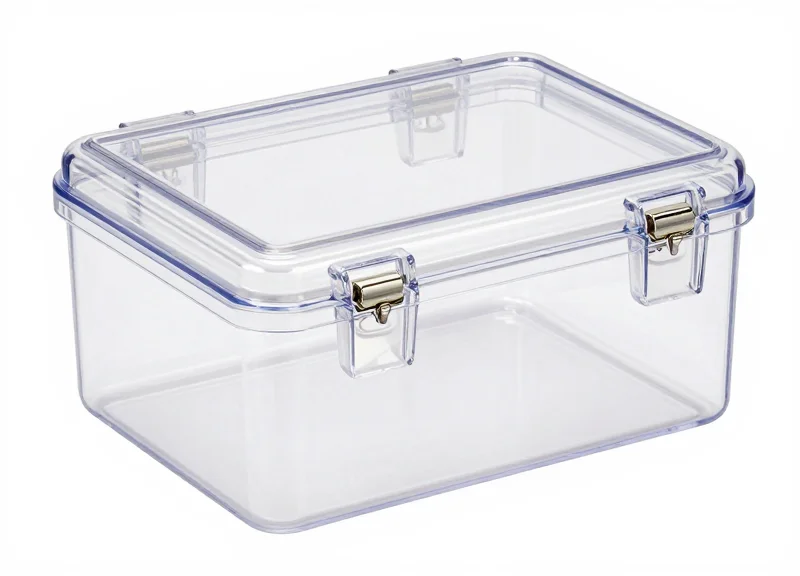
A technical-grade 15mm EAS (Electronic Article Surveillance) safer box is a high-clarity polycarbonate enclosure designed to protect high-shrink micro-electronics while maintaining a slim profile for maximum peg-hook density. These units typically feature internal dimensions optimized for standard Micro-SD and SD card blister packs, integrating either Acousto-Magnetic (AM) 58kHz or Radio Frequency (RF) 8.2MHz resonators. The 15mm thickness is the industry standard for 'High-Density Merchandising,' allowing retailers to increase on-shelf inventory by up to 40% compared to traditional 25mm or 32mm security cases.
| Feature | Standard Specification | Premium Specification |
|---|---|---|
| External Dimensions | 145mm x 120mm x 15mm | 142mm x 118mm x 14.5mm |
| Material Composition | Standard Polycarbonate (PC) | High-Impact GE Lexan™ PC |
| Locking Force | Standard Magnetic (>5,000G) | Superlock Magnetic (>12,000G) |
| Transparency Index | 88% Light Transmission | 92%+ (Optical Grade) |
| EAS Frequency | Single (AM or RF) | Dual-Phase (AM + RF Integrated) |
The structural integrity of a 15mm safer box relies on the hinge design and the locking tooth engagement. High-quality specifications demand a reinforced 'double-hinge' geometry to prevent 'crowbarting'—a common theft technique where pliers are used to snap the pivot point. Furthermore, the locking mechanism usually employs a spring-loaded steel clutch that only retracts when subjected to a specific magnetic Gauss threshold, ensuring that consumer-grade magnets cannot bypass the security.
What is the importance of 'Optical Grade' Polycarbonate?
Lower-grade plastics yellow over time and create glare. Optical-grade PC ensures that 2D barcodes and QR codes on Micro-SD packaging can be scanned by Point-of-Sale (POS) lasers through the box without removal, reducing friction during checkout.
Why is the internal depth usually 11mm-12mm for a 15mm box?
The 3mm-4mm difference accounts for the wall thickness required to maintain impact resistance (IK07 rating) and the space needed for the internal EAS coil housing.
How does the locking mechanism differ between Mechanical and Magnetic?
Mechanical locks require a physical key and are prone to wear; magnetic locks (S3/Standard/Super) use a magnetic detent system that is faster for staff to operate but requires a high-pull-force detacher.
Expert Insight: The 'Anti-Sweep' Rib Design. When implementing 15mm safers, look for models with integrated 'Stacking Ribs' or 'Nesting Grooves' on the exterior shell. These micro-structures (often only 0.3mm high) prevent the boxes from sliding laterally against each other on the peg. This prevents 'shelf-sweeping'—where a thief clears an entire row into a bag—by increasing the friction and noise generated during rapid removal, effectively acting as a secondary psychological deterrent.
Frequency Compatibility: Integrating with AM and RF Systems

Frequency compatibility for 15mm EAS safer boxes is the critical alignment between the internal security tag (ferrite or circuit-based) and the store's Electronic Article Surveillance (EAS) gate infrastructure. Most global retail environments utilize either Acousto-Magnetic (AM) systems operating at 58 kHz or Radio Frequency (RF) systems operating at 8.2 MHz. Because 15mm boxes are designed for high-density merchandising, selecting the wrong frequency or low-quality tags can lead to 'blind spots' or false alarms caused by signal interference from neighboring protected items.
| Feature | Acousto-Magnetic (AM) 58 kHz | Radio Frequency (RF) 8.2 MHz |
|---|---|---|
| Detection Range | Superior: Effective for wider exits. | Standard: Best for narrow-to-mid doorways. |
| Metal Interference | Resilient: Less affected by foil packaging. | Sensitive: Performance drops near metal. |
| Tag Form Factor | Thicker: Requires precise internal cavity. | Ultra-Thin: Fits easily in 15mm profiles. |
| Cost per Tag | Higher: Due to ferrite material costs. | Lower: Economical for high-volume units. |
Expert Insight: The Proximity Coupling Effect. In ultra-high-density micro-SD displays, where 15mm boxes are stacked 10-15 deep on a single peg, RF labels can suffer from 'detuning' due to parasitic capacitance. This happens when the cumulative plastic mass and proximity to metal hooks shift the resonance of the 8.2 MHz circuit. For maximum reliability in dense micro-SD planograms, we recommend AM (58 kHz) technology, as its magnetic resonance is significantly more stable when items are tightly packed together.
- Audit Current Infrastructure: Identify whether your pedestals are AM or RF by checking the controller unit; AM units typically operate at 58 kHz and are required for foil-backed micro-SD packaging.
- Internal Cavity Matching: Ensure the 15mm box has a dedicated internal slot that keeps the tag flat. Bent or compressed RF labels will lose frequency calibration.
- Test Deactivation Height: Verify that your point-of-sale (POS) deactivators can penetrate the 15mm polycarbonate shell to effectively kill the signal without opening the box.
Can I use both AM and RF in the same store?
While possible, it requires dual-technology pedestals. Most retailers stick to one to simplify the 'tagging at source' process for micro-SDs.
Does the 15mm box shell block the signal?
No, high-grade polycarbonate is transparent to both 58 kHz and 8.2 MHz waves, provided no metallic coatings are used on the box.
How do I prevent false alarms from 'Body Shielding'?
AM technology is generally more resistant to the human body's tendency to absorb RF signals, making it the preferred choice for small, concealable items like SD cards.
Planning Your Layout for High-Density Merchandising
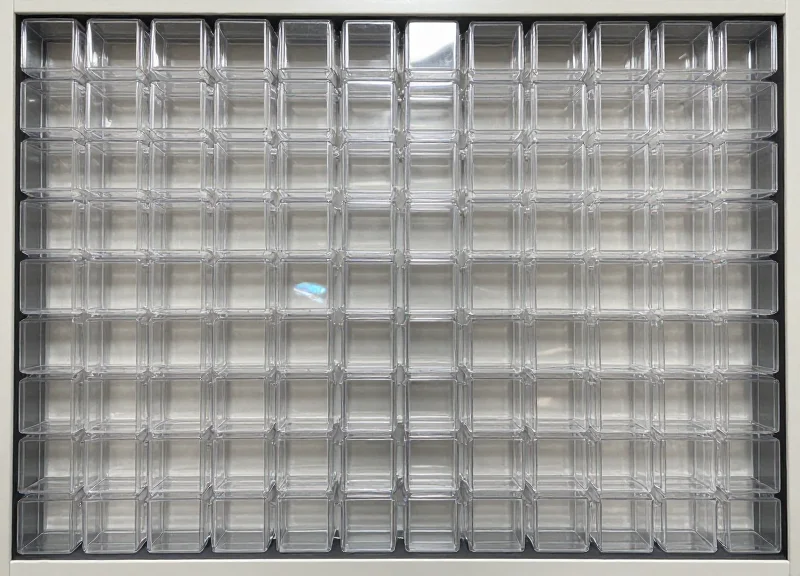
High-density merchandising layout is the strategic arrangement of retail space to maximize the number of Stock Keeping Units (SKUs) displayed per linear foot without compromising product security or consumer accessibility. By transitioning from standard 22mm safer boxes to ultra-slim 15mm profiles, retailers can achieve a theoretical capacity increase of 30-50% on existing peg-hook systems, allowing for a deeper product mix and reduced out-of-stock occurrences in high-value categories like Micro-SD cards and flash drives.
Implementing a high-density strategy requires more than just thinner boxes; it demands a recalibration of your planogram's spatial logic. When products are packed tightly, the visual 'weight' of the shelf changes. The objective is to utilize the slim 15mm profile to reclaim 'dead air' on the hook, effectively turning a 12-inch peg from a 12-unit display into an 18-unit powerhouse.
| Metric | Standard 22mm Safer Box | 15mm High-Density Box | Net Efficiency Gain |
|---|---|---|---|
| Units per 12" Peg Hook | 12 Units | 18-20 Units | +50% Depth |
| Horizontal SKUs (48" Shelf) | 18 Facings | 24 Facings | +33% Breadth |
| Visual Transparency | Moderate | High (Polycarbonate) | Improved Visibility |
| Weight per Full Hook | Approx. 1.2kg | Approx. 1.8kg | Requires Heavy-Duty Pegs |
- Calculate the Depth-to-Weight Ratio: Before loading hooks, ensure your display backing (slatwall or pegboard) can handle the 50% increase in weight. 15mm boxes allow more product in less space, which shifts the center of gravity forward on the hook.
- Implement Staggered Horizontal Spacing: To prevent a 'wall of plastic' effect, stagger the heights of adjacent hooks by 5-10mm. This allows customers to easily grip the edges of the 15mm box, which are more difficult to pinch than thicker alternatives.
- Optimize the 'Golden Zone' Planogram: Place the highest-margin Micro-SDs at eye level using the 15mm boxes to double the facings. This 'High-Density Golden Zone' strategy maximizes profit per square inch.
Expert Insight: The Friction Factor and 'Micro-Air' Gaps. A common pitfall in high-density layouts is 'box-clumping,' where high-clarity polycarbonate boxes stick together due to static or vacuum seals. When planning your layout, specify 15mm boxes with 'molded-in standoffs'—tiny raised nibs on the box surface. This creates a microscopic air gap between units, ensuring that when a customer pulls one Micro-SD forward, they don't accidentally pull the entire row onto the floor.
Does higher density lead to more 'sweep' theft?
While density increases the number of items available, the use of locking 'anti-sweep' hooks in conjunction with 15mm boxes actually decreases theft by requiring a deliberate dispensing motion for each unit.
Should I use 15mm boxes for all SD cards?
15mm boxes are optimized for Micro-SD and standard SD formats. For bulkier items like USB hubs, stick to standard widths to maintain a cohesive visual line on the shelf.
How does box slimness affect RFID scanning?
The 15mm profile actually improves RFID read rates in high-density environments because it reduces the physical distance between tags, allowing for more consistent signal bounce within a concentrated 'read zone'.
Step-by-Step Installation and Tagging Procedures
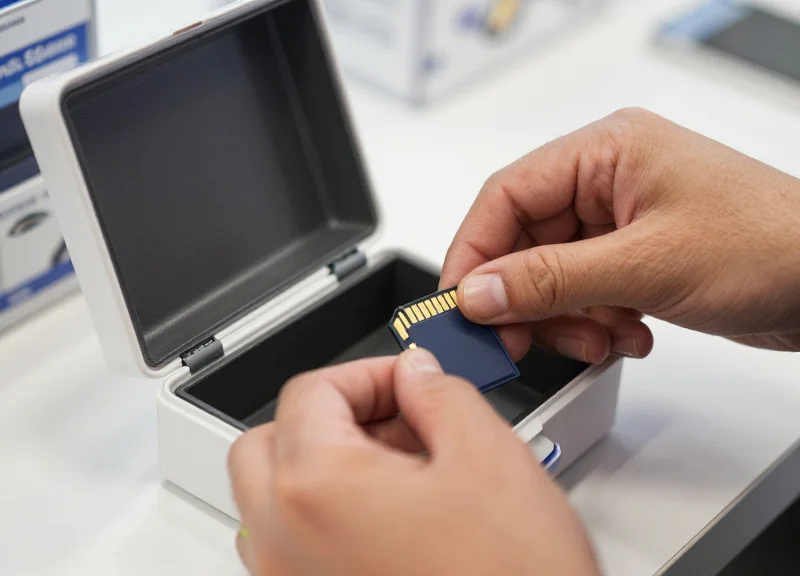
The installation procedure for 15mm EAS safer boxes is the critical bridge between warehouse receiving and floor readiness. For high-density micro-SD merchandising, this workflow must balance speed with technical precision to ensure that the ultra-slim 15mm profile remains perfectly flat for stacking while maintaining 100% signal integrity for Acousto-Magnetic (AM) or Radio Frequency (RF) detection systems.
- Environmental Preparation: Clear a dedicated workstation and use an anti-static mat. Micro-SD cards are sensitive to Electrostatic Discharge (ESD); ensuring the technician is grounded prevents latent component damage during high-volume handling.
- Internal Tag Calibration: Apply the EAS label (AM or RF) to the designated recessed area inside the safer box. Ensure the label is centered; an off-center label in a 15mm box can create a 'bulge' that prevents perfect vertical stacking on high-density shelving.
- Product Orientation and Insertion: Place the micro-SD card—retaining its original thin-film packaging if possible—into the guide rails. The product must be flush against the front transparent wall to ensure the barcode remains scannable through the polycarbonate.
- Lock Engagement: Slide the locking cap or engage the magnetic hinge. Listen for the 'audible click' which signifies the mechanical teeth have fully seated into the box frame.
- Signal Verification: Pass a sample from the batch through a field tester or deactivator at the 'check' setting to verify the internal tag has not been shielded by the product's internal metallic components.
| Procedure Component | 15mm Best Practice | Common Error to Avoid |
|---|---|---|
| Tag Placement | Lower 1/3rd of the box back-plate | Centering over the Micro-SD chip (causes interference) |
| Cleaning | 99% Isopropyl alcohol on outer surfaces | Using abrasive cloths that scratch the scannable window |
| Locking | Dual-locking magnetic mechanism | Forcing a closure on a misaligned card |
Expert Tip: To maximize density, utilize the 'Offset-Tagging' method. If you are stacking these boxes horizontally on a shelf, alternate the internal tag placement between the left and right sides for every other box. This prevents the cumulative 'thickness creep' that occurs when multiple EAS labels are stacked directly on top of one another, allowing you to fit 5-10% more units in the same shelf footprint.
Why is the 15mm thickness specifically difficult to tag?
The narrow internal clearance means there is less 'air gap' between the EAS tag and the product. In 15mm boxes, if the tag is too close to the micro-SD's metal contacts, it can cause 'detuning,' which reduces the detection range of the security gates.
How often should detachers be inspected?
Magnetic detachers should be tested weekly using a gauss meter. A weakened magnet may fail to fully retract the internal pins of the 15mm box, leading to plastic fatigue and eventual breakage during forced opening.
Can I reuse the internal EAS tags?
No. While the safer box itself is designed for hundreds of cycles, the adhesive EAS labels are single-use and lose their resonant frequency stability if peeled and reapplied.
Addressing Signal Interference and False Alarms
In high-density merchandising, signal interference and false alarms are typically caused by electronic noise (EMI), metal proximity, or tag coupling, which can disrupt the communication between 15mm EAS safer boxes and detection pedestals. Managing these factors requires a technical understanding of the 'near-field' environment, where the proximity of metal shelving and other electronic devices can shift the resonance frequency of RF tags or dampen the magnetic signal of AM systems.
| Interference Source | Impact on 15mm Safer Boxes | Technical Mitigation |
|---|---|---|
| Metal Peg Hooks/Shelving | Creates a Faraday cage effect, shielding the internal tag from the gates. | Use plastic-coated hooks or maintain a 2-inch gap between the gate and metal racks. |
| LED Driver Noise | High-frequency switching power supplies cause 'phantom' alarms. | Install ferrite beads on power cables or upgrade to shielded LED drivers. |
| Tag Proximity (Coupling) | Tags placed too close together shift resonance frequencies (RF specific). | Ensure boxes are not overlapping; maintain linear alignment on peg hooks. |
Expert Tip: The Resonance Shift Phenomenon. When you pack 15mm safer boxes tightly on a single hook, you create a mutual inductance effect. In RF systems (8.2 MHz), this can shift the resonance frequency by as much as 0.5 MHz, causing the gates to miss the tag entirely. To counteract this, always stagger your inventory depth or use 'high-Q' tags designed for close-proximity environments to maintain signal integrity.
- Identify the Noise Floor: Use a field strength meter or the EAS system's built-in diagnostics to measure the ambient noise levels when the store is empty versus when electronics are active.
- Isolate the Culprit: Systematically power down nearby digital signage or POS terminals to see if false alarms cease, indicating a localized EMI issue.
- Recalibrate the Threshold: Adjust the sensitivity settings (Phasing) on your EAS controller to filter out background noise while maintaining detection width for the small tags inside Micro-SD boxes.
Why do my gates alarm when no one is passing through?
This is often 'phantom ringing' caused by external electronic interference, such as poorly shielded neon lights or automated doors, interacting with the system's receiver.
Can I use 15mm safer boxes on all-metal display tables?
Yes, but you must ensure the tags within the boxes are not in direct contact with the metal surface; a thin acrylic riser can prevent signal absorption.
Does the orientation of the safer box affect false alarms?
Orientation affects detection, not necessarily false alarms. However, horizontal placement relative to the floor often yields the most consistent signal return in AM systems.
Optimizing the Checkout Experience: Detaching and Recycling
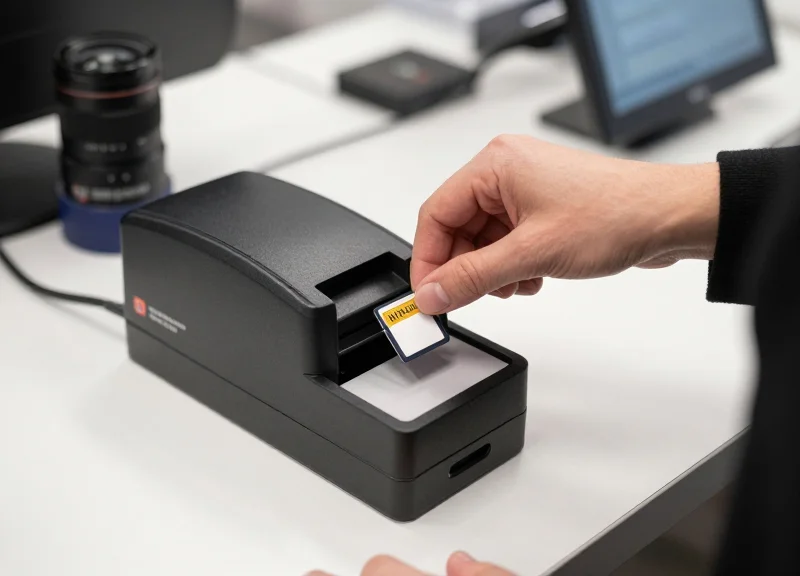
Optimizing the checkout experience for 15mm EAS safer boxes requires a 'parallel-path' workflow where detaching the security lock is integrated directly into the scanning motion. By positioning high-strength magnetic or mechanical detachers within the 'Golden Triangle' of the cashier's reach—between the scanner and the bagging area—retailers can reduce transaction times by up to 30% while ensuring the 15mm boxes are safely collected for immediate reuse.
- The Simultaneous Scan-and-Release: Train cashiers to align the safer box with the detacher as they bring the item toward the barcode scanner. This motion should be fluid: the lock releases just as the 'beep' confirms the sale.
- Ergonomic Box Extraction: Utilize gravity-assisted detachers where the box can be dropped slightly into a padded collection bin immediately after the Micro-SD is removed, preventing micro-fractures in the polycarbonate casing.
- Immediate Verification: Ensure the cashier checks for any residual adhesive or tamper-evident labels that might have been applied by customers, removing them before the box enters the recycling bin.
| Detacher Type | Compatibility | Workflow Impact | Maintenance Requirement |
|---|---|---|---|
| Universal Magnetic (12k Gauss+) | All magnetic-lock 15mm boxes | High speed; one-handed operation | Low; periodic cleaning of debris |
| Mechanical Hook | Specific S3 or key-based boxes | Moderate; requires precise alignment | Medium; check for hook fatigue |
| Integrated Countertop | High-volume fixed lanes | Highest; flush-mount reduces reach | High; requires professional install |
Expert Insight: The MTBC (Mean Time Between Cleaning) Protocol. Unlike larger safer boxes, 15mm Micro-SD boxes have tighter tolerances. Dust or skin oils on the locking pin can cause the mechanism to 'stick' over time. We recommend a monthly 'Isopropyl Dip' for your box fleet—a quick 10-second submerge in 70% IPA followed by air-drying—which can extend the functional life of the locking spring by 40% compared to dry-recycled units.
Why is the box sticking to the detacher?
This usually indicates magnetic interference from metallic debris or a buildup of static electricity. Clean the detacher surface with a non-polar solvent and ensure it is grounded if it's a powered unit.
How often should boxes be retired from the fleet?
Perform a 'Clarity Check' every 50 cycles. If the polycarbonate becomes cloudy or yellowed, it interferes with barcode scanning through the box, frustrating customers and slowing down the line. Retire these to the recycling stream.
What if the EAS tag inside is failing?
Periodically run an empty box through your EAS gates. If it fails to trigger, the internal AM/RF ferrite may be cracked. These boxes should be marked 'Dead Tag' and removed from the merchandising floor immediately.
Measuring ROI: Shrinkage Reduction vs. Operational Costs
Measuring the Return on Investment (ROI) for 15mm EAS safer boxes involves calculating the net financial gain derived from a significant reduction in retail shrinkage (theft) and increased inventory turnover, weighed against the Total Cost of Ownership (TCO), which includes hardware procurement and labor for locking/unlocking. In high-density merchandising for Micro-SD cards, a successful implementation typically sees a ROI break-even point within 6 to 9 months, depending on the historical theft rates of the specific SKU.
| Metric Category | Legacy Packaging (25mm+) | 15mm Slim Safer Box Impact |
|---|---|---|
| Shrinkage Rate | High (8-15% on high-value SDs) | Low (under 1-2% typical) |
| Shelf Density | Standard (e.g., 10 units per peg) | High-Density (e.g., 18 units per peg) |
| Labor Cost | High (Frequent restocking/tagging) | Moderate (Initial box application) |
| Sales Velocity | Limited by stockouts | Increased (Better on-shelf availability) |
- Establish the Shrinkage Baseline: Analyze historical POS data vs. physical inventory audits for Micro-SD cards over the previous two quarters to determine the 'Shrinkage Cost per Linear Foot'.
- Calculate Total Cost of Ownership (TCO): Factor in the unit price of the 15mm boxes, the cost of magnetic detachers, and the estimated 15-second labor overhead per unit for boxing and unboxing at checkout.
- Measure the 'Density Delta': Quantify the revenue increase gained by stocking 40% more SKUs in the same retail footprint, a direct benefit of the slim 15mm form factor.
- Execute a 90-Day Post-Implementation Audit: Compare the new shrinkage rates and labor costs against your baseline to find the net monthly savings.
Expert Insight: The Peg-Hook Parity Index (P-HPI). While most retailers focus solely on theft reduction, the true 'hidden' ROI of 15mm boxes lies in the P-HPI. By reducing the box profile from the industry-standard 25mm to 15mm, you effectively increase your 'Revenue per Square Inch' by approximately 40%. In Silicon Valley retail tech circles, we call this the 'Density Dividend'—the ability to keep high-demand cards in stock longer without increasing the physical size of the display, thereby reducing the opportunity cost of empty hooks.
How long do the 15mm boxes typically last?
High-quality polycarbonate safer boxes are rated for 3,000+ open/close cycles, meaning a single box can protect thousands of dollars in merchandise over a 3-5 year lifespan.
Does the increased labor at checkout offset the savings?
Generally, no. The labor cost of unboxing at checkout is typically less than $0.05 per unit, whereas the loss of a single $40 Micro-SD card wipes out the profit of 100+ sales.
Can these boxes be used for other small electronics?
Yes, their utility for USB drives and specialized batteries extends the ROI by allowing for a unified security fleet across multiple high-shrink departments.