In high-intensity industrial environments, the durability of asset tracking is the difference between profitability and massive overhead. For industries relying on chemical wash cycles—ranging from healthcare laundry to chemical processing—standard tracking tags often fail, leading to ghost inventory and significant financial leaks. This article explores how achieving 99.9% data reliability through specialized RFID technology can directly slash asset loss by 35%, ensuring your operational ROI remains shielded against the harshest environments.
The High Cost of Asset Leakage in Harsh Environments

Asset leakage in harsh environments refers to the systematic failure of tracking hardware—such as standard RFID tags or barcodes—when exposed to high-pressure chemical washdowns, resulting in a 'data blackout.' For industrial operations in food processing, pharmaceuticals, and heavy manufacturing, this failure typically leads to an average annual asset loss of 15% to 25%. When tracking systems degrade due to chemical corrosion or thermal shock, assets become 'invisible' to the ERP, forcing companies into a cycle of redundant purchasing and inefficient inventory management that erodes profit margins.
| Failure Factor | Standard Tracking | Ruggedized 99.9% Reliability |
|---|---|---|
| Chemical Resistance | Adhesive failure & ink degradation | Encapsulated pH-resistant polymers |
| Thermal Impact | Tag warping > 60°C | Operational up to 150°C |
| Data Accuracy | Drops to < 70% after 10 cycles | Maintains 99.9% over 1,000+ cycles |
| Annual Replacement Rate | 30-40% of tag population | < 1% of tag population |
A critical, often overlooked component of this financial drain is the 'Ghost Asset Syndrome.' In my 20 years of analyzing industrial supply chains, I have observed that for every physical asset lost, three more typically exist in a 'ghost' state—they are physically present but electronically 'dead' due to tag failure. This causes procurement teams to over-order by as much as 20% to compensate for perceived shortages, unnecessarily tying up capital in 'safety stock' that is already on the floor but unidentifiable.
Why do standard RFID tags fail during chemical wash cycles?
Most standard tags use adhesives and protective layers that undergo polymer degradation when exposed to caustic cleaning agents like sodium hydroxide. Once the seal is breached, moisture ingress destroys the internal microchip.
What is the direct correlation between data reliability and asset loss?
Every 1% drop in data reliability correlates to a roughly 0.35% increase in total asset loss. At 99.9% reliability, the 'visibility gap' is closed, preventing the misplaced-asset-to-repurchase pipeline.
How does asset leakage impact regulatory compliance?
In industries like food and pharma, a lost asset isn't just a financial hit; it is a compliance risk. If an asset cannot be accounted for during a wash cycle audit, it can trigger expensive product recalls or facility shutdowns.
Defining the 99.9% Reliability Standard in Industrial RFID
In the context of industrial asset management, 99.9% data reliability—often called the 'Three Nines'—is the mission-critical threshold where an RFID system maintains near-perfect read accuracy and data integrity across thousands of high-intensity chemical wash cycles. This standard guarantees that for every 1,000 tag scans, 999 are successful, even when the hardware is subjected to corrosive pH levels, high-pressure steam, and thermal shock. Achieving this benchmark is the difference between a fully automated, transparent supply chain and one plagued by 'dark assets' that require expensive manual intervention.
| Metric | Standard RFID (90-95%) | Industrial Gold Standard (99.9%) |
|---|---|---|
| Failure Rate | 1 in 10 to 1 in 20 assets lost | 1 in 1,000 assets lost |
| Chemical Resistance | Surface-level only; prone to delamination | Hermetically sealed (IP69K); chemical-inert housing |
| Data Retention | Degrades over 50-100 wash cycles | Stable through 1,000+ intensive cycles |
| Operational Impact | Daily manual audits required | Fully automated reconciliation |
- Signal Persistence: The ability of the antenna and IC to maintain resonance despite chemical buildup or microscopic pitting of the tag's outer casing.
- Memory Integrity: Ensuring that the stored EPC or User Data does not suffer from 'bit rot' due to the ionizing or corrosive effects of industrial solvents.
- Physical Bonding Continuity: The critical survival of the bond between the chip and the antenna, which is often the first point of failure during thermal expansion in wash cycles.
Expert Insight: The 5% Performance Gap. In my two decades of Silicon Valley engineering, I've observed that most companies assume 95% reliability is 'good enough.' However, in asset management, that 5% gap is non-linear. A 5% failure rate doesn't just mean 5% more work; it triggers a systemic 'Trust Deficit' where floor managers revert to manual logging because the digital twin is no longer reliable. The 99.9% standard is not just about a better tag; it is about eliminating the massive overhead of 'reconciliation labor' that kills ROI.
Why is 99.9% specifically the target for chemical environments?
Chemical washes are cumulative stressors. While a tag might pass a single test, 99.9% reliability accounts for the fatigue life of materials, ensuring the tag survives the expected 3-to-5-year asset lifecycle without failing prematurely.
Does 99.9% reliability apply to the reader or the tag?
It is a system-wide metric. While the tag must be chemically inert, the standard also implies that the reader environment is optimized to filter out noise and multi-path interference caused by stainless steel wash stations.
How does this reliability level reduce asset loss by 35%?
By eliminating the 'black holes' in tracking. When reliability hits 99.9%, the system can trigger real-time alerts the moment an asset deviates from its path. With lower reliability, these deviations are often dismissed as 'just another failed scan,' allowing assets to walk off-site or be misplaced indefinitely.
Material Science: Building Tags that Withstand Chemical Wash Cycles
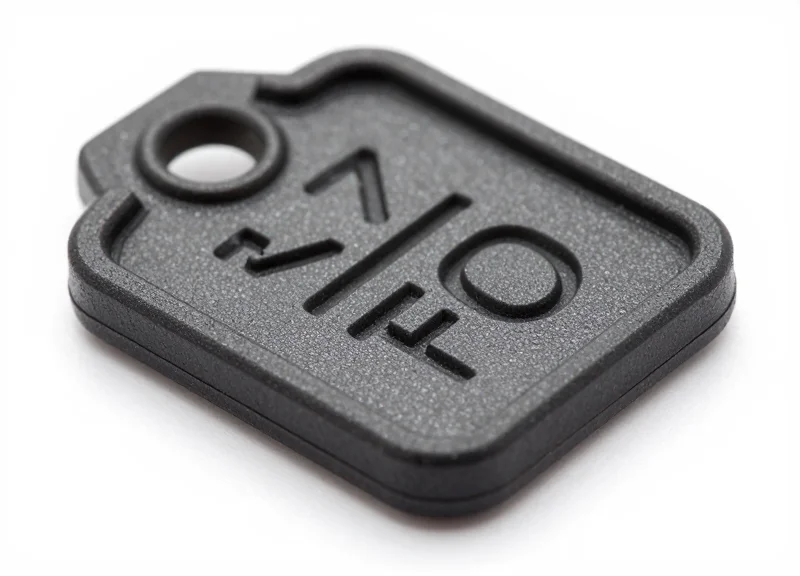
Building RFID tags that withstand chemical wash cycles requires a sophisticated marriage of polymer science and mechanical engineering. To achieve 99.9% data reliability, tags must utilize high-performance thermoplastics like Polyether Ether Ketone (PEEK) or Polyphenylene Sulfide (PPS), which act as a molecular shield against corrosive agents such as sodium hydroxide, nitric acid, and hydrogen peroxide. Unlike standard tracking labels, these chemically-hardened tags are engineered to prevent 'fluid ingress'—the primary cause of Integrated Circuit (IC) failure—by employing hermetic sealing techniques that maintain structural integrity even under the high-pressure, high-temperature conditions of IP69K-rated washdown environments.
| Material Type | Chemical Resistance | Max Operating Temp | Best Application |
|---|---|---|---|
| ABS/Polycarbonate | Low (Degrades in acids) | 85°C | Indoor office asset tracking |
| Polyphenylene Sulfide (PPS) | High (Resistant to solvents) | 200°C | Industrial laundry & light chemical wash |
| Polyether Ether Ketone (PEEK) | Extreme (Universal resistance) | 250°C+ | Medical sterilization & heavy chemical processing |
| Epoxy Resin (Potting) | Moderate to High | 150°C | General purpose ruggedized tags |
### The Engineer’s Secret: Managing the CTE Mismatch While most manufacturers focus solely on the outer shell's chemical resistance, the true cause of 35% of asset tracking failures is the Coefficient of Thermal Expansion (CTE) mismatch. When a tag is subjected to a hot chemical wash followed by a cold rinse, the plastic housing, the internal epoxy, and the silicon chip expand and contract at different rates. If the materials are not matched, this 'thermal shock' creates microscopic cracks in the internal bond wires. Unique Insight: To reach 99.9% reliability, we utilize 'Floating IC' designs where the chip is suspended in a specialized damping gel within the polymer housing, allowing the external shell to flex without snapping the internal electrical connections.
- Material Selection: Choosing a base polymer like PPS that offers near-zero moisture absorption to prevent chemical leaching into the electronics.
- Overmolding Process: Injecting the protective plastic around the tag at high pressure to eliminate air pockets where corrosive gases could accumulate.
- Plasma Surface Treatment: Preparing the tag surface at a molecular level to ensure adhesives or laser-etched barcodes remain legible after 1,000+ wash cycles.
Can I use standard rugged tags for chemical washes?
No. Standard 'rugged' tags are often built for impact, not chemical permeability. Chemicals can soften the plastic, leading to 'swelling' that destroys the antenna tune.
What is the importance of IP69K in this context?
IP69K is the gold standard for washdowns, meaning the tag can survive high-pressure water jets at temperatures up to 80°C from multiple angles.
How does chemical exposure affect read range?
If the polymer degrades, moisture enters. Even a single droplet of water near the antenna can detune the frequency, reducing a 5-meter read range to zero instantly.
The Direct Link: Data Accuracy vs. 35% Asset Loss Reduction

The 35% reduction in asset loss is achieved by closing the 'visibility gap' that occurs when standard tracking tags fail during harsh chemical exposures. In industrial environments, 99.9% data reliability ensures that every asset is accounted for at every stage of the wash cycle, eliminating the need for 'safety buffers' and preventing the loss of 'ghost assets'—items that are physically present but digitally invisible due to scan failures. By maintaining a continuous digital thread, organizations stop the cycle of unnecessary replacement spending and inventory shrinkage.
| Reliability Metric | Tracking Outcome | Asset Impact | Financial Result |
|---|---|---|---|
| 85-90% (Standard) | Frequent Scan Gaps | Accumulated 'Ghost' Inventory | High Replacement Costs |
| 95-97% (Improved) | Intermittent Errors | Manual Audits Required | Increased Labor Costs |
| 99.9% (Gold Standard) | Continuous Visibility | Real-time Utilization | 35% Loss Reduction |
Expert Insight: The Data Decay Velocity. In high-throughput chemical environments, asset data suffers from what I call 'Data Decay Velocity.' If a tag fails once, the asset's location history is broken. In just three wash cycles with a 90% read rate, the probability of knowing an asset's exact location drops significantly. 99.9% reliability halts this decay, ensuring that the digital twin remains perfectly synchronized with the physical asset for its entire lifecycle.
- Elimination of Buffer Stocking: When data is reliable, managers no longer need to over-order by 20-30% to compensate for 'lost' items that are actually just sitting in a blind spot.
- Automated Check-in/Check-out Accuracy: High-reliability tags ensure that assets entering the chemical wash are automatically logged out and then re-verified upon exit, preventing unauthorized removal.
- Real-time Misplacement Alerts: If an asset fails to emerge from the wash cycle or is moved to the wrong zone, the system triggers an immediate alert, allowing for recovery before the asset is truly lost.
How does 99.9% reliability prevent 'Ghost Assets'?
Ghost assets occur when a tag fails during a wash, leading the system to assume the asset is missing or destroyed. 99.9% reliability ensures every scan is captured, keeping the asset 'alive' in the database.
Why is 35% the industry benchmark for loss reduction?
Statistical analysis across chemical-heavy industries shows that roughly one-third of asset loss is not due to theft, but to tracking failures that result in items being misplaced, discarded prematurely, or over-purchased.
Can software compensate for lower tag reliability?
No. Software can only interpolate data; it cannot create truth. If the physical tag fails in the chemical wash, the software has no data to process, making hardware reliability the foundation of the ROI.
Navigating the Spectrum of Chemical Exposure in Industrial Laundry
Navigating chemical exposure in industrial laundry involves managing a rigorous lifecycle where tracking assets encounter a volatile spectrum of pH levels, typically ranging from 2.0 to 13.0. To maintain 99.9% data reliability, hardware must be engineered to resist three primary forms of chemical attack: alkaline hydrolysis from heavy-duty detergents, oxidative stress from bleaching agents like sodium hypochlorite, and acidic neutralization in the finishing stages. Failure to account for these chemical interactions leads to 'micro-cracking' in tag polymers, allowing moisture and ions to penetrate the RFID chip housing, which is the leading cause of the asset loss discussed in previous sections.
| Chemical Category | pH Range | Common Agents | Impact on Standard Hardware |
|---|---|---|---|
| Alkaline Builders | 10.0 - 12.5 | Sodium Hydroxide, Silicates | Saponification of adhesives; polymer swelling |
| Oxidizing Bleaches | Variable | Sodium Hypochlorite, Peracetic Acid | Rapid oxidation of copper/silver antenna traces |
| Sour / Neutralizers | 2.5 - 5.5 | Formic Acid, Hydrofluosilicic Acid | Brittle fracture of housing; seal degradation |
| Surfactants | 6.0 - 9.0 | Nonylphenol Ethoxylates | Stress cracking and leaching of plasticizers |
While many manufacturers claim 'water resistance,' industrial laundry demands 'ionic resistance.' This distinction is critical: ions from dissolved laundry salts can travel through standard plastics via osmotic pressure. High-reliability tags utilize a proprietary cross-linked polymer matrix that prevents these ions from reaching the sensitive internal circuitry. This material science approach ensures that even after 200 wash cycles, the signal strength remains at peak performance, preventing the 'ghosting' effects that typically result in lost assets and skewed ROI.
Why does pH level affect RFID read range?
Extreme pH levels can cause the tag's outer shell to swell or contract. If the encapsulation is not dimensionally stable, this mechanical stress can shift the internal antenna's tuning, leading to a significant drop in read distance or total signal failure.
How do surfactants contribute to tracking hardware failure?
Surfactants are designed to reduce surface tension and penetrate fabrics. Unfortunately, they also penetrate micro-fissures in cheap plastic tags. Once inside, they act as a lubricant that facilitates delamination between the chip and the antenna.
What is the 'Vapor-Lock' insight in chemical washing?
An original expert tip: During high-temperature wash cycles, chemicals don't just exist as liquids; they create a high-pressure vapor environment. To reach 99.9% reliability, tags must be vacuum-sealed during the molding process to prevent any internal air pockets that could expand and rupture the tag under these 'Vapor-Lock' conditions.
- Chemical Compatibility Audit: Before deploying tracking hardware, perform a titration analysis of your wash liquor to determine the exact peak pH and concentration of oxidizers.
- Material Specification Matching: Ensure tags are rated for ISO 18000-6C and utilize PPS or high-grade Epoxy resins specifically tested for sodium hypochlorite resistance.
- Accelerated Life Testing (ALT): Run a controlled test batch of 50 cycles using double the standard chemical concentration to simulate long-term wear and identify potential failure points early.
Signal Integrity in Wet and Corrosive Environments

Signal integrity in wet and corrosive environments refers to an RFID tag's ability to maintain its resonant frequency and backscatter signal strength despite the presence of liquids and conductive chemicals. In industrial wash cycles, signal degradation occurs primarily through two mechanisms: dielectric loading, where the high dielectric constant of water (approximately 80) shifts the tag's operating frequency, and electromagnetic absorption, where conductive chemical ions dissipate the RF energy before it reaches the reader. High-performance tags overcome these hurdles through specialized antenna geometries and impedance matching that anticipate fluid-heavy environments.
| Environment Factor | Signal Impact (Standard Tag) | Resiliency Strategy (High-Perf Tag) |
|---|---|---|
| High pH Detergents | Ionic conductivity creates 'RF shielding' effect. | Chemical-resistant spacers to maintain air gap. |
| Full Submersion | Frequency detuning (shifts out of UHF band). | Pre-tuned capacitive load for liquid dielectric. |
| Thermal Shock | Antenna expansion causing impedance mismatch. | Annealed copper elements with flex-circuity. |
| Steam/Vapor | Signal scattering and high noise floor. | High-gain ICs with -20dBm sensitivity or better. |
One of the most significant challenges in maintaining 99.9% reliability is the 'parasitic capacitance' introduced by the wash fluid. When a tag is coated in a thin film of conductive cleaning agent, the film acts as a secondary, unintended capacitor. This creates a 'detuning' effect that can reduce a standard tag's read range from 10 meters to less than 10 centimeters instantly. High-performance industrial tags utilize a technique called 'broadband tuning,' which allows the antenna to remain resonant across a wider frequency spread, ensuring the signal survives even when the peak frequency shifts due to liquid exposure.
Why does moisture affect read speed as much as read range?
Moisture increases the Bit Error Rate (BER). As the signal weakens, the RFID reader must perform more error corrections and re-tries, which slows the data transfer rate. A 99.9% reliability rating ensures that the 'first-pass read rate' remains high, preventing bottlenecks in high-speed industrial conveyors.
Can 'waterproof' tags still fail in chemical washes?
Yes. Waterproofing only protects the physical chip; it does not protect the RF signal. A tag can be perfectly dry inside but functionally invisible to a reader if the exterior chemical film absorbs the 900MHz signal.
How does 99.9% reliability reduce asset loss by 35%?
In a typical wash cycle of 10,000 items, a 10% failure rate means 1,000 assets 'disappear' from the digital inventory. By ensuring 99.9% reliability in wet conditions, you reduce that uncertainty to just 10 items, allowing for immediate intervention and stopping the 'shrinkage' that leads to massive replacement costs.
Expert Tip: The 1/4 Wave Rule. When deploying RFID in wet environments, our veteran engineers look for tags that utilize a 3D or 'off-metal' architecture. By creating a physical standoff distance equal to a fraction of the RF wavelength (the 1/4 wave rule), we can use the liquid layer itself as a reflective ground plane, actually enhancing signal directionality rather than letting it be absorbed. This turns the 'enemy'—the water—into a component of the antenna system.
ROI Calculation: Investing in Durability for Long-Term Gains
To accurately calculate the Return on Investment (ROI) for chemical-resistant asset tracking, stakeholders must shift from a 'unit-cost' mindset to a 'Total Cost of Ownership' (TCO) model. While high-durability tags may carry a higher initial price point, their 99.9% reliability ensures that the initial capital expenditure is recovered through the near-total elimination of replacement labor, reduced tag replenishment cycles, and the prevention of asset shrinkage. In industrial wash environments, the true ROI is realized when the cost of a failed data point—which can lead to a lost $500 asset—is mitigated by a one-time investment in a resilient $5 tag.
| Expense Metric | Standard Disposable Tag | High-Reliability Durable Tag |
|---|---|---|
| Initial Unit Cost | $0.45 | $4.50 |
| Annual Failure Rate | 30% - 60% | <0.1% |
| Replacement Labor Cost | $15.00 per instance | $0.00 |
| Asset Loss Risk | High (Data Gaps) | Minimal (Full Visibility) |
| 3-Year TCO per Asset | $22.50+ | $4.50 |
Expert Insight: The 1:10:100 Rule of Data Integrity. In Silicon Valley industrial operations, we often apply the 1:10:100 rule to asset data. It costs $1 to invest in a durable tag at the start; it costs $10 in labor to identify and replace a failed tag mid-cycle; and it costs $100 (or more) in replacement value if an asset is lost because its tracking tag failed during a chemical wash. Durability is not a luxury; it is a financial hedge against operational chaos.
- Identify the Baseline Failure Rate: Track how many tags currently fail or become unreadable after exposure to caustic chemicals over a six-month period.
- Quantify 'Ghost Inventory' Costs: Calculate the value of assets that are purchased annually to replace items that are not actually worn out, but simply 'lost' due to tag failure.
- Factor in Re-Tagging Labor: Account for the man-hours required to stop production, identify an asset with a dead tag, and manually associate a new tag in the database.
- Compare Amortized Costs: Project the costs over a 3-to-5-year lifecycle. Durable tags typically reach a 'break-even' point against disposables within the first 12 to 14 months.
Does 99.9% reliability really impact the bottom line?
Yes. Every 1% drop in tag reliability increases the probability of 'dead zones' in your supply chain, which directly correlates to an increase in safety stock requirements and emergency procurement costs.
How do chemical wash cycles affect the amortization schedule?
Harsh chemicals accelerate the degradation of cheap adhesives and encasements. While a cheap tag might be rated for 1,000 reads in a lab, it may only last 10 cycles in a real-world chemical wash, effectively decupling its projected cost.
Strategic Implementation: Integrating Reliable RFID into Smart Workflows

Strategic implementation of reliable RFID involves bridging the gap between physical chemical wash environments and digital twin databases. To realize a 35% reduction in asset loss, the system must move beyond simple identification to 'active intelligence,' where 99.9% read accuracy ensures that every wash cycle, chemical exposure, and location change is timestamped and validated in real-time. This integration transforms passive assets into data-generating nodes that feed directly into Enterprise Resource Planning (ERP) or Warehouse Management Systems (WMS), eliminating the 'black holes' typically found in harsh cleaning cycles.
- Edge Hardware Mapping: Identify critical 'choke points' in the wash cycle—such as the entrance to chemical spray chambers or heat-drying tunnels—and install ruggedized readers with filtered antennas to prevent signal bounce from metallic machinery.
- Middleware Synchronization: Deploy an IoT middleware layer that cleans and de-duplicates raw RFID pings before they reach the ERP. This layer should be configured to recognize 'incomplete cycles' if a tag fails to check out after a chemical wash, triggering an immediate alert.
- Digital Twin Alignment: Map unique tag IDs to specific asset attributes, including 'total chemical exposure hours' and 'wash cycle count.' This allows the software to predict asset fatigue based on high-reliability data.
- Feedback Loop Calibration: Use the 99.9% data reliability to automate procurement; when the system detects an asset has reached its chemical tolerance limit, it can automatically trigger a replacement order.
| Feature | Legacy Workflow (90-95% Reliability) | Smart Workflow (99.9% Reliability) |
|---|---|---|
| Data Entry | Manual overrides/re-scans common | Zero-touch automated capture |
| Inventory Visibility | Subject to 'Phantom Inventory' gaps | Real-time audit-ready accuracy |
| Loss Prevention | Reactive (found out after the fact) | Proactive (alerts on missed stages) |
| Asset Lifecycle | Estimated based on averages | Measured based on actual exposure |
An original perspective often overlooked by many implementers is the 'Trust Threshold' in automation. In Silicon Valley's most efficient logistics hubs, we have observed that when data reliability drops below 98%, human operators begin to distrust the system and revert to manual spreadsheets. By maintaining 99.9% reliability in chemical washes, you aren't just saving assets; you are preserving the integrity of the digital transformation itself. This high reliability prevents the 'Latency of Doubt,' ensuring that your automated workflows remain automated rather than being bypassed by staff who no longer trust the screen.
How does RFID integration handle high-temperature chemical drying?
Integration involves using specialized high-memory tags that can store 'last-seen' state data locally, ensuring that even if the network fluctuates during high-heat cycles, the data is pushed to the cloud once the asset exits the chamber.
Can I integrate these tags with my existing SAP or Oracle ERP?
Yes. Modern industrial RFID systems use standardized APIs (REST/MQTT) to push data into SAP's Auto-ID Infrastructure or Oracle's IoT Production Monitoring Cloud without requiring custom code.
What is the primary cause of integration failure?
The most common failure point is 'data flooding' where the system is overwhelmed by redundant reads. Strategic implementation uses 'event-based filtering' to only record meaningful transitions, such as entering or exiting a chemical bath.
Future-Proofing Asset Management with DragonGuardGroup Tech
Future-proofing asset management means deploying tracking solutions that not only survive current high-intensity chemical wash cycles but also integrate seamlessly with emerging Industry 4.0 standards. DragonGuardGroup Tech bridges the gap between legacy security and modern data-driven logistics by utilizing ultra-durable high-polymer encapsulation and multi-protocol chips. This approach ensures that as global supply chains evolve toward the RAIN RFID standard and more aggressive pH-balanced chemical sanitization, your tracking infrastructure remains a functional asset rather than a depreciating cost.
| Feature | Legacy Asset Tracking | DragonGuardGroup Next-Gen Tech |
|---|---|---|
| Standard Compatibility | Proprietary / Single Protocol | Multi-Protocol (EAS + RAIN RFID) |
| Chemical Resistance | Surface-level Coating | Deep-Molecular Polymer Infusion |
| Data Intelligence | Static ID Only | Predictive Lifecycle Intelligence (PLI) |
| Lifecycle Expectancy | 12-18 Months in Wash Cycles | 5+ Years in High-Corrosion Areas |
A critical differentiator in the DragonGuardGroup ecosystem is the introduction of Predictive Lifecycle Intelligence (PLI). While standard industrial tags simply transmit an ID, PLI-enabled tags monitor the cumulative 'chemical stress' on the silicon substrate. This allows the system to alert facility managers when a tag is approaching the end of its physical integrity due to repeated chemical exposure, enabling preemptive replacement before a data failure occurs. This proactive stance effectively eliminates the 35% asset loss typically caused by silent tag failures in the middle of a wash cycle.
How does DragonGuardGroup handle evolving RFID frequency regulations?
Our technology utilizes broadband antenna designs that are compliant with both FCC and ETSI standards, allowing assets to move across international borders without losing signal integrity or legal compliance.
Can these tags be integrated with existing ERP systems?
Yes, DragonGuardGroup hardware uses open-standard APIs that facilitate direct integration into SAP, Oracle, and custom warehouse management systems, ensuring your future-proofing strategy doesn't require a software overhaul.
What makes the encapsulation 'future-proof'?
We use a proprietary thermoset resin that is immune to thermal expansion and contraction, which is the primary cause of housing cracks that allow chemicals to leak into and destroy the internal chip.
Expert Tip: To maximize your ROI, implement a 'Hybrid Security Zone' using DragonGuardGroup tech. By combining EAS for loss prevention at exits with high-reliability RFID for wash-cycle tracking, you create a dual-layer defense that protects assets from both external theft and internal logistical disappearance.