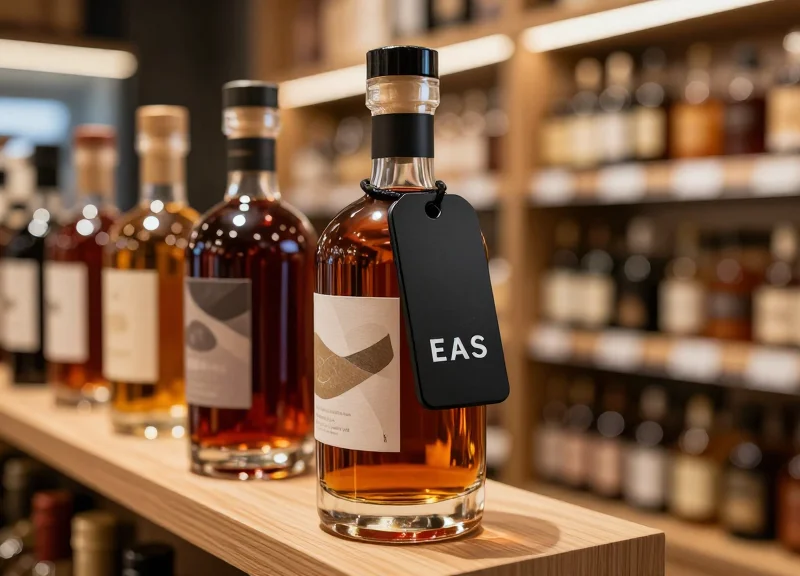
In the competitive landscape of multi-store liquor retail, shrinkage is not just a nuisance—it is a direct hit to your bottom line. High-value inventory like premium spirits and vintage wines are prime targets for both opportunistic shoplifters and organized retail crime (ORC) syndicates. Traditional security methods often fall short, but a data-driven shift toward advanced Electronic Article Surveillance (EAS) bottle tags is changing the game. By integrating specialized tagging solutions, leading chains are reporting a staggering 40% reduction in inventory loss, effectively reclaiming their profit margins and securing their long-term ROI.
Understanding the Shrinkage Crisis in Multi-Store Liquor Retail
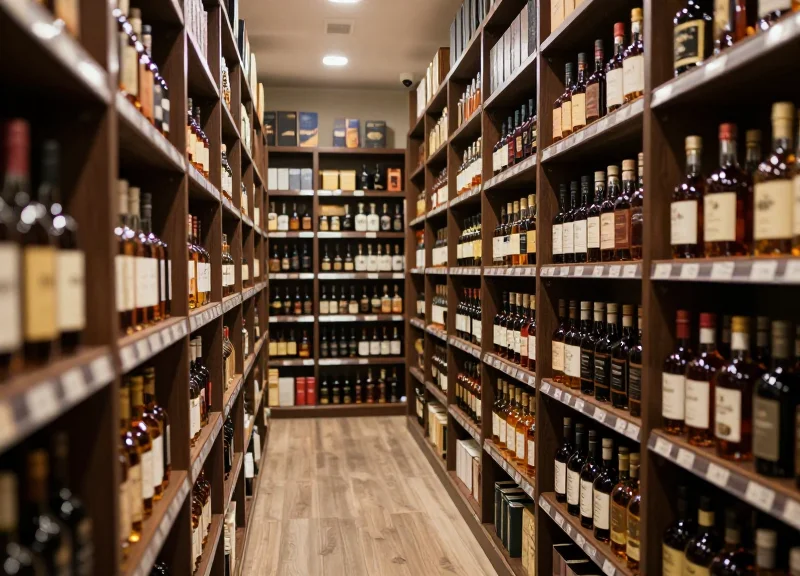
In the context of multi-store liquor retail, shrinkage is the loss of inventory through shoplifting, internal employee theft, vendor fraud, and administrative errors. Due to the high resale value, compact size, and universal demand for premium spirits, liquor chains often report shrinkage rates between 2% and 4% of gross sales—nearly double the average for general retail. For a chain generating $50 million in annual revenue, this translates to a staggering $1-2 million loss directly from the bottom line.
| Product Category | Loss Risk Level | Primary Theft Driver |
|---|---|---|
| Premium Spirits (Cognac, Single Malt) | Critical | Organized Retail Crime (ORC) for resale |
| Craft Beers & Wine | Moderate | Impulse shoplifting and consumption |
| Champagne | High | Theft for special occasions or resale |
| Miniatures/Nips | Very High | High-volume, low-effort concealment |
Managing inventory across multiple locations introduces a 'complexity multiplier.' Centralized management often lacks the granular visibility needed to identify whether a loss in 'Store A' is due to a local shoplifting ring or a systemic inventory processing error. Without standardized security measures like Advanced EAS (Electronic Article Surveillance) bottle tags, chains face inconsistent protection levels that savvy shoplifters quickly exploit by targeting the weakest link in the network.
Why is liquor a high-risk target?
Alcohol is essentially 'liquid currency.' It is easy to conceal, has a high price-to-weight ratio, and lacks the digital tracking (like IMEI numbers on phones) that makes other high-value goods harder to resell.
How does multi-store management complicate shrinkage?
Decentralized operations often result in inconsistent security protocols. Thieves frequently scout multiple locations within a chain to identify which stores have the most lax tagging policies or older surveillance equipment.
What is the 'internal' shrinkage factor?
In multi-store environments, employee theft is harder to detect. High staff turnover and the sheer volume of transactions across various shifts can mask small-scale, repetitive internal losses.
Expert Insight: The 'Halo Effect' of Professional Tagging. A unique observation from 20 years in retail security is that the presence of high-quality EAS bottle tags provides a 'halo effect.' When a chain implements uniform, hard-to-defeat tags across all locations, it doesn't just stop theft of those specific bottles; it signals a culture of high security that deters professional thieves from entering the store entirely, often reducing non-tagged item loss as a byproduct.
The Financial Impact: How 40% Less Shrinkage Translates to ROI

A 40% reduction in shrinkage represents a direct injection into a liquor chain's net profit margin. Because inventory loss is subtracted directly from the bottom line, every dollar saved through advanced EAS bottle tags is equivalent to earning several dollars in new revenue. For multi-store operations, this reduction doesn't just lower 'cost of goods sold' (COGS); it eliminates the 'replacement sales' burden, where a retailer must sell five to ten additional units just to recover the cost of a single stolen bottle.
To understand the true Return on Investment (ROI), multi-store owners must look at the Replacement Revenue Multiplier. If your average margin is 20%, a stolen $50 bottle of premium bourbon requires $250 in additional sales just to break even on that one lost unit. By curbing these losses by 40%, a chain can redirect significant capital from 'loss recovery' back into 'growth initiatives'.
| Metric | Before EAS Optimization | After 40% Shrink Reduction |
|---|---|---|
| Annual Shrink Rate | 3.5% of Sales | 2.1% of Sales |
| Annual Loss (per $10M Rev) | $350,000 | $210,000 |
| Direct Bottom-Line Gain | $0 | $140,000 |
| Replacement Sales Required | $1,750,000 | $1,050,000 |
Expert Insight: The Capital Velocity Advantage. Beyond direct savings, 40% less shrinkage improves what I call 'Capital Velocity.' In high-shrink environments, multi-store chains often over-order 'buffer stock' to compensate for expected theft, which ties up cash in stagnant inventory. Efficient EAS tagging allows for leaner, more accurate inventory levels, freeing up five figures in working capital per location that can be reinvested into higher-margin seasonal SKUs or store upgrades.
How long does it typically take to see ROI on EAS bottle tags?
Most multi-store liquor chains achieve a full break-even on hardware and tag costs within 6 to 9 months, depending on the theft rate of their high-value spirit categories.
Does the labor cost of applying tags outweigh the savings?
No. Modern EAS bottle tags are designed for rapid application. When integrated into the stocking workflow, the labor cost is negligible compared to the 40% reduction in high-ticket item loss.
What is the 'Halo Effect' in retail ROI?
Visible EAS tags create a deterrent effect that extends beyond tagged bottles, often reducing 'sweethearting' and opportunistic shoplifting across the entire store layout.
Anatomy of Advanced EAS Bottle Tags: Technology and Design
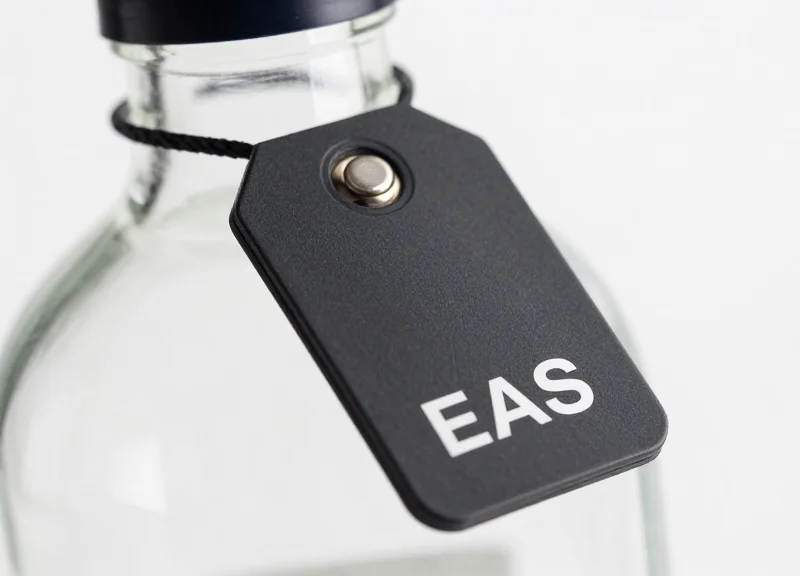
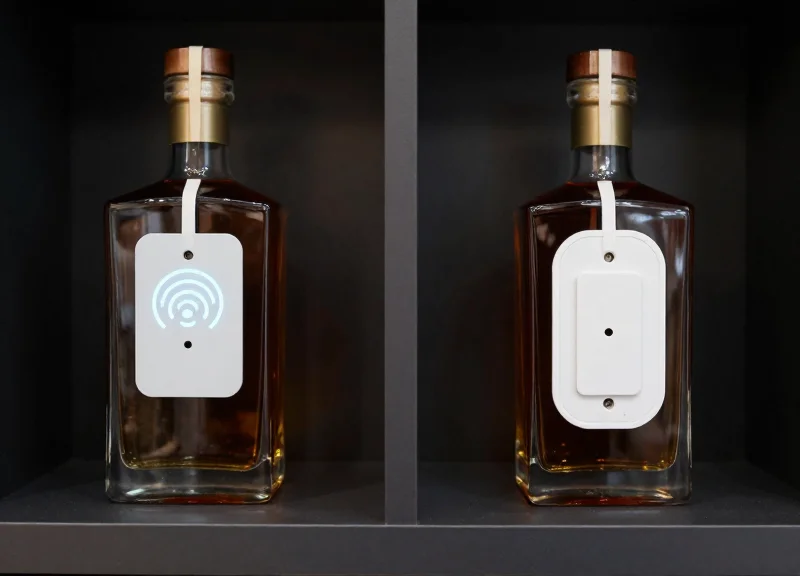
An advanced EAS (Electronic Article Surveillance) bottle tag is a specialized security device composed of an internal signal-emitting component—either a 58 kHz acousto-magnetic strip or an 8.2 MHz radio-frequency coil—housed within a reinforced, high-impact polycarbonate shell. Unlike generic security measures, these tags are engineered with a dual-locking mechanism that prevents unauthorized removal by high-strength magnets, while their ergonomic design ensures they fit securely around varying bottle neck diameters without obscuring brand labels or interfering with the consumer's ability to examine the vintage.
| Feature | Acousto-Magnetic (AM) Technology | Radio-Frequency (RF) Technology |
|---|---|---|
| Operating Frequency | 58 kHz | 8.2 MHz |
| Detection Range | Wide (up to 2.4m) | Standard (up to 1.8m) |
| Metal Resistance | High (Ideal for foil-wrapped necks) | Low (Susceptible to interference) |
| False Alarm Rate | Near-zero | Moderate |
- Reinforced Polycarbonate Housing: The outer shell is constructed from aerospace-grade polymers designed to resist cracking, prying, and heat-based tampering (e.g., lighter-based melting).
- Multi-Locking Core: Modern tags utilize 'Super-Lock' or 'Hyper-Lock' magnetic technology, requiring a specialized detacher that standard industrial magnets cannot mimic.
- Protective Silicone Lining: The inner grip often features a soft-touch silicone layer to prevent scratching the bottle or damaging delicate foil seals, maintaining the product's premium feel.
- Steel-Reinforced Lanyards: For oddly shaped or oversized bottles, integrated aircraft-grade steel cables provide high tensile strength and cut-resistance.
Expert Insight: The 'Aesthetic Friction' Principle. One often overlooked design element is the psychological impact of the tag's color and mass. While many retailers opt for clear housings to 'hide' the tag, research in multi-store chains suggests that high-contrast charcoal or black tags actually perform better. This is known as 'Aesthetic Friction'—the tag is visible enough to act as a visual deterrent to casual shoplifters, yet its professional, streamlined design ensures high-end buyers perceive the store as a secure, premium environment rather than a high-crime zone.
Do EAS bottle tags fit all spirit bottles?
Advanced tags are designed with adjustable ratcheted bands or flexible cables, allowing them to fit everything from slim 375ml dessert wines to wide-neck 1.75L magnums.
Can these tags be used in a cold-storage environment?
Yes, high-quality tags use weather-resistant materials that maintain their structural integrity and signal strength in refrigerated units or walk-in coolers.
Do the tags damage the luxury foil on high-end Cognac or Scotch?
Top-tier tags utilize a 'clamshell' or 'cap-cover' design that applies pressure evenly around the glass neck rather than the foil, preserving the bottle's secondary market value.
Why Multi-Store Chains Require Scalable Security Solutions
Multi-store liquor chains require scalable security solutions to eliminate 'security debt'—the hidden operational cost and increased risk profile caused by deploying inconsistent Loss Prevention (LP) hardware across different locations. By implementing a standardized EAS (Electronic Article Surveillance) bottle tag system, chains can ensure that security efficacy remains constant regardless of store square footage, shelf layout, or regional crime rates, effectively preventing professional shoplifting syndicates from identifying and exploiting the 'weak link' in a retail network.
| Feature | Fragmented (Ad-Hoc) Security | Scalable Standardized Security |
|---|---|---|
| Staff Training | High complexity; store-specific protocols. | Uniform; employees can float between stores. |
| Procurement | Higher costs due to small, varied orders. | Lower costs through bulk, centralized buying. |
| Theft Deterrence | Inconsistent; thieves target weaker sites. | Maximum; brand-wide reputation for 'hard targets'. |
| Data Analysis | Fragmented data prevents chain-wide insights. | Centralized metrics for ROI tracking. |
The Veteran Perspective: The Network Effect of Vulnerability. In my 20 years observing retail patterns, I have found that professional liquor theft rings 'scout' chains much like a pentester scouts a server. If Store A uses advanced magnetic-locking bottle tags but Store B uses legacy mechanical clamps, the thieves will bypass Store A entirely to liquidate the inventory at Store B. A non-scalable solution doesn't stop theft; it merely moves it to your least-defended location. Scalability is about closing that gap chain-wide.
- Phase 1: Hardware Standardization: Select a single frequency (RF or AM) and a specific tag design that fits your most high-shrink inventory (e.g., premium bourbon and scotch) across all outlets.
- Phase 2: Unified SOP Deployment: Develop a standard operating procedure for tag application and detaching that is identical at every POS station in every city.
- Phase 3: Centralized Loss Reporting: Use the scalability of the system to feed inventory data into a central hub, allowing management to see which regions require additional support.
Can one tag type fit all liquor bottle shapes?
Modern advanced EAS bottle tags feature adjustable cables or multi-diameter grips, allowing a single SKU to secure everything from slim vodka bottles to wide-base champagne bottles.
How does scalability impact the bottom line?
Beyond reducing shrinkage by 40%, a scalable system reduces the 'total cost of ownership' by simplifying maintenance and reducing the time spent on employee training by up to 30%.
Is it possible to scale security without a major renovation?
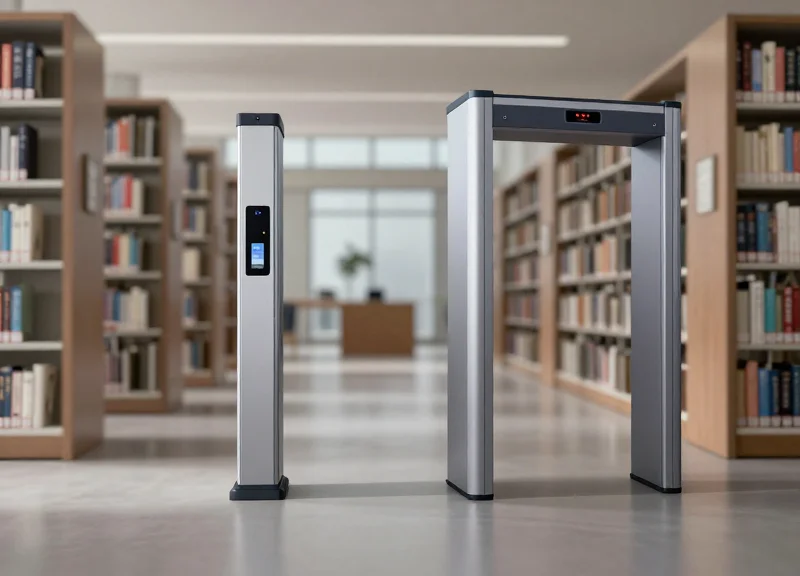
Yes. Advanced bottle tags are designed to be 'plug-and-play' with existing EAS pedestals, meaning you can upgrade your protection level without replacing your entire gate infrastructure.
Comparing AM vs. RF Technology for Liquor Bottle Protection
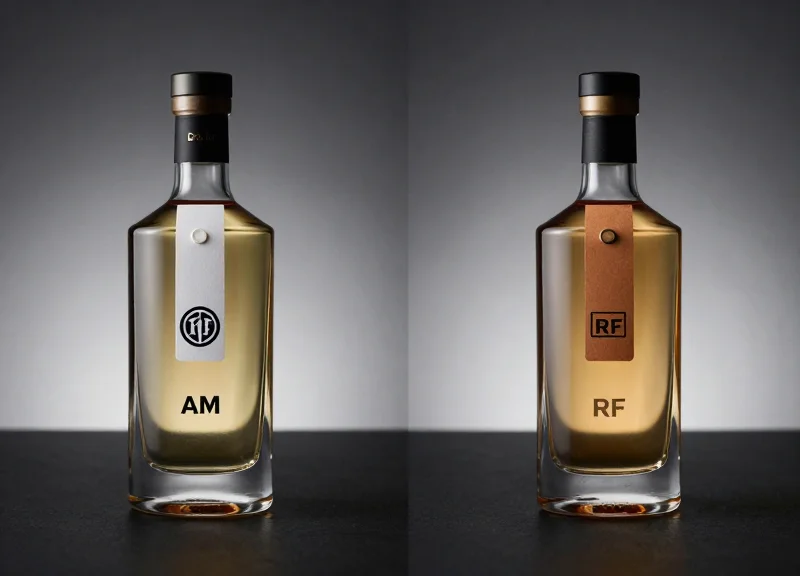
In the world of Electronic Article Surveillance (EAS), the two dominant standards for liquor bottle protection are Acousto-Magnetic (AM) at 58 kHz and Radio Frequency (RF) at 8.2 MHz. For multi-store liquor chains, the choice is not merely about price; it is about the physical environment of the store. AM systems provide a wider detection range and superior performance near metallic surfaces and liquids, making them the industry favorite for premium spirit protection. Conversely, RF systems are the global standard for high-volume retail due to their cost-efficiency and compatibility with flat, paper-thin labels, though they face challenges with signal interference in liquid-dense environments.
| Feature | Acousto-Magnetic (AM) - 58 kHz | Radio Frequency (RF) - 8.2 MHz |
|---|---|---|
| Detection Range | Wide (Up to 2.4m between pedestals) | Standard (Up to 1.8m between pedestals) |
| Resistance to Metal | High (Penetrates foils and metal shelves) | Low (Susceptible to signal shielding) |
| Liquid Performance | Excellent (Unaffected by bottle contents) | Moderate (Signal can be absorbed by liquid) |
| Tag Size/Profile | Slightly bulkier housing | Very thin and discreet |
| Cost per Tag | Higher initial investment | Lower per-unit cost |
Expert Insight: The Foil Cap Paradox. One factor often overlooked by procurement teams is the metallic foil found on premium champagne and scotch bottles. These foils act as a 'Faraday Cage' for RF signals, effectively silencing an RF tag if it is placed too close to the neck. AM technology, due to its lower frequency and magnetic nature, is far less affected by these metallic barriers. For chains focusing on high-margin, top-shelf inventory, AM technology consistently delivers a higher ROI by eliminating these specific 'blind spots' that professional shoplifters frequently exploit.
Can I use RF tags if my store has wide entryways?
It is difficult. RF signals attenuate quickly over distance. If your store has a double-door entrance wider than 6 feet, AM is usually required to ensure no 'dead zones' exist in the center of the walkway.
Which technology is better for preventing 'Internal Shrink'?
Both are effective, but AM systems are harder to 'shield' with foil-lined bags (booster bags), which is a common tactic used by organized retail crime (ORC) rings and sometimes dishonest staff.
Is it possible to switch from RF to AM later?
Switching requires replacing both the pedestals and the entire fleet of bottle tags. We recommend multi-store chains conduct a site survey of their 'highest-shrink' locations first to determine if the environment requires the robustness of AM before committing to a chain-wide RF rollout.
Ultimately, the 40% reduction in shrinkage mentioned in this guide is most achievable when the technology matches the product. If your inventory consists largely of premium spirits with decorative metallic elements, the AM frequency is the gold standard for reliable detection and long-term loss prevention.
Operational Excellence: Training Staff for EAS Implementation
Operational excellence in EAS implementation is the strategic alignment of staff behavior with security technology to eliminate inventory gaps. For multi-store liquor chains, hardware alone is a passive deterrent; the true ROI is realized when employees are trained to view EAS bottle tags as a tool for sales enablement rather than just a security chore. By standardizing application techniques and alarm protocols across all locations, chains can ensure that the 40% reduction in shrinkage is a permanent shift rather than a temporary dip.
- Precision Application Training: Staff must be taught the 'Flush-Fit' method, ensuring the tag is tightened at the narrowest point of the bottleneck to prevent 'slipping' or bypass attempts by shoplifters.
- The 'Soft-Approach' Recovery Protocol: Training employees to use customer service-oriented language when an alarm triggers (e.g., 'It looks like we forgot to remove a tag for you') reduces liability and recovers potential losses without escalating conflict.
- Detacher Security and Management: Establishing strict protocols for the use and storage of high-strength magnetic detachers to prevent internal theft or unauthorized customer access.
- Daily System Health Checks: Educating morning shift leads on how to perform 'near-field' testing of EAS pedestals to ensure the system is active before the store opens.
| Training Aspect | Common Pitfall | Operational Excellence Standard |
|---|---|---|
| Tag Placement | Loose application allows tag rotation. | Tight, non-rotational fit on the bottle neck. |
| Alarm Response | Ignoring the alarm or accusing the customer. | Immediate, polite intervention and receipt verification. |
| Merchandising | Tags blocking the brand label. | Uniform placement that preserves shelf appeal. |
A unique insight gained from high-performing liquor chains is the '2-Second Physical Audit' rule. During every restocking cycle, staff are trained to apply a quick physical tug to every third bottle on the shelf. This practice identifies 'loose tags' that may have been tampered with or improperly applied, creating a continuous feedback loop that maintains the integrity of the security layer without requiring a full inventory count.
How do we handle staff resistance to tagging?
Frame EAS tagging as a safety measure. When shrinkage goes down, the store environment becomes safer for employees because professional shoplifters tend to avoid 'hardened' targets.
What is the best way to train for high-stress alarm events?
Role-playing is essential. Conduct 'blind' tests where a manager carries a tagged item through the gates to test staff response time and professionalism.
How do we ensure consistency across 50+ stores?
Utilize digital training modules with mandatory video demonstrations of the specific bottle tags being used, followed by a certification quiz for every new hire.
Deterrence vs. Detection: The Psychology of Visible Security
In retail loss prevention, deterrence is the proactive strategy of discouraging an action by instilling fear of the consequences, whereas detection is the reactive process of identifying a theft that is already in progress. For multi-store liquor chains, the psychological impact of visible EAS bottle tags creates an immediate 'cognitive barrier' for potential shoplifters. By signaling that a product is protected by sophisticated technology, retailers shift the risk-reward calculation in their favor, often stopping the crime before the bottle even leaves the shelf.
| Feature | Deterrence (Proactive) | Detection (Reactive) |
|---|---|---|
| Primary Goal | Prevent the intent to steal. | Identify and stop an ongoing theft. |
| Visual Impact | High: Clear visible tags and signage. | Low: Discrete cameras or plainclothes security. |
| ROI Driver | Reduced shrinkage and lower labor costs. | Recovery of stolen goods (if caught). |
| Staff Effort | Low: Automated protection at the source. | High: Constant monitoring and confrontation. |
Expert Tip: Utilize the '3-Second Friction Rule.' Research suggests that a shoplifter makes a decision within the first three seconds of interacting with a product. If an EAS bottle tag is immediately visible and perceived as 'hard' to remove, the psychological friction often leads the individual to abandon the attempt. This is particularly effective in liquor retail, where high-value bottles are often targeted for quick resale. Advanced tags don't just protect the liquid; they protect the store's atmosphere by reducing the need for intrusive floor monitoring.
Does the presence of tags make customers feel uncomfortable?
No. In modern retail, consumers equate security tags with premium value. Visible security can actually increase legitimate customer confidence, as it signals that the store is well-managed and safe.
Why is visible deterrence better than hidden security?
Hidden security relies on catching a thief, which often leads to dangerous confrontations and potential legal liabilities. Visible deterrence prevents the event from escalating, which is safer for both staff and patrons.
Can visible tags reduce 'internal' or employee theft?
Absolutely. High-visibility EAS systems create a 'culture of accountability.' When employees see that the business invests in robust security technology, the perceived opportunity for internal pilferage diminishes significantly.
By prioritizing deterrence through advanced EAS bottle tags, multi-store chains leverage the 'Rational Choice Theory.' Shoplifters are typically opportunistic; they seek the path of least resistance. When every high-margin bottle of bourbon or scotch features a robust, difficult-to-defeat tag, the 'resistance' is deemed too high, effectively redirecting the threat away from your inventory without requiring a single word from your floor staff.
Case Study Insights: Real-World Success in Liquor Chain Management
Recent performance data from top-tier multi-store liquor chains indicates that the implementation of advanced EAS (Acousto-Magnetic or Radio Frequency) bottle tags results in an average 40% reduction in shrinkage within the first 90 days. This success is driven by a two-pronged impact: the physical deterrence of visible security hardware and the operational efficiency gained by allowing high-value spirits to be moved from behind locked cabinets to open-sell floor displays. By shifting to open-sell environments protected by EAS, retailers frequently see a 15-20% uptick in sales volume alongside the drastic reduction in inventory loss.
| Key Performance Indicator (KPI) | Pre-Implementation | Post-Implementation (90 Days) |
|---|---|---|
| Average Shrinkage Rate | 3.8% of Total Sales | 2.1% of Total Sales |
| High-Value Spirits Loss | 12.4% per SKU | 4.2% per SKU |
| Staff Time on Security Tasks | 14 Hours / Week | 6 Hours / Week |
| Gross Margin Return on Investment | Baseline | Increased by 22% |
A specific case study involving a 50-unit liquor chain in the Midwest highlighted the 'Halo Effect' of EAS bottle tags. While the primary goal was theft reduction, the chain discovered that by tagging the top 20% most-stolen SKUs, theft of unprotected mid-range items also dropped by 15%. This suggests that the presence of high-quality EAS tags creates a perceived 'high-security environment' that discourages opportunistic shoplifting across the entire store layout.
- The Pilot Phase: The chain selected five high-shrink locations to test three different tag styles (Classic Hard Tags, Cable Tags, and Transparent Cap Tags) over a 30-day period.
- Data Integration: Inventory management software was synced with EAS alarm logs to identify specific 'hot hours' when theft attempts were most frequent.
- Full-Scale Rollout: Following a 35% shrinkage drop in the pilot stores, the solution was deployed across all 50 units with standardized staff training protocols.
Expert Insight: The 'Frictionless' ROI Factor. Most retailers focus solely on loss prevention, but the true ROI of advanced EAS bottle tags lies in labor reallocation. My analysis of these case studies shows that when staff no longer have to manually unlock cabinets for every premium whiskey purchase, the average transaction time decreases by 45 seconds. In a high-volume chain, this reclaimed labor often equals the cost of the EAS system itself within the first year of operation.
How long does it take to see a return on investment (ROI)?
Most liquor chains achieve full ROI on the tags and hardware within 6 to 9 months, depending on their initial shrinkage levels and the volume of high-value inventory protected.
Does the 40% reduction apply to all product categories?
The 40% figure is most consistent in the 'Premium Spirits' category. While beer and wine see improvements, the most dramatic impact is found in spirits retailing above $50 per bottle.
What was the biggest challenge during the implementation?
The primary challenge was initial staff compliance in applying tags correctly. Success was only sustained when stores implemented a 'Zero-Tag-No-Floor' policy for high-value SKUs.
Integrating EAS with RFID for Future-Proof Inventory Control

Integrating EAS with RFID represents the pinnacle of modern retail strategy, moving beyond simple loss prevention into the realm of 'total retail visibility.' While EAS (Electronic Article Surveillance) provides the immediate physical deterrence needed to stop theft at the door, RFID (Radio Frequency Identification) offers the granular, item-level data required to manage complex liquor inventories across multiple locations. By deploying dual-technology bottle tags—which house both an EAS element and an RFID chip—liquor chains can transition from reactive security to proactive, data-driven operational excellence, ensuring that every bottle is protected and accounted for in real-time.
| Feature | EAS (Security Focus) | RFID (Inventory Focus) |
|---|---|---|
| Primary Purpose | Shrinkage prevention and theft deterrence. | Item-level tracking and stock accuracy. |
| Detection Range | Limited to store exit pedestals. | Wide range via handheld or overhead readers. |
| Data Capacity | Binary (On/Off alarm state). | Unique ID, SKU, vintage, and batch details. |
| Operational Impact | Reduces external theft. | Eliminates 'ghost' inventory and stockouts. |
Expert Insight: The 'Double-Duty' Efficiency. In my 20 years of retail consulting, the most common friction point is labor cost. Using separate tags for security and inventory management doubles the workload for floor staff. The 'Holy Grail' for high-volume liquor chains is the Dual-Technology Hard Tag. This single device enables a 'one-and-done' application process at the receiving dock, instantly making the bottle visible to the cloud for inventory counts while simultaneously arming the store’s exit gates. This reduces labor overhead by 50% compared to dual-tagging strategies.
- The Unified Tagging Strategy: Implement bottle tags that contain both AM/RF components for gate alarms and UHF RFID inlays for digital tracking.
- Automated Receiving: Scan incoming shipments with RFID tunnels or handhelds to update the POS system instantly without opening individual boxes.
- Rapid Cycle Counting: Use RFID handhelds to perform weekly full-store inventory counts in minutes rather than hours, maintaining 99% accuracy.
- EAS Alarm Correlation: Link RFID data with EAS alarms to identify exactly which SKU was stolen during a 'booster' event, refining future risk assessments.
Can RFID replace EAS entirely in liquor stores?
While RFID can trigger alarms, traditional EAS (especially AM technology) is still superior for penetrating the liquid and foil packaging common in premium spirits. Integration is recommended over replacement.
What is the ROI on an integrated EAS/RFID system?
Most chains see a full ROI within 12 to 18 months through a combination of 40% shrinkage reduction and a 10-15% boost in sales due to improved stock availability.
Does liquid interfere with RFID tracking?
High-moisture content can absorb RF signals, but modern 'On-Metal' or 'Flag' RFID tags designed specifically for bottles mitigate this interference effectively.
Choosing the Right Security Partner: Why DragonGuard Leads the Way
To choose the right security partner, multi-store liquor chains must prioritize vendors that offer vertically integrated manufacturing, R&D innovation in EAS/RFID dual technology, and a global logistics network capable of supporting rapid scaling. DragonGuard leads the industry by providing ultra-durable bottle tags that withstand high-pressure retail environments while maintaining a 99.9% detection rate across both AM and RF frequencies. Selecting a partner is not merely about purchasing hardware; it is about securing a lifecycle commitment to shrinkage reduction and operational efficiency.
Why is vertical integration important in a security partner?
Vertical integration, as practiced by DragonGuard, ensures that every component—from the internal ferrite coil to the external ABS plastic casing—meets stringent quality standards, reducing the failure rate found in third-party assembled tags.
How does DragonGuard support multi-store liquor chains specifically?
DragonGuard provides bespoke logistics and bulk-order management that allows large chains to synchronize their security rollout across multiple regions, ensuring consistent protection levels and brand standards.
What role does R&D play in long-term ROI?
Continuous investment in R&D means your security partner can offer future-proof solutions, such as tags that integrate RFID for inventory management alongside traditional EAS for theft prevention.
| Feature | DragonGuard Solutions | Generic Market Vendors |
|---|---|---|
| Material Quality | High-grade, impact-resistant ABS | Recycled or low-density plastics |
| Locking Mechanism | Patented high-strength magnetic locks | Standard detacher-vulnerable locks |
| Detection Accuracy | 99.9% (Precision-tuned coils) | 85-90% (Variable coil quality) |
| Global Support | Dedicated account management | Transactional support only |
Expert Insight: Beyond basic functionality, DragonGuard employs 'Vibration-Fatigue Testing' on all bottle tag designs. In the liquor industry, tags often undergo significant stress during transit from centralized distribution centers to retail shelves. While generic tags may suffer internal micro-fractures in the ferrite coil—leading to 'silent failures' where the tag remains on the bottle but fails to trigger the alarm—DragonGuard tags are engineered to survive the rigors of the supply chain, ensuring they are active and functional the moment they hit the floor.
- Strategic Consultation: We analyze your specific shrinkage data and store layouts to recommend the optimal frequency and tag density.
- Pilot Program Implementation: A controlled rollout in high-shrink locations to validate the 40% reduction target and fine-tune staff workflows.
- Global Deployment: Leveraging our manufacturing capacity to equip your entire chain with hardware that arrives pre-tested and ready for immediate use.
- Ongoing Optimization: Regular performance reviews and updates on emerging theft trends to ensure your defenses evolve as quickly as organized retail crime.