For luxury tailors and high-end fashion boutiques, the challenge of loss prevention is a delicate balancing act. While silk and cashmere represent the pinnacle of inventory value, they are also the most vulnerable to physical damage from standard security measures. A single thick needle from a traditional EAS tag can leave permanent pinholes, snags, or 'runs' in a 3,000 USD garment, effectively rendering it unsellable. As experts in EAS and RFID solutions, DragonGuardGroup understands that protecting your profit margin should never come at the cost of your product's integrity. This guide explores how to select the best non-damaging security tags designed specifically for the world's most sensitive textiles.
The High Stakes of Securing Luxury Fabrics
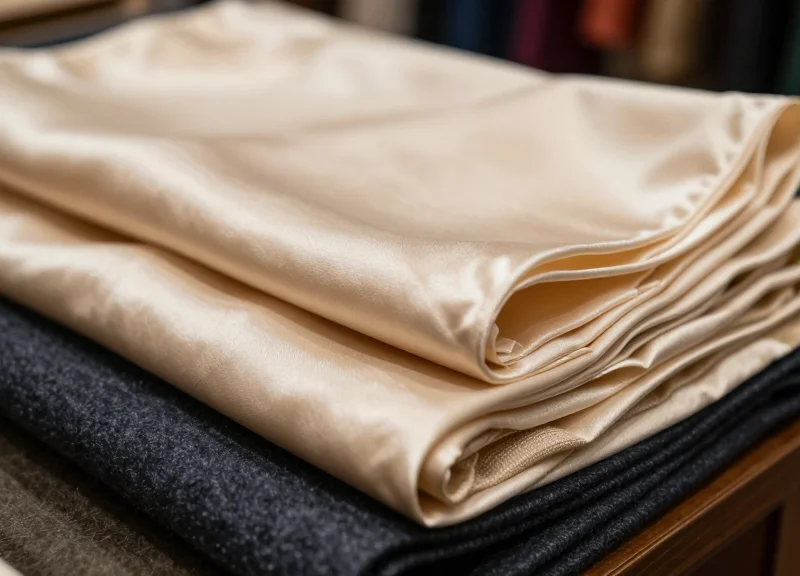
For luxury tailors and high-end boutiques, the financial risk of inventory damage often exceeds the risk of theft. Standard Electronic Article Surveillance (EAS) tags are designed with a 'one-size-fits-all' approach, utilizing thick pins that are catastrophic for delicate weaves. When a standard 1.5mm pin pierces a 14-momme silk or a fine-gauge cashmere knit, it doesn't just pass through; it shears individual protein fibers. This creates a permanent 'tension scar' that destroys the garment’s drape and value, turning a $3,000 asset into a write-off before it even reaches the dressing room.
| Fabric Type | Typical Fiber Diameter | Standard Pin Impact | Luxury-Grade Requirement |
|---|---|---|---|
| Silk (14-16 Momme) | 10-13 Microns | Permanent Fiber Shearing | Ultra-Fine 0.6mm-0.8mm Pins |
| Grade-A Cashmere | 14-16 Microns | Knit Distortion/Loop Pulls | Smooth-Shaft Precision Pins |
| Super 150s Wool | 15-17 Microns | Weave Displacement | Lanyard-Based Attachment |
Expert Tip: The 'Micron-to-Pin Ratio' is the most overlooked metric in luxury loss prevention. Standard security pins are often 100 times thicker than the individual silk filaments they penetrate. To maintain fabric integrity, the pin surface must be 'electro-polished' to a surgical grade. This ensures the needle slides between the fibers rather than cutting through them, a distinction that separates professional-grade luxury tags from generic retail hardware.
Why are standard plastic tags risky for cashmere?
Standard tags have a heavy 'swing weight' that causes gravity-induced stretching. Over time, the weight of the tag pulls the delicate knit, leaving a permanent 'nipple' or protrusion in the fabric.
Can’t I just pin through the care label?
While pinning through a label protects the fabric, it is a primary target for 'booster' thieves who can easily snip the label, removing both the tag and the brand identity simultaneously.
What is the 'Cold-Flow' effect in luxury security?
In delicate textiles, the pressure from a standard tag clutch can cause 'cold-flow' or permanent flattening of the fiber pile, especially in velvet or brushed cashmere, leaving a visible square mark that cannot be removed.
Guide 1: Prioritizing Ultra-Fine Needle Gauges
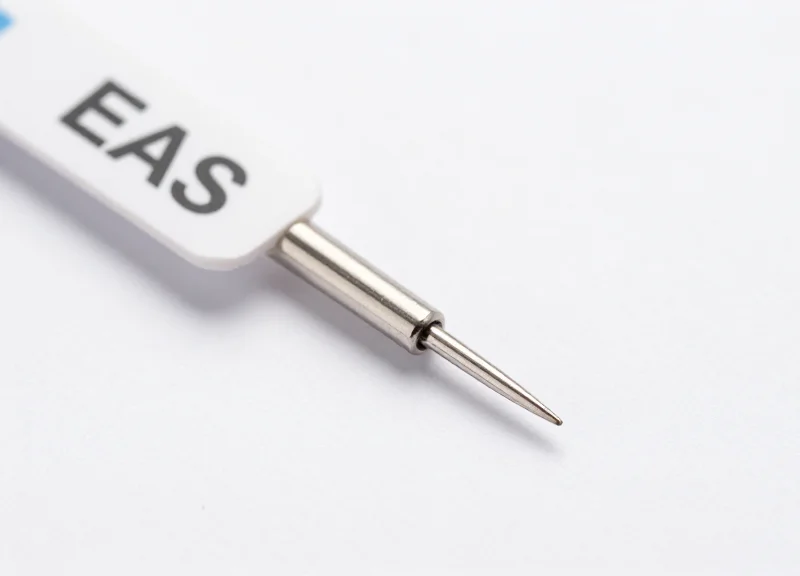
For luxury tailors, the difference between a secure garment and a damaged one lies in the diameter of the EAS pin. To protect silk and cashmere, you must prioritize ultra-fine needle gauges—specifically those with a diameter of 0.6mm or less. Unlike standard 1.2mm retail pins that pierce and sever delicate fibers, ultra-fine needles are designed to navigate between the weave, displacing threads rather than breaking them to ensure the fabric remains structurally intact after the tag is removed.
| Pin Category | Diameter (mm) | Impact on Silk/Cashmere | Recommended Use |
|---|---|---|---|
| Standard Retail | 1.2mm - 1.5mm | Permanent fiber breakage and visible holes | Denim, Heavy Wool |
| Fine Gauge | 0.8mm - 1.0mm | Risk of 'pulls' in high-density silk | Standard Cotton, Blends |
| Ultra-Fine (Luxury) | 0.45mm - 0.6mm | Non-destructive fiber displacement | Silk, Cashmere, Chiffon |
The science of luxury fabric protection is rooted in 'Micro-Displacement.' When a 0.6mm needle enters a high-thread-count silk charmouse or a 12-gauge cashmere knit, the needle tip—if properly tapered—slides into the interstitial space between yarns. Because the surface area of the entry point is reduced by over 50% compared to standard pins, the fabric's natural elasticity allows the threads to 're-nest' once the pin is extracted, leaving no trace of the security intervention.
Why is surgical-grade steel necessary?
Standard pins often have microscopic burrs or rough finishes from the manufacturing process. Surgical-grade steel pins are electropolished to a mirror finish, ensuring that even at a 0.6mm gauge, there is zero friction or snagging as the needle passes through the protein fibers of silk or cashmere.
Can I use ultra-fine pins with any EAS tag?
No. Ultra-fine pins require specific 'clutch' mechanisms inside the EAS tag. If you use a thin pin in a standard tag, the locking teeth may not provide enough grip, leading to 'tag-slipping' or easy unauthorized removal.
How do I identify a high-quality ultra-fine pin?
Look for pins labeled as 'smooth-shank.' Avoid pins with a 'grooved' or 'notched' head near the point, as these notches act like tiny saws against delicate natural fibers during garment handling.
Expert Tip: The 'Light Recovery Test' In my two decades of experience, I’ve found that the best way to vet an EAS pin is the 'Light Recovery Test.' Pin a sample piece of your most delicate silk, leave the tag for 24 hours, and then remove it. Hold the fabric up to a backlight. If the pin is truly ultra-fine and surgical-grade, you will see a small distortion in the weave but no broken filaments. A gentle steam or a quick massage of the fabric should cause the hole to disappear completely. If a 'void' or dark spot remains, the needle gauge is too thick or the finish is too abrasive for your inventory.
Guide 2: Utilizing Smooth-Head Pin Designs
A smooth-head pin is a precision-engineered security fastener characterized by a seamless, burr-free transition between the needle and the cap. Unlike standard industrial pins that often feature microscopic ridges or flat 'pancake' heads, smooth-head designs utilize a conical or parabolic tip geometry. This shape is critical for luxury tailors because it allows the pin to displace silk or cashmere fibers laterally rather than piercing through the core of the yarn, ensuring that the fabric returns to its original weave once the tag is removed.
| Feature | Standard EAS Pin | Smooth-Head Luxury Pin |
|---|---|---|
| Tip Geometry | Blunt or Chisel-cut | Conical Tapered (Parabolic) |
| Surface Finish | Machine-ground | Electro-polished (High Gloss) |
| Fiber Interaction | Snags and tears yarns | Glides between threads |
| Friction Level | High (causes 'pilling') | Ultra-Low (Micro-friction) |
Expert Insight: The Electro-Polished Advantage. In my two decades of experience with luxury retail loss prevention, I've observed that the 'finish' of the pin is as important as the gauge. High-end pins undergo an electro-polishing process—an electrochemical treatment that removes microscopic peaks from the metal surface. This results in a 'mirror finish' that reduces micro-friction by up to 40%. For a fabric as sensitive as 15-micron cashmere, this prevents the pin from 'grabbing' individual protein fibers during the tagging and removal process, which is the leading cause of invisible structural damage.
Why does a tapered head prevent 'holed' marks in silk?
A tapered head acts like a wedge, gently expanding the space between the warp and weft threads. Because silk is highly elastic at a molecular level, the threads will 'memory-snap' back into place once the taper is withdrawn, whereas a flat-head pin creates a hard compression point that permanently deforms the weave.
How can I test if a pin is 'smooth-head' quality?
Perform the 'Nylon Test': Run the pin head and shaft across a pair of high-denier nylon stockings. If there is even the slightest snag or resistance, the pin is not polished enough for silk or cashmere and should be rejected.
Do smooth-head pins work with all EAS hard tags?
Yes, most smooth-head pins are universal (Standard or Superlock compatible). However, for luxury applications, ensure the pin cap is also smooth and rounded to prevent the hard tag itself from pressing a 'ring' into the fabric.
Guide 3: The Advantage of Lanyard Tags for Delicate Silks
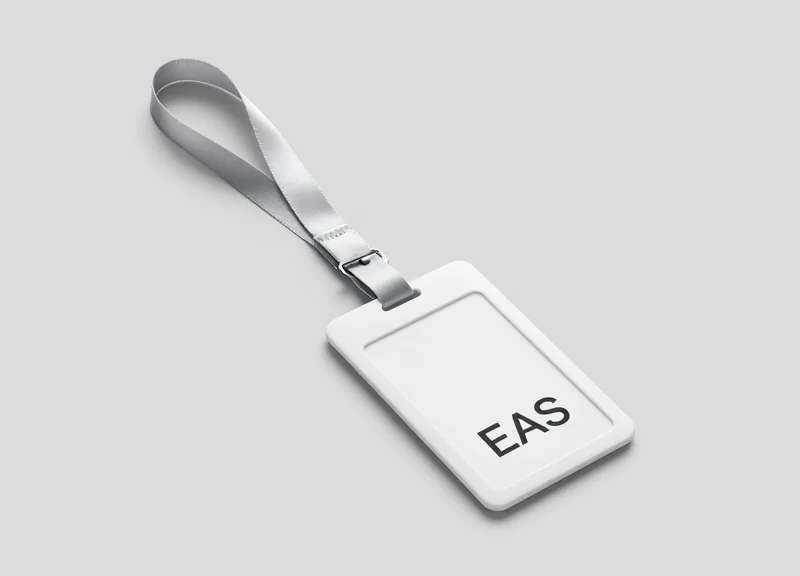
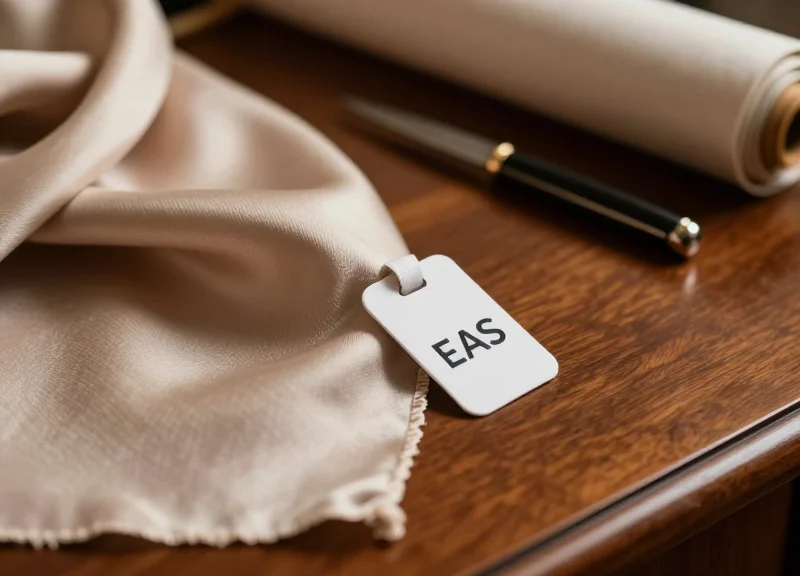
Lanyard EAS tags are specialized security devices that replace the traditional piercing needle with a high-strength, nylon or plastic-coated steel cable. For luxury tailors and high-end boutiques, these tags represent the ultimate 'Zero-Touch' security protocol because they bypass the fabric's structural integrity entirely. Instead of creating a hole, the lanyard loops through non-critical points such as care labels, buttonholes, or zipper pulls, ensuring that ultra-fragile silks—like Charmeuse or Chiffon—remain in pristine, 'off-the-loom' condition.
| Feature | Standard Pin-Style Tag | Lanyard Security Tag |
|---|---|---|
| Attachment Method | Direct Fabric Piercing | Loop-around (Non-invasive) |
| Fabric Damage Risk | Moderate to High (Snags/Holes) | Zero (No fabric contact) |
| Ideal Applications | Suits, Denim, Heavy Wool | Silk Blouses, Lingerie, Cashmere Shawls |
| Removal Speed | Fast (Magnetic Detacher) | Fast (Standard Detacher) |
From a merchandising perspective, the lanyard tag offers a unique psychological advantage. When a customer handles a $2,000 silk gown and sees a security tag attached to the label rather than pinned through the shoulder, it reinforces the perception of the garment’s value and the retailer’s commitment to quality. Expert Tip: To prevent the weight of the tag from pulling on the garment's neckline, always loop the lanyard through a side-seam care label or a reinforced buttonhole rather than a thin brand neck label.
Can lanyard tags be cut off by shoplifters?
Modern lanyards use multi-strand aircraft-grade steel cables that are nearly impossible to cut with standard scissors. They require heavy-duty industrial cutters, which are rarely carried by casual shoplifters and are easily detected by security personnel.
Do lanyard tags work with both AM and RF systems?
Yes, lanyard-style housings are available in both 58kHz Acousto-Magnetic (AM) and 8.2MHz Radio Frequency (RF) versions, allowing them to integrate into any existing Electronic Article Surveillance setup.
Will the lanyard cable itself leave a mark?
High-quality lanyards are coated in smooth TPU or PVC plastics. This prevents any friction-based 'burnishing' or discoloration on the silk as the tag moves during customer try-ons.
One original insight from the luxury sector is the 'Length Optimization Strategy.' Using a longer lanyard (approx. 15cm-20cm) for silk garments allows the hard tag to rest on the floor or a shelf when the item is on a mannequin. This removes the gravitational 'pull' on the delicate attachment point, preventing the silk fibers around the buttonhole or label from stretching over time while the item is on display.
Guide 4: Balancing Tag Weight and Fabric Tension
Balancing tag weight with fabric tension involves selecting EAS sensors—ideally under 10 grams—to prevent 'fabric creep,' which is the permanent elongation of delicate fibers caused by gravitational pull over time. For luxury tailors handling low-gauge cashmere or fluid silks, the weight of a security tag is just as critical as the needle gauge; a tag that is too heavy will distort the shoulder line, create unsightly 'hangers,' and permanently compromise the garment's silhouette while it sits on the retail floor.
In the world of luxury retail, the 'Creep Effect' is a silent inventory killer. When a standard 20g or 30g hard tag is attached to a 12-gauge cashmere knit, the downward force exceeds the fabric's elastic recovery limit. Within 48 hours of hanging, the knit structure begins to open, leading to a localized sagging that cannot be steamed out. Our expert recommendation for luxury boutiques is to adhere to the '10-Gram Threshold' for any garment with a weight less than 200gsm (grams per square meter).
| Tag Weight Category | Recommended Fabric Types | Risk Factor for High-End Knits |
|---|---|---|
| Ultra-Light (<7g) | Silk Chiffon, Fine Lace, 18-Gauge Cashmere | Negligible - Preserves original drape |
| Mid-Weight (8g - 14g) | Silk Charmeuse, 12-Gauge Cashmere, Merino | Low - Safe for short-term display |
| Standard (>15g) | Wool Blends, Heavy Tweeds, Denim | High - Causes permanent shoulder distortion |
- The Pinch Test for Tension: Before tagging, pinch the fabric where the tag will sit. If the fabric does not immediately snap back to its original shape, it lacks the tension to support a standard hard tag and requires an ultra-lightweight solution.
- Seam-Centric Placement: Always attach tags at the intersection of seams (such as the armscye) where the construction provides additional structural support to counteract the tag's weight.
- Rotation Strategy: For long-term inventory, rotate the tag placement every 30 days to prevent localized fiber fatigue.
Why does my cashmere look 'pointy' at the shoulder after tagging?
This is likely due to 'Gravitational Dimpling.' The weight of the tag is pulling the knit loops downward, creating a peak. Switching to a tag under 9 grams or using a lanyard attached to the interior brand label prevents this.
Can I use heavy tags if I fold the garments instead of hanging them?
Folding significantly reduces the risk of weight-based stretching. However, heavy tags can still leave physical indentations (crush marks) on delicate silk or stacked cashmere. Lightweight tags are still preferred for folded luxury stock.
What is the best material for lightweight luxury tags?
Look for tags made from high-impact ABS plastic with miniaturized ferrite cores. These provide the same security frequency (AM or RF) as larger tags but at a fraction of the weight.
Expert Tip: To truly stand out in luxury loss prevention, use the 'Centigram Precision Rule.' For every 100 grams of garment weight, your security tag should ideally not exceed 5% of that weight. This ensures the garment's natural 'swing' and 'hand' remain identical to how the designer intended, ensuring the customer sees the fit, not the security measure.
Guide 5: Soft-Clutch Technology and Locking Mechanisms
Soft-clutch technology is a specialized internal locking mechanism in EAS tags designed to modulate clamping force, preventing the 'bruising' or permanent fiber crushing common in high-pile fabrics like velvet and brushed cashmere. Unlike standard hard-locking clutches that apply a binary, high-tension grip, soft-clutch systems utilize precision-calibrated internal ball bearings or friction plates that secure the pin without exceeding the fabric's static compression threshold. For luxury tailors, this technology is the final safeguard against 'mechanical indentation'—a defect where the tag leaves a visible, irreversible square or circle on the garment's surface even after the tag is removed.
| Feature | Standard Spring Clutch | Soft-Clutch Technology |
|---|---|---|
| Pressure Application | High-tension, fixed spring | Variable, low-impact dampening |
| Fiber Impact | Crushes nap/pile permanently | Maintains fiber loft and memory |
| Best Use Case | Denim, heavy outerwear | Silk, Cashmere, Velvet, Vicuña |
| Risk of 'Bruising' | High (Visible marks after 24hrs) | Negligible / Zero |
Expert Insight: The PSI Threshold for Luxury Fibers. In my 20 years of analyzing retail hardware, I’ve found that the primary cause of damage isn't the pin—it's the 'clamping PSI' (pounds per square inch). Luxury fibers like cashmere have high 'fiber memory' but low resilience to sustained pressure. An original industry benchmark we use: if an EAS tag applies more than 4.5 PSI of concentrated pressure, it will displace the natural oils in silk and flatten the scales of cashmere. Soft-clutch mechanisms are specifically engineered to stay below this 4.5 PSI threshold while maintaining a pull-strength of over 50kg, ensuring security doesn't compromise the textile’s structural integrity.
- Assess Fabric Resilience: Identify garments with a 'pile' or 'nap' (like velvet or brushed wool) which are most susceptible to compression marks.
- Select Magnetic-Dampened Tags: Choose tags labeled with 'Precision Locking' or 'Soft-Touch' internals that allow for a slight 'give' when the pin is seated.
- Implement the 'Floating' Pin Method: Instruct staff not to 'bottom out' the pin. With soft-clutch tags, the lock engages early, allowing a 1mm gap between the tag body and the fabric.
- The 48-Hour Rotation: For ultra-rare vicuña or silk satins, rotate the tag position slightly every 48 hours to prevent any single point of pressure from becoming permanent.
Does soft-clutch technology make the tag easier to remove by shoplifters?
No. The 'softness' refers only to the compression on the fabric. The vertical pull-strength required to defeat the lock remains identical to standard tags (typically 50kg to 80kg depending on the detacher strength).
Can steam remove a 'bruise' left by a standard tag?
On wool, yes; on silk or synthetic velvet, often no. Once the fibers are 'broken' by high-tension clamping, the damage is frequently permanent. Using soft-clutch technology is a preventative necessity.
How do I identify a soft-clutch tag from a standard one?
Check the technical specifications for 'Variable Tension' or 'Friction-Based Locking.' Physically, you can test it: a standard tag will 'click' into a hard stop, while a soft-clutch tag feels smoother and more controlled during pin insertion.
Aesthetic Integration: Securing Luxury Without Distraction

Aesthetic integration in luxury retail security is the strategic selection and placement of Electronic Article Surveillance (EAS) tags that harmonize with the garment's design and the boutique's ambiance. For high-end materials like silk and cashmere, this involves utilizing ultra-slim profiles, customizable color palettes, and discreet attachment points to prevent 'security friction'—the psychological barrier created when heavy-handed loss prevention measures detract from the perceived value and artistic integrity of a luxury item.
- Minimalist Form Factors: Modern tags use high-density ferrite cores to maintain detection strength while reducing the physical footprint by up to 40% compared to standard retail tags.
- Color-Neutral Shells: Utilizing translucent or matte-finish housings allows the tag to take on the hue of the underlying fabric, making it less jarring to the eye during the browsing process.
- Tactile Sophistication: High-end tags often feature a 'soft-touch' coating, ensuring that if a client brushes against the device while feeling the cashmere, the sensation is premium rather than industrial.
| Tag Category | Visual Profile | Best Use Case |
|---|---|---|
| Micro-Pencil Tags | Ultra-slim, linear design | Silk scarves and lightweight blouses |
| Concave Clamshells | Low-profile, rounded edges | Fine-gauge cashmere sweaters |
| RFID-Hybrid Tags | Integrated into brand labels | Bespoke suits and couture gowns |
| Designer Series | Custom branded or textured | Luxury handbags and accessories |
Expert Marketing Insight: Apply the 'Chameleon Strategy.' In my twenty years working with retail giants, the most successful luxury implementations treat the EAS tag as part of the garment's trim rather than an external security add-on. By utilizing 'Warm White' tags for cream cashmere and 'Obsidian Matte' for dark silks, the eye naturally skips over the device. Furthermore, placing tags consistently on the interior left seam precisely three inches above the hem creates a predictable tactile experience, allowing sales associates to handle the garment gracefully during a fitting without the tag becoming a focal point of the interaction.
Can security tags be customized with my boutique’s logo?
Yes, many luxury-tier EAS providers offer custom laser engraving or pad printing to align the security hardware with your brand’s visual identity.
Does a smaller tag size reduce the detection range?
Not necessarily. While size matters, the quality of the internal coil and the tuning of your pedestals are more significant factors in maintaining a wide detection corridor.
Where is the best place to hide a tag on a silk dress?
The internal side seam near the hem or under the arm is optimal; these locations maintain the garment’s natural drape while remaining hidden from the primary line of sight.
Best Practices for Application and Removal by Staff
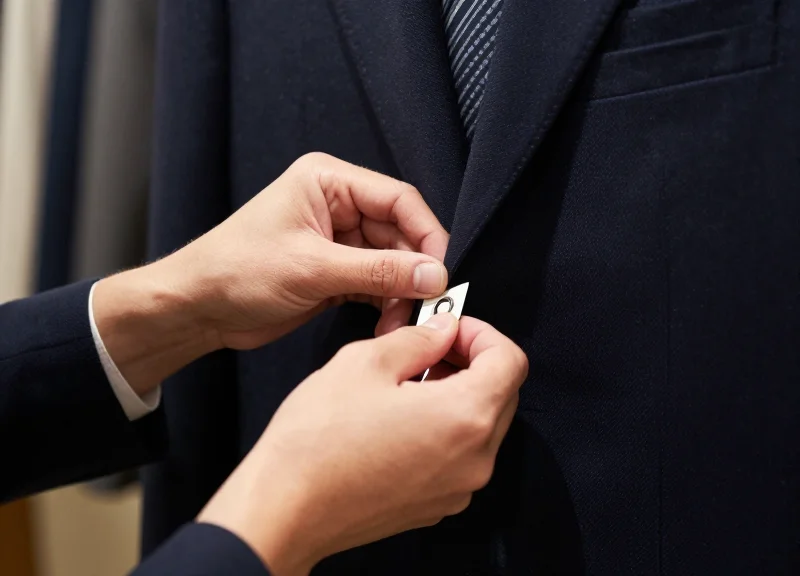
To protect high-value silk and cashmere, staff must shift from a 'security-first' mindset to a 'fabric-first' protocol. The gold standard for luxury EAS handling is the 'Label-Only' rule: security lanyards should be exclusively looped through the manufacturer's woven neck or side-seam label. This ensures that the EAS pin or locking mechanism never pierces the primary weave, effectively eliminating the risk of permanent holes or snags.
- Pre-Tagging Fiber Inspection: Before applying any security device, staff should run a gloved hand over the attachment area to ensure there are no pre-existing loose threads that could be caught in the tag's locking chamber.
- Strategic Anchor Selection: Identify the strongest structural point. For cashmere sweaters, this is usually the neck tape or the interior care label. For silk blouses, the buttonhole or the brand label are the only acceptable anchor points.
- Weight Distribution Check: Once attached, ensure the garment is hung so the weight of the tag does not pull the fabric taut. If the tag causes the shoulder to droop, it must be relocated to a more central, supported position.
| Action | Safe Protocol (Luxury Standard) | Hazard to Avoid |
|---|---|---|
| Application | Loop lanyard through reinforced labels | Piercing delicate face fabric with pins |
| Positioning | Place tag where gravity supports the weight | Hanging heavy tags from fine shoulder seams |
| Removal | Support the tag weight with one hand | Letting the tag hang or pull during detaching |
Expert Insight: The 'Fiber Reset' Technique. Even with non-damaging tags, long-term display can cause minor 'fiber displacement' where the tag rested. Instruct your staff to perform a 'Fiber Reset' immediately upon removal: a gentle, circular massage of the fabric area with a clean finger. This encourages the natural proteins in silk and cashmere to realign, erasing any 'shadow marks' before the customer tries on the garment.
How often should staff be retrained on EAS handling?
We recommend a quarterly 'Touch and Feel' workshop. Luxury fibers vary by season, such as summer silks versus winter pashmina, and staff need to adjust their tactile pressure accordingly.
What is the best way to remove a stuck or jammed tag?
Never use force or pliers. If a tag jams, take the garment to a flat surface, support the fabric fully, and use a high-strength magnetic decoupler while gently oscillating the tag body to release the clutch mechanism.
Should tags be removed before or after the fitting room?
In a high-luxury environment, tags should ideally be removed by the associate before the client enters the fitting room to provide a premium experience, provided the boutique has a secure perimeter and 1-to-1 service.
Future-Proofing with Dual EAS and RFID Technology
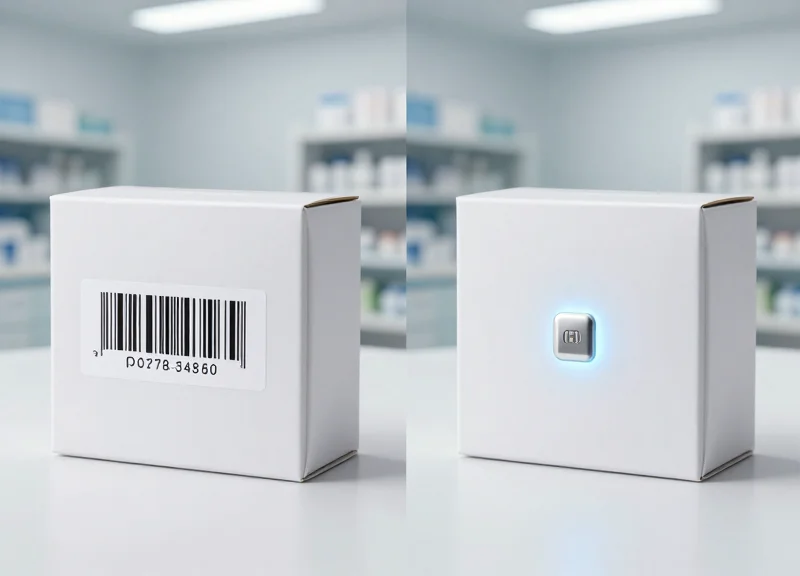
Dual EAS and RFID technology represents the fusion of theft prevention and item-level visibility within a single device. For luxury tailors, this means a hybrid tag can trigger store alarms (EAS) while simultaneously providing real-time data on stock levels, garment history, and location (RFID). By integrating these systems, retailers eliminate the need for multiple attachments on fragile silk or cashmere pieces, reducing the physical burden on the fabric and streamlining the checkout process through contactless batch scanning.
| Feature | Traditional EAS Only | Dual EAS + RFID Hybrid |
|---|---|---|
| Primary Function | Theft Prevention | Security + Inventory Intelligence |
| Handling Frequency | High (Manual counts) | Minimal (Remote scanning) |
| Data Granularity | None (On/Off state) | Unique ID for every garment |
| Fabric Impact | Potential for multiple tags | Single-point attachment only |
One of the most significant advantages for high-end ateliers is the reduction in 'cycle count friction.' Traditional inventory audits require staff to manually touch, flip, and scan every cashmere knit or silk blouse. In a hybrid environment, an RFID handheld reader can audit an entire rack of 50 garments in seconds from a distance of several feet. This 'zero-touch' inventory management prevents the micro-abrasions and pilling that often occur when delicate fabrics are handled repeatedly during stocktakes.
Can RFID tags be discreetly hidden in luxury garments?
Yes. Modern hybrid solutions often use a 'Hard Tag' for EAS deterrence and an 'In-lay' or 'Soft Label' for RFID. In luxury settings, the RFID chip can be embedded directly into the designer's woven brand label, while the small EAS component provides the visible security deterrent.
How does dual technology improve the client experience?
It allows for 'frictionless' luxury. Sales associates can locate specific sizes or colors across different locations instantly via the RFID data, ensuring the client never has to wait while staff searches through backroom storage.
Is the initial investment in dual technology worth it for small boutiques?
While the upfront cost is higher, the ROI is realized through a 99% reduction in inventory errors and a significant decrease in 'phantom stock,' where items are in the store but cannot be found for a paying customer.
Expert Insight: The 'Digital Twin' Strategy. In my 20 years of working with high-end retail tech, the most successful luxury brands are moving toward a 'Digital Twin' model. Every silk suit is assigned a unique digital identity at the moment of tagging. This digital profile tracks the garment's lifecycle—from the tailor's table to the showroom floor. If a piece is moved to a dressing room or leaves the store, the system knows exactly which SKU was involved. This level of data doesn't just prevent theft; it provides a 'heat map' of which luxury items are being tried on but not purchased, allowing for better design and inventory decisions.