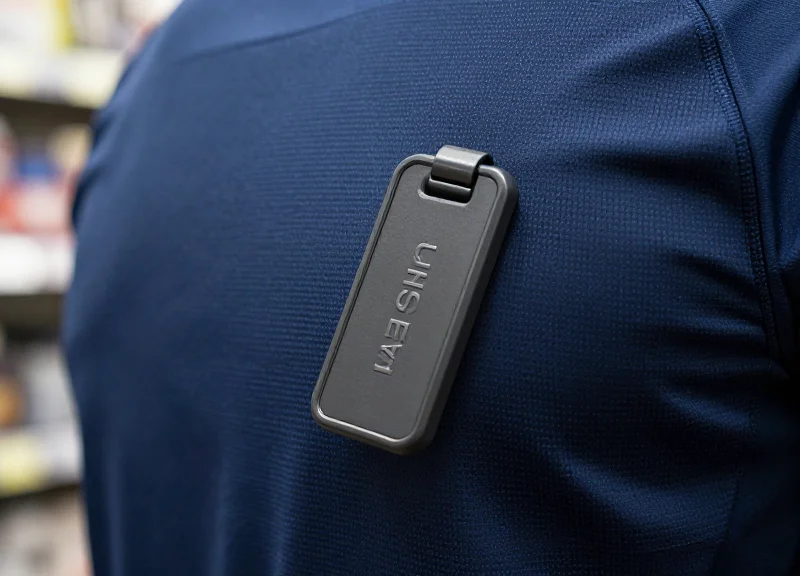
In the competitive world of uniform retail, high-performance fabrics are the gold standard. Whether it is moisture-wicking medical scrubs, flame-resistant industrial workwear, or ultra-elastic athletic uniforms, these specialized materials represent a significant investment. However, traditional Electronic Article Surveillance (EAS) tags—often bulky and equipped with thick, blunt pins—can leave permanent holes or snags that ruin the garment's integrity and aesthetic. For retailers, the challenge is clear: how do you prevent theft without destroying the product you are trying to protect? This guide provides an expert deep dive into selecting the perfect EAS solutions tailored specifically for technical textiles.
The Evolution of Uniform Retail and the Need for Specialized Security

Uniform retail has undergone a radical transformation, moving from basic polyester-cotton blends to high-performance technical gear designed for extreme durability, medical safety, and athletic efficiency. This shift means that modern uniform retailers are no longer just selling clothing; they are selling specialized tools. Consequently, traditional Electronic Article Surveillance (EAS) tags—originally designed for high-volume, low-density garments—now pose a significant threat to inventory quality by causing permanent 'needle-point damage' and compromising the specialized membranes that define high-performance workwear.
As the price point for specialized uniforms (such as flame-resistant coveralls or surgical scrubs with silver-ion antimicrobial properties) has increased, so has their attractiveness to organized retail crime. This creates a unique paradox for the retailer: you must secure the item to maintain margins, but the very act of securing it with standard hard tags can render the garment unsellable or, worse, non-compliant with safety standards.
| Fabric Category | Key Performance Feature | Legacy Security Vulnerability |
|---|---|---|
| Waterproof/Breathable | DWR Coatings & Membranes | Standard pins create 'leak points' that compromise the waterproof barrier. |
| Antimicrobial | Silver or Copper Ion Infusion | Heavy tags can cause micro-tearing, breaking the continuity of the protective weave. |
| Flame Resistant (FR) | Nomex/Kevlar Fiber Integrity | Incompatible pin materials can weaken fiber strength or introduce flammability risks. |
| High-Stretch/Compression | Elastane & Spandex Blends | Standard tag weight causes 'fabric sag' and permanent distortion of the garment shape. |
Why can't I use standard retail security tags for high-tech uniforms?
Standard tags often utilize thick, 1.2mm steel pins that displace the weave of technical fabrics. Unlike traditional knits, high-performance textiles (like ripstop or fused membranes) do not 'heal' around the puncture, leading to visible holes or fraying.
How does specialized security impact insurance and compliance?
In industries like fire safety or healthcare, a punctured garment may no longer meet OSHA or NFPA certifications. Using specialized, fine-gauge EAS solutions ensures that the security measure doesn't invalidate the product's safety rating.
What is the financial impact of 'invisible damage'?
Invisible damage occurs when a pin pierces a moisture-wicking layer. While it looks fine on the shelf, the functionality is destroyed, leading to high return rates and damage to brand reputation.
Expert Insight: The Capillary Effect Risk. A unique challenge with high-performance fabrics is what we call 'capillary damage.' When a standard thick-gauge security pin creates a hole in a layered uniform fabric, it doesn't just leave a mark—it creates a channel. For medical or industrial uniforms, this channel can allow fluids to bypass protective coatings through capillary action, effectively 'wicking' contaminants through a barrier that was designed to be impermeable. Specialized EAS pins with ultra-thin diameters (0.8mm or less) are essential to mitigate this specific risk by preserving the surface tension of the textile.
Identifying the Risks: How Standard EAS Tags Damage High-Performance Fabrics

Standard EAS tags damage high-performance fabrics through a process called 'mechanical fiber severance.' Unlike traditional coarse-weave cotton where yarns can easily shift to accommodate a pin, modern uniform fabrics like microfibers and high-gauge knits are engineered with extremely tight tolerances. When a standard, blunt-tipped EAS pin is forced through these materials, it doesn't simply slide between fibers; it shears through them. This results in permanent puncture marks, 'laddering' in knits, and compromised moisture-wicking properties that render premium garments unsellable before they even leave the rack.
| Fabric Type | Typical Construction | Damage Risk Level | Primary Failure Mode |
|---|---|---|---|
| Microfiber Polyester | Ultra-fine synthetic filaments | High | Filament splitting and localized fraying |
| High-Gauge Knit | Interlocking microscopic loops | Critical | Runs (laddering) and structural unraveling |
| Elastane/Spandex Blends | Elastic polymer core | Moderate | Permanent 'puckering' at the entry point |
| Ripstop Nylon | Reinforced grid pattern | Low | Distortion of the reinforcement grid |
The 'Unique Insight' for retailers lies in the Pin-to-Fiber Ratio. Most standard EAS pins have a diameter of 1.2mm to 1.5mm. However, the interstices (the gaps between yarns) in a high-performance 40-gauge knit are often smaller than 0.1mm. Forcing a standard pin through these fabrics is the mechanical equivalent of driving a broadsword through a chain-link fence. This creates a permanent 'memory' in the synthetic polymer, meaning the hole will never close, regardless of subsequent steaming or washing.
Why do 'runs' occur specifically in athletic uniforms?
Activewear often uses a circular knit construction. If a single loop in that continuous chain is severed by a blunt EAS pin, the tension of the garment causes that break to travel vertically, creating a 'run' or 'ladder' that compromises the entire panel.
Can't 'self-healing' fabrics recover from tag punctures?
No. While some technical fabrics are marketed as 'self-healing,' this usually refers to water-repellent coatings or micro-abrasions. They cannot bridge a gap created by a severed filament or a snapped elastic core.
How does tagging affect moisture-wicking capabilities?
Punctures disrupt the capillary action of micro-denier fibers. By creating a localized crater in the weave, the tag site becomes a 'moisture trap' that can lead to discomfort and premature fabric degradation in high-performance apparel.
Anatomy of a Safe Security Tag: Smooth Pins and Precision Clutches
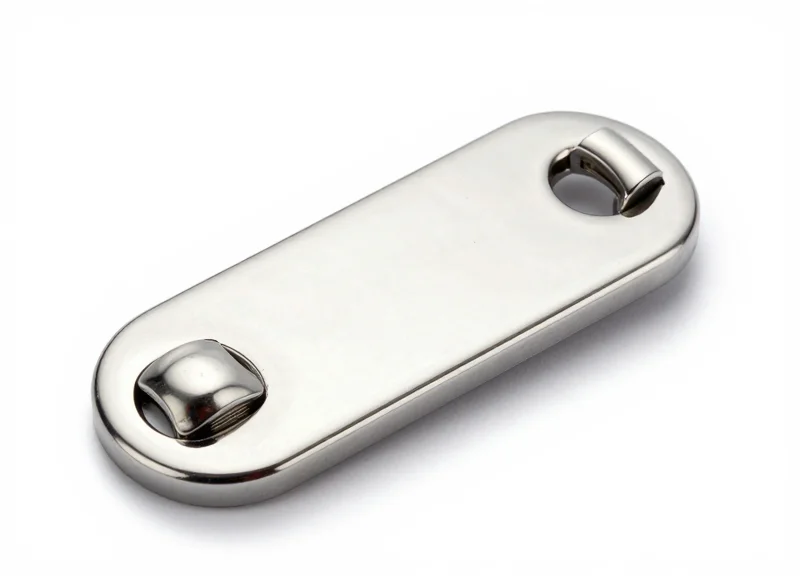
A 'safe' Electronic Article Surveillance (EAS) tag is defined by its ability to secure a garment without altering its physical structure. For high-performance uniforms, this requires a combination of 'fine-pin' technology—typically pins with a diameter of 0.8mm to 1.0mm—and high-precision magnetic clutches that maintain consistent tension. Unlike standard security tags that use thick, blunt-force pins to pierce material, safe tags are engineered to slide between the microscopic gaps in high-gauge knits and microfibers, ensuring that once the tag is removed, the fabric returns to its original state without 'memory' holes or snags.
| Feature | Standard Retail Tag | High-Performance 'Safe' Tag |
|---|---|---|
| Pin Diameter | 1.2mm - 1.6mm | 0.8mm - 1.0mm (Ultra-Fine) |
| Tip Geometry | Conical/Punch-style | Tapered 'Suture' Tip |
| Surface Finish | Machined Steel | Electro-Polished / Nickel-Plated |
| Clutch Mechanism | Generic Spring Clutch | Precision High-Strength Magnetic |
| Fabric Impact | Severed fibers, permanent holes | Fiber displacement, self-healing |
The secret to preventing damage lies in the surface friction of the pin. Most retail damage occurs because standard pins have microscopic burrs from the manufacturing process. When these pins pass through a dense weave, those burrs act like a saw, snagging delicate spandex or polyester filaments. Safe tags undergo an electro-polishing process, creating a mirror-smooth finish that minimizes 'drag' during insertion and removal.
- Fiber Displacement over Destruction: The tapered tip of a fine-pin tag acts like a needle used in surgical suturing; it pushes the warp and weft of the fabric aside rather than punching a hole through the yarn itself.
- Clutch Tension Calibration: A precision clutch ensures the tag doesn't 'wobble' while attached. This stability prevents the pin from oscillating and enlarging the entry point during customer handling or transport.
- Weight Optimization: High-performance tags are often made from lightweight ABS plastic to ensure the weight of the tag itself doesn't cause 'sagging' or stretching in lightweight moisture-wicking fabrics.
- Expert Tip: The 'Light Test' for Pin Quality: Hold a sample pin up to a strong light source or use a 10x jeweler’s loupe. A high-quality 'safe' pin should have a perfectly rounded, chrome-like tip. If you see any flat edges or rough texture, it will eventually ruin your high-gauge uniforms.
- Why is magnetic strength important for fabric safety?: Stronger magnetic clutches (e.g., 12,000 Gauss or higher) allow for a more secure lock with less mechanical movement, reducing the risk of the pin dragging against the fabric fibers during the decoupling process.
- Can fine-pins be used on heavy workwear?: Yes. While designed for delicate knits, fine-pins are made from hardened steel and are more than capable of penetrating heavy canvas or denim without bending, making them a versatile 'one-tag' solution for diverse uniform inventories.
AM vs. RF Technology: Which is Better for Uniform Environments?
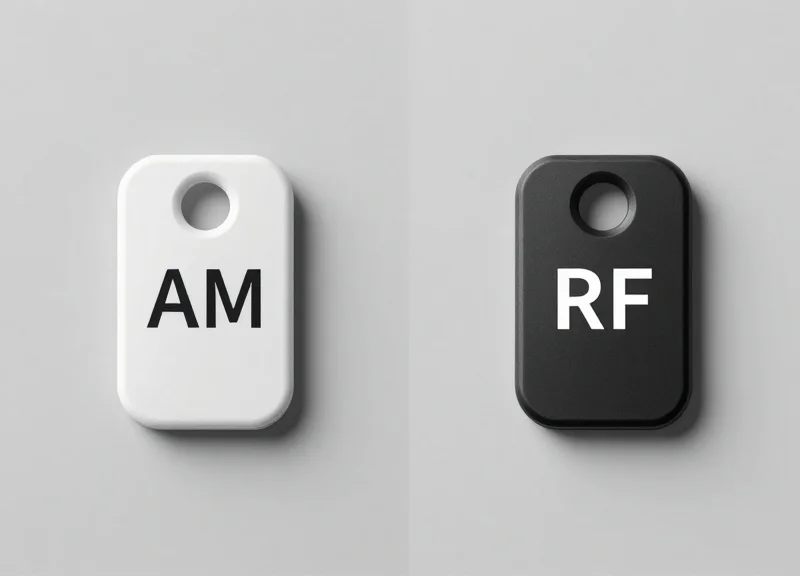
For uniform retailers, the choice between Acousto-Magnetic (AM) and Radio Frequency (RF) technology is dictated by the chemical and physical properties of the garments; while RF is a global standard for general apparel, AM technology (58 kHz) is the superior choice for high-performance uniforms because it is significantly less prone to 'shielding' or false alarms caused by metallic fibers, carbon-infused anti-static threads, and moisture-wicking treatments.
| Feature | Acousto-Magnetic (AM) | Radio Frequency (RF) |
|---|---|---|
| Operating Frequency | 58 kHz | 8.2 MHz |
| Detection Accuracy | High (Less affected by liquid/metal) | Moderate (High interference risk) |
| Label Flexibility | Thicker, plastic-housed strips | Paper-thin, flat stickers |
| Best Use Case | Specialized workwear, ESD garments | Standard poly-cotton scrubs, linens |
The Conductive Fiber Challenge: Modern uniform retailing often involves specialized textiles, such as ESD (Electrostatic Discharge) apparel used in tech manufacturing or workwear with high-visibility metallic reflective tape. RF systems operate at a frequency that is easily disrupted by these conductive materials, creating a 'Faraday Cage' effect that hides the security tag from the detection pedestal. AM technology, utilizing magnetic resonance, penetrates these conductive barriers with ease, ensuring that a high-performance jacket doesn't become 'invisible' to your security system simply because of its reflective safety strips.
- AM Pro: Liquid and Metal Immunity: Uniforms with high moisture-wicking capabilities or those containing metal zippers and heavy-duty snaps do not trigger the 'detuning' common in RF systems.
- RF Pro: High-Speed Throughput: If your uniform inventory consists strictly of standard cotton or polyester blends without specialized treatments, RF systems offer faster deactivation at the point of sale.
- Expert Insight: The 'Ghosting' Phenomenon: A unique challenge in uniform retail is 'ghosting,' where moisture-saturated performance fabrics (like those used in heavy-duty athletic uniforms) can hold enough static to trigger sensitive RF gates. AM systems bypass this issue entirely due to their low-frequency magnetic operation.
Can I use RF labels on uniforms with metallic nameplates?
It is not recommended. Metallic nameplates or silver-threaded logos can shield RF signals, causing the tag to fail at the exit gate.
Is AM technology worth the higher initial investment?
For specialized uniform retailers, yes. The reduction in false alarms and the ability to protect high-margin, high-performance gear far outweighs the hardware cost difference.
Do AM tags require different pins for fine fabrics?
The technology (AM vs RF) resides in the tag body, but the pin is what contacts the fabric. Regardless of technology, you must pair your system with 'fine-gauge' smooth pins to prevent snags in high-performance knits.
Beyond the Pin: Exploring Lanyard and Ink Tag Alternatives

For uniform retailers, 'zero-puncture' security is the gold standard for high-performance textiles like GORE-TEX membranes or moisture-wicking synthetics. Lanyards and ink tags offer a critical alternative to traditional pins by utilizing existing garment features—such as buttonholes, zippers, or structural loops—to secure Electronic Article Surveillance (EAS) sensors. While pins rely on physical penetration of the knit, these alternatives prioritize the structural integrity of the fiber, ensuring that the garment remains in pristine, sellable condition even after the security device is removed.
| Feature | Lanyard Tags | Ink Tags (Benefit Denial) | Application Strategy |
|---|---|---|---|
| Attachment | Looping through loops/holes | Clamping or Pin-based | Non-invasive for lanyards |
| Deterrent Type | EAS Alarm (AM/RF) | Visual & Chemical | Lanyards for detection; Ink for denial |
| Best For | Zipped jackets, footwear | High-shrinkage items | Lanyards for technical shells |
| Fabric Risk | Zero (No puncture) | Variable (Depends on pin) | Lanyards eliminate 'runs' entirely |
Lanyards are particularly effective for high-performance uniforms that feature specialized zippers or reinforced utility loops. By using a plastic-coated steel cable, retailers can attach an EAS tag to the garment's hardware rather than its surface. This is vital for waterproof apparel, where a single pin-hole can compromise the hydrostatic head rating of the fabric. Modern lanyards come in 'no-tool' configurations, allowing staff to quickly loop and lock the tag without needing a specialized applicator, which streamlines the merchandising process for high-volume inventory.
Expert Insight: The 'Structural Anchor' Principle. When using lanyards on high-stretch fabrics like Spandex blends, always anchor the lanyard to the garment's internal care label or a reinforced seam junction. This prevents the weight of the tag from causing 'fabric fatigue' or stretching a specific area of the garment over time while it sits on the hanger—a common issue often overlooked by standard retail operations.
Do ink tags actually protect against professional shoplifters?
Yes. Ink tags operate on the principle of 'benefit denial.' Even if a thief bypasses the EAS gate, the risk of permanent staining makes the garment unwearable and impossible to resell on the secondary market.
Are lanyards compatible with my current AM or RF pedestals?
Absolutely. Lanyards are simply an attachment mechanism; the internal ferrite or capacitor remains the same, ensuring 100% compatibility with your existing security gates.
Can ink tags damage fabrics if they are tampered with inside the store?
That is the intent. The ink is designed to release only upon forceful, unauthorized removal. For high-performance fabrics, look for 'dry-ink' or non-acidic formulations that won't degrade synthetic fibers instantly.
How do I choose between a lanyard and a fine-pin tag?
If the fabric has a visible weave or is a mesh knit, a fine-pin is often safe. If the fabric is a non-porous laminate or a high-tension compression garment, a lanyard is the only way to guarantee zero damage.
The Strategic Advantage of Dual EAS-RFID Technology

Dual EAS-RFID technology represents the ultimate convergence of loss prevention and operational efficiency for modern uniform retailers. By embedding an Acousto-Magnetic (AM) or Radio Frequency (RF) resonator alongside a serialized RFID chip within a single housing, retailers can simultaneously deter theft and maintain real-time inventory visibility. For uniform suppliers dealing with high-performance textiles, this 'one-tag' solution is critical because it minimizes the number of punctures required in the fabric, effectively halving the risk of structural damage compared to using separate security and tracking devices.
| Feature | Standard EAS Only | Standalone RFID | Dual EAS-RFID Hybrid |
|---|---|---|---|
| Primary Function | Theft Deterrence | Inventory Tracking | Security + Visibility |
| Item Identification | None (Alarm Only) | Serialized (Unique SKU) | Serialized + Alarm |
| Inventory Accuracy | ~65-70% | 98%+ | 98%+ |
| Fabric Stress | Low (1 Pin) | Low (1 Pin/Sticker) | Minimal (Single Pin for both) |
| Data Insights | Alarm counts only | Stock levels/Location | Shrinkage patterns by SKU |
Expert Insight: Solving the 'Identical Item' Problem. Uniform retailers face a unique challenge: a rack of 50 navy blue tactical shirts looks identical to the naked eye, even if they span six different sizes and three sleeve lengths. While a standard EAS tag tells you a shirt left the store, a Dual EAS-RFID tag tells you exactly which size 42-Long is missing. This allows for automated replenishment, ensuring that high-demand sizes are always in stock, which is the primary driver of revenue in the uniform industry.
How does Dual Technology improve the customer experience?
It enables 'Frictionless Returns' and 'Buy Online, Pick Up In-Store' (BOPIS). Because the tag identifies the specific garment, the return process is faster, and inventory levels are updated instantly across all sales channels.
Is the weight of a dual-tech tag too heavy for high-performance fabrics?
Modern hybrid tags are engineered with lightweight polycarbonate shells. When used with a fine-gauge precision pin, the weight distribution is optimized to prevent 'sagging' or stretching in lightweight moisture-wicking polos.
Does RFID replace the need for an EAS gate?
While RFID can detect items leaving the store, EAS remains the gold standard for high-volume theft deterrence. A dual-system ensures that even if an RFID signal is shielded, the EAS resonator will still trigger the pedestal alarm.
Beyond simple loss prevention, the strategic advantage lies in the 'Single Source of Truth' it provides. For uniform retailers who often fulfill large corporate or government contracts, knowing exactly what is on the floor versus what is in the warehouse reduces the 'safety stock' overhead, freeing up capital for new product lines or technical fabric R&D. By investing in dual-tech tags, you are not just buying security; you are buying a data-driven infrastructure.
Optimal Placement Strategies for Maximum Security and Minimal Wear
The gold standard for EAS placement in uniform retail is the 'Seam-Junction' principle: tags must be applied to the thickest part of a garment—typically where two or more reinforced seams meet—to distribute the weight of the hard tag and prevent the 'sagging' effect common in performance knits. By positioning tags in high-tensile areas such as the underarm seam, waistband, or pocket welt, retailers ensure maximum security through visibility while utilizing the garment's own structural architecture to protect delicate fibers from localized stress or permanent puncture holes.
| Uniform Category | Primary Placement Zone | Fabric Protection Rationale |
|---|---|---|
| Medical Scrubs | Back of neck seam or side hip seam | Avoids interference with the chest pocket and prevents stretching of soft poly-cotton blends. |
| Performance Polos | Inner side seam, 2 inches below armpit | Utilizes the vertical seam strength to support tag weight without distorting the collar or placket. |
| Tactical Pants | Rear waistband near the center loop | The multi-layered waistband fabric prevents the pin from creating a visible hole in high-visibility areas. |
| Outerwear/Jackets | Cuff seam or bottom hem corner | Ensures the tag is visible to the EAS gates but doesn't weigh down the shoulder profile of the garment. |
- Identify the Load-Bearing Seam: Locate a double-stitched or reinforced seam. This provides a 'hidden' channel for the pin that won't disrupt the primary weave of the performance fabric.
- Check for 'Fabric Memory': Before tagging, pinch the fabric. If it stays wrinkled, use a lanyard. If it snaps back (like spandex), use a micro-pin through the seam to avoid 'pin-hole ghosting'.
- Horizontal Orientation: Always align the tag body horizontally against vertical seams. This prevents the tag from flapping or gaining momentum when customers move the garment, which reduces friction wear.
Expert Tip: Implement the 'Gravity-Neutral' Rule. In my 20 years of retail consulting, I've found that placing tags as close to the garment's natural pivot points—like the hip or shoulder-back junction—significantly reduces the 'lever effect.' When a tag is placed far from a seam on a stretchy fabric, the weight acts as a lever, pulling the fibers apart over time. By keeping the tag close to the body’s pivot points on a hanger, you eliminate the mechanical stress that causes high-performance uniforms to lose their shape on the showroom floor.
Should I tag uniforms on the sleeve?
Only if using lightweight micro-tags. Heavy tags on sleeves can lead to 'sleeve-creep,' where the fabric permanently elongates due to gravity, making the garment unsellable.
Does tag placement affect the fit-testing process?
Yes. Avoid placing tags near zippers or buttons. Customers trying on uniforms need to feel the range of motion; a poorly placed tag can make a perfectly fitting uniform feel restrictive.
What is the best way to avoid 'pin-burn' on white uniforms?
Ensure your EAS pins are stainless steel and have a smooth, tapered tip. Avoid textured or 'ribbed' pins, which act like tiny saws against delicate white synthetic fibers.
Return on Investment: Calculating the Cost of Fabric Damage vs. Theft
Calculating the Return on Investment (ROI) for EAS systems in uniform retail isn't just about stopping shoplifters; it is the mathematical balance between the 'Hard Loss' of theft and the 'Soft Loss' of fabric damage. For high-performance apparel—such as flame-resistant (FR) gear, GORE-TEX shells, or moisture-wicking synthetics—a single pin-hole from an inferior security tag can void a garment's safety certification or render it unsellable at full price. When a $200 tactical jacket is marked down to $50 because of a snag, the loss is often greater than the cost of the theft the tag was meant to prevent.
| Financial Metric | Generic Heavy-Pin Tags | Fabric-Safe Precision Tags |
|---|---|---|
| Theft Prevention Rate (Shrink) | High (98%) | High (99%) |
| Fabric Damage/Markdown Rate | 3.5% - 5.0% | < 0.2% |
| Average Markdown Loss per Unit | $45.00 (Snags/Holes) | $0.00 |
| Total Impact on Net Margin | Significant Reduction | Optimized Growth |
The Degradation Dividend: A Unique Perspective on Inventory Health. In my 20 years of analyzing retail tech, I’ve observed a phenomenon called 'The Degradation Dividend.' Standard heavy tags exert constant gravitational pull on technical knits, leading to 'shoulder bumps' and collar stretching over time. Premium, lightweight tags use balanced housings to distribute weight. By switching to a fabric-safe solution, retailers often see a 12-15% increase in 'Full-Price Sell-Through' simply because the floor stock maintains its structural integrity longer.
- Identify Total Shrinkage: Analyze your POS data to determine the value of items lost to theft over a 12-month period.
- Audit 'Damaged Goods' Markdowns: Categorize markdowns specifically caused by pin holes, snags, or fabric distortions from security devices.
- Calculate Tag Life Cycle: Cheap tags fail faster. Factor in the replacement cost of broken or jammed clutches versus the longevity of premium locking mechanisms.
- Determine Net Recovery: Subtract the cost of damaged inventory from the value of theft prevented to see your true security profit.
Is the initial cost of premium tags worth the investment?
Yes. While premium tags can cost 20-30% more upfront, they typically pay for themselves within one retail season by eliminating tag-related markdowns on high-ticket uniform items.
How does fabric damage affect brand reputation?
For professional uniform retailers, selling a garment with a visible pin snag damages the customer's trust in the gear's performance, leading to higher return rates and lower customer lifetime value.
Can RFID integration improve this ROI?
Absolutely. Dual EAS-RFID tags allow you to track exactly which garments are being handled most frequently, helping you identify which fabrics are most susceptible to tag-weight damage before it becomes a widespread issue.
The DragonGuardGroup Difference: Tailored Solutions for Uniform Retailers
DragonGuardGroup differentiates itself by shifting the focus from generic loss prevention to 'Preservation-First Security.' For uniform retailers, this means our EAS solutions are not just deterrents, but precision instruments designed to integrate with high-performance fabrics without causing fiber distortion, snagging, or permanent punctures. We leverage decades of material science and electronic engineering to ensure that your inventory remains secure while maintaining its technical integrity and premium aesthetic.
| Feature | Standard Industry Tags | DragonGuard Specialized Solutions |
|---|---|---|
| Pin Geometry | Generic thick-gauge pins | Smooth-shaft, micro-gauge polished steel |
| Clutch Mechanism | Standard spring locking | Precision-release mechanisms to prevent 'tug-tears' |
| Frequency Options | Usually RF only | Multi-frequency (RF, AM) and RFID integration |
| Fabric Impact | Potential for visible holes | Zero-footprint application on technical weaves |
- Customized R&D for Technical Apparel: We don't offer one-size-fits-all hardware. Our engineers test tag applications on specific moisture-wicking and flame-resistant fabrics to ensure compatibility before recommendation.
- Global Logistics & Scalability: With a robust global supply chain, we support large-scale uniform retailers across multiple continents, ensuring consistent hardware quality and rapid replenishment.
- Sustainable Security Initiatives: Our high-durability tags are designed for thousands of cycles, reducing the environmental impact and cost-per-use for high-volume retail environments.
The DragonGuard Unique Insight: Pin-to-Denier Matching. Unlike competitors who treat all pins the same, we utilize a proprietary 'Pin-to-Denier' matching system. We analyze the denier (fiber thickness) and weave density of a retailer's primary product lines—such as 500D nylon or ultra-fine poly-blends—and recommend a specific pin tip radius. This micro-engineering approach ensures the pin slides between fibers rather than through them, effectively eliminating the risk of permanent fabric damage.
Can DragonGuard tags be integrated into existing pedestals?
Yes. Our tags are engineered to be cross-compatible with most 8.2MHz RF or 58KHz AM systems, allowing for a seamless upgrade without replacing your current infrastructure.
How does DragonGuard handle source tagging for manufacturers?
We offer comprehensive source-tagging programs where our security solutions are applied at the factory level, ensuring garments arrive floor-ready and protected.
Do you provide custom branding for security tags?
Absolutely. We can incorporate your logo or specific brand colors into the tag housing to maintain a cohesive visual identity in your retail spaces.