The luxury apparel landscape is undergoing a radical transformation where the needle-thin line between high-security and high-fashion aesthetics is finally blurring. By 2026, the traditional pin-and-clutch mechanisms that once defined loss prevention are being phased out in favor of sophisticated, non-intrusive technologies. High-end retailers are no longer just fighting 'shrink'; they are curating experiences. This shift towards hybrid RFID systems and elegant lanyard tagging represents a dual commitment to protecting razor-thin margins and preserving the integrity of delicate fabrics. In this guide, we explore how the next generation of EAS and RFID solutions is redefining retail resilience for the world’s most prestigious brands.
The Evolution of Loss Prevention in Luxury Retail

The evolution of loss prevention in luxury retail marks a fundamental shift from reactive, visible deterrence—such as heavy hard tags and steel cables—to proactive 'Ambient Intelligence.' By 2026, the industry is moving toward a 'frictionless security' model where hybrid RFID systems and discreet lanyard tagging provide real-time inventory visibility and shrink protection without compromising the high-touch aesthetic of a luxury boutique. This transition allows brands to bridge the gap between open-merchandising sales goals and the high-risk reality of high-ticket inventory theft.
| Feature | Legacy Approach (Pre-2022) | 2026 Luxury Standard |
|---|---|---|
| Primary Goal | Visual Deterrence (Hard Tags) | Data-Driven Prevention & CX |
| Hardware Style | Large, Intrusive Plastic Pins | Discreet Lanyards & Hybrid RFID |
| Operational Focus | Manual Audits / Shrink Reports | Real-Time Inventory Intelligence |
| Customer Impact | High Friction / Sensory Negative | Seamless / Low-Profile Integration |
Historically, luxury retailers faced a 'Security Paradox': the need to protect assets worth thousands of dollars versus the need to maintain an inviting, gallery-like atmosphere. For decades, the solution was 'Security by Presence'—bulky tags that damaged delicate fabrics and security guards who shadowed high-net-worth individuals. Today, the 2026 outlook utilizes 'Security by Design,' where protection is woven into the product journey through sophisticated, multi-sensor ecosystems that detect unauthorized movement before a product even reaches the threshold.
Why is the luxury sector moving away from traditional pin-based tags?
Traditional pins are often too heavy for delicate luxury silks or leathers and can be bypassed by professional organized retail crime (ORC) groups using high-powered magnets. 2026 trends favor lanyard-based and hybrid tags that offer higher magnetic resistance and protect materials from puncture damage.
How does 'Inventory Intelligence' differ from standard Loss Prevention?
Loss prevention stops theft; inventory intelligence uses RFID to track every item's movement. This data helps retailers understand 'sweethearting' at checkout and identifies exactly which SKU was taken during a grab-and-go event, facilitating faster insurance claims and police reporting.
What role does Hybrid technology play in 2026?
Hybrid technology combines Electronic Article Surveillance (EAS) for immediate alarm triggering with RFID for granular data. This dual-layered approach ensures that high-value apparel is protected by both a physical alarm and a digital breadcrumb.
Expert Insight: The Rise of Shadow Inventory Remediation. In 2026, the most significant shift isn't just stopping theft, but eliminating 'Shadow Inventory'—items that are technically in stock but are misplaced or mis-tagged. By using discreet lanyard tagging with integrated RFID, luxury brands are seeing a 15-20% improvement in stock accuracy, which directly correlates to a reduction in 'perceived shrink' that often masks internal operational failures.
The Death of the Pin: Protecting Delicate Fabrics
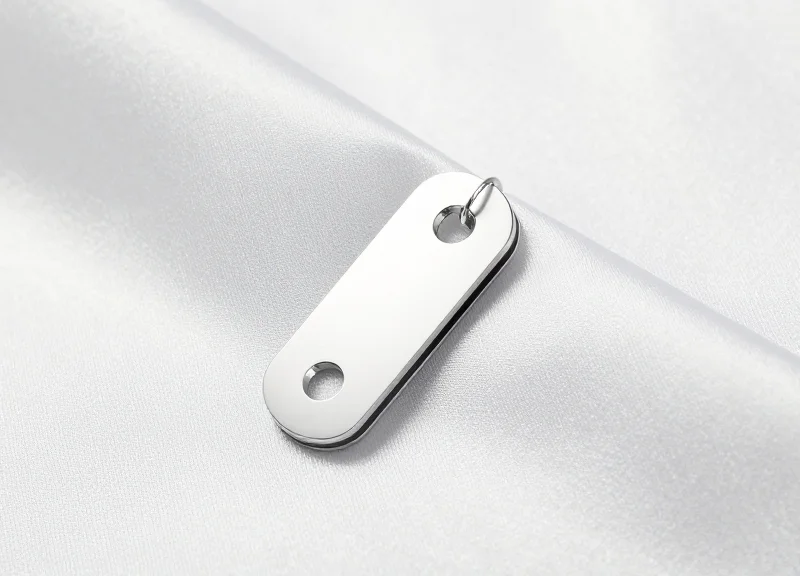
The 'death of the pin' refers to the strategic industry shift where luxury retailers are abandoning traditional mechanical security tags that pierce fabric in favor of non-invasive solutions like lanyard tags, magnetic clips, and RFID adhesives. This transition is primarily driven by the need to eliminate 'pin-hole syndrome'—the permanent displacement or breakage of fibers in high-value materials such as silk, cashmere, and ultra-fine leather. In a 2026 market where luxury consumers view their purchases as appreciating assets, even a microscopic puncture from a standard security pin can devalue a garment by up to 30% on the secondary market, making pin-based protection a liability rather than a security asset.
| Protection Method | Fabric Impact | Typical Application | Security Level |
|---|---|---|---|
| Standard Hard Tag | High (Permanent Holes) | Heavy Denim, Canvas | Standard |
| Lanyard Cable Tag | Zero (Non-invasive Loop) | Handbags, Silk Blouses | High |
| Magnetic Clamshell | Medium (Compression Marks) | High-gauge Knits | Medium |
| RFID Discreet Inlay | Zero (Adhesive/Integrated) | All Luxury Apparel | High (Data-driven) |
Beyond the physical damage, the use of heavy pins creates a 'negative tactile experience' during the try-on process. For a garment retailing at $2,000 or more, the weight of a traditional plastic tag can distort the drape of a fabric, preventing the customer from experiencing the true silhouette intended by the designer. High-end boutiques are increasingly adopting 'Hybrid Lanyard' systems that loop through buttonholes or around straps, ensuring the garment's structural integrity remains uncompromised from the warehouse to the final sale.
Why are pins particularly damaging to modern luxury fabrics?
Modern luxury often uses high-twist, ultra-fine yarns (like Super 180s wool). Traditional pins do not just slide between threads; they often sever the fibers, creating a permanent hole that cannot be 'steamed out' or repaired by professional cleaners.
Do pinless tags offer the same level of theft deterrence?
Yes. Modern lanyard and magnetic solutions use reinforced steel cables or high-strength locking mechanisms that are more difficult to defeat than standard pins, which can often be removed with simple tools that leave the fabric shredded.
How does this shift affect the ROI for luxury brands?
The ROI is realized through a significant reduction in 'damaged goods' markdowns. Retailers report that switching to pinless technology reduces the volume of unsellable floor samples by up to 15% annually.
Expert Insight: The 'Resale Value' Factor. A unique driver for this trend in 2026 is the rise of the circular economy. Discerning luxury buyers now inspect garments for security-tag scarring before purchase, knowing that 'pin-hole damage' is a primary reason for rejection by luxury authentication and resale platforms like The RealReal or Vestiaire Collective. By eliminating pins, brands are effectively protecting the future value of the item, which has become a key selling point for high-net-worth individuals.
Hybrid RFID-EAS: The New Gold Standard for 2026

Hybrid RFID-EAS is a dual-layered security technology that integrates Electronic Article Surveillance (EAS) for theft prevention with Radio Frequency Identification (RFID) for item-level tracking. By 2026, this technology has become the luxury retail gold standard because it allows brands to maintain a high-security posture while simultaneously achieving near-perfect (99%+) inventory accuracy. Unlike single-purpose tags, hybrid systems provide 'identity-aware' security, meaning the system knows exactly which specific SKU is leaving the store, rather than just triggering a generic alarm.
| Feature | Legacy EAS (AM/RF) | Standalone RFID | Hybrid RFID-EAS |
|---|---|---|---|
| Primary Function | Loss Prevention | Inventory Tracking | Loss Prevention + Intelligence |
| Inventory Accuracy | ~65-70% | 98-99% | 99.8% |
| Alarm Response | Generic Beep | Digital Notification | SKU-Specific Item Alert |
| Theft Deterrence | High | Low/Moderate | Maximum |
- Omnichannel Synchronization: Ensures that 'Buy Online, Pick Up In-Store' (BOPIS) orders are filled accurately by providing real-time visibility into local stock levels.
- Automated Replenishment: Triggers immediate restocking alerts the moment a specific luxury item is sold or leaves the floor, preventing 'out-of-stock' scenarios on high-margin goods.
- Shrinkage Intelligence: Identifies which specific sizes, colors, or styles are being targeted by shoplifters, allowing for data-driven adjustments to floor layouts.
Expert Insight: The 'Self-Reporting Floor' Concept. In my 20 years of retail tech consulting, the biggest shift I've seen for 2026 is the move from manual audits to the 'Self-Reporting Floor.' Hybrid tags turn every garment into a data node. Instead of associates spending 20 hours a week scanning barcodes, the hybrid infrastructure 'pings' the inventory continuously. This effectively eliminates the 'phantom inventory' problem that plagues luxury retailers who often find their digital stock counts don't match the physical reality of the boutique floor.
Does Hybrid RFID-EAS require specialized gates?
Yes. To leverage the full benefits, retailers install dual-purpose pedestals or 'overhead' sensors that can read both the traditional security signal and the unique RFID serial number simultaneously.
Is it cost-effective for mid-sized luxury boutiques?
While the initial hardware investment is higher than traditional EAS, the ROI is typically realized within 12-18 months through a 10-15% increase in sales driven by improved stock availability and a 20% reduction in shrinkage.
Can hybrid tags be reused?
Yes, many 2026 designs utilize hard-shell lanyard or pinless formats that are detached at the POS and recycled, making them a more sustainable choice than disposable adhesive RFID labels.
Discreet Lanyard Tagging: Aesthetics Meets Security

Discreet lanyard tagging is a premium loss prevention solution designed to secure high-value luxury items—such as handbags, silk scarves, and delicate footwear—using ultra-thin, reinforced cables instead of traditional piercing pins. In the 2026 luxury landscape, these tags serve as a critical bridge between security and visual merchandising, allowing customers to interact with products freely while ensuring that the silhouette and material of the item remain entirely uncompromised.
- Non-Invasive Attachment: Utilizes loops and soft-touch gaskets to secure items through existing hardware or natural openings, eliminating the risk of permanent holes in fine leather or silk.
- Reinforced Core Technology: Features multi-strand steel or aramid fiber cores that are nearly impossible to cut with standard hand tools, despite their slender appearance.
- Customizable Aesthetics: Modern lanyards offer color-matching options and premium finishes (matte, gloss, or metallic) to blend seamlessly with a brand's specific color palette.
| Feature | Traditional Security Lanyards | 2026 Discreet Lanyard Tags |
|---|---|---|
| Cable Thickness | 2.0mm - 3.5mm (Bulky) | 0.8mm - 1.2mm (Ultra-Slim) |
| Material | Vinyl-coated steel | High-tensile aramid or silk-wrapped steel |
| Brand Impact | Distracting/Industrial | Integrated/Premium |
| RFID Integration | Rarely included | Standard dual-frequency (EAS + RFID) |
Expert Insight: The Rise of 'Sensory Security'. A major shift for 2026 is the focus on tactile luxury. High-end brands are now requesting lanyards wrapped in bio-synthetic silks or recycled ocean plastics. This ensures that even if a customer touches the security device while trying on a $5,000 handbag, the texture aligns with the product’s premium feel and the brand's sustainability commitments. Security is no longer an 'add-on'; it is a curated component of the product presentation.
Will these lanyards scratch delicate leather hardware?
No. Leading 2026 designs utilize soft-touch silicone or polymer coatings specifically engineered to prevent friction damage or metal-on-metal scratching.
Can these be integrated with RFID for inventory tracking?
Yes. Most discreet lanyards now house a 'Hybrid Mini-Tag' that contains both an EAS element for security and an RFID chip for real-time inventory accuracy.
Are they easy for staff to remove at checkout?
Despite their high security, they utilize standard high-strength magnetic or mechanical detachers, ensuring the friction-free checkout experience luxury clients expect.
Omnichannel Fulfillment and Real-Time Visibility
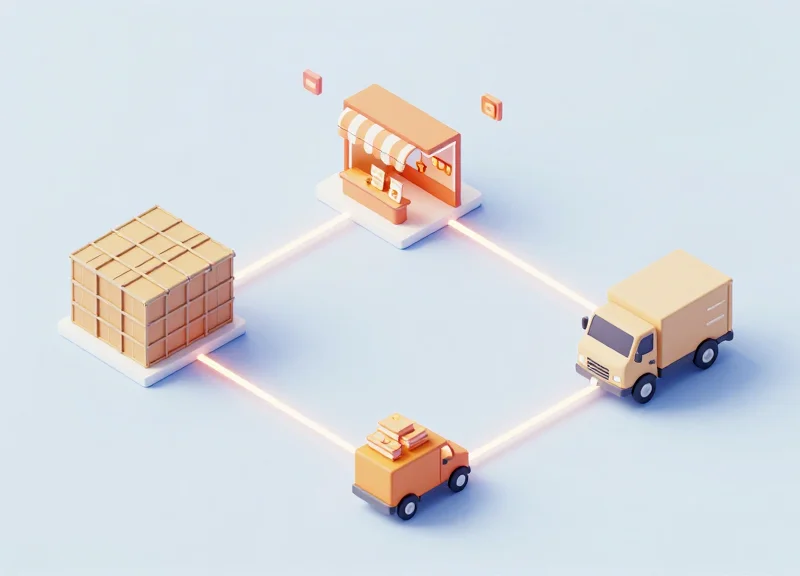
By 2026, omnichannel fulfillment in luxury retail has evolved from a value-add service to the primary driver of brand loyalty. Omnichannel fulfillment is the strategic integration of physical and digital inventory, allowing customers to purchase items via any channel (online, mobile, or in-store) and receive them through their preferred method, such as Buy Online, Pick Up In-Store (BOPIS) or ship-from-store. The foundation of this model is Real-Time Visibility, powered by hybrid RFID tags that provide 99% inventory accuracy, ensuring that a high-value garment listed as 'in stock' is physically present and ready for immediate fulfillment.
| Feature | Traditional Inventory (EAS Only) | RFID-Enabled Omnichannel (2026 Standard) |
|---|---|---|
| Inventory Accuracy | 65% - 75% average | 98% - 99.9% |
| BOPIS Cancellation Rate | High (due to 'ghost inventory') | Near-zero |
| Fulfillment Speed | Hours to Days (manual search) | Minutes (Geographic RFID locating) |
| Stock Counting | Twice a year (intrusive) | Weekly or Daily (automated/near-instant) |
In the luxury sector, the 'out of stock' or 'order cancelled' notification is a cardinal sin that erodes brand equity. Hybrid RFID-EAS systems solve this by creating a 'Living Ledger' of every SKU in the building. When a customer buys a limited-edition silk blouse online for in-store pickup, the RFID system doesn't just confirm it's in the building; it tells the associate exactly which rack or backstock bin it occupies. This precision eliminates the frantic 'treasure hunt' typical of traditional retail, allowing staff to focus on the high-touch white-glove service that luxury clients expect.
How does RFID improve the BOPIS experience for luxury shoppers?
It ensures that the inventory reflected online is 100% accurate, preventing the embarrassment of a customer arriving at a boutique only to find their item was miscounted or misplaced.
Can RFID help with 'Ship-from-Store' logistics?
Yes. By turning every boutique into a mini-distribution center, brands can fulfill online orders from the closest physical location, reducing shipping times and carbon footprints while moving store-specific aged inventory.
What is 'Ghost Inventory' and how does this tech kill it?
Ghost inventory occurs when items are lost, stolen, or misplaced but still show as available in the system. RFID tags provide constant digital presence, automatically purging the system of items that are no longer physically detectable.
Expert Insight: The Rise of 'Active Inventory Liquidity'. In my two decades observing Silicon Valley's impact on retail, the most significant shift for 2026 is the transition from static security to 'Active Inventory Liquidity.' By embedding RFID within discreet lanyards or hybrid tags, luxury brands are effectively turning every item of clothing into an IoT (Internet of Things) device. This allows for 'Dynamic Re-routing'—if a specific boutique has zero foot traffic but high stock of a trending item, the system can automatically prioritize that store for all national e-commerce orders of that SKU, maximizing full-price sell-through and virtually eliminating the need for end-of-season markdowns.
Invisible Security: Improving the Customer Journey

Invisible security in luxury retail refers to the strategic deployment of asset protection technologies—such as overhead sensors, under-floor RFID antennas, and door-frame concealed EAS systems—that provide robust theft deterrence without the visual intrusion of traditional security pedestals. By moving the 'security gate' out of the customer's sightline, brands can maintain a high-end 'open-sell' environment that fosters trust and encourages seamless interaction with premium merchandise from the moment a client enters the boutique.
For 2026, the shift toward invisible security is driven by the 'Experience Economy.' Luxury shoppers increasingly expect a friction-free environment. Traditional pedestals, often referred to as 'plastic pylons,' can trigger subconscious psychological barriers, making a high-end boutique feel restrictive or overly policed. By concealing these sensors within the architecture—under marble flooring or inside decorative crown molding—retailers can remove the 'prison gate' aesthetic while actually increasing the detection zone's accuracy through multi-directional RFID arrays.
| Feature | Traditional Visible Pedestals | Invisible/Concealed Systems |
|---|---|---|
| Store Entrance Aesthetic | Obstructed and industrial | Wide, open, and welcoming |
| Detection Technology | Basic EAS (RF or AM) | Hybrid RFID + AI-Beam Sensing |
| Customer Psychology | Reactive/Apprehensive | Free-flowing/Relaxed |
| Installation Location | Bolted to the floor at doors | Under-floor, overhead, or door-frame |
Expert Insight: The 'Zonal Confidence' Model. The true innovation for 2026 isn't just hiding the hardware; it is the software's ability to interpret 'intent.' Modern invisible systems use AI-filtered RFID data to distinguish between a customer simply browsing near the exit and a genuine 'push-out' theft attempt. This eliminates the 'embarrassment alarm'—the leading cause of customer dissatisfaction in luxury retail—by ensuring the system only triggers when it is 99.9% certain an unpurchased item has crossed the threshold.
Do invisible systems have the same detection range as pedestals?
Actually, modern overhead and under-floor systems often have a wider detection range. While a standard pedestal might cover 3 to 6 feet, a ceiling-mounted RFID array can cover an entrance up to 30 feet wide without losing signal strength.
Are these systems more difficult to install in existing boutiques?
Retrofitting can be more complex than bolting down a pedestal, but 2026 trends favor 'slim-line' door-frame sensors that can be painted or wrapped in fabric to match the interior design with minimal construction.
Does 'invisible' mean less of a deterrent to shoplifters?
Not necessarily. Professional shoplifters are often more deterred by the unknown. Subtle signage and the presence of high-tech lanyard tags (discussed in previous sections) signal that the store is protected by sophisticated, albeit unseen, technology.
Sustainability in Security: Reusable and Eco-Friendly Tags

Sustainability in security for 2026 focuses on transitioning from disposable, petroleum-based plastic hardware to high-durability, reusable tags and bio-degradable RFID inlays. For luxury brands, this means adopting loss prevention tools that contribute to a circular economy—specifically through the use of ocean-bound plastics, bio-composites, and manufacturer-led 'take-back' programs that ensure hardware never enters a landfill. By 2026, sustainable security is no longer an optional add-on but a core component of the luxury brand's environmental, social, and governance (ESG) rating.
| Feature | Traditional Security Tags | 2026 Sustainable Hybrid Tags |
|---|---|---|
| Primary Material | Virgin ABS Plastic | Bio-polymers or Recycled Ocean Plastic |
| Operational Lifespan | 12 - 24 Months | 60+ Months (High-Durability Engineering) |
| End-of-Life Process | Landfill / Incineration | Closed-loop Recycling / Refurbishment |
| Carbon Footprint | High (Single-use focus) | Low (Carbon-neutral manufacturing) |
A significant shift in 2026 is the 'Security-as-a-Service' (SaaS) model for hardware. Instead of purchasing thousands of tags as consumables, luxury retailers are partnering with providers who manage the entire lifecycle of the tag. This includes the deployment of 'Smart Reusables'—tags equipped with sensors that alert the store when their structural integrity is compromised, allowing for proactive replacement and recycling. This shift significantly reduces the Total Cost of Ownership (TCO) while satisfying the demands of eco-conscious Gen Z and Millennial luxury buyers who scrutinize every aspect of a brand's supply chain.
Are eco-friendly tags as secure as traditional ones?
Absolutely. Modern bio-composites and recycled polycarbonates are engineered to match or exceed the tensile strength of virgin plastics, ensuring that 'eco-friendly' does not mean 'easy to defeat' for professional shoplifters.
How do sustainable tags impact brand perception?
Visible sustainable markers, such as a subtle 'recycled material' embossment on the tag, act as a quiet signal to customers that the brand is committed to sustainability even in its operational back-end.
What is the 'Closed-Loop' security model?
It is a system where the security hardware manufacturer collects broken or end-of-life tags from the retailer, grinds them down, and uses the material to create the next generation of security products.
Expert Insight for 2026: Look for the rise of 'Dissolvable RFID Inlays.' Emerging tech now allows for RFID chips to be embedded in FSC-certified paper or compostable starch-based films. When the garment is sold and the tag is eventually discarded by the consumer, the internal antenna can be composted or easily separated for metal recovery, eliminating the 'e-waste' problem traditionally associated with smart labeling.
Future-Proofing Your Boutique: Implementation Best Practices
Future-proofing a luxury boutique in 2026 involves transitioning from passive loss prevention to a proactive, data-centric security ecosystem. The gold standard for implementation involves a three-pillar strategy: hardware concealment, real-time data integration via Hybrid RFID/EAS, and staff-centric training. By prioritizing an 'invisible security' layer, retailers can protect high-margin inventory while simultaneously gathering granular analytics on garment movement, fitting room dwell times, and inventory accuracy without disrupting the high-touch boutique atmosphere.
- The 20% Pilot Rule: Begin by deploying hybrid RFID tags and discreet lanyard systems on the top 20% of your highest-shrink categories or your most exclusive seasonal collection. This provides immediate ROI data and allows for troubleshooting the network integration before a store-wide rollout.
- Infrastructure Calibration: Ensure your existing Point-of-Sale (POS) and Inventory Management Systems (IMS) are cloud-native and API-ready. The true value of hybrid tagging lies in its ability to update inventory levels the moment an item is sold or leaves the floor.
- Staff Empowerment Workshops: Shift the staff mindset from 'detecting theft' to 'managing data.' Train associates to use RFID handhelds for lightning-fast cycle counts, which frees them to spend more time on personalized clienteling.
- Visual Merchandising Alignment: Collaborate with your visual merchandising team to hide overhead sensors and under-floor antennas. The goal is to create a 'frictionless gate' that provides 360-degree detection without the intimidating look of traditional pedestals.
| Implementation Factor | Legacy Systems (Pins/EAS) | Hybrid 2026 Strategy (RFID/Lanyards) |
|---|---|---|
| Primary Goal | Visual Deterrence Only | Security + Stock Accuracy |
| Customer Experience | Intrusive/Damage Risk | Discreet/Seamless |
| Data Granularity | Binary (Alarm/No Alarm) | Real-time Item Intelligence |
| Operational Speed | Manual Detagging | Automated Bulk Processing |
Unique Industry Insight: In the 2026 landscape, the most successful boutiques are adopting the 'Cognitive Store' model. This involves using the signal from hybrid tags to trigger digital signage content. For example, when a customer carries a lanyard-tagged handbag toward a smart mirror, the mirror can automatically display the item's craftsmanship story or suggest matching accessories. This transforms a security necessity into a powerful marketing touchpoint, effectively paying for the technology through increased upsell opportunities.
Will hybrid RFID tags damage delicate silks or lace?
No. Modern discreet lanyard tags are specifically engineered with non-marring polymers and magnetic locking mechanisms that eliminate the needle-piercing required by traditional pins, making them ideal for high-end fabrics.
How long does a typical boutique-wide transition take?
A phased implementation usually spans 8 to 12 weeks, including staff training and back-end software integration, though high-priority zones can be secured in as little as 48 hours.
Is the investment justifiable for smaller boutiques?
Yes. While the upfront cost is higher than legacy EAS, the reduction in manual inventory labor (from hours to minutes) and the 99% accuracy in omnichannel fulfillment often results in a full break-even within 14 months.