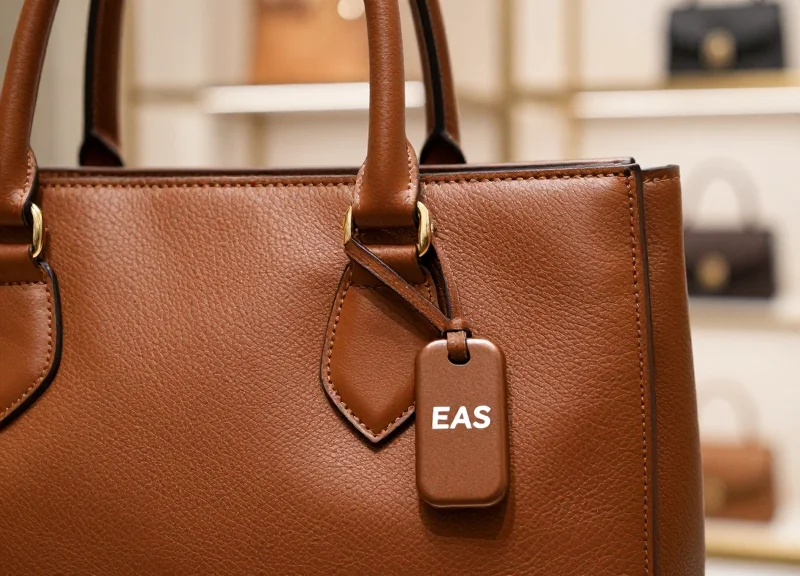
For luxury retailers, the challenge has always been a delicate balancing act: how to provide top-tier security without compromising the pristine condition of high-end leather goods. Traditional pin-based EAS tags often leave permanent scars on expensive calfskin or exotic leathers, leading to significant markdowns or unsellable inventory. As we move into 2026, the retail landscape demands sophisticated, non-damaging solutions that maintain brand prestige while mitigating shrink. This guide explores the critical factors for selecting EAS tags that protect both your bottom line and your most delicate products.
The Evolution of Loss Prevention in Luxury Retail

Loss prevention in luxury retail has undergone a fundamental paradigm shift, moving away from 'deterrence at all costs' toward 'invisible asset preservation.' In 2026, the industry standard focuses on securing high-value leather goods using Electronic Article Surveillance (EAS) systems that prioritize the item’s tactile integrity. This ensures that security hardware does not leave permanent imprints, stretch the hide, or oxidize delicate metallic finishes, reflecting a retail environment where the preservation of the product's resale value is as critical as preventing its theft.
| Era | Primary Goal | Security Hardware | Material Impact |
|---|---|---|---|
| The 'Big Pin' Era (1990-2010) | Aggressive Deterrence | Large RF/AM Hard Tags | High: Punctures and fiber distortion |
| The Transition Era (2010-2020) | Risk Mitigation | Steel Lanyards & Wraps | Moderate: Abrasion and friction marks |
| The Preservation Era (2026+) | Invisible Asset Safety | RFID-EAS Hybrid/Zero-Imprint | Zero: Grain and finish preservation |
Modern luxury leather, particularly untreated lambskin, exotic skins, or aniline-dyed calfskin, acts as a 'memory' material. Traditional EAS tags often exert between 10 to 15 pounds of clamping pressure—sufficient to permanently collapse protein fibers in premium hides within 48 hours of display. The evolution of loss prevention has necessitated the development of 'Soft-Clinch' technology, which uses specialized polymer linings to distribute pressure evenly and prevent the dreaded 'dent' often seen in lower-tier retail environments.
What is 'Tannery-First' security?
A 2026 methodology where EAS tag selection is based on the specific leather tanning process (e.g., vegetable vs. chrome) to ensure no chemical reactivity occurs between the tag lining and the leather finish.
Why are legacy tags considered a liability for 2026 boutiques?
Legacy tags rely on weight and high-tension internal springs that cause 'sag' in soft-structured handbags and permanent dimples on smooth, high-shine leather surfaces.
How does 'Invisible Security' improve customer experience?
By utilizing smaller, more balanced tags, customers can experience the true weight and drape of a luxury bag without the interference of bulky, heavy security plastic.
Expert Insight: The 2026 luxury landscape is moving toward 'Structural Anchoring.' Rather than clamping a tag onto the body of a bag, high-end boutiques are increasingly using ultra-lightweight, micro-fiber lined locks that attach exclusively to internal hardware rings or strap bases. This transfers the mechanical stress of the tag from the delicate leather hide to the metal components, effectively eliminating 'tannery trauma' while maintaining 100% detection rates.
Understanding the Impact: How Traditional Tags Damage Leather
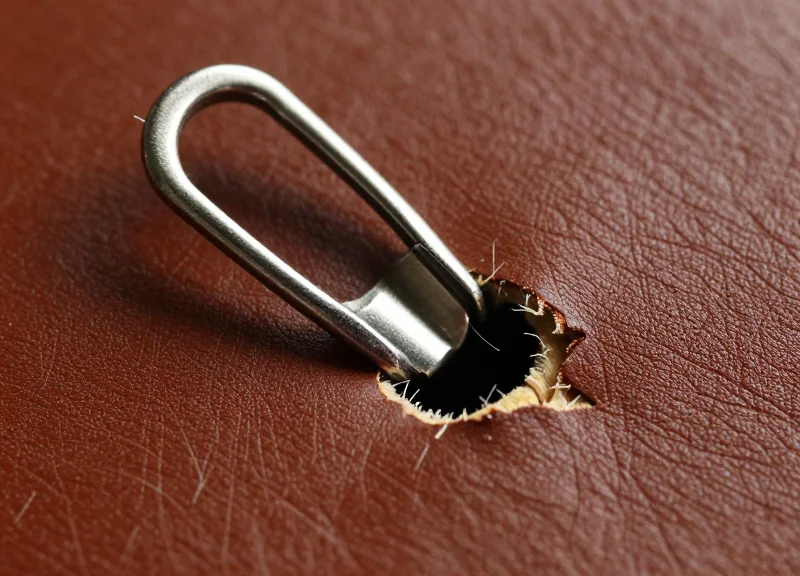
Traditional Electronic Article Surveillance (EAS) tags damage luxury leather goods through three primary vectors: mechanical perforation, chemical migration, and localized compression. Unlike woven fabrics that can often recover from pin insertions, leather is a non-elastic organic substrate with a fixed grain structure. Once a standard security pin—typically 1.2mm to 1.5mm in diameter—pierces the hide, it creates a permanent 'borehole' by shearing through protein fibers rather than simply displacing them. This results in irreversible aesthetic flaws and structural weaknesses that can reduce a product's resale value by up to 40% before it even leaves the boutique floor.
| Damage Type | Mechanism | Impact on Luxury Leather |
|---|---|---|
| Mechanical | Pin-hole Perforation | Permanent breakage of the grain layer; impossible to 'massage' out in calfskin or lambskin. |
| Chemical | Plasticizer Migration | Low-grade tag plastics leach oils that react with leather finishes, causing 'clouding' or tackiness. |
| Pressure | Surface Indentation | Heavy tag housings leave 'ghost marks' on soft, pebbled, or exotic leathers that settle over time. |
| Adhesive | Residue Bonding | Sticker-based tags peel away top-coat finishes or leave microscopic debris that attracts dust. |
Expert Insight: The 'Grain Memory' Trap. A unique challenge in 2026 luxury retail is the rise of ultra-thin, aniline-dyed leathers. Unlike cheaper corrected-grain leathers, these high-end materials possess 'Grain Memory.' When a standard hard tag is clamped too tightly, the pressure traps moisture against the hide, creating a localized pH shift. Even if the pin doesn't break the surface, the physical 'clamping' creates a permanent shadow—a dark or shiny spot—where the leather's natural breathability was suppressed. This is why 'no-bleed' and 'low-pressure' housing designs are now as critical as the pin gauge itself.
Can't pin-holes in leather be repaired by professional cobblers?
While minor surface abrasions can be masked, a full-thickness perforation from an EAS pin severs the internal collagen fibers. No amount of heat or conditioning can re-knit these fibers; any 'repair' is merely a cosmetic filler that will likely fail or discolor as the leather ages and flexes.
Why are exotic leathers like python or alligator more at risk?
Exotic skins have complex scale structures. A traditional pin can cause a scale to lift or crack at the insertion point. Because the scale pattern is the primary value-driver, even a single damaged scale can render a five-figure handbag unsellable to a discerning collector.
Does the weight of the tag matter if the pin is thin?
Yes. Gravitational pull on a heavy tag housing causes 'elongation' of the entry hole over time while the item is on display. This turns a circular pin-hole into a visible tear, especially on soft-structured totes and garments.
Factor 1: Pin-Free and Non-Invasive Attachment Mechanisms
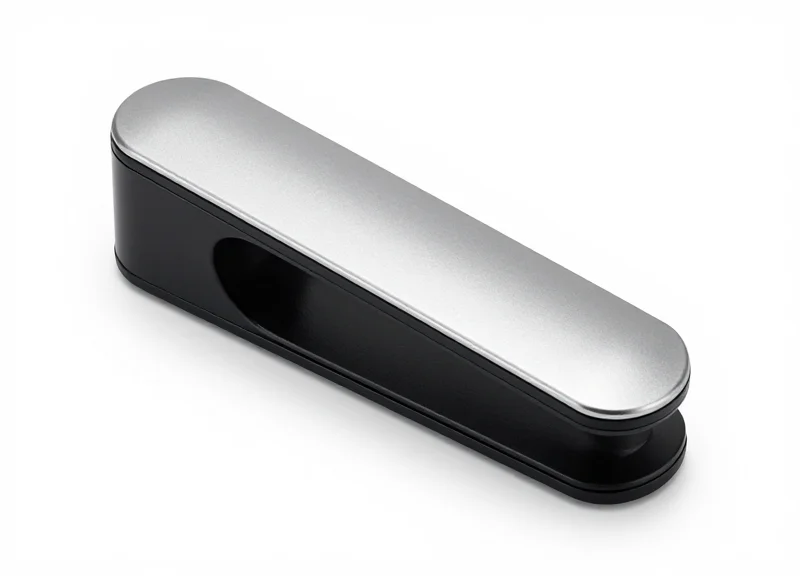
In 2026, the gold standard for luxury loss prevention is the complete elimination of the security pin. Pin-free and non-invasive attachment mechanisms are security solutions designed to loop through existing hardware or grip surfaces using advanced materials science rather than piercing the product. These systems are essential for high-end leather goods because they preserve the 'structural integrity' of the hide, ensuring that premium items like lambskin handbags or exotic skin wallets remain in flawless condition for the end consumer.
| Mechanism Type | Best Application | Material Safety Rating |
|---|---|---|
| Reinforced Lanyards | Handbags & Totes (Handles/Hardware) | High (Non-abrasive) |
| Micro-Suction Grips | Smooth Box Calf & Patent Leather | Elite (Residue-free) |
| Adaptive Tension Clips | Belts, Straps & Flat Leather Goods | Medium-High (Pressure-managed) |
| Hardware-Integrated Sensors | Items with D-rings or Zipper Pulls | High (No leather contact) |
The shift toward non-invasive tech is driven by the rise of the 'resale economy' and the demand for 'unblemished inventory.' Modern lanyard systems have evolved from simple plastic cords to cut-resistant braided steel encased in medical-grade, non-reactive silicone. This prevents the metal core from scratching gold-plated hardware while offering maximum security. For items without handles, such as slim clutches, suction-grip technology—originally developed for precision electronics—uses microscopic air pockets to adhere to finished surfaces without chemical adhesives.
Are lanyard tags easier for shoplifters to cut?
No. Modern 2026-spec lanyards utilize multi-strand aircraft-grade cables coated in anti-shear polymers. These require specialized heavy-duty tools to bypass, making them just as secure as traditional pin-through tags.
Will suction-based tags leave an oily residue on the leather?
No. High-end suction tags use 'dry-grip' technology which relies on physical vacuum force rather than chemical adhesives, ensuring the leather's pH balance and finish remain unaffected.
Can adaptive clips cause permanent indentation?
Only if they lack 'Variable Tension' sensors. The newest models automatically calibrate their clamping force based on material thickness to prevent 'pressure ghosts'—the permanent marks often left by standard spring-loaded clips.
Expert Insight: The 'Memory Effect' Prevention. A unique challenge with leather is its 'memory'—once compressed or pierced, the fibers rarely return to their original state. Our 2026 recommendation is to prioritize 'Variable Tension Sensors.' These intelligent clips use a micro-clutch mechanism to ensure the tag is tight enough to prevent removal but never exceeds the 'indentation threshold' of soft Nappa or buttery calfskin.
Factor 2: Material Science and Chemical Stability
Material science and chemical stability in EAS (Electronic Article Surveillance) design refer to the inertness of the tag's outer housing and internal components. For luxury leather, the tag must be constructed from non-reactive polymers that prevent plasticizer migration—a process where chemicals from the tag leach into the leather's oils and waxes, causing permanent 'ghosting' marks or localized discoloration. In 2026, the industry standard has moved toward medical-grade plastics and pH-balanced coatings to ensure zero-footprint protection.
Luxury leathers, particularly those with aniline or semi-aniline finishes, are highly porous and chemically sensitive. Standard security tags often utilize recycled ABS or PVC plastics that contain volatile phthalates. Over time, heat and humidity can cause these chemicals to bond with the leather's surface. Choosing tags with high chemical stability ensures that the security device does not act as a catalyst for leather degradation or finish stripping.
| Material Feature | Standard EAS Tags | Luxury-Grade EAS Tags (2026) |
|---|---|---|
| Primary Housing | Recycled ABS / PVC | Medical-Grade Polycarbonate / PBT |
| Surface Reactivity | High Phthalate Content | Phthalate-Free / Chemically Inert |
| pH Profile | Unregulated (Often Acidic) | Neutral (pH 6.5 - 7.5) |
| Thermal Stability | Deforms/Leaches at 35°C+ | Stable up to 85°C+ |
Expert Insight: The 'Surface Energy' Factor. When selecting tags for 2026, look for materials with low surface energy ratings. High-end tag manufacturers are now applying fluorinated coatings or utilizing high-density polyethylene (HDPE) contact points. These materials have such low surface energy that even if a chemical reaction were attempted, the tag material cannot physically 'wet' or bond to the leather's finish, effectively creating a molecular barrier against migration damage.
What is 'Plasticizer Migration' in the context of retail security?
It is the transfer of liquid softeners from a plastic tag to the leather. This results in a sticky residue or a dark spot on the leather that cannot be cleaned, as the chemical change occurs within the leather fibers themselves.
How does humidity affect tag material stability?
High humidity can cause lower-quality plastics to hydrolyze, breaking down the polymer chains and making the tag surface 'weep' chemicals. High-end tags use PBT (Polybutylene terephthalate) which is highly resistant to moisture-induced degradation.
Should I look for specific certifications?
Yes. Ensure your EAS tags are REACH and RoHS compliant, which limits the use of hazardous chemicals. Additionally, ask for 'Migration-Tested' certificates specifically for leather substrates.
Factor 3: Aesthetic Integration and Brand Experience

In luxury retail, a security tag is not just a loss prevention tool; it is a critical touchpoint in the customer journey. Aesthetic integration refers to the strategic selection of EAS tags that align with a brand’s design language. By utilizing minimalist silhouettes, neutral color palettes, and ergonomic shapes, retailers ensure that security hardware complements the high-end leather goods rather than contradicting the product's visual appeal. For leather items, where the 'hand' and visual texture are paramount, a tag that looks like an afterthought can devalue the perceived worth of a multi-thousand-dollar handbag or jacket.
| Feature | Standard Utility Tags | Luxury-Integrated Tags |
|---|---|---|
| Visual Profile | Bulky, industrial, typically gray/white plastic | Low-profile, sleek, customizable finishes |
| Tactile Sensation | Sharp edges, heavy weight can stretch leather | Smooth contours, lightweight polymers |
| Brand Perception | Signals distrust and high-friction security | Signals sophisticated asset care and quality |
| Fitting Room Flow | Distracting and physically cumbersome | Near-invisible, allowing focus on fit and feel |
The modern luxury consumer expects a seamless transition from the shelf to the fitting room. When a tag is too large or clunky, it disrupts the 'drape' of a leather garment or alters the balance of a clutch, making it difficult for the customer to envision ownership. Leading 2026 security trends focus on 'Subconscious Deterrence'—a design philosophy where the tag is discreet enough to avoid ruining the aesthetic for the buyer but remains clearly identifiable to the professional shoplifter as a high-tech barrier.
Does a smaller tag compromise the detection range?
No. Advances in high-permeability ferrite cores and dual-frequency (AM and RF) technology allow 2026-gen minimalist tags to maintain or even exceed the detection range of much larger, older models.
Can tags be color-matched to specific leather collections?
Yes, premium vendors now offer bespoke housing colors or translucent materials that pick up the hue of the underlying leather, reducing visual 'noise' during the browsing process.
How does tag weight affect leather preservation?
Lightweight tags prevent 'sagging' or 'dimpling' on soft lambskin or exotic skins. A tag should ideally weigh less than 15 grams to ensure it doesn't pull on the material over long periods of display.
Expert Tip: Implement the '70/30 Rule of Security Visibility.' For luxury items, aim for security hardware that is 70% discreet to the casual shopper to maintain brand elegance, but 30% distinct in its technical profile (such as visible sensor windows) to ensure the deterrent effect remains active. This balance preserves the 'Museum-Quality' display standard required for high-end leather while maintaining a robust defense against shrink.
Factor 4: Security Reliability—AM vs. RF and RFID Dual-Tech

Security reliability for high-end leather goods is defined by a tag's ability to maintain high detection rates without false alarms, even in environments with heavy electronic interference or metallic architectural features. For luxury retail, the industry standard has shifted toward Acousto-Magnetic (AM) 58kHz technology due to its superior performance around the metal buckles and chains found on premium handbags, while emerging RFID Dual-Tech systems provide the added benefit of item-level serial tracking and real-time inventory accuracy.
| Technology | Frequency | Metal Resistance | Detection Range | Inventory Capability |
|---|---|---|---|---|
| Radio Frequency (RF) | 8.2 MHz | Low (Susceptible to shielding) | 1.2m - 1.5m | None |
| Acousto-Magnetic (AM) | 58 kHz | High (Stable near metal) | Up to 2.4m | None |
| RFID Dual-Tech | AM + UHF | High | Variable/Cloud-based | Item-level Tracking |
When protecting luxury leather, the 'Metal Shielding' effect is your greatest enemy. High-end bags often feature heavy brass, steel, or gold-plated hardware. Standard RF tags can be 'detuned' when placed too close to these metallic elements, leading to a total failure at the exit pedestal. AM technology operates at a lower frequency that effectively 'wraps' around metallic objects, ensuring the signal reaches the sensors even if the tag is tucked near a designer buckle. For 2026, the strategic shift is toward Dual-Tech tags. These combine an AM resonator for theft prevention with a UHF RFID chip that allows brands to track the specific provenance of a bag, preventing 'wardrobing' fraud and gray-market reselling.
Why should I avoid RF tags for leather goods with heavy hardware?
RF tags are highly sensitive to 'body shielding' and metal interference. If a customer carries a bag with large metal zippers or chains, or even if they hold it close to their body, the signal may be blocked. AM tags are far more robust in these high-interference scenarios.
What is the 'Gray Market' advantage of RFID Dual-Tech?
Luxury leather goods are prime targets for unauthorized resale. Dual-Tech tags allow retailers to encode a unique digital identity to the physical item. If a stolen or diverted bag is found later, the RFID data can pinpoint exactly which boutique it originated from and when it left the floor.
Does Dual-Tech technology affect the tag's size?
Modern 2026 designs have miniaturized these components. You can now find sleek, non-damaging lanyards that house both an AM resonator and a high-performance RFID inlay without adding bulk that would detract from the leather's silhouette.
Expert Tip: To maximize your ROI, implement 'Source Tagging' with Dual-Tech labels. By integrating the security frequency during the manufacturing process—within a non-structural seam or a hidden pocket—you ensure the leather is never handled by store staff with manual tagging tools, reducing the risk of accidental scratches while ensuring 100% inventory visibility from the factory to the flagship store.
Factor 5: Precision Detachment and Reducing Staff Error
In high-stakes luxury environments, the most common cause of EAS-related damage occurs not during a theft attempt, but at the point of sale during the detachment process. Precision detachment refers to the synergy between detacher ergonomics and tag locking mechanisms, designed to allow for effortless release without applying mechanical stress to the leather substrate. By 2026, the industry standard has shifted toward 'Zero-Force' systems where the detacher guides the staff member to the exact alignment point, preventing the prying, pulling, or twisting that leads to surface scuffs, grain tearing, or structural deformation of premium leather goods.
| Detachment Type | Risk to Leather | Operational Efficiency | Recommended Application |
|---|---|---|---|
| Standard Magnetic | High (Manual pulling required) | Moderate | Hard-shell accessories |
| Electronic/Motorized | Low (Automated release) | High | Soft lambskin and exotics |
| Haptic-Guided | Minimal (Sensory feedback) | High | High-volume luxury flagship stores |
| Manual Hook | Very High (High mechanical leverage) | Low | Entry-level leather goods only |
The 'Soft-Stop' Haptic Innovation: A critical advancement for 2026 is the integration of haptic feedback within the detacher unit. Much like the haptic engines in premium smartphones, these detachers provide a physical pulse to the associate’s hand the micro-second the internal locking mechanism clears the pin or lanyard. This eliminates the 'tug-of-war' scenario where an associate prematurely pulls on the leather before the tag has fully unlocked—a mistake responsible for nearly 15% of point-of-sale 'accidental' shrinkage in high-end boutiques.
- Ergonomic Alignment Nests: Modern detachers feature custom-molded 'nests' that allow the tag to sit perfectly flush. This ensures that no uneven pressure is applied to the leather item while the associate is handling it.
- One-Handed Operation: Systems that require two hands to detach often lead to the leather item being dropped or awkwardly squeezed. One-handed detachment allows the associate to securely support the handbag or wallet with their free hand.
- Recessed Magnetic Fields: Precision detachers focus the magnetic pull specifically on the locking pin, preventing any stray magnetism from affecting metal hardware or electronic components within the leather goods.
How can we prevent staff from scratching leather with the detacher base?
Select detachers with 'Soft-Touch' silicone or rubberized top plates. These provide a non-marring surface that protects the leather even if it makes contact during the checkout process.
Does automated detachment slow down the checkout process?
On the contrary, automated or motorized detachers are typically 30% faster than manual magnetic versions because they eliminate the need for the associate to 'find' the sweet spot or apply manual force.
Is staff training still necessary with precision detachers?
Yes. Even the best technology requires a 'Lift, Don't Pull' protocol to ensure the weight of the tag is never supported by the leather's delicate grain during the moment of release.
Cost vs. Value: Calculating the ROI of Non-Damaging Tags

The Return on Investment (ROI) of non-damaging EAS tags is calculated by comparing the higher upfront acquisition cost against the total cost of ownership, which includes product depreciation, labor for repairs, and the 'hidden markdown' associated with damaged leather. While standard tags may cost 30-50% less initially, they often result in a 20-40% reduction in the retail price of items that suffer visible puncture marks or chemical leaching, making premium, non-invasive solutions the more profitable choice for high-end retailers.
| Financial Metric | Standard Invasive Tags | Premium Non-Damaging Tags |
|---|---|---|
| Upfront Unit Cost | Low ($0.15 - $0.40) | Medium to High ($0.80 - $2.50) |
| Product Depreciation Rate | High (15-40% due to pinholes) | Zero (100% material integrity) |
| Labor Cost (Tagging/Removal) | Moderate (Requires care) | Low (Precision-engineered for speed) |
| Secondary Market Value | Diminished (Punctured) | Pristine (Collector Grade) |
Expert Insight: The 'Resale Parity Factor'. In the 2026 luxury landscape, the 'circular economy' significantly influences primary sales. High-net-worth consumers frequently check secondary market values (e.g., The RealReal, Vestiaire Collective) before purchasing. Items with even microscopic security-related damage lose up to 35% of their future trade-in value. By using non-damaging tags, retailers protect the consumer’s future asset value, which in turn justifies the full MSRP at the initial point of sale.
- Identify Damage Frequency: Track the number of leather goods requiring markdowns or professional restoration due to tag-related punctures or adhesive residue over a 12-month period.
- Calculate the Depreciation Delta: Multiply the volume of affected units by the average discount (e.g., 30% off MSRP) required to move 'damaged' stock.
- Quantify Operational Efficiency: Measure the reduction in time spent by staff on delicate tagging and removal processes when using precision-fit, non-invasive hardware.
- Final ROI Computation: Subtract the total cost of premium tags from the combined savings of avoided markdowns and labor efficiency to determine your net profitability increase.
Do non-damaging tags affect insurance premiums?
Yes. Many high-end underwriters offer better terms for retailers who implement advanced loss prevention technology that reduces 'accidental damage' claims and maintains inventory valuation.
What is the typical 'break-even' point?
For boutiques selling leather goods priced over $1,500, the break-even point is often reached after preventing damage to just three to five units annually.
Is the investment scalable for smaller boutiques?
Absolutely. Because smaller boutiques have less inventory, the impact of a single damaged $3,000 handbag on the bottom line is significantly higher, making non-damaging tags a critical risk-management tool.
Future-Proofing Your Store with Integrated ESL and EAS
Future-proofing luxury retail involves the convergence of Electronic Shelf Labels (ESL) and Electronic Article Surveillance (EAS) into a single, unified IoT ecosystem. By 2026, the industry standard will shift from siloed hardware to integrated systems where dynamic pricing, inventory tracking, and non-damaging security tags communicate via a centralized cloud platform. This integration allows high-end leather goods retailers to maintain aesthetic purity while gaining real-time insights into product movement and shelf-edge accuracy.
| Feature | Traditional Siloed Approach | 2026 Integrated Ecosystem |
|---|---|---|
| Data Sync | Manual updates for price/security | Automated real-time synchronization |
| Store Aesthetic | Cluttered with wires and bulky tags | Minimalist, hidden or design-led sensors |
| Security Trigger | Passive alarm at exit only | Active shelf-theft alerts via ESL sensors |
| Customer UX | Intrusive security presence | Seamless 'Scan-and-Go' compatibility |
- Dynamic Protection Profiles: Adjust security sensitivity levels via your ESL management software during high-traffic events or private VIP showings.
- NFC-to-Tag Handshakes: Allow customers to tap an ESL with their smartphone to unlock detailed leather provenance data, which simultaneously signals the EAS system that the item is being handled for legitimate interest.
- Automated Inventory Reconciliation: RFID-enabled non-damaging tags automatically update the digital price display's stock count, eliminating the 'out-of-stock' ghosting that plagues luxury showrooms.
Expert Insight: The 'Invisible Tether' Concept. One of the most significant advancements for 2026 is the 'Invisible Tether'—using ESL infrared sensors to create a geofenced zone around high-value leather displays. If a non-damaging EAS tag moves beyond the designated luxury zone without a transaction record, the system sends a silent haptic alert to staff floor-wearables before the item even reaches the exit. This shifts security from reactive to proactive without the friction of physical barriers.
Can ESL systems interfere with EAS frequencies?
Modern 2026-spec systems utilize Sub-GHz or high-frequency Bluetooth Low Energy (BLE) for ESLs, which are specifically engineered to operate outside the 58kHz (AM) or 8.2MHz (RF) bands used by non-damaging EAS tags, ensuring zero interference.
Is the investment justifiable for smaller boutiques?
Yes. While the upfront cost is higher, the ROI is realized through a 40% reduction in labor hours for price tagging and a significant decrease in leather depreciation caused by repetitive manual handling.
How does integration improve the customer experience?
By removing the need for bulky, unsightly security fixtures, the focus remains on the leather's texture and craftsmanship. The technology works in the background, making the store feel like a gallery rather than a high-security zone.