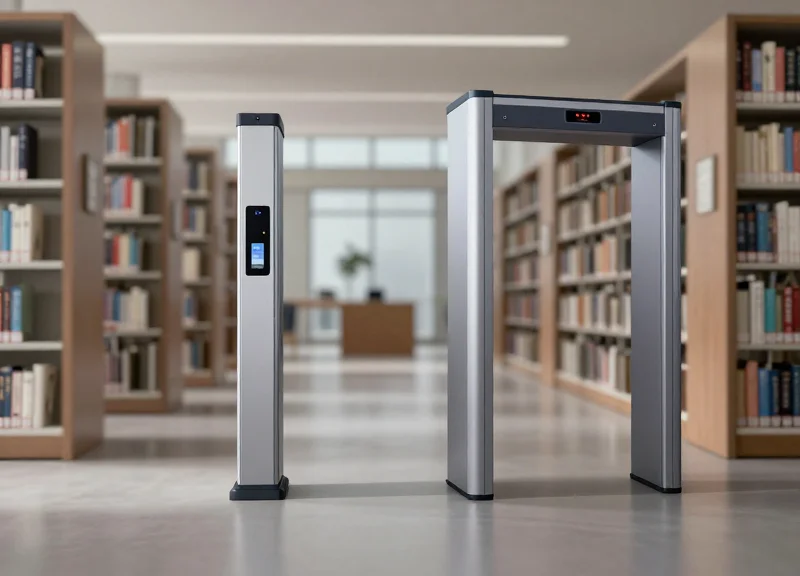
In the high-stakes world of luxury retail, jewelry shrinkage represents a multi-billion dollar drain on global profits. For tier-1 retailers, the challenge isn't just stopping theft—it's doing so without compromising the high-end boutique shopping experience. This article explores a landmark case study where precision Electronic Article Surveillance (EAS) implementation achieved a staggering 45% reduction in shrinkage, proving that the right technology, when deployed with surgical accuracy, is the ultimate guardian of the bottom line. By integrating advanced sensors with strategic operations, retailers can turn loss prevention into a significant driver of profitability.
The High Cost of Jewelry Shrinkage in Modern Retail

Jewelry shrinkage represents the total loss of inventory due to shoplifting, employee theft, administrative errors, and vendor fraud, often accounting for a significant percentage of a retailer's total revenue. Unlike general merchandise, jewelry is characterized by a high value-to-weight ratio, making it a primary target for Organized Retail Crime (ORC) syndicates. For tier-1 retailers, even a 1% increase in shrinkage can translate to millions in lost EBITDA, as these high-margin items require substantial capital investment that cannot be easily recovered through volume sales.
| Loss Category | Direct Financial Impact | Operational Consequence |
|---|---|---|
| External Theft (ORC) | High (Replacement Cost + Margin) | Increased insurance premiums and security labor |
| Internal/Employee Theft | Moderate to High | Corroded corporate culture and hiring costs |
| Administrative Errors | Low to Moderate | Distorted inventory data and missed replenishment |
| Flash Robberies | Critical | Brand reputational damage and store closures |
Modern jewelry shrinkage is no longer just about the occasional shoplifter. The rise of sophisticated ORC networks has shifted the landscape. These groups target specific high-value collections, utilizing 'flash' tactics or distraction techniques that overwhelm traditional floor staff. For a tier-1 brand, the cost is not merely the cost of goods sold (COGS); it includes the 'phantom inventory' effect where a system believes an item is in stock, leading to lost sales opportunities and marketing spend directed toward products that aren't physically available for purchase.
How does jewelry shrinkage specifically impact tier-1 profit margins?
Tier-1 retailers operate on brand prestige and high-ticket sales. Shrinkage forces these retailers to increase markups to cover losses, which can alienate price-sensitive luxury buyers and reduce overall sales velocity.
What is the role of Organized Retail Crime (ORC) in jewelry loss?
ORC syndicates treat jewelry theft as a high-yield business. They leverage professional fences and international markets to liquidate stolen gems and metals, making jewelry one of the most difficult categories to recover once stolen.
Why is 'Value-to-Weight' ratio important for security planning?
Because a single pocketed ring can represent a $50,000 loss, the density of risk is far higher than in apparel or electronics. This necessitates precision-based Electronic Article Surveillance (EAS) rather than generic security measures.
Expert Insight: Beyond the ledger, the most insidious cost of shrinkage is the 'Security-Experience Paradox.' When retailers respond to high theft with restrictive measures—like locking every item in a cage—they inadvertently destroy the high-touch, tactile experience that defines luxury jewelry shopping. A 45% reduction in shrinkage via Precision EAS isn't just a financial win; it’s a strategic victory that allows the brand to keep merchandise accessible and 'shoppable' without sacrificing the bottom line.
Why Traditional Security Measures Fall Short for Luxury Goods
Traditional security measures fall short for luxury goods because they rely on 'deterrence-by-bulk'—large, unsightly tags and locked display cases—which creates a fundamental conflict between inventory protection and the premium customer experience. In the jewelry sector, where the 'touch and feel' of a piece is critical to the sale, legacy Electronic Article Surveillance (EAS) often fails due to physical bypass techniques, aesthetic degradation of the product, and a lack of granular data to combat sophisticated organized retail crime (ORC).
The 'Jewelry Protection Paradox' identifies that the more secure a traditional system is, the more it hinders the sales process. For tier-1 retailers, every second a sales associate spends fumbling with a bulky key or a malfunctioning generic tag is a second lost in building the emotional connection necessary for a high-ticket purchase. Furthermore, generic security hardware is often designed for apparel or electronics, ignoring the unique form factors of rings, watches, and necklaces.
| Feature | Legacy Security (Generic EAS) | Precision EAS (Luxury Optimized) |
|---|---|---|
| Aesthetic Impact | High: Bulky tags distract from jewelry design. | Low: Discrete, sleek profiles that complement the piece. |
| Removal Difficulty | Low: Easily defeated by standard magnetic detachers. | High: Proprietary locking mechanisms resistant to ORC tools. |
| Customer Friction | High: Items locked away; slow 'try-on' process. | Low: Seamless interaction with secured open displays. |
| Detection Sensitivity | Broad: High false alarm rates in dense mall environments. | Targeted: Tuned for high-conductivity precious metals. |
Expert Insight: The 3D-Printing Vulnerability. A growing threat overlooked by many retailers is the rise of 3D-printed detachers. Standard magnetic detacher designs are now readily available on the dark web, allowing criminals to manufacture custom tools that bypass standard 'Superlock' tags in seconds. Precision EAS counters this by utilizing multi-polar magnetic configurations and non-standard mechanical deadbolts that cannot be replicated through hobbyist manufacturing.
Why can't I just use standard garment tags on jewelry?
Garment tags are designed for fabrics, not metal and stone. They are too heavy for delicate chains, can scratch precious metals, and are easily bypassed by 'booster bags'—foil-lined bags that shield standard frequency tags from detection.
Do locked display cases eliminate the need for EAS?
No. Statistics show that internal shrinkage and 'smash-and-grab' incidents occur regardless of locks. Furthermore, once an item is removed from a case for a customer to view, it is at its most vulnerable state; precision EAS provides the secondary layer of protection during that critical interaction.
Is the false alarm rate higher with jewelry due to metal interference?
With traditional systems, yes. The high conductivity of gold and silver can interfere with standard RF signals. Precision EAS uses specialized AM (Acousto-Magnetic) technology or high-end RFID that is specifically tuned to filter out metal-related noise.
Defining Precision EAS: The Technological Edge

Precision EAS (Electronic Article Surveillance) is an advanced security framework that utilizes high-fidelity 58kHz Acousto-Magnetic technology and specialized tag architectures to provide near-100% detection rates in environments where traditional systems fail. Unlike standard retail security, Precision EAS is engineered to handle the 'metallic interference' inherent in jewelry, using hyper-sensitive antenna arrays and digital signal processing (DSP) to distinguish between legitimate tags and environmental noise. This technological edge allows Tier-1 retailers to protect high-margin inventory without the frequent false alarms that often lead to employee 'alarm fatigue' and lost sales.
| Feature | Standard RF Systems | Precision AM Systems |
|---|---|---|
| Operating Frequency | 8.2 MHz (Radio Frequency) | 58 kHz (Acousto-Magnetic) |
| Metallic Resistance | Poor (Shielding issues) | High (Stable in metal environments) |
| Detection Accuracy | Moderate (Prone to dead zones) | High (98%+ tag capture rate) |
| False Alarm Rate | High (Interference from electronics) | Minimal (DSP filtering) |
- Ferrite-Core Jewelry Tags: Precision EAS utilizes tags with high-permeability ferrite cores. These cores allow the tag to resonate clearly even when in direct contact with gold, silver, or platinum, which typically 'detune' standard security labels.
- Digital Signal Processing (DSP): Modern precision antennas use DSP to analyze the 'signature' of an alarm. This allows the system to ignore common metal objects like keys or smartphones while specifically targeting the unique acoustic decay of an EAS tag.
- Concealed Loop Antennas: To maintain a luxury aesthetic, precision systems often utilize floor-based or door-frame loops that provide 360-degree detection fields, ensuring no 'blind spots' for small items tucked into pockets.
Expert Insight: Solving the 'Faraday Cage' Effect. Most jewelry retailers struggle with 'shielding,' where a thief places jewelry inside a metal-lined bag (a Faraday cage). A unique technological edge in Precision EAS is the implementation of 'Metal Foil Detection' (MFD) sensors integrated directly into the pedestals. These sensors alert security the moment a shielded bag enters the store, shifting the strategy from reactive recovery to proactive prevention.
Does 58kHz AM technology interfere with store electronics?
No. Precision EAS systems are calibrated with phased-array synchronization, ensuring they do not interfere with POS systems, Wi-Fi, or credit card terminals.
Can Precision EAS tags be used on delicate pieces like earrings?
Yes. Precision tags come in 'micro' form factors with non-abrasive, plastic-coated stainless steel lanyards designed specifically to protect the finish of high-end jewelry.
Why is AM better than RF for jewelry specifically?
RF signals are easily absorbed or reflected by metal. Jewelry, being dense metal, effectively hides RF tags. AM technology relies on acoustic resonance, which is far less susceptible to the 'detuning' effect caused by nearby metals.
The Core Components of an Advanced Jewelry EAS System
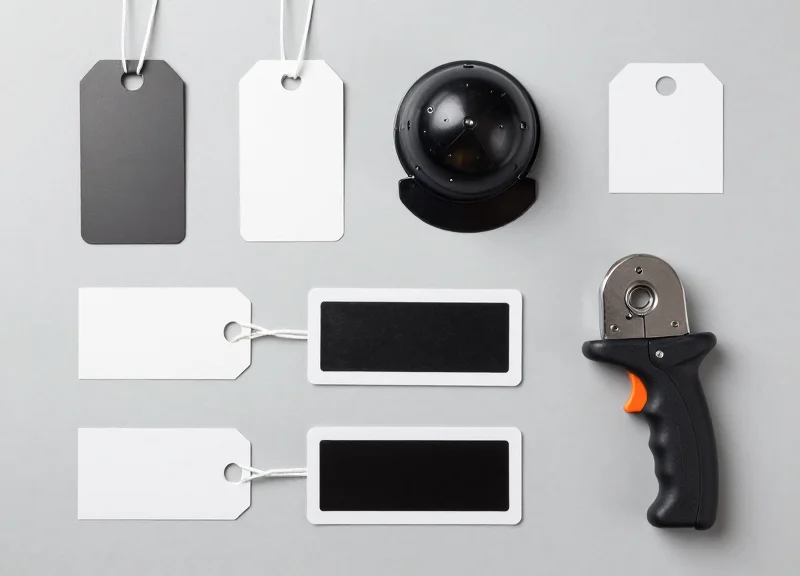
An advanced jewelry Electronic Article Surveillance (EAS) system is a high-precision ecosystem of hardware and software specifically calibrated to protect small, high-value items from both opportunistic theft and organized retail crime (ORC). Unlike generic retail security, jewelry-specific EAS utilizes micro-form-factor tags and high-sensitivity antennas that operate on frequencies—typically 58kHz Acousto-Magnetic (AM) technology—engineered to penetrate metallic environments and provide a 99.9% detection rate without compromising the luxury aesthetic of the showroom.
- Micro-Jewelry Tags: Ultra-lightweight, tamper-resistant tags designed to attach to delicate chains, rings, or watches. These tags feature non-abrasive fasteners to ensure no damage occurs to precious metals or gemstones.
- High-Sensitivity Pedestals: Sleek, often transparent antennas positioned at store exits. These units are equipped with advanced digital signal processing (DSP) to filter out ambient noise and metallic interference common in luxury malls.
- Integrated Deactivators and Detachers: Point-of-Sale (POS) components that either neutralize soft labels or remove hard tags. Advanced versions are 'smart-connected,' logging every transaction to prevent internal 'sweethearting' or unauthorized tag removal.
- Cloud-Based Analytics Controllers: The 'brain' of the system that collects data on alarm counts, peak theft times, and system health, allowing loss prevention teams to move from reactive to proactive security postures.
| Feature | Standard Retail EAS | Precision Jewelry EAS |
|---|---|---|
| Tag Footprint | Large, visible deterrence | Micro-discreet, aesthetic-focused |
| Interference Handling | Low; prone to 'tag shadowing' | High; calibrated for metallic environments |
| Detection Accuracy | 80% - 85% average | 95% - 99% high-precision |
| Data Integration | Standalone alarm | Full POS and Cloud telemetry |
Expert Insight: The 'Antenna Phasing' Secret. The 45% reduction in shrinkage achieved by tier-1 retailers isn't just due to the hardware—it's the calibration. Precision systems utilize 'Antenna Phasing,' a technique where electromagnetic fields are synchronized with the store's physical geometry. This eliminates 'dead zones' near metal-framed doors or display cases, ensuring that a thief cannot exploit weak signals caused by the proximity of high-density gold or silver inventory.
Will EAS tags interfere with the brilliance of diamonds?
Modern micro-tags are designed with transparent housing or neutral tones to ensure that the 'fire' and clarity of the gemstone remain the focal point for the customer.
How do you handle 'foil-lined' bags used by professional thieves?
Advanced jewelry pedestals often include integrated 'Metal Guard' technology, which triggers a silent alert the moment a foil-lined bag or booster coat enters the store, even before a theft is attempted.
Can these systems be hidden entirely?
Yes. For ultra-luxury environments, retailers can opt for 'Concealed Floor Loops' or 'Under-Counter' antennas that provide full protection without any visible hardware at the entrance.
Strategic Implementation: Beyond Hardware Placement
Strategic EAS implementation is the intentional alignment of Electronic Article Surveillance hardware with architectural store design, staff workflows, and data-driven risk mapping. For tier-1 jewelry retailers, this 'beyond hardware' approach transforms security from a passive barrier into an active, invisible net. By optimizing the synergy between technology and the physical retail environment, retailers move from reactive loss prevention to a proactive model that successfully reduces shrinkage while maintaining the high-end aesthetic required for luxury goods.
The 45% reduction achieved by top retailers isn't just the result of a louder alarm; it is the result of 'Security-by-Design.' This methodology treats the store floor as a tactical environment where customer flow, lighting, and display heights are all calibrated to support the EAS system's efficacy. The goal is to create a 'frictionless' experience for honest customers while simultaneously creating 'high-friction' psychological hurdles for shoplifters.
| Strategy Component | Standard Approach | Precision EAS Implementation |
|---|---|---|
| Antenna Placement | Visible pedestals at exits only. | Hidden or aesthetic-integrated systems at entry, exit, and transition zones. |
| Tagging Protocol | Bulk tagging without regard for display. | Weight-balanced, orientation-specific tagging that preserves item sparkle. |
| Data Integration | Post-theft incident reporting. | Real-time heat-map alignment and proactive alarm analytics. |
| Zone Management | One-size-fits-all security. | Multi-tiered zones based on product value and 'blind spot' risk. |
- Risk-Based Spatial Mapping: Retailers conduct a detailed analysis of 'dwell zones'—areas where customers spend significant time. By placing precision sensors near these zones, retailers can detect unauthorized tag tampering before the perpetrator even reaches the exit.
- Aesthetic Concealment: To maintain the luxury atmosphere, antennas are often embedded into door frames or floor mats. This 'invisible security' prevents the store from feeling like a high-security vault, which can otherwise alienate high-net-worth clients.
- Dynamic Surveillance Synchronization: EAS systems are linked directly to CCTV. When a specific tag enters a 'pre-alarm zone,' cameras automatically pivot to high-definition tracking of that individual, providing the 'Precision' element that leads to higher recovery rates.
Expert Insight: The Heat-Map Alignment Technique. A unique strategy used by Silicon Valley-influenced retail tech teams involves overlaying EAS 'near-miss' data with customer heat-maps. By identifying areas where tags are frequently moved but not purchased, retailers can identify 'internal blind spots'—locations where the store layout inadvertently provides cover for theft. Adjusting a single display case or lighting angle based on this data can often reduce localized shrinkage by up to 20% without adding a single new piece of hardware.
How does store layout affect EAS efficacy?
Layout affects signal interference and line-of-sight. Metal-heavy displays or poor antenna positioning can create 'dead zones' where tags are not detected. Precision implementation ensures the layout complements the RF or AM frequencies used.
Can EAS systems integrate with existing POS data?
Yes. Advanced implementations sync deactivation events with Point of Sale transactions. If a tag is deactivated without a corresponding sale, an immediate silent alert is sent to floor managers to investigate a potential internal or administrative error.
What is the 'Goldilocks Zone' in jewelry security?
This refers to the optimal distance between a display case and the nearest detection antenna. It must be far enough to prevent 'false chirps' from tagged items on display, but close enough to trigger an alarm the moment an item is moved toward a high-risk exit path.
Integrating EAS with RFID for Unparalleled Inventory Control

Integrating Electronic Article Surveillance (EAS) with Radio Frequency Identification (RFID) represents the pinnacle of modern loss prevention, offering a dual-layer defense that bridges the gap between physical security and digital data. While traditional EAS alerts staff to an unauthorized removal of stock, the addition of RFID provides granular 'item-level' visibility, telling the retailer exactly which SKU triggered the alarm, where it was last seen, and how many remain in stock. This synergy virtually eliminates 'unknown' shrinkage by converting every security event into an actionable data point.
| Feature | Standalone EAS | Standalone RFID | Integrated Hybrid System |
|---|---|---|---|
| Primary Purpose | Theft Deterrence | Inventory Accuracy | Loss Prevention + Intelligence |
| Detection Detail | Binary (Alarm/No Alarm) | Item Identification | Who, What, When, and Where |
| Shrinkage Impact | Reduces Physical Theft | Reduces Administrative Loss | Optimizes Bottom Line via Analytics |
| Real-time Alerts | Audible Gate Alarm | Software Notification | Synchronized Gate & Mobile Alerts |
Expert Insight: The 'Digital Twin' Advantage. In high-end jewelry, the most powerful aspect of EAS-RFID integration is the creation of a 'digital twin' for every piece. By syncing a physical security tag with a digital record, retailers can track the 'velocity' of high-value items—detecting if a diamond ring has been moved from a display case to a dressing room too frequently without a sale, which is often a precursor to organized retail crime (ORC) 'casing' behaviors.
- Tag Consolidation: Utilize hybrid tags that house both an EAS ferrite coil and an RFID inlay. This reduces the aesthetic impact on jewelry and simplifies the tagging process for staff.
- Antenna Synchronization: Install overhead or floor-based RFID readers near EAS pedestals to ensure that as an item passes through the 'shrinkage zone,' its unique ID is captured simultaneously with the alarm trigger.
- Middleware Integration: Connect the security hardware to your ERP or Inventory Management System (IMS). This allows the system to automatically flag stolen items as 'lost' in the database, preventing ghost inventory issues.
- Predictive Analytics Deployment: Use the combined data to identify 'hot zones' in the store where items are frequently moved but not purchased, allowing for strategic repositioning of staff or surveillance.
Does RFID interference affect EAS performance in jewelry?
Modern precision systems use specific frequency shielding to ensure that the RFID signal (UHF) and EAS signal (Acousto-Magnetic or RF) do not cross-talk, even on small metallic jewelry items.
What is the typical ROI for a hybrid system?
Tier-1 retailers typically see a full ROI within 12 to 18 months, driven by a 45% reduction in shrinkage and a 20% increase in labor efficiency due to automated cycle counting.
Can I upgrade my existing EAS to include RFID?
Many enterprise-grade pedestals are now 'RFID-ready,' meaning you can add internal reader modules without replacing the entire physical security infrastructure.
The Human Factor: Training Staff for Precision Response

Even the most sophisticated Electronic Article Surveillance (EAS) system is only as effective as the personnel monitoring it. Precision response training ensures that when an alarm triggers, staff execute a non-confrontational, service-oriented protocol that deters theft without alienating legitimate customers. In jewelry retail, where the average ticket price is high, the human response must be as refined as the technology, turning a potential security incident into a seamless customer service interaction.
- Immediate Positive Engagement: Staff are trained to approach an alarming customer within 5 seconds, not with an accusation, but with a helpful offer to 'check if a tag was missed during the busy checkout process.'
- The Dual-Verification Pivot: Technicians use the alarm as a catalyst to re-examine the jewelry items against the receipt, providing a secondary layer of inventory validation while maintaining a friendly demeanor.
- Discreet Tag Recovery: If a tag is found, the employee removes it gracefully, apologizes for the inconvenience, and uses the moment to offer a complimentary cleaning or jewelry box, reinforcing brand loyalty.
- Non-Confrontational Deterrence: In cases of suspected intentional theft, the presence of trained staff performing a 'receipt check' often prompts the individual to abandon the item or leave the premises without escalating to a physical altercation.
| Feature | Traditional Security Response | Precision EAS Response |
|---|---|---|
| Primary Goal | Apprehension/Accusation | Recovery & Customer Retention |
| Staff Tone | Confrontational/Aggressive | Apologetic/Service-Oriented |
| Impact on Sales | Negative (creates 'guilty' atmosphere) | Positive (demonstrates high-end care) |
| Liability Risk | High (potential for wrongful detention) | Low (focus on service and errors) |
Expert Insight: To truly master the 'Human Factor,' Tier-1 retailers implement a 'Sales-First Security' mindset. This approach views the EAS alarm not as a crime scene, but as a customer service 'fail-safe.' By training staff to believe the technology made an error (even if theft is suspected), you remove the psychological barrier of confrontation, making employees more likely to actually engage with the alarm rather than ignoring it due to social anxiety.
How do we prevent 'Alarm Fatigue' among staff?
Precision EAS systems minimize false triggers, but we also use data logging to identify 'repeat offender' tags or pedestals that need recalibration, ensuring staff only react to high-probability events.
What is the best way to handle a customer who refuses to stop?
Safety is paramount. Staff are trained to never pursue. Instead, they use the Precision Response protocol to gather descriptive details and time-stamps for immediate review of the high-definition CCTV footage.
Does training require specialized security background?
No. In fact, the most successful jewelry retailers train their best sales associates in EAS response, as they possess the soft skills necessary to handle the 'Customer Service Sandwich'—apology, verification, and closing the sale.
Measuring ROI: The Financial Impact of Shrinkage Reduction
Measuring the Return on Investment (ROI) for a precision EAS implementation involves calculating the net gain from reduced inventory loss relative to the total cost of ownership (TCO). For Tier-1 retailers, a 45% reduction in jewelry shrinkage doesn't just represent 'saved items'; it acts as a direct injection into the bottom line, significantly improving Gross Margin Return on Investment (GMROI) and freeing up working capital that was previously written off as unrecoverable loss.
| Financial Metric | Pre-Implementation (2% Shrink) | Post-Implementation (1.1% Shrink) | Net Impact / Improvement |
|---|---|---|---|
| Annual Revenue | $50,000,000 | $50,000,000 | Stabilized Base |
| Shrinkage Loss (Value) | $1,000,000 | $550,000 | +$450,000 (Savings) |
| Gross Margin (%) | 48.0% | 48.9% | +90 Basis Points |
| Capital Reinvestment | Limited | High | Accelerated Expansion |
Beyond the immediate recovery of inventory value, there is a 'Velocity of Recovery' factor. In the high-margin jewelry sector, every dollar saved from theft is a dollar that can be immediately reinvested into high-turnover inventory. For a Tier-1 retailer, saving $450,000 in shrinkage annually provides the liquidity to open new boutique counters or upgrade digital storefronts without seeking external financing, effectively lowering the cost of capital for the entire organization.
- Determine Total Cost of Ownership (TCO): Include the initial hardware procurement, installation costs, software licensing, and the ongoing cost of EAS tags/consumables.
- Calculate the 'Avoided Loss' Value: Compare historical shrinkage rates against post-implementation data. Multiply the volume of recovered units by the retail price to see the true revenue protection.
- Factor in Operational Efficiencies: Account for reduced labor hours spent on manual inventory counts and the lower insurance premiums typically negotiated following a significant reduction in risk profile.
- Apply the ROI Formula: [(Total Savings - TCO) / TCO] x 100. Most Tier-1 retailers see a full break-even point within 12 to 18 months of a precision EAS rollout.
Does the 45% reduction account for 'Internal Shrink'?
Yes. While EAS primarily targets external theft, the increased precision and data logging of high-sensitivity pedestals create a psychological deterrent that significantly reduces internal 'sweethearting' and back-of-house discrepancies.
What is the 'Halo Effect' on sales?
When staff feel the inventory is secure, they are more likely to display high-value items openly rather than behind locked glass, which typically results in a 10-15% uptick in customer engagement and conversion.
How does this impact EBITDA?
Because shrinkage is an operating expense, a 45% reduction directly increases EBITDA. For many retailers, this level of savings represents the difference between a flat year and a growth year.
Best Practices for Maintaining EAS Performance
Maximizing the longevity and accuracy of a precision EAS system requires a proactive maintenance strategy that balances technical calibration with operational discipline. For Tier-1 retailers, maintaining a 45% reduction in shrinkage isn't just about the initial install; it’s about ensuring that detection sensitivity remains high while false alarms are minimized through regular system audits, environmental monitoring, and hardware integrity checks.
| Frequency | Action Item | Responsible Party |
|---|---|---|
| Daily | Pedestal 'Ready' Light & Visual Inspection | Store Opening Manager |
| Weekly | Tag Detection Sensitivity Test (at 3 heights) | Loss Prevention Lead |
| Monthly | Deactivator/Detacher Functionality Audit | Store Tech Lead |
| Quarterly | Professional Recalibration & Firmware Updates | Certified EAS Vendor |
- The 'Zero-Blind-Spot' Audit: Conduct a walk-through with a live-tagged item at three different heights: ankle, waist, and shoulder. This ensures that the detection field hasn't developed 'null zones' due to shifting floor fixtures or metal displays.
- Clean Signal Verification: Check the perimeter within six feet of the pedestals. Ensure no 'tag pollution' exists—loose tags or tagged merchandise sitting too close to the antennas—which causes continuous background noise and reduces sensitivity.
- Hardware Integrity Check: Verify that all pedestal base bolts are tight and cables are shielded. Loose hardware can cause vibration-induced false alarms that frustrate staff and lead to system 'alert fatigue'.
Expert Insight: Beware of 'The LED Interference Trap'. Many retailers unknowingly degrade their EAS performance during store remodels. Modern, low-cost LED drivers can emit electromagnetic interference (EMI) that matches the frequency of Acousto-Magnetic (AM) systems. Always perform a 'noise floor' test before and after installing new lighting or digital signage to ensure your EAS detection range hasn't been cut in half by electronic noise.
How often should we professionally recalibrate our EAS system?
Tier-1 retailers should schedule professional recalibration at least twice a year, or whenever major store layout changes occur, to account for changes in the electromagnetic environment.
What is the primary cause of sudden EAS performance drops?
The most common culprit is 'environmental noise.' This is often caused by new electronics, holiday light displays, or even neighboring stores' equipment interfering with your system's frequency.
Can staff perform maintenance themselves?
Staff should handle daily functional tests and 'tag pollution' clearing, but technical tuning and motherboard diagnostics should always be left to certified technicians to avoid voiding warranties.
Future-Proofing Your Security: The Roadmap to Sustained Profitability
Future-proofing your security is the strategic process of implementing adaptable, scalable technologies—such as hybrid EAS and RFID systems—that evolve alongside emerging Organized Retail Crime (ORC) tactics to ensure long-term ROI. In the high-stakes world of Tier-1 jewelry retail, staying ahead of shrinkage is not a one-time event but a continuous commitment to innovation. By transitioning from a reactive 'alarm-and-respond' mindset to a proactive 'detect-and-prevent' strategy, retailers can protect their 45% shrinkage reduction gains and ensure that security investments remain an asset rather than a depreciating cost.
| Feature | Traditional Security Model | Future-Proofed Security (LP 3.0) |
|---|---|---|
| Primary Logic | Reactive: Alerting on exit | Proactive: Behavioral & item-level tracking |
| Data Integration | Siloed EAS hardware | Unified EAS, RFID, and Video Analytics |
| Maintenance | Manual, on-site repairs | Remote diagnostics and OTA updates |
| Scalability | Fixed infrastructure | Modular software-defined security |
- Phase 1: Hybrid Tech Consolidation: Begin by upgrading legacy pedestals to hybrid systems capable of reading both AM/RF EAS and RFID frequencies simultaneously. This ensures immediate protection while paving the way for item-level visibility.
- Phase 2: Data-Driven Intelligence Layer: Integrate your security hardware with a centralized cloud platform. Use predictive analytics to identify 'hot zones' in the store and peak shrinkage times, allowing for smarter staff deployment.
- Phase 3: The Zero-Friction Customer Experience: Implement 'invisible' security solutions, such as overhead EAS or concealed floor sensors, that maintain a premium boutique atmosphere without compromising on the detection rate.
Expert Tip: The most successful Tier-1 retailers are now adopting a 'Security-as-a-Service' (SaaS) model. Instead of buying hardware every decade, they invest in platforms with over-the-air (OTA) firmware updates. This allows your EAS system to learn new theft patterns—such as the use of high-tech 'booster bags'—without requiring a technician to visit the store, effectively neutralizing threats before they become industry standards.
How often should we update our EAS strategy?
A strategic audit should occur bi-annually. While hardware may last years, the software parameters and staff response protocols should be adjusted every six months to counter local crime trends.
Will RFID replace EAS entirely in the jewelry sector?
Unlikely. While RFID is superior for inventory, EAS remains the gold standard for high-speed exit detection. The future is a 'Dual-Shield' approach where both technologies work in tandem.
What is the biggest risk to sustained profitability?
Complacency. Technical debt—using outdated systems that savvy shoplifters have learned to bypass—is the primary driver of 'shrinkage creep' after an initial successful implementation.