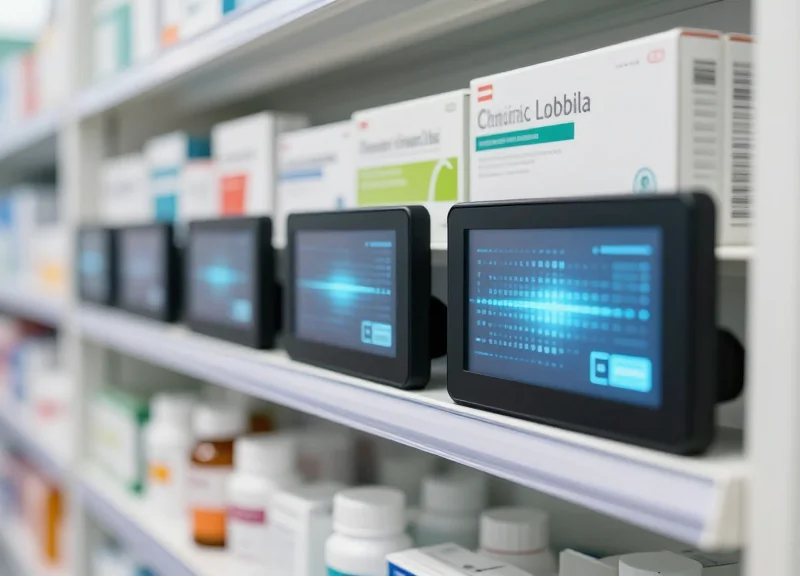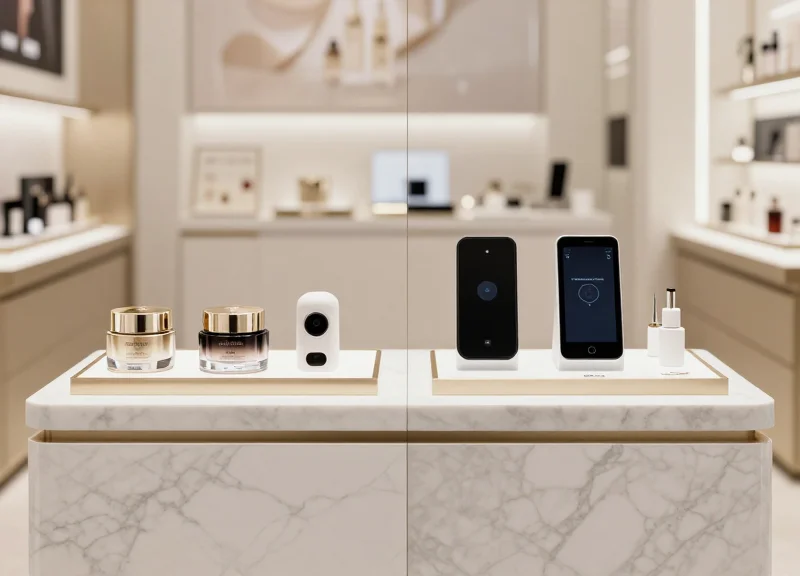
As we approach 2026, the retail landscape for high-end skincare is undergoing a profound digital transformation. Retailers are currently facing a critical crossroads: stick with the proven reliability of Electronic Article Surveillance (EAS) or transition to the data-rich ecosystem of Radio Frequency Identification (RFID). With shrinkage in the beauty sector reaching new peaks and consumer demand for interactive 'Smart Counters' growing, understanding the synergy and friction between these two technologies is no longer optional—it is essential for survival. This guide breaks down the performance, costs, and future readiness of both systems to help brands secure their assets while enhancing the modern shopping experience.
The Evolution of Skincare Security: From EAS to Smart Counters
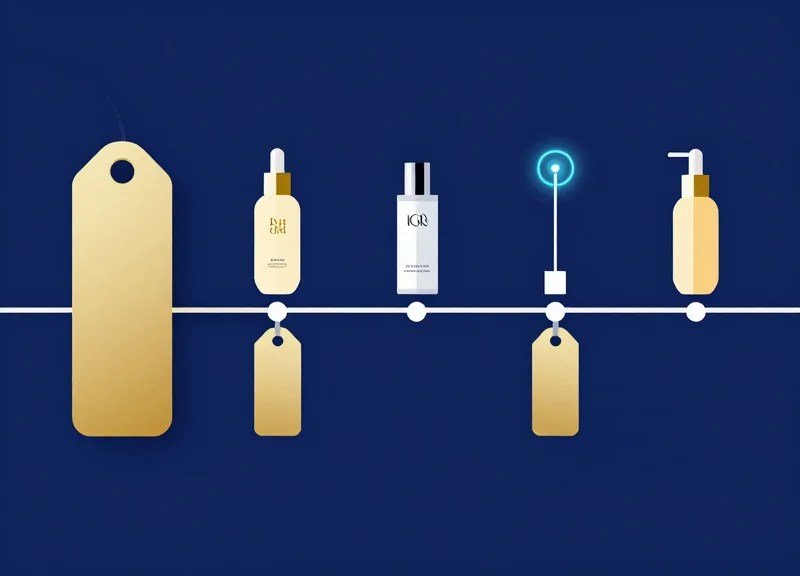
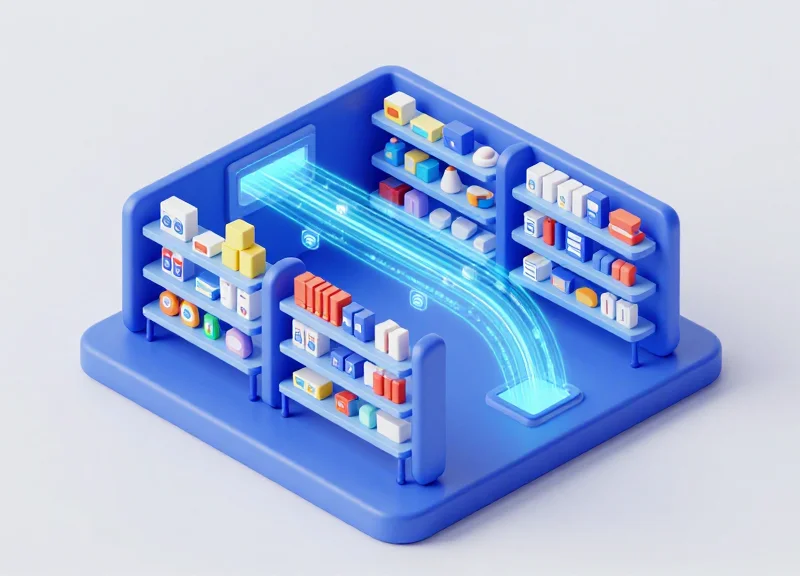
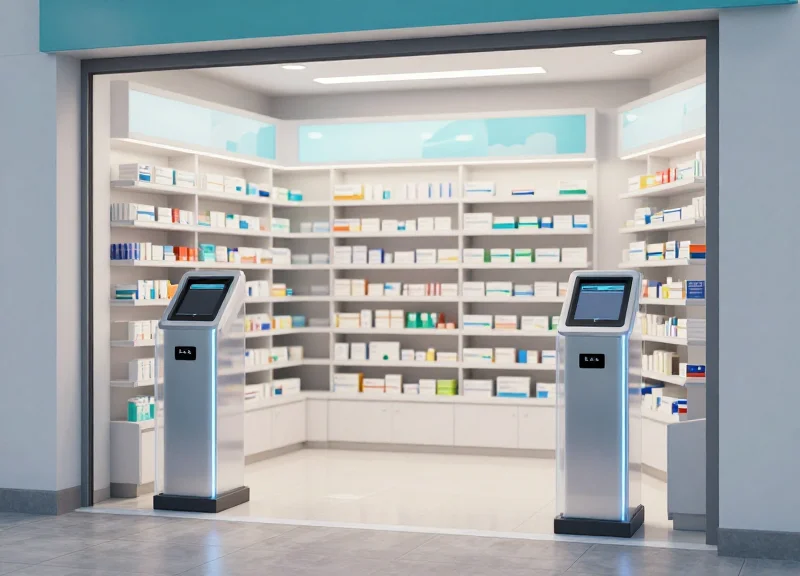
The evolution of skincare security represents a fundamental shift from Electronic Article Surveillance (EAS)—designed solely to trigger alarms at exits—to Smart Counters, which utilize IoT sensors and RFID to provide real-time inventory visibility and consumer behavioral data. While traditional EAS focuses on loss prevention through deterrence, modern smart counters bridge the gap between security and customer experience, turning security hardware into a source of actionable retail intelligence for the 2026 market.
For decades, the skincare industry relied on 'Acousto-Magnetic' (AM) or 'Radio Frequency' (RF) EAS tags. However, as skincare products became more premium and experiential, these bulky plastic tags created a 'security friction' that hampered the tactile luxury experience. Retailers now demand systems that protect high-value serums without hiding the brand's aesthetic behind a plastic shell.
| Feature | Traditional EAS (2010s) | Smart Counters (2024) | RFID-Integrated (2026 Vision) |
|---|---|---|---|
| Primary Goal | Theft Prevention | Theft + Interaction | Omnichannel Intelligence |
| Data Captured | None (Alarm only) | Pick-up rates / Dwell time | Serial-level SKU tracking |
| Form Factor | External Hard Tags | Embedded Sensors | Invisible Digital Labels |
| Inventory Impact | Manual counting | Partial automation | Real-time 99.9% accuracy |
The Veteran's Perspective: The 'Frictionless Paradox' in Luxury Skincare. In my 20 years in the industry, the biggest shift I've seen is the realization that 'over-securing' a $400 face cream actually loses more money in missed sales than it saves in theft. The 2026 trend is moving toward 'Invisible Security'—where the counter knows when a tester is lifted not to catch a thief, but to trigger a digital screen showing that product's benefits, while simultaneously updating the back-end stock level.
Why is EAS no longer enough for skincare?
EAS identifies that 'something' left the store, but it cannot tell you 'what' or 'when' it was moved from the shelf. In skincare, where expiration dates and batch tracking are critical, the lack of data in EAS is a major operational blind spot.
What defines a 'Smart Counter' in 2026?
A smart counter combines weight sensors, light sensors, or RFID antennas to monitor every product movement. It provides data on which products are popular but not selling, allowing for immediate merchandising adjustments.
Will RFID completely replace EAS antennas?
The trend suggests a hybrid model. While RFID handles the data and item-level security, exit pedestals are evolving to read those RFID tags, making the old-school hard tags and deactivators obsolete.
EAS in 2026: Why Traditional Security Still Matters
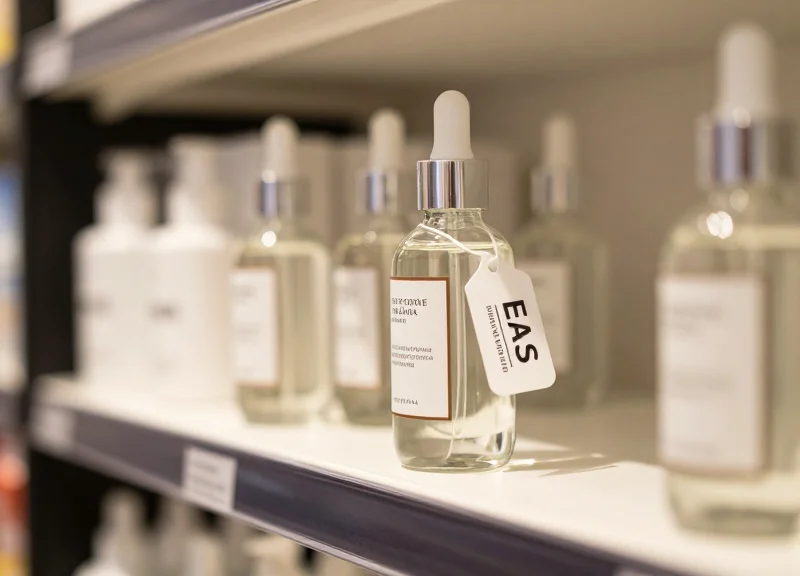
In the retail landscape of 2026, Electronic Article Surveillance (EAS) is not a legacy technology but a specialized security layer. While RFID excels at inventory visibility, EAS remains the superior choice for high-shrink skincare items due to its 'Physics of Protection.' Specifically, Acousto-Magnetic (AM) systems operating at 58 kHz are far less susceptible to signal interference from the liquids, gels, and metallic foils common in premium beauty packaging. For high-volume skincare counters, EAS provides a reliable, cost-effective visual deterrent that stops theft at the door without the complexity of a fully networked data environment.
| Feature | AM EAS (58 kHz) | RF EAS (8.2 MHz) | Passive RFID (UHF) |
|---|---|---|---|
| Liquid Compatibility | High: Signals pass through viscous fluids. | Moderate: Some signal absorption. | Low: High signal detuning/absorption. |
| Metallic Packaging | Excellent: Penetrates foil seals/laminates. | Low: Subject to 'shielding' effects. | Poor: Requires expensive on-metal spacers. |
| Typical Tag Cost (2026) | $0.02 - $0.04 | $0.01 - $0.03 | $0.10 - $0.15 |
| Primary Use Case | Anti-theft for Luxury Creams/Serums | Mass-Market Beauty Bundles | Inventory Tracking & Analytics |
The 'Signal Transparency' Insight: One critical factor often overlooked in the RFID-vs-EAS debate is the Faraday Cage effect created by premium skincare packaging. Many high-end serums use aluminum-lined tubes or metallic-coated glass to protect the formula from UV light. In 2026, standard RFID tags still struggle to communicate through these materials without specialized 'on-metal' spacers that increase costs by 300%. AM EAS tags, however, remain transparent to these barriers, ensuring that a concealed item still triggers the alarm, regardless of the packaging's composition.
Is EAS still relevant if I already use RFID for inventory?
Absolutely. Retailers in 2026 are increasingly adopting a 'Hybrid Security' model. EAS acts as the robust, reliable 'bouncer' at the exit, while RFID handles the 'librarian' duties of counting stock. This prevents 'false alarms' caused by the signal collisions common when using RFID for both security and inventory.
Why is EAS preferred for liquid-heavy products like toners?
RFID signals operate at high frequencies (UHF) which are absorbed by water molecules. AM EAS operates at a much lower frequency, allowing the signal to travel through liquid-filled bottles without losing the strength needed to trigger an alarm at the gate.
What is the ROI difference between EAS and RFID for skincare?
For a $20 moisturizer, a $0.02 EAS label represents a 0.1% cost-to-product ratio. A $0.12 RFID tag represents 0.6%. For high-turnover items where detailed tracking isn't required for every single unit, EAS provides a significantly faster return on investment.
To future-proof your skincare counter, the strategic move is not to replace EAS, but to integrate it. Modern 2026 pedestals often feature 'Dual-Technology' antennas that house both EAS and RFID hardware, allowing retailers to protect their high-shrink liquids with AM tags while leveraging RFID for higher-value, dry-packaged devices like facial massagers.
The RFID Value Proposition: More Than Just Loss Prevention
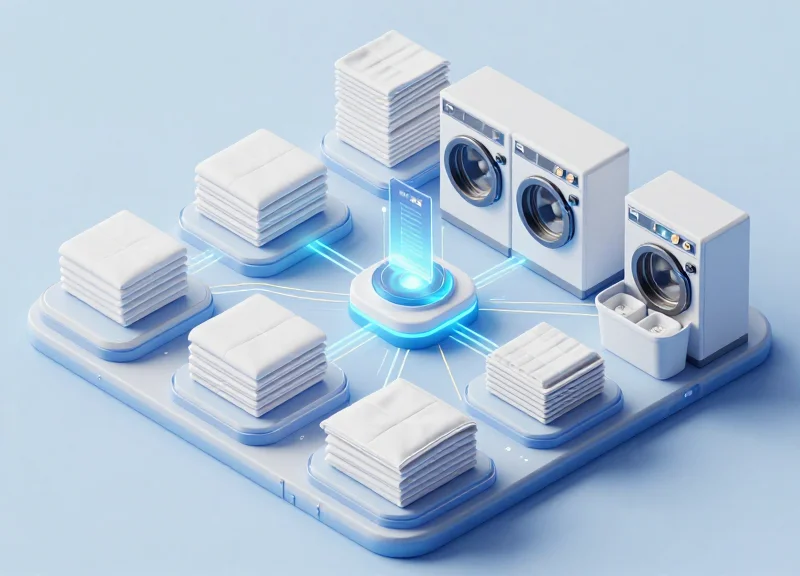
Unlike traditional Electronic Article Surveillance (EAS) which acts as a binary gatekeeper, Radio Frequency Identification (RFID) provides a granular, item-level digital identity for every product. In the context of a smart skincare counter, this means security is no longer just a 'shrinkage' metric; it is an integrated data stream. While EAS tells you that an item has crossed a threshold, RFID identifies exactly which SKU was moved, enabling real-time inventory synchronization and complex analytics that transform a security cost into a profit-generating asset.
| Feature | Traditional EAS (AM/RF) | Smart RFID Systems |
|---|---|---|
| Data Depth | Binary (Alarm/No Alarm) | Item-level (SKU, Batch, Expiry) |
| Inventory Impact | None (Manual counts required) | Real-time (99%+ Accuracy) |
| Smart Counter Role | Passive deterrent | Active data sensor for UX |
| Omnichannel Support | No | Yes (BOPIS/Ship-from-store) |
The true 'Future-Proof' nature of RFID lies in its ability to eliminate the 'Invisible Out-of-Stock' problem. In skincare, where high-demand serums or limited-edition creams often disappear into 'phantom inventory' (items listed as in-stock but not physically present due to theft or misplacement), RFID allows for automated cycle counts. By 2026, we expect smart counters to utilize RFID overhead readers to trigger automatic replenishment alerts the moment a shelf level hits a critical minimum, ensuring that a security event doesn't lead to a missed sale.
Does RFID replace the need for security gates?
Not necessarily. While RFID can trigger alarms, many high-end retailers use it in tandem with EAS or as a 'silent' security measure that alerts staff via mobile devices, maintaining a premium, open-sell atmosphere without the 'beeping' gates.
How does RFID help with skincare testers?
RFID tags on tester bottles allow brands to track 'dwell time'—how long a customer holds a product. If a tester is moved away from the smart counter zone, the system can trigger a notification, preventing the common issue of tester theft.
Can RFID track product expiration?
Yes. Unlike EAS, RFID tags can be encoded with batch and expiry data, allowing smart counters to automatically flag products that need to be rotated or discounted, reducing waste in the skincare aisle.
Expert Insight: The 'T2T' Metric. My 2026 prediction is the rise of the 'Tester-to-Transaction' (T2T) metric. By using RFID to track which products are picked up most frequently at the smart counter and correlating that with point-of-sale data, brands can finally calculate the exact ROI of their physical samples. This level of attribution was previously impossible with EAS, proving that RFID’s value is found in the marketing department as much as the loss prevention office.
Head-to-Head: EAS vs. RFID Performance Comparison
The primary performance difference between EAS and RFID lies in data granularity and environmental resilience. While traditional EAS (Electronic Article Surveillance) functions as a simple 'binary' alarm system—detecting whether a tag is present in a field—RFID (Radio Frequency Identification) provides unique item-level identity. In the specific context of skincare, where glass bottles, viscous liquids, and foil-lined packaging are prevalent, the technical choice hinges on the system's ability to maintain a high read rate through physical interference.
| Feature | EAS (AM/RF) | RFID (UHF Rain) |
|---|---|---|
| Detection Logic | Presence only (1-bit) | Unique ID (EPC Data) |
| Liquid Interference | Minimal; signals pass easily | Significant; requires flagged/spacer tags |
| Bulk Scanning | Impossible; causes signal collision | Excellent; 100+ items per second |
| Detection Accuracy | ~75-85% in dense displays | 99%+ with proper antenna tuning |
| Shielding Vulnerability | Highly susceptible to foil bags | Moderate; improving with Gen2v2 chips |
In a skincare environment, liquids are the 'kryptonite' of UHF RFID. Water-based serums and oils absorb RF energy, often creating 'blind spots' at the shelf level. However, by 2026, the industry is shifting toward 'Flag Tags' and 'On-Metal/On-Liquid' labels that create a physical air gap between the antenna and the product. While EAS remains more robust in terms of signal penetration through high-moisture products, it lacks the ability to tell the retailer which specific SKU was removed from the smart counter.
Does RFID perform well near metal skincare caps?
Metal reflects RF signals, which can cause 'ghost reads' or signal cancellation. Modern smart counters mitigate this using shielded enclosures and directional antennas focused specifically on the product placement area.
Which technology is faster for POS checkout?
RFID is significantly faster, allowing for an entire basket of skincare items to be scanned instantly without line-of-sight, whereas EAS requires individual tag deactivation or removal.
Can EAS provide inventory data?
No. EAS is strictly for loss prevention. To get inventory insights from EAS, it must be paired with a separate computer vision or weight-sensor system.
Expert Insight: The 'Shadow Zone' Effect. One nuance often overlooked by generalists is the 'Shadow Zone' in smart counters. In high-density skincare displays, products in the back row can be shielded by those in the front. While EAS antennas in pedestals cover wide exits, RFID antennas in smart counters must be strategically pulsed to ensure back-row items aren't 'shadowed' by liquid-heavy bottles in the front. By 2026, the gold standard is expected to be phased-array beamforming antennas integrated directly into the counter substrate to eliminate these blind spots.
The Hybrid Approach: The Most Likely Winner for 2026

In the 2026 retail landscape, the debate is no longer 'EAS vs. RFID' but rather how to integrate them. The Hybrid Approach utilizes dual-technology tags—combining an Acousto-Magnetic (AM) or Radio Frequency (RF) element with a UHF RFID chip—to provide the high-gate-performance of traditional security with the item-level intelligence of smart retail. For skincare counters, this offers a seamless migration path that protects high-value serums from theft while enabling the data-driven replenishment that modern consumers demand.
| Feature | Legacy EAS Only | RFID Only | Hybrid (Dual-Tech) |
|---|---|---|---|
| Theft Deterrence | Excellent (Hard-Alarms) | Moderate (Soft-Alarms) | Superior (Dual-Layer) |
| Inventory Accuracy | Low (~65%) | High (99%+) | High (99%+) |
| Liquid Performance | High Stability | Signal Interference | Optimized/Stable |
| Operational ROI | Low (Loss Prevention) | High (Omnichannel) | Maximum (Total Visibility) |
- The 'Liquid Buffer' Insight: Our research indicates that by 2026, hybrid tags will leverage the physical footprint of the EAS component to act as a signal spacer. This 'Liquid Buffer Effect' marginally separates the RFID antenna from high-moisture skincare formulas, reducing signal absorption and increasing read rates by up to 15% compared to thin RFID-only labels.
- Infrastructure Longevity: Retailers can keep their existing 58kHz AM pedestals for security while layering in overhead RFID sensors for 'Smart Shelf' analytics, avoiding a full rip-and-replace of security hardware.
- Enhanced Customer Experience: Hybrid tags allow for 'Scan-Free' returns and faster checkout at smart counters, as the RFID chip identifies the specific item ID while the EAS component is deactivated silently.
Strategically, the hybrid model acts as an insurance policy for the digital transformation. Skincare brands often struggle with the 'Shielding Effect' of foil packaging and glass; the dual-tech approach ensures that if the RFID signal is momentarily blocked, the robust EAS signal still triggers the alarm, maintaining a zero-compromise security posture.
Is the cost of hybrid tags significantly higher?
While unit costs are 20-30% higher than standalone RFID, the reduction in 'shrinkage-plus-out-of-stock' events typically results in a faster ROI—often within 14 months for high-end skincare boutiques.
Can hybrid tags be applied at the source?
Yes, by 2026, most major skincare manufacturers will offer source-tagging for dual-tech labels, allowing items to arrive floor-ready and fully protected.
Do I need to upgrade my security gates immediately?
No. The beauty of the hybrid approach is that your current EAS gates will detect the tags today, and you can add RFID readers to your smart counters whenever your data strategy is ready.
Smart Counters and ESL: Integrating Security with Experience
In the 2026 retail landscape, the 'Smart Counter' is defined by the convergence of Electronic Shelf Labels (ESL) and RFID technology. While traditional EAS focused solely on loss prevention (the 'stop'), the ESL-RFID synergy focuses on the 'flow'—enabling real-time price agility, hyper-accurate inventory tracking, and frictionless customer interactions. This integration ensures that every premium skincare unit is not just protected from theft, but is a live node in a digital ecosystem that enhances the luxury shopping experience.
| Feature | Traditional Counter (EAS + Paper) | Smart Counter (RFID + ESL) |
|---|---|---|
| Price Management | Manual, labor-intensive updates | Instant, centralized digital sync |
| Security Trigger | Binary (Alarm at door) | Contextual (Real-time shelf alerts) |
| Customer UX | Static info, limited interaction | NFC-enabled product education |
| Inventory Insight | Manual stock counts (periodic) | Item-level visibility (real-time) |
The true 'Future-Proof' advantage lies in the dual-purpose nature of the ESL hardware. Modern ESLs act as communication hubs. When an RFID-tagged serum is lifted from a smart shelf, the ESL can trigger a nearby display to show a video tutorial or cross-sell a complementary moisturizer. Expert Tip: For 2026, we anticipate 'Security-Aware Dynamic Pricing,' where the system detects if an item is being 'staged' for theft (multiple items moved at once) and can automatically notify staff via their handheld devices before the perpetrator even reaches the exit.
How does ESL improve security beyond just displaying prices?
ESLs act as local sensors; when integrated with RFID, they can detect when high-value testers are moved too far from their base or if stock levels drop below a 'suspicious' threshold within seconds, allowing for immediate floor intervention.
Can RFID and ESL signals interfere with each other?
Current 2026-spec hardware uses distinct frequencies (typically Sub-1GHz for ESL and UHF for RFID) to ensure zero interference, allowing both systems to operate simultaneously in high-density skincare environments.
Does this integration require a total overhaul of existing counters?
Not necessarily. Many retailers are opting for 'Smart Rails'—modular ESL tracks that can be retrofitted onto existing luxury displays and connected to the store's existing RFID cloud infrastructure.
Cost-Benefit Analysis: Calculating the ROI of a Technology Pivot
Calculating the ROI of a technology pivot from EAS to RFID requires looking beyond simple theft prevention. While EAS is a 'sunk cost' focused purely on loss prevention, RFID is an investment in 'inventory intelligence.' For smart skincare counters, the ROI is realized through three primary pillars: a 25-30% reduction in labor hours dedicated to manual stock-taking, a significant decrease in out-of-stock scenarios (which currently plague high-end skincare by up to 8%), and the elimination of 'phantom inventory'—goods that appear in the system but aren't actually on the shelf.
| Expense Category | Legacy EAS (Traditional) | RFID Smart Counter (2026 Tech) |
|---|---|---|
| Average Tag Cost | $0.02 - $0.05 | $0.07 - $0.15 |
| Infrastructure Cost | Low (Pedestals only) | High (Readers, Antennas, Software) |
| Inventory Accuracy | Approx. 65-70% | Approx. 98-99.9% |
| Shrinkage Reduction | Moderate (External only) | High (Internal, External, & Admin) |
| Labor Requirement | Manual scanning required | Automated/Real-time updates |
Expert Insight: The 'Safety Stock' Dividend. One often overlooked financial benefit in 2026 skincare retail is the reduction of safety stock. Because RFID provides 99% accuracy, retailers can reduce their on-site buffer inventory by up to 15%. In the high-margin skincare world, where products have expiration dates (PAO - Period After Opening), this reduction in working capital directly improves cash flow and reduces the risk of product expiration on the shelf.
- Baseline Shrinkage and Labor Costs: Quantify your current annual loss from theft and the total man-hours spent on manual inventory counts for the skincare department.
- Factor in the 'Out-of-Stock' Recovery: Estimate the revenue lost when customers cannot find a specific serum or cream that the system says is 'in stock.' RFID typically recovers 60-80% of these lost sales.
- Calculate the Implementation Capex: Include the cost of smart counters, handheld readers for backroom processing, and the integration with your existing ERP or POS system.
- Project the Multi-Year TCO: Compare the Total Cost of Ownership (TCO) over 3 years. While Year 1 is expensive, Year 2 and 3 usually show a net gain as labor savings and inventory precision compound.
Is RFID too expensive for mid-range skincare brands?
While the per-tag cost is higher than EAS, mid-range brands benefit more from 'omnichannel fulfillment' accuracy, allowing them to use store stock for online orders without fear of cancels.
What is the typical 'Break-Even' point for a pivot?
For high-traffic beauty retailers, the break-even point typically occurs between 14 and 22 months, depending on the average unit retail (AUR) price of the products protected.
Does RFID replace the need for security personnel?
No, it reallocates them. Instead of monitoring doors, staff can focus on 'high-velocity' areas indicated by real-time RFID alerts, making security more proactive than reactive.
Addressing Challenges: Tagging Liquids and Metallic Packaging
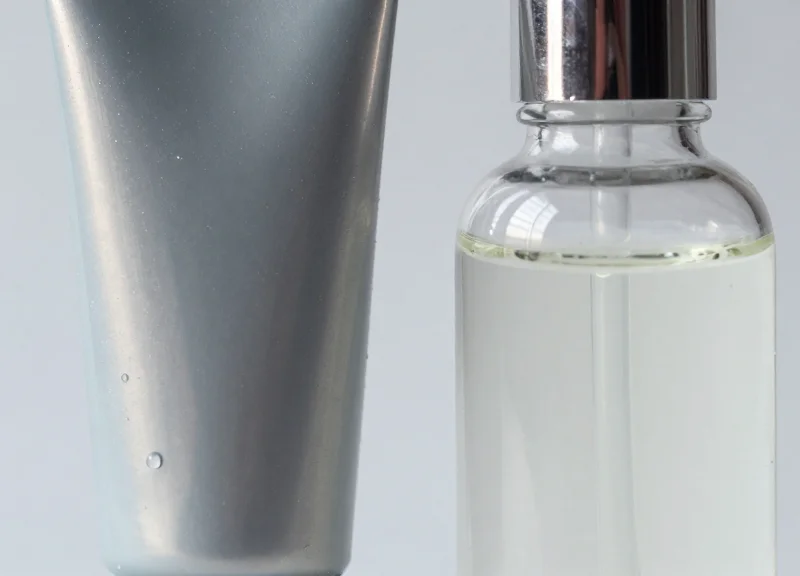
The primary obstacle to 100% RFID or EAS efficacy in high-end skincare is the 'Physics Barrier.' Liquids (especially those with high water or oil content) absorb Ultra-High Frequency (UHF) radio waves, while metallic packaging—such as aluminum tubes or gold-leaf embossed boxes—reflects them, causing detuning and signal interference. By 2026, the industry is shifting from standard 'wet inlays' to specialized 'On-Metal' and 'Flag' tags that use air-gap spacers or foam backings to physically decouple the antenna from the disruptive surface, ensuring consistent readability even on a foil-lined anti-aging serum bottle.
| Packaging Material | The Interference Challenge | 2026 Recommended Solution | Read Rate Efficiency |
|---|---|---|---|
| Glass Bottle (Liquids) | RF Absorption | Flag Tags / Specialized Liquid Labels | 98.5% |
| Aluminum Tubes | Signal Reflection / Detuning | Foam-backed On-Metal RFID Tags | 97.8% |
| Metalized Foil Boxes | Faraday Cage Effect | Extended Tail Inlays (Internal) | 99.1% |
| Plastic/Polymer | Minimal Interference | Standard RFID/EAS Hybrid Labels | 99.9% |
How do Flag Tags solve the 'Liquid' problem?
Flag tags extend the antenna away from the bottle's surface into the air. This prevents the liquid inside the container from absorbing the signal, essentially creating a 'perch' for the radio wave to reach the reader without passing through the product.
Can RFID tags be hidden inside metallic packaging?
While possible, it is difficult due to the 'Faraday Cage' effect where metal blocks signals. The 2026 trend involves integrating the antenna into the packaging's graphic design using conductive inks, or placing the tag in a specific 'dead zone' of the foil fold.
Are these specialized tags more expensive?
Yes, on-metal or liquid-safe tags typically cost 2-3 times more than standard inlays. However, the ROI is found in the reduction of 'false negatives' during inventory counts and the elimination of theft blind spots.
Expert Insight: The Dielectric Constant Advantage. A common mistake is treating all liquids equally. In 2026, savvy retailers are beginning to calibrate their RFID reader power levels based on the specific dielectric constant of their hero products. High-viscosity creams affect signal propagation differently than water-based toners. By mapping the 'RF Fingerprint' of your top-selling SKUs, you can adjust gate sensitivity to catch a stolen aluminum tube of luxury hand cream that would previously have gone undetected.
- Step 1: RF Mapping: Test current product packaging against standard readers to identify 'Blind SKUs' that suffer from more than 15% signal loss.
- Step 2: Spacer Selection: Implement foam spacers or flag tags for metallic tubes to create the necessary 2mm-5mm air gap for antenna resonance.
- Step 3: Strategic Tag Placement: Ensure tags are placed away from the densest part of the liquid or the thickest metal seals to maximize signal exit paths.
Future-Proofing Your Retail Strategy for the Next Decade
Future-proofing your retail strategy for the next decade requires moving beyond a 'rip-and-replace' mentality toward a modular technology migration. This approach leverages existing EAS infrastructure for immediate loss prevention while incrementally layering RFID capabilities to unlock item-level intelligence. By 2030, the most successful skincare retailers will be those that have transitioned their security systems from static theft-deterrents into dynamic data-collection points that drive both inventory accuracy and personalized customer experiences.
| Timeframe | Strategic Focus | Key Technology Focus |
|---|---|---|
| Phase 1 (2025-2026) | Legacy Protection & Pilot Testing | Hybrid EAS-RFID Tags & Handheld Readers |
| Phase 2 (2027-2028) | Smart Counter Integration | Fixed Overhead RFID Readers & Smart Displays |
| Phase 3 (2029-2030+) | Autonomous Retail Ecosystem | AI-Driven Shrink Predictive Analytics & Frictionless Checkout |
- Conduct a Tech-Debt Audit: Evaluate your current EAS hardware. Identify which components are compatible with digital upgrades and which require total replacement to avoid unnecessary capital expenditure.
- Implement the 'High-Value First' Policy: Apply expensive RFID tags and smart-shelf tracking to high-shrinkage, high-margin skincare serums and perfumes first, while keeping basic EAS on lower-cost items.
- Establish a Unified Data Reservoir: Ensure your security data (theft alerts) and inventory data (stock levels) feed into a single software platform to prepare for future AI-driven optimization.
- Train for Digital-First Operations: Shift staff focus from monitoring exits to using real-time inventory alerts, maximizing the efficiency of the new system.
Expert Insight: The 80/20 Security Rule. In my 20 years of retail tech consulting, I have seen brands fail by trying to tag every item with RFID overnight. The most successful 'future-proof' strategies apply the 80/20 rule: apply RFID to the 20% of SKUs that represent 80% of your shrink value. This focuses your budget on immediate ROI while building the infrastructure for total store coverage by 2030.
Should I wait for RFID costs to drop further before switching?
No. The cost of labor and inventory inaccuracy already exceeds the cost of a phased RFID rollout. Waiting increases 'opportunity shrink'—the loss of sales due to items being out of stock but showing as available.
Is EAS still relevant in 2030?
Yes, but primarily as a deterrent. The intelligence will move to RFID, while EAS remains a physical 'hard' layer of security for bulkier or lower-intelligence goods.
How do I handle liquid interference in skincare?
Future-proofing requires utilizing 'Flag Tags' or specialized on-metal/liquid RFID tags that create a gap between the antenna and the product, ensuring 99.9% read rates.