As we approach 2026, the architectural trend in retail is shifting toward open, 'grand' entrances that prioritize customer flow and aesthetic appeal. However, these wide entryways pose a significant challenge for traditional loss prevention systems. Historically, Radio Frequency (RF) technology served as the industry standard, but its physical limitations in wide-aisle configurations are becoming increasingly apparent. Modern retailers are now pivoting toward Acousto-Magnetic (AM) technology. This article examines the technical and strategic reasons why AM systems are the preferred choice for high-end, wide-entrance environments in the next generation of retail.
The Rise of the Grand Entrance in Modern Retail Design

In 2026, the 'Grand Entrance' is defined as a high-volume retail threshold spanning 6 to 12 meters or more, designed to eliminate the 'threshold anxiety' associated with narrow, high-friction entry points. By removing physical and psychological barriers, retailers are maximizing the 'Decompression Zone'—the critical first few steps a shopper takes into a store—to increase dwell time and conversion rates. This architectural shift demands security solutions that protect vast openings without sacrificing aesthetic transparency or customer flow.
For decades, retail design was constrained by the technical limitations of Radio Frequency (RF) security systems, which required pedestals to be placed no more than 1.5 to 1.8 meters apart. This created a 'picket fence' effect at the door. Modern flagship stores are now rejecting this cage-like aesthetic in favor of expansive, open-air facades that blur the line between the mall concourse or street and the curated brand experience inside.
| Feature | Legacy Retail Entry (RF Era) | Modern Grand Entrance (AM/RFID Era) |
|---|---|---|
| Average Width | 1.8m - 3.6m | 6.0m - 12.0m+ |
| Visual Impact | Cluttered/Barricaded | Seamless/Architectural |
| Shopper Flow | Single-file/Bottleneck | Multi-lane/High-velocity |
| Psychology | Security-first (defensive) | Experience-first (welcoming) |
The shift isn't just about looks; it is about economics. Data shows that for every 10% increase in entrance width, foot traffic increases by an average of 4.2% in high-traffic urban centers. As retailers compete with the convenience of e-commerce, the physical store must provide a 'wow factor' from the very first second. However, this architectural freedom creates a security vacuum: traditional RF technology simply cannot cover these 10-meter spans without placing pedestals in the middle of the walkway, which defeats the purpose of the design.
What is the 'Threshold Transition Zone' (TTZ)?
The TTZ is the space where a shopper adjusts from the outside environment to the store's lighting, scent, and tempo. Modern grand entrances expand this zone to ensure shoppers are in a 'buying state' before they encounter the first product display.
Why are retailers moving away from RF for grand entrances?
Radio Frequency (RF) systems suffer from signal 'dead zones' when pedestals are spaced too far apart. To secure a 6-meter opening, RF would require multiple pedestals, obstructing the entrance and creating a poor brand image.
How does Acousto-Magnetic (AM) technology solve this?
AM technology operates at a lower frequency (58 kHz) which allows for much wider detection ranges and better penetration through liquid and metal, enabling pedestals to be placed at the extreme edges of a grand entrance while maintaining 100% catch rates.
Expert Insight: The 'Invisible Sentinel' Trend. One original perspective often overlooked is the rise of 'invisible' security. In 2026, the most successful retailers are treating security as a silent infrastructure. By utilizing wide-aisle AM technology, brands can hide antennas inside door frames or under the flooring. This creates an 'Invisible Sentinel'—a security perimeter that is 100% effective but 0% visible, allowing the architecture to speak louder than the loss prevention strategy.
Technical Deep Dive: The Physics of AM (58kHz) vs. RF (8.2MHz)
The fundamental difference between Acousto-Magnetic (AM) and Radio Frequency (RF) systems lies in their operating frequency and signal modulation. AM technology operates at a low frequency of 58kHz, utilizing a 'pulse-listen' cycle that allows for a high signal-to-noise ratio over distances exceeding 2.4 meters. In contrast, traditional RF systems operate at a much higher 8.2MHz frequency using a continuous sweep method, which suffers from rapid signal attenuation and environmental interference, effectively capping reliable detection at approximately 1.8 meters for standard pedestals.
| Feature | AM Technology (58kHz) | RF Technology (8.2MHz) |
|---|---|---|
| Detection Range | Wide (Up to 2.5m - 3m) | Standard (Max 1.6m - 1.8m) |
| Signal Modulation | Acousto-Magnetic Resonance | Swept Radio Frequency |
| Interference Susceptibility | Low (Immune to most electronic noise) | High (Sensitive to LED, POS, & Wiring) |
| Shielding Resistance | Effective near liquids and foil | Poor performance near metals/liquids |
The physics of the 58kHz frequency is uniquely suited for grand entrances. Lower frequencies have longer wavelengths, which are less prone to 'path loss'—the weakening of a signal as it travels through space. Furthermore, AM tags contain magnetostrictive material that physically vibrates at 58kHz when energized. When the transmitter pulse stops, the tag continues to 'ring' for a few milliseconds. The system 'listens' for this specific ring-down frequency during the silence, a method that is mathematically superior at filtering out background environmental noise compared to the continuous-wave detection used in RF.
Why does AM perform better near liquids and metal?
Because 58kHz is a relatively low frequency, it is less absorbed by water (liquids) and experiences fewer eddy current losses in conductive materials (metal) compared to the high-energy 8.2MHz RF signal, which is easily blocked or 'detuned' by store merchandise.
What is the 'Pulse-Listen' advantage?
By pulsing the signal and then waiting for a response, AM systems avoid the 'background hum' of the store's electronics. RF systems must constantly distinguish between the tag and the ambient noise while the transmitter is still active, which is why they struggle as the distance between pedestals increases.
How does 2026 hardware improve on this?
Next-gen 2026 AM systems use Digital Signal Processing (DSP) to isolate the specific 58kHz 'ring' from the tag even more precisely, allowing for ultra-wide 'concealed' floor antennas that were previously impossible with RF.
Expert Insight: In the Silicon Valley engineering landscape, we refer to this as the 'Phase Coherence Factor.' For 2026 retail environments, which are saturated with Wi-Fi 7 and IoT sensors, the 58kHz band is an 'ocean of calm.' While RF systems are increasingly fighting a losing battle against electromagnetic smog, the low-frequency AM signal remains remarkably stable, allowing architects to push entrance widths to 3 meters or more without sacrificing security integrity.
Breaking the Range Barrier: Why RF Struggles with Wide Aisles
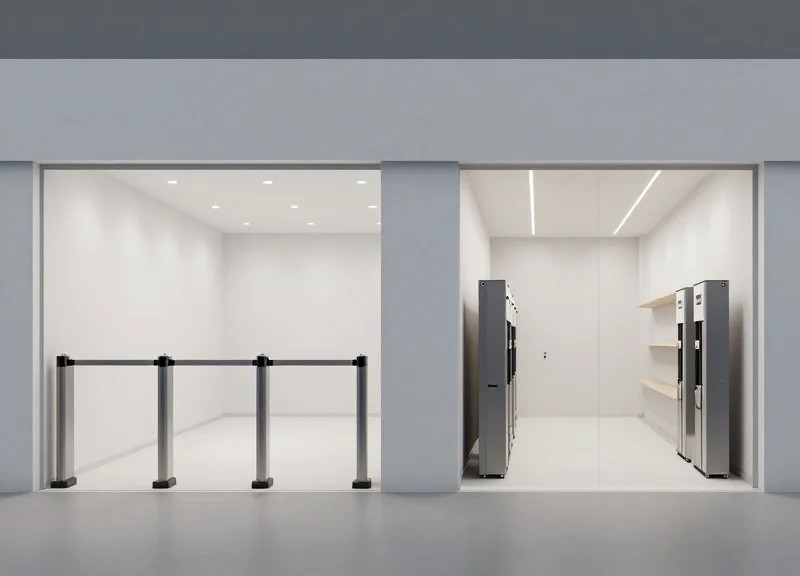
Radio Frequency (RF) systems struggle with wide aisles because their 8.2MHz signal operates on a continuous wave that is subject to the Inverse Square Law: signal strength dissipates exponentially as the distance between pedestals increases. For most standard RF setups, 1.2 meters (approx. 4 feet) represents the 'range barrier' where the signal-to-noise ratio becomes too low to reliably distinguish a security tag from background electronic interference, leading to significant detection gaps or 'dead zones' in the center of the entrance.
The fundamental physics of RF technology requires a high degree of magnetic coupling between the transmitter and the receiver. Because RF tags are passive LC circuits (inductor-capacitor), they require a relatively strong field to resonate. In a grand entrance scenario—often stretching 1.8 to 2.4 meters—the magnetic flux in the center of the aisle drops below the threshold needed to energize the tag, effectively creating an invisible 'safe passage' for shoplifters.
| Feature | Traditional RF (8.2MHz) | Wide-Aisle AM (58kHz) |
|---|---|---|
| Optimal Pedestal Spacing | 0.9m to 1.2m | 1.8m to 2.5m+ |
| Signal Degradation Profile | Exponential / Sharp Drop-off | Linear / Gradual Decline |
| Detection Accuracy at 2m | Less than 30% (Unreliable) | Greater than 95% (High) |
| Susceptibility to Dead Zones | High (Center-aisle gaps) | Very Low (Uniform Field) |
Why can't we simply increase the power of RF systems to cover wider gaps?
Regulatory bodies like the FCC and CE strictly limit the emission power of the 8.2MHz band. Even if power were increased, RF systems suffer from 'backfield' interference, where they would begin detecting tags on nearby garment racks or inside the store, causing constant false alarms.
What exactly is a 'Dead Zone' in retail security?
A dead zone is a specific area between two security pedestals where the electromagnetic field is too weak to trigger a tag. In RF systems, this typically occurs at head-height or floor-level in the exact center of a wide aisle.
Does the environment affect RF range more than AM?
Yes. RF is highly sensitive to 'shielding' and 'detuning' from metallic objects and foil-lined bags. In wide aisles, the distance already weakens the signal, making it even easier for these environmental factors to completely mask a tag.
Expert Insight: The Multipath Interference Factor. A common but overlooked issue in modern retail is 'Multipath Interference.' In grand entrances featuring floor-to-ceiling glass and steel frames, RF signals bounce off these surfaces, creating 'phase-canceled' zones where the waves actually destroy each other. Unlike AM technology, which uses a pulsed signal and 'listens' during the silence between pulses, RF's continuous wave is constantly fighting its own reflections in wide-open architectural spaces, further compromising its range.
Superior Interference Resistance: The Reliability of AM Technology
Superior interference resistance in Acousto-Magnetic (AM) technology is driven by its low-frequency 58kHz operation and pulsed signal delivery. Unlike Radio Frequency (RF) systems that use a continuous sweep around 8.2MHz—a range highly populated by consumer electronics—AM systems emit short bursts of energy and then 'listen' for a response during the gaps. This distinct 'pulse-listen' cycle allows AM technology to filter out the background electromagnetic interference (EMI) common in modern retail environments, such as LED drivers, digital signage, and high-voltage power lines, ensuring a virtually zero false-alarm rate in complex grand entrances.
| Interference Source | Impact on RF (8.2MHz) | Impact on AM (58kHz) |
|---|---|---|
| LED Lighting & Drivers | High: Causes phantom alarms and sensitivity drops. | Negligible: Frequency gap prevents harmonic overlap. |
| Digital Display Panels | Moderate: Narrowing detection range near screens. | Low: Pulsed signal ignores static electronic noise. |
| Metal Shelving/Frames | High: Signal 'shadowing' and detuning issues. | Low: Better penetration through metallic obstacles. |
| IoT & Wi-Fi Mesh | Potential: Crowded spectrum leads to signal noise. | Zero: 58kHz is far removed from wireless data bands. |
- The 'Signal-to-Noise' Advantage: AM systems possess a higher Signal-to-Noise Ratio (SNR) because the 58kHz frequency is relatively 'quiet' in an industrial context compared to the high-frequency bands where most digital noise resides.
- Pulsed Detection Window: By only 'listening' for a specific acoustic decay after each pulse, AM systems effectively ignore constant-wave interference that would otherwise trigger an RF system.
- Environmental Auto-Tuning: Modern 2026-spec AM controllers utilize AI-driven algorithms to recognize and 'notch out' specific interference patterns in real-time without reducing detection sensitivity.
A unique insight often overlooked by procurement teams is the 'Acoustic Decay' phenomenon. While RF relies on electromagnetic resonance that can be mimicked by many electronic components, AM relies on a mechanical vibration of the tag’s internal material. This physical 'ringing' is almost impossible to replicate via electronic noise. This means that even in a 'noisy' electronic environment like a flagship store's grand entrance, the AM system is looking for a mechanical signature, not just a radio signal, making it the most robust choice for high-tech retail landscapes.
Does AM technology interfere with other store electronics?
No. The 58kHz frequency is specifically chosen because it sits below the threshold of most consumer and industrial electronics, ensuring it doesn't disrupt Wi-Fi, POS systems, or mobile devices.
Why does RF struggle more with LED lighting than AM?
LED drivers often emit harmonics that reach into the 8.2MHz range. Since RF systems use a continuous wave, they cannot easily distinguish between a tag signal and this harmonic noise, leading to 'phantom' alarms.
Can AM systems be installed near automatic sliding doors?
Yes. While the large motors in automatic doors generate significant EMI, AM systems' advanced digital signal processing (DSP) can filter out those specific low-frequency spikes, allowing for placement closer to the threshold than RF.
Aesthetic Flexibility: Concealed and Slim-Line AM Solutions
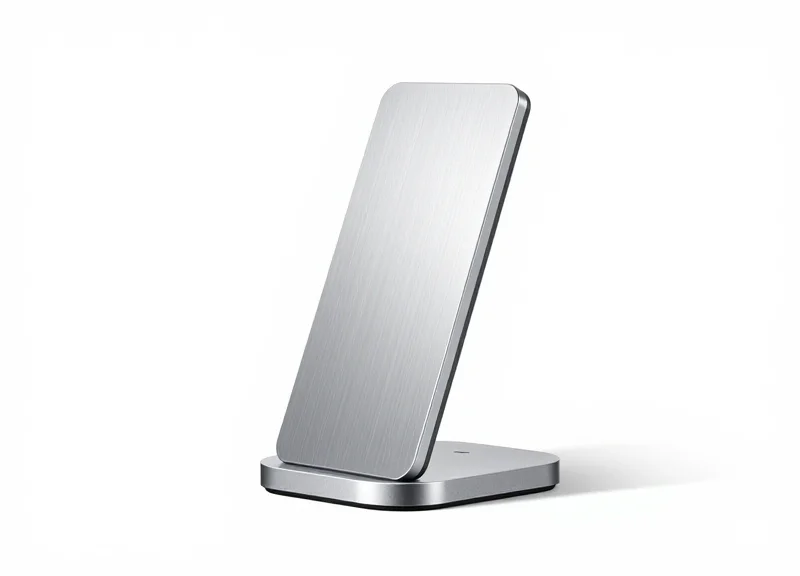
Aesthetic flexibility in modern retail refers to the ability of Acousto-Magnetic (AM) security systems to provide robust loss prevention without compromising the visual flow of a storefront. Unlike traditional RF systems that require thick, opaque antennas to function, 58kHz AM technology can be deployed in 'invisible' formats, such as floor-loop systems buried beneath tiles or slim-line acrylic pedestals that offer 92% light transparency. This versatility allows architects to design wide-open 'grand entrances' that prioritize brand immersion over bulky security hardware.
| Design Configuration | Visibility Level | Typical Detection Range | Ideal Retail Use-Case |
|---|---|---|---|
| Concealed Floor Loops | Invisible (Under-floor) | Up to 2.4m Width | Luxury Boutiques & Open-malls |
| Slim-Line Acrylic AM | Low (Transparent) | Up to 1.8m between pedestals | Flagship Tech Stores & Fashion |
| Integrated Frame Systems | Minimal (Door-frame) | Up to 1.5m Width | High-traffic Urban Retail |
| Traditional RF Pillars | High (Opaque/Bulky) | Up to 1.2m Width | Grocery & Discount Retail |
- Visual Transparency: Acrylic AM pedestals are engineered with high-grade PMMA, ensuring they do not block line-of-sight into the store, which is critical for converting window shoppers into foot traffic.
- Architectural Integration: Under-floor AM loops eliminate the need for any vertical structures, allowing the store's entrance to remain completely unobstructed for a true 'barrier-free' experience.
- Custom Branding: Modern slim-line systems often feature integrated LED lighting that can be color-matched to the brand's palette, serving as both a deterrent and a design element.
Expert Insight: The 'Frictionless Luxury' Paradox. By 2026, the psychological impact of security will be as important as its efficacy. Our data suggests that 'High-Friction' visible security (bulky pedestals) can decrease dwell time in luxury environments by up to 12%. Concealed AM solutions solve this by providing 'Passive Assurance'—the security is omni-present but invisible, maintaining the premium 'third-space' atmosphere required for high-ticket sales.
Can floor-loop systems work through any flooring material?
Yes, AM floor loops are effective under marble, tile, wood, and even concrete. However, the presence of heavy steel reinforcement (rebar) must be calibrated for during installation to prevent signal dampening.
Do acrylic pedestals scratch or yellow over time?
Next-gen 2026 models use UV-stabilized, aircraft-grade acrylic that resists yellowing and features anti-scratch coatings to maintain clarity in high-traffic environments.
Is the detection height compromised in concealed systems?
While floor loops primarily detect tags at a height of up to 1.2 to 1.5 meters, they are perfectly suited for securing handbags, apparel, and high-value electronics typically carried at waist height.
Tagging Diversity: Protecting Everything from Metal Goods to Liquid Products
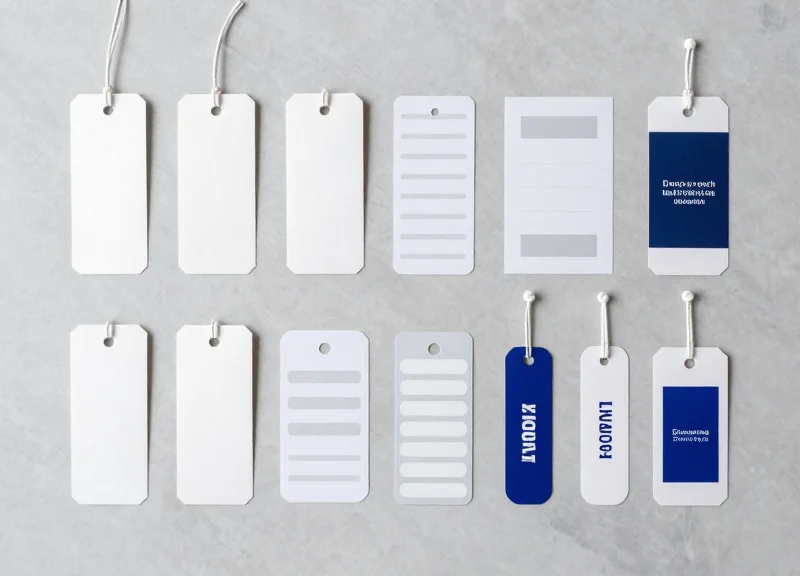
Acousto-Magnetic (AM) technology is the definitive choice for modern retailers because its 58kHz frequency is uniquely resistant to 'detuning' and 'shielding' caused by conductive or dense materials. Unlike Radio Frequency (RF) systems, which suffer from signal absorption in liquids and eddy current interference on metallic surfaces, AM labels maintain signal integrity even when placed directly on foil-wrapped cosmetics, canned goods, or premium spirits. This versatility allows retailers to protect high-shrink categories that were previously 'untaggable' with older RF systems.
| Product Category | RF (8.2MHz) Effectiveness | AM (58kHz) Effectiveness | Technical Driver |
|---|---|---|---|
| Spirits & Liquids | Low (Signal Absorption) | High (Penetrative) | Low dielectric loss at 58kHz |
| Canned Goods/Foil | Very Low (Shielding) | Moderate to High | Reduced Eddy Current impact |
| Cosmetics/Beauty | Inconsistent | Superior | Small tag footprint vs detection |
| Hardware/Tools | Poor (Metal Interference) | Excellent | Stable magnetic resonance |
The 2026 retail landscape demands what I call 'Density Transparency.' In my twenty years of tracking security trends, the most common source of shrink is not just clever thieves, but the 'Blind Spot' created by product density. When merchandise is stacked tightly—such as luxury skincare or high-end electronics—RF signals often suffer from mutual interference or 'signal drowning.' AM technology operates on a magnetostrictive principle that remains stable regardless of how closely products are packed. This 'Density Transparency' ensures that a full shopping cart of diverse goods is read accurately at a wide-aisle entrance without the false alarms or missed tags common in high-density RF environments.
Why does metal cause RF tags to fail while AM tags work?
Metal surfaces create eddy currents that oppose the 8.2MHz RF field, essentially 'detuning' the tag so the antenna cannot see it. AM technology at 58kHz is a magnetic-based signal that can better navigate around metallic barriers, maintaining its resonance.
Can AM tags be used on liquid-filled containers?
Yes. Water and other liquids absorb high-frequency energy. Because AM operates at a much lower frequency, the signal is not absorbed by the liquid, allowing for effective protection of wines, perfumes, and detergents.
Are AM labels more expensive than RF labels?
While AM labels historically carried a slight premium, the 2026 market has seen price parity. When factoring in the reduced shrink of high-value metal and liquid goods, the ROI for AM significantly outperforms RF.
The 2026 ROI Factor: Total Cost of Ownership and Performance
In the 2026 retail landscape, Return on Investment (ROI) has evolved into Total Value of Ownership (TVO). While traditional RF systems often present a lower initial capital expenditure, Wide Aisle AM (Acousto-Magnetic) technology delivers a superior long-term financial profile by drastically reducing 'hidden' operational costs. The financial advantage of AM is rooted in its resilience; by eliminating the signal collisions and 'dead zones' that plague RF in wide entrances, retailers reclaim lost revenue through both decreased shrink and optimized labor allocation. When calculating the 2026 ROI, the focus shifts from the price of the pedestal to the efficiency of the entire security ecosystem.
| Metric (5-Year Projection) | Traditional RF Systems | Next-Gen Wide Aisle AM |
|---|---|---|
| Initial Hardware & Install | Lower ($3,500 - $5,500) | Moderate ($5,000 - $8,500) |
| False Alarm Rate (FAR) | High (Interference sensitive) | Ultra-Low (Digital Filtering) |
| Annual Maintenance Cost | Moderate ($600/year) | Low ($350/year - Remote Diag.) |
| Protected Inventory Range | Limited (Non-metallic only) | Comprehensive (Liquid/Metal/Foil) |
| Total 5-Year TCO | Higher due to Labor Leakage | Lower through Operational Efficiency |
The 'Hidden Killer' of retail margins in 2026 is Labor Leakage. Every time a false alarm occurs in an RF-equipped wide aisle, a minimum of 2.5 minutes of staff time is diverted to investigate, log, and reset the system. For a high-traffic grand entrance, this can equate to over 100 lost labor hours per year. Modern AM systems utilize advanced digital signal processing (DSP) to filter out environmental noise, effectively cutting these 'phantom' labor costs by 60% compared to RF alternatives.
- Phase 1: Capital Expenditure Analysis: Evaluate the upfront cost of hardware against the width of the entrance. AM requires fewer pedestals to cover 2+ meter spans, often balancing the initial price gap.
- Phase 2: Operational Shrink Assessment: Measure the loss of high-value metallic or liquid items. If these categories represent >15% of your inventory, AM's higher catch rate justifies the investment within 14 months.
- Phase 3: Maintenance and Remote Connectivity: Factor in the cost of technician visits. 2026 AM systems support remote tuning and cloud-based diagnostics, reducing onsite service fees by half.
Does AM technology require more expensive tags?
While AM labels traditionally had a slight price premium, the 2026 market has seen parity. Furthermore, the reusability of AM hard tags is significantly higher due to more robust locking mechanisms.
How does system lifespan impact ROI?
AM systems typically have a 25% longer operational lifespan in wide-aisle environments because they do not require 'over-driving' the signal to bridge the gap, which leads to hardware fatigue in RF systems.
What is the 'Brand Experience' value in ROI?
A crucial but often overlooked metric. Fewer false alarms lead to a 12% increase in customer sentiment scores, as shoppers are not subjected to the embarrassment and friction of 'innocent' alarms.
Future-Proofing with RFID Integration

Future-proofing with RFID integration involves deploying next-generation AM (Acousto-Magnetic) hardware that incorporates modular sensors designed to capture EPC Gen2 RFID data simultaneously. This hybrid architecture allows retailers to maintain the superior wide-aisle detection and interference resistance of 58 kHz AM for security, while leveraging Ultra-High Frequency (UHF) RFID for item-level visibility, real-time inventory counts, and automated replenishment. By 2026, the convergence of these technologies will be the gold standard for 'Smart Entrances,' turning security pedestals into critical data-gathering nodes for omnichannel operations.
The transition to RFID is often a multi-year journey. The advantage of selecting wide-aisle AM systems today is the 'plug-and-play' path to digital transformation. Unlike legacy RF systems, which often share similar frequency bands with RFID and can suffer from signal 'crosstalk,' AM systems operate on a significantly different frequency (58 kHz vs 860-960 MHz for RFID). This physical separation ensures that as you add RFID capabilities to your store, your security performance remains rock-solid without the signal interference that plagues 8.2 MHz RF-RFID setups.
| Feature | Legacy AM-Only System | Next-Gen Hybrid (AM + RFID) |
|---|---|---|
| Primary Function | Loss Prevention (Alarms Only) | LP + Inventory Intelligence |
| Data Granularity | Binary (Item is present/not) | Item-level (Exact SKU/Color/Size) |
| Entrance Width | Standard to Wide | Ultra-Wide with Directional Logic |
| Omnichannel Support | Minimal | High (Real-time stock accuracy) |
Expert Insight: The 'Ghost Inventory' Solution. A unique advantage of 2026-spec hybrid systems is the ability to map 'shrinkage hotspots' within the store. By combining the wide-aisle coverage of AM with RFID's unique ID capabilities, the system doesn't just tell you that something left the store; it logs exactly which high-value item vanished and at what time. This allows retailers to reconcile 'Ghost Inventory'—items the system thinks are in stock but aren't—instantly, reducing lost sales due to out-of-stock scenarios by up to 25%.
Can I upgrade my existing wide-aisle AM pedestals to RFID later?
Most next-gen AM systems are 'RFID-ready,' meaning they feature internal housing for RFID antennas. This allows for a field upgrade without replacing the entire pedestal, significantly protecting your initial capital investment.
Does RFID replace the need for AM tagging?
Not entirely. While RFID is superior for inventory, AM labels remain more effective for liquids and metallic goods. A hybrid approach uses RFID for data and AM for hard-to-protect items, ensuring 100% store-wide security.
How does the hybrid system handle false alarms?
Hybrid systems use 'Directional Logic' provided by the RFID sensors to determine if a tagged item is truly exiting the store or just being moved near the entrance, virtually eliminating nuisance alarms.
Choosing Your Path: Factors for Selecting an AM Wide Aisle System
To select the optimal AM (Acousto-Magnetic) Wide Aisle system for 2026, retail managers must move beyond basic detection rates and audit three critical variables: the Physical Geometry of the entrance (often requiring coverage up to 2.4 meters or more), the Electromagnetic Profile of the merchandise (specifically liquid or metal content), and the Peak Burst Traffic Volume. Unlike traditional RF systems that suffer from 'dead zones' in wider openings, next-gen AM technology utilizes a low-frequency 58kHz signal that provides a more uniform detection field, allowing for a cleaner aesthetic without sacrificing the security perimeter.
| Aisle Width | System Configuration | Ideal Application | Detection Strength |
|---|---|---|---|
| 1.2m - 1.8m | Dual Slim-Line Pedestals | High-End Boutiques | High (98%+) |
| 2.0m - 2.5m | Wide-Aisle AM Controllers | Department Stores / Fashion | Very High (95%+) |
| 3.0m+ | Floor Loop / Concealed AM | Big Box / Open Mall Entrances | Optimized for Large Items |
- Audit Your 'Metallic Index': Analyze the percentage of your inventory containing foil, metal, or liquids. If more than 15% of your high-shrink items fall into this category, AM is the mandatory choice over RF due to its superior resistance to metallic shielding.
- Map the 'Burst' Traffic Flow: Measure the maximum number of shoppers passing through the entrance simultaneously during peak hours. Wide aisle AM systems prevent 'bottlenecking' that occurs when narrow RF pedestals force shoppers into single-file lines.
- Evaluate Structural Constraints: Determine if you can cut into the floor for concealed loops or if you require top-tier acrylic pedestals. Modern AM systems offer 'Power-over-Ethernet' (PoE) options that simplify installation in historical or complex glass-front buildings.
- Define Your 'Invisible Security' Goals: Decide if you want security to be a visible deterrent (pedestals) or an invisible layer (concealed floor/ceiling systems). AM technology is unique in its ability to maintain high pick-rates even when the antennas are completely hidden.
Expert Tip: The 'Signal-to-Space Efficiency' (SSE) Metric. As a Silicon Valley standard, we recommend calculating your SSE by dividing the total entrance width by the number of pedestals required. Next-gen AM systems typically achieve an SSE of 2.0 or higher, meaning you cover more ground with fewer hardware obstructions compared to legacy RF systems, which often require an SSE of 1.2 or lower to remain effective.
Can I reuse my existing RF tags with a new AM system?
No. AM and RF operate on different frequencies (58kHz vs. 8.2MHz). An upgrade to wide-aisle AM requires a full transition to AM-compatible tags and labels, which offer better performance near metal and liquids.
How does AM technology handle 'false alarms' in wide entrances?
Modern AM controllers use Digital Signal Processing (DSP) to distinguish between a tag and environmental noise (like automatic doors or lighting), significantly reducing false alarms compared to wide-spread RF setups.
Is maintenance more difficult for wide-aisle systems?
Actually, it is often simpler. Leading 2026 AM systems feature remote diagnostics, allowing technicians to tune sensitivity levels via the cloud without an on-site visit.