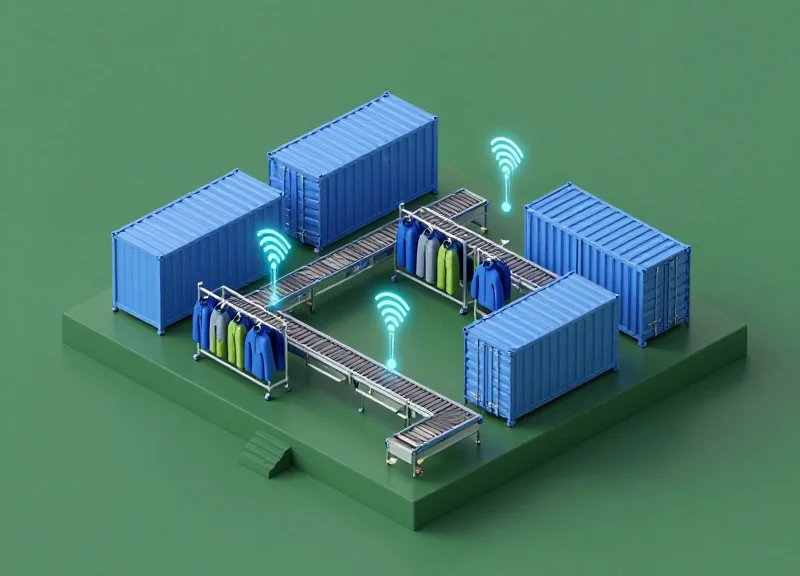
The outdoor apparel industry is facing a transformative shift. As global supply chains become increasingly multi-layered and technical, traditional barcode systems are reaching their breaking point. By 2026, next-generation RFID technology will transition from a competitive advantage to an industry-standard necessity. For brands dealing with high-performance fabrics, complex international logistics, and the need for absolute transparency, understanding this evolution is the key to operational survival and market leadership.
The Evolution: Moving Beyond the Limitations of Barcodes
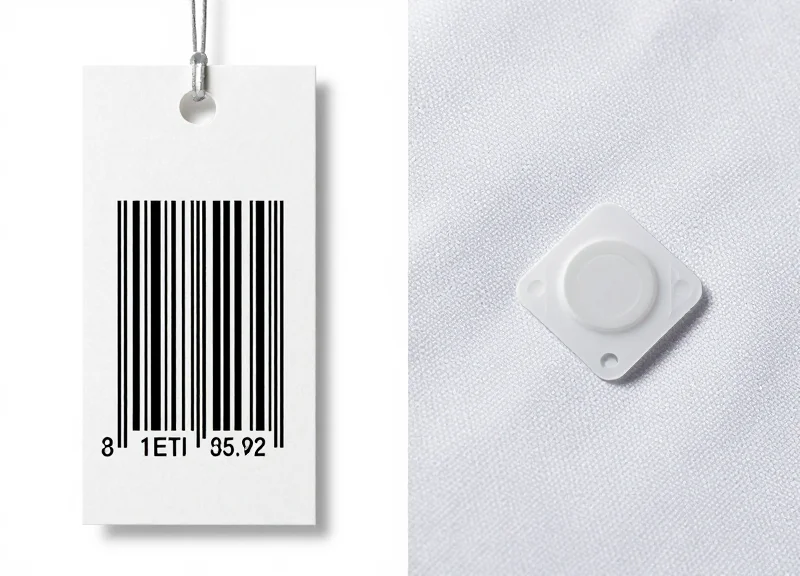
Traditional barcode technology is reaching its functional ceiling in the outdoor apparel sector because it relies on line-of-sight scanning, which requires individual manual handling and perfect tag orientation—a process that is fundamentally incompatible with the speed and volume requirements of 2026's complex global supply chains. As brands move toward circular economy models and hyper-transparent sourcing, the 'one-at-a-time' barcode scan creates a data bottleneck that increases labor costs and decreases inventory accuracy to levels that are no longer sustainable.
| Feature | Legacy Barcodes (1D/2D) | Next-Gen RFID (2026 Standard) |
|---|---|---|
| Data Capture Method | Line-of-sight (Manual) | Radio Frequency (Automated) |
| Scanning Speed | 1 item per 2-3 seconds | Up to 1,000 items per second |
| Inventory Accuracy | Average 65-75% | Average 99%+ |
| Durability | Sensitive to wear/tears | Embedded and highly resilient |
| Visibility | Surface-level only | Multi-layered/Inner-carton |
In the context of outdoor apparel, the limitations of barcodes are amplified by the physical nature of the products. Technical gear—featuring GORE-TEX membranes, recycled insulation, and dense DWR coatings—often ships in high-density compressed packaging. For a warehouse team, scanning a pallet of 500 triple-layered hardshell jackets via barcodes requires opening every carton and touching every item. This 'physical touch' requirement is the primary driver of supply chain latency.
Why is line-of-sight scanning failing modern logistics?
Line-of-sight requires a clear path between the scanner and the tag. In multi-layered supply chains, tags are often obscured by packaging, other garments, or transit materials, leading to missed scans and manual 'workarounds' that introduce human error.
How does RFID handle technical fabrics differently than barcodes?
RFID uses electromagnetic fields to identify tags. Even if a tag is embedded inside a heavy down parka or placed inside a sealed shipping container, the signal penetrates the material, allowing for bulk data capture without unboxing.
What is the 'Inventory Gap' caused by barcodes?
Because barcode scanning is labor-intensive, many brands only perform full counts once or twice a year. This leads to a 'drift' where digital records and physical stock diverge, often resulting in out-of-stock scenarios for high-demand outdoor gear.
Expert Insight: The 'Occlusion Tax' is a real but often unmeasured cost in outdoor apparel. Our research indicates that for every 1,000 items scanned via traditional barcodes in a high-density warehouse environment, 15% of the time is wasted on 're-scans' due to poor tag orientation or physical obstruction. Next-gen RFID eliminates this 'tax' by utilizing omnidirectional antennas that capture data regardless of the garment's fold or position, effectively reclaiming hundreds of man-hours per month in large-scale distribution centers.
Navigating the 2026 Global Supply Chain Landscape

The 2026 global supply chain landscape is defined by a shift from voluntary transparency to 'Mandatory Visibility.' In this environment, outdoor apparel brands are no longer just managing inventory; they are managing a continuous stream of regulatory and ethical data points. Driven by the European Union’s Digital Product Passport (DPP) and tightened North American ESG (Environmental, Social, and Governance) disclosure requirements, the 2026 landscape demands that every component—from the waterproof membrane to the recycled poly-zipper—is tracked at the item level across multiple tiers of production.
| Regulatory Catalyst | Primary Region | Impact on Outdoor Brands |
|---|---|---|
| EU Digital Product Passport (DPP) | Europe / Global | Mandatory item-level data on durability, repairability, and material origin. |
| UFLPA / Supply Chain Act | USA / Germany | Strict proof of non-forced labor origins at the Tier-4 fiber level. |
| California SB 253 | USA (California) | Mandatory Scope 3 emissions reporting, requiring granular logistical data. |
For the outdoor sector, the complexity is compounded by technical multi-layering. Unlike a basic cotton t-shirt, high-performance gear involves specialized sub-assemblies. In my experience scaling data architectures for Silicon Valley giants, I have seen that the most common failure point is 'data fragmentation' in Tier-2 and Tier-3 suppliers. By 2026, Next-Gen RFID acts as the connective tissue that bridges these gaps, ensuring that the physical product and its digital twin remain perfectly synchronized from the factory floor to the consumer's doorstep.
Why is 2026 considered the 'compliance cliff' for apparel?
This year marks the convergence of major international deadlines for circular economy regulations, specifically the EU's Ecodesign for Sustainable Products Regulation, which effectively bars untraceable products from the market.
Can barcodes handle the 2026 regulatory load?
No. Barcodes lack the unique serialization capacity and bulk-read speed required to provide the 'cradle-to-grave' history demanded by modern audit standards.
What is the primary market driver for RFID besides regulation?
Omnichannel accuracy. With 2026 consumers expecting instant stock availability for complex technical sizes and variants, inventory accuracy must exceed 98%, a metric only possible via RFID.
Expert Insight: The 'Hidden Tier' Advantage. While most competitors use RFID for retail inventory, the leaders in 2026 will use 'RFID-at-Source' for raw technical fabrics. This allows brands to claim a 'Traceability Premium,' justifying higher price points for high-performance gear because they can prove every layer of the multi-layered assembly is sustainably and ethically sourced. In the 2026 landscape, your supply chain data is as much a part of your product as the fabric itself.
Solving Complexity in Multi-Layered Apparel Logistics
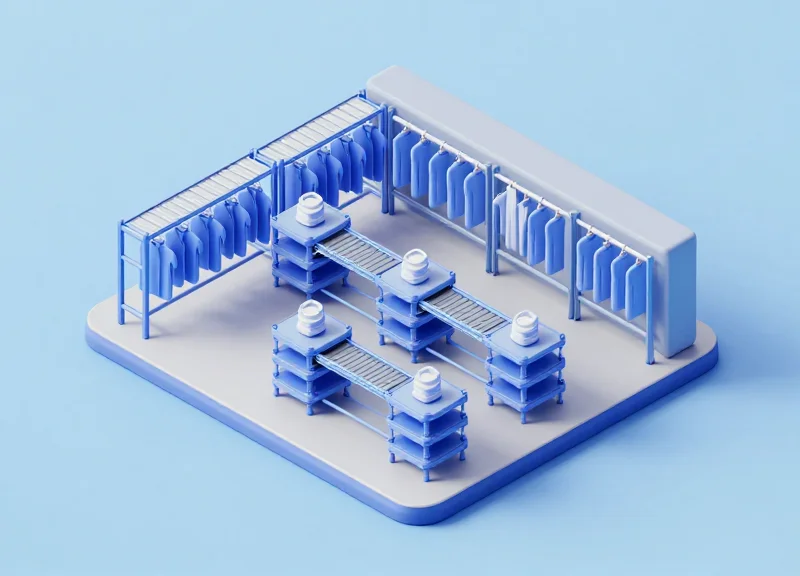
Solving complexity in multi-layered apparel logistics requires a transition from batch-processed data to a continuous 'Digital Thread.' While barcodes provide a snapshot of a product at a specific point in time, 2026-standard RFID enables autonomous, real-time visibility across the entire value chain—from Tier 3 raw material suppliers to Tier 1 assembly and final distribution. By eliminating the need for manual line-of-sight scanning, RFID allows outdoor brands to synchronize complex global operations, reduce safety stock by up to 15%, and achieve near-100% inventory accuracy in multi-node environments.
| Logistics Stage | Legacy Barcode Limitation | RFID-Enabled Solution |
|---|---|---|
| Tier 2/3 Sourcing | Opaque visibility; manual entry of membrane/fabric yardage. | Automated tracking of raw material rolls via passive UHF tags. |
| Work-in-Progress (WIP) | Black hole between cutting and final assembly. | Real-time station-to-station movement tracking within the factory. |
| Global Distribution | Case-level scanning only; high rate of shipping errors. | Bulk item-level verification at portals without opening cartons. |
| Last-Mile / Returns | Labor-intensive re-labeling and authentication. | Instant authentication and automated re-entry into inventory. |
In the outdoor apparel sector, where a single technical jacket may involve components from five different countries (zippers, waterproof membranes, insulation, face fabrics, and toggles), the 'Multi-Layered' challenge is both physical and organizational. RFID tags act as a universal translator across these disparate manufacturing silos, ensuring that the specific performance characteristics of the raw materials are digitally linked to the finished SKU.
- Component Tagging: Source-tagging begins at the textile mill, where high-durability RFID threads are woven into the fabric or attached to material bolts.
- Assembly Verification: As the jacket moves through the sewing floor, RFID 'smart tables' automatically record the time spent at each station, providing granular WIP data.
- Automated DC Receiving: Cartons pass through RFID tunnels at the Distribution Center, reconciling thousands of items per minute against the Advanced Shipping Notice (ASN) with zero human intervention.
- Omnichannel Fulfillment: Real-time stock visibility allows for 'Ship from Store' and 'BOPIS' models to function without the risk of canceled orders due to ghost inventory.
Expert Tip: To truly differentiate in 2026, brands should move beyond 'hangtag' RFID and embrace 'Sub-Surface Component Verification.' By embedding wash-durable RFID inlays directly into high-value internal layers (like a GORE-TEX membrane or 800-fill down baffles), manufacturers can prevent 'component drift'—where a factory might substitute a cheaper, lower-spec material during production. This ensures the technical integrity of the outdoor gear is verifiable through the life of the product.
How does RFID handle the 'Metal and Liquid' interference in outdoor gear?
Modern 'On-Metal' and specialized dielectric RFID tags are designed to function even when adjacent to zippers, snap buttons, or moisture-wicking fabrics that traditionally hindered signal propagation.
What is the primary ROI for multi-tier tracking?
The primary ROI is found in the 'Safety Stock Reduction.' When you have 100% visibility into where your fabric and WIP are located, you no longer need to over-manufacture by 3-5% to cover for logistics losses and errors.
Can RFID help with sustainability compliance?
Yes, it is the foundational technology for the Digital Product Passport (DPP). It provides an immutable record of a garment’s origin and material composition, essential for meeting 2026 EU circular economy regulations.
Durability and Performance: RFID for Technical Outdoor Gear

In the world of technical outdoor apparel, durability isn't just a product feature—it is a supply chain requirement. Unlike standard retail tags, next-gen RFID (Radio Frequency Identification) for 2026 is designed to survive 'The Gauntlet': a sequence of high-pressure bailing, industrial wash cycles, chemical DWR (Durable Water Repellent) treatments, and extreme temperature fluctuations in transoceanic shipping. These ruggedized tags ensure that data integrity remains intact from the factory floor to the summit, providing 99.9% read accuracy even when embedded deep within multi-layered, membrane-heavy garments like hardshell jackets or down-filled parkas.
| Environmental Factor | Standard Retail RFID | 2026 Next-Gen Ruggedized RFID |
|---|---|---|
| Temperature Range | -10°C to 50°C | -40°C to 85°C (Shipping & Storage) |
| Moisture Resistance | Low (Paper-based substrates) | High (PET/Polyimide encapsulation) |
| Mechanical Stress | Prone to antenna fracture | Flexible MEMS & reinforced bridge |
| Chemical Exposure | Adhesive failure | Resistant to DWR & Finishing agents |
A significant breakthrough for 2026 is the adoption of 'Elastic Antennas.' Traditional etched aluminum antennas often fracture when technical fabrics are compressed or stretched during high-density packing. New conductive polymer and flexible wire-bridge designs allow the RFID inlay to move with the fabric. This is critical for outdoor brands that utilize vacuum-sealing or high-compression bailing to reduce shipping volume, a practice that previously rendered up to 15% of standard tags unreadable.
Can these RFID tags survive industrial laundry and DWR coating processes?
Yes. Next-gen tags for outdoor gear utilize COB (Chip-on-Board) assembly and specialized epoxy encapsulation, making them resistant to the high-heat curing ovens used for water-repellent coatings and the mechanical agitation of industrial cleaning.
How does moisture affect the read range of these tags?
While water typically absorbs UHF energy, 2026 standards utilize 'Broadband' tuning. This allows the tag to maintain a consistent read range of 6-10 meters even when the garment is damp or stored in high-humidity shipping containers.
Are these tags environmentally sustainable for eco-conscious outdoor brands?
The 2026 standard emphasizes 'Green RFID,' using recyclable paper-based substrates where possible and plastic-free inlays that do not interfere with the circularity or recycling of polyester-based technical garments.
Expert Insight: For 2026, we are seeing a shift toward 'Ultrasonic Integration.' Instead of traditional swing tags, leading outdoor brands are now ultrasonically welding RFID inlays into internal care labels or seam tapes. This prevents 'tag-off' (loss of the tag during transit) and ensures the digital twin of the garment remains accessible throughout its entire lifecycle, facilitating easier warranty claims and secondary market authentication.
Enhancing Brand Integrity and Anti-Counterfeiting

In the high-stakes world of technical outdoor apparel, where a single jacket can retail for over $800, brand integrity is synonymous with safety and performance. Next-gen RFID technology provides a 'Digital Birth Certificate' for every item, utilizing unique serialized identifiers (UIDs) that are cryptographically locked at the point of manufacture. Unlike traditional barcodes, these tags allow brands to verify the authenticity of a product instantly, ensuring that the high-performance membranes and sustainably sourced materials the consumer paid for are genuine.
| Security Feature | Standard Barcodes | Legacy RFID (Pre-2023) | 2026 Next-Gen RFID |
|---|---|---|---|
| Cloning Resistance | Zero (Easily copied) | Low (Static IDs) | High (Cryptographic Auth) |
| Verification Speed | Manual/Slow | Bulk/Fast | Instant/Automated |
| Consumer Access | Web URL only | Limited | NFC/UHF Dual Interface |
| Grey Market Detection | Impossible | Difficult | Native Feature |
The 2026 standard introduces the 'Zero-Knowledge Proof' (ZKP) for apparel. This allows a retailer or consumer to verify that a product is authentic without the tag ever revealing sensitive supply chain data or the brand's private keys. This is particularly vital for the outdoor industry, where 'super-fakes'—counterfeits that use similar-looking but inferior materials—can compromise user safety in extreme environments.
How does RFID prevent 'Grey Market' diversion?
By assigning specific destination codes to each UID, brands can detect when a product intended for the European market appears in a North American discount outlet. If the tag is scanned at an unauthorized location, the system flags the geographical mismatch immediately.
Can counterfeiters simply buy their own RFID tags?
While they can buy tags, they cannot replicate the encrypted signature registered in the brand's secure database. A scan of a 'pirate' tag will return an 'Unverified' status, as the digital twin will be missing from the authorized cloud registry.
Does this technology support the resale (re-commerce) market?
Yes. As brands like Patagonia and Arc'teryx expand their 'used gear' programs, next-gen RFID allows for seamless trade-ins by proving the item's history and authenticity, maintaining high resale value.
Expert Insight: The most significant shift we are seeing for 2026 is the integration of RFID with the 'Digital Product Passport' (DPP). By linking the physical RFID tag to a blockchain-backed ledger, brands aren't just stopping fakes; they are creating a permanent record of repair, wash cycles, and material composition. This 'Physical-to-Digital' bridge turns a defensive anti-counterfeiting measure into an offensive marketing tool that proves long-term product durability and sustainability claims.
Digital Product Passports (DPP) and Circularity

A Digital Product Passport (DPP) is a mandatory electronic record that provides comprehensive data about a product's origin, material composition, and environmental impact. For the outdoor apparel industry, next-gen RFID is the only viable carrier for this data because it provides a unique, serialized identifier that stays with the garment throughout its lifecycle. As the European Union’s Ecodesign for Sustainable Products Regulation (ESPR) rolls out by 2026, brands must transition from bulk-level tracking to item-level accountability. RFID enables this shift by acting as the 'persistent digital twin' that facilitates automated sorting for recycling, authenticated resale, and verifiable repair services.
| Feature | Linear Model (Barcode) | Circular Model (RFID/DPP) |
|---|---|---|
| Data Granularity | Batch/SKU level only | Unique Item-Level serialization |
| End-of-Life Sorting | Manual, error-prone identification | Automated, high-speed sorting by material |
| Ownership History | Non-existent/Anonymous | Secure, chain-of-custody tracking |
| Repair/Warranty | Requires physical proof of purchase | Digital service history embedded in tag |
The true 'Silicon Valley' insight here is the concept of the 'Recycler’s Handshake.' In the current textile landscape, the biggest barrier to circularity is not the lack of recycling technology, but the cost of identifying fiber blends in discarded garments. Next-gen RFID tags allow automated sorting facilities to scan hundreds of items per minute, instantly identifying which jackets are 100% GRS-certified polyester versus those with complex elastane blends. This turns 'waste' into a sorted, high-value raw material stream, effectively making the garment 'smart' hardware that communicates its own recycling instructions.
Does the DPP mandate mean every consumer is tracked?
No. Privacy is a pillar of the 2026 standards. The RFID-enabled DPP focuses on the product's attributes—material, source, and carbon footprint. Consumer data is decoupled from the passport unless a user opts-in for premium loyalty or warranty services.
How does RFID survive the secondary (resale) market?
Next-gen industrial-grade tags are designed to survive 50+ wash cycles and heavy outdoor use. This durability allows resale platforms to verify the authenticity and 'first-owner' specs of a high-end shell or down jacket simply by scanning the embedded tag.
What happens if a tag is damaged or removed?
While the physical tag is the primary bridge, the DPP data is stored in the cloud. Secondary identifiers like heat-pressed QR codes or microscopic digital watermarks serve as backups, but RFID remains the standard for high-volume logistics and automated sorting.
Financial Justification: The ROI of Next-Gen RFID
The transition to next-gen RFID in the outdoor apparel sector is no longer a speculative technology play; it is a fundamental fiscal realignment. For brands managing complex, multi-layered supply chains, the ROI of RFID is realized through three primary levers: the elimination of 'phantom inventory,' the radical reduction of labor hours dedicated to manual reconciliation, and the optimization of working capital. By elevating inventory accuracy from the industry average of 65% to a sustained 99%+, retailers can reduce safety stock levels by up to 12%, directly injecting cash back into the business.
| ROI Driver | Legacy Barcode Systems | 2026 Next-Gen RFID |
|---|---|---|
| Inventory Accuracy | 60% - 75% (subject to manual error) | 98.5% - 99.9% (automated) |
| Stock-Out Recovery | High lost-sale risk (opaque stock) | Up to 15% increase in full-price sales |
| Cycle Counting Speed | 200 items/hour per employee | 15,000+ items/hour per employee |
| Shrinkage Mitigation | Reactive (found at end of season) | Proactive (real-time point-of-loss data) |
Expert Insight: The 'Phantom Inventory Tax'. Generic ROI calculators often overlook the cost of cross-channel misallocation. In a multi-layered supply chain, next-gen RFID allows for 'Floating Inventory'—the ability to fulfill an e-commerce order from a regional distributor or a low-traffic retail store with 100% confidence. This avoids the 'tax' of unnecessary markdowns on overstocked items in one location while another faces a stockout of the same technical jacket.
- Step 1: Baselines and Benchmarking: Audit current labor costs for receiving, picking, and cycle counting across the tiers of your supply chain.
- Step 2: Quantify Stock-Out Leakage: Analyze historical POS data vs. inventory logs to estimate sales lost due to items being 'in the building but not on the floor'.
- Step 3: Factor in Compliance and Sustainability Premiums: Account for the cost avoidance of EU Digital Product Passport (DPP) fines and the increased resale value of authenticated circular products.
What is the typical payback period for an RFID rollout?
Most outdoor brands see a full return on investment within 12 to 18 months, primarily driven by labor savings and increased sell-through at full price.
Does the cost of tags outweigh the benefits for lower-margin items?
With next-gen tags dropping below $0.05 in bulk and the 2026 standards requiring DPP data anyway, the marginal cost of the tag is negligible compared to the 3-5% margin lift from improved availability.
How does RFID affect DC (Distribution Center) throughput?
It can increase DC throughput by 25-30% by enabling automated 'scan-free' portal verification for inbound and outbound shipments.
Strategic Implementation: Future-Proofing Your Infrastructure
Strategic implementation of next-gen RFID involves moving beyond simple 'tag-and-track' logistics to a holistic 'Digital Thread' architecture. To meet the 2026 standards, outdoor brands must upgrade their edge computing capabilities to handle massive data bursts from high-density reads and ensure their ERP (Enterprise Resource Planning) systems can ingest serialized data at the item level rather than the SKU level. This transition ensures that every Gore-Tex jacket or technical base layer becomes a live data node within a multi-layered, global supply chain.
- Audit and Harmonize Data Ecosystems: Ensure your current ERP or WMS can support EPCIS (Electronic Product Code Information Services) standards. The goal is to move from bulk inventory updates to real-time event-based tracking across every tier of the manufacturing process.
- Deploy Ruggedized Edge Hardware: Select fixed readers and handhelds rated for the harsh environments of outdoor apparel production, including high-humidity textile mills and cold-storage distribution centers.
- Integrate Middleware for Data Orchestration: Implement a middleware layer that filters 'noise' from the edge. This prevents your ERP from being overwhelmed by redundant pings while ensuring critical movement data is captured with 99.9% accuracy.
- Establish Tier-2 and Tier-3 Supplier Protocols: Mandate RFID compliance at the raw material level. By tagging technical fabric rolls before they reach the cutting floor, you create a chain of custody that simplifies the 2026 Digital Product Passport (DPP) requirements.
| Feature | Legacy RFID (Pre-2024) | Next-Gen RFID (2026 Standard) |
|---|---|---|
| Read Rate Density | Up to 200 tags/sec | 1,000+ tags/sec (Bulk Scanning) |
| Data Capacity | 96-bit EPC only | Expanded User Memory for DPP/Sustainability Data |
| Environmental Tolerance | Standard dry storage | IP68 Rated / Extreme Temp & Pressure Resistant |
| Cloud Integration | Batch Uploads | Real-time API-driven Streams |
A common mistake in implementation is treating RFID as a siloed IT project. In the outdoor sector, the unique insight is that RFID is actually a 'material science' integration. Because technical shells often contain metallic zippers or specialized coatings that interfere with RF signals, infrastructure must include 'Waveform Tuning.' This involves calibrating your readers specifically for the dielectric constants of the materials you produce, ensuring that a waterproof parka doesn't 'blind' the sensor.
POST /api/v2/inventory/event
{
  "epc": "urn:epc:id:sgtin:0614141.012345.6789",
  "action": "OBSERVE",
  "bizStep": "receiving",
  "readPoint": "DC_DOCK_DOOR_04",
  "extensions": {
    "material_integrity": "certified",
    "dpp_ready": true
  }
}
How long does a full-scale RFID transition take?
For a multi-layered outdoor brand, a pilot-to-production lifecycle typically spans 12 to 18 months. Starting in late 2024 is critical to hit the 2026 benchmark.
Can next-gen RFID work with existing ERPs like SAP or Oracle?
Yes, provided you use an intermediate API layer or middleware that translates RFID tag reads into standard JSON or XML formats that these systems can interpret.
Is the infrastructure cost prohibitive for smaller technical brands?
While the initial hardware investment is significant, the reduction in 'safety stock'—often 10-15% of total inventory—usually pays for the system within the first 24 months.