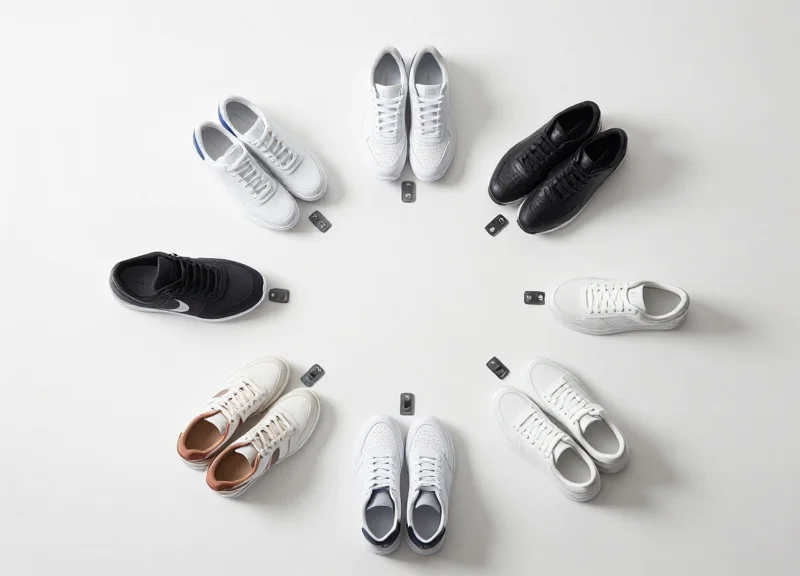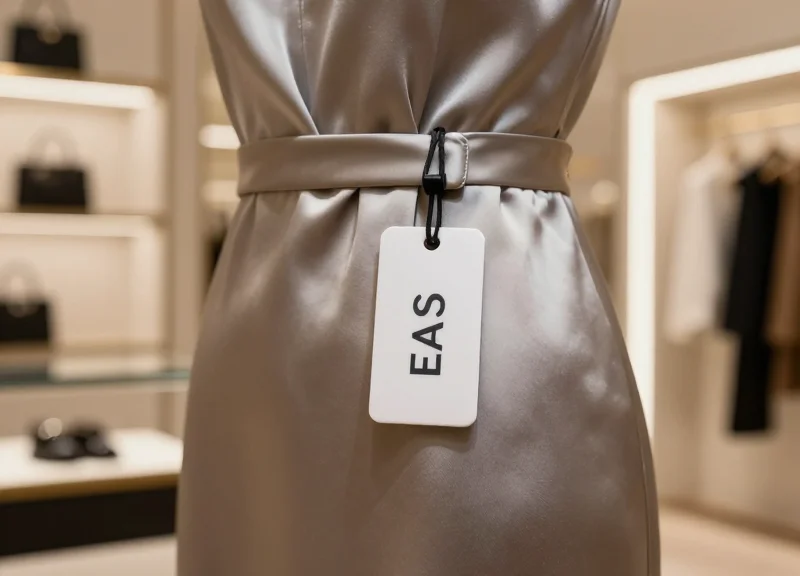
In the world of high-end fashion, the atmosphere is as valuable as the merchandise itself. For designer boutiques, the traditional, bulky anti-theft tag is more than just an eyesore; it's a disruption of the brand story and a physical risk to delicate fabrics. However, inventory loss is a stark reality that cannot be ignored. The challenge lies in Selecting the Invisible—finding advanced EAS security solutions that offer robust protection without compromising the curated visual identity of your boutique. This guide explores how luxury retailers can leverage modern technology to safeguard their collections while maintaining a seamless, high-end shopping experience.
The Dilemma of Luxury Loss Prevention: Security vs. Aesthetics

The dilemma of luxury loss prevention is the inherent conflict between the necessity of protecting high-margin, high-theft inventory and the mandate to preserve a seamless, premium brand experience. For designer boutiques, a security tag is not just a plastic deterrent; it is a potential 'visual pollutant' that can disrupt the garment's silhouette, damage delicate fabrics, and diminish the perceived value of an item during the critical 'try-on' phase of the customer journey.
| Feature | Traditional Retail Security | High-End Luxury LP |
|---|---|---|
| Visual Impact | Large, clunky, and highly visible to deter casual shoplifters. | Discreet, miniaturized, or color-matched to the brand's palette. |
| Merchandising | Can obstruct branding or price tags; heavy weight. | Ultra-lightweight to maintain the natural 'drape' of premium fabrics. |
| Customer Psychology | Signals a 'high-crime' environment; creates distrust. | Prioritizes an open-browsing experience with 'invisible' tech. |
| Operational Goal | Maximum deterrent through high visibility. | Frictionless protection that complements the interior design. |
In the luxury sector, the 'Brand Tax' of ugly security is real. When a customer pays $3,000 for a silk gown, the presence of a bulky, grey plastic tag doesn't just look bad—it introduces 'Tactile Friction.' This is an expert-level concept referring to how the weight and balance of a security device can physically alter the way a garment hangs on a mannequin or feels in a client's hands. If the tag is heavier than the fabric itself, it fundamentally compromises the designer's intent and the boutique's authority.
Can security tags actually damage luxury fabrics?
Yes. Traditional pins can create permanent holes in fine leathers, silks, and high-thread-count cottons. Luxury-specific tags use ultra-fine 'nanopins' or smooth-bore locking mechanisms to prevent snagging.
Does high visibility really deter professional shoplifters?
While it deters amateurs, professional thieves target luxury goods regardless of tag visibility. For high-end boutiques, 'invisible' protection combined with high-quality surveillance is often more effective than bulky deterrents.
Why should aesthetics be a priority in loss prevention?
Because in luxury, the atmosphere is the product. Any element that breaks the 'spell' of the boutique environment can lead to a drop in conversion rates that far exceeds the cost of occasional shrink.
Expert Tip: For boutiques with high ceilings or minimalist entrances, consider 'Concealed EAS' systems. By embedding the detection antennas into the floor or door frames and using miniature, designer-toned tags, you can achieve a zero-footprint security profile that protects your assets without announcing its presence to your clientele.
Why Traditional EAS Tags Fail the Designer Boutique Test
Traditional EAS tags fail designer boutiques because they prioritize raw deterrence over product integrity and brand prestige. Their bulky plastic forms create visual noise that distracts from a garment's craftsmanship, while their standard mechanical designs often result in fabric fatigue or permanent punctures in delicate materials like silk, lace, and ultra-fine cashmere. In a luxury environment where the 'tactile experience' is paramount, a heavy, intrusive tag signals a lack of trust and disrupts the seamless aesthetic journey high-net-worth clients expect.
| Feature | Traditional EAS Tags | Boutique-Grade Solutions |
|---|---|---|
| Visual Impact | Oversized, industrial plastic shells. | Minimalist, low-profile, or color-matched. |
| Weight | 12g - 20g (Causes fabric stretching). | Under 5g (Preserves natural drape). |
| Pin Gauge | Thick steel (Risk of 'permanent holes'). | Ultra-fine smooth-shaft or adhesive. |
| Customer Psychology | Hard security / Loss prevention focus. | Seamless / Discrete brand protection. |
Beyond aesthetics, there is a technical failure known as 'The Weighted Drape Sabotage.' Designer garments are engineered to hang a specific way; adding a 15-gram weight to a single seam of a $4,000 bias-cut silk gown literally changes the silhouette. This prevents the client from seeing the true fit, leading to lost sales at the most critical point of the customer journey—the fitting room.
Why do traditional tags cause 'Micro-Tears'?
Standard tags use thick, serrated pins. When a customer tries on a garment, the movement causes the heavy tag to tug at the weave. In high-thread-count luxury fabrics, this creates micro-tears that are irreparable, effectively devaluing the inventory before it is even sold.
Do bulky tags actually deter professional shoplifters?
Paradoxically, no. Large, traditional tags are often easier for professional 'boosters' to identify and bypass using standard detachers. High-end boutiques require 'invisible' tech that is harder to manipulate and less obvious to the casual observer.
How does visual noise impact the 'Brand Halo'?
Luxury branding relies on a 'halo effect' of perfection. A row of neon-colored or chunky grey plastic tags breaks this psychological spell, shifting the environment from an art gallery-like experience to a high-volume commodity store.
Expert Tip: To test if your current tags are failing your inventory, perform a 'tension test.' Attach your current tag to a swatch of 10-momme silk and leave it hanging for 48 hours. If you see 'yawning' around the pin entry point or a distortion in the fabric grain, your security solution is actively destroying your margins.
The Rise of Aesthetic Security: Defining High-End EAS Tags
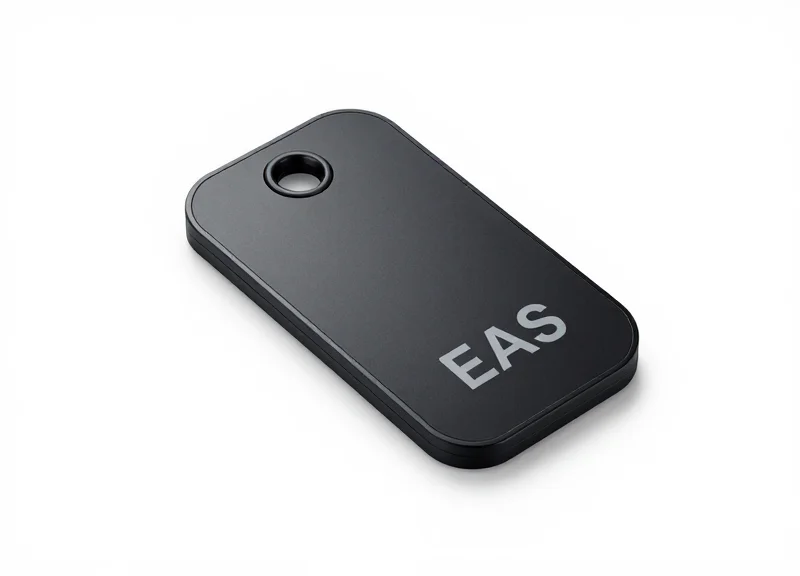
High-end Electronic Article Surveillance (EAS) tags represent a specialized category of loss prevention hardware engineered specifically for the luxury retail sector. Defined by a 'design-first' philosophy, these tags prioritize ultra-compact footprints, premium non-marring materials, and sleek industrial aesthetics that integrate seamlessly with designer apparel and accessories. Unlike standard security devices that rely on visual intimidation, high-end tags utilize advanced high-Q circuitry to maintain superior detection ranges within a significantly smaller, more discreet physical profile.
| Feature | Standard EAS Tags | High-End Aesthetic Tags |
|---|---|---|
| Material Composition | Low-grade recycled ABS plastic | Reinforced PC/ABS blends or brushed metallic finishes |
| Visual Profile | Bulky, high-visibility 'clamshell' designs | Micro-profiles, slender pencil shapes, or transparent housings |
| Fabric Impact | Thick pins that can leave permanent holes | Ultra-fine smooth-shaft pins or silk-safe clutches |
| Brand Perception | Suggests distrust and a 'discount' environment | Reinforces a high-touch, premium service atmosphere |
- Miniaturization and Discrete Geometry: Modern high-end tags, such as micro-pencil or 'teardrop' styles, reduce the visual footprint by up to 60% compared to traditional hard tags, ensuring they do not distort the drape or silhouette of luxury garments.
- Premium Material Palette: Innovations include the use of soft-touch coatings and high-clarity polycarbonates that mimic the look of high-end packaging rather than industrial equipment.
- Advanced Pin Technology: High-end variants often feature precision-engineered pins with rounded tips and thinner diameters (under 1.2mm) to prevent thread separation in delicate silks and cashmeres.
Expert Insight: The 'Shadow Profile' Technique. When selecting high-end tags, look for devices with a matte or non-reflective finish. In high-lumen boutique environments, glossy plastic tags create 'specular highlights'—harsh light reflections—that draw the eye away from the merchandise. A matte-finished tag absorbs light, effectively disappearing into the shadows of the garment, achieving the 'invisible' security profile that luxury brands demand.
Material Matters: Protecting Delicate Fabrics from Damage
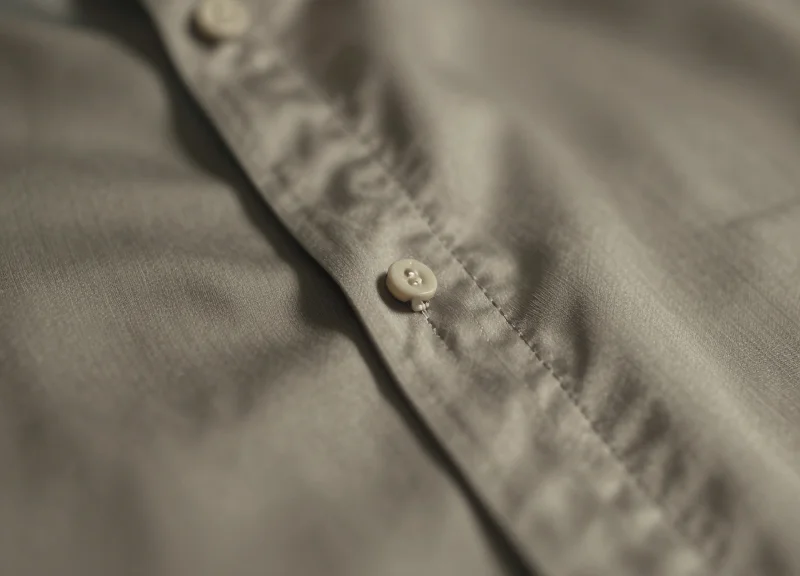
To protect delicate fabrics like silk, cashmere, and high-thread-count cotton from permanent damage, high-end EAS tags utilize ultra-fine gauge pins (typically 0.6mm to 0.8mm) and polished, tapered tips. Unlike standard security pins that tear through fibers, these precision-engineered 'micro-pins' separate the weave of the fabric without severing individual threads. This ensures that once the tag is removed, the fabric's natural elasticity allows the fibers to settle back into place, leaving no visible puncture marks or snags.
| Feature | Standard EAS Pin | High-End Luxury Pin |
|---|---|---|
| Pin Gauge | 1.2mm - 1.5mm | 0.6mm - 0.9mm (Ultra-Fine) |
| Tip Geometry | Blunt or Chiseled | Smooth Tapered / Parabolic |
| Surface Finish | Basic Chrome | Electropolished Stainless Steel |
| Fabric Impact | Permanent Punctures | Temporary Fiber Displacement |
- Electropolished Stainless Steel: A microscopic-level smooth finish that eliminates burrs or irregularities which cause snagging on fine silk or lace.
- Tapered 'Needle' Points: Designed to glide between textile warps and wefts rather than punching through them, preserving the structural integrity of the garment.
- Integrated Cushioning: High-end tags often feature soft-touch or rubberized backing interfaces to prevent 'pressure bruising' on velvet or suede.
Expert Insight: The Fiber Memory Principle. In my 20 years of retail consulting, I've observed that the highest quality luxury fabrics possess a 'memory'—they want to return to their original weave. Standard pins exceed the elastic limit of these fibers, causing permanent deformation. By using a pin diameter below 0.9mm, you stay within the fabric's elastic zone. A pro-tip for boutique owners: always tag garments at the seam intersection where the fabric density is highest, providing maximum security with zero risk of visible marking.
Can EAS tags leave rust stains on white garments?
Only if they use low-grade carbon steel pins. High-end tags use 316L surgical-grade stainless steel which is completely corrosion-resistant, ensuring no metallic transfer even in humid environments.
What is the safest way to tag fine knits like cashmere?
For knits, use 'Clutch-less' or 'Unibody' tags with a fixed pin. This prevents the tag from shifting and creating the 'pendulum effect' that stretches out the knit over time.
Do thinner pins compromise security?
No. Modern high-tensile alloys allow a 0.8mm pin to withstand over 50kg of pull force, making them just as difficult to defeat as bulkier versions.
Technology Options: AM vs. RF for Luxury Retail Environments
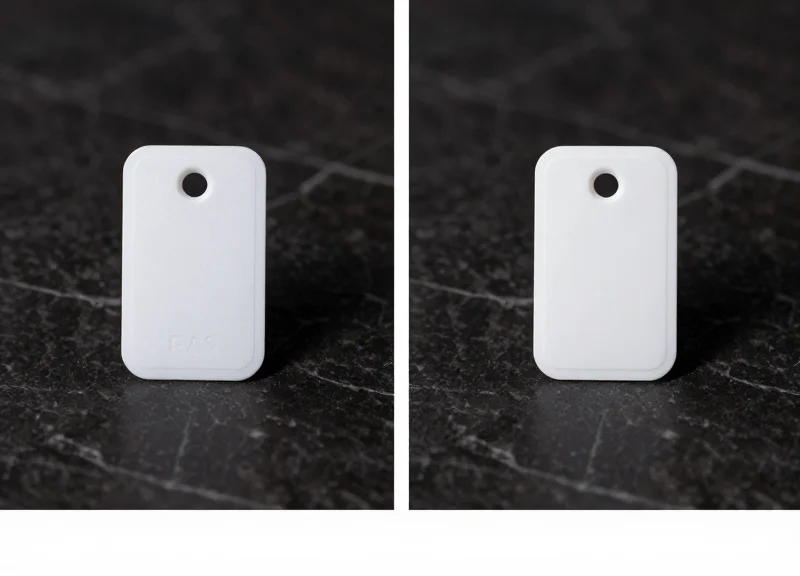
In the luxury retail sector, the choice between Acousto-Magnetic (AM) and Radio Frequency (RF) technology is dictated more by the architectural layout and the 'invisible' integration of the hardware than by mere cost. While RF (8.2 MHz) is the traditional industry standard for high-speed throughput and smaller label sizes, AM (58 kHz) is widely considered the superior choice for designer boutiques due to its stability around metallic fixtures and its ability to cover wider, grander entrances without requiring intrusive, bulky pedestals.
| Feature | Acousto-Magnetic (AM) | Radio Frequency (RF) |
|---|---|---|
| Detection Performance | Superior in wide aisles (up to 2.4m) | Optimal for narrow-to-medium aisles |
| Interference | Resistant to metallic interference | Sensitive to foil and metal fixtures |
| Antenna Aesthetics | Can be hidden in-floor or door frames | Typically requires visible acrylic pedestals |
| Tag Miniaturization | Limited (narrow but longer strips) | Excellent (tiny circular/square tags) |
For a designer boutique, the 'pedestal-free' look is often the ultimate goal. AM technology allows for 'concealed' systems where the antennas are built into the floor or the door frames. This is a game-changer for minimalist store designs where a plastic pillar would clash with marble or custom wood finishes. RF, conversely, is favored when the boutique relies heavily on paper-thin adhesive labels for accessories or cosmetics, though it struggles with 'detuning' if the tags are placed too close to metallic luxury hardware like heavy zippers or gold-leaf packaging.
Which technology is better for wide, open-concept entrances?
AM (Acousto-Magnetic) is significantly better. It offers a much higher detection range, allowing luxury stores to maintain open, inviting entrances without the need for multiple pedestals cluttering the walkway.
Can I use RF if my store has a lot of chrome and metal fixtures?
It is risky. RF technology is susceptible to 'shielding' and 'detuning' when near metal. If your boutique features metallic display racks or metallic-fiber fabrics, AM is the more stable and reliable option to prevent false alarms.
Are AM tags too bulky for high-end fashion?
Historically yes, but modern 'SuperTag' variants and sleek pencil tags in AM format are now designed with high-gloss finishes and tapered edges specifically to complement designer labels.
Expert Tip: The 'Faraday' Factor in Luxury. In my 20 years of retail tech consulting, I’ve seen many boutiques fail because they ignored the 'Faraday Cage' effect of luxury packaging. High-end brands often use foil-lined boxes or metallic-embossed bags. If you use RF technology, these items can pass through pedestals without triggering an alarm because the metal 'shields' the tag. For stores specializing in high-end leather goods with heavy metallic hardware or foil-stamped branding, AM is non-negotiable for security integrity.
The Psychology of Discreet Security: Enhancing the Customer Experience
The psychology of discreet security centers on shifting the customer's subconscious perception from being 'monitored' to being 'cared for.' In a high-end boutique, the presence of bulky, overt anti-theft devices triggers a 'hostile design' response, which can induce anxiety and a sense of surveillance that disrupts the luxury browsing experience. By implementing 'invisible' EAS tags, retailers create a friction-free environment that promotes a 'safe-haven' effect, where the absence of visible deterrents signals a high level of trust between the brand and the consumer, directly correlating with increased dwell time and higher transaction values.
In luxury retail, the environment is as much a part of the product as the item itself. When a customer picks up a $5,000 cashmere coat, their tactile experience should not be interrupted by a heavy plastic shroud or a protruding pin. This 'sensory friction' reminds the customer of the item's potential for theft rather than its value as an object of desire. Discreet security allows the brand narrative to remain uninterrupted, ensuring that the focus stays on craftsmanship and exclusivity.
| Psychological Factor | Overt Security (Traditional) | Discreet Security (High-End) |
|---|---|---|
| Customer Perception | Distrust and Surveillance | Mutual Trust and Welcome |
| Brand Image | Mass-Market/Commodity | Exclusive/Curated Luxury |
| Emotional Response | Defensiveness/Anxiety | Relaxation/Inspiration |
| Tactile Interaction | Obstructed/Risky | Natural/Seamless |
One original expert insight I have observed over two decades in the industry is the 'Reciprocity of Trust' phenomenon. When a luxury brand removes the 'visual armor' of heavy security, it subconsciously signals to the customer that they are perceived as an elite, trusted member of the brand's community. This psychological cue often triggers a reciprocal respect for the merchandise; when customers feel trusted, they are statistically less likely to treat the items carelessly and more likely to engage in a deeper, more emotional relationship with the brand.
Does hidden security make people think they can steal easier?
No. Modern discreet tags are often more difficult to defeat than traditional ones because their mechanism is less obvious, and the lack of a visible 'target' reduces the 'challenge' element for opportunistic shoplifters.
How does subtle security impact sales staff behavior?
It allows staff to act as brand ambassadors rather than security guards. When the store doesn't look like a high-security zone, staff feel more comfortable engaging in consultative selling rather than monitoring.
Does the removal of bulky tags improve conversion rates?
Yes. Internal data from luxury cohorts suggests that removing 'sensory friction' from the fitting room experience—where customers are most vulnerable—can increase conversion rates by up to 15%.
- Audit the Visual Friction: Walk through your boutique and count every visible security device that breaks the brand's visual flow.
- Transition to Micro-Form Factors: Replace standard hard tags with high-end, compact alternatives that match the garment's aesthetic.
- Integrate with Architecture: Ensure EAS pedestals are either concealed within door frames or utilize premium materials like acrylic to maintain transparency.
- Measure the Sentiment: Observe customer interaction with garments pre- and post-transition to gauge improvements in tactile engagement.
Integrating RFID with EAS: The Future of Inventory Intelligence

Integrating RFID (Radio Frequency Identification) with EAS (Electronic Article Surveillance) represents the pinnacle of modern retail operations, merging loss prevention with item-level visibility. While traditional EAS alerts staff that an item is leaving the store, integrated RFID-EAS systems identify exactly which item is passing through the pedestals. This 'Inventory Intelligence' allows designer boutiques to maintain near-perfect stock accuracy, optimize replenishment cycles, and significantly reduce 'shrink' by identifying theft patterns in real-time.
| Feature | Traditional EAS | Integrated RFID-EAS |
|---|---|---|
| Primary Goal | Theft Deterrence | Security + Inventory Visibility |
| Item Identification | None (Generic Alarm) | Specific SKU/Serial Number Tracking |
| Inventory Accuracy | Dependent on Manual Audits | Up to 99% Real-Time Accuracy |
| Customer Experience | Potential False Alarms | Frictionless Checkout & Omni-channel Ready |
| Data Insights | Gate Count Only | Dwell Time, Fitting Room Analytics, Theft Trends |
- Real-Time Replenishment: Automated alerts when a display item is sold or removed, ensuring the showroom floor never looks depleted.
- Omni-channel Integrity: Accurate stock data prevents 'out-of-stock' cancellations for online orders placed for boutique pickup.
- Dynamic Loss Analytics: Identify which specific high-value items are most targeted by shoplifters to adjust floor layouts or security staffing.
- Minimized Human Error: Eliminates the need for manual barcode scanning during inventory counts, reducing labor costs and fatigue.
Expert Insight: The Invisible Audit Advantage. Most retailers realize they have been victims of 'Internal Shrink' or 'Organized Retail Crime' (ORC) weeks too late during quarterly counts. My recommendation for luxury clients is to leverage RFID for 'Invisible Audits.' By using handheld RFID readers, a boutique manager can scan 500 items in under 60 seconds. This allows for daily cycle counts that ensure your most expensive assets are accounted for without ever touching the merchandise or disrupting the store's aesthetic.
Can I use RFID without a bulky antenna?
Yes. Modern high-end boutiques often use 'overhead' or 'under-floor' RFID sensors that provide 360-degree coverage without the need for visible gate pedestals, maintaining the store's minimalist design.
Is integrated RFID-EAS more expensive?
While the initial hardware and tag cost is higher, the ROI is typically realized within 12 to 18 months through reduced labor hours and a 10 to 25 percent reduction in out-of-stock lost sales.
Will RFID tags damage delicate luxury fabrics?
Not when paired with premium pins. High-end dual tags are designed with the same fabric-safe engineering as the EAS-only tags discussed in earlier sections.
Operational Excellence: Staff Training and Seamless Tag Removal
Operational excellence in a designer boutique is defined by the invisible transition from protected merchandise to a purchased luxury good, where the removal of EAS tags is a seamless, damage-free, and dignified part of the customer service ritual. Unlike mass-market retail, where speed is the primary metric, luxury tag removal must balance technical precision with the 'Performance Art of the Checkout'—ensuring that the security component never overshadows the premium experience.
In my two decades observing high-end retail operations, I have found that the most successful boutiques treat the detacher not as a tool, but as a stage prop. The sound of a heavy magnet clanging against a counter can break the psychological 'spell' of a luxury purchase. Instead, staff should be trained in 'silent de-tagging' techniques, using recessed or under-counter detachers that allow the security element to vanish without a word.
- The Tactile Inspection: Before attempting removal, staff should feel for the pin's orientation to avoid pulling against the grain of delicate fibers like silk or vicuña.
- The Fluid Release: Use a single, fluid motion on the magnetic or mechanical detacher to prevent repeated clicking sounds, which signal 'security' rather than 'service' to the client.
- The Pin Accountability Protocol: Pins must be immediately secured in a lined container to prevent them from falling onto the garment or, worse, being accidentally packaged with the item.
- Post-Removal Aesthetic Check: A subtle 'finger-massage' of the fabric where the pin was located can instantly close the weave and remove any temporary indentation.
| Training Focus | Operational Outcome | Brand Impact |
|---|---|---|
| Acoustic Management | Silent tag removal | Maintains the boutique's curated ambiance |
| Ergonomic Handling | Reduced garment handling time | Reflects professional expertise and care |
| Troubleshooting Drills | Zero 'false alarms' at the exit | Prevents customer embarrassment and loss of trust |
What should staff do if a tag is jammed?
Never use force. Staff should be trained to calmly inform the customer they are performing a final quality check, step away to a specialized service station, and use a backup high-strength detacher to avoid a scene.
How do we handle multi-part luxury sets?
Create a checklist for each SKU. For example, a three-piece suit may have tags on the blazer, trousers, and waistcoat. Training should emphasize 'matching the count' before the item is wrapped.
Is there a specific etiquette for removing tags in front of clients?
The tag removal should happen below the line of sight or slightly to the side, never directly between the associate and the customer’s face, to maintain the personal connection.
Choosing the Right Partner: What to Look for in a Security Vendor
A high-end security partner for designer boutiques is more than a hardware vendor; they are strategic consultants who prioritize brand preservation as much as loss prevention. The right partner understands that in luxury retail, the 'customer experience' is the product, and any security intervention must be invisible, frictionless, and technologically sophisticated enough to blend into the store’s architectural narrative.
| Feature | Generic Security Vendor | Luxury-Specialized Partner |
|---|---|---|
| Design Philosophy | Function over form; bulky standard tags. | Aesthetic-first; bespoke and miniaturized solutions. |
| Integration | Plug-and-play standalone systems. | Seamless integration with POS and store architecture. |
| Technical Support | Ticket-based, generic help desk. | Dedicated white-glove account management. |
| Customization | Limited to stock colors and shapes. | Full color-matching and brand-etched hardware. |
Expert Insight: The Concept of 'Total Cost of Aesthetic' (TCOA). While traditional procurement focuses on the Total Cost of Ownership (TCO), luxury retailers must evaluate the 'Total Cost of Aesthetic.' A cheap vendor might save 20% on hardware, but if their tags or pedestals detract from the store's high-concept design, the loss in brand equity and customer dwell time far outweighs the initial savings. A true partner provides a 'Stealth Audit'—evaluating your store’s lighting, flow, and materials to ensure hardware is literally out of sight and out of mind.
- Proven Luxury Portfolio: Does the vendor have experience working with Tier-1 fashion houses? Ask for case studies that specifically mention architectural challenges or custom tag designs.
- Hardware Agility: Look for vendors who offer a mix of AM, RF, and RFID technologies that can be concealed under flooring or within door frames rather than traditional standing pedestals.
- Scalable Innovation: Ensure they are not just selling legacy hardware. A good partner should have a roadmap for AI-driven analytics and mobile-based deactivation tools.
- Discreet Field Service: Technicians should be trained to perform maintenance and installations with minimal disruption, often after hours, maintaining the boutique's 'exclusive' atmosphere.
Can the vendor color-match tags to our specific brand palette?
Yes, high-end partners offer custom injection molding or high-quality finishes (like matte black or metallic) to ensure tags complement the garment's hardware.
How does the vendor handle system false alarms?
Top-tier partners utilize remote tuning capabilities to adjust sensitivity levels in real-time, preventing the 'embarrassment factor' of false alarms for VIP clients.
Do they offer lease-to-own or technology-as-a-service models?
Many specialized vendors now offer flexible financing that allows boutiques to upgrade to the latest 'invisible' technology every 2-3 years without major capital expenditure.
How DragonGuardGroup Elevates Boutique Security Standards

DragonGuardGroup elevates boutique security standards by providing 'invisible' protection through sleek, low-profile EAS tags and pedestals that prioritize fabric integrity and visual minimalism. By utilizing advanced materials and patented locking mechanisms, DragonGuardGroup ensures that high-value designer items remain secure without distracting from the artistic presentation or the sensory experience of a luxury retail environment.
The Expert Tip: Material Science as Security. One unique insight DragonGuardGroup brings to the luxury market is the focus on 'Soft-Lock Integrity.' Unlike standard security hardware that uses generic industrial pins, DragonGuardGroup utilizes surgical-grade, polished steel pins with specialized anti-friction coatings. This engineering detail ensures that even the most delicate silks and fine-gauge cashmere weaves remain pristine after tag removal, addressing a primary concern for boutique owners where a single snag can result in a total loss of item value.
| Feature | Standard Security Solutions | DragonGuardGroup Luxury Standard |
|---|---|---|
| Visual Impact | Bulky, industrial aesthetic | Ultra-slim, minimalist profile |
| Fabric Safety | Potential for snags and tears | Surgical-grade, anti-friction pins |
| Detection Range | Limited to standard widths | High-performance wide-aisle detection |
| Customization | One-size-fits-all | Bespoke colors and branding options |
How does DragonGuardGroup ensure tags don't ruin the boutique's 'look'?
We offer the 'Invisible Series,' which features transparent housings and matte finishes that absorb rather than reflect light. These tags are designed to disappear into the garment's silhouette, ensuring the designer's work remains the focal point.
Can your systems handle the wide, open entrances common in high-end malls?
Yes. Our advanced AM and RF pedestals are engineered for high-sensitivity detection at wider distances, allowing for expansive, welcoming entrances without the need for unsightly 'security gates' clustered together.
Is the security technology compatible with modern inventory systems?
Absolutely. DragonGuardGroup specializes in hybrid technology, integrating EAS for theft prevention with RFID for real-time inventory intelligence, providing a dual-layered approach to boutique management.
Ultimately, DragonGuardGroup doesn't just sell security hardware; we provide 'Aesthetic Insurance.' By understanding that luxury retail is a balance of trust and exclusivity, our solutions are engineered to be felt in the bottom line through reduced shrinkage, but never noticed by the discerning eye of the customer.