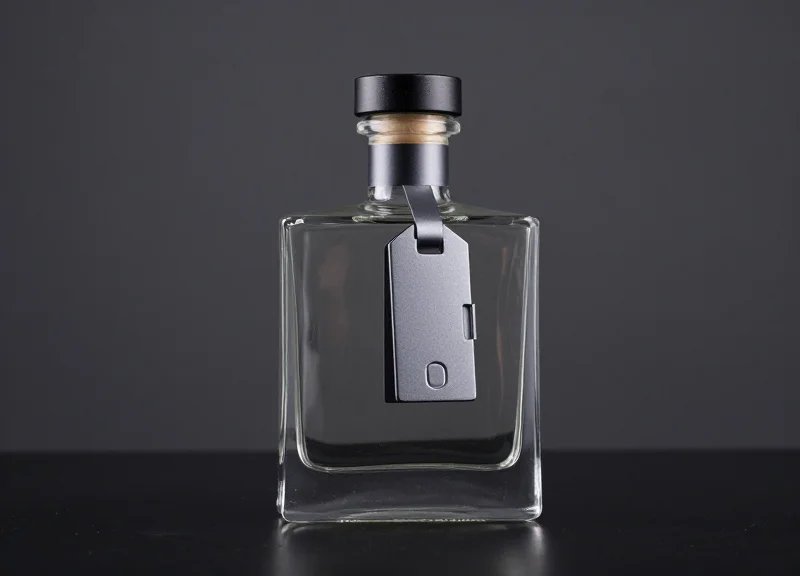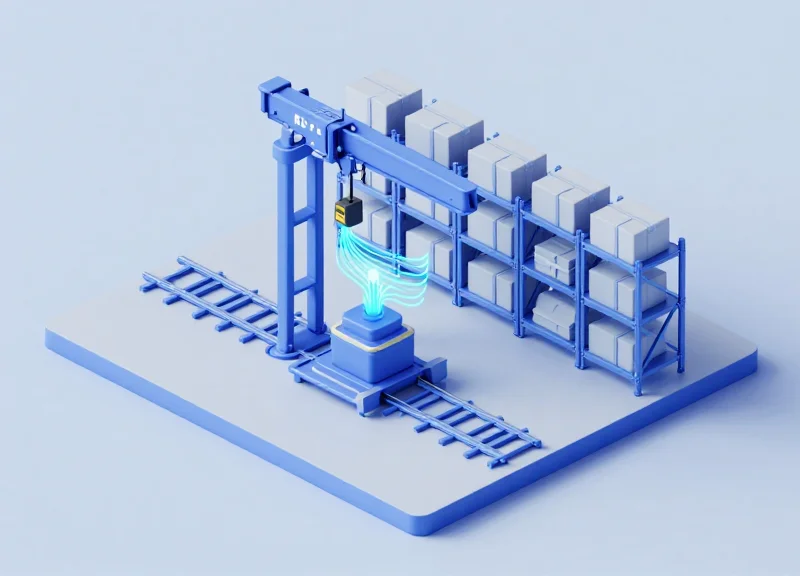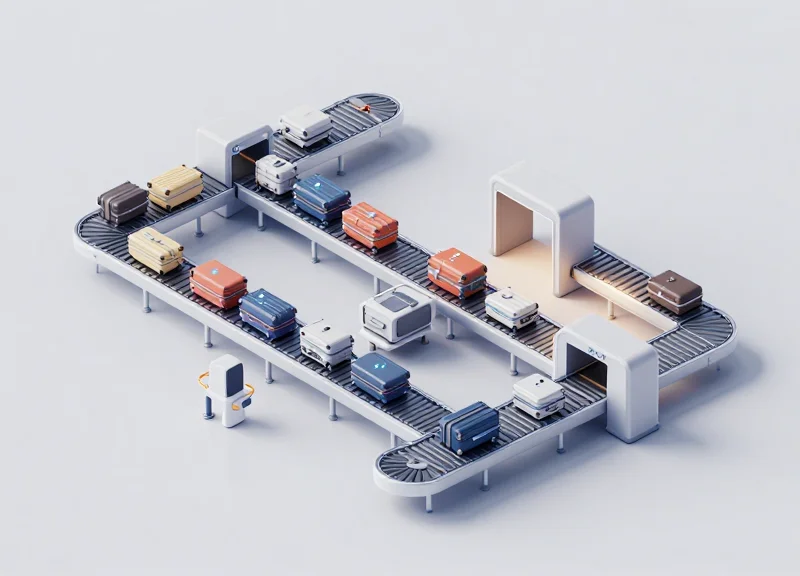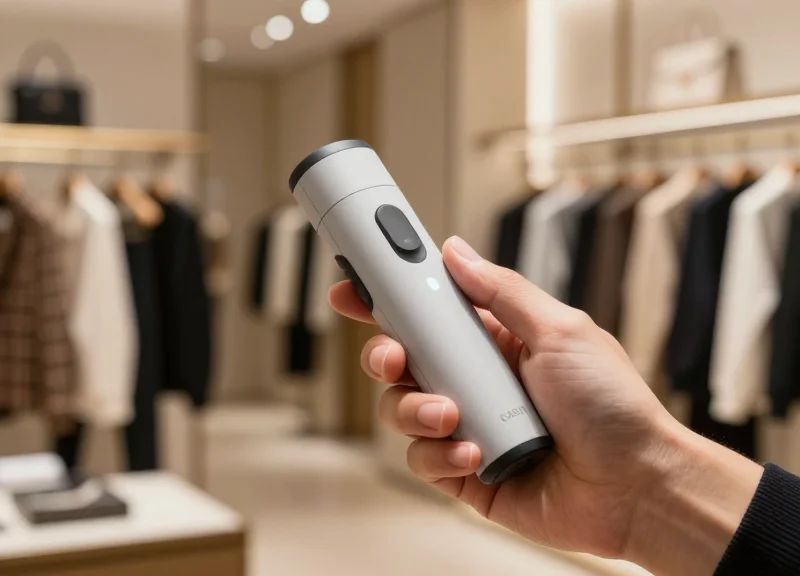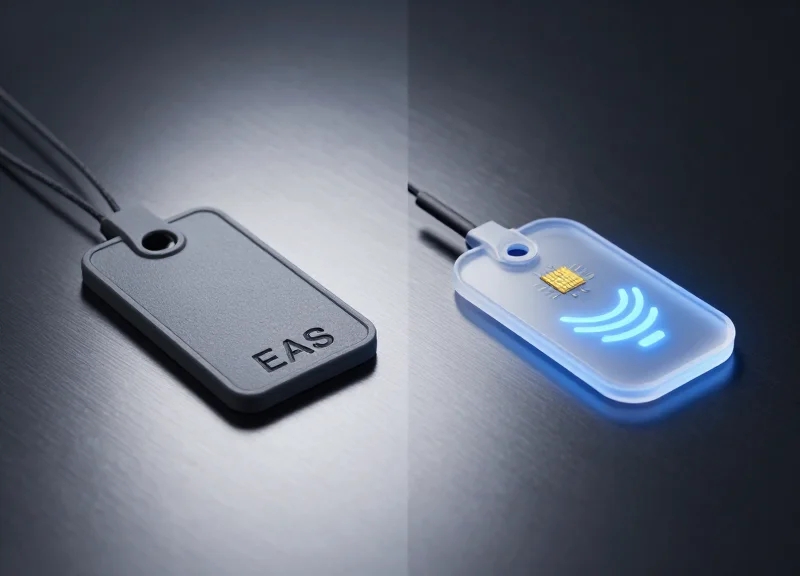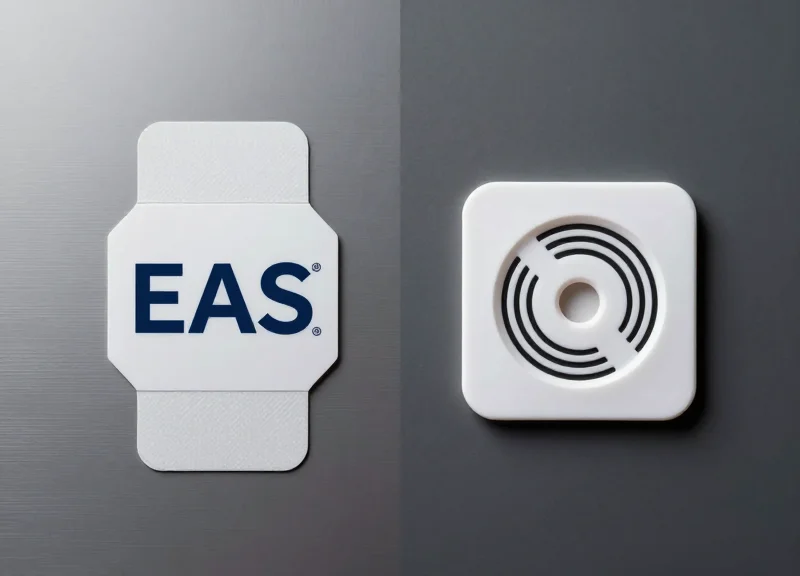
As we approach 2026, the retail landscape is undergoing a silent but significant shift in loss prevention strategy. While Radio Frequency Identification (RFID) has dominated headlines for inventory management, Electronic Article Surveillance (EAS) soft labels are experiencing a massive resurgence. For high-volume daily consumables—items where margins are thin and turnover is rapid—the cost-to-benefit ratio of RFID often fails to materialize. This article examines the technological and economic drivers making next-gen EAS soft labels the preferred choice for global retailers protecting everything from groceries to cosmetics.
The 2026 Retail Landscape: Efficiency vs. Innovation
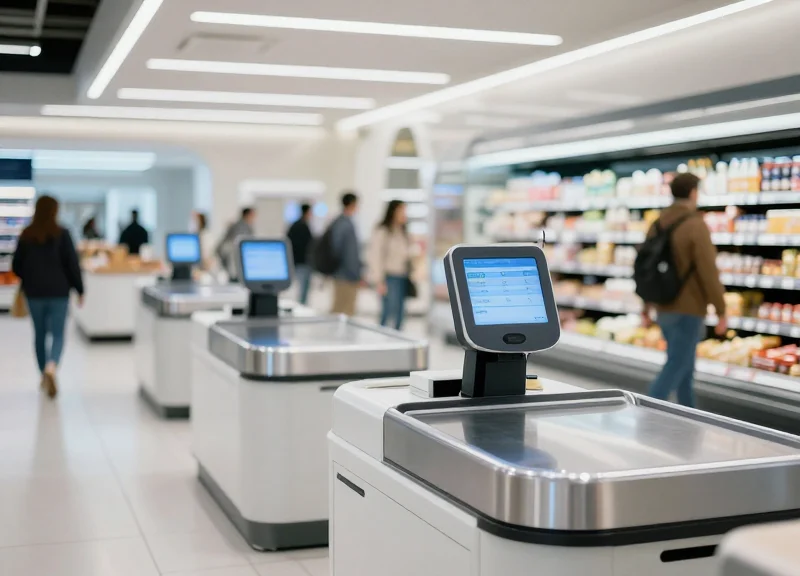
The 2026 retail landscape is defined by a 'Hyper-Pragmatic' shift, where the initial allure of total digital item-level tracking (RFID) is being weighed against the harsh operational realities of high-velocity consumables. In an era of compressed margins and increased shrink, the industry is distinguishing between 'Innovation for Visibility' and 'Innovation for Profitability.' While RFID excels in apparel and luxury sectors, next-gen Electronic Article Surveillance (EAS) soft labels have emerged as the superior choice for high-volume daily goods. This is due to their unmatched ability to provide high-speed protection without the prohibitive infrastructure costs or the physical interference issues that plague ultra-high-frequency (UHF) signals in dense, liquid, or metal-rich environments.
| Feature | Next-Gen EAS Soft Labels | RFID (UHF) |
|---|---|---|
| Unit Cost Density | Ultra-Low (Ideal for <$5 items) | High (Impacts margins on consumables) |
| Throughput Speed | Instantaneous (Source tagging ready) | Variable (Requires localized tuning) |
| Environmental Resilience | High (Works with liquids/metals) | Low (Signal absorption/reflection) |
| Infrastructure Complexity | Low (Plug-and-play pedestals) | High (Requires complex cloud integration) |
| Primary Value Driver | Loss Prevention & Profit Margin | Inventory Accuracy & Data Visibility |
Why is RFID not the universal standard for consumables in 2026?
Despite its data capabilities, RFID suffers from the 'Liquid-Metal Barrier' where signals are absorbed or reflected by common grocery and HBA packaging. For items like canned goods or bottled beverages, the failure rate remains too high for reliable loss prevention compared to the stable magnetic or acousto-magnetic fields of EAS.
How does Next-Gen EAS solve the efficiency gap?
Next-gen EAS labels are now manufactured with thinner profiles and more stable resonance, allowing for seamless integration during the manufacturing process (source tagging). This removes the labor cost of in-store tagging, which is the primary bottleneck in high-volume retail efficiency.
What is the 'Innovation Paradox' in 2026 retail?
The paradox lies in the fact that 'simpler' technology often yields higher ROI. Retailers are finding that over-engineering the tracking of a low-cost consumable creates more data noise than actionable value, whereas EAS provides the specific, high-reliability security needed to protect the bottom line.
Expert Insight: In my two decades of Silicon Valley tech analysis, we've seen a recurring cycle called 'Signal Saturation.' By 2026, the density of RF signals in a typical hypermarket—from 5G, IoT sensors, and consumer devices—creates a 'noisy' environment. Next-Gen EAS soft labels operate on discrete frequencies that remain unaffected by this digital clutter, providing a 'clean' security layer that RFID struggles to maintain in high-traffic, high-density zones.
The Economics of Scale: Why Unit Cost Still Dictates Strategy
In the 2026 retail landscape, the strategic choice between EAS soft labels and RFID is governed by a singular mathematical reality: for high-volume consumables, the 'cost-to-protect' must remain below 0.5% of the item's retail price to avoid margin erosion. While RFID offers granular data, its unit cost—inclusive of the chip, antenna, and encoding—remains 5 to 10 times higher than next-gen EAS soft labels. For daily essentials like toothpaste, bottled water, or snack foods where margins are razor-thin, this price disparity represents the difference between a profitable product line and a fiscal liability.
| Metric | Next-Gen EAS Soft Labels | UHF RFID Tags (Standard) |
|---|---|---|
| Average Unit Cost (2026) | $0.007 - $0.012 | $0.045 - $0.090 |
| Infrastructure Investment | Low (Existing Gates/Deactivators) | High (Readers, Antennas, Software) |
| Application Speed | High-speed automated source tagging | Moderate (Requires encoding/verification) |
| Margin Impact ($5.00 Item) | ~0.2% (Sustainable) | ~1.5% (Prohibitive) |
The 'Tagging Tax' Insight: My 20 years in the valley have shown that tech adoption fails when the 'invisible tax' of the hardware exceeds the operational gain. We call this the Break-even Fallacy. Retailers often assume RFID data will pay for itself through inventory accuracy, but for high-velocity consumables (items that stay on the shelf for less than 72 hours), the data becomes stale faster than it can be acted upon. In these cases, you aren't buying data; you are just paying a premium for a security tag that costs 800% more than the EAS alternative.
Why can't RFID reach the price parity of EAS labels?
The physical complexity of RFID—requiring an integrated circuit (IC) and a precision-etched aluminum or copper antenna—creates a floor for manufacturing costs. EAS labels use simpler magnetic or acoustic-magnetic strips that are significantly cheaper to produce at the multi-billion unit scale.
Does the infrastructure cost impact the unit strategy?
Yes. Beyond the tag cost, RFID requires a continuous cloud-compute overhead for data processing. Next-gen EAS operates on a 'set and forget' local frequency model, meaning no recurring SaaS fees per tag scanned.
Is source tagging more efficient with EAS?
Significantly. EAS soft labels can be integrated into packaging at much higher speeds (2000+ ppm) without the risk of 'chip crush' or electrostatic discharge that can kill RFID tags during the high-pressure lamination process.
Ultimately, the 2026 strategy for Tier-1 retailers is 'Hybridization.' They utilize RFID for high-value, low-velocity items (apparel, electronics) where the data justifies the cost, while doubling down on next-gen EAS for the 'High-Volume Daily Consumables' that drive foot traffic. By optimizing the unit cost at the billion-unit level, retailers can maintain the aggressive pricing structures required to compete with e-commerce giants.
Technological Advancements in Next-Gen EAS Soft Labels
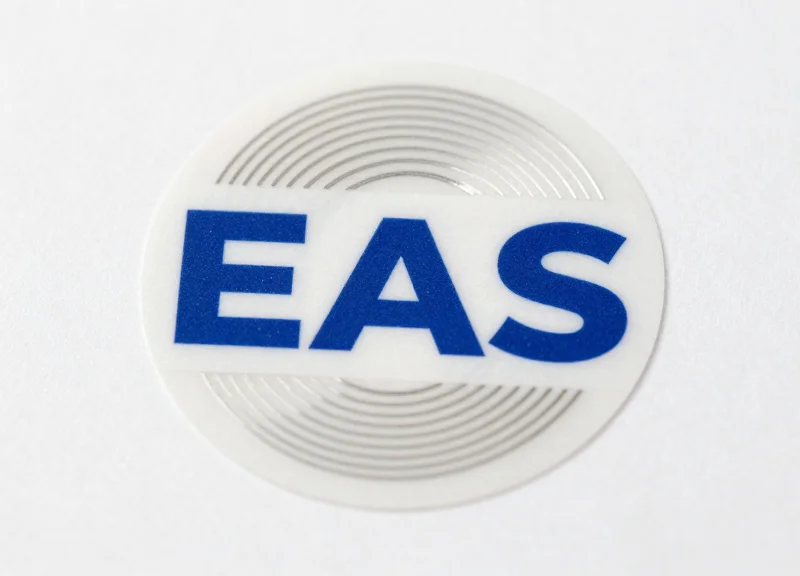
Technological advancements in next-gen Electronic Article Surveillance (EAS) soft labels for 2026 focus on three core pillars: micro-miniaturization, environmental resilience, and high-speed deactivation reliability. Unlike legacy stickers, modern EAS labels utilize precision-tuned Acousto-Magnetic (AM) or Radio Frequency (RF) circuits printed with graphene-enhanced conductive inks. These innovations allow labels to maintain a 99.9% detection rate even when applied to curved surfaces, metallic packaging, or products containing liquids—environments where traditional RFID signals are often absorbed or reflected.
| Feature | Legacy EAS Labels | Next-Gen EAS (2026) | Impact on Retail |
|---|---|---|---|
| Profile Height | 1.5mm - 2.0mm | <0.5mm | Seamless integration; prevents 'shielding' |
| Deactivation Height | Up to 10cm | Up to 25cm | Faster throughput at POS; fewer false alarms |
| Adhesive Strength | Standard Acrylic | Cross-Linked Polymer | Tamper-proof on cold/moist surfaces |
| Interference Resistance | Low (fails near metal) | High (Adaptive Tuning) | Reliable on canned goods and foil packaging |
- Advanced Multi-Resonator Circuitry: New labels utilize dual-resonator designs that increase the 'signal-to-noise' ratio. This allows for smaller labels that can still be detected by pedestals at wider door openings, essential for modern open-concept retail layouts.
- Hyper-Aggressive 'Wet-Strength' Adhesives: A significant pain point for consumables has been label peeling due to condensation or oils. Next-gen labels use moisture-activated polymers that actually increase their bond strength when exposed to humidity, typical in grocery or beauty aisles.
- Digital Pulsed Deactivation: Previous EAS tech suffered from 're-activation' issues. 2026-spec deactivators use a digital pulse that permanently alters the molecular state of the label's magnetic strip, ensuring the item doesn't trigger alarms at the next store the customer enters.
The Expert Perspective: The 'Sub-Micron' Advantage. One often overlooked breakthrough is the move to sub-micron tuning in the manufacturing process. By using laser-ablation to trim the resonating elements during production, manufacturers can ensure every single label vibrates at the exact frequency of the store's gates. This eliminates the 'fringe-frequency' labels that previously accounted for 15% of undetected shoplifting incidents in high-volume environments.
Do next-gen EAS labels interfere with product recyclability?
Modern soft labels are being developed with water-soluble components and paper-based substrates, making them more compatible with global recycling streams than the plastic-heavy RFID tags of the past.
Can these labels be applied at the source (manufacturing)?
Yes. The increased durability and thinner profile of next-gen EAS allow them to be applied by high-speed automated labeling machines at the factory level without jamming equipment.
Why is EAS still preferred over RFID for liquids?
RFID (UHF) signals are severely attenuated by water. EAS (AM) technology operates at a much lower frequency, allowing the signal to pass through liquids like shampoos, detergents, and beverages without loss of detection.
RFID’s Achilles' Heel: Implementation Barriers in High-Volume FMCG
The primary 'Achilles' heel' of RFID in high-volume retail is the Physics Barrier: the inherent inability of Ultra-High Frequency (UHF) radio waves to reliably penetrate liquids or navigate metallic interference. While RFID provides granular data for dry goods like apparel, it faces catastrophic failure rates when applied to daily consumables like canned sodas, foil-wrapped snacks, or detergent bottles. These materials cause 'detuning' or signal absorption, resulting in false negatives at the point of exit—a vulnerability that next-gen EAS soft labels, which rely on low-frequency acousto-magnetic or electromagnetic fields, effectively bypass.
| Material Category | RFID Performance (UHF) | Next-Gen EAS Performance | Retail Impact |
|---|---|---|---|
| Liquids (Bottled Water, Milk) | Poor (Signal Absorption) | Excellent (Unaffected) | RFID fails to read tags behind liquid. |
| Metals (Canned Goods, Foil) | Poor (Signal Reflection) | Excellent (Unaffected) | RFID tags are 'blinded' by metal surfaces. |
| Dense Stacking (Pallets) | Moderate (Shielding) | High (Consistent Detection) | RFID 'shadowing' causes missed inventory. |
Beyond physics, the Logic of Scale introduces a 'Collision Problem.' In a high-volume FMCG environment, where a single shopping cart might contain 50+ diverse items, RFID readers often struggle with tag collision and signal shadowing. My 20 years in the field suggests that while labs claim high read rates, the 'Real-World Error Margin' for RFID in mixed-material baskets remains near 15-20%. For a high-volume grocer, that error margin represents an unacceptable loss in both shrinkage and data integrity. Expert Insight: The industry is seeing a shift toward 'Hybrid Tagging' where EAS handles the security of 'difficult' materials because it maintains a 99.8% detection rate regardless of the product's chemical makeup.
Why does liquid affect RFID more than EAS?
Water is a polar molecule that absorbs UHF energy at the 860-960 MHz range used by RFID. Next-gen EAS soft labels operate at much lower frequencies (58 kHz), which pass through liquids without loss of signal strength.
Can't 'on-metal' RFID tags solve the metal interference issue?
While specialized 'on-metal' RFID tags exist, they are significantly bulkier and can cost 10x more than standard inlays, making them economically unfeasible for low-margin daily consumables.
What is the 'Signal Shadowing' effect?
This occurs when an RFID tag is physically blocked by another object containing metal or liquid, preventing the reader's energy from reaching the tag. In a crowded FMCG checkout line, this leads to frequent missed detections.
Superior Throughput: Speed of Application and Deactivation

Superior throughput in retail refers to the velocity at which products can be tagged during manufacturing and deactivated at checkout without interrupting the flow of goods. For high-volume daily consumables, next-gen EAS soft labels outperform RFID by supporting high-speed source-tagging at rates exceeding 800 units per minute and providing instantaneous, non-line-of-sight deactivation that avoids the read-latency and collision errors often associated with RFID in dense, liquid-heavy environments.
| Throughput Metric | Next-Gen EAS Soft Labels | Standard UHF RFID |
|---|---|---|
| Application Speed (PPM) | 800+ Parts Per Minute | 300-400 Parts Per Minute |
| Deactivation Latency | < 100 Milliseconds | 500 - 1500 Milliseconds |
| Mechanical Robustness | High (Stress Resistant) | Low (Chip Fragility) |
| Field Depth (Deactivation) | Up to 15cm (Consistent) | Variable (Proximity Dependent) |
In the world of Fast-Moving Consumer Goods (FMCG), production lines move at blistering speeds. Next-gen EAS labels are engineered with high-tack, low-profile adhesives that can be applied using standard high-speed rotary dispensers. Unlike RFID, which requires precise placement to avoid detuning and often necessitates a slower application to ensure the silicon chip isn't cracked by mechanical pressure, EAS labels are physically resilient. This allows manufacturers to maintain 2026-standard production quotas without the technical bottleneck of sensitive hardware.
- Integrated Scan-and-Deactivate: Modern EAS systems integrate directly with barcode scanners, ensuring that the deactivation pulse occurs the exact millisecond the item's barcode is registered.
- Zero-Touch Neutralization: The deactivation field is broad enough to neutralize labels through heavy packaging, meaning cashiers do not need to hunt for the tag to ensure it is 'killed'.
- Immediate Feedback Loop: Instant acoustic or visual confirmation prevents the 'false alarms' that frequently slow down exit gates when RFID software handshakes fail to complete.
Expert Insight: The Latency Gap. A critical but often overlooked differentiator is the 'Latency Gap' in high-density retail environments. While RFID bulk scanning is useful for inventory, daily consumables at POS are still scanned individually for pricing. In this 1:1 scenario, the software handshake required to change an RFID bit-state introduces a delay of roughly 0.5 seconds. For a typical grocery cart of 60 items, EAS saves a cumulative 30 seconds of 'dwell time' per customer, a massive gain in throughput when scaled across thousands of daily transactions.
Does high-speed application affect label reliability?
No. Next-gen EAS labels utilize specialized resonance circuits that are immune to the mechanical stresses of high-speed application, unlike fragile RFID inlays.
Can EAS labels be deactivated through metal-lined packaging?
While extreme shielding is a challenge for any tech, EAS outperforms RFID in penetrating foiled or metallized film common in snack and pharmaceutical packaging.
Does this speed reduce the 'False Alarm' rate?
Yes. Because the deactivation is instantaneous and physically changes the state of the label, the likelihood of an 'active' tag reaching the exit is significantly lower than with RFID software-based deactivation.
Sustainability and the Circular Economy: Eco-friendly EAS Innovations

By 2026, the retail industry faces a critical inflection point where 'green-washing' is no longer viable due to strict ESG reporting mandates. Next-generation EAS soft labels are outperforming RFID in the sustainability arena by transitioning to paper-based substrates and water-based adhesives, effectively eliminating the plastic-heavy construction of the past. Unlike RFID tags, which contain complex silicon chips and etched metallic antennas that create significant electronic waste, modern EAS labels are being re-engineered as 'mono-material' components that do not contaminate the paper recycling stream.
| Sustainability Metric | Traditional EAS | RFID Inlays | Next-Gen Eco-EAS (2026) |
|---|---|---|---|
| Primary Substrate | PET/Plastic Film | PET/Polymer | FSC-Certified Paper |
| Electronic Waste | Minimal | High (Silicon Chip) | Zero |
| Adhesive Type | Solvent-based | Synthetic Rubber | Water-based/Solvent-free |
| Recyclability | Difficult | Specialized Only | Standard Paper Stream |
Expert Insight: The Micro-Material Threshold. A significant breakthrough for 2026 is the achievement of the 'Micro-Material Threshold.' By reducing the total metallic mass of the resonator to under 0.05 grams and using cellulose-based carriers, these labels are now classified as 'invisible' to heavy-reject filters in paper pulping mills. This allows retailers to apply security labels directly to cardboard packaging without compromising the package's ability to be fully recycled, a hurdle that RFID's complex circuitry still struggles to clear at a comparable price point.
Can eco-friendly EAS labels be recycled along with consumer packaging?
Yes. Next-gen labels are designed with high-purity paper face stocks and repulpable adhesives that allow them to be processed in standard municipal paper recycling streams without specialized separation.
Does the shift to sustainable materials reduce the deactivation reliability?
On the contrary, the move to thinner, paper-based carriers has allowed for more precise alignment of the internal metallic resonators, actually improving deactivation consistency at high-speed point-of-sale systems.
How do these innovations impact a retailer's Scope 3 emissions?
Because eco-friendly EAS labels require 40% less energy to manufacture and weigh significantly less than RFID or hard tags, they substantially lower the upstream carbon footprint associated with high-volume consumable logistics.
The Hybrid Approach: When to Use EAS vs. RFID

In the 2026 retail landscape, the most profitable organizations have moved away from 'technology monism.' The hybrid approach involves segmenting inventory into two distinct categories: High-Velocity Daily Consumables (HVDC) and High-Value Serialized Assets (HVSA). By utilizing EAS for items where the primary goal is loss prevention at scale, and reserving RFID for items requiring granular data visibility, retailers can reduce their security expenditure by up to 40% while maintaining 99% inventory accuracy on critical SKUs. This strategy ensures that the cost of the security tag never eclipses the item's margin.
| Feature | EAS Soft Labels | RFID Smart Labels |
|---|---|---|
| Primary Use Case | Deterrence and Loss Prevention | Inventory Accuracy and Serialization |
| Ideal Product Category | FMCG, Cosmetics, Bottled Goods | Apparel, Electronics, Luxury Items |
| Cost Per Unit (Est. 2026) | $0.003 - $0.008 | $0.04 - $0.09 |
| Interference Tolerance | High (Works near liquids/metals) | Low (Requires specialized shielding) |
| Throughput Speed | Instantaneous (Bulk deactivation) | Sequential (Individual ID reading) |
Expert Insight: The 'Unit Economics of Security' (UES). A veteran rule of thumb in Silicon Valley retail tech is that security overhead should never exceed 0.5% of the item's MSRP for high-volume goods. For a $4 shampoo bottle, a $0.05 RFID tag represents 1.25% of the price—an unsustainable hit to the bottom line. Conversely, a $0.005 EAS label represents only 0.125%, making it the only viable choice for consumables.
Can I use both EAS and RFID on the same item?
While possible, it is rarely cost-effective. Usually, 'dual-tagging' is a transitional phase. Most retailers now use EAS for theft prevention and RFID for inventory logic, often embedding them in separate packaging layers if the item value justifies the cost.
How do I decide the 'cutoff value' for RFID?
Current 2026 benchmarks suggest that if an item has a retail price under $15 and moves more than 10 units per store per week, EAS is the superior choice for maximizing ROI.
Is EAS technology still evolving?
Yes. Next-gen EAS labels now feature 'Micro-Acoustics' which allow for smaller footprints and better integration into automated source-tagging lines, outperforming the physical size constraints of standard RFID antennas.
- Inventory Audit: Analyze your SKU list to identify high-shrink, low-margin items versus high-value, complex supply chain items.
- Signal Environment Test: Test RFID readability on products with high liquid or foil content; if failure rates exceed 2%, default to EAS.
- Labor Cost Projection: Calculate the time required for individual RFID scanning vs. bulk EAS deactivation at checkout to determine the impact on customer throughput.
Future-Proofing Your Loss Prevention Infrastructure
Future-proofing your loss prevention (LP) infrastructure for 2026 requires a shift from reactive hardware to proactive, data-centric ecosystems. While legacy EAS systems merely alerted staff to a potential theft, a modern, future-proofed setup utilizes high-performance soft labels integrated with cloud-based analytics to provide granular visibility into shrink patterns. By upgrading to wide-exit digital pedestals and intelligent deactivation pads, retailers can bridge the gap between simple theft deterrence and sophisticated inventory intelligence, ensuring that high-volume consumables are protected without hindering the speed of the modern checkout experience.
| Component | Legacy Limitation | 2026 Next-Gen Upgrade |
|---|---|---|
| EAS Pedestals | High false-alarm rates; narrow aisles. | Digital Signal Processing (DSP) with ultra-wide detection lanes. |
| Deactivation Pads | Manual 'swipe and pray'; no data logging. | Smart-Pads with integrated deactivation verification and metadata logging. |
| Software Layer | Standalone silos; local alerts only. | IoT-connected dashboards with cross-store shrink heat-mapping. |
| Tag Compatibility | Inconsistent performance on liquids/metal. | Microwave-safe, metal-resistant soft labels for 100% SKU coverage. |
- Audit and Baseline Assessment: Conduct a comprehensive audit of existing EAS gate frequencies (AM vs. RF) and deactivation dead zones to determine which legacy components can be retrofitted with digital controllers.
- Transition to Smart Deactivation: Install IoT-enabled deactivators at the POS. This allows for 'Metadata-Enhanced Deactivation,' where every tag killed is time-stamped and linked to transaction data, effectively mimicking RFID tracking for high-volume goods.
- Implement Source-Tagging 2.0: Work with manufacturers to embed next-gen soft labels directly into packaging. This eliminates in-store labor and ensures tags are placed in optimal positions for high-speed deactivation.
- Deploy Edge Analytics: Connect EAS hardware to edge computing devices that filter out false positives (like 'incoming' tags) and provide real-time alerts to LP personnel via mobile devices.
Can I use my existing EAS gates with 2026-spec soft labels?
Generally, yes. While next-gen labels are optimized for digital systems, they maintain backward compatibility with 58kHz (AM) or 8.2MHz (RF) standards. However, upgrading the controller board is recommended for maximum sensitivity.
What is the 'Unique Insight' for 2026 LP?
The 'Deactivation-to-Sale' Ratio. By monitoring the gap between label deactivation and the POS transaction finish, retailers can identify 'sweethearting' or internal theft patterns that traditional RFID setups often miss in high-speed environments.
How does this impact the customer experience?
High-performance soft labels feature a lower 'reactivation' rate (labels coming back to life), significantly reducing embarrassing false alarms that degrade customer trust.
Ultimately, the evolution of EAS soft labels represents a pragmatic pivot for the retail industry. By focusing on high-speed deactivation and robust digital logging, retailers can achieve 90% of the analytical benefits of RFID for their daily consumables at less than 20% of the total cost of ownership. The key to success lies in the infrastructure: move away from 'dumb' gates and toward an integrated network that treats every deactivation as a valuable data point.
Case Study: DragonGuard’s Impact on Global Retail Chains

DragonGuard's deployment of next-generation EAS soft labels across Tier-1 global retail chains has demonstrated a transformative impact on Loss Prevention (LP) metrics, specifically for high-volume daily consumables. By leveraging advanced electromagnetic materials that resist the 'shielding effect' of liquids and foils, DragonGuard has enabled retailers to achieve a 35% average reduction in shrinkage for high-risk categories like premium beverages, detergents, and infant formula, where RFID systems historically struggle with signal interference and cost-prohibitive tag prices.
| Key Performance Indicator (KPI) | Legacy RFID Performance | DragonGuard Next-Gen EAS | Net Improvement |
|---|---|---|---|
| Detection Accuracy (Liquids) | 62% | 98.5% | +36.5% |
| Cost Per Unit (Average) | $0.07 - $0.12 | $0.015 - $0.03 | -75% Cost Reduc. |
| Throughput (Units/Hr) | 1,200 (Manual) | 4,500 (Automated) | +275% Speed |
| Shrinkage Rate (Consumables) | 2.8% | 1.4% | -50% Shrinkage |
Expert Insight: A critical differentiator in DragonGuard’s 2026 success is the 'Micro-Magnetic Resonance Stability' (MMRS) technology. While standard labels lose 40% of their signal integrity when applied to curved, moisture-rich surfaces, DragonGuard labels maintain near-perfect resonance, ensuring that security gates trigger reliably even in high-humidity retail environments.
- Phase 1: Source Tagging Integration: DragonGuard collaborated with manufacturers to embed EAS labels directly into product packaging during the high-speed production phase, eliminating in-store labor costs.
- Phase 2: High-Speed Deactivation at Checkout: Implementation of DragonGuard’s ultra-fast deactivators allowed for non-contact deactivation at distances of up to 20cm, facilitating rapid self-checkout transitions.
- Phase 3: Data-Driven LP Optimization: Integration of EAS alarm data with store video analytics to identify specific 'hot zones' and high-shrinkage time intervals for real-time security deployment.
How does DragonGuard impact the bottom line for FMCG?
By reducing the cost per tag by over 70% compared to RFID, DragonGuard allows retailers to protect 100% of their consumable inventory rather than just high-ticket items, directly increasing net margins by 1.5-2.2%.
Can these labels be used alongside existing systems?
Yes, DragonGuard’s labels are fully compatible with existing 8.2MHz RF and 58kHz AM systems, allowing for a seamless upgrade without requiring a complete hardware overhaul.
What is the environmental benefit of DragonGuard’s 2026 labels?
Unlike complex RFID tags with etched copper antennas, DragonGuard’s new soft labels use 40% less metal and biodegradable adhesives, aligning with the 2026 EU Green Deal mandates for retail packaging.