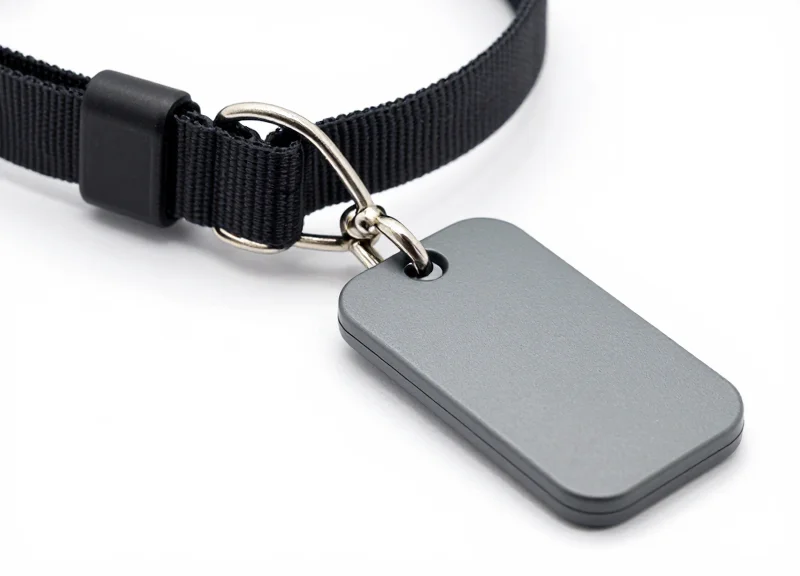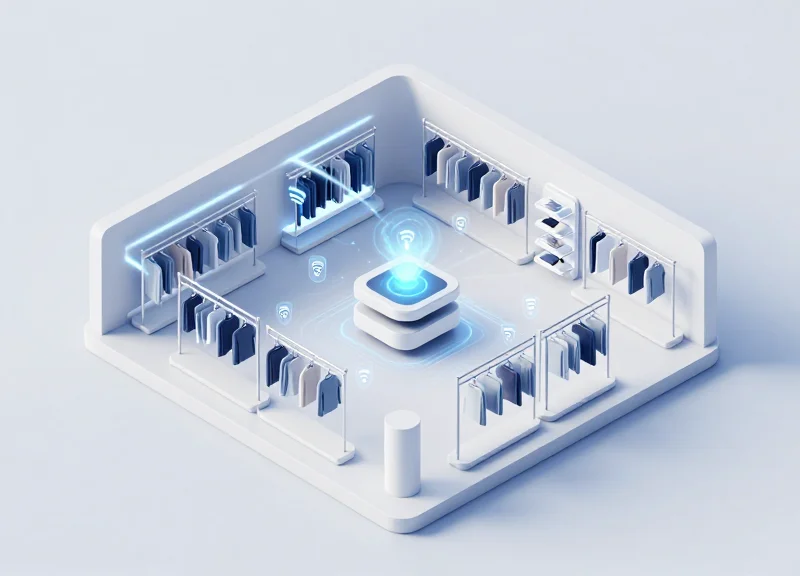
As we approach 2026, the retail and display landscape is undergoing a profound digital transformation. The traditional showroom, once reliant solely on basic Electronic Article Surveillance (EAS) for loss prevention, is now evolving into a data-driven environment. Businesses are increasingly shifting toward RFID-integrated sample asset management to bridge the gap between physical security and operational intelligence. This evolution allows companies not only to protect their high-value samples but also to gain real-time visibility into inventory movements, customer preferences, and supply chain efficiency.
The Limitations of Legacy EAS in Modern Showrooms

In the context of 2026 retail environments, Legacy Electronic Article Surveillance (EAS) refers to traditional security systems—Acousto-Magnetic (AM) or Radio Frequency (RF)—designed strictly for loss prevention. While these systems are effective at triggering an alarm when a tag passes through a pedestal, they function as 'binary' sensors: they only know if something is leaving, not what is leaving. This lack of granular, SKU-level data creates a massive blind spot for showroom managers who require precise asset tracking and sample management rather than just a simple theft deterrent.
| Feature | Legacy EAS (AM/RF) | Modern RFID-Integrated Management |
|---|---|---|
| Identification Level | Bulk/Category Only | Individual SKU/Unique Serial Number |
| Inventory Visibility | Zero (Requires manual counts) | Real-time (99%+ accuracy) |
| Data Directionality | Entry/Exit Only | Full movement history within showroom |
| Customer Friction | High (False alarms/hard tags) | Low (Discreet tags/seamless checkout) |
Expert Insight: The 'Ghost Inventory' Trap. A unique failing of legacy EAS is its inability to combat 'internal misplacement.' In high-end showrooms, 15-20% of 'lost' samples are actually just in the wrong room or behind a curtain. Legacy EAS is powerless to find these items because it only 'sees' the exit. RFID-integrated systems solve this by providing a digital map of every asset, essentially eliminating the labor costs associated with hunting for misplaced samples.
- Lack of Contextual Data: Legacy EAS cannot distinguish between a high-value sample being moved to a VIP fitting room and one being stolen. This leads to 'alarm fatigue' among staff and a poor experience for genuine customers.
- Manual Labor Dependency: Because EAS doesn't track inventory, staff must still perform manual daily counts of showroom samples. In 2026, this 1990s-era workflow is a significant drain on high-value human capital.
- Aesthetic Limitations: Traditional EAS requires bulky pedestals at every exit. Modern smart showrooms favor 'invisible' or overhead sensors that maintain the architectural integrity and premium feel of the space.
Can my existing EAS pedestals be upgraded to RFID?
Generally, no. While some 'hybrid' pedestals exist, true RFID sample management requires a different frequency (UHF) and a software layer that legacy AM/RF hardware cannot support without a total motherboard swap.
Why is 'Directionality' important for 2026 showrooms?
Directionality allows the system to know if a sample is entering a display area, moving to a storage zone, or actually exiting the building. Legacy EAS only knows that a tag is 'near' the gate, leading to frequent false alarms when merchandise is displayed too close to the door.
Defining RFID-Integrated Sample Asset Management

RFID-integrated sample asset management is a comprehensive ecosystem that uses Radio Frequency Identification technology to transition showroom operations from reactive theft prevention to proactive, item-level intelligence. Unlike traditional Electronic Article Surveillance (EAS), which only alerts staff when a generic tag passes a gate, an integrated RFID system assigns a unique digital identity (an EPC or Electronic Product Code) to every individual sample. This allows for automated, non-line-of-sight tracking and continuous data logging of an item's status, location, and movement history throughout its lifecycle on the showroom floor.
| Feature | Legacy EAS (Traditional) | RFID-Integrated Management |
|---|---|---|
| Primary Objective | Theft Deterrence / Alarms | Visibility & Lifecycle Automation |
| Identification Level | Bulk (Is 'an' item leaving?) | Unique (Is 'Sample A-01' leaving?) |
| Data Capture | Point-of-Exit Only | Omnidirectional / Real-time |
| Analytics Capabilities | Minimal (Alarm counts only) | Rich (Dwell time, movement patterns) |
| Staff Effort | High (Manual inventory counts) | Low (Automated daily reconciliations) |
In a 2026 smart showroom environment, this technology functions as the 'nervous system' of the retail space. It involves three core components: UHF RFID tags (passive or active), strategically placed readers (ceiling-mounted or shelf-integrated), and a cloud-based middleware platform. This setup ensures that every time a sample is picked up, moved to a fitting room, or misplaced, the system automatically logs the event without human intervention.
What is 'Item-Level Serialization'?
It is the process of giving every physical sample a unique 'digital twin' ID. This prevents 'ghost inventory' by ensuring the system knows the difference between two identical-looking products.
How does 'Automated Data Logging' work?
Fixed readers continuously scan the environment. When a tag moves from Zone A to Zone B, the software timestamps the movement, creating a searchable audit trail of the sample's journey.
Does it replace existing security?
Yes and no. While it replaces the need for basic EAS, it enhances security by identifying exactly which high-value assets are missing in real-time, rather than waiting for a monthly manual audit.
Expert Insight: The Shift to 'Micro-Interaction' Analytics. A unique advantage of RFID-integrated systems in 2026 is the ability to capture 'micro-interactions.' By tracking how often a sample is moved but not purchased or ordered, showrooms can identify 'vogue but vague' products—items that attract attention but fail to convert due to price or fit issues. This turns security hardware into a powerful merchandising tool that traditional EAS could never replicate.
Top Smart Showroom Trends for 2026

The primary trend for 2026 smart showrooms is the transition to Autonomous Orchestration, where RFID-integrated systems move beyond simple tracking to proactively manage the sample lifecycle. Unlike traditional Electronic Article Surveillance (EAS) which only triggers alarms at exits, 2026 trends focus on 'Invisible Infrastructure'—overhead RFID arrays and smart surfaces that provide 100% real-time visibility without human intervention. This enables showrooms to function as living data centers, where every movement of a sample provides actionable insights into product popularity and staff efficiency.
- Autonomous Inventory Audits: Fixed overhead RFID readers will perform continuous, hands-free inventory counts every few minutes, eliminating the need for manual scanning or closing showrooms for stocktakes.
- Frictionless Sample Check-in/out: Utilizing RFID 'Grab-and-Go' portals, staff and clients can move samples between zones or out of the building with automated digital logging, reducing administrative overhead by up to 85%.
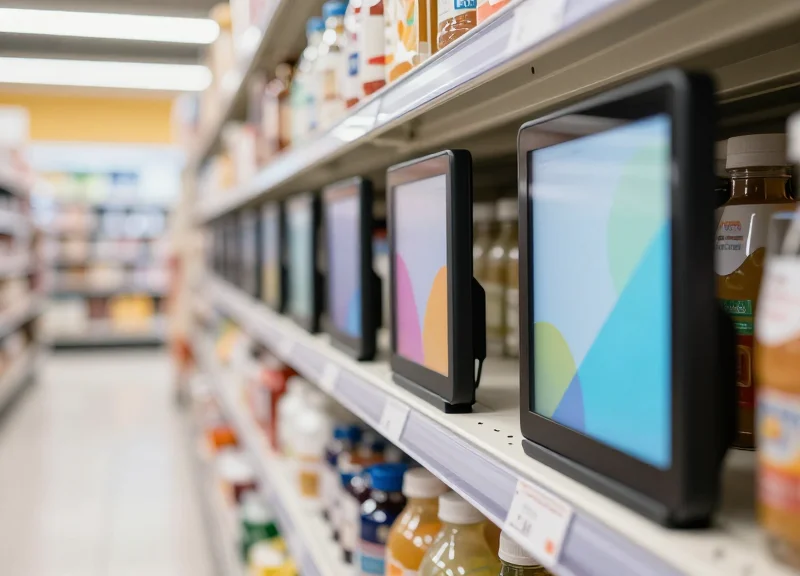
- ESL & RFID Convergence: Electronic Shelf Labels (ESL) are now being paired with RFID sensors to show real-time availability, dynamic pricing, or digital 'call-to-action' prompts based on physical proximity.
| Feature | Legacy EAS Approach | 2026 RFID-Integrated Trend |
|---|---|---|
| Primary Goal | Theft Prevention | Operational Intelligence & Asset Flow |
| Inventory Method | Manual Barcode Scanning | Autonomous Overhead Sensing |
| Data Granularity | Bulk Count Only | Item-level DNA (Batch, Color, Size) |
| User Experience | Intrusive Security Gates | Invisible Tracking & Seamless Checkout |
Expert Insight: The Rise of 'Self-Healing' Showrooms. In 2026, the most sophisticated showrooms will implement 'Self-Healing' logic. By combining RFID location data with AI, the system identifies when a sample has been misplaced (e.g., a luxury handbag left in the footwear section) and sends an automated alert to the nearest staff member's wearable device. This ensures the showroom remains curated and 'photo-ready' at all times without constant supervisor walkthroughs.
How does ESL integration improve the showroom experience?
ESL (Electronic Shelf Labels) allow showrooms to update product information instantly across all displays. When an RFID tag is detected nearby, the ESL can trigger a QR code for more details or notify the user if that specific sample is currently reserved.
Is RFID-integrated management more expensive than traditional EAS?
While the initial hardware investment is higher, the ROI is significantly faster. Savings are realized through the total elimination of manual inventory hours, reduced sample loss, and higher staff productivity.
What is the 'Invisible Tech' trend in 2026?
It refers to embedding RFID antennas into ceilings, furniture, and door frames so that the technology is completely hidden from the customer, maintaining the premium aesthetic of the showroom while providing total security and tracking.
From Security to Strategy: The Business Case for RFID
The business case for RFID in 2026 transcends simple theft prevention; it is a fundamental shift from a cost-center (security) to a profit-enabler (strategy). While legacy EAS systems act as a reactive barrier against loss, RFID-integrated sample asset management functions as a proactive data engine. By assigning a unique digital identity to every sample, businesses can capture high-fidelity 'interaction data'—such as how often an item is moved, which items are paired together, and the dwell time of specific displays—turning physical inventory into a measurable stream of consumer insights that drive marketing and merchandising ROI.
| Feature | Legacy EAS (Security Focus) | RFID Strategy (Business Focus) |
|---|---|---|
| Primary Goal | Loss Prevention | Asset Optimization & Sales Intel |
| Data Granularity | Binary (On/Off Tag) | Item-level (SKU, Color, History) |
| Visibility | Exit-point only | Real-time, floor-wide movement |
| Marketing Value | Zero | High (Heatmapping, Trial-to-Sales) |
| Operational Impact | Manual Audits Required | Automated, Continuous Inventory |
The Expert Insight: Capturing 'Shadow Conversion' Rates. Most showroom managers only measure what sells. In 2026, the strategic advantage lies in measuring what doesn't sell but was highly engaged with. RFID allows brands to calculate the 'Shadow Conversion Rate'—identifying samples that are frequently picked up or taken to fitting rooms but fail to convert. This specific data point is more valuable than a sales receipt because it flags design flaws, pricing disconnects, or fit issues in real-time, allowing for mid-season pivots that were previously impossible.
- Marketing Optimization: Use RFID heatmaps to determine which display zones have the highest 'dwell time,' allowing you to charge premium rates for partner placements or optimize high-margin product positioning.
- Labor Efficiency: Eliminate manual 'blind' counts. RFID reduces inventory labor by up to 90%, redirecting staff from counting items to engaging with high-value clients.
- Omnichannel Accuracy: Ensure that the sample shown in the showroom is reflected accurately in your digital catalog, preventing 'Out of Stock' friction during the transition from physical touch to digital order.
Is the ROI of RFID purely based on reducing theft?
No. While theft reduction is a benefit, the primary ROI comes from increased inventory accuracy (typically rising from 65% to 99%) and the ability to use interaction data to boost sales conversion rates by 10-15%.
How does RFID integrate with existing CRM systems?
Modern RFID platforms use APIs to link item-level interactions with customer profiles. If a VIP client spends 20 minutes with a specific sample category, that data can trigger an automated, personalized follow-up email.
Will RFID tags replace the need for security personnel?
RFID doesn't replace personnel; it empowers them. Instead of monitoring doors, security and floor staff receive real-time alerts on their mobile devices regarding unauthorized movement, allowing for more discrete and effective intervention.
The Hybrid Approach: Migrating from EAS to RFID
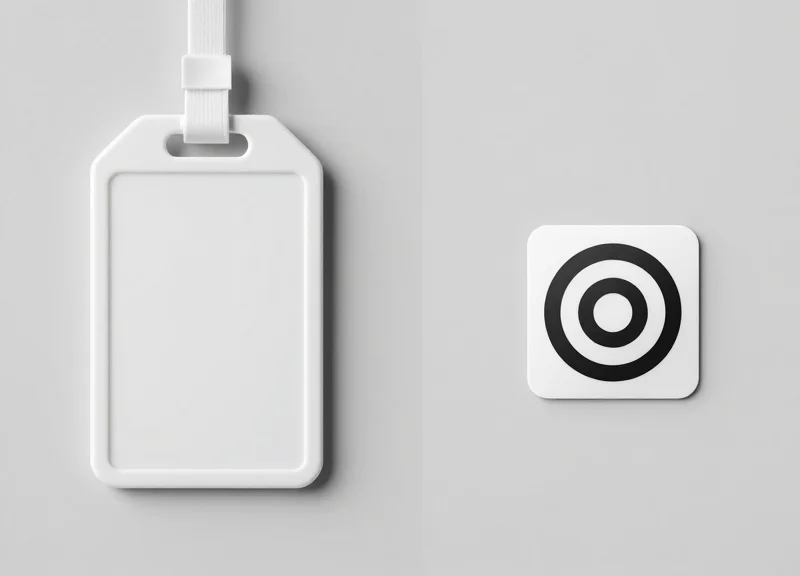
A hybrid migration strategy is the practice of integrating dual-technology hardware—tags that house both legacy Electronic Article Surveillance (EAS) components and modern Radio Frequency Identification (RFID) chips—to allow for a seamless transition from basic loss prevention to intelligent asset management. This approach enables 2026 smart showrooms to immediately leverage item-level data and real-time inventory visibility without the 'rip-and-replace' costs or operational disruptions associated with removing existing security gates and infrastructure overnight.
| Feature | Legacy EAS (AM/RF) | Hybrid Strategy | Full RFID-Integrated |
|---|---|---|---|
| Primary Goal | Loss Prevention | Security + Data Pilot | Strategic Asset Mgmt |
| Tagging | Single Security Tag | Dual-Tech (EAS + RFID) | UHF RFID Encoded |
| Infrastructure | Pedestal Gates | Existing Gates + Handhelds | Overhead & Portal Readers |
| Data Granularity | None (Binary On/Off) | Item-level via Sampling | Full Lifecycle History |
- Infrastructure Audit and Frequency Mapping: Identify whether your current EAS operates on Acousto-Magnetic (58kHz) or Radio Frequency (8.2MHz) to ensure dual-tags don't cause interference with the incoming 860-960MHz UHF RFID signals.
- Implementation of Dual-Technology Tags: Begin tagging new sample arrivals with hybrid tags. This maintains perimeter security via legacy gates while allowing staff to use handheld RFID readers for rapid weekly inventory counts.
- The 'Shadow Inventory' Pilot: Run RFID data collection in the background for high-value assets. Compare RFID-generated inventory reports against manual counts to calibrate system accuracy before going live.
- Phased Reader Deployment: Install fixed RFID readers at high-traffic zones (fitting rooms, checkout, or exits). This allows for 'soft' data collection before decommissioning the legacy EAS gates.
- Software Integration and EAS Decommissioning: Once the RFID data stream is 99% accurate, migrate the security function to the RFID system and remove legacy hardware.
Expert Tip: The 'Quiet Gate' Strategy. In my 20 years in the field, the biggest mistake I see is companies turning off EAS before their RFID logic is fully tuned. Keep your EAS gates active but 'visually' transition your staff to RFID alerts. This allows you to identify 'blind spots' in your RFID reader coverage—areas where a tag might be missed—without actually losing an asset. It effectively uses your legacy system as a safety net during the learning curve of the new tech.
Will RFID interfere with my current EAS alarms?
Generally, no. EAS (AM or RF) and UHF RFID operate on vastly different frequencies. However, testing for 'tag detuning' is essential when using dual-tech tags placed in close proximity.
Is a hybrid approach more expensive in the long run?
While dual-tags cost more than single-use EAS stickers, the ROI is realized through the elimination of manual inventory hours and the prevention of 'out-of-stock' scenarios on the showroom floor.
Do I need to retrain my entire staff immediately?
The beauty of the hybrid model is that it allows for phased training. Staff continue their security protocols as usual while a small 'super-user' group masters the RFID data analytics.
Operational Efficiency: Reducing Human Error in Asset Tracking
Operational efficiency in the 2026 smart showroom is defined by the transition from active manual labor to passive, automated data capture. By integrating RFID-driven Sample Asset Management (SAM), businesses replace error-prone manual barcode scanning and the 'security-only' focus of EAS with a hands-free system. This technology enables the simultaneous reading of hundreds of items without direct line-of-sight, effectively eliminating the 'human factor'—fatigue, missed scans, and data entry mistakes—that typically limits traditional inventory accuracy to roughly 70-80%.
| Efficiency Metric | Manual/Barcode Tracking | Standard EAS | RFID-Integrated SAM |
|---|---|---|---|
| Inventory Speed | Approx. 200 items/hour | N/A (No tracking) | 10,000+ items/hour |
| Data Accuracy | 80% - 85% (Average) | Low (Alarms only) | 99.9% (Consistent) |
| Labor Requirement | High (Active scanning) | Minimal | Zero-Touch (Passive) |
| Visibility Level | Point-in-time | Exit point only | Real-time zonal |
Expert Insight: The 'Ghost Asset' Paradox. In high-traffic showrooms, the biggest hidden cost isn't theft; it's the 'Ghost Asset'—a sample that is physically present but misplaced, or missing but still listed as 'in stock.' Traditional EAS cannot solve this because it only reacts at the exit. By 2026, leading showrooms are using 'Ambient Sensing'—where the ceiling-mounted RFID infrastructure performs autonomous reconciliation every 15 minutes, ensuring that if a sample is moved to a different floor or hidden under a display, the system flags the anomaly immediately without a staff member ever lifting a finger.
- Automated Check-In/Out: As samples arrive or leave the showroom floor, portal readers automatically log the movement in the ERP/CMS, removing the need for staff to manually update spreadsheets.
- Rapid Cycle Counting: Handheld or fixed overhead readers can perform full floor audits in minutes instead of days, allowing for daily accuracy checks that were previously cost-prohibitive.
- Exception-Based Alerts: The system triggers instant notifications if a high-value sample is moved into an unauthorized zone or if a kit is missing a specific component.
Does RFID integration require specialized staff training?
No. In fact, it reduces training requirements because the software handles the complex logic. Staff simply need to know how to respond to system alerts rather than mastering inventory logistics.
What is the primary ROI on labor costs?
Most showrooms see a 60-80% reduction in time spent on administrative inventory tasks, allowing personnel to focus entirely on client engagement and sales.
How does this prevent data silos?
RFID systems sync directly with centralized cloud databases, ensuring that marketing, sales, and logistics teams all see the same real-time asset data simultaneously.
Enhancing the Customer Experience with Interactive Displays

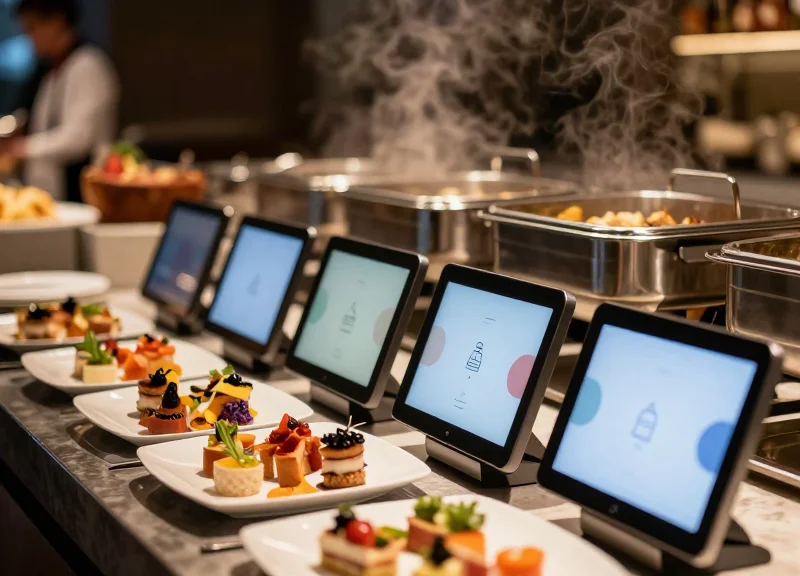
In 2026, interactive showroom displays leverage RFID-integrated sample management to create a 'Lift and Learn' environment where physical interaction instantly triggers high-definition digital content. When a customer picks up a sample, the embedded RFID tag communicates with local sensors, prompting nearby screens to display product specifications, styling videos, and real-time inventory levels. This seamless integration eliminates the friction of searching for price tags or waiting for staff, transforming the showroom from a passive storage space into an active, self-service information hub that accelerates the path to purchase.
- Dynamic Product Storytelling: Automatically launch brand narratives or technical deep-dives as soon as a customer handles a specific SKU, ensuring consistent messaging.
- Real-time ESL Synchronization: Electronic Shelf Labels (ESL) update instantly alongside the display, showing current promotions, loyalty pricing, or QR codes for immediate mobile checkout.
- Cross-Selling & Recommendations: The system recognizes the category of the item held and suggests complementary products available in the showroom, increasing average basket value.
| Feature | Basic EAS Setup | RFID-Integrated Interactive Display |
|---|---|---|
| Primary Function | Theft Prevention | Engagement & Conversion |
| Content Delivery | Static Signage | Dynamic, Trigger-Based Video |
| Customer Feedback | None (Silent) | Interactive Analytics & Preferences |
| Inventory Visibility | Manual Check | Real-time Automated Sync |
Expert Insight: Beyond the visual appeal, the true value of RFID-integrated displays lies in 'Phantom Interest Tracking.' Unlike traditional retail where you only know what sold, these systems capture data on which products were picked up but not purchased. By analyzing 'dwell time'—how long a customer held a sample while watching the interactive content—brands can identify design friction points or pricing hurdles that were previously invisible in a standard EAS environment.
Does the system require high-speed local Wi-Fi?
While a stable connection is needed for cloud updates, most 2026 systems use Edge Computing to ensure content triggers with sub-millisecond latency, preventing any lag between the physical 'lift' and the digital 'learn'.
Can I track which sales reps are most effective with these displays?
Yes. By integrating employee RFID badges, the system can correlate staff presence with display interactions, providing a granular view of how human assistance complements automated digital content.
Are these displays compatible with all product types?
RFID tags have evolved to work on metal, liquids, and delicate fabrics, making these interactive displays viable for everything from high-end jewelry to technical outdoor gear.
Future-Proofing Your Showroom with DragonGuardGroup
Future-proofing your showroom means building a digital foundation that transitions from reactive loss prevention to proactive asset intelligence. DragonGuardGroup achieves this by harmonizing Electronic Article Surveillance (EAS) for security, Radio Frequency Identification (RFID) for granular tracking, and Electronic Shelf Labels (ESL) for dynamic customer engagement into a single, interoperable ecosystem. This 'Triple-Threat' architecture ensures that as your showroom scales or your inventory complexity increases, your management system adapts without requiring a complete infrastructure overhaul.
| Feature | Legacy Showroom Setup | DragonGuardGroup Ecosystem |
|---|---|---|
| Security Methodology | Acousto-Magnetic (AM) or RF only | Hybrid RFID-EAS Gateways |
| Inventory Visibility | Manual cycle counts (Periodic) | Real-time automated tracking |
| Pricing & Info | Static paper labels | Dynamic ESL (Instant Updates) |
| Data Utilization | Post-theft analysis only | Predictive behavior & flow analytics |
The DragonGuardGroup advantage lies in our 'Modular Scalability' philosophy. We don't just sell hardware; we provide a roadmap for digital transformation. By starting with our high-performance RFID-enabled EAS antennas, showrooms can immediately secure their assets while laying the groundwork for item-level data collection that feeds directly into ERP and CRM systems.
- Interoperable Hardware Suite: Our sensors and tags are designed to communicate across protocols, ensuring that your EAS gates, handheld scanners, and ESL nodes share a unified data stream.
- Cloud-Native Integration: All DragonGuardGroup solutions feature open APIs, allowing for seamless integration with modern retail management software and future AI-driven analytics tools.
- Sustainable Lifecycle Management: We prioritize energy-efficient ESL modules and long-life RFID tags, reducing the total cost of ownership (TCO) over a 10-year horizon.
Expert Insight: The 2026 Data Dividend. Most competitors treat RFID and ESL as separate silos. Our unique perspective is that the interaction between the two—where an RFID-tracked sample being moved triggers an ESL price update or a nearby digital display change—creates a 'Data Dividend.' This is the point where the system pays for itself not through loss prevention, but through a 15-25% increase in conversion rates driven by hyper-relevant customer interactions.
Can we upgrade our existing EAS system to RFID with DragonGuardGroup?
Yes. Our hybrid antennas are designed to support both traditional AM/RF tags and new RFID overlays, allowing for a phased migration that protects your initial investment.
What is the typical deployment timeline for a full smart showroom?
A standard integration of EAS and RFID takes 4-6 weeks, while the addition of a fully synced ESL system can be completed within 8 weeks depending on the showroom size.
Does DragonGuardGroup provide global support?
Our global logistics and technical support teams ensure that whether your showrooms are in Silicon Valley or Shanghai, you receive consistent hardware and 24/7 technical assistance.