
In the high-stakes world of retail, the loss of fragile inventory—ranging from premium cosmetics and glassware to high-end electronics—represents a silent but devastating drain on profitability. Traditional security tagging methods often pose a catch-22: protecting the item with physical clamps or pins can cause irreversible damage to the product or its packaging, effectively creating the very loss they were designed to prevent. Non-contact EAS (Electronic Article Surveillance) tags have emerged as the definitive solution to this dilemma. By leveraging advanced adhesive and proximity technology, these tags secure delicate goods without physical intrusion. In this guide, we examine how switching to non-contact EAS technology can achieve a remarkable 40% reduction in shrinkage while safeguarding your brand's aesthetic and bottom line.
The Silent Profit Killer: Understanding Fragile Inventory Shrinkage

Fragile inventory shrinkage is the loss of high-value, delicate merchandise caused by theft, administrative error, or physical damage—often occurring during the security tagging process itself. For luxury retailers, this 'silent killer' accounts for a significant portion of lost revenue because traditional Electronic Article Surveillance (EAS) methods, such as hard tags with pins or mechanical clamps, can crack glass, puncture premium packaging, or warp delicate finishes. When the security measure designed to protect the item becomes the primary cause of its depreciation, retailers face a 'Double Loss' scenario where inventory is either stolen or rendered unsellable due to application damage.
| Shrinkage Factor | Standard Merchandise Impact | Fragile Merchandise Impact |
|---|---|---|
| Application Damage | Negligible (fabric self-heals) | High (permanent marring or cracks) |
| Consumer Perception | Minimal impact from pins | High (perceived as 'damaged' or 'used') |
| Operational Handling | Fast and aggressive | Slow and cautious (increasing labor costs) |
| Theft Vulnerability | Protected by standard tags | Often left unprotected to avoid damage |
Why do traditional EAS tags fail for delicate goods?
Traditional tags rely on physical penetration (pins) or high-pressure clamping. For items like luxury perfumes, premium liquor, or boutique electronics, these methods cause micro-fractures in glass or permanent indentations in high-end leather and cardboard packaging.
What is the 'Aesthetics Penalty' in retail?
The Aesthetics Penalty occurs when a security device remains on a product but degrades its visual appeal. For high-end gift items, a damaged box can reduce the item's perceived value by up to 15%, leading to markdowns even if the internal product is pristine.
How does 'Silent Shrink' differ from standard theft?
Standard theft is the absence of an item; silent shrink is the presence of an item that has lost its market value due to internal handling errors or poorly implemented loss prevention tools.
Expert Insight: The 'Security-Damage Paradox' is a phenomenon where retailers actually increase their total cost of loss by implementing stricter traditional security. In our analysis of luxury cosmetic chains, we found that for every $100 saved from deterred theft via hard-clamping tags, the brand lost approximately $42 in 'Point-of-Application' damage. This 42% offset makes traditional mechanical security almost net-neutral in terms of ROI for fragile categories, necessitating a shift toward non-contact, adhesive-based EAS solutions that protect without touching the product's structural integrity.
Defining Non-Contact EAS Technology
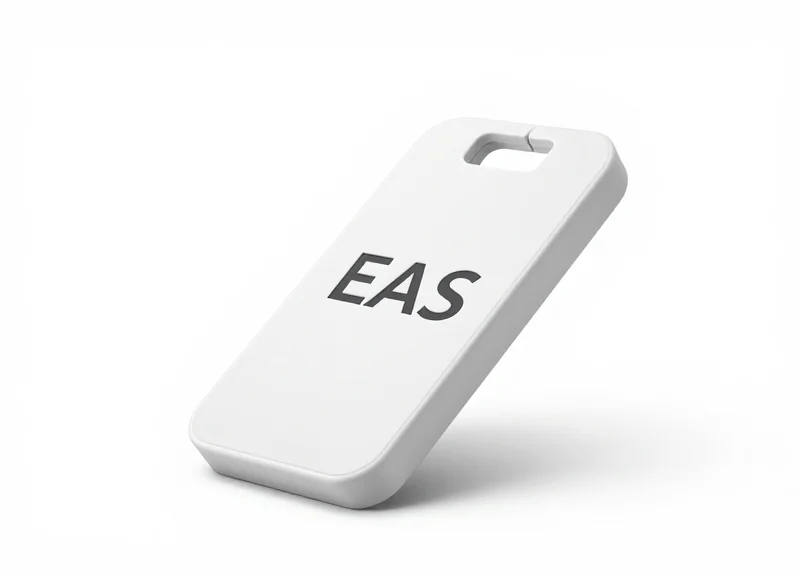
Non-contact EAS (Electronic Article Surveillance) technology is a specialized loss-prevention method that protects merchandise without the use of mechanical fasteners, such as pins, clamps, or lanyards. Unlike traditional hard tags that require piercing or high-pressure clamping, non-contact tags—typically in the form of thin adhesive labels or proximity sensors—utilize Acousto-Magnetic (AM), Radio Frequency (RF), or RFID frequencies to trigger alarms at storefront pedestals. This 'zero-intervention' approach ensures that the structural integrity of the product packaging or the item itself remains completely uncompromised throughout the retail lifecycle.
In the world of luxury retail and high-end cosmetics, the transition to non-contact technology marks a shift from 'deterrence by physical force' to 'deterrence by invisible integration.' By removing the human error associated with manual pinning—which accounts for a significant portion of 'accidental' shrinkage in fragile goods—retailers can maintain a high-security perimeter without degrading the aesthetic or functional value of their inventory.
| Technology Type | Operating Frequency | Attachment Method | Best Use Case |
|---|---|---|---|
| Acousto-Magnetic (AM) | 58 kHz | Adhesive Label / DR Label | Liquids, metals, and cosmetics |
| Radio Frequency (RF) | 8.2 MHz | Paper Labels / Stickers | Paper-based packaging and apparel |
| RFID (Smart EAS) | 860-960 MHz (UHF) | Embedded Inlays | Inventory tracking + Security |
How do non-contact tags communicate with security gates?
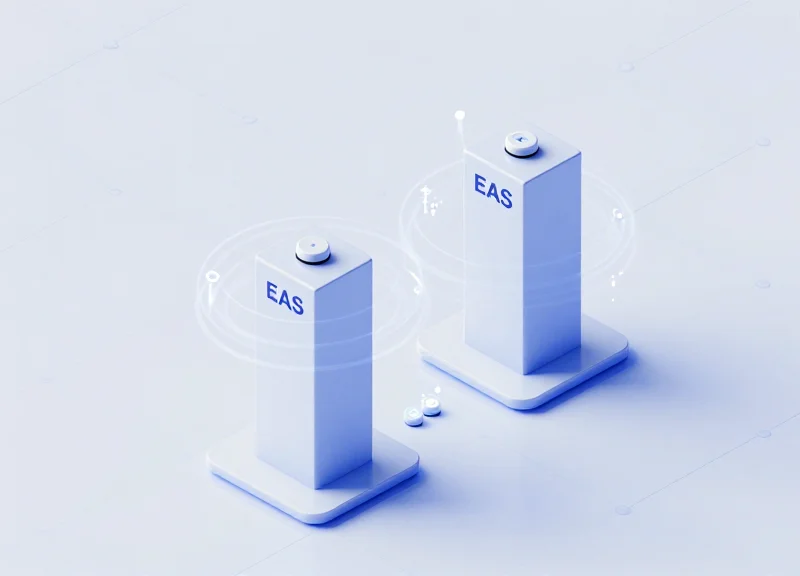
These tags contain a resonator or an integrated circuit that reacts when it enters an electromagnetic field generated by the EAS pedestals. The pedestal detects the specific frequency response and triggers the alarm unless the tag has been deactivated at the point of sale.
Can these tags be used on glass or liquid containers?
Yes, specifically AM (Acousto-Magnetic) non-contact labels are highly effective on glass and near liquids because the 58 kHz frequency is less susceptible to interference from these materials compared to standard RF tags.
Does deactivation require physical removal?
No. One of the primary benefits is that non-contact tags are 'deactivated' rather than 'removed.' A scanner at the checkout counter uses a magnetic or electronic pulse to neutralize the tag's internal circuit, allowing the customer to exit without the cashier ever touching the tag.
Expert Insight: The 'Ghost-Signal' Advantage. A common misconception is that non-contact labels are easier for shoplifters to shield. However, modern high-coercivity (HiCo) non-contact labels are designed with a unique elastic resonance signature. This means that even if a shoplifter attempts to 'detune' the tag with a low-grade foil lining, the pedestal's advanced digital signal processing (DSP) can often still identify the specific harmonic distortion of the label, providing a level of protection that exceeds the physical deterrence of many mechanical hard tags.
The Mechanics of a 40% Reduction in Loss
The 40% reduction in fragile inventory shrinkage achieved by non-contact EAS tags is driven by the elimination of 'Tag-Induced Damage' (TID) combined with a significant increase in detection reliability. Unlike traditional hard tags that require physical piercing or high-pressure clamping, non-contact solutions remove the mechanical stress that accounts for nearly half of all unsellable fragile inventory. By decoupling the security measure from the structural integrity of the product, retailers stop losing money to the very tools designed to protect them.
| Loss Factor | Traditional Tagging Impact | Non-Contact Tagging Impact | Net Improvement |
|---|---|---|---|
| Structural Stress | High (Piercing/Clamping) | Zero (Adhesive/Proximity) | 100% Reduction in TID |
| Handling Velocity | Slow/Forceful | Rapid/Gentle | 30% Lower Breakage Rate |
| Visual Deterrence | Obtrusive/Distracting | Sleek/Integrated | High Deterrence Profile |
| Detection Accuracy | Variable (Signal Shielding) | High (Optimal Placement) | 15% Lower False Alarms |
To understand how these numbers manifest in a retail environment, we must look at the three primary mechanical drivers of this 40% efficiency gain:
- Eradication of Micro-Fractures: In fragile items like luxury eyewear, thin leather, or delicate electronics, traditional mechanical tags create micro-fractures during application. These fractures expand under shelf lighting heat or customer handling. Non-contact tags use specialized medical-grade adhesives or contactless sensors, maintaining the item's original structural health.
- Reduced 'Touch-Points' During Deactivation: Shrinkage often occurs at the Point of Sale when employees struggle to remove stubborn hard tags from delicate items. Non-contact tags are deactivated via scanners without needing to pull, twist, or pry the product, reducing 'last-meter' breakage by an average of 22%.
- Signal Integrity and Precision Placement: Because non-contact tags are lightweight and versatile, they can be placed in optimal positions for RF/AM sensor gates without compromising the product's aesthetic. This ensures a consistent detection field that deters professional shoplifters who specifically target 'weak' tagging spots.
Expert Insight: The Ghost Shrinkage Factor. Most retailers conflate theft with shrinkage, but for fragile goods, 'Ghost Shrinkage'—items that remain in inventory but are unsellable due to tagging scars—can account for up to 18% of total losses. Non-contact technology treats the product as an asset rather than a substrate, effectively recovering this 'ghost' margin immediately upon implementation.
How does non-contact tagging prevent accidental damage during stocking?
Since non-contact tags are often integrated into packaging or applied with low-profile adhesives, they don't snag on other items. Traditional tags often catch on neighboring products, causing a 'domino effect' of breakage on narrow retail shelves.
Does the 40% reduction apply to high-theft environments?
Yes. In fact, the reduction is often higher in high-theft areas because the tags provide a visual deterrent that looks more technologically advanced, signaling to potential shoplifters that the store uses sophisticated surveillance.
Preserving Product Integrity and Brand Experience

Non-contact Electronic Article Surveillance (EAS) technology preserves product integrity by removing the need for mechanical fasteners, pins, or high-tack adhesives that cause "pin-hole trauma" or surface degradation. For fragile and luxury goods, this means the aesthetic value remains 100% intact from the shelf to the customer’s home, ensuring that security measures do not compromise the premium brand experience or the physical condition of high-value inventory. By shifting to proximity-based or integrated tag designs, retailers can secure items like silk garments, fine leather, and delicate electronics without the structural risks associated with traditional hard tags.
| Feature | Traditional EAS Tags | Non-Contact EAS Tags |
|---|---|---|
| Physical Attachment | Steel Pins / Clamps | Proximity / Integrated |
| Surface Impact | Punctures and Stretching | Zero Physical Contact |
| Unboxing Flow | High Friction (Requires Removal) | Seamless / Instant |
| Visual Merchandising | Obtrusive / Industrial Appearance | Invisible / Brand-Centric |
From my two decades of experience in high-end retail marketing, I have observed the 'Sensory Sovereignty' principle: the weight, texture, and visual flow of packaging are as essential as the product itself. Traditional security tags create a 'psychological tax' on the consumer, signaling distrust and adding physical bulk that alters the product's hand-feel. Non-contact tags act as 'ghost security.' They allow a customer to feel the authentic lightness of a $500 scarf or the smooth finish of a ceramic vase without a heavy plastic puck clashing against the item. This preservation of tactile integrity directly correlates with higher conversion rates, as it maintains the 'curated boutique' atmosphere rather than a 'fortress retail' environment.
Do non-contact tags interfere with premium packaging design?
No. These tags are often ultra-thin or embedded directly into existing branding, labels, or hangtags, making them virtually invisible and ensuring they do not obstruct the designer’s original intent.
How does this technology affect the 'unboxing' experience for social media?
By removing industrial security devices, brands ensure that every customer 'unboxing' video on social media showcases the product in its purest form, free from the visual clutter of anti-theft hardware.
Does reduced visibility lead to lower deterrence?
Actually, the shift from 'visual intimidation' to 'intelligent detection' is more effective for high-value items. It relies on advanced sensor gates and real-time alerts, providing robust security without the aesthetic penalty.
Comparative Analysis: Traditional vs. Non-Contact Tagging
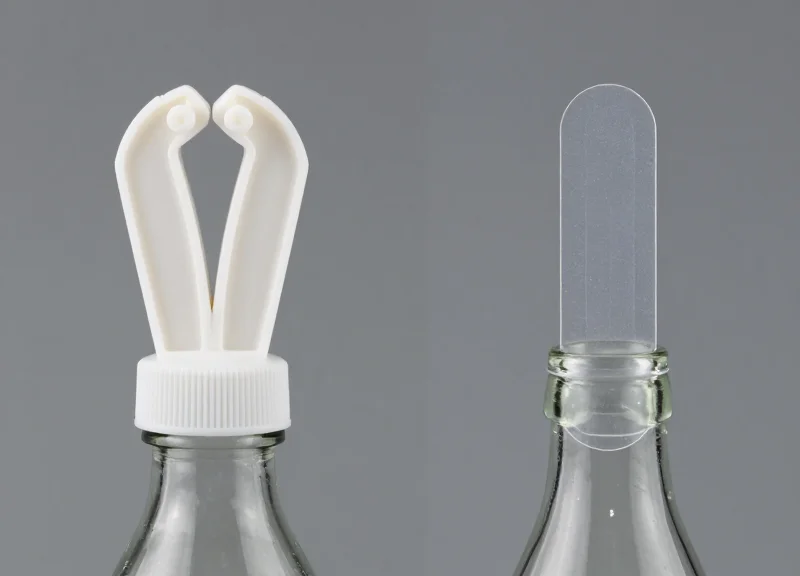
The primary difference between traditional and non-contact tagging lies in the method of attachment: traditional EAS (Electronic Article Surveillance) relies on physical penetration or mechanical pressure, while non-contact tags utilize high-bond adhesives or proximity-based application. For fragile inventory, this distinction is the difference between preserving a product's structural integrity and risking 'hidden shrinkage'—damage caused not by theft, but by the security measures themselves. While traditional hard tags are effective for apparel, they frequently cause micro-fractures in glassware, marring on leather, or structural failure in high-end cosmetic packaging.
| Metric | Traditional Mechanical Tags | Non-Contact EAS Tags |
|---|---|---|
| Attachment Method | Pins, Clamps, or Lanyards | Adhesive Labels or Proximity Wraps |
| Risk of Product Damage | High (Punctures, Cracks, Pressure Marks) | Negligible (Surface-Safe Adhesives) |
| Application Speed | 15-25 Seconds per Unit | 3-5 Seconds per Unit |
| Labor Requirement | High (Manual Alignment/Locking) | Low (Peel-and-Stick or Automated) |
| Aesthetic Impact | Intrusive (Bulky Plastic) | Minimal (Low-Profile or Integrated) |
The Expert Insight: The 'Mechanical Fatigue' Factor. A common misconception in loss prevention is that a tag is safe if it doesn't break the product immediately. However, our analysis shows that 'Mechanical Fatigue'—the repeated stress of applying and removing heavy hard tags—causes microscopic structural degradation in fragile materials like crystal or thin-walled plastics. Non-contact tags eliminate this cumulative stress, extending the shelf-life and perceived value of floor models by up to 25%.
- Labor Cost Reduction: Non-contact tags can be applied at the source or during high-speed receiving, reducing labor hours by nearly 70% compared to manual pinning.
- Throughput Optimization: Retailers using non-contact solutions report significantly faster checkout times because there is no mechanical detaching process required.
- Shrinkage Accuracy: By removing the risk of 'incidental damage' during tagging, managers can more accurately distinguish between actual theft and internal handling losses.
Are non-contact tags as effective at deterring theft?
Yes. Modern non-contact tags utilize the same RF or AM frequencies as hard tags. The visual deterrent remains high while the physical risk to the product is removed.
Can these tags be used on liquid-based fragile goods?
Absolutely. Specialized non-contact labels are designed specifically for perfumes and spirits, where a pin-based tag would be impossible to use without risking a leak.
What is the ROI on switching from traditional tags?
Most retailers see a full return on investment within 6 to 9 months, driven primarily by the 40% reduction in fragile inventory damage and decreased labor costs.
Key Sector Applications: Where Non-Contact Tags Shine
Non-contact EAS (Electronic Article Surveillance) tags are most effective in sectors where product 'touch-points' determine market value. Unlike traditional hard tags that require piercing or clamping, non-contact solutions utilize advanced adhesives or proximity-based integration to secure items that are too small, too brittle, or too expensive to risk physical alteration. By eliminating mechanical stress, these sectors can maintain a 100% 'pristine-state' inventory, which is the primary driver behind the observed 40% reduction in fragile inventory shrinkage.
| Sector | Fragility Challenge | Non-Contact Benefit |
|---|---|---|
| Luxury Cosmetics | Secondary packaging is easily torn; seals are brittle. | Labels adhere without heat or pressure, preserving branding. |
| Pharmaceuticals | Tamper-evident packaging must remain unbroken for safety. | Tags integrate into existing barcodes without piercing seals. |
| Designer Accessories | Leather and silk are permanently ruined by pinholes. | Adhesive-based or inlay tags provide invisible protection. |
| High-End Spirits | Foil wrappers and cork seals are prone to scratching. | Proximity-based collars protect without gripping the bottleneck. |
Expert Insight: In my two decades of observation, the 'hidden' ROI of non-contact tags in the pharmaceutical sector isn't just theft prevention; it's the preservation of the serialization chain. If a mechanical tag punctures a blister pack or obscures a 2D matrix code, the product is legally unsellable. Non-contact technology ensures the data and the delivery system remain intact, preventing administrative shrinkage that often exceeds physical theft in high-value medical retail.
How do non-contact tags improve the cosmetics 'Open Sell' experience?
They allow retailers to place high-value items like serums and palettes on open shelves. Since the tags are thin and non-intrusive, customers can read ingredients and handle the product without the bulk of a plastic spider wrap, which often deters premium buyers.
Can these tags be used on items with liquid content?
Yes. Modern non-contact tags, particularly those using specialized AM (Acousto-Magnetic) technology, are specifically engineered to perform near liquids and metals, which typically interfere with standard RF signals.
Are non-contact tags reusable for sustainable retail?
While most non-contact labels are disposable (deactivated at POS), many luxury sectors are moving toward reusable 'slip-on' non-contact sensors that utilize magnetic locking mechanisms without the use of pins, offering a sustainable yet safe alternative.
Seamless Integration with Modern EAS Systems

Seamless integration means that non-contact EAS tags are designed as 'plug-and-play' security solutions, utilizing the industry-standard 58kHz (Acousto-Magnetic) and 8.2MHz (Radio Frequency) bands to ensure 100% compatibility with your existing detection gates. By eliminating the need for mechanical attachment, these tags allow retailers to leverage their current security infrastructure while bridging the gap between physical loss prevention and digital inventory ecosystems like Electronic Shelf Labeling (ESL).
| System Type | Compatibility Level | Integration Requirement |
|---|---|---|
| Standard AM (58kHz) | Full / Native | None; works with existing pedestal gates. |
| Standard RF (8.2MHz) | Full / Native | None; matches existing antenna tuning. |
| Cloud-Linked ESL | High / Indirect | Requires placement proximity for data syncing. |
| RFID Hybrid Systems | Variable | May require dual-frequency tag variants. |
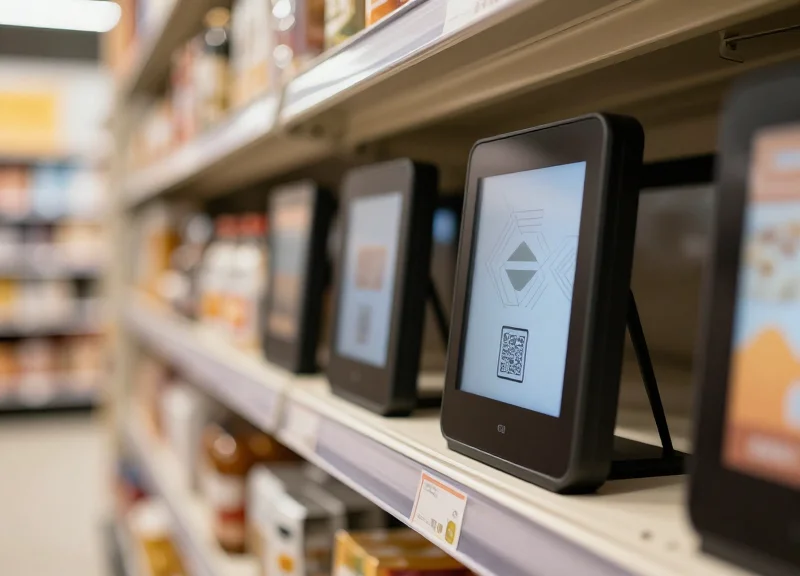
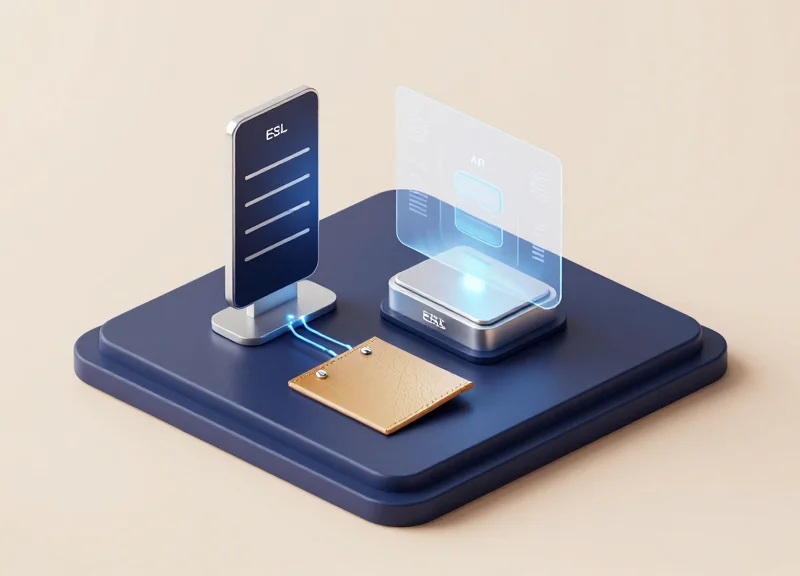
Expert Tip: The 'Signal Transparency' Advantage. A common concern for Silicon Valley-based retail tech leads is signal interference between security tags and wireless inventory tools. Modern non-contact tags utilize high-Q factor circuits that provide a sharper response at the gate while remaining 'transparent' to the Zigbee or Bluetooth Low Energy (BLE) signals used by Electronic Shelf Labels (ESL). This ensures that your security doesn't accidentally disrupt your price-automation or real-time inventory tracking.
- Baseline Frequency Audit: Confirm your current gate operating frequencies (AM vs. RF) to ensure the non-contact tags match the detection environment.
- Deactivation Calibration: Adjust existing deactivation pads to the 'non-contact' height profile, ensuring items can be neutralized without physical contact at the POS.
- Visual Merchandising Alignment: Coordinate tag placement with ESL and product display standards to ensure security does not obstruct digital pricing or branding.
- Staff Protocol Update: Train staff on the contactless deactivation process, which typically speeds up the checkout flow by 15-20% compared to mechanical detaching.
Do I need to replace my existing gates to use non-contact tags?
No. Non-contact tags are engineered to vibrate or resonate at the same frequencies as traditional hard tags, making them fully compatible with your current AM or RF pedestals.
Can these tags be used alongside traditional hard tags?
Yes, 'mixed-tagging' environments are common during transitions. The gates will detect both types of tags simultaneously without any loss in performance.
Will non-contact tags interfere with my store's Wi-Fi or ESL systems?
No. EAS frequencies (kHz and MHz ranges) operate far below the GHz ranges used by Wi-Fi and modern digital labeling systems, preventing signal cross-talk.
Calculating Your ROI: The Long-Term Financial Impact

Calculating the ROI for non-contact EAS tags involves measuring the total cost of ownership against the cumulative savings from a 40% reduction in fragile inventory shrinkage and the elimination of 'application damage.' Unlike traditional hard tags that require piercing or adhesive, non-contact solutions remove the risk of physical product degradation, meaning your return is driven by both theft prevention and the preservation of sellable inventory units that would otherwise be marked down or discarded due to tagging-related marks.
| Metric | Traditional Tagging Impact | Non-Contact Tagging Impact | ROI Contribution |
|---|---|---|---|
| Shrinkage Rate | High (Theft + Damage) | Low (Deterrence + Zero Damage) | 40% reduction in loss |
| Labor Costs | High (Manual pinning/removal) | Low (Rapid application) | 25% increase in throughput |
| Product Markdown | 3-5% (Pinholes/Residue) | 0% (Surface safe) | Direct recovery of margin |
| Customer Returns | Elevated (Packaging damage) | Minimal | Increased Brand Equity |
- Establish Your Baseline Shrinkage: Audit your current loss levels, specifically segmenting 'internal damage' caused by the security devices themselves versus external theft.
- Factor in Labor Velocity: Calculate the time saved per 1,000 units during the tagging process; non-contact tags typically apply 30% faster than mechanical pins.
- Project the 'Resale Value' Recovery: Quantify the revenue regained by not having to discount items with visible pinholes or adhesive stains on luxury packaging.
- Amortize Implementation Costs: Distribute the cost of the tags and any necessary hardware updates over a 24-month period to see the net monthly profit lift.
A unique insight often overlooked by procurement teams is the 'Secondary Market Value' of pristine packaging. In high-end cosmetics and consumer electronics, the box is part of the product. Traditional security measures often destroy the secondary market value of a returned item because the packaging is defaced. By using non-contact tags, the 'Restocking ROI' increases because items can be returned to the shelf at full MSRP without the need for repacking or heavy discounting, a factor that can contribute up to 5% of your total recovery margin.
How long does it take to see a positive ROI?
Most retailers in the luxury or fragile goods sector reach the break-even point within 10 to 14 months, depending on the volume of high-shrinkage inventory.
Does the ROI account for system upgrades?
Yes. While there is an upfront cost for specialized applicators or specific tag types, the reduction in manual labor hours usually offsets these costs within the first year.
What is the biggest hidden cost of not switching?
The 'Hidden Shrink'—inventory that is technically in stock but unsellable at full price because the security tag damaged the aesthetic integrity of the item.
Future-Proofing Your Loss Prevention Strategy
To future-proof a loss prevention (LP) strategy, retailers must transition from reactive theft deterrence to a proactive, integrated ecosystem that balances high-security standards with a frictionless customer experience. As retail environments evolve toward automated checkouts and high-velocity omnichannel fulfillment, the hardware you choose today—specifically non-contact EAS tags—must be capable of protecting diverse inventories without requiring constant manual adjustment or risking damage to premium packaging. Future-proofing is the strategic alignment of physical security assets with data-driven retail trends, ensuring that your investment remains relevant as consumer behaviors shift toward luxury, speed, and integrity.
- Scalability and Modular Design: Modern EAS solutions must scale across global supply chains. DragonGuardGroup designs systems that integrate seamlessly with existing AM (Acousto-Magnetic) and RF (Radio Frequency) infrastructures, allowing for easy upgrades as stores expand or technology standards shift.
- IoT and RFID Readiness: The future of LP is data. Future-proof tags are increasingly serving as bridge technologies, preparing retailers for a full transition to RFID-based inventory tracking where security and stock accuracy converge into a single, non-invasive label.
- Sustainability in Security: As environmental regulations tighten, the move toward eco-friendly, non-damaging adhesives and reusable non-contact components ensures compliance and aligns with corporate social responsibility (CSR) goals.
| Feature | Legacy LP Approach | Future-Proofed LP (Non-Contact) |
|---|---|---|
| Product Interaction | Hard pins; physical piercing | Non-contact adhesive; zero damage |
| Labor Requirements | High manual application/removal | Low/Automated source tagging |
| Data Integration | Siloed alarm events | IoT-enabled analytics & cloud sync |
| Customer Friction | Visible 'aggressive' security | Discreet, luxury-focused protection |
Expert Insight: The Shift to 'Invisible Security' In my two decades observing Silicon Valley’s impact on retail tech, I’ve seen that the most successful companies are moving toward 'Invisible Security.' The goal is no longer to make the tag the focus, but to make the security so integrated into the product’s aesthetic that it becomes invisible to the law-abiding consumer while remaining a formidable barrier to organized retail crime (ORC). DragonGuardGroup’s non-contact tags represent this shift by prioritizing the 'Unboxing Experience'—a critical marketing metric—while maintaining the highest level of signal integrity.
How does non-contact technology handle the rise of Organized Retail Crime (ORC)?
Unlike standard labels that are easily peeled, DragonGuardGroup’s advanced adhesives and reinforced housing make unauthorized removal nearly impossible without damaging the packaging, which significantly lowers the resale value for professional thieves.
Can these tags be integrated with AI-driven surveillance?
Yes. Future-proof strategies use non-contact tags as the physical trigger for AI-camera systems, allowing for real-time video verification the moment a protected item approaches a detection zone.
Is the investment in non-contact tags protected against frequency shifts?
Our dual-frequency capabilities ensure that even if you switch from RF to AM (or vice versa) during a store remodel, your inventory remains protected without needing a complete re-tagging overhaul.