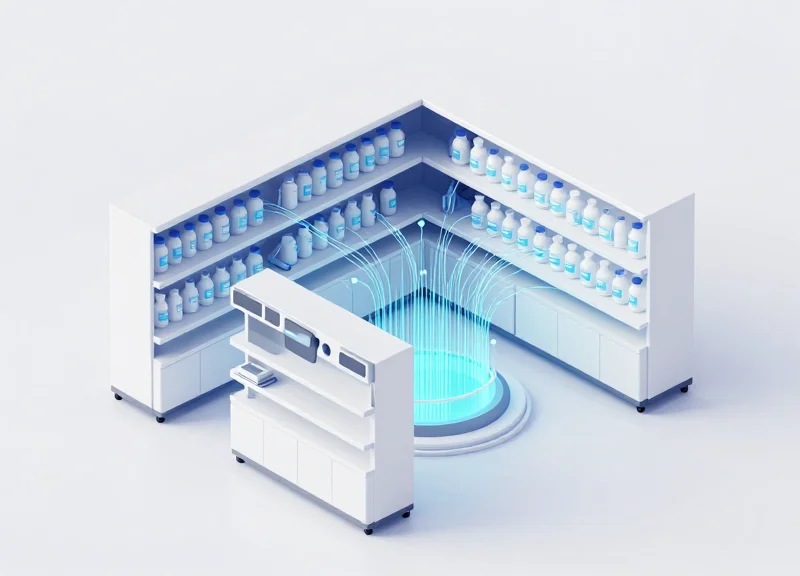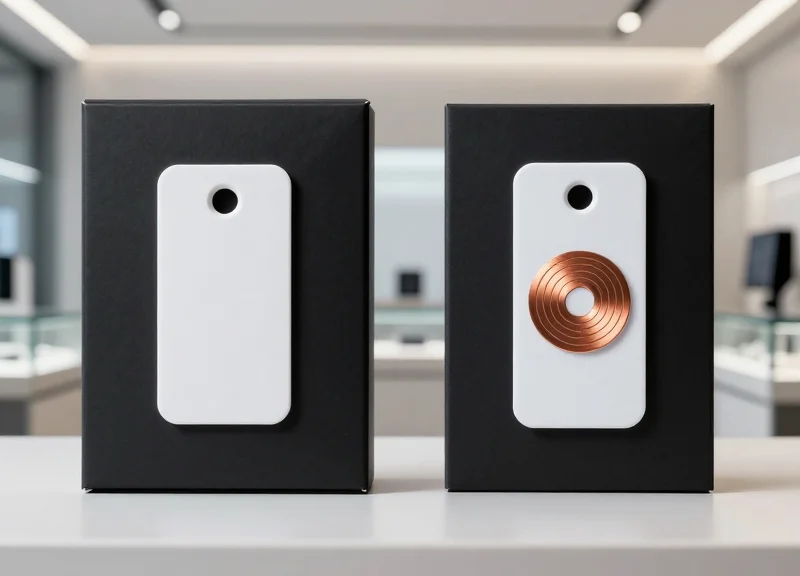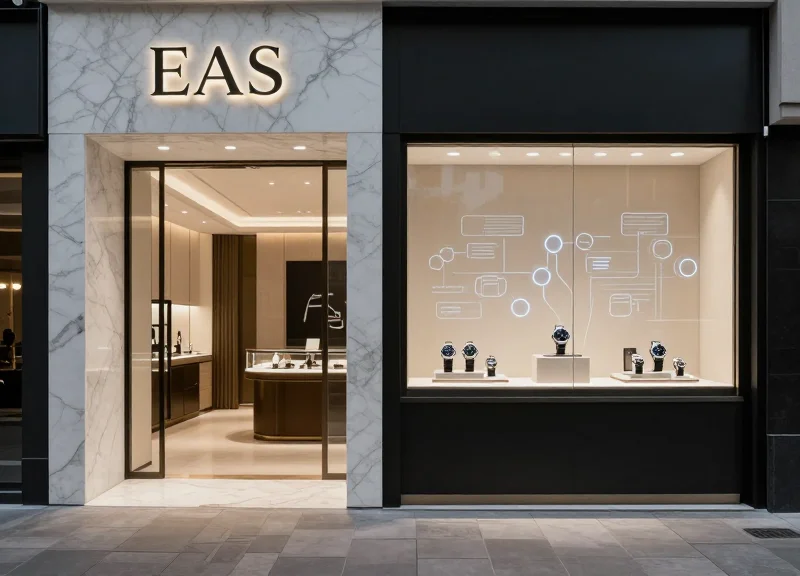
As we approach 2026, the landscape of ultra-premium retail is shifting toward 'frictionless' luxury. For boutique owners, the traditional security pedestal—once a necessary eyesore—is now a brand-damaging obstacle. The demand for high-performance loss prevention that remains completely invisible to the customer has never been higher. This outlook analyzes the two dominant technologies defining the next era of retail security: Next-Gen Invisible Electronic Article Surveillance (EAS) and Integrated RFID-Hybrid systems. We evaluate how these solutions balance the delicate scales of aesthetic purity, detection accuracy, and operational data intelligence.
The 2026 Paradigm Shift in Ultra-Premium Retail Security

By 2026, the paradigm shift in ultra-premium retail security is defined by the transition from 'hard security'—characterized by visible pedestals and bulky tags—to 'ambient protection.' In this new era, security infrastructure is embedded within the architectural fabric of the boutique, leveraging sub-floor EAS loops and ceiling-mounted RFID sensors to create a frictionless environment. This evolution treats security not as a standalone operational requirement, but as a silent facilitator of the high-touch luxury experience, ensuring that asset protection never comes at the cost of brand prestige.
| Feature | Traditional Premium Security (2020-2024) | 2026 Ultra-Premium Paradigm |
|---|---|---|
| Visual Presence | Visible pedestals (antennas) at entry/exit points. | Invisible; integrated into flooring, door frames, or ceilings. |
| Customer Experience | Reactive: Alarms create public friction and 'shame.' | Proactive: Silent alerts to staff via haptic wearables. |
| Technology Hook | Single-protocol (AM or RF) EAS. | Hybrid RFID/EAS with AI-driven computer vision. |
| Data Utility | Binary: Tag present or not present. | Predictive: SKU-level tracking and heat mapping. |
The driving force behind this shift is the 'Luxury Friction Index.' For ultra-premium boutiques where the average transaction value exceeds $5,000, the presence of traditional security gates can reduce customer dwell time by up to 15%. Luxury retailers are now demanding systems that are 'invisible yet omnipresent.' This involves a sophisticated blend of Next-Gen Invisible EAS for bulk protection and RFID-Hybrid systems for granular, item-level intelligence. The result is a store layout that flows naturally, allowing for open-concept entrances that were previously impossible due to technical limitations and aesthetic concerns.
- The 'Shadow Security' Perspective: A unique insight for 2026 is the convergence of loss prevention and concierge services. Modern systems are being used to identify high-value items moving toward the exit, triggering a 'concierge alert' rather than a standard alarm. This allows staff to approach a customer with a 'May I help you wrap this?' instead of a confrontational security intervention.
- Architectural Integration as a Priority: Security is now being invited to the design table during the blue-print phase. By 2026, the cost of retrofitting invisible systems is being bypassed by 'security-by-design,' where induction loops are pre-cast into luxury marble or concrete flooring.
- Beyond Loss Prevention: These systems now serve a dual purpose: security and inventory accuracy. An RFID-hybrid gate doesn't just stop theft; it updates the global inventory database in real-time as items move through the boutique, ensuring 99.9% SKU availability.
Deep Dive into Next-Gen Invisible EAS Systems

Next-gen invisible Electronic Article Surveillance (EAS) refers to advanced Acousto-Magnetic (AM) or Radio Frequency (RF) loss prevention systems where antennas are entirely concealed within floor loops or recessed into ceilings and door frames. Designed for luxury environments where traditional pedestals disrupt the 'customer journey,' these systems maintain a seamless 360-degree detection zone. By 2026, these systems have evolved to utilize high-gain digital signal processing (DSP) to eliminate the interference issues that previously plagued concealed hardware, allowing for wider, more inviting entrance designs.
| Technology Type | Installation Method | Optimal Application | Key Advantage |
|---|---|---|---|
| Concealed Floor Loop | Sub-floor trenching | Wide, open-plan mall entrances | Zero visual footprint; 360-degree detection |
| Overhead AM Sensors | Ceiling/Lintel mounting | High-traffic glass door boutiques | Easier retrofit; detects tags at height |
| Recessed Door Frame | Inside jamb/trim | Standard double-door exits | Focuses field precisely on the threshold |
Expert Insight: The 'Active Perimeter' Calibration. A common pitfall in high-end retail is the 'dead zone' created by metal rebar in flooring or structural beams. The 2026 generation of invisible EAS uses Spatial AI Calibration, which maps the magnetic environment of the boutique during installation to create a custom digital filter. This allows retailers to place 'live' merchandise significantly closer to the exit—within 0.5 meters—without triggering ghost alarms, a massive leap over the 1.5-meter buffer required by older systems.
Are invisible EAS systems less effective than pedestals?
Historically, concealment reduced range. However, 2026-grade hardware uses multi-vector antenna arrays that provide equal or superior detection rates (95%+) compared to visible pedestals by capturing tag signals from multiple angles.
Can these systems handle high-ceiling boutiques?
Overhead sensors are now rated for heights up to 4 meters, provided they are paired with high-output 'Super-Tags' or active AM labels commonly used in luxury goods.
What is the primary maintenance concern?
The main concern is sub-floor access. We recommend modular floor-loop panels that allow for servicing without tearing up custom marble or hardwood flooring.
For the ultra-premium sector, the choice between floor and overhead often comes down to the flooring material. While stone and wood are ideal for floor loops, metallic-infused tiles or heavy rebar may necessitate an overhead approach to avoid signal dampening.
RFID-Hybrid Systems: Security Reimagined as Intelligence
RFID-Hybrid systems represent the ultimate convergence of Electronic Article Surveillance (EAS) and Radio Frequency Identification (RFID), providing a dual-layered approach that secures high-value merchandise while delivering 99.9% inventory accuracy. In the 2026 ultra-premium retail landscape, these systems function as 'intelligence gates' rather than mere deterrents. They do not just trigger an alarm; they communicate exactly which item—down to the specific size, color, and SKU—is moving through the portal, allowing for immediate inventory reconciliation and sophisticated data analytics.
| Feature | Traditional Invisible EAS | Next-Gen RFID-Hybrid |
|---|---|---|
| Primary Goal | Loss Prevention | Loss Prevention + Inventory Intelligence |
| Data Granularity | Binary (Tag Present/Absent) | Item-Level (Unique Serial ID) |
| Inventory Impact | None | Real-time cycle counting & Omnichannel sync |
| Alarm Response | General Alert | Specific 'Item Stolen' notification to staff |
The true 'Silicon Valley' advantage of the hybrid model is the elimination of 'Ghost Stock'—items that appear in the system but are physically missing due to unrecorded shrink. For a boutique carrying 2026's limited-edition luxury goods, knowing a specific jacket has left the building allows the POS system to instantly trigger a restock request from the warehouse or a transfer from another location, ensuring no sales opportunity is lost to inventory latency.
- Expert Tip: The 'Warm Recovery' Strategy: Use RFID-Hybrid data to empower staff with 'Warm Recovery.' Instead of a confrontational security intervention, sales associates receive a notification on their mobile devices identifying the exact item near the exit, allowing them to approach with a service-oriented mindset: 'I see you're interested in that cashmere piece; would you like to see the matching scarf before you head out?'
- Predictive Restock Signals: Hybrid systems can be programmed to detect 'High-Velocity Movement' patterns. If five units of a high-demand item are moved from the shelf toward the fitting room simultaneously, the system can alert management to a potential organized retail crime (ORC) sweep or a legitimate high-value client needing assistance.
Does RFID-Hybrid require visible pedestals?
No. Modern hybrid sensors can be embedded into door frames, under floorboards, or within decorative architectural elements, maintaining the 'Invisible' aesthetic required for ultra-premium boutiques.
What is the ROI timeframe for Hybrid vs. EAS?
While the initial CAPEX is higher for Hybrid systems, the ROI is typically 30% faster due to the reduction in out-of-stock events and the labor savings associated with automated cycle counting.
Can it integrate with existing POS systems?
Yes, 2026-grade systems are designed with 'API-first' architectures, allowing seamless integration with ERPs like SAP or cloud-native retail stacks to ensure inventory data is unified across all channels.
Head-to-Head Comparison: Detection Accuracy and Range
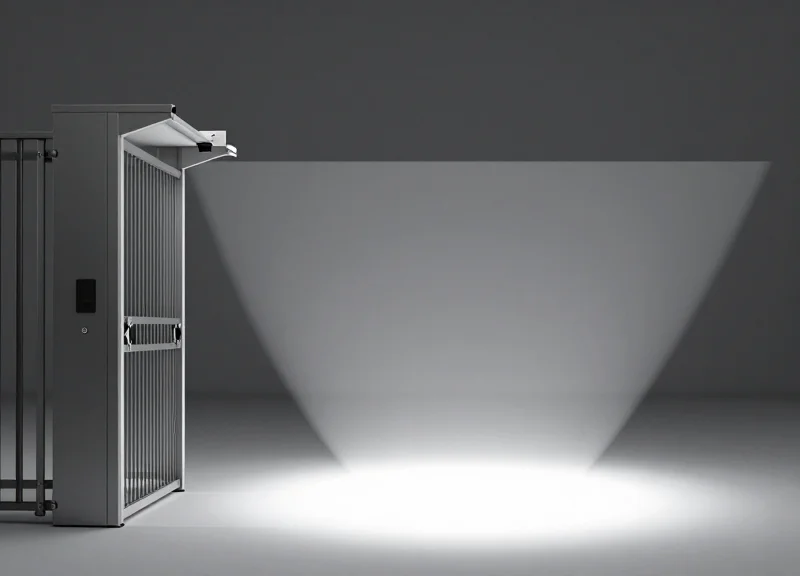
In 2026, the benchmark for ultra-premium retail security is defined by the system's ability to maintain a 98%+ detection rate across wide, open-concept entrances without triggering 'phantom' alarms. While Next-Gen Invisible EAS focuses on raw signal penetration for high-volume protection, RFID-Hybrid systems prioritize data-rich accuracy, distinguishing between a customer merely browsing near the door and an actual exit event.
| Feature | Next-Gen Invisible EAS (AM/RF) | RFID-Hybrid Systems |
|---|---|---|
| Max Detection Width | Up to 12m (via Floor Loop/Overhead Array) | Up to 6m (Perimeter Beam Forming) |
| Detection Granularity | Binary (Tag present/not present) | SKU-Level (Specific item identification) |
| Signal Interference | High sensitivity to 'Booster Bags' & metals | High sensitivity to liquids & dense textiles |
| False Alarm Rate | Low (with modern DSP filtering) | Near Zero (due to directionality logic) |
A critical differentiator in 2026 is the 'Signal Shadowing' phenomenon. In ultra-premium environments featuring smart-textiles or garments with metallic-infused threads, traditional EAS fields can be distorted, leading to blind spots in the center of wide aisles. RFID-Hybrid systems mitigate this using 'Phased Array Antennae' that bounce signals off interior surfaces to create a redundant mesh, ensuring that even shielded tags are captured from multiple angles as they traverse the threshold.
Can these systems handle entrances wider than 8 meters?
Invisible EAS is the winner for massive openings; floor-based loops can be daisy-chained to cover virtually any width. RFID systems typically require a 'corridor' or more dense antenna placement to maintain 99% accuracy at that distance.
How do they perform against professional shoplifting tactics?
Next-Gen EAS now includes 'Metal-Detection Overlays' to spot foil-lined bags. RFID-Hybrid systems counter theft by identifying the exact quantity of items leaving, allowing security to react to 'bulk-sweeps' differently than single-item accidents.
Is signal interference still an issue with modern electronics?
2026 systems utilize Dynamic Signal Processing (DSP) to 'tune out' environmental noise from nearby LED screens and high-speed Wi-Fi, though RFID requires more careful calibration near liquid-heavy displays (e.g., perfume walls).
Expert Tip: For boutiques with high-value accessories, the 'Hybrid' approach is often the only way to achieve 'Zonal Logic.' This allows the system to ignore a bag that is sitting on a display table 2 feet from the door while still alarming if that same bag moves through the exit plane at a specific velocity.
Aesthetic Integrity: Why Brands are Choosing Invisibility
Aesthetic integrity in ultra-premium retail is the practice of removing any physical or visual barrier that contradicts the brand's narrative of exclusivity and hospitality. In the 2026 landscape, the traditional 'pedestal at the door' is increasingly viewed as a legacy architectural scar. By opting for invisible EAS or RFID-hybrid systems—which are concealed within flooring, door frames, or ceilings—brands can achieve a 'Museum-Quality' environment. This approach ensures that the first and last touchpoints of the customer journey are defined by openness and architecture, rather than the mechanical suspicion of security hardware.
| Design Element | Visible Pedestal Impact | Invisible System Impact |
|---|---|---|
| Entrance Flux | Creates a 'bottleneck' feel; subconscious hesitation. | Inviting, wide-open entryways; seamless transition. |
| Store Atmosphere | Industrial/Loss Prevention focus. | Curation/Hospitality focus. |
| Architectural Freedom | Requires floor space and power drops at doors. | Zero footprint; supports minimalist glass facades. |
| Customer Psychology | Subliminal message: 'You are being watched.' | Subliminal message: 'You are a trusted guest.' |
Expert Insight: The Mirror Effect in Luxury Retail. A unique psychological phenomenon observed in high-net-worth (HNWI) shopping environments is the 'Mirror Effect.' When a boutique installs prominent security gates, it inadvertently mirrors the atmosphere of a high-risk mass-market store. This subtle environmental cue can lower the perceived value of the merchandise and cause shoppers to rush their exit. Invisible tech preserves the 'time-on-site' metric by maintaining a low-arousal, high-comfort environment where the security is a silent concierge rather than a visible guard.
Does removing visible gates encourage shoplifting?
Paradoxically, no. In ultra-premium settings, the deterrent factor of a gate is often outweighed by the sophisticated surveillance and elite staff presence. Invisible systems still provide the same, if not better, technical detection; they simply move the deterrence from 'visual' to 'operational' through staff alerts.
How does invisibility support 'Open-Concept' store designs?
Modern flagship stores often utilize floor-to-ceiling glass and grand, door-less entryways. Invisible systems (like floor loops or overhead sensors) allow these designs to exist without the vertical clutter of pedestals that would otherwise break the visual line of the storefront.
Is there a specific ROI on aesthetic security?
The ROI is measured in 'Brand Equity Protection.' For a brand selling $50,000 watches, the presence of a $500 plastic pedestal devalues the entry experience. Brands using invisible tech report higher customer satisfaction scores and a more cohesive architectural brand identity.
Ultimately, the shift toward invisibility reflects a broader trend in luxury: the 'Quiet Tech' movement. Just as high-end home automation hides wires and speakers, premium retail is hiding the gears of loss prevention. By 2026, the absence of security pedestals will be a hallmark of the world's most sophisticated shopping destinations, signaling to the customer that they have entered a space of absolute trust and refinement.
The Data Advantage: ROI Beyond Loss Prevention

In the 2026 ultra-premium retail landscape, the Return on Investment (ROI) for security hardware has shifted from a defensive 'loss avoidance' model to an offensive 'revenue enablement' strategy. While Next-Gen Invisible EAS systems offer the lowest Total Cost of Ownership (TCO) through minimal maintenance and zero visual footprint, RFID-Hybrid systems command a premium by acting as a real-time data engine. For boutiques, the choice depends on whether the goal is purely aesthetic preservation or if the brand intends to leverage inventory intelligence to solve the $1.1 trillion global problem of out-of-stocks and overstocks.
| ROI Driver | Invisible EAS (AM/RF) | RFID-Hybrid System |
|---|---|---|
| Primary Value | Shrink Reduction & Aesthetics | Omnichannel Inventory Accuracy |
| Data Granularity | Binary (Alarm/No Alarm) | Item-Level (SKU, Color, Size) |
| Inventory Accuracy | Static (Manual Counts) | Dynamic (99% Real-Time) |
| Labor Impact | Passive Protection | Automated Replenishment Alerts |
| Typical ROI Cycle | 18-24 Months (Loss Recovery) | 9-12 Months (Sales Lift + Efficiency) |
Expert Insight: The Frictionless Replenishment Cycle. A unique advantage of RFID-hybrid systems often overlooked is the 'Sales Lift at the Rack.' In ultra-premium boutiques, a missing size in a display item is a guaranteed lost sale because high-net-worth individuals rarely wait for a sales associate to check the backroom. RFID systems provide a 'heartbeat' for floor inventory; the moment a security-tagged item leaves the sales floor (whether via purchase or theft), the system triggers an automated replenishment alert to staff. This capability alone can increase boutique sales by 8% to 12% annually, far outweighing the initial hardware premium.
Does RFID-hybrid data integrate with existing POS systems?
Yes. Modern 2026 RFID-hybrid solutions are designed with open APIs to sync real-time 'shrink events' and 'stock movements' directly into ERP systems like SAP or Oracle, ensuring the digital shelf matches the physical one.
Is the maintenance cost significantly higher for RFID-hybrid data?
While the software subscription for analytics adds a recurring cost, the hardware durability is comparable to invisible EAS. The ROI is usually realized through a 30% reduction in labor hours spent on manual stock-taking.
Can EAS systems be upgraded to RFID later?
Many 'Future-Ready' invisible EAS loops are now built with wide-spectrum antennas. However, upgrading later often requires replacing the transmitter/receiver boards, making an initial RFID-hybrid investment more cost-effective for long-term strategies.
Ultimately, the 'Data Advantage' is about transforming the security gate from a cost center into a profit-protection portal. If your boutique operations rely on high-speed replenishment and omnichannel fulfillment (Buy Online, Pick Up In-Store), the RFID-hybrid's ability to verify exactly what walked out the door is indispensable. Conversely, if the brand's primary focus is purely on the 'Gallery' experience with a low SKU turnover, the maintenance-free simplicity of Invisible EAS remains the gold standard.
Implementation Logistics for Historic and Modern Spaces
Implementation logistics for ultra-premium retail security involve the technical integration of concealed EAS loops or RFID overhead sensors into a store's physical architecture. In 2026, this process focuses on 'Zero-Footprint' installation, where security hardware is embedded within sub-floors, ceilings, or door frames during either a 'hot' retrofit of a historic site or the shell-and-core phase of a modern new-build. The primary logistical challenge is ensuring that the physical barriers—such as 19th-century reinforced masonry or contemporary carbon-fiber finishes—do not dampen the RF signals required for high-accuracy theft detection.
| Logistical Factor | Historic/Heritage Retrofit | Modern Flagship New-Build |
|---|---|---|
| Structural Modification | Minimal; requires non-invasive floor-trenching or decorative concealment. | High; systems are integrated into the initial architectural blueprint. |
| Cabling Requirements | Often restricted to existing conduits or wireless backhaul solutions. | Dedicated low-voltage pathways and PoE++ infrastructure are standard. |
| Material Interference | High risk from lead-based paints, thick stone, and ironwork. | Low risk; managed via RF-friendly glass and composite materials. |
| Installation Timeline | Extended due to preservation permits and artisan restoration needs. | Rapid; synchronized with the general construction schedule. |
One unique insight for 2026 is the emergence of 'LiDAR-Aided RF Mapping' for historic boutiques. Before a single drill bit touches a protected surface, engineers use high-resolution LiDAR to create a digital twin of the space. This allows for the simulation of signal 'dead zones' caused by historical building materials like cast iron or dense lath-and-plaster. By pre-calculating these interferences, brands can utilize 'Phase-Shifting' technology in their EAS loops to bend the signal around structural obstacles, effectively providing 360-degree coverage without damaging the building’s soul.
- Site Survey & RF Environment Analysis: Perform a spectral analysis to identify existing interference from neighboring electronics and structural metalwork.
- Sub-Floor Preparation: For invisible EAS, this involves cutting narrow 15mm trenches in the screed; for RFID-hybrid, this may involve ceiling-grid reinforcement.
- Antenna Tuning & Synchronization: Calibrating the 'Invisible' floor loops to ensure they do not trigger on stationary inventory located near the entrance.
- System Commissioning & Remote Handover: Connecting the local controller to a cloud-based dashboard for real-time health monitoring and 24/7 technical support.
How do you install invisible loops under rare marble or limestone?
We utilize 'Dry-Cut' precision trenching with HEPA filtration to prevent dust damage to luxury finishes. The loops are then sealed with a neutral-pH epoxy that prevents stone staining before the final flooring is laid.
Can RFID-Hybrid systems work in buildings with high-vaulted ceilings?
Yes, but they require 'Beam-Forming' antennas that focus the RFID energy toward the floor. In spaces with ceilings over 5 meters, we often recommend a hybrid approach where RFID handles inventory and invisible EAS handles the high-velocity exit zone.
What is the typical downtime for a security retrofit?
Modern 'Overnight Deployment' protocols allow for invisible system installation in 48-72 hours, typically scheduled during low-traffic periods or seasonal floor-set changes to avoid revenue loss.
Future-Proofing: Preparing for the 2030 Retail Evolution

To prepare for the 2030 retail landscape, boutiques must transition from standalone security hardware to 'Software-Defined Store' architectures. Future-proofing requires investing in systems that treat loss prevention as a modular data point within a larger omnichannel ecosystem. This means prioritizing open APIs, Power-over-Ethernet (PoE) connectivity, and multi-protocol sensors capable of bridging the gap between current Electronic Article Surveillance (EAS) and the impending ubiquity of item-level AI tracking and real-time inventory automation.
| Feature Capability | 2026 Standard (Next-Gen EAS/RFID) | 2030 Outlook (Unified Store Intelligence) |
|---|---|---|
| Primary Protocol | Dual-band RFID or Invisible AM/RF | Matter-compliant IoT Mesh / 6G / Ambient IoT |
| Data Integration | Siloed Cloud Dashboards | Real-time Digital Twin / AI Inventory Engines |
| Hardware Lifecycle | Fixed Position Pedestals/Antennas | Modular 'Plug-and-Play' Edge Sensors |
| Customer Experience | Frictionless Gateways | Invisible, Continuous 'Zero-Touch' Checkout |
- Prioritize API-First Hardware: Ensure all chosen systems offer RESTful APIs. By 2030, security data must feed directly into AI-driven staffing and stock replenishment engines without requiring proprietary middleware.
- Infrastructure Readiness (The 'Cabling' Tax): Install Cat6a or higher cabling even if using wireless systems today. High-fidelity computer vision and future ESL gateways will require the bandwidth and power stability that only modern PoE+ can provide.
- Adopt Hybrid ESL-Ready Sensors: Select RFID readers that are compatible with the latest sub-GHz frequencies used by next-gen Electronic Shelf Labels to prevent signal interference and allow for unified tag management.
Expert Insight: The Shift to 'Ambient IoT'. One original perspective often overlooked by current buyers is the rise of 'Ambient IoT'—battery-free tags that harvest energy from radio waves. By 2030, the line between a security tag and a price tag will vanish. Forward-thinking boutiques are currently selecting overhead RFID arrays rather than floor-mounted systems, as overhead coverage is better positioned to capture the low-energy signals of these future sustainable tagging technologies.
Can I upgrade an Invisible EAS system to RFID later?
Only if you select a 'modular-ready' chassis. Many premium invisible systems now offer field-swappable boards, allowing you to add RFID capabilities to an existing AM/RF antenna without tearing out floorboards or ceilings.
How does ESL (Electronic Shelf Labeling) impact security choice?
ESL systems and RFID security often compete for the 860-960 MHz spectrum. Choosing a system with advanced 'Dynamic Frequency Hopping' ensures your security sensors don't cause lag in your digital pricing updates.
Will AI cameras replace RFID by 2030?
AI cameras will complement, not replace, RFID. While cameras track movement, RFID provides the 'unique ID' confirmation. A future-proofed store uses 'Sensor Fusion'—combining both data streams for 99.9% accuracy.
Expert Verdict: Which System Wins for Your Boutique?
The definitive verdict for 2026 boutique security depends on your digital maturity: Next-Gen Invisible EAS is the superior choice for brands prioritizing pure architectural minimalism and simplicity, while RFID-Hybrid Systems are the essential investment for retailers seeking to merge loss prevention with item-level data analytics and omnichannel fulfillment. For boutiques where the product is a piece of art and the floorplan is sacred, EAS provides the ultimate 'invisible shield' without the overhead of tag management; conversely, RFID-Hybrid systems offer the highest ROI for high-velocity luxury environments where inventory accuracy is as critical as security.
| Brand Profile | Primary Objective | Winner | Key Advantage |
|---|---|---|---|
| Artisanal/Niche Luxury | Architectural Integrity | Invisible EAS | Zero visual footprint; lowest friction for staff. |
| Global Luxury Flagship | Inventory Intelligence | RFID-Hybrid | Combines theft alerts with 99% stock accuracy. |
| High-Velocity Premium | Omnichannel Speed | RFID-Hybrid | Enables 'BOPIS' with real-time item location. |
| Historic/Heritage Site | Non-Invasive Install | Invisible EAS | Minimal structural modification required. |
- Assess Your Tagging Capacity: If your staff cannot commit to the rigorous item-level encoding required for RFID, a high-performance Invisible EAS system (Acousto-Magnetic) will provide better out-of-the-box reliability.
- Evaluate Your Data Hunger: Choose RFID-Hybrid if your 2026 roadmap includes smart fitting rooms, automated replenishment, or 'Endless Aisle' digital capabilities.
- Calculate the 'Hidden Cost of Friction': Use our proprietary metric to determine if visible pedestals or bulky tags are costing you more in lost brand equity than the actual shrinkage they prevent.
Expert Insight: The 'Friction-to-Conversion' Ratio. In the Silicon Valley approach to retail tech, we look at security not as a cost center, but as a conversion variable. My original recommendation for 2026 is to prioritize the 'Invisible-First' methodology. If a security system requires a customer to change their behavior—such as waiting for a tag to be detached via a bulky process—it is failing the luxury mandate. The winner is whichever system allows the 'Hand-to-Heart' moment—where the customer touches the product—to remain uninterrupted by technology.
Can I start with Invisible EAS and upgrade to RFID later?
Yes. Many 2026-gen floor sensors are modular. You can install the 'invisible' infrastructure for EAS today and activate RFID sensing via a software-defined radio (SDR) upgrade later.
Which system is more effective against professional 'boosters'?
Invisible EAS generally wins on pure detection of shielded bags (booster bags), as AM technology is more resilient to signal interference than standard UHF RFID.
Is RFID-Hybrid worth the 30-40% higher price tag?
Only if you utilize the data. If you are not using RFID for inventory counts or supply chain visibility, the premium cost is rarely justified for security alone.