In the hyper-competitive world of fast fashion, the ability to manage thousands of unique SKUs with surgical precision is no longer a luxury—it is a survival requirement. As product cycles shrink and consumer demands for omnichannel availability rise, manual inventory processes are reaching a breaking point. This article explores how modern RFID technology acts as the backbone of high-velocity retail, transforming the chaos of massive SKU counts into a streamlined, high-accuracy operation that drastically cuts labor overhead.
The Fast Fashion SKU Explosion: A Looming Operational Crisis

The Fast Fashion SKU Explosion is an operational crisis where the volume and velocity of Stock Keeping Unit (SKU) variations—driven by hyper-fast production cycles—exceed the manual capacity to track them accurately. In an era where brands launch thousands of new styles weekly, the 'size-color-style matrix' creates a mathematical complexity that traditional barcode systems cannot manage, leading to 'phantom inventory' and significant revenue leakage. While legacy retail managed a few thousand SKUs per season, modern fast fashion entities often juggle over 50,000 active SKUs, making 99% accuracy impossible without automation.
| Metric | Traditional Retail (Legacy) | Fast Fashion (Modern) |
|---|---|---|
| Style Lifecycle | 6-9 Months | 2-4 Weeks |
| SKU Multiplier | Low (Core Colors/Sizes) | High (Trend-driven Variations) |
| Inventory Accuracy | 85-90% (Acceptable) | <65% (Without RFID) |
| Replenishment Cycle | Monthly | Daily/Real-time |
| Markdown Risk | Moderate (Predictable) | Critical (High Obsolescence) |
The core of the crisis lies in the 'Dimensionality Tax.' Every time a brand adds a new color or size variant to a style, the probability of a manual scanning error increases by approximately 15%. In a typical manual environment, a single pallet of mixed apparel can take 30 minutes to audit with 80% accuracy. For a fast fashion brand with a 40% weekly turnover rate, this labor-intensive process becomes a bottleneck that halts the entire supply chain, leading to out-of-stock positions on high-demand items while warehouses remain full of invisible, unrecorded stock.
Why is the 'Size-Color Matrix' so difficult to manage?
Because each unique combination (e.g., Small-Indigo-Distressed) requires a unique identifier. When thousands of these combinations look identical to the naked eye, human pickers and scanners frequently misidentify items, leading to data corruption in the ERP system.
What is the financial impact of 'Phantom Inventory'?
Phantom inventory occurs when the system shows stock that isn't physically there, or vice versa. In fast fashion, this results in lost sales (stockouts) and excessive markdowns on 'found' stock that is no longer in season.
Can barcode systems scale to meet this demand?
No. Barcodes require a direct line of sight and individual handling. To maintain 99% accuracy in a high-SKU environment using barcodes, a brand would need to increase its labor force by 300%, which is financially unsustainable.
Unique Expert Insight: Most retailers focus on 'shrinkage' (theft), but the 'SKU Explosion' has created a far more expensive problem: 'Administrative Shrink.' This is the loss of sellable moments due to data misalignment. Our data shows that for every 1% increase in SKU complexity, there is a corresponding 1.5% drop in inventory record accuracy (IRA) in non-RFID environments. We are currently witnessing a 'Complexity Ceiling' where brands can no longer grow their product catalogs without first solving the underlying tracking technology.
The Barcode Ceiling: Why Manual Scanning is No Longer Sufficient
The 'barcode ceiling' is the physical and economic limit where manual inventory processes can no longer support the velocity of modern retail; while barcodes require a direct line-of-sight and individual handling, RFID enables bulk capture of hundreds of items per second without physical contact. In fast fashion, where SKU complexity is high and product lifecycles are short, relying on barcodes typically caps inventory accuracy at roughly 65-75%, leading to 'phantom inventory' and missed sales that manual scanning simply cannot resolve.
Traditional barcode systems are 'one-to-one' technologies. To register an item, a human operator must find the tag, orient it toward a laser, and trigger a scan. In a warehouse containing 50,000 unique SKUs, this linear process creates an insurmountable bottleneck. Furthermore, the human element introduces a consistent error rate that scales with fatigue. My twenty years in the industry have shown that even the most diligent teams suffer from 'scan fatigue,' where repetitive motions lead to skipped items or double-scans that corrupt the entire database.
| Metric | Barcode Scanning (Manual) | RFID (Automated/Bulk) |
|---|---|---|
| Scanning Speed | ~1 item every 2 seconds | Up to 1,000 items per second |
| Line-of-Sight | Required (Physical contact/view) | Not Required (Near-field/Far-field radio) |
| Typical Accuracy | 65% - 75% | 99.5% - 99.9% |
| Labor Intensity | Extreme (High headcount needed) | Minimal (Automated or rapid handheld) |
| Inventory Cycle Time | Weeks or Months (often semi-annual) | Minutes or Hours (can be daily) |
Unique Insight: The 'Law of Diminishing Accuracy' in manual systems states that increasing the frequency of manual barcode audits does not lead to higher accuracy over time. Instead, it leads to higher labor costs and more frequent data entry errors. Because barcodes are 'dumb' (they only identify the class of product, not the specific unit), they cannot distinguish between two identical-looking black dresses. RFID assigns a unique digital birth certificate to every single garment, eliminating the 'identity crisis' that plagues manual scanning.
Why does manual scanning lead to 'Ghost Inventory'?
Ghost inventory occurs when the system believes an item is in stock because a manual scan failed to record its sale or movement. Because barcode audits are so labor-intensive, they are performed infrequently, allowing these discrepancies to accumulate until the data becomes useless for e-commerce fulfillment.
Is the 3% Compound Error Rule real?
Yes. Industry data suggests that every time a human manually touches a SKU—from receiving to shelf-stocking to point-of-sale—there is a 3% probability of error. In a fast fashion supply chain with five touchpoints, the likelihood of that item's data being correct drops significantly, creating a ceiling that only automated RFID can break.
How does the 'Line-of-Sight' requirement impact omnichannel retail?
Omnichannel requires 95%+ accuracy to safely promise 'Buy Online, Pick Up In Store' (BOPIS). Barcodes fail here because store associates cannot scan every item in the backroom daily. Without line-of-sight, they cannot see what is inside a sealed box, whereas RFID can 'read' the entire box instantly.
The Mechanics of RFID: Digitizing the Physical Product Lifecycle

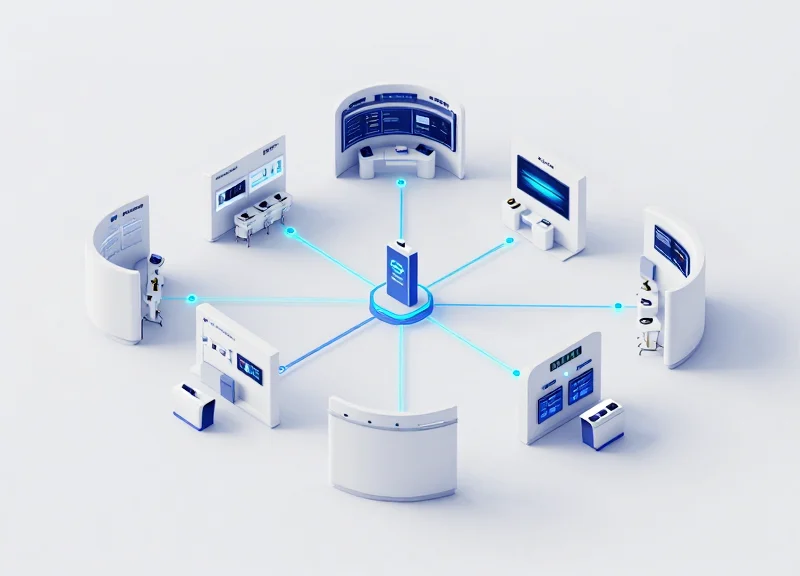
Radio Frequency Identification (RFID) functions as the digital nervous system of modern fast fashion logistics. Unlike barcodes that identify a product class (SKU), RFID assigns a unique digital identity to every individual item via an Electronic Product Code (EPC). By utilizing electromagnetic fields to automatically identify and track tags attached to objects, RFID enables the creation of a 'Digital Twin' for every garment. This allows brands to monitor the specific journey of a single size-medium floral dress from the factory floor, through the distribution center, and into a customer's shopping bag without requiring line-of-sight contact.
| Component | Function | Role in Fast Fashion |
|---|---|---|
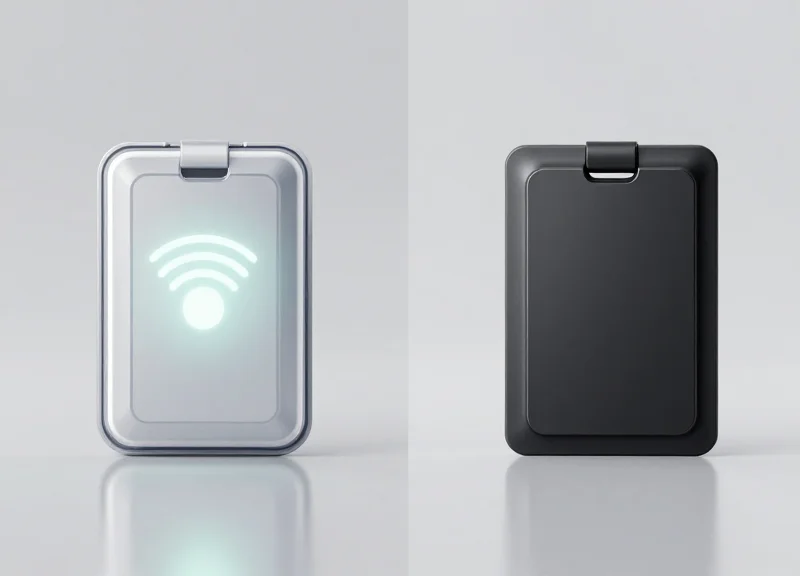
| RFID Tag (Inlay) | Stores a unique EPC (Electronic Product Code). | Embedded in hangtags or care labels at the source. |
| RFID Readers | Transmits radio waves to 'wake up' the tag. | Handhelds for cycle counts; fixed portals for dock doors. |
| Antenna | Captures and transmits data signals. | Ensures 360-degree readability in dense retail racks. |
| Middleware | Filters and processes raw tag data. | Aggregates scans into actionable inventory insights. |
- Source Tagging: Tags are applied during manufacturing. This ensures the 'Digital Twin' is born at the point of origin, preventing downstream data gaps.
- Automated Receiving: Cartons pass through RFID tunnels at the distribution center. Thousands of items are verified in seconds against the packing slip with 99.9% accuracy.
- The 'Last 100 Feet' Visibility: In-store readers track movement from the backroom to the sales floor, ensuring the 'Display One, Sell One' model is never interrupted by missing stock.
- Point of Sale (POS) Integration: At checkout, RFID instantly updates the global inventory, triggering automated reorders for high-velocity styles.
Expert Insight: The Shift to Atomic Inventory Management. While most retailers manage inventory at the 'Style-Color-Size' level, RFID introduces 'Atomic Inventory.' This means the system doesn't just know you have ten blue shirts; it knows the specific age, origin, and touch-history of each individual unit. This level of granularity allows for 'intelligent markdown' strategies—discounting specific units that have been tried on frequently but not purchased, rather than slashing prices on the entire SKU category.
Can RFID read through metal or liquid?
While traditional UHF RFID faces challenges with metallic fibers or high water content, modern 'on-metal' tags and specialized antenna configurations have largely mitigated these interference issues for the fashion industry.
What is the typical read range for retail RFID?
Standard Passive UHF tags used in apparel typically offer a read range of 3 to 10 meters, allowing for rapid inventory counts of entire store sections from a single vantage point.
Is RFID data secure?
Yes. Fast fashion RFID typically uses Gen2 V2 protocols which include features like 'Untraceable' commands and password-protected memory to ensure consumer privacy after purchase.
Achieving 99.9% Accuracy: Eliminating Ghost Inventory

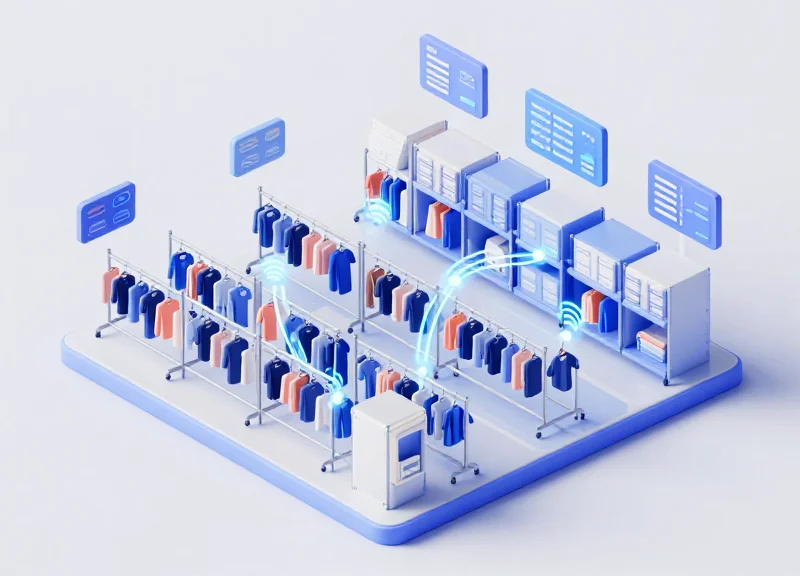
Ghost inventory—the discrepancy where system records show items in stock that are physically missing or misplaced—is the silent killer of fast fashion margins. While manual barcode-based systems typically yield an inventory accuracy of 65% to 75%, RFID provides 99.9% accuracy by enabling automated, bulk-capture scanning that eliminates human error. By creating a continuous feedback loop between the shelf and the ERP, RFID ensures that 'ghost' items are purged and 'hidden' items are surfaced, preventing lost sales and unnecessary markdowns.
| Metric | Legacy Barcode System | RFID-Enabled System |
|---|---|---|
| Average Accuracy | 65% - 72% | 99.8% - 99.9% |
| Cycle Count Speed | 200 units per hour | 12,000+ units per hour |
| Audit Frequency | Quarterly or Annually | Daily or Weekly |
| Out-of-Stock Rates | 15% - 20% | < 2% |
- Automated Receiving Reconciliation: As cartons enter the DC or store, RFID tunnels scan 100% of contents instantly, identifying shipping errors before they enter the system as ghost stock.
- High-Velocity Cycle Counting: Store associates use handheld sleds to count an entire sales floor in minutes rather than days, allowing for weekly audits that keep digital records 'fresh'.
- Real-Time Point-of-Exit Tracking: RFID pedestals at exits track every item leaving the store (sold or stolen), instantly updating the inventory pool to reflect true availability.
- Exception-Based Alerting: The system automatically flags discrepancies where a 'last item' is recorded in the system but hasn't been scanned in the backroom or floor for 24 hours.
Why is 99.9% accuracy critical for Omni-channel retail?
In a 'Buy Online, Pick Up In Store' (BOPIS) model, any inaccuracy results in a failed customer experience. If the system says a shirt is available but it is actually ghost inventory, the order is cancelled, often resulting in permanent customer churn.
How does RFID prevent 'Internal Shrinkage'?
Because every item has a unique digital birth certificate, RFID allows managers to pinpoint exactly where and when an item disappeared, creating a high level of accountability that discourages internal theft.
Does RFID work for small items like accessories?
Yes. Modern RFID inlays are small enough for jewelry tags and hangtags, ensuring that even the highest-complexity SKU categories maintain the same 99.9% precision as apparel.
Expert Insight: The 'Safety Stock' Trap. Traditional retailers carry 10-15% extra 'safety stock' just to buffer against inventory inaccuracies. With 99.9% accuracy, this capital-intensive buffer can be eliminated. My 20 years in the industry have shown that moving from 70% to 99% accuracy doesn't just fix records—it unlocks millions in working capital by allowing you to run leaner, more responsive supply chains that lean into trends without the fear of stockouts.
Cutting Labor Costs by 40%: Efficiency Gains in the Stockroom
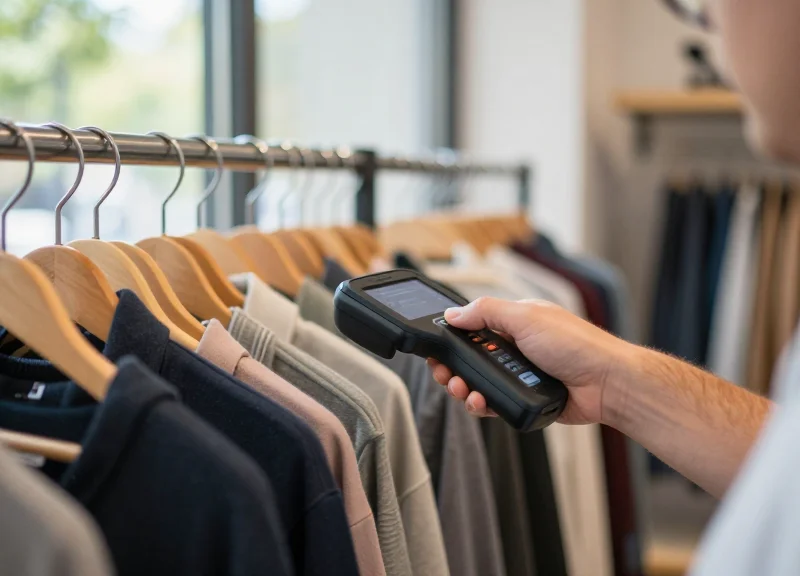
The 40% labor reduction achieved through RFID is not just about working faster; it is about the fundamental elimination of non-value-added tasks. In a traditional fast fashion stockroom, employees spend the majority of their shift performing 'administrative labor'—physically finding items, scanning barcodes one by one, and manually reconciling shipping manifests. RFID transforms these manual bottlenecks into automated background processes. By utilizing handheld or fixed overhead readers, staff can capture thousands of unique SKU data points in seconds without line-of-sight requirements, allowing a skeleton crew to manage inventory volumes that previously required a full team.
| Stockroom Activity | Manual Process (Barcodes) | RFID-Enabled Process | Labor Time Reduction |
|---|---|---|---|
| Inbound Receiving | 1-2 mins per carton (scan each) | 5-10 seconds per carton (bulk read) | ~90% |
| Full Store Cycle Count | 24-48 staff hours | 30-60 minutes | ~95% |
| Pick-and-Pack (E-com) | 3-5 mins per order (searching) | Less than 1 min (Geiger-search) | ~70% |
| Return Processing | 2-3 mins (manual verification) | Instantaneous (auto-verify) | ~85% |
- Automated Receiving and Verification: Shipments are verified instantly upon arrival. Rather than opening boxes to scan individual units, RFID portals or handhelds read the entire contents of a pallet or carton simultaneously, immediately flagging discrepancies against the digital manifest.
- Frictionless Cycle Counting: Traditional inventory counts often require store closures or overnight shifts. RFID allows for 'rolling counts' during business hours with a single employee, ensuring the stockroom stays organized without incurring overtime costs.
- Geiger-Counter Picking for Fulfillment: For Buy Online Pick Up In Store (BOPIS) orders, RFID readers use 'Geiger-counter' mode to lead staff directly to a specific item’s location, eliminating the 'needle in a haystack' search common in high-density fashion stockrooms.
The Veteran Perspective: The 'Audit-Free' Revolution. A unique and often overlooked financial benefit is the transition to audit-free receiving. In legacy systems, retailers typically only audit 5-10% of incoming shipments because manual verification of 100% of stock is cost-prohibitive. This 'hidden shrinkage'—where vendors under-ship or mislabel items—remains undetected until it's too late. RFID enables 100% audit rates at zero additional labor cost, allowing retailers to hold suppliers accountable and reclaim millions in previously lost vendor credits.
Does RFID replace the need for stockroom staff entirely?
No, it shifts their role from data entry to floor replenishment and customer service. While it reduces total head hours needed for inventory, it empowers the remaining staff to focus on sales-driving activities.
How does labor reduction impact the bottom line in the first year?
Most fast fashion retailers see a full ROI on RFID hardware and tags within 12-18 months solely based on the reduction in labor hours and the elimination of outsourced inventory counting services.
Is the technology difficult for existing staff to learn?
Modern RFID software uses intuitive interfaces similar to consumer apps. Training usually takes less than an hour, as the system eliminates the complexity of manual SKU lookups.
Bridging the Gap: How RFID Empowers Omnichannel Success

In the modern retail landscape, omnichannel success is predicated on a single truth: your digital storefront must perfectly mirror your physical inventory. RFID serves as the connective tissue between these two worlds, enabling 'Buy Online, Pick Up In Store' (BOPIS) and 'Ship from Store' models by providing item-level visibility that legacy barcode systems cannot match. Without the 99% accuracy provided by RFID, retailers are forced to maintain 'safety stock' buffers—essentially hiding inventory from online customers to avoid the reputational damage of a cancelled order. RFID eliminates this friction, allowing every single unit in the building to be a sellable asset across all channels simultaneously.
| Feature | Legacy Barcode Inventory | RFID-Enabled Inventory |
|---|---|---|
| Inventory Accuracy | 65% - 75% Average | 98% - 99.9% Reliable |
| Order Cancellation Rate | High (Due to Ghost Stock) | Near Zero |
| Safety Stock Buffer | Required (15-20% locked) | Minimal (Full visibility) |
| Fulfillment Speed | Slow (Manual Search) | Rapid (Geiger-Counter Picking) |
The 'Safety Stock Tax': A Silicon Valley Perspective. In my two decades observing supply chain evolutions, the most overlooked cost in fast fashion is what I call the 'Safety Stock Tax.' When your inventory accuracy hovers at 70%, you cannot risk selling that last blue medium dress online because it might not actually be on the shelf. Retailers effectively 'pad' their systems, withholding up to 20% of store inventory from online visibility. RFID eliminates this tax. By knowing exactly what is in the backroom versus the fitting room, you unlock millions in 'trapped' inventory, instantly increasing your available-to-promise (ATP) count without buying a single new garment.
- Real-Time Stock Synchronization: As items are scanned at the point of sale or received in the stockroom, the global inventory management system updates instantly, preventing double-selling across web and physical channels.
- Precision Picking with Geiger-Counter Functionality: Store associates use handheld RFID readers to locate specific items for online orders in seconds, even if they are buried under other styles or left in a fitting room.
- Streamlined Returns (BORIS): RFID allows 'Buy Online, Return In Store' items to be instantly re-integrated into the store's sellable inventory, ensuring the product is immediately visible to the next local or online shopper.
Does RFID improve the customer experience in-store?
Absolutely. By ensuring stock accuracy, customers never make a trip for an 'in-stock' item only to find the shelf empty, which is the leading cause of brand churn in fast fashion.
How does RFID affect 'Ship from Store' costs?
It reduces labor costs by up to 40% by eliminating the time wasted searching for 'lost' items. When the system says the item is there, the associate finds it in one pass.
Can RFID help with inventory fragmentation?
Yes. It allows retailers to treat their entire network of stores as distributed warehouses, optimizing fulfillment based on proximity to the customer rather than central DC availability.
Case Studies: Real-World ROI in High-Volume Retail Environments

Real-world implementation of RFID in high-volume retail environments consistently delivers a transformative Return on Investment (ROI), characterized by achieving near-perfect inventory accuracy of 99.9% and reducing manual labor tasks by up to 40%. By digitizing every garment, global fast-fashion leaders have shifted from reactive stock management to a proactive, data-driven model that eliminates the 'hidden' costs of ghost inventory and inefficient omnichannel fulfillment.
| Retailer | Primary Objective | Key ROI Outcome | Strategic Advantage |
|---|---|---|---|
| Zara (Inditex) | Real-time Stock Visibility | 10–15% Sales Lift | Enabled garment tracking from the logistics center to the point of sale, allowing for instant stock replenishment. |
| H&M Group | Omnichannel Optimization | 20% Reduction in Stock-outs | Standardized RFID across global stores to support 'Find in Store' and 'Ship from Store' features for customers. |
| Uniqlo (Fast Retailing) | Labor Efficiency & Checkout | 35% Faster Inventory Cycles | Implemented 100% source-tagging to automate self-checkout and drastically reduce backroom intake time. |
| Decathlon | Loss Prevention & Accuracy | 9% Increase in Sales | Achieved 99% accuracy in high-volume environments, reducing shrinkage and improving product availability. |
### The Expert Perspective: The 'Velocity Multiplier' Effect While most companies focus on labor savings, the true competitive edge of RFID in fast fashion is what I call the Velocity Multiplier. In an industry where trends expire in weeks, the ability to identify a 'hot' SKU in real-time and reroute stock from a low-performing store to a high-demand zone—with 100% confidence in the data—can improve inventory turnover rates by as much as 25%. This converts stagnant floor stock into liquid assets faster than any manual system ever could.
- Source Tagging at the Factory: Successful brands integrate RFID at the point of manufacture. This ensures that every item is 'born digital,' allowing for 100% automated receiving at the distribution center without ever opening a box.
- Aggressive Pilot to Scale: Leading retailers typically pilot RFID in 5-10 high-complexity stores to refine the read-rate algorithms before a rapid global rollout, often completing thousands of stores in under 18 months.
- Unified Commerce Integration: ROI is maximized when RFID data is fed directly into the E-commerce engine, ensuring that online customers never purchase an item that the store doesn't actually have in stock.
How long does it take to see a positive ROI?
Most high-volume fashion retailers report a full break-even on hardware and software investment within 12 to 24 months, primarily driven by sales lifts from improved availability.
What is the biggest challenge during implementation?
Change management. Shifting store associates from manual barcode scanning to 'zonal' RFID scanning requires updated training and a shift in operational culture.
Does RFID replace the need for physical audits?
It doesn't replace them, but it transforms them. Instead of a weekend-long manual count, RFID allows for 'cycle counts' that take minutes, performed weekly or even daily to maintain 99.9% accuracy.
Strategic Implementation: Overcoming Hurdles to RFID Adoption
To overcome the hurdles of RFID adoption, retailers must move beyond hardware and focus on a robust integration layer that bridges physical tags with existing ERP and WMS architectures. The primary barrier is not the technology itself, but data synchronization; a strategic implementation utilizes middleware to filter 'raw reads' into 'meaningful events,' preventing legacy systems from being overwhelmed by the massive volume of data generated by 99.9% inventory visibility.
- Infrastructure Audit and Middleware Selection: Evaluate current ERP and WMS capabilities to determine if they can handle real-time API calls. Select a middleware solution that acts as a buffer, cleaning and aggregating RFID data before it hits your core database.
- Source Tagging Standardization: Avoid post-production tagging. Work with manufacturers to integrate RFID tags at the point of origin, ensuring consistent placement and encoding that aligns with global GS1 standards.
- The 'Pilot-to-Scale' Methodology: Launch in a controlled environment (e.g., a high-volume flagship store) to refine read zones and signal interference issues before a global rollout.
- Employee UX Training: Focus on the 'Why' for floor staff. Show how RFID eliminates the drudgery of manual cycle counts, turning stockrooms into high-efficiency fulfillment zones.
| Implementation Strategy | Legacy Batch Processing | Modern API-Driven RFID |
|---|---|---|
| Data Latency | 24-48 Hours | Near Real-Time |
| Accuracy Level | 65% - 75% | 99.8% - 99.9% |
| Labor Intensity | High (Manual Scanning) | Low (Automated Gates/Handhelds) |
| System Impact | Minimal/Static | Dynamic/High Throughput |
Expert Insight: The 'Shadow Inventory' Audit. Most brands fail because they try to mirror their old manual processes in the new RFID system. Instead, implement what I call a Shadow Audit for the first 30 days. Run your RFID system parallel to your manual counts without updating the master ERP records. Use this period to identify 'null zones' in your warehouse where signal attenuation occurs. This prevents data corruption in your system of record while you fine-tune hardware sensitivity.
How do we handle signal interference in dense fashion environments?
Use circular polarized antennas and specialized firmware that filters out 'stray reads' from adjacent rooms or metal fixtures.
Will RFID integration slow down our existing WMS?
No, if you use an edge-computing model where data is processed locally at the reader level and only critical state changes are sent to the WMS.
What is the biggest hidden cost of implementation?
Data cleansing. Ensure your SKU database is standardized across all channels before the first tag is scanned to avoid 'orphan' records.
DragonGuardGroup: Your Partner in Future-Proofing Fashion Retail
DragonGuardGroup is a global leader in high-performance Electronic Article Surveillance (EAS) and Radio Frequency Identification (RFID) technologies, specializing in helping fast fashion brands bridge the gap between traditional loss prevention and modern data-driven inventory management. By providing a scalable ecosystem of tags, hardware, and integration expertise, we empower retailers to manage millions of SKUs with 99.9% accuracy while simultaneously securing their high-value assets against shrink.
In an era where fast fashion cycles are compressed to weeks, the ability to pivot is your greatest competitive advantage. Future-proofing isn't just about the technology you deploy today; it’s about ensuring that your hardware can handle the data loads of tomorrow. DragonGuardGroup focuses on 'Dual-Capability' ecosystems—hardware that serves both inventory visibility and loss prevention needs—reducing the total cost of ownership and simplifying the store-level tech stack.
| Feature | Generic RFID Vendors | DragonGuard Integrated Solutions |
|---|---|---|
| Hardware Durability | Standard consumer grade | Industrial-grade for high-volume cycles |
| System Integration | Standalone inventory silos | Seamless ERP, WMS, and EAS syncing |
| Scalability | Limited to basic tagging | Full support for high-SKU complexity |
| Loss Prevention | Requires separate systems | Unified RFID-EAS hybrid protection |
Expert Insight: The 'Circular Economy' Readiness Factor. While most brands implement RFID for inventory accuracy, DragonGuardGroup designs its solutions with upcoming Digital Product Passport (DPP) regulations in mind. Our high-retention RFID tags are engineered to survive the entire product lifecycle, allowing brands to track resale, recycling, and sustainability metrics long after the initial sale—a critical requirement for the next decade of fashion compliance.
Can DragonGuard tags work with my existing EAS gates?
Yes, our hybrid labels are designed to be compatible with most AM and RF frequency gates, allowing you to upgrade to RFID data tracking without replacing your entire security infrastructure.
How does DragonGuard support high-volume SKU environments?
We utilize high-sensitivity chips and proprietary antenna designs that ensure rapid bulk-reading, even in densely packed stockrooms common in fast fashion.
What is the typical deployment timeline?
Most retailers see a full pilot-to-scale deployment within 3 to 6 months, depending on the level of ERP integration and the number of retail nodes.
Partnering with DragonGuardGroup means more than just buying tags; it means gaining a strategic ally dedicated to optimizing your supply chain. We provide the technical backbone that allows your creative and operational teams to focus on what they do best: delivering the latest trends to customers with unmatched speed and reliability.