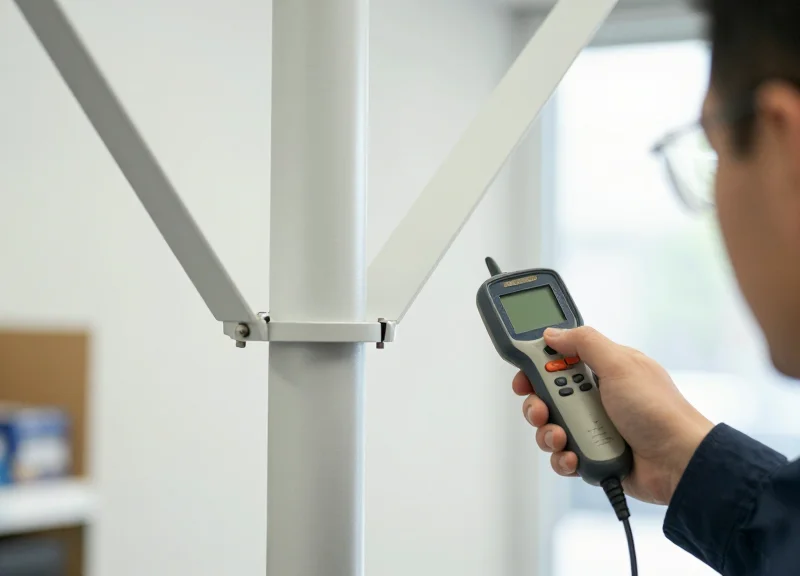
In the high-stakes world of pharmaceutical manufacturing, speed and accuracy are non-negotiable. As the industry moves toward total item-level traceability to meet DSCSA mandates, the challenge shifts to the production line: how do you maintain 99.9% read accuracy when products are moving at lightning speeds? Selecting the right UHF RFID tag is not just a technical detail—it is a critical business decision that impacts compliance, safety, and the bottom line. This guide provides decision-makers with the technical depth and strategic insight needed to navigate the complexities of RFID integration in high-speed pharmaceutical environments.
The Evolution of Pharmaceutical Traceability and DSCSA Compliance
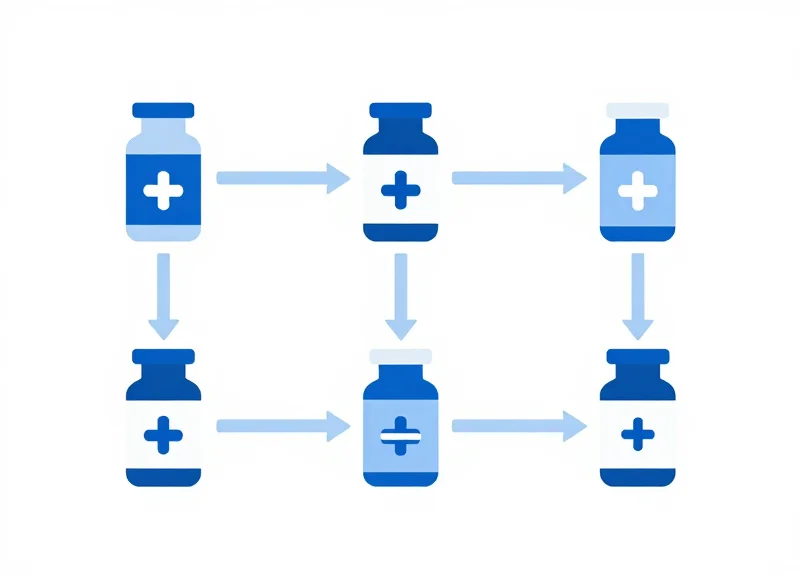
Pharmaceutical traceability has evolved from a voluntary safety measure into a rigorous, legally mandated framework centered on the Drug Supply Chain Security Act (DSCSA). Historically, the industry relied on lot-level tracking, which only identified broad batches of medicine. Today, the mandate has shifted to item-level serialization, requiring a fully electronic, interoperable system to track and trace prescription drugs as they move through the supply chain. For high-speed production lines, this means that every single vial, bottle, or blister pack must be uniquely identified and verifiable with near-perfect accuracy to prevent counterfeiting and ensure patient safety.
| Feature | Legacy Traceability (Pre-DSCSA) | Modern DSCSA Requirements (2024+) |
|---|---|---|
| Tracking Granularity | Lot or Batch Level | Individual Item/Unit Level |
| Data Exchange | Paper-based or Siloed Electronic | Electronic, Interoperable, and Standardized |
| Verification Method | Manual and Reactive | Automated and Proactive |
| Speed Requirements | Low to Moderate | High-Speed Real-Time Validation |
While 2D DataMatrix barcodes are commonly used for serialization, they face significant limitations on high-speed pharmaceutical lines where line-of-sight is not always guaranteed. My unique insight for decision-makers: The true value of UHF RFID in DSCSA compliance isn't just 'tagging'—it's the elimination of 'Data Friction.' Unlike barcodes, UHF RFID allows for the simultaneous capture of hundreds of items in a single scan, effectively turning the physical supply chain into a real-time digital twin without slowing down the conveyor.
What is the ultimate goal of the DSCSA?
The DSCSA aims to build a digital, electronic system to identify and trace certain prescription drugs as they are distributed in the United States, protecting consumers from drugs that may be counterfeit, contaminated, or otherwise harmful.
Why is 99.9% accuracy critical for pharma RFID?
In the pharmaceutical world, a 0.1% failure rate represents thousands of potentially untraceable units. Regulatory compliance requires near-perfect data integrity to avoid costly 'quarantine' events where entire shipments are rejected due to a single unreadable tag.
How does UHF RFID improve over traditional 2D barcodes?
UHF RFID enables bulk reading without direct line-of-sight, allowing for the scanning of entire cases or pallets in milliseconds, which is physically impossible with optical scanners on high-speed lines.
Why Read Accuracy Matters: The Impact of the 99.9% Benchmark
In high-speed pharmaceutical manufacturing, a 99.9% read accuracy benchmark is the industry standard for ensuring that every serialized unit is accounted for without slowing down production. This precision is necessary because even a minor 0.1% failure rate—one missed tag in a thousand—can trigger a 'stop-and-fix' event that disrupts automated downstream logistics, leading to expensive manual re-validation and potential DSCSA compliance violations.
| Accuracy Level | Error Frequency (per 1M units) | Operational Impact | Financial Risk Profile |
|---|---|---|---|
| 95.0% | 50,000 | Systemic failure; constant manual intervention. | Extreme: High rework costs and regulatory fines. |
| 99.0% | 10,000 | Frequent line stoppages; pallet-level rejection. | Significant: Erodes profit margins via labor costs. |
| 99.9% | 1,000 | Optimal automated flow; standard exceptions only. | Low: Balanced ROI and compliance assurance. |
The 'Hidden Cost of the 0.1%' is often underestimated by decision-makers. In a high-speed environment where lines move at 300+ units per minute, a single missed read doesn't just represent one lost data point; it often necessitates the quarantine of an entire case or pallet to verify the integrity of the batch. This 'Multiplier Effect' means that a fractional drop in tag performance can result in a disproportionate increase in labor hours spent on manual reconciliation.
- Manual Rework and Labor Costs: When a tag fails to read, automation stops. Personnel must manually scan or inspect the unit, which can cost between $15 and $50 per intervention depending on the complexity of the batch.
- Regulatory and Compliance Penalties: Under DSCSA, missing data in the 'chain of custody' can lead to shipments being rejected by wholesalers, resulting in missed delivery windows and heavy contractual penalties.
- Product Spoilage and Shrinkage: For cold-chain biologics, every minute spent in a manual rework area rather than a climate-controlled environment increases the risk of product degradation.
Expert Insight: The 'Ghost Tag' Phenomenon. In high-speed pharma lines, the biggest threat to 99.9% accuracy isn't just a dead tag; it's 'RF shadowing' caused by liquid-filled vials. At high velocities, the time-on-target for a reader is measured in milliseconds. If your tag doesn't have a high-sensitivity IC (Integrated Circuit), the signal may fail to 'wake up' in time, creating a 'ghost tag' that exists physically but is invisible to the digital record. Selecting tags with high-dielectric tolerance is the only way to mitigate this.
Technical Challenges of High-Speed RFID Tagging in Pharma
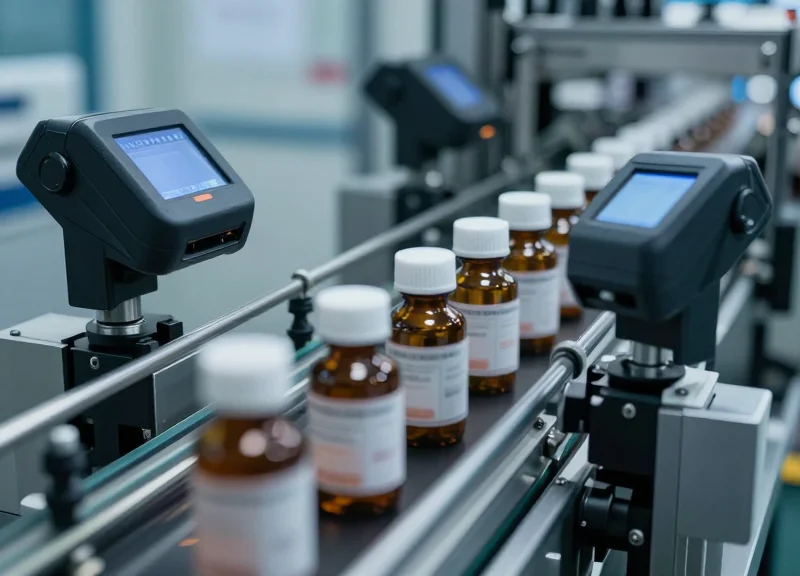
In high-speed pharmaceutical packaging environments, the primary technical challenge is the 'Data Acquisition Window'—the fractional second a tag spends within the reader's effective radiation pattern. Achieving 99.9% accuracy requires the UHF RFID system to successfully complete the EPC Gen2 'Query-Measure-Acknowledge' handshake while the tag is moving at speeds up to 2 meters per second. Failure occurs when the line velocity exceeds the 'dwell time' required for the tag's integrated circuit (IC) to harvest enough energy to modulate a response back to the reader.
| Line Speed (Units/Min) | Velocity (m/s) | Est. Dwell Time (ms) | Accuracy Risk Level |
|---|---|---|---|
| 100 | 0.5 | 400ms | Low - Standard Tuning |
| 250 | 1.2 | 160ms | Moderate - Requires High-Gain Antennas |
| 400 | 2.0 | 90ms | High - Requires Gen2V2 Fast-Track Protocols |
| 600+ | 3.0+ | <60ms | Critical - Specialized High-Sensitivity ICs Only |
Beyond simple speed, the pharmaceutical environment introduces unique dielectric challenges. Many life-saving medications are liquid-based or packaged in high-barrier foils (like blister packs). Liquids absorb RF energy, while foils reflect it, creating 'null zones' where tags become invisible. In high-speed scenarios, there is no time for the reader to attempt multiple retries, meaning the first 'backscatter' must be perfect. This is why tag placement and the choice of antenna polarization (circular vs. linear) are non-negotiable technical hurdles.
How does tag-to-reader orientation affect high-speed reads?
As items rotate on a conveyor, the 'polarization mismatch' can lead to a 50% loss in read range. High-speed lines require dual-polarized antennas or omnidirectional tags to ensure the tag is energized regardless of its orientation.
What is the impact of RF cross-talk on pharma lines?
In dense facilities, 'Reader Collision' occurs when multiple antennas interfere with one another. On high-speed lines, this jitter can cause a 10-20ms delay—enough to miss a tag entirely as it exits the read zone.
Why is 'Tag Sensitivity' more important than 'Read Range'?
In pharma, we don't need to read a tag from 10 meters away; we need it to wake up instantly at 1 meter. Higher sensitivity tags (measured in dBm) require less energy to activate, significantly shortening the time-to-first-read.
Expert Insight: Beware of the 'Doppler Shift' at extreme velocities. While often ignored in logistics, at pharmaceutical speeds exceeding 3 meters per second, the frequency shift of the reflected signal can drift outside the reader's narrow-band filter. To combat this, elite engineers utilize 'Frequency Agility'—configuring readers to hop channels more aggressively to capture the backscatter from moving targets without losing sync.
Evaluating RFID Tag Inlay Design and Sensitivity
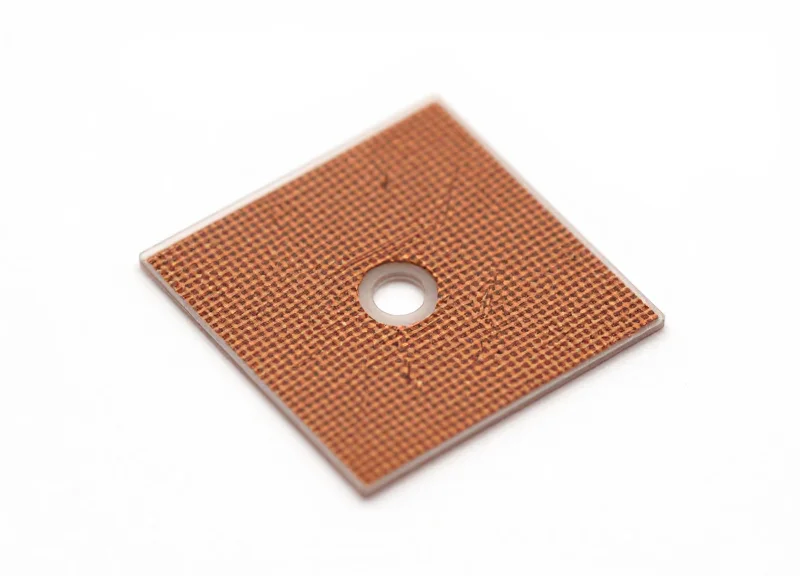
Evaluating RFID tag inlay design and sensitivity is the critical process of selecting a tag where the antenna geometry and Integrated Circuit (IC) are optimized to minimize the 'wake-up' power threshold. In high-speed pharmaceutical environments, sensitivity is not just about read range; it is the primary driver of response latency. A highly sensitive chip (measured in dBm) requires less energy from the reader to activate, allowing it to complete the 'handshake' and transmit its data within the millisecond-long window as a bottle or vial zips past the antenna array at speeds exceeding 300 units per minute.
| Feature | Standard Inlay | High-Speed Pharma Inlay |
|---|---|---|
| Chip Sensitivity | -17 to -19 dBm | -21 to -24 dBm (e.g., Impinj M700 series) |
| Wake-up Time | 5 - 8 Milliseconds | Less than 2 Milliseconds |
| Antenna Design | Generic Dipole | Folded Dipole or Dual-Dipole for Orientation Agnosticism |
| Encoding Speed | Standard | Auto-tune/Self-compensating for Rapid Batching |
Antenna geometry plays a dual role in both sensitivity and reliability. While a larger antenna generally increases gain, pharmaceutical packaging often limits the physical 'real estate' available for a tag. Decision-makers must prioritize 'orientation-agnostic' designs. On a high-speed line, products may rotate or shift slightly; a dual-dipole antenna design ensures that the tag can be energized regardless of its angle relative to the reader, preventing 'blind spots' that lead to the dreaded 0.1% failure rate.
Does higher sensitivity always mean better performance?
Not necessarily. While higher sensitivity allows for faster wake-up times, it can also lead to 'over-reading' adjacent tags on a dense line. The goal is a balanced 'Link Budget' where sensitivity is paired with precise reader power settings.
How does liquid content affect inlay selection?
Pharmaceuticals often contain liquids that absorb RF energy. In these cases, look for inlays specifically tuned for 'near-liquid' performance, which utilize specialized antenna layouts to offset detuning caused by the product's dielectric constant.
What is the importance of the 'Auto-Tune' feature?
Modern ICs feature auto-tuning capabilities that allow the tag to adjust its impedance in real-time to match its environment, ensuring peak sensitivity even when applied to different packaging materials like plastic, glass, or cardboard.
Expert Insight: The 'Sensitivity-to-Throughput' Paradox. Many engineers mistakenly optimize for maximum distance, assuming a 'stronger' tag is better. However, in Silicon Valley high-speed testing labs, we've found that the most successful pharma deployments focus on 'Backscatter Efficiency.' A tag that wakes up at -24 dBm but has poor backscatter (the ability to reflect signal back to the reader) will fail at high speeds because the reader cannot 'hear' the response over the ambient RF noise of the factory floor. Always validate the 'return link' margin, not just the wake-up threshold.
Material Matters: Managing Interference from Liquids and Foil
In the physics of UHF RFID, liquids and metals are traditionally the 'antagonists.' Pharmaceutical products are frequently composed of saline solutions, liquid medications, or packaged in aluminum blister packs and foil-lined induction seals. UHF radio waves (860-960 MHz) are absorbed by aqueous liquids and reflected by conductive metals. This causes 'detuning,' where the tag's resonant frequency shifts so significantly that it can no longer communicate with the reader. To maintain a 99.9% read rate on a high-speed line, decision-makers must move beyond standard 'all-purpose' inlays and select tags specifically tuned for high-dielectric or metallic environments.
| Material Type | RF Interaction | Impact on Read Rate | Recommended Tag Strategy |
|---|---|---|---|
| Saline/Aqueous Liquids | Absorption | High signal loss (attenuation) | Large-aperture antennas or 'liquid-flag' tags |
| Aluminum Blister Packs | Reflection | Antenna detuning/null zones | On-metal (MOM) tags or Spacer-inlays |
| Glass Vials (Dry) | Refraction | Minimal interference | High-sensitivity general purpose inlays |
| Cold Chain/Frost | Scattering | Intermittent signal bounce | Cryogenic-grade adhesives with high-gain chips |
The 'Air Gap' Advantage: An Expert Tip for Foil Packaging. One of the most effective, yet underutilized, strategies for 99.9% accuracy on foil-lined pharmaceutical packaging is the 'spacer' technique. By using a tag with a 1mm to 2mm foam or air-bridge backing, you physically decouple the RFID antenna from the metallic substrate. This prevents the metal from acting as a parasitic element to the antenna, maintaining the tag's impedance and ensuring it 'wakes up' instantly even as it zips past the reader at 400 units per minute. This minor physical adjustment often yields better results than simply increasing reader power, which can cause unwanted multi-path interference.
- Substrate Characterization: Analyze whether the primary interference is coming from the product (internal liquid) or the packaging (external foil).
- Dielectric Matching: Select an inlay tuned for the specific dielectric constant of the container; for example, specialized tags for PET plastic vs. borosilicate glass.
- Orientation Testing: Identify the 'worst-case' rotation of the product on the conveyor to ensure the tag remains readable regardless of its position relative to the liquid volume.
Can a standard RFID tag work on a saline bag?
Generally, no. The water content absorbs the energy required to chip-up the tag. A 'flag' tag or an inlay with a specialized 'liquid-friendly' antenna design is required for 99.9% reliability.
How does foil affect high-speed reading?
Foil creates 'blind spots.' If a tag is flush against foil, the signal reflects away. Using 'Metal-on-Metal' (MOM) tags or increasing the standoff distance is critical for high-speed accuracy.
Does the thickness of the glass vial matter?
Yes. Thicker glass can cause minor detuning. High-speed lines require chips with higher sensitivity (e.g., Impinj M700 series) to compensate for the slight dielectric shift of thick-walled vials.
Reader-Tag Synchronization: Optimizing the High-Speed Environment

Reader-Tag Synchronization in high-speed pharmaceutical packaging is the strategic alignment of hardware components to maximize the 'dwell time'—the specific millisecond window during which a tag is energized and successfully communicates with the reader. When conveyor belts exceed 100 feet per minute, the margin for error disappears. Synchronization ensures that the electromagnetic field is focused exactly where the tag is most receptive, preventing missed reads caused by polarization mismatch or insufficient power-up time.
| Parameter | Linear Polarization | Circular Polarization | High-Speed Pharma Recommendation |
|---|---|---|---|
| Orientation Sensitivity | High (Tag must match antenna axis) | Low (Reads tags at various angles) | Circular for variable item orientation |
| Read Range/Power | Concentrated and Long | Distributed and Moderate | Linear for fixed-path narrow channels |
| Read Rate Accuracy | 99.9% (If aligned) | 98-99.5% (Due to multipath) | Dual-Circular Cross-Polarization |
To hit the 99.9% accuracy benchmark, one must look beyond simple placement. The 'Golden 30-Degree Rule' suggests that angling the antenna 30 degrees toward the oncoming product can increase the effective read zone length, providing the tag chip those critical extra milliseconds to complete its state machine transition from 'Power-Up' to 'Reply'.
- Field Mapping: Use a field analyzer or tag-on-stick testing to map the 'hot spots' of your RF field. In high-speed lines, the theoretical center of the beam is rarely where the fastest read occurs due to conveyor metal reflections.
- Antenna Shingling: Overlapping the RF fields of two successive antennas creates a continuous interrogation zone, ensuring that if a tag fails to wake up in the first field, the second field is already at peak power for an immediate retry.
- Velocity-Matched Gating: Integrate a hardware trigger (like a photo-eye) to synchronize the reader's 'Inventory' command with the exact physical arrival of the product. This reduces RF noise and prevents the reader from wasting cycles on empty space.
Expert Insight: The 'Trigger-Sync' Advantage. Most generic setups leave the reader in a continuous 'always-on' state. In Silicon Valley's most advanced pharma facilities, we implement 'Precision Gating.' By using an PLC-integrated trigger to fire the RF burst only when the tag is in the 95th percentile of the antenna's power lobe, you eliminate 'ghost reads' from neighboring lines and ensure the reader's full processor bandwidth is dedicated to that single, high-velocity target.
How does conveyor material affect synchronization?
Metallic conveyors act as ground planes that can distort the RF field. Using dielectric spacers or RF-absorbent mounting brackets is essential to keep the 'sweet spot' synchronized with the tag's path.
Can I use multiple antennas for one high-speed lane?
Yes, but they must be synchronized via a multiplexer or software logic to prevent 'reader collision,' where two antennas interfere with each other and prevent the tag from decoding the signal.
What is the maximum speed for 99.9% accuracy?
With proper synchronization and high-sensitivity tags (like Monza R6-P or UCODE 9), 99.9% accuracy is achievable at speeds up to 600 items per minute, provided the read zone is at least 0.5 meters long.
Quality Control and Real-Time Verification Systems
Quality control in high-speed pharmaceutical RFID tagging relies on integrated 'Read-after-Write' (RaW) verification systems that validate data integrity in milliseconds. By immediately interrogating a tag after it has been encoded, manufacturers can identify and eject 'silent killers'—tags that appear physically intact but contain corrupt, locked, or inaccessible data—ensuring that only 100% accurate units proceed to the packaging stage and preventing costly downstream compliance failures.
In a pharma environment moving at 300+ units per minute, the verification system must operate as a closed-loop process. It is no longer sufficient to assume the write-command was successful based on the absence of an error flag from the reader. True real-time verification requires the system to perform a secondary 'read' operation to confirm the Electronic Product Code (EPC) or User Memory matches the intended database record before the item reaches the physical reject diverter.
- Synchronized Encoding: The PLC triggers the RFID reader to write specific serialized data as the tag enters the localized RF field.
- Immediate Read-Back: Within microseconds of the write-cycle, the reader performs a high-sensitivity read to verify the written bit-stream.
- Database Reconciliation: The system compares the interrogated data against the 'Expected Value' in the manufacturing execution system (MES).
- Automated Rejection: Any tag failing the match or failing to respond is tracked via encoder to a pneumatic reject arm for removal from the line.
| Verification Strategy | Latency | Accuracy Level | Pharma Suitability |
|---|---|---|---|
| Batch Sampling | High (Minutes/Hours) | Statistical Probability Only | Low (High Risk) |
| Post-Pack Verification | Medium (Seconds) | Aggregated Bulk Read | Moderate (Difficult to Isolate) |
| Inline Read-after-Write | Ultra-Low (Milliseconds) | 99.9% Deterministic | Critical (Gold Standard) |
Expert Insight: The 'Ghost Tag' Latency Trap. A common failure point in high-speed lines is the 'Ghost Tag' effect, where a verification reader accidentally validates a tag from an adjacent item or a downstream buffer instead of the item currently being processed. To achieve 99.9% accuracy, you must implement Phase-Angle Filtering. By analyzing the signal's arrival phase, the system can distinguish between a tag directly under the antenna and a 'stray' tag just a few centimeters away, effectively eliminating false positives in the QC loop.
What is the maximum line speed for 100% verification?
With modern UHF Gen2v2 chips and high-performance readers, 100% verification is achievable at speeds up to 600 units per minute, provided the RF tunnel is properly shielded to prevent cross-talk.
Does 'Read-after-Write' slow down production?
If implemented with a single-antenna setup, it can create a bottleneck. However, using a dual-antenna 'Series' configuration (one for writing, one for verification) allows for parallel processing without increasing cycle time.
How are failed tags handled in a validated environment?
Failed tags must be physically diverted into a locked bin, and the software must log the specific UID as 'Failed-Destroyed' to maintain a continuous serial number audit trail for DSCSA compliance.
Cost vs. Reliability: Calculating the True ROI of Premium Tags
For high-speed pharmaceutical lines, the Return on Investment (ROI) of an RFID tag is not determined by the purchase price but by the 'Total Cost of Ownership' (TCO). While commodity tags may offer a lower upfront cost per unit, premium tags engineered for high-sensitivity and interference resistance provide 99.9% read accuracy, preventing costly line stoppages, manual rework, and potential compliance fines. In a sector where downtime can cost thousands of dollars per minute, the 'reliability premium' of a high-end tag is often recovered within the first month of operation.
| Metric | Commodity Tag (Economy) | Premium Tag (High-Performance) |
|---|---|---|
| Average Unit Cost | $0.05 - $0.08 | $0.12 - $0.18 |
| Typical Read Rate at 300+ ppm | 92% - 96% | 99.8% - 99.99% |
| Failure Mode | Line stops, manual inspection | Continuous throughput |
| Hidden Cost Impact | High (Labor + Rework) | Negligible |
| Risk of Compliance Recalls | Significant | Minimal |
Expert Insight: The Failure Cost Per Tag (FCPT) Formula. To find your true ROI, use the FCPT formula: FCPT = (Unit Price) + (Failure Rate x Cost of Manual Intervention). In pharmaceutical manufacturing, the cost of a single 'no-read' that triggers a line rejection often exceeds $5.00 when factoring in labor, re-packaging, and potential loss of sterile integrity. When a premium tag reduces failure rates from 4% to 0.1%, it saves $0.19 per unit—more than double the initial price difference between the tags.
- Establish a Baseline Throughput: Measure the current speed of your packaging line and identify the exact 'no-read' threshold where the automated system triggers a rejection or halt.
- Quantify Labor for Rework: Calculate the average time a technician spends identifying, pulling, and manually scanning a failed item, then multiply this by the hourly loaded labor rate.
- Analyze the Cost of Incomplete Data: Assess the financial risk of 'orphan products'—items that are physically shipped but lack digital twins in the DSCSA database due to tag failure.
Is the cheapest tag ever the right choice for pharma?
Only in low-speed, manual labeling environments with no liquid or foil presence. On high-speed automated lines, the efficiency loss of a cheap tag always outweighs the procurement savings.
How does tag reliability impact DSCSA compliance?
The Drug Supply Chain Security Act requires 100% data integrity. Frequent tag failures lead to gaps in the 'chain of custody' data, which can result in entire batches being quarantined.
What is the 'Long-Tail' ROI of premium tags?
Beyond the production line, premium tags ensure better performance in the warehouse and at the pharmacy level, reducing downstream returns and chargebacks from distributors.
Future-Proofing Your Pharma Line with Advanced RFID Tech

Future-proofing a high-speed pharmaceutical line requires a shift in perspective: viewing the UHF RFID tag not merely as a digital license plate, but as a multifunctional 'data node' capable of environmental sensing and cryptographic verification. As global regulations like the DSCSA evolve, the most resilient systems are those adopting 'Smart RFID'—technology that integrates temperature logging, tamper-evidence, and secure-element chips to bridge the gap between physical products and their digital twins.
The next frontier for pharma is the convergence of RFID and the Internet of Things (IoT). While standard tags provide identity, advanced sensor-integrated tags can now monitor the viability of sensitive biologics without breaking the sterile seal. These tags utilize harvested energy from the reader to power internal sensors, providing a cost-effective alternative to active battery-powered loggers for unit-level monitoring.
| Feature | Legacy RFID (Identification Only) | Advanced RFID (Future-Ready) |
|---|---|---|
| Data Capacity | Fixed 96-128 bit EPC | Expandable User Memory + Dynamic Logging |
| Security | Basic Password Kill/Lock | AES-128 Cryptographic Authentication |
| Environmental Sensing | None (Requires external probes) | Integrated Temperature & Tamper Sensors |
| Supply Chain Role | Inventory Tracking | Blockchain-Ready Provenance Tracking |
A unique insight for decision-makers: The trend is moving toward 'Thin-Client' RFID. Instead of trying to store massive amounts of production data directly on the tag—which slows down high-speed encoding—future-proofed lines use high-performance chips with unique 'Digital ID' signatures that act as a pointer to a secure cloud or blockchain ledger. This allows for 99.9% read rates at speeds exceeding 600 units per minute while maintaining a rich, immutable data history off-chip.
How does Blockchain integrate with UHF RFID in pharma?
Blockchain uses the RFID tag's unique UID as a physical anchor for a digital record. Every scan in the supply chain creates a cryptographically signed entry, ensuring the drug's journey is immutable and verifiable for regulatory compliance.
Are sensor-integrated tags compatible with existing high-speed readers?
Yes, most advanced sensor tags follow the EPC Gen2V2 protocol, allowing them to be read by standard industrial readers, though specialized software is often required to parse the additional sensor data packets.
What is the 'Circular Economy' impact of RFID?
Future-ready tags are being developed with recyclable substrates (paper-based) and aluminum antennas instead of etched copper to reduce the electronic waste footprint of billions of pharmaceutical doses.
Finally, consider the security of your chips. Future-proofing means preparing for the threat of sophisticated counterfeiting. Next-generation tags now feature 'crypto-authentication'—a challenge-response mechanism where the tag proves its identity to the reader using a secret key that is never transmitted over the air. This ensures that even if a tag's ID is copied, the clone will fail authentication at the pharmacy level.