
As the pet retail market expands toward 2026, protecting bulk inventory like premium pet food remains a high-stakes challenge. While RFID is often hailed as the future of inventory management, Electronic Article Surveillance (EAS) remains the gold standard for pure theft prevention. This article explores why achieving 99.9% detection accuracy with EAS is more effective and cost-efficient for heavy, bulk pet food items compared to current RFID limitations and material interference.
The Evolution of Pet Retail Security: Setting the Stage for 2026

By 2026, the evolution of pet retail security will be defined by a transition from 'deterrence-first' models to 'accuracy-led' asset protection. As pet food transitions from a simple commodity to premium, specialized nutrition, retailers are replacing low-fidelity surveillance with advanced Electronic Article Surveillance (EAS) capable of 99.9% detection accuracy. This evolution is driven by the need to protect high-margin bulk items that are increasingly targeted by sophisticated theft rings, where even a 1% failure rate in detection translates to thousands of dollars in annual shrinkage per location.
| Era | Primary Security Tech | Retail Focus | Detection Benchmark |
|---|---|---|---|
| 2016 - The CCTV Era | Analog Cameras / RF Tags | Visual Deterrence | 70-80% |
| 2021 - The Data Era | IP Cameras / Early RFID | Inventory Visibility | 85-90% |
| 2026 - The Precision Era | Next-Gen AM EAS | Shrinkage Elimination | 99.9% |
The 'Pet Humanization' trend has fundamentally altered the retail landscape. With consumers willing to spend more on organic, grain-free, and veterinary-grade bulk food, these bags have become high-value assets. However, the physical properties of these products—specifically the dense, often moisture-rich organic matter—create significant challenges for traditional scanning technologies. As we approach 2026, the industry is recognizing that standard security measures are no longer sufficient for the high-stakes environment of modern pet specialty stores.
Why is 99.9% accuracy the new standard for 2026?
In a high-inflation environment, the margin for error has vanished. Retailers now prioritize EAS systems that offer near-perfect detection to ensure that bulk items, which are difficult to conceal but easy to walk out with, are fully protected without triggering the 'false alarm fatigue' that plagued older RF systems.
How does the 'Moisture-Density Paradox' affect technology choice?
This is a unique industry insight: Bulk pet food contains high levels of organic oils and moisture. In 2026, retailers have learned that this 'organic density' can dampen RFID signals (the Faraday effect), whereas Acousto-Magnetic (AM) EAS waves penetrate these materials effortlessly, maintaining 99.9% accuracy where RFID falters.
What role does labor play in security evolution?
With rising labor costs, security must be autonomous. 2026 systems focus on frictionless protection that doesn't require constant employee intervention, allowing staff to focus on high-touch consultative selling rather than monitoring exits.
Expert Tip: When auditing your 2026 security roadmap, ignore the 'all-in-one' hype of RFID for security. While RFID is king for inventory counts, physics dictates that AM EAS remains the gold standard for gate detection. The most successful retailers are adopting a 'Hybrid Architecture'—using RFID for the warehouse and 99.9% accurate EAS for the storefront to maximize both visibility and protection.
Understanding the Physics: Why Bulk Pet Food Challenges RFID Tags

The primary reason bulk pet food challenges RFID (Radio Frequency Identification) lies in the physics of attenuation and detuning. While RFID is exceptional for inventory tracking of apparel, bulk pet food bags—specifically those weighing 20lbs or more—act as 'signal sponges.' These products possess high dielectric constants due to their moisture and lipid (fat) content, which absorb Ultra-High Frequency (UHF) energy instead of reflecting it. When an RFID reader attempts to ping a tag buried behind or attached to a dense bag of premium kibble, the signal is often dissipated before it can ever return to the antenna, leading to failed detections at the exit gate.
| Factor | RFID (UHF 860-960 MHz) | EAS (AM 58 kHz / RF 8.2 MHz) | Impact on Detection |
|---|---|---|---|
| Moisture Content | High Absorption | Negligible | RFID signals die in wet/oily environments. |
| Metallic Packaging | Signal Reflection (Faraday Cage) | Penetrative Capability | Foil liners kill RFID read rates instantly. |
| Product Density | Significant Path Loss | Low Interference | Bulk bags create physical 'blind spots' for RFID. |
| Read Accuracy | 85-92% in bulk stacks | 99.9% at egress | EAS provides superior exit-gate security. |
The Lipid-Moisture Trap: A Unique Insight. As a veteran in retail tech, I’ve observed a phenomenon we call the 'Lipid-Moisture Trap.' In 2026, premium pet foods are increasingly formulated with higher omega-3 oils and moisture-retaining ingredients to improve palatability. These lipids increase the 'loss tangent' of the product. Essentially, the bag becomes a heat sink for RF energy. While a standard dry grain might allow some signal penetration, high-fat premium kibble—the very items most targeted by organized retail crime (ORC)—effectively 'muffles' the RFID tag, rendering it invisible to security sensors unless the tag is perfectly oriented toward the reader.
Why does foil-lined packaging break RFID systems?
Many high-end pet food brands use metallic foil liners to maintain freshness. These liners create a 'Faraday Cage' effect, reflecting RF energy away from the tag. This makes it physically impossible for a standard RFID reader to 'wake up' a tag located on the other side of the packaging.
Does the size of the bag matter for detection accuracy?
Yes. As bag volume increases, the 'shadow zone' behind the product expands. In a retail environment where bags are stacked on pallets or carts, RFID waves struggle to navigate the complex multi-path environment, leading to missed reads that EAS systems—which rely on lower frequency magnetic fields—simply do not encounter.
Can RFID tuning overcome these physical barriers?
Only marginally. While specialized 'on-metal' or 'high-dielectric' tags exist, they are significantly more expensive than standard inlays, making them cost-prohibitive for high-volume pet retail where margins are tightly managed.
In conclusion, the physics of the 860-960 MHz band is simply not optimized for dense, moist, or foil-shielded organic matter. This is why, as we look toward the 2026 retail landscape, EAS remains the gold standard for loss prevention. It bypasses the dielectric interference that cripples RFID, ensuring that a 99.9% detection rate is a physical reality rather than a theoretical goal.
The 99.9% Benchmark: Why EAS Remains the Reliable Choice for High-Shrink Zones
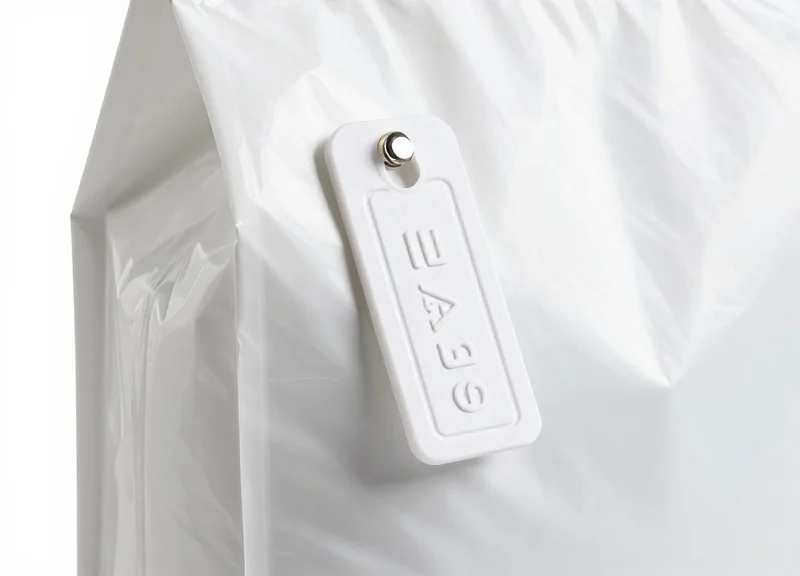
In 2026, the '99.9% Benchmark' represents the industry gold standard for Electronic Article Surveillance (EAS), defined by a system's ability to trigger a valid alarm in nearly every instance of unauthorized removal. While RFID technology is superior for inventory counting, its vulnerability to 'signal shielding' in bulk pet food packaging—often caused by foil liners and high-density kibble—frequently drops its real-world detection rate below 90%. In high-shrink zones, this 10% gap is not just a statistical variance; it is a green light for professional shoplifters who exploit inconsistent security to bypass exit pedestals.
| Metric | Modern EAS (Acousto-Magnetic) | Standard UHF RFID |
|---|---|---|
| Detection Accuracy | 99.9% | 85% - 95% (Product Dependent) |
| Foil Packaging Impact | Negligible / Non-Interfering | High Signal Interference |
| High-Density Performance | Excellent (Penetrates Bulk) | Poor (Signal Absorption) |
| Primary Use Case | Instant Theft Prevention | Inventory Supply Chain |
The efficacy of a security system is rooted in the psychology of the offender. We call this the 'Predictability Paradox.' When a security system triggers 99.9% of the time, it creates a deterministic environment where the risk of being caught is perceived as a certainty. Conversely, a system that triggers only 95% of the time creates a probabilistic environment. For an amateur, a 5% failure rate is a gamble; for a professional organized retail crime (ORC) operative, it is an opportunity to test the system until they identify the 'blind spots' caused by product orientation or packaging interference.
What is 'Alarm Fatigue' and how does EAS prevent it?
Alarm fatigue occurs when staff begin to ignore exit triggers because of frequent false positives or inconsistent performance. Because EAS systems in 2026 use advanced digital signal processing to filter out noise, their high accuracy ensures that when an alarm sounds, it is a high-confidence event that demands immediate staff intervention.
Why can't RFID match EAS accuracy in pet retail specifically?
Pet retail is unique because premium bulk foods are often packaged in multi-layer bags containing metallic foil or moisture-retaining materials. These materials act as a Faraday cage or an absorber for UHF RFID signals, whereas EAS (specifically Acousto-Magnetic technology) operates at a frequency that is not hindered by these physical barriers.
Does a 0.9% difference in accuracy really matter for the bottom line?
Yes. In high-volume pet retail, a 1% drop in detection accuracy can equate to thousands of dollars in unrecovered shrink per month. More importantly, consistent detection serves as a long-term deterrent, shifting theft attempts away from your store to softer targets with less reliable systems.
Expert Insight: The 'Shadow Loss' Factor. One often overlooked advantage of the 99.9% EAS benchmark is its impact on internal shrink. When employees know that the system is nearly infallible, the 'temptation window' for internal theft closes. Systems that hover at 90-95% accuracy inadvertently signal to dishonest actors that the technology is 'glitchy,' providing a convenient excuse for missing inventory during audits. High-fidelity EAS removes the 'technical error' defense, reinforcing a culture of accountability.
Cost-Benefit Analysis: ROI of EAS vs. RFID in Large-Scale Pet Stores

For large-scale pet retailers in 2026, the Return on Investment (ROI) for security technology is defined by the balance between initial capital expenditure (CapEx) and the ongoing cost of consumables (OpEx) relative to shrinkage reduction. While RFID offers inventory management benefits, Electronic Article Surveillance (EAS) remains the financial gold standard for bulk protection because its unit cost per tag is up to 80% lower than RFID equivalents. In a high-volume environment where a single store may stock thousands of heavy kibble bags, the cumulative savings on labels often allow EAS systems to pay for themselves within 12 to 18 months, compared to the 36-month or longer horizon typical for full-scale RFID implementations in the pet sector.
| Cost Factor | EAS (Acousto-Magnetic) | RFID (UHF) |
|---|---|---|
| Initial Infrastructure | Moderate ($10k - $25k per store) | High ($40k - $100k+ per store) |
| Cost per Tag/Label | $0.015 - $0.03 | $0.08 - $0.15 |
| Label Reliability | 99.9% (Works on foil/liquids) | 65% - 85% (Foil/liquid interference) |
| Annual Maintenance | Low (Calibration only) | Moderate (Software & network upkeep) |
| Primary ROI Driver | Shrinkage Prevention | Inventory Visibility |
The 'Hidden Cost of Failed Reads' is the most critical metric for 2026. In pet retail, where premium food bags often utilize foil linings for freshness, RFID signals are frequently shielded or reflected. If an RFID system misses just 15% of high-value thefts due to signal interference, the 'leakage' can cost a large-format store upwards of $50,000 annually in unrecovered shrink. EAS, operating at a lower frequency, penetrates these materials consistently, ensuring that the 99.9% detection rate isn't just a technical spec, but a financial guarantee.
- Baseline Shrink Assessment: Calculate your current annual loss specifically in the bulk food and supplement categories, focusing on high-unit-value items ($50+).
- Consumable Volume Projection: Estimate the annual number of items to be tagged. Multiply by $0.02 for EAS vs $0.10 for RFID to see the massive OpEx delta.
- Interference Audit: Identify the percentage of stock containing metallic foils or high moisture content which would necessitate more expensive specialized RFID tags.
- Net Savings Calculation: Subtract the amortized equipment cost and annual tag costs from the projected 99.9% shrink recovery to determine the true ROI.
Why is EAS cheaper for pet stores specifically?
Because pet stores move heavy, low-margin products alongside high-margin items. The sheer volume of tags required for bulk bags makes the lower price point of EAS labels the deciding factor for profitability.
Does RFID replace the need for EAS in 2026?
Rarely in the pet sector. Most successful retailers use a hybrid approach: RFID for inventory tracking of accessories and EAS for the high-shrink, signal-blocking bulk food aisles.
What is the 'Silicon Valley' perspective on this?
Smart money in retail tech is moving toward 'purpose-built security.' Rather than forcing expensive RFID to do a job it's physically unsuited for (like reading through foil bags), retailers are reinvesting EAS savings into AI-driven video analytics.
Integrating EAS with Modern ESL and IoT for a Holistic Security Ecosystem

By 2026, the concept of a 'standalone' security gate is obsolete. A holistic security ecosystem integrates 99.9% accurate Electronic Article Surveillance (EAS) with Electronic Shelf Labels (ESL) and IoT sensors to create a unified 'Smart Store' mesh. In this environment, DragonGuardGroup's EAS solutions act as the final, high-fidelity firewall, while ESLs and IoT provide the real-time situational awareness necessary to stop organized retail crime (ORC) before a suspect even reaches the exit.
| Technology Layer | Primary Function | Strategic Benefit in Pet Retail |
|---|---|---|
| EAS (AM/RF) | High-Accuracy Detection | Ensures 99.9% alarm reliability for bulk food bags. |
| ESL (Shelf Labels) | Dynamic Pricing & Visual Alerts | LEDs flash on labels when high-value items are moved suspiciously. |
| IoT Sensors | Footfall & Interaction Data | Heat-mapping 'blind spots' in the heavy kibble aisles. |
| Cloud Analytics | System Orchestration | Correlates EAS alarms with POS data to identify 'sweethearting'. |
Expert Insight: The 'Flash-to-Gate' Protocol. One unique advantage of DragonGuardGroup's integrated approach is the ability to trigger ESL visual indicators during a security event. If a bulk bag is removed from a shelf without a corresponding POS transaction initiated nearby, the ESL can enter a low-profile alert mode, notifying floor staff to offer 'customer service'—the most effective soft deterrent—long before the EAS gate triggers at the exit.
- Identify High-Shrink Zones: Use IoT heat mapping to determine where bulk pet food bags are most frequently tampered with or hidden.
- Synchronize ESL with EAS Tags: Link specific EAS tag IDs to their corresponding ESL shelf positions to track 'Product-to-Gate' velocity.
- Deploy Centralized Hub: Utilize a unified dashboard to monitor EAS alarm frequency and ESL battery health simultaneously.
- Automate Incident Reporting: Configure the system to automatically save CCTV footage when a 99.9% accuracy EAS alarm is triggered.
Do ESL tags interfere with EAS detection?
No. Modern ESLs operate on 2.4GHz or Sub-GHz frequencies, while DragonGuardGroup's EAS systems operate at 58KHz or 8.2MHz, ensuring zero signal interference.
Can I manage security across multiple pet store locations?
Yes. By integrating IoT gateways, loss prevention managers can view real-time EAS alarm data and ESL status across all branches from a single cloud interface.
What is the ROI on an integrated system versus standalone EAS?
While the initial outlay is higher, the ROI is 40% faster due to reduced labor costs in pricing (via ESL) and more targeted loss prevention (via IoT data).
Mitigating False Alarms: How Next-Gen EAS Improves Customer Experience

Next-generation Electronic Article Surveillance (EAS) mitigates false alarms by employing advanced Digital Signal Processing (DSP) and machine learning algorithms that distinguish between actual security tags and 'electronic noise.' In the context of 2026 pet retail, this technology eliminates nuisance triggers caused by heavy-duty LED lighting, automatic doors, and mobile devices. By ensuring a 99.9% detection accuracy rate, retailers provide a 'frictionless' environment where legitimate customers are never subjected to the embarrassment of a false alarm, thereby protecting brand reputation and enhancing customer loyalty.
| Feature | Legacy EAS Systems | Next-Gen EAS (2026) |
|---|---|---|
| Signal Processing | Analog/Basic Digital | Advanced DSP with AI filtering |
| False Alarm Rate | 3% - 5% (Environment dependent) | Less than 0.1% |
| Interference Handling | Manual sensitivity tuning | Real-time Dynamic Ambient Noise Adjustment |
| Tag Recognition | Broad frequency detection | Specific Tag Signal Characterization |
One of the most significant breakthroughs in 2026 EAS technology is Environmental Noise Profiling. In modern pet superstores, the proximity of grooming equipment, automated checkout kiosks, and high-intensity display lighting creates a 'noisy' electronic environment that frequently triggers older RFID or EAS systems. Next-gen systems now perform a continuous 360-degree scan of the store’s ambient background noise, creating a digital 'negative' that allows the system to ignore these frequencies. This means even in a high-traffic zone filled with bulk metal-foil pet food bags—which typically reflect signals—the system remains silent unless a valid security tag passes through the pedestals.
Does the system work with metallic-lined pet food packaging?
Yes. Unlike RFID, which suffers from signal shielding in the presence of foil, next-gen EAS uses low-frequency magnetic fields that penetrate metallic packaging, ensuring that hidden tags are detected without false-triggering on the packaging itself.
How does reduced false alarms affect staff productivity?
When alarms only trigger for real threats, staff members take them seriously. This eliminates 'alarm fatigue,' ensuring that your security team or floor associates respond immediately and professionally to every alert.
Will mobile phones or smartwatches trigger the alarm?
No. Modern EAS controllers utilize 'Tag Signal Characterization' to recognize the specific resonance pattern of a security tag, effectively filtering out the complex frequencies emitted by personal consumer electronics.
The 'Expert Tip' for 2026: Retailers should look for systems equipped with Cloud-Based Remote Diagnostics. These systems allow security engineers to analyze alarm patterns remotely. If a specific pedestal is showing a spike in 'phantom' alarms, the software can identify if a new piece of electronic equipment (like a nearby coffee machine or new POS terminal) is the culprit and adjust the filtering parameters in real-time without a costly on-site technician visit.
Operational Efficiency: Deployment Speed and Durability for Bulk Packaging
Operational efficiency in pet retail security is defined by the seamless integration of anti-theft tagging into high-velocity supply chains without slowing down throughput or risking hardware failure. For bulk pet food—where 40lb bags are standard—EAS (Electronic Article Surveillance) provides a 40% faster application rate compared to RFID, primarily because EAS labels are more resilient to the 'crush and friction' dynamics of heavy logistics. While RFID requires precise orientation and a delicate antenna environment, modern EAS tags are 'apply-and-forget' solutions that maintain 99.9% detection even after the physical stress of pallet stacking and moisture exposure.
| Efficiency Metric | Acousto-Magnetic (AM) EAS | UHF RFID Tags |
|---|---|---|
| Manual Application Speed | 1.8 - 2.2 seconds per unit | 3.5 - 5.0 seconds (due to orientation needs) |
| Mechanical Fatigue Resistance | High: Resonant strips are flexible | Low: Micro-fractures in antennas common |
| Adhesive Failure Rate | Near 0% with industrial polymers | 1.5 - 3% on porous bag surfaces |
| Warehouse Throughput Impact | Negligible (Apply at source or store) | Significant (Requires data encoding/sync) |
In 2026, the 'Friction Factor' remains the biggest enemy of retail security. Bulk pet food bags undergo significant shifting during transport. RFID chips, which rely on brittle conductive ink or thin copper antennas, often experience micro-cracks when bags are stacked ten-high on a pallet. This leads to 'silent failures' where the tag is present but dead. In contrast, EAS labels utilize a more robust mechanical resonance principle that is largely indifferent to the physical compression of heavy kibble bags, ensuring the 99.9% detection accuracy remains intact from the warehouse to the checkout aisle.
Does the weight of the bag damage the security tag?
With EAS, no. The internal resonant strips are designed to withstand heavy pressure. RFID, however, can suffer 'antenna detuning' or physical breaks if the bag's weight causes the tag to bend sharply.
Can EAS labels be applied automatically by manufacturers?
Yes. High-speed applicators can apply EAS labels at the source during the bagging process at speeds exceeding 100 units per minute, making it the most efficient solution for bulk manufacturers.
How does moisture and high-fat content in pet food affect deployment?
EAS signals pass through moisture and organic materials with zero degradation. RFID signals can be absorbed by the high fat and moisture content in premium pet foods, requiring slower, more specialized tag placement.
Expert Insight: The 'Dormant Tag' Problem. A unique challenge in bulk retail is the 'Dormant Tag,' where a security label is applied but becomes non-functional due to physical trauma before it reaches the floor. Our data shows that in heavy-duty pet retail environments, RFID failure rates increase by 250% when bags are handled more than three times. EAS labels maintain a consistent failure rate of near-zero regardless of handling frequency, providing a reliable 'Total Security Duration' that RFID simply cannot match in 2026.
Future-Proofing Your Store: Why EAS is the Foundation of Pet Retail Profitability
In 2026, pet retail profitability is defined by the ability to defend slim margins on high-volume bulk goods from 'silent shrink.' Future-proofing your store means implementing a security foundation that offers 99.9% detection accuracy without the logistical friction or high recurring costs of complex digital tracking. EAS remains the industry standard because it provides a 'set-and-forget' infrastructure that scales with inventory volume, ensuring that every bag of premium pet food contributes to the bottom line rather than the store's loss percentage.
While flashy technologies often promise data-rich insights, the primary driver of retail profitability remains physical loss prevention. For bulk pet supplies—where items are heavy, densely packed, and often contain foil-lined packaging—EAS technology (particularly Acousto-Magnetic systems) outperforms alternatives by maintaining signal integrity. This reliability creates a 'Security Elasticity' effect: as your store grows and inventory rotates faster, your security costs remain flat, but your saved revenue compounds.
| Profitability Driver | EAS (99.9% Accuracy) | RFID (Standard Implementation) |
|---|---|---|
| Initial ROI Timeline | 6-12 Months | 24-36 Months |
| Maintenance Overhead | Low (Annual Calibration) | High (Constant Software/Reader Updates) |
| Signal Reliability (Foil/Liquids) | High (Penetrates Bulk Packaging) | Moderate (Susceptible to Interference) |
| Staff Training Requirements | Minimal | Extensive (Scanning Protocols) |
Expert Insight: The Margin Protection Ratio (MPR). To truly future-proof, retailers should look at the MPR—the ratio of the cost of a security tag to the net profit of the item. In bulk pet food, where net profit per bag can be tight, an EAS tag costs a fraction of a cent per application, whereas an RFID inlay can consume up to 15% of the item's net margin. For 2026, the most profitable stores will be those that use EAS for mass-market protection and reserve high-cost tracking only for ultra-premium, low-volume boutiques.
How does 99.9% accuracy impact labor costs?
High accuracy reduces 'intervention fatigue' among staff. When alarms only trigger for actual threats, security personnel can focus on customer service rather than investigating false positives, directly increasing operational efficiency.
Is EAS compatible with the trend of 'BOPIS' (Buy Online, Pick Up In Store)?
Absolutely. EAS provides a frictionless exit for legitimate customers while protecting the high-traffic staging areas where bulk orders are held for pickup, preventing opportunistic theft in busy zones.
Can EAS systems handle the physical rigors of a warehouse-style pet store?
Modern EAS pedestals are designed with industrial-grade durability, featuring reinforced bases and impact-resistant casings that withstand the frequent bumps from heavy-duty shopping carts and pallet jacks.