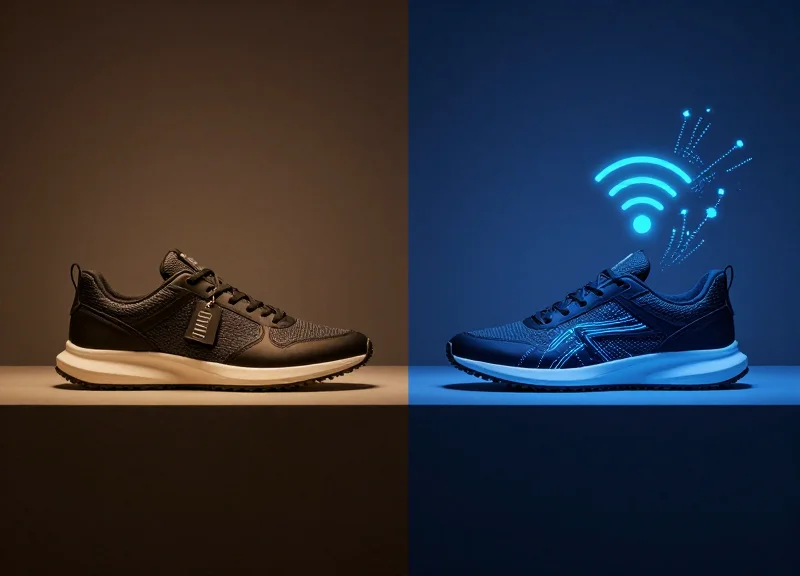
The global footwear market is undergoing a seismic shift. By 2026, the baseline for success will no longer be just 'loss prevention'—it will be 'inventory intelligence.' While traditional Acousto-Magnetic (AM) EAS systems remain a reliable defense against shoplifting, the rise of complex omnichannel retail models is driving a massive transition toward Radio Frequency Identification (RFID). Footwear retailers face unique challenges, from managing high-volume shoe boxes to ensuring item-level accuracy across digital and physical storefronts. This article provides an authoritative comparison of AM and RFID technologies, helping your brand decide which path leads to the highest efficiency and profitability in the next-generation retail landscape.
The Evolution of Footwear Security: Why 2026 is a Turning Point

The evolution of footwear security is reaching a critical inflection point in 2026, moving from reactive Electronic Article Surveillance (EAS) to proactive Inventory Intelligence. For decades, retail security was defined by its ability to sound an alarm at the door. However, the modern footwear landscape—characterized by high-velocity omnichannel fulfillment and rising 'shadow shrink'—now requires more than just a deterrent. The turning point in 2026 is driven by the need for 99.9% inventory accuracy, where security hardware must double as data-gathering nodes to ensure that every pair of sneakers is not only protected but also visible across the global supply chain.
| Feature | Legacy AM Systems (Pre-2024) | Next-Gen RFID Solutions (2026+) |
|---|---|---|
| Primary Function | Theft Deterrence (Beep at Door) | Inventory Intelligence & Tracking |
| Data Granularity | Bulk Sensing (Item present/not) | Item-Level Unique ID (SGTIN) |
| Omnichannel Support | None (Manual counts required) | Real-time stock for 'Buy Online, Pick Up In Store' |
| Loss Insight | Detection only | Insight into when and how items left the floor |
Expert Insight: The 2026 'Digital Mandate'. One of the most overlooked drivers of this evolution is the emergence of Digital Product Passports (DPP) and circular economy regulations. By 2026, major markets are expected to require granular data on material sourcing and product lifecycle. Traditional Acousto-Magnetic (AM) systems are 'blind' to this data, whereas RFID-based security provides a native platform for compliance, allowing brands to track a shoe from the factory floor to the recycling bin while simultaneously preventing theft.
Why is traditional EAS no longer enough for footwear in 2026?
Traditional EAS (AM or RF) only tells you that 'something' was taken. In footwear, where a missing left shoe makes the right shoe unsellable, you need to know exactly which SKU is missing to trigger immediate replenishment and prevent 'hidden out-of-stocks'.
How does inventory intelligence affect the bottom line?
Beyond reducing shrink, moving to an intelligence-based model reduces labor costs associated with manual cycle counts by up to 80% and increases sales by 3-5% through improved stock availability.
Is the transition from AM to RFID purely about security?
No. By 2026, security is just the 'trojan horse' for RFID. The real value lies in enabling seamless omnichannel experiences like 'ship-from-store,' which requires the near-perfect stock accuracy that only RFID security tags can provide.
AM (Acousto-Magnetic) Technology: The Reliability of the Gold Standard
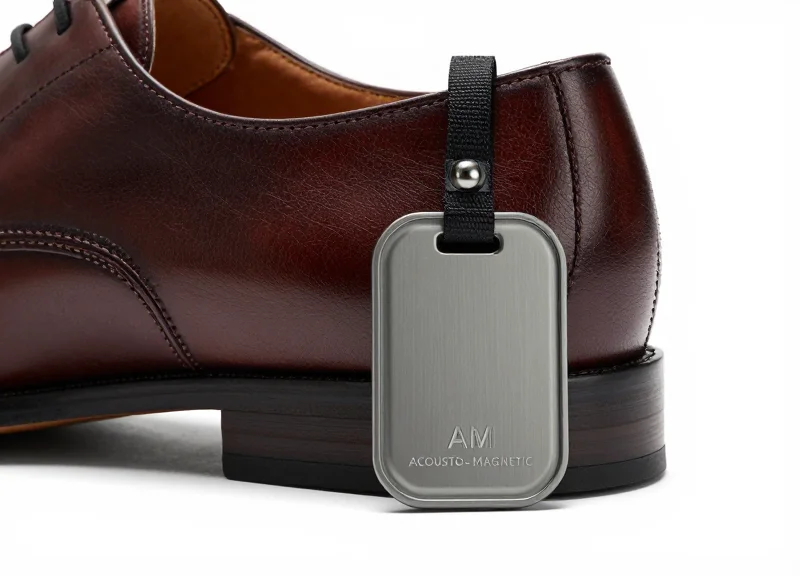
Acousto-Magnetic (AM) technology is a specialized Electronic Article Surveillance (EAS) system operating at 58 kHz that utilizes the principle of magnetostriction to detect unauthorized removal of merchandise. Unlike standard Radio Frequency (RF) systems, AM technology uses an active transmitter to create a surveillance zone where tags containing two strips of amorphous metal vibrate at a specific frequency, providing a highly stable signal that is virtually immune to environmental noise and 'shielding' from metallic objects.
For footwear retailers entering 2026, AM remains the 'Gold Standard' for pure loss prevention. Its dominance in the footwear sector is driven by the physics of the retail environment. High-end sneakers often feature metallic eyelets, carbon fiber plates, and foil-based heat-reflective linings—materials that frequently cause false alarms or signal 'dead zones' in older RF systems. AM’s lower frequency and magnetic resonance allow it to punch through these materials, ensuring that a concealed shoe is detected even if placed inside a foil-lined 'booster bag' or a metallic shopping tote.
| Feature | AM (Acousto-Magnetic) Specification | Impact on Footwear Retail |
|---|---|---|
| Operating Frequency | 58 kHz | High resistance to liquid and metallic interference common in luxury shoes. |
| Detection Range | Up to 2.4 meters (8 feet) | Allows for wide, aesthetically pleasing 'open' store entrances. |
| Tag Deactivation | Distance-based (non-contact) | Prevents physical damage to delicate leather or suede during checkout. |
| Signal Accuracy | 95% - 99% | Extremely low false-alarm rate compared to standard RF systems. |
Despite its physical reliability, AM technology faces a 'data wall.' In an era of Next-Gen Inventory Intelligence, AM's primary limitation is its inability to distinguish between individual items. An AM pedestal can tell you that a shoe is leaving the store, but it cannot tell you if it is a size 10 Air Jordan or a size 6 running spike. It is a binary security gate, not a data-capture point. For retailers looking to sync loss prevention with real-time stock levels, this lack of unique serialized identity is the catalyst for the shift toward hybrid RFID-AM solutions.
Can AM tags be hidden inside shoes?
Yes. Due to their slim profile, AM 'DR' labels can be placed under the factory insole or inside the tongue, providing discreet protection without compromising the customer's try-on experience.
Why do luxury shoe boutiques prefer AM over RF?
Luxury environments often use heavy metal decor and high-density lighting that create 'electronic noise.' AM technology is inherently more stable in these environments, reducing embarrassing false alarms for high-spending clients.
Is AM technology compatible with future 2026 RFID systems?
While they operate on different physics, 'Dual Tech' antennas exist that house both AM and RFID hardware in one pedestal, allowing retailers to keep AM for security while using RFID for inventory.
Expert Insight: In 2026, we are seeing a trend called 'Resonance Hardening.' Footwear manufacturers are now embedding AM materials directly into the midsole during the injection molding process. This makes the security element impossible to remove without destroying the shoe, a level of permanent protection that RFID—which can be shielded by the human body or specific packaging—cannot yet guarantee with 100% certainty at the exit point.
The Rise of RFID: Transforming Shoes into Intelligent Data Points
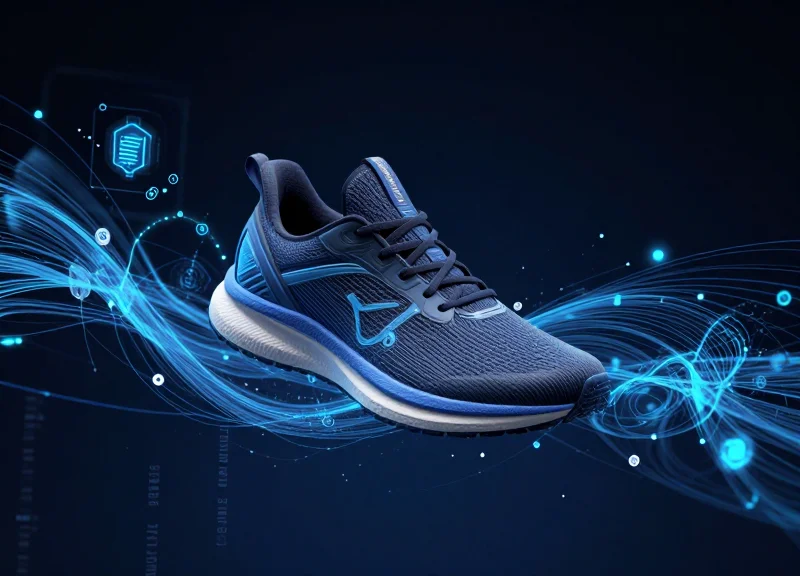
Radio Frequency Identification (RFID) in the footwear industry represents the transition from 'dumb' security tags to 'intelligent' data points. Unlike traditional Acousto-Magnetic (AM) systems that only signal an alarm at the door, RFID utilizes Ultra-High Frequency (UHF) waves to identify specific, serialized items from a distance without line-of-sight. By 2026, RFID is expected to be the foundational layer for footwear retailers, providing 99% inventory accuracy and enabling the hyper-efficient omnichannel fulfillment required to compete in a post-digital market.
| Metric | Legacy Inventory (Manual/Barcode) | Next-Gen RFID Footwear Systems |
|---|---|---|
| Inventory Accuracy | 65% - 75% | 98% - 99.5% |
| Counting Speed | 200 items/hour | Up to 20,000 items/hour |
| Visibility Level | SKU-level (Batch) | Item-level (Serialized) |
| Omnichannel Readiness | Low (Frequent cancellations) | High (Real-time stock sync) |
In the footwear sector, the 'mismatched pair' or 'missing display shoe' problem has historically plagued margins. RFID solves this by assigning a unique digital identity to every left and right shoe. When a customer wants to Buy Online, Pick Up In-Store (BOPIS), the system doesn't just know a size 10 is 'somewhere' in the building; it knows exactly which box is in the backroom and which is on the display floor, reducing fulfillment search time by up to 80%.
- Source Tagging: RFID tags are embedded into the shoe tongue or sole during manufacturing, ensuring data integrity from the factory floor to the retail shelf.
- Rapid Receiving: Retailers scan entire shipments in seconds without opening boxes, instantly updating the ERP system with 100% verification of contents.
- Continuous Cycle Counting: Store staff perform weekly or daily 'wave' counts with handheld readers, identifying stock discrepancies before they lead to lost sales.
- Frictionless Fulfillment: Real-time accuracy enables confident 'Ship from Store' capabilities, turning every retail location into a micro-distribution center.
Expert Insight: The 'Safety Stock' Tax. Most footwear retailers carry 10-15% extra inventory simply as a buffer against poor data accuracy. My 20 years in Silicon Valley retail tech have shown that implementing RFID allows brands to slash this 'Safety Stock Tax.' By trusting your data, you can operate leaner, reduce end-of-season markdowns, and significantly improve your environmental footprint by producing only what you actually sell.
Does RFID replace the need for security gates?
Not necessarily. While RFID can trigger alarms, it is often used alongside AM for high-theft items or integrated into overhead RFID 'portals' that provide both security and data on exactly which item left the store.
Is RFID tagging expensive for shoes?
The cost per tag has dropped significantly (now pennies), and the ROI is typically realized within 12-18 months through labor savings and a 3-5% lift in top-line sales due to better stock availability.
Can RFID track customers?
No. Modern retail RFID tags are passive (no battery) and have a limited range. They are designed for inventory management and are typically 'killed' or ignored once the consumer leaves the retail environment.
Head-to-Head Comparison: AM vs. RFID for Footwear Operations
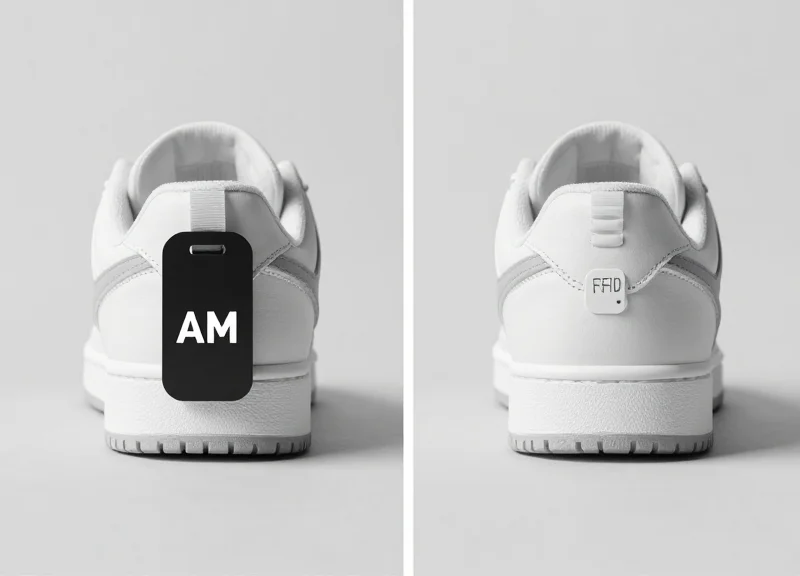
Choosing between AM (Acousto-Magnetic) and RFID for footwear operations depends on whether your primary goal is high-performance loss prevention or total inventory visibility. While AM systems are the gold standard for pure theft deterrence due to their superior detection through liquids and metals, RFID provides an intelligence layer that transforms every shoe box into a trackable asset, enabling 99% inventory accuracy and seamless omnichannel fulfillment that legacy EAS systems simply cannot match.
| Metric | AM (Acousto-Magnetic) | RFID (UHF Gen2) |
|---|---|---|
| Primary Function | Loss Prevention (EAS) | Inventory Intelligence + Security |
| Detection Range | Up to 2.4 meters (Dual Pedestal) | Up to 10+ meters (Fixed Overhead) |
| Interference Sensitivity | Low (Immune to body shielding) | High (Attenuated by liquids/dense metals) |
| Data Capacity | None (Bit-based 1/0 trigger) | High (Unique ID, SKU, Batch, Size) |
| Cost Per Tag (Avg.) | Low ($0.02 - $0.05) | Moderate ($0.07 - $0.15) |
| Stocktake Speed | Manual (Barcode dependent) | Automated (20,000+ items per hour) |
In the specific context of footwear, the 'Shadow Inventory' effect is a critical differentiator. An AM system protects the exit, but it cannot tell a store manager that the last size 10 running shoe is actually hidden in the backroom behind winter boots. This is where RFID excels. By using handheld readers, footwear retailers can reduce the time spent on weekly cycle counts from 8 hours down to 15 minutes, directly impacting labor costs and ensuring that digital stock levels match physical reality for Buy-Online-Pick-Up-In-Store (BOPIS) orders.
Which technology is better for wide store entrances?
AM is traditionally better for wide entrances (up to 2.4m) because its lower frequency waves are less prone to interference. However, 2026-gen RFID overhead antennas can now cover massive spans by creating a 'ceiling-down' detection zone, effectively eliminating the need for bulky pedestals entirely.
Can RFID tags be embedded inside the shoe?
Yes, many footwear manufacturers are now embedding 'source-tagged' RFID inlays directly into the midsole or heel of the shoe during production. This is much harder to achieve with AM tags, which are typically larger and require physical removal or deactivation at the POS.
How do costs compare for a high-volume shoe retailer?
While AM tags are cheaper per unit, the total cost of ownership (TCO) for RFID is often lower when factoring in labor savings. RFID eliminates the need for manual barcode scanning during receiving and inventory audits, which can save a 50-store chain thousands of man-hours annually.
Expert Tip: For 2026 footwear deployments, do not view this as a binary choice. The most successful global retailers are moving toward 'Dual-Technology' tags. These hybrid tags contain both an AM resonator for robust security and an RFID chip for inventory data. This allows brands to leverage their existing AM pedestals for high-security theft prevention while simultaneously gaining the granular data insights required for modern omnichannel retail.
Solving the 'Phantom Inventory' Crisis in Shoe Retail
Phantom inventory refers to a discrepancy where a retailer's inventory management system shows stock as available when it is physically missing, damaged, or misplaced. In the high-stakes footwear sector, where a single missing size can render an entire style 'out of stock' for a customer, solving this crisis requires moving beyond basic electronic article surveillance (EAS) toward item-level intelligence. While traditional AM systems only alert you when a product leaves the store, 2026-ready RFID solutions provide a continuous heartbeat for every SKU, ensuring that digital records match physical reality with up to 99% accuracy.
| Inventory Challenge | AM (Traditional) Impact | RFID (Next-Gen) Impact |
|---|---|---|
| Inaccurate Stock Counts | Manual counts only; errors persist for months. | Weekly/Daily counts ensure real-time accuracy. |
| Omnichannel Fulfillment | High cancellation rates due to missing stock. | Confident 'Buy Online, Pick Up In Store' (BOPIS). |
| Size/Style Drifting | Hard to detect if a specific size 9 is missing. | Instant alerts for size-specific depletion. |
| Display Compliance | No way to track if a display shoe is on the floor. | Ensures every hero style is represented visually. |
The 'Orphaned Shoe' Insight: A unique footwear challenge is the single-shoe mismatch. Often, a customer tries on a left shoe while the right remains in the box; if one goes missing, the system still shows '1 pair' available. This is the ultimate phantom inventory trap. Next-gen RFID tags allow retailers to pair-match digitally. If a system detects two 'Left' tags for a specific model but only one 'Right' tag, it flags an anomaly immediately—a level of granularity that traditional AM security cannot hope to achieve.
How does phantom inventory specifically hurt footwear margins?
It leads to 'safety stock' bloat. To avoid stockouts caused by inaccurate data, retailers over-order, which leads to aggressive markdowns at the end of the season when the phantom inventory is finally discovered during annual audits.
Can AM technology assist in inventory intelligence at all?
Strictly speaking, no. AM is a 'dumb' technology designed for a binary outcome: alarm or no alarm. It identifies that 'an' object is crossing a threshold, but it cannot identify 'which' shoe it is, meaning it provides zero data to correct inventory records.
Is the transition to RFID worth the cost for mid-market shoe brands?
Yes, because the labor savings from automated cycle counting and the 2-5% revenue lift from reduced out-of-stocks typically provide a full ROI within 12 to 18 months, especially as tag costs continue to drop heading into 2026.
By 2026, the 'Invisible Store' will become a competitive disadvantage. Retailers using next-gen intelligence don't just stop theft; they create a frictionless supply chain where the customer never hears the words 'it says we have it in the system, but I can't find it in the back.'
The Hybrid Model: Can You Use Both AM and RFID Simultaneously?

Yes, you can absolutely use both AM and RFID simultaneously, and for many forward-thinking footwear retailers in 2026, this 'Hybrid Model' is the strategic gold standard. Rather than choosing between security and data, retailers are deploying dual-technology tags that house both an Acousto-Magnetic (AM) resonator and a UHF RFID inlay within a single housing. This allows the AM component to handle the heavy lifting of theft prevention at the storefront, while the RFID component feeds granular, item-level data into the inventory management system. It bridges the gap between legacy loss prevention and modern digital transformation without requiring two separate pieces of hardware on every shoe.
| Feature | Standalone AM | Standalone RFID | Hybrid AM/RFID |
|---|---|---|---|
| Theft Prevention | Excellent (Hard to shield) | Moderate (Susceptible to body shielding) | Excellent (Best of both worlds) |
| Inventory Visibility | Zero (Binary: In or Out) | 99% (Item-level data) | 99% (Item-level data) |
| Implementation Effort | Low | Medium (Requires infrastructure) | High Initial Setup / Lower Daily Friction |
| Primary Use Case | Loss Prevention Only | Supply Chain & Inventory | Omnichannel & High-Value Footwear |
Do hybrid tags cause signal interference between the AM and RFID components?
Modern 2026-gen hybrid tags are engineered with specific spatial separation and shielding to prevent the AM resonator from detuning the RFID antenna. High-quality dual-tech tags ensure that the 58kHz frequency of AM does not conflict with the 860-960MHz range used by RFID.
Is the cost of hybrid tags justifiable for mid-range footwear?
While the per-unit cost of a hybrid tag is higher than a single-tech tag, the ROI is found in labor reduction. Applying one tag instead of two saves significant 'floor-ready' processing time, and the reduction in 'phantom inventory' stockouts typically pays for the tag premium within 12-18 months.
Can I use my existing AM pedestals with hybrid tags?
Yes, that is the primary advantage. You can keep your existing AM EAS gates for security while adding handheld or overhead RFID readers to capture the inventory data, making it a non-disruptive upgrade path.
Expert Insight: Solving the 'Tag Bloat' Aesthetic. In my years consulting for high-end Silicon Valley retail tech, I've observed that the 'Hybrid Model' isn't just a technical win—it's a brand win. Footwear, especially premium sneakers and designer heels, suffers from 'Tag Bloat' when multiple security and tracking stickers are applied, cluttering the product's silhouette. The 2026-gen hybrid tag solves this by consolidating the footprint. Pro Tip: Look for 'Eco-Hybrid' tags that utilize a sustainable housing; as circular economy regulations tighten by 2026, having a single, recyclable dual-tech tag will simplify your compliance reporting while keeping your floor displays elegant.
Cost-Benefit Analysis: Calculating ROI for 2026 Implementation
To accurately calculate the ROI of transitioning from traditional AM EAS to RFID-driven intelligence for 2026, retailers must move beyond viewing security as a 'shrinkage-only' metric. The real financial breakthrough lies in 'Inventory Velocity'—the speed and accuracy with which a pair of shoes moves from the warehouse to the customer's feet. While AM systems primarily offer a defensive ROI by preventing theft, RFID and Hybrid solutions provide an offensive ROI by unlocking 'phantom inventory,' reducing labor hours by up to 80% during stock takes, and enabling high-margin omnichannel fulfillment that is otherwise impossible with 70% baseline accuracy.
| Financial Metric | Legacy AM Solutions | Next-Gen RFID/Hybrid (2026) |
|---|---|---|
| Initial Hardware CAPEX | Low (Pedestals only) | Moderate to High (Readers + Infrastructure) |
| Annual Tagging OPEX | Low (Reusable hard tags) | Variable (Source-tagging integration) |
| Inventory Accuracy | 65-75% (Static) | 98-99% (Real-time) |
| Labor Cost Savings | Negligible | High (Automated counting/receiving) |
| Sales Lift (Stockout Reduction) | 0% | 2% to 6% Average Increase |
- Establish the 'Accuracy Gap' Baseline: Quantify current revenue lost due to out-of-stocks and 'phantom inventory' where the system shows a size 9 is in stock, but it cannot be found on the floor.
- Model Labor Reallocation: Calculate the hours spent by staff manually scanning barcodes. RFID allows for a full store count in minutes rather than hours, reallocating labor to high-value customer service.
- Project Omnichannel Revenue Growth: Estimate the increase in 'Buy Online, Pick Up In Store' (BOPIS) success rates. High inventory accuracy eliminates the cost of cancelled orders and shipping from distant warehouses.
- Factor in Shrinkage Reduction: Include the direct savings from reduced theft, particularly in high-theft footwear categories, using the granular data provided by RFID to identify exact points of loss.
Expert Insight: The 'Compliance Dividend'. By 2026, the ROI calculation must include the cost of non-compliance with emerging Digital Product Passport (DPP) regulations in the EU and globally. RFID implementation for inventory intelligence doubles as the foundation for these mandatory sustainability disclosures. Investing now avoids 'compliance debt'—the high cost of rushing a deployment later to meet legal requirements for footwear circularity and material traceability.
Is the cost per tag for RFID still a barrier compared to AM?
While RFID tags are consumables compared to reusable AM hard tags, the 'cost per read' has plummeted. When source-tagged at the factory, the cost is often offset by the removal of manual tagging labor at the DC or store level.
How long does it take to see a positive ROI?
Most footwear retailers report a break-even point within 12 to 18 months, driven primarily by a 3% average lift in sales from improved item availability.
Does 2026 technology require a total infrastructure overhaul?
Not necessarily. Many brands are adopting a 'Hybrid' approach, utilizing existing AM pedestals for security while adding handheld RFID readers or overhead sensors to minimize initial CAPEX.
Future-Proofing Your Store: Steps to Transition to RFID Intelligence

Future-proofing your footwear retail environment requires transitioning from reactive Acousto-Magnetic (AM) security to proactive Radio Frequency Identification (RFID) intelligence. This shift is not merely a hardware upgrade but a strategic migration from simple loss prevention at the exit gate to 99% item-level inventory accuracy across the entire supply chain. By implementing a phased approach that integrates source-tagging with cloud-based analytics, brands can eliminate 'phantom inventory' and enable seamless omnichannel operations before the 2026 retail cycle begins.
- Phase 1: The Infrastructure Audit & Gap Analysis: Evaluate your current POS systems and handheld hardware. Determine if existing pedestals are dual-capable or require full replacement. For footwear, ensure your shelving units (especially metal-framed displays) won't cause RF interference.
- Phase 2: Upstream Source-Tagging Implementation: Partner with manufacturers to embed RFID inlays into shoe boxes or tongue labels at the point of production. This ensures 100% tag compliance and reduces labor costs associated with manual in-store tagging.
- Phase 3: Zonal Pilot Programs: Deploy RFID in a 'Micro-Pilot'—ideally focusing on high-turnover categories like performance runners. Monitor the 'Read-Rate' accuracy from the backroom to the sales floor to identify dead zones.
- Phase 4: API & ERP Integration: Connect RFID data streams to your Enterprise Resource Planning (ERP) software. This allows real-time stock updates that synchronize with your online store, preventing customers from ordering 'available' shoes that are actually missing.
- Phase 5: Staff Literacy & Cultural Shift: Train associates to use RFID handhelds for weekly cycle counts rather than annual physical inventories. Shift the staff mindset from 'security guards' to 'inventory specialists'.
| Implementation Stage | Primary Goal | Key Technology |
|---|---|---|
| Month 1-3 | Baseline Infrastructure | Cloud-ready Gateways |
| Month 4-8 | Source Integration | RFID-embedded Labels |
| Month 9-12 | Data Synchronization | Middleware / API Connectors |
| Month 12+ | Operational Excellence | Fixed Overhead Readers |
Expert Insight: The Safety Stock Compression. Most footwear retailers carry a 15-20% 'safety stock' buffer to account for inventory inaccuracies. An original benefit of transitioning to RFID is the ability to compress this buffer down to 3-5%. By 2026, this freed-up capital will be the primary differentiator between brands that can afford aggressive R&D and those struggling with stagnant cash flow tied up in backroom boxes.
Can I keep my existing AM pedestals during the transition?
Yes. Most footwear brands utilize a 'Hybrid Year' where dual-technology tags are used, allowing the legacy AM gates to handle security while handheld RFID readers manage inventory until the pedestals are upgraded.
What is the biggest hurdle in RFID footwear migration?
Liquid and Metal interference. While shoes are generally 'RF-friendly,' certain metallic accents or moisture-heavy warehouse environments can dampen signals. Using specialized footwear-optimized inlays is critical.
How does this affect 2026 sustainability goals?
RFID significantly reduces overproduction by providing accurate demand data, directly supporting 'Green' initiatives by ensuring brands only manufacture what they can actually sell.
DragonGuard's Vision for Next-Gen Retail Ecosystems
DragonGuard's vision for next-gen retail ecosystems centers on the Unified Intelligence Model, a paradigm shift where AM security and RFID inventory tracking are no longer siloed operations but coexist within a single, cloud-integrated platform. By 2026, we aim to help global footwear brands achieve 99% inventory accuracy and near-zero shrink by bridging the gap between physical loss prevention and digital supply chain visibility, ensuring that every pair of shoes—from the warehouse to the fitting room—is a data point for growth.
| Strategic Pillar | Legacy Retail Approach | DragonGuard 2026 Ecosystem |
|---|---|---|
| Security & Inventory | Separated systems (AM gates vs. Manual counts) | Unified Hardware (Hybrid AM-RFID sensors) |
| Data Velocity | Periodic audits with high latency | Real-time edge computing and cloud sync |
| Customer Experience | Friction-heavy anti-theft measures | Invisible security / frictionless checkout |
| Sustainability | Single-use plastic hard tags | Recyclable, eco-designed smart tags |
Expert Insight: The 'Invisible Checkout' Synergy. Unlike competitors who focus solely on hardware sales, DragonGuard’s unique perspective is that the best security technology is the one the customer never sees. In 2026, we are pioneering 'Security-as-a-Service' where our hybrid tags allow for automated, gate-free checkout zones. This doesn't just stop theft; it reallocates store labor from 'guarding' to 'selling,' potentially increasing high-end footwear conversion rates by up to 15%.
Does DragonGuard's vision require replacing all existing AM pedestals?
No. Our ecosystem is designed for modularity. You can overlay our RFID 'Intelligence Layer' onto existing AM infrastructure, allowing for a phased transition that protects your current CAPEX while preparing for future scalability.
How does the single platform handle data security and privacy?
DragonGuard utilizes end-to-end encryption from the tag-read at the edge to the cloud dashboard. We adhere to global data standards (like GDPR and CCPA) to ensure inventory movement is tracked without compromising individual shopper privacy.
Can this system reduce labor costs in shoe stores?
Absolutely. By automating the receiving and inventory cycle-counting process via RFID, our ecosystem reduces the time spent on manual stock-taking by over 80%, allowing staff to focus on customer service and replenishment.
- Phase 1: Security Stabilization: Implement high-performance AM tags to immediately reduce shrink and stabilize the bottom line.
- Phase 2: Intelligence Integration: Deploy RFID overhead readers and handhelds to gain real-time visibility into shelf availability and stock movement.
- Phase 3: Ecosystem Maturity: Leverage AI-driven analytics to predict future stockouts and automate re-ordering processes across the global footwear network.