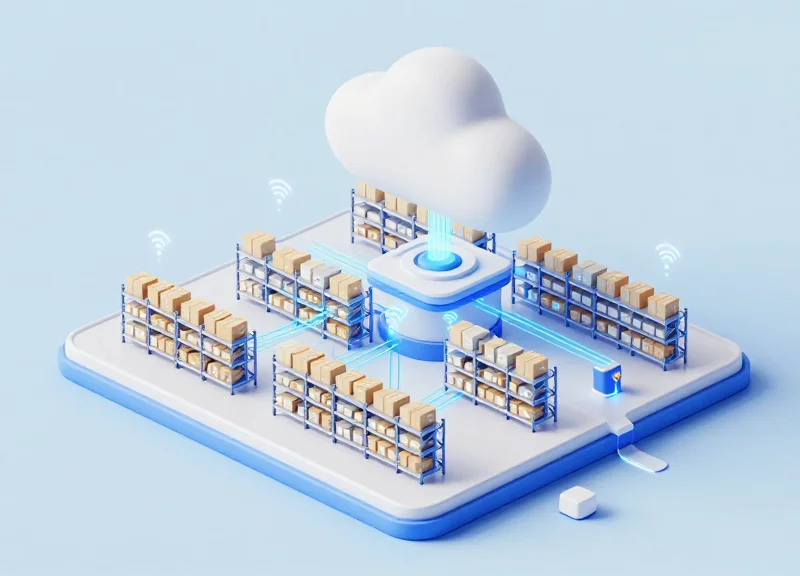
As we approach 2026, the retail logistics landscape is undergoing a seismic shift. Traditional on-premise RFID middleware, once the gold standard for tracking goods, is increasingly becoming a liability for global enterprises. The demand for hyper-speed fulfillment and omnichannel precision has exposed the rigidity of local server-based systems. This article explores why the migration to cloud-native architectures is no longer optional but essential for scalability, data integrity, and real-time operational efficiency in the modern supply chain.
The Evolution of RFID in Retail Logistics
The evolution of RFID in retail logistics marks a fundamental shift from 'Scan-and-Store' mechanics to 'Sense-and-Respond' intelligence. Historically, RFID was utilized as a high-tech alternative to barcodes—primarily for inventory counts and basic loss prevention. However, as we approach 2026, the technology has evolved into a real-time data stream that powers autonomous supply chains. This evolution is defined by the migration from siloed, on-premise middleware that merely collected data, to cloud-native architectures that orchestrate global inventory visibility across omnichannel networks.
| Era | Primary Architecture | Key Objective | Data Utility |
|---|---|---|---|
| RFID 1.0 (2000s) | Legacy On-Premise | Pallet Tracking | Reactive Reporting |
| RFID 2.0 (2010s) | Centralized Middleware | Inventory Accuracy | Batch Synchronization |
| RFID 3.0 (2020-2026) | Cloud-Native / API-First | Omnichannel Agility | Real-Time Predictive Analytics |
In the early stages, RFID adoption was stifled by the 'Middleware Tax'—the high cost and complexity of maintaining local servers and proprietary software at every warehouse or storefront. These legacy systems acted as data traps, where information was siloed and often hours or days old by the time it reached corporate ERP systems. Modern logistics demands 'Data Gravity'—the ability to pull actionable insights directly from the edge to the cloud without the latency of traditional on-site processing.
How did RFID move beyond simple item-level tagging?
The breakthrough occurred when retailers stopped viewing RFID as a sticker and started viewing it as a digital twin. By integrating cloud-native sensors, every movement of a product—from manufacturing to a return center—is logged as a unique event in a global ledger.
Why is the transition to cloud-native critical for 2026 logistics?
Scalability is the primary driver. On-premise middleware cannot handle the 'data tsunami' generated by millions of sub-second tag reads across thousands of locations. Cloud-native architectures use serverless functions to scale instantly during peak seasons like Black Friday.
What is the role of 'Edge Computing' in this evolution?
Edge computing allows for local filtering of RFID data, ensuring only relevant events (like a product leaving a shelf) are sent to the cloud, significantly reducing bandwidth costs and latency.
Expert Insight: By 2026, the industry will pivot toward 'Zero-Middleware' environments. In this model, RFID readers function as native IoT devices, pushing authenticated JSON payloads directly to cloud endpoints via MQTT or Webhooks. This removes the brittleness of local software updates and allows retailers to deploy new logistics logic globally in minutes rather than months.
The 'Middleware Wall': Limitations of Legacy On-Premise Systems

The 'Middleware Wall' refers to the inevitable performance ceiling reached by legacy RFID systems where localized hardware constraints and siloed data architectures prevent retailers from achieving the sub-second visibility required for modern, automated supply chains. Unlike modern cloud-native solutions, legacy middleware relies on physical servers stationed at each distribution center or retail store, creating fragmented 'islands of data' that make enterprise-wide inventory synchronization nearly impossible in real-time.
| Feature | Legacy On-Premise Middleware | Cloud-Native RFID Architecture |
|---|---|---|
| Scalability | Vertical (Requires new physical hardware) | Horizontal (Elastic auto-scaling) |
| Data Access | Local silos; batch processing | Global availability; real-time streaming |
| Maintenance | High (Manual patches, physical cooling, hardware EOL) | Low (Serverless, automated updates) |
| Interoperability | Rigid APIs; often proprietary | Open RESTful APIs; seamless ERP/WMS integration |
Expert Insight: The Latency-Throughput Paradox. In legacy on-premise environments, as the volume of RFID tag reads increases linearly during peak seasons, the processing latency often increases exponentially. This occurs because local CPUs become overwhelmed by the 'noise' of massive tag density, leading to dropped packets and inaccurate inventory counts—precisely when accuracy is needed most. This 'glass ceiling' is the primary driver for the 2026 shift toward cloud-edge hybrid models.
Why does legacy middleware create data silos?
On-premise systems store data locally before periodic 'syncs' with the central ERP. This creates a time lag where the warehouse thinks it has stock that has already been diverted or sold, leading to omnichannel fulfillment errors.
What is the hidden cost of maintaining these systems?
Beyond license fees, the true cost lies in 'Technical Debt'—the expense of maintaining aging OS versions, securing local networks against edge vulnerabilities, and the opportunity cost of not having real-time data for AI-driven forecasting.
Can legacy middleware support high-velocity automation?
Generally, no. Legacy systems lack the sub-millisecond response times needed to trigger high-speed sorters or autonomous mobile robots (AMRs) based on live RFID telemetry.
Furthermore, the security profile of legacy middleware is increasingly problematic. Maintaining consistent security patches across hundreds of physical locations is a logistical nightmare. In a cloud-native environment, security protocols are updated globally and instantaneously, protecting the entire supply chain from the edge to the core without manual intervention at each node.
Defining Cloud-Native RFID Architecture for 2026
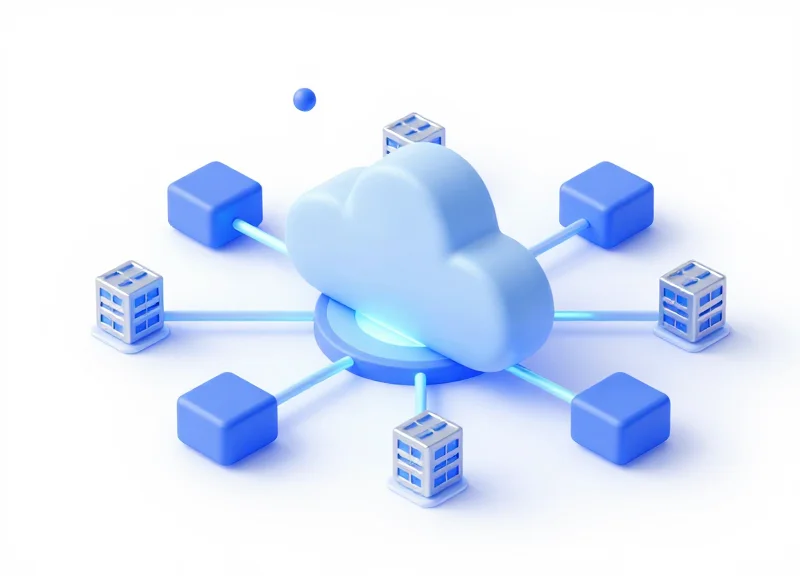
A cloud-native RFID architecture is a modular system designed specifically for the cloud environment, utilizing microservices, containerization, and API-first principles to ingest, process, and analyze massive volumes of RFID data in real-time. Unlike legacy middleware that acts as a rigid bridge, 2026-standard architectures are built to be elastic, allowing retail enterprises to scale data processing power up or down instantly across thousands of global locations without the need for localized hardware maintenance.
| Feature | Legacy On-Premise Middleware | 2026 Cloud-Native Architecture |
|---|---|---|
| Deployment | Local servers / Site-by-site | Containers (Docker/Kubernetes) |
| Scaling | Manual / Hardware-dependent | Elastic / Auto-scaling |
| Updates | Scheduled downtime required | Continuous Deployment (CI/CD) |
| Data Access | Siloed / Batch processing | API-First / Streaming (Kafka) |
To understand why this shift is occurring, we must look at the structural components that allow these systems to outperform traditional installations. By 2026, the 'Gold Standard' for retail logistics is defined by three specific technical pillars:
- Microservices Orchestration: The system is broken into independent services (e.g., tag filtering, inventory reconciliation, alert generation). If the 'alert' service fails, the 'inventory' service continues to run, ensuring zero-downtime reliability.
- Containerization (Kubernetes): RFID processing logic is packaged into containers, allowing the same code to run identically on an edge reader in a warehouse or a central server in the cloud, simplifying edge-to-cloud synchronization.
- API-First Interoperability: Instead of proprietary connectors, every data point is accessible via REST or GraphQL APIs, making it trivial to plug RFID data into modern ERPs, AI demand-forecasting engines, or customer-facing apps.
Expert Insight: The Shift to Event-Driven Orchestration. My original observation from twenty years in Silicon Valley is that we are moving away from 'Data at Rest' to 'Data in Motion.' In 2026, the best architectures don't just store RFID tags in a database; they use an 'Event Mesh.' This means a single tag read triggers a cascade of automated actions—updating a digital twin, notifying a logistics carrier, and reordering stock—all within milliseconds. This event-driven nature is impossible in legacy middleware but is the native language of the cloud.
Is cloud-native RFID more expensive than on-premise?
While it requires a subscription model, the Total Cost of Ownership (TCO) is lower by 2026 standards because it eliminates local server maintenance, manual patches, and the high cost of data silos.
Does cloud-native work if the store internet goes down?
Modern architectures use 'Edge Computing' containers that allow local readers to process data offline and sync with the cloud the moment connectivity is restored, preventing data loss.
Can I migrate from legacy middleware to cloud-native?
Yes, most enterprises use a 'Strangler Pattern' approach, gradually moving specific functions like reporting to the cloud while keeping existing hardware in place until it reaches end-of-life.
Scalability Without Borders: Supporting Global Supply Chains
In the 2026 retail landscape, global scalability is no longer defined by how many servers you can rack and stack, but by how efficiently you can orchestrate data across a distributed network. Cloud-native RFID architectures achieve 'scalability without borders' by utilizing centralized control planes that push configuration and logic to the edge, effectively decoupling the physical hardware from the management layer. This allows a retailer to provision thousands of new RFID read-points across a global footprint—covering warehouses in Vietnam, transit hubs in Germany, and storefronts in New York—without ever deploying a local IT technician or installing a single piece of site-specific middleware.
| Scaling Metric | Legacy On-Premise Middleware | Cloud-Native Architecture |
|---|---|---|
| Deployment Velocity | Months: Requires site visits and local server setup. | Days: Zero-touch provisioning via automated cloud scripts. |
| Maintenance Overhead | High: Requires local OS patches and hardware upkeep. | Near-Zero: Managed services with automated updates. |
| Data Synchronization | Batch processing; high risk of regional data silos. | Real-time; unified global inventory view. |
| Elasticity | Fixed capacity based on local hardware limits. | Infinite: Automatically scales with peak seasonal volume. |
The true breakthrough lies in the 'Global Command Center' model. By shifting to a cloud-native stance, enterprise architects can manage the firmware versions, read-event logic, and filtering algorithms for 50,000 readers as if they were one single device. This eliminates the 'config-drift' that plagued legacy systems, where different stores would inadvertently run different versions of middleware, leading to inconsistent inventory accuracy across the enterprise.
How does cloud-native RFID handle latency in remote global regions?
Modern architectures use 'Edge-Cloud' hybrids where critical filtering and data deduplication happen on the reader or an edge gateway, while business logic and long-term storage reside in the cloud, ensuring high performance even with sub-optimal internet connectivity.
What is the impact on IT headcount when scaling globally?
Retailers typically see a 60-80% reduction in site-specific IT requirements. Centralized management allows a small core team to oversee a global network that previously required a decentralized army of field engineers.
Can cloud-native systems handle peak holiday traffic globally?
Yes. Unlike on-premise servers that crash when exceeding CPU limits, cloud-native systems utilize auto-scaling microservices to expand compute resources during high-traffic events like Black Friday or Singles' Day.
Expert Insight: The 'Shadow IT Tax' is the most significant hidden cost in legacy global retail. In our experience, roughly 15-20% of operational budgets in on-premise environments are lost to localized 'band-aid' fixes—custom scripts written by local contractors to keep aging middleware running. Cloud-native architectures recover this budget by enforcing a single, immutable code base across the entire global supply chain.
Real-Time Data: From Batch Processing to Instant Insights

In the 2026 retail landscape, real-time data is defined as sub-second synchronization between physical movement and digital record. Unlike legacy on-premise middleware that relies on periodic 'batching'—where RFID tag reads are stored locally and uploaded in intervals—cloud-native architectures utilize event-driven streaming. This shift ensures that as soon as a pallet moves or a garment is sold, the entire global inventory system reflects the change, enabling precise omni-channel fulfillment and proactive loss prevention that legacy systems simply cannot match.
| Feature | Legacy Batch Processing | Cloud-Native Event Streaming |
|---|---|---|
| Latency | 15 minutes to 24 hours | Sub-500 milliseconds |
| Data Freshness | Stale / Historical | Live / Actionable |
| Infrastructure | Local Servers / Polling | Serverless / Pub-Sub |
| Inventory Accuracy | ~80-90% (drift occurs) | 99.9% (continuous sync) |
The fundamental flaw of batch processing is the 'Visibility Gap.' When a retailer relies on hourly updates, they are effectively flying blind between those intervals. If a high-demand item sells out in the first ten minutes of an hour, the e-commerce platform may continue accepting orders for fifty minutes, leading to costly cancellations and poor customer experiences. Cloud-native systems solve this by treating every RFID ping as a discrete event in a continuous stream, processed immediately via technologies like Apache Kafka or AWS Kinesis.
- Edge Capture: Fixed or handheld RFID readers capture tag data at the point of activity and push it instantly to a cloud gateway.
- Stream Processing: The cloud engine filters and deduplicates millions of 'pings' to identify meaningful movement events.
- Global State Update: Inventory databases across all nodes (Web, Store, Warehouse) update simultaneously via API triggers.
The 2026 Expert Insight: The 'Drift Tax'. Legacy systems incur what I call a 'Drift Tax'—the cumulative financial loss caused by the delta between physical reality and digital records. By 2026, retailers using cloud-native RFID will eliminate this tax by implementing 'Dynamic Safety Stock.' Because their data is instant, they can reduce buffer inventory by 15-20% without increasing stockout risk, directly boosting bottom-line margins through improved working capital efficiency.
How does real-time RFID impact loss prevention?
By identifying exactly when and where an item leaves a zone without a POS trigger, cloud systems can alert security or log the event instantly, rather than discovering the loss during a weekly count.
Does streaming data consume more bandwidth than batching?
While it generates more frequent connections, cloud-native systems use efficient protocols like MQTT, which are optimized for IoT and often require less total overhead than heavy, uncompressed legacy batch uploads.
Is real-time data necessary for all retail categories?
While critical for high-turnover fashion and electronics, even low-velocity categories benefit from real-time data for accurate 'BOPIS' (Buy Online, Pick Up In Store) reliability.
Total Cost of Ownership (TCO): On-Premise vs. Cloud SaaS Models
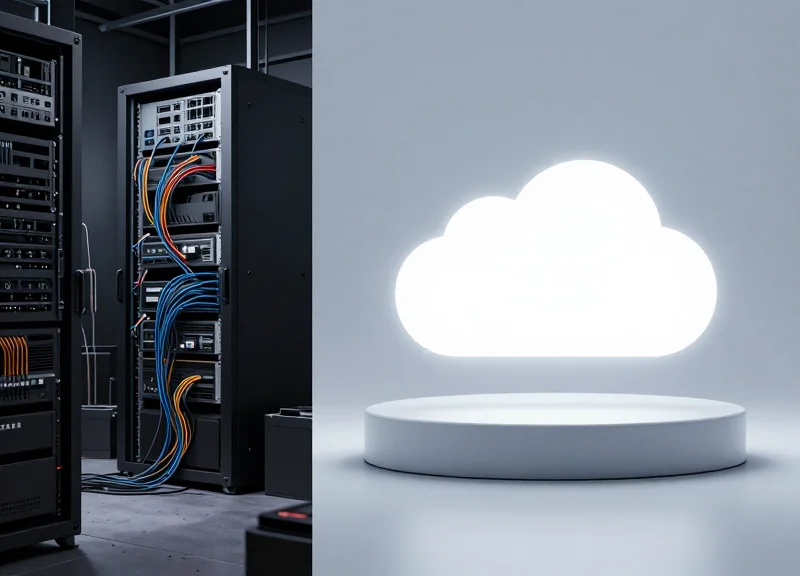
Total Cost of Ownership (TCO) for retail RFID is the sum of all direct and indirect costs associated with the system's lifecycle. In 2026, the financial landscape of retail logistics is shifting from heavy Capital Expenditure (CAPEX) models, which require massive upfront investments in on-premise servers and perpetual licenses, to Operational Expenditure (OPEX) models. Cloud-native SaaS (Software as a Service) architectures allow retailers to pay only for the value consumed, drastically reducing the 'time-to-value' and eliminating the hidden costs of managing physical infrastructure at thousands of distributed store locations.
| Cost Component | Legacy On-Premise (CAPEX) | Cloud-Native SaaS (OPEX) |
|---|---|---|
| Initial Investment | High: Server hardware, rack space, and licenses. | Low: Minimal setup fees and per-device/per-site subscription. |
| Maintenance & Support | Variable: Local IT labor, physical hardware repairs. | Fixed: Included in subscription with 99.9% uptime SLA. |
| Software Updates | Manual: Requires scheduled downtime and local patches. | Automated: Continuous deployment with zero downtime. |
| Scalability Cost | Exponential: Buying new hardware for every new site. | Linear: Seamlessly scales with store expansion. |
| Hardware Refresh | Every 3-5 years: Full replacement of legacy servers. | Never: Logic lives in the cloud; edge hardware is minimal. |
Beyond the visible balance sheet, legacy systems carry an 'Architecture Tax.' Based on Silicon Valley implementation data, for every $1 spent on legacy middleware licenses, retailers spend an average of $1.60 annually on 'glue code,' security patching, and manual data reconciliation. Cloud-native architectures eliminate this friction by providing standardized API endpoints that require no local maintenance, redirecting IT resources from 'keeping the lights on' to high-value data analytics and customer experience initiatives.
What is the 'Hidden Energy Tax' of on-premise RFID?
On-premise middleware requires dedicated server rooms with 24/7 cooling and power. For a retailer with 500 locations, this 'phantom' energy cost can add six figures to the annual TCO, which is completely eliminated in a cloud-native model.
Does cloud-native RFID reduce labor costs?
Yes. Because cloud-native systems use centralized management, a single IT specialist can manage a global fleet of RFID readers, whereas legacy systems often require local site visits or specialized regional engineers to troubleshoot middleware failures.
Why is the 'Hardware Refresh' cycle a financial trap?
Legacy on-premise servers typically reach peak performance at year 3 and become liabilities by year 5. This forces a massive capital reinvestment cycle that disrupts operations, unlike SaaS models that provide performance upgrades through software optimization without new hardware.
The ultimate financial advantage of 2026's cloud-native shift is the 'Elasticity Benefit.' In a legacy environment, you must build for peak capacity (such as Black Friday), meaning you pay for idle hardware 90% of the year. Cloud-native RFID scales its compute power up and down instantly, ensuring your TCO is always perfectly aligned with your actual transaction volume, never wasting a dollar on unused capacity.
Security and Resilience: Protecting the Edge in a Connected World
In the 2026 retail landscape, security is no longer a peripheral IT concern but the backbone of supply chain resilience. Unlike legacy on-premise RFID middleware that relies on easily bypassed network perimeters, cloud-native architectures implement a 'Zero Trust' framework where every edge device, API call, and data packet is continuously verified. This approach ensures that a security breach at a single storefront cannot escalate into a global network compromise, effectively neutralizing lateral movement by attackers.
| Security Feature | Legacy On-Premise Middleware | Cloud-Native RFID Architecture |
|---|---|---|
| Patch Management | Manual, site-by-site updates (often months behind). | Global, automated 'Over-the-Air' (OTA) updates applied instantly. |
| Threat Detection | Reactive: Log analysis happens after an incident. | Proactive: AI-driven anomaly detection across all nodes. |
| Data Encryption | Inconsistent; often relies on local network firewalls. | End-to-end (E2EE) with rotating cryptographic keys. |
| Access Control | Static credentials stored on local servers. | Identity-centric (IAM) with Multi-Factor Authentication (MFA). |
Resilience in 2026 is defined by 'Edge Survivability.' While legacy systems often freeze during a server failure or internet outage, cloud-native RFID utilizes containerized edge logic (via Kubernetes or lightweight Docker) that allows sensors to continue processing inventory data locally. Once connectivity is restored, the system performs an automated cryptographic handshake to resync data, ensuring zero loss of visibility while maintaining the integrity of the centralized ledger.
Does moving RFID to the cloud increase the attack surface?
No. While it increases connectivity, it drastically reduces the 'unguarded' attack surface. Legacy on-premise servers are notorious for having unpatched vulnerabilities and weak physical security. Cloud-native systems centralize the defense, allowing elite security teams to manage thousands of endpoints via a single, hardened interface.
How does cloud-native RFID prevent data tampering?
Modern architectures use 'Immutable Infrastructure' principles. By deploying edge applications as signed, read-only containers, attackers cannot modify the software running on the hardware. Any deviation in the code signature results in an immediate isolation of that node from the network.
What happens if the cloud provider has an outage?
Enterprise-grade cloud-native RFID in 2026 uses multi-cloud or hybrid-edge strategies. If a primary region fails, traffic automatically reroutes to a secondary cloud provider or continues to run on local edge logic until the handshake can be completed, ensuring 99.99% operational uptime.
Expert Tip: The Rise of Moving Target Defense (MTD). A unique advantage of 2026 cloud-native systems is MTD. By constantly shuffling the internal IP addresses and API endpoints within the virtual private cloud, the system makes it nearly impossible for an external attacker to map the network or launch a coordinated DDoS attack against specific retail locations.
Interoperability: Integrating RFID with ESL and AI Analytics

In the 2026 retail landscape, interoperability is no longer a luxury—it is the baseline for survival. Interoperability refers to the seamless, bi-directional flow of data between RFID item-level tracking, Electronic Shelf Labels (ESL), and AI-driven analytics engines. Unlike legacy systems where these technologies lived in isolated silos, cloud-native architectures utilize standardized RESTful APIs and MQTT protocols to create a 'unified retail fabric.' This integration allows a single event—such as an RFID reader detecting a low-stock condition—to simultaneously update a digital price tag and trigger an AI-generated purchase order, all within milliseconds.
| Feature | Legacy Middleware Approach | Cloud-Native Interoperability |
|---|---|---|
| Data Sync Speed | Batch processing (Hourly/Daily) | Real-time event streaming |
| Integration Method | Custom hard-coded connectors | Open APIs & Microservices |
| ESL Relationship | Manual price updates | Automated stock-aware pricing |
| AI Capability | Historical reporting only | Predictive & Prescriptive action |
Expert Insight: The 'Shadow Inventory' Erasure. A unique advantage of cloud-native RFID/ESL integration is the elimination of 'shadow inventory'—stock that is physically in the store but misplaced and thus invisible to the system. By 2026, AI models will use RFID triangulation to detect if an item is on the wrong shelf; it then signals the nearest ESL to flash an LED alert, guiding associates to the exact location for correction. This turns every shelf into an intelligent, self-auditing node.
- RFID Detection: The cloud-native reader identifies that inventory of a high-demand SKU has dropped below the critical shelf-stocking threshold.
- AI Analytics Assessment: The AI engine analyzes local weather, social trends, and historical velocity to determine if the stockout is an anomaly or a surge.
- ESL Dynamic Response: If stock is low and replenishment is delayed, the AI instructs the ESL to remove a promotional 'Sale' flag to slow demand and preserve margin.
- Automated Replenishment: Simultaneously, a prioritized restocking task is pushed to the backroom associate's handheld device via the cloud orchestration layer.
How does RFID improve ESL accuracy?
RFID provides the ground-truth location data. By integrating with ESL systems, retailers ensure that the price shown on the digital label corresponds exactly to the physical item detected in that specific bin or hook.
Can AI analytics work with legacy middleware?
While possible, it is highly inefficient. Legacy middleware often filters out 'noise' that is actually valuable signal for AI. Cloud-native platforms stream raw, high-fidelity data that allows AI to identify subtle patterns in consumer behavior.
What is the primary ROI of this integration?
The primary ROI is a 20-30% reduction in out-of-stocks and a significant increase in labor efficiency, as staff no longer need to manually verify shelf counts or update paper labels.
The Strategic Role of DragonGuardGroup in the RFID Transition
As retail logistics pivots toward 2026, DragonGuardGroup serves as the essential architectural bridge, providing the 'Cloud-Native Edge' hardware that eliminates the need for expensive on-premise middleware. By engineering hardware that natively supports MQTT and REST API protocols, DragonGuardGroup allows retailers to bypass the traditional 'Black Box' middleware layer, feeding clean, filtered RFID data directly into cloud-based AI and ERP engines. This strategic alignment ensures that physical infrastructure no longer acts as a bottleneck but as a scalable extension of the retailer’s digital strategy.
| Feature | Legacy Middleware Approach | DragonGuardGroup Cloud-Ready Model |
|---|---|---|
| Integration Speed | Months of local server configuration | Plug-and-play cloud registration |
| Data Latency | High (Batch processing at store level) | Ultra-low (Sub-second direct-to-cloud) |
| Maintenance | On-site IT required per location | Centralized OTA (Over-The-Air) updates |
| Scalability | Hardware-constrained by local CPU | Infinitely scalable cloud compute |
How does DragonGuardGroup simplify the migration from legacy systems?
We offer hybrid hardware that supports both legacy LLRP (Low Level Reader Protocol) and modern web-native protocols, allowing retailers to maintain old systems while simultaneously testing new cloud-native workflows.
What role does DragonGuardGroup play in data security during the transition?
Our hardware features built-in hardware security modules (HSM) and encrypted tunnels, ensuring that data moving from the retail floor to the cloud is protected without the need for additional local VPN hardware.
Can DragonGuardGroup hardware support 2026 sustainability goals?
Yes, our next-generation readers are designed for low-energy consumption and remote diagnostics, reducing the carbon footprint associated with on-site maintenance visits and energy-heavy local server racks.
Expert Insight: The 'Zero-Touch Edge' Philosophy. A common pitfall in RFID transitions is the 'Shadow IT' burden created when new cloud software requires heavy local configuration. DragonGuardGroup differentiates itself through a 'Zero-Touch Edge' philosophy. We provide pre-provisioned hardware that identifies its own cloud environment the moment it hits the network. This doesn't just save time; it changes the ROI math of an RFID rollout by removing the need for specialized network engineers at every physical storefront.
Preparing for 2026: Steps to Modernize Your RFID Infrastructure

Modernizing your RFID infrastructure for 2026 requires shifting from siloed, hardware-dependent middleware to an elastic, cloud-native ecosystem that prioritizes real-time data streaming and edge-to-cloud orchestration. This transition is not merely a software update but a strategic re-engineering of how data moves from a physical tag to a business-ready insight, moving away from expensive local server maintenance toward a scalable API-first environment.
- Inventory and Hardware Audit: Evaluate existing fixed readers and handhelds for 'Cloud-Ready' status. Identify devices that support LLRP (Low Level Reader Protocol) or MQTT to ensure they can communicate directly with cloud gateways without intermediate local servers.
- Network Resilience Mapping: Cloud-native systems demand high uptime. Assess your facility's SD-WAN capabilities and implement 5G failovers to ensure that edge data continues to sync with the cloud during primary ISP outages.
- Middleware Decoupling: Begin isolating business logic from your legacy middleware. Shift custom scripts and data processing rules into microservices or serverless functions (like AWS Lambda or Azure Functions) that can scale independently.
- Data Governance and Security Alignment: Update security protocols to include Zero Trust Architecture. Ensure all RFID data packets are encrypted at the point of capture (the reader) before they enter the cloud transport layer.
- Phased Pilot with Shadow Migration: Select a single high-volume distribution center to run the cloud-native platform in parallel with legacy systems for 30 days to validate data accuracy before a full global rollout.
| Modernization Milestone | Legacy State (2023) | Future State (2026) |
|---|---|---|
| Data Processing | On-premise servers / Batch sync | Edge-computing / Real-time streams |
| Integration | Complex VPNs and FTP transfers | Restful APIs and Webhooks |
| Scalability | Manual hardware provisioning | Auto-scaling cloud containers |
| Maintenance | Local IT support required per site | Centralized DevOps management |
A unique insight for 2026 is the 'Digital Twin Parallelism' strategy. Rather than a 'rip-and-replace' approach, top-tier retailers are now using cloud-native platforms to create a digital twin of their logistics flow. By streaming RFID data to a cloud-based twin while the legacy system still handles the local transactional duties, organizations can stress-test their AI-driven predictive models without risking current operations. This allows for a zero-downtime transition once the cloud model proves superior in accuracy.
Will I need to replace all my existing RFID readers?
No. Most modern readers produced after 2020 are 'cloud-capable' and can be updated with new firmware to support direct MQTT or cloud-gateway communication, bypassing legacy middleware.
How does this impact latency for warehouse gates?
By utilizing 'Edge Intelligence,' critical decisions (like opening a gate or triggering an alarm) happen locally on the reader or an edge gateway, while non-critical data is synced to the cloud, maintaining sub-millisecond response times.
What is the biggest risk during migration?
Data fragmentation is the primary risk. Ensuring that your legacy database and new cloud-native database are synchronized in real-time during the transition is vital to prevent inventory 'ghosting' or double-counting.