As the 2026 deadline for global supply chain transparency looms, traditional barcodes are reaching their limit. From the GS1 Sunrise 2027 transition to the EU's Digital Product Passport (DPP), the shift toward granular, real-time data is no longer optional—it is a survival requirement for modern enterprises. While barcodes have served us for decades, they cannot provide the depth of data or the speed of processing required by new sustainability and compliance mandates. This article explores how next-generation RFID technology provides the superior traceability and operational efficiency needed to meet these evolving standards while future-proofing your business operations for a circular economy.
The 2026 Compliance Landscape: A Tipping Point for Global Trade

The global supply chain is approaching a 'regulatory convergence' in 2026 that will render traditional 1D barcodes obsolete for international trade. This transition is headlined by the European Union's Ecodesign for Sustainable Products Regulation (ESPR), which mandates the Digital Product Passport (DPP). By 2026, products entering the EU—starting with batteries, textiles, and electronics—must carry a digital identity containing verifiable data on sustainability, material provenance, and circularity. Simultaneously, GS1's 'Sunrise 2027' initiative is pushing the global retail sector toward 2D data carriers and RFID, ensuring that every physical item can connect to a standardized web-based 'Digital Link.' For enterprises, 2026 is the point where transparency moves from a CSR (Corporate Social Responsibility) goal to a non-negotiable license to operate.
| Regulation / Initiative | Region | Deadline | Primary Requirement |
|---|---|---|---|
| EU Digital Product Passport (DPP) | European Union | 2026-2027 | Mandatory digital 'twin' for lifecycle and sustainability data. |
| FDA FSMA Rule 204 | United States | January 2026 | Enhanced traceability and record-keeping for high-risk food items. |
| GS1 Sunrise 2027 | Global | 2027 | Retiring 1D barcodes for 2D/RFID-enabled Digital Link standards. |
| Digital Labeling Act | Global Markets | 2025-2026 | Shift from physical labels to digital-first compliance information. |
Unique Strategic Insight: The Compliance Debt Trap. Having navigated three decades of supply chain shifts in Silicon Valley, I see a critical pattern emerging: 'Compliance Debt.' Many firms are attempting to patch legacy barcode systems to meet 2026 requirements, but these systems are fundamentally 'dumb'—they cannot store or transmit the granular, serialized, and real-time environmental data required by the DPP. Relying on manual scans of 2D barcodes for high-volume compliance is a recipe for operational bottlenecks. RFID is the only technology that resolves this debt by allowing bulk, non-line-of-sight data capture with 99.9% accuracy, effectively future-proofing the balance sheet against rising labor costs and regulatory fines.
Does the EU Digital Product Passport (DPP) apply to US-based manufacturers?
Yes. The DPP is a 'market access' regulation, meaning any product sold within the EU—regardless of where it was manufactured—must comply or face being blocked from the market.
Why can't I just use a standard QR code?
While a QR code can hold the GS1 Digital Link, it still requires a manual line-of-sight scan. For global compliance at scale, RFID provides the same data link but allows for automated, high-speed verification without human intervention.
What is the impact of FSMA 204 on 2026 logistics?
The FDA's Food Safety Modernization Act (FSMA) Rule 204 requires 'Key Data Elements' for every 'Critical Tracking Event' by January 2026, making automated data capture like RFID essential for food safety compliance.
Why Traditional Barcodes are Failing the Modern Supply Chain
Traditional barcodes are failing because they represent a 'static snapshot' in an era that demands 'dynamic visibility.' While 1D and 2D barcodes were the gold standard for decades, they suffer from three critical architectural flaws: the requirement for physical line-of-sight, the necessity of manual labor for scanning, and a rigid data capacity that cannot accommodate the multi-layered lifecycle information required by 2026 global mandates. As supply chains move toward autonomous operations and circular economy models, the friction caused by individual, manual barcode scans creates a 'data velocity gap' that prevents real-time decision-making.
| Feature | Barcode Limitation | Operational Impact |
|---|---|---|
| Scanning Method | Line-of-Sight Required | Bottlenecks at receiving and outbound docks. |
| Read Rate | Single tag at a time | High labor costs for bulk inventory counts. |
| Data Capacity | Fixed/Limited (KB) | Cannot store full provenance or carbon data. |
| Durability | Easily damaged/obscured | High failure rates in harsh industrial environments. |
The hidden cost of barcodes is what I call the 'Line-of-Sight Tax.' In a typical distribution center, a worker spends roughly 30% of their shift simply locating, orienting, and scanning barcodes. This manual intervention is not just a labor expense; it is a source of data corruption. If a barcode is smudged or hidden inside a pallet, it often goes unscanned, leading to 'ghost inventory' where the system believes an item is out of stock simply because it wasn't physically oriented toward a laser. This failure to scale makes barcodes fundamentally incompatible with the high-speed throughput required for modern e-commerce and regulatory traceability.
Can barcodes meet the EU Digital Product Passport (DPP) requirements?
Technically, yes, via a URL link, but practically, no. Barcodes cannot handle the automated, bulk verification needed to validate product origin and material composition across complex, high-volume shipping containers without massive manual intervention.
Why is the 2D barcode transition (GS1 Digital Link) not enough?
While GS1 Digital Link improves data connectivity, it still requires a human or a robotic arm to 'find' the code. In 2026, compliance will require hands-free, bulk processing which only radio-frequency technology can provide at scale.
How do barcodes impact sustainability reporting?
Barcodes fail to track the 'usage' phase of a product. Because they require manual scans, they are rarely scanned during return, repair, or recycling phases, breaking the data chain needed for Circular Economy credits.
Expert Insight: The biggest threat to barcode-based systems is the 'Audit Lag.' In 2026, regulators will demand real-time proof of compliance. With barcodes, your data is always as old as your last manual scan—which might be days or weeks ago. RFID provides a 'Pulse,' whereas barcodes provide a 'Snapshot.' To survive the 2026 transition, companies must move from periodic audits to continuous visibility.
Next-Gen RFID: The Technological Leap in Data Granularity
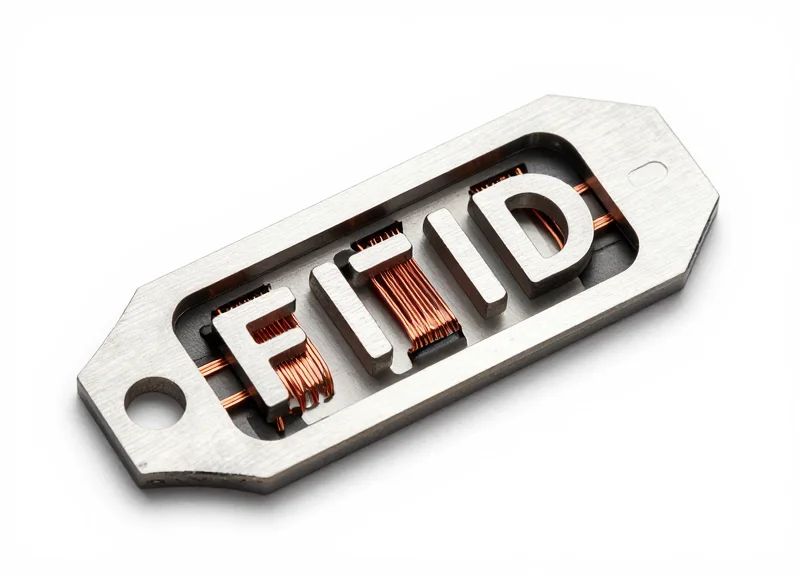
Next-generation RFID (Radio Frequency Identification) represents a fundamental shift from batch-level tracking to high-fidelity, item-level data granularity. Unlike traditional barcodes that identify a product category (SKU), modern RFID tags assign a unique, serialized identity to every individual unit. This allows for 'mass serialization' where thousands of items are identified simultaneously without direct line-of-sight, enabling a real-time 'Digital Twin' for every asset in the supply chain.
| Feature | Legacy Barcodes (1D/2D) | Next-Gen RFID (UHF/RAIN) |
|---|---|---|
| Data Resolution | SKU-Level (All same items share one ID) | Item-Level (Every unit has a unique serial) |
| Capture Method | Manual, Line-of-Sight, One-by-One | Automated, Non-Line-of-Sight, Bulk Scanning |
| Data Capacity | Static (Limited to printed info) | Dynamic (Rewritable memory for lifecycle data) |
| Reading Speed | ~2-3 seconds per item | Up to 1,000+ items per second |
The true power of this granularity lies in the removal of human error. In a standard warehouse environment, achieving 99% inventory accuracy with barcodes requires constant, labor-intensive cycle counting. With Next-Gen RFID, overhead readers and handheld sensors capture the movement of assets across 'choke points' automatically. This creates an immutable audit trail, which is essential for the 2026 mandates concerning the EU Digital Product Passport (DPP), where every handoff in a product's lifecycle must be documented.
How does RFID support the 'Digital Twin' concept?
Each RFID tag acts as a physical anchor for a cloud-based digital twin. As the item moves, the cloud record is updated with location, timestamp, and environmental data, providing a complete historical record from manufacture to recycling.
Can RFID tags store environmental data?
Yes, next-gen 'sensor-fused' tags can monitor and store temperature, humidity, or shock events directly on the chip, ensuring compliance for sensitive goods like pharmaceuticals or perishables.
Is the data secure against tampering?
Modern RFID chips use advanced encryption and 'untreaceable' modes to ensure that serialized data can only be accessed by authorized readers, protecting brand integrity.
Expert Insight: For 2026 compliance, don't just look at 'Passive RFID.' The real leap is in 'Ambient IoT'—a subset of RFID technology that harvests energy from surrounding radio waves (like Wi-Fi or cellular signals). This allows for continuous, battery-free tracking that bridges the gap between traditional warehouse logistics and consumer-facing transparency, making the circular economy technically feasible at scale.
Speed and Accuracy: Comparing High-Volume Data Capture
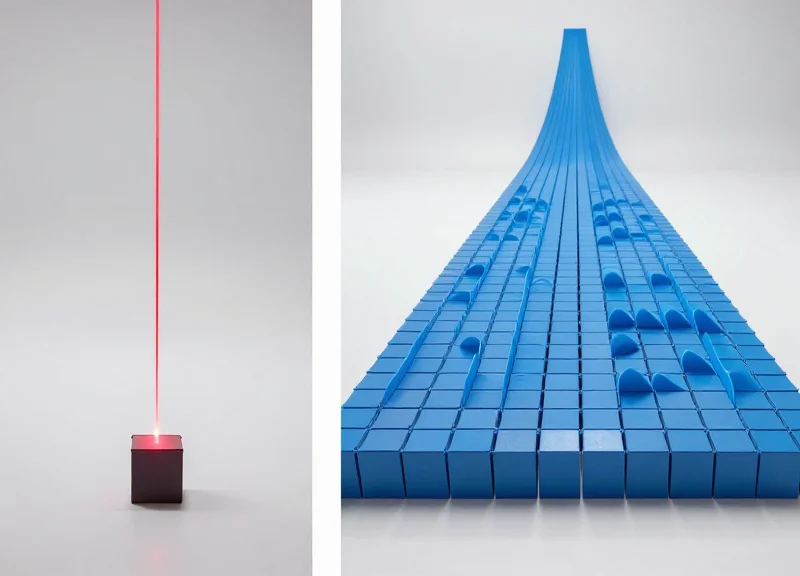
In high-volume supply chain environments, data capture performance is the primary differentiator between meeting and failing 2026 global compliance mandates. While traditional barcodes rely on sequential, line-of-sight manual scanning—averaging 300 to 500 items per hour per worker—next-generation RFID systems enable simultaneous, automated bulk reading of up to 25,000 items per hour with 99.9% accuracy. This transition from manual 'hunt-and-peck' scanning to passive 'portal-based' data ingestion effectively eliminates the throughput bottlenecks that currently plague global logistics.
| Feature | Standard Barcode (2D/GS1) | Next-Gen RFID (UHF/RAIN) |
|---|---|---|
| Reading Method | Manual, Sequential, Line-of-Sight | Automated, Simultaneous, No Line-of-Sight |
| Read Rate (Items/Hour) | ~300 - 600 | 15,000 - 25,000+ |
| Human Error Margin | 1% to 3% (Missed scans/Duplicates) | < 0.01% (Algorithmic Verification) |
| Inventory Cycle Time | Days/Weeks | Minutes/Hours |
| Data Capacity | Kilobytes (Static) | Megabytes (Dynamic/Writable) |
The 'Accuracy Gap' is where the hidden costs of barcodes reside. In a high-speed warehouse, a 1% error rate in barcode scanning translates to thousands of misplaced units annually, leading to 'ghost inventory' and compliance reporting failures. Next-gen RFID utilizes advanced anti-collision algorithms that allow a single reader to distinguish between hundreds of individual tags per second, ensuring that every serialized item is accounted for without human intervention.
- Automated Receiving: Pallets pass through an RFID portal at dock doors, instantly logging 100% of contents into the ERP without breaking down the wrap.
- Real-Time Sortation: Conveyor-mounted readers identify and route individual units at speeds exceeding 3 meters per second, maintaining compliance at every junction.
- Instant Reconciliation: Cycle counts are performed by handheld or overhead readers in minutes, identifying discrepancies between physical stock and the Digital Product Passport (DPP) registry.
Expert Insight: To truly outperform competitors in 2026, look beyond 'Read Rates' and focus on 'Read Sensitivity.' Next-gen RFID chips now feature -85dBm sensitivity, allowing them to be read from distances or through dense packaging where older RFID tags would have failed. This 'Sensitivity Margin' is the secret to achieving 100% accuracy in noisy industrial environments.
Does RFID speed suffer in dense environments?
No. Modern 'Dense Reader Mode' (DRM) prevents interference between multiple readers, allowing high-speed capture even when dozens of portals are operating in close proximity.
Can RFID handle liquid or metal at high speed?
Yes. While historically difficult, specialized on-metal tags and 'flag tags' utilize the physical properties of the container to enhance the signal, maintaining high-volume throughput.
How does this impact 2026 compliance?
Regulatory bodies like the EU require granular, item-level data. RFID is the only technology that can capture this data at the scale required for global trade without tripling labor costs.
Enabling the Circular Economy: RFID’s Role in Asset Sustainability

Next-gen RFID is the critical enabler of the circular economy because it transforms static products into dynamic, data-rich assets that can be tracked through multiple life cycles. While barcodes provide a 'point-of-sale' identity, RFID provides a 'cradle-to-cradle' narrative. By storing and updating maintenance records, material compositions, and ownership history directly on the tag or via a cloud-linked Digital Twin, RFID allows organizations to move from a linear 'take-make-waste' model to a circular system where assets are systematically reused, refurbished, and recycled with 100% transparency.
| Sustainability Feature | Traditional Barcode | Next-Gen RFID (2026 Ready) |
|---|---|---|
| Data Persistence | Static; requires external database lookup. | Dynamic; rewritable memory for repair logs. |
| Durability | High failure rate due to surface wear. | Embedded tags withstand harsh environments. |
| Recycling Efficiency | Manual sorting; prone to human error. | Automated, bulk sorting of material types. |
| Secondary Market Trust | Low; history is easily falsified. | High; immutable digital provenance. |
The upcoming 2026 global mandates, particularly the EU’s Digital Product Passport (DPP), require products to carry specific sustainability data. RFID tags outperform barcodes here by enabling 'Digital Triage.' At the end of a product's first life, automated sorters can read RFID tags to instantly determine if an item should be sent for repair, dismantled for high-value components, or shredded for raw material recovery—all without manual inspection. This level of automation is the only way to make large-scale recycling economically viable.
How does RFID support the 2026 Digital Product Passport (DPP)?
RFID facilitates the DPP by providing a unique, non-line-of-sight identifier that links to a secure cloud database containing material origins, carbon footprint data, and disassembly instructions, ensuring compliance with new transparency laws.
Can RFID reduce the carbon footprint of the supply chain?
Yes. By optimizing inventory accuracy to 99%, RFID prevents overproduction and reduces the carbon emissions associated with emergency shipments and redundant manufacturing.
What happens to the RFID tag itself at the end of life?
Modern 'Green RFID' tags are now being manufactured with paper-based substrates and recyclable antennas, ensuring the tracking technology does not contribute to electronic waste.
Expert Insight: The Residual Value Lock. One of the most overlooked benefits of RFID in sustainability is the preservation of an asset’s secondary market value. In my 20 years in the industry, I’ve seen that the biggest barrier to resale is 'information asymmetry'—the buyer doesn't know the item's true history. RFID 'locks' this value by providing an unalterable record of every service event and component upgrade. By 2026, companies using RFID won't just be tracking inventory; they will be protecting the residual value of their physical capital, effectively turning every product into a liquid asset.
Real-Time Visibility: From Manufacturing to the Consumer Hands
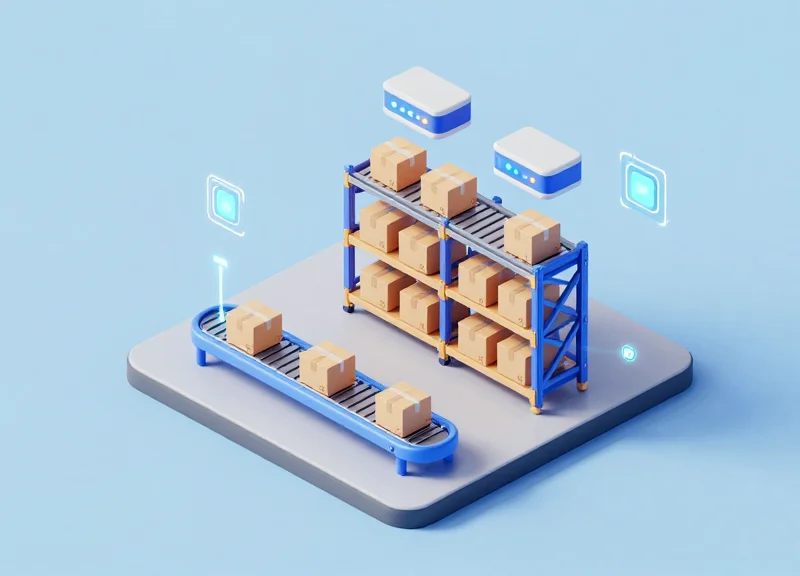
Real-time visibility in the 2026 landscape is defined as the continuous, automated synchronization of a physical asset with its digital twin across every node of the global supply chain. Unlike legacy systems that rely on periodic manual scans, next-gen RFID creates a 'living' data stream. This allows stakeholders to monitor movement, environmental conditions, and authenticity from the moment a raw material is sourced to the second a consumer interacts with the finished product at home. By bridging the physical-digital divide, RFID eliminates the 'black holes' of traditional logistics where goods often vanish into untracked warehouse corners or get lost in transit.
| Visibility Phase | Barcode Limitation | RFID Strategic Advantage |
|---|---|---|
| In-Transit Monitoring | Requires manual scan at checkpoints; no location data between gates. | Automated gate readers and IoT sensors provide constant location updates. |
| In-Store Accuracy | Averages 65% accuracy due to human error and theft 'ghost' stock. | Maintains 99%+ accuracy via rapid, automated daily inventory counts. |
| Consumer Interaction | Requires app download or perfect lighting to scan URL. | NFC-compatible RFID allows tap-to-verify functionality for smartphones. |
| End-of-Life Tracking | Label often damaged or unreadable by recycling facilities. | Embedded tags remain readable for sorting and material recovery. |
A critical driver for this shift is the European Union's Digital Product Passport (DPP), set to become a standard by 2026. Regulators and consumers alike are demanding radical transparency regarding a product’s carbon footprint, repairability, and material origin. RFID is the only scalable technology capable of carrying this serialized history without increasing the labor cost of data entry. For the modern consumer, this means trust is no longer a marketing claim but a verifiable data point accessible via a simple smartphone tap.
How does RFID improve the 'Last Mile' experience for consumers?
By providing precise item-level location data, RFID ensures that 'Buy Online, Pick Up In Store' (BOPIS) orders are 100% accurate, preventing the common frustration of out-of-stock notifications after a purchase is made.
Is RFID visibility cost-prohibitive for consumer goods?
While tag costs exist, the ROI is found in a 10-15% reduction in inventory holding costs and the total elimination of manual cycle counts, which often pay for the system within 12-18 months.
Can RFID help in the fight against counterfeit goods?
Yes, each next-gen RFID tag contains a unique, non-clonable encrypted ID, allowing consumers to verify product authenticity instantly, which is vital for luxury and pharmaceutical sectors.
Expert Insight: The most overlooked advantage of RFID visibility is 'Post-Retail Intelligence.' In the coming years, we will see a shift where the product becomes a communication channel. For example, a luxury garment with an embedded RFID tag can provide its owner with exclusive digital content or facilitate a seamless one-tap resale on a verified platform, effectively turning a physical asset into a lifelong service portal. This is functionality a barcode simply cannot replicate.
Overcoming the Cost Barrier: The True ROI of RFID Migration
The Return on Investment (ROI) for RFID migration is achieved when the reduction in operational expenditures—specifically labor, inventory inaccuracy, and shrinkage—surpasses the initial capital outlay for hardware and tags, typically within 12 to 18 months. Unlike legacy barcode systems that require line-of-sight manual scanning, next-gen RFID offers a 'Total Cost of Ownership' advantage by automating data capture and providing the granular audit trails necessary to meet 2026 global compliance mandates like the EU Digital Product Passport (DPP).
| Cost Driver | Barcode System (Legacy) | RFID System (Next-Gen) |
|---|---|---|
| Tag/Label Cost | $0.001 - $0.01 (Extremely Low) | $0.04 - $0.15 (Moderate) |
| Labor Requirement | High (Manual scan per item) | Near-Zero (Bulk automated reading) |
| Inventory Accuracy | 65% - 75% average | 99.5% - 99.9% average |
| Shrinkage/Loss | High (Detection after the fact) | Low (Real-time exit monitoring) |
| Compliance Risk | High (Manual data gaps) | Low (Automated serialization) |
A common mistake in strategic planning is viewing RFID as a direct replacement for barcode stickers. Instead, it should be viewed as an infrastructure for automated intelligence. Expert Insight: In the Silicon Valley logistics landscape, we are seeing the emergence of 'Compliance-as-a-Service.' Companies that fail to migrate by 2026 will not just face slower operations, but will be locked out of premium markets due to an inability to provide verifiable carbon footprint and circularity data—a 'soft' cost that can actually represent 10-15% of total annual revenue in the form of lost opportunities.
- Phase 1: Direct Labor Elimination: Quantify the man-hours currently spent on cycle counts and receiving. RFID typically reduces these costs by 80-90% by allowing 1,000+ items to be read in seconds.
- Phase 2: Working Capital Optimization: With 99% accuracy, safety stock levels can be reduced. This frees up significant capital previously tied up in 'just-in-case' inventory buffers.
- Phase 3: Fine Mitigation: Calculate the projected penalties for non-compliance with upcoming 2026 sustainability transparency laws. RFID provides the immutable digital twin required to bypass these costs.
Is RFID still too expensive for low-margin consumer goods?
While the per-tag cost is higher than a printed barcode, the 'cost-per-read' is significantly lower. For low-margin goods, the ROI is found in reducing 'out-of-stock' scenarios, which cost retailers billions annually.
How does RFID impact insurance premiums?
Many enterprise insurers now offer lower premiums for facilities using RFID for asset tracking, as it significantly reduces the risk of theft and improves fire safety through accurate hazardous material location data.
What is the hidden cost of staying with barcodes?
The 'Cost of Inaction' includes labor inflation and the risk of supply chain decoupling. As partners demand real-time data, barcode-reliant firms become 'dark spots' in the global network, leading to de-prioritization by major distributors.
Strategic Implementation: Integrating RFID with Existing ERP Systems
Strategic RFID integration is the process of synchronizing automated radio-frequency data capture with Enterprise Resource Planning (ERP) systems like SAP, Oracle, or Microsoft Dynamics. Unlike manual barcode scans, which trigger a single database update, RFID generates a high-velocity stream of data. Successful implementation requires a 'Middleware Orchestration' layer that filters, aggregates, and validates tag reads at the edge, ensuring only relevant business events—such as 'Item Shipped' or 'Pallet Received'—are pushed to the ERP to maintain system performance and data integrity.
- Network and Infrastructure Audit: Assess the existing WLAN and LAN capacity to handle increased traffic from fixed readers and handhelds. Ensure power-over-ethernet (PoE) capabilities are available at key choke points.
- Middleware Selection and Configuration: Deploy an IoT middleware platform to act as the 'buffer.' This software translates raw EPC (Electronic Product Code) data into business-ready formats like JSON or XML.
- Data Mapping and EPCIS Compliance: Map RFID data fields to existing ERP tables. Utilize EPCIS (Electronic Product Code Information Services) standards to ensure the data is interoperable for 2026 global compliance mandates.
- API and Webhook Integration: Develop RESTful APIs or utilize pre-built ERP connectors to automate the hand-off between the middleware and the core business logic, replacing manual 'Enter' keystrokes with automated triggers.
- Phased Hybrid Rollout: Run RFID in parallel with barcodes for a 30-day pilot. Use this period to calibrate 'read zones' and eliminate false positives before deprecating legacy scanning.
| Integration Metric | Legacy Barcode Flow | Next-Gen RFID Flow |
|---|---|---|
| Data Entry Trigger | Human Interaction (Manual Scan) | Sensor-Based (Automated Gate) |
| ERP Update Frequency | Point-in-Time Latency | Real-Time Stream |
| Middleware Requirement | Minimal (Direct to Database) | Critical (Edge Filtering Layer) |
| Scalability | Linear (More labor = More data) | Exponential (Automated Bulk Reads) |
Expert Insight: The 99% Noise Rule. A common pitfall in RFID implementation is treating every tag 'ping' as a database entry. In a warehouse, a single tag may be read 50 times per second by a fixed reader. If these are sent directly to your ERP, the system will crash under the load. Your middleware must be configured to 'suppress' redundant reads at the edge, only communicating with the ERP when a state change occurs—such as an item moving from 'Inventory' to 'In-Transit'.
Will I need to replace my current ERP to support RFID?
No. Most modern ERPs can ingest RFID data via APIs. The key is the middleware that sits between the readers and the ERP, which handles the heavy lifting of data translation.
How do we handle 'Ghost Reads' in the system?
Ghost reads are managed through physical shielding and RSSI (Received Signal Strength Indicator) filtering in the software, ensuring only tags within a specific range trigger an ERP update.
Is a hybrid barcode-RFID system feasible for 2026?
Yes, many enterprises use 'Smart Labels' that feature both a printed 2D barcode and an embedded RFID chip to ensure 100% compatibility across all supply chain partners during the transition.
Future-Proofing for 2030 and Beyond
Future-proofing for 2030 and beyond means moving past simple item identification to build an 'Autonomous Asset Ecosystem.' While 2026 compliance focuses on data capture, the next decade will be defined by assets that not only tell you where they are but also report their condition, environment, and remaining lifecycle value through a fusion of RFID, AI-driven edge computing, and sensor-based IoT. By transitioning to next-gen RFID now, enterprises are laying the physical foundation for 'self-aware' supply chains that require zero human intervention to maintain 100% inventory accuracy.
| Feature | Legacy Barcodes (Manual) | Next-Gen RFID (Automated) | 2030 Autonomous Systems |
|---|---|---|---|
| Data Interaction | Line-of-sight scanning | Bulk, non-line-of-sight | Always-on, ambient reporting |
| Asset Intelligence | Static identity | Dynamic status updates | Predictive lifecycle analysis |
| Sustainability Role | Final disposal tag | Circular tracking | Autonomous refurbishment triggers |
| Human Requirement | High (Scanning) | Low (Portal gates) | Zero (Ambient IoT) |
The integration of AI with RFID data streams will be the primary driver of ROI by 2030. Rather than reacting to a 'low stock' alert, AI agents will analyze the velocity of RFID-tagged items in real-time to predict shortages before they occur. We are moving toward the 'Internet of Everything' (IoE), where every pallet, parcel, and individual SKU functions as a node in a decentralized network, feeding real-time 'Digital Twins' that simulate entire global supply chains with surgical precision.
Will RFID tags be compatible with 6G and future IoT networks?
Yes. Future RFID standards are designed for 'Ambient IoT' compatibility, allowing tags to harvest energy from surrounding radio waves (including 5G and future 6G signals) to broadcast data across much longer ranges without batteries.
How does AI enhance RFID data for 2030 compliance?
AI cleanses 'noisy' RFID data, filtering out stray reads and identifying patterns such as shelf-misplacement or theft anomalies that human operators would miss.
Can RFID support the UN's 2030 Sustainable Development Goals?
Absolutely. By enabling the 'Digital Product Passport,' RFID provides the immutable provenance data required to verify carbon footprints and ensure 100% recyclability of technical nutrients.
Expert Insight: The Rise of Ambient Energy Harvesting. A critical breakthrough for 2030 is the elimination of batteries in high-function sensors. Silicon Valley is currently pivoting toward 'Battery-free IoT' where RFID chips use energy-harvesting circuitry to power on-board temperature and moisture sensors using only ambient RF energy. For companies, this means the ability to monitor the integrity of perishables for years at a time with a tag that costs pennies and never needs a charge.