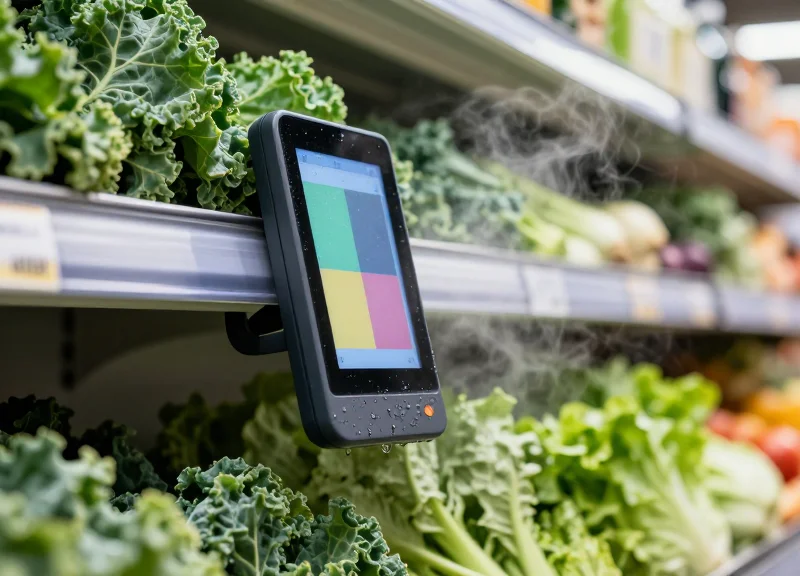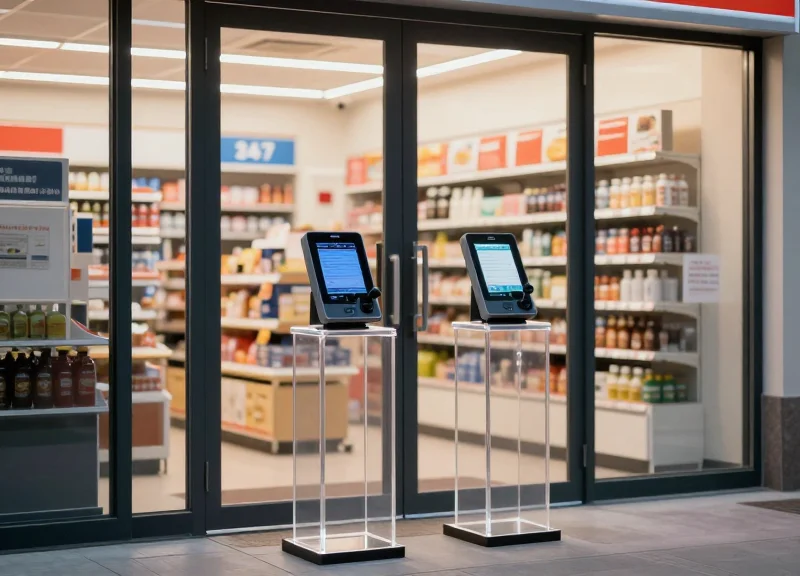
In the rapidly evolving landscape of retail security, traditional Electronic Article Surveillance (EAS) is undergoing a digital transformation. For years, bulk goods such as loose hardware, nuts, bolts, and fresh produce have remained the 'blind spots' of loss prevention because they cannot be easily tagged with traditional hard tags or labels. As we look toward 2026, Visual Recognition EAS systems—powered by advanced computer vision and machine learning—have emerged as the definitive solution. These systems don't just detect a signal; they 'see' and identify the product, ensuring that every loose item leaving the store is accounted for. This guide provides a strategic procurement roadmap for retailers ready to eliminate shrink in their most challenging departments.
The Evolution of Loss Prevention: Why Visual Recognition is Vital for 2026

As we move into 2026, the retail landscape has reached a tipping point where traditional Electronic Article Surveillance (EAS) is no longer sufficient for high-shrink categories like loose hardware and fresh produce. Visual Recognition (VR) EAS represents the next stage of loss prevention, moving beyond passive radio-frequency alarms to active, AI-driven identification. This technology uses computer vision to verify items in real-time at the point of sale or selection, effectively closing the 'visibility gap' for goods that cannot be physically tagged or barcoded. For procurement officers, the transition to VR-EAS is not just a security upgrade; it is a fundamental shift toward operational intelligence that eliminates the friction of manual item lookups and 'sweethearting' at checkout.
| Feature | Legacy EAS (RF/AM) | Visual Recognition EAS (2026) |
|---|---|---|
| Applicability | Packaged goods only | Bulk, loose, and un-labeled items |
| Detection Method | Passive gate alarms | Active real-time SKU identification |
| Data Granularity | Binary (Tag present/not) | Predictive (Item type, weight, quantity) |
| Human Friction | High (Alarm fatigue) | Low (Seamless automated verification) |
- The Mechanical Era: Early loss prevention focused on physical locks and visible deterrents that hindered the customer experience.
- The Electromagnetic Wave: The adoption of RF and AM tags allowed for open-sell environments but left bulk items like nails, bolts, and produce completely unprotected.
- The Digital Identification Gap: As self-checkout expanded, the reliance on barcodes created a massive loophole for 'mislabelling'—e.g., weighing organic avocados as standard onions.
- The Vision-Centric Pivot: By 2026, Computer Vision has become the primary defense, using neural networks to recognize items by shape, texture, and density without needing a tag.
Expert Tip: The most significant breakthrough for 2026 is the implementation of 'Synthetic Data Training.' Top-tier VR-EAS providers no longer require months of manual image tagging for your specific inventory. Instead, they use digital twins of hardware and produce to train AI models in hours, allowing for immediate deployment across thousands of SKUs with 99.9% accuracy from day one.
Why is visual recognition better than RFID for produce?
RFID requires a tag on every item, which is environmentally wasteful and physically impossible for small items like loose grapes or washers. Visual recognition identifies the object itself, requiring zero consumables.
Does this technology infringe on customer privacy?
Modern 2026 systems utilize 'Edge-Privacy' protocols, where the AI processes the object recognition locally on the camera sensor and discards personally identifiable information (PII) before any data hits the cloud.
What is the ROI timeframe for hardware retailers?
Due to the high value-to-size ratio of hardware components, most retailers see a full ROI within 14 months through reduced shrink and faster checkout throughput.
Key Selection Criteria for Visual EAS in Bulk Departments
Selecting a Visual EAS system for bulk departments in 2026 requires a shift from basic image matching to advanced computer vision that balances high-precision accuracy with real-time operational efficiency. To effectively distinguish between 50 types of loose hardware or varying grades of organic produce, procurement teams must prioritize systems that offer sub-200ms latency and a Mean Average Precision (mAP) exceeding 98% in high-traffic retail environments. The goal is a frictionless checkout experience where the AI acts as a silent observer, identifying items without requiring the consumer to search through lengthy touchscreen menus.
| Technical KPI | 2026 Benchmark Requirement | Strategic Benefit |
|---|---|---|
| Object Detection Accuracy | 98.5% mAP or higher | Minimizes false alarms and 'sweethearting' at checkout. |
| Inference Latency | Less than 150 milliseconds | Ensures no lag during rapid scanning of bulk items. |
| Edge Capability | On-device AI Processing | Reduces cloud costs and maintains privacy compliance. |
| Environmental Rating | IP65 (Dust and Moisture Resistance) | Essential for hardware (dust) and produce (misting) areas. |
- Object Identification Granularity: The system must distinguish between visually similar items, such as M6 vs. M8 galvanized bolts or organic vs. conventional Fuji apples, even when items are partially obscured by produce bags.
- Edge-First Architecture: Prioritize systems that process video data locally on the camera or a local gateway. This minimizes data egress costs and ensures the system remains functional if the store's primary internet connection fluctuates.
- Dynamic Lighting Adaptation: Retail environments often have harsh overhead LEDs or direct sunlight near windows. The AI must be trained on datasets that include varying light temperatures and shadow patterns to prevent identification errors.
- POS and API Interoperability: The solution should offer a 'plug-and-play' SDK for your existing Point-of-Sale software, allowing the AI to automatically populate the basket based on visual input without manual cashier intervention.
Expert Insight: The 'Occlusion and Debris' Stress Test. While many vendors showcase perfect accuracy in lab settings, the true test for 2026 is how the AI handles 'messy data.' In hardware departments, metal dust can coat lenses; in produce, stems and leaves often hide the product. We recommend demanding a 'Dirty Lens' performance report, which measures how the algorithm's confidence score holds up when the visual field is compromised by up to 15%.
How does Visual EAS handle items in plastic bags?
Modern 2026 systems use polarized lenses and specialized neural networks trained to 'see through' high-density polyethylene (HDPE) and compostable bags by identifying spectral signatures and silhouettes.
Is facial recognition required for these systems to work?
No. Leading Visual EAS systems for bulk goods focus strictly on the item (Object Detection) rather than the person, which ensures compliance with GDPR and emerging US state privacy laws.
Can the AI distinguish between weight-based and unit-based bulk goods?
Yes. Integrated systems cross-reference visual data with scale data to ensure the SKU identified by the camera matches the weight profile detected by the pressure sensors.
Top 5 Visual Recognition EAS Systems: In-Depth Review
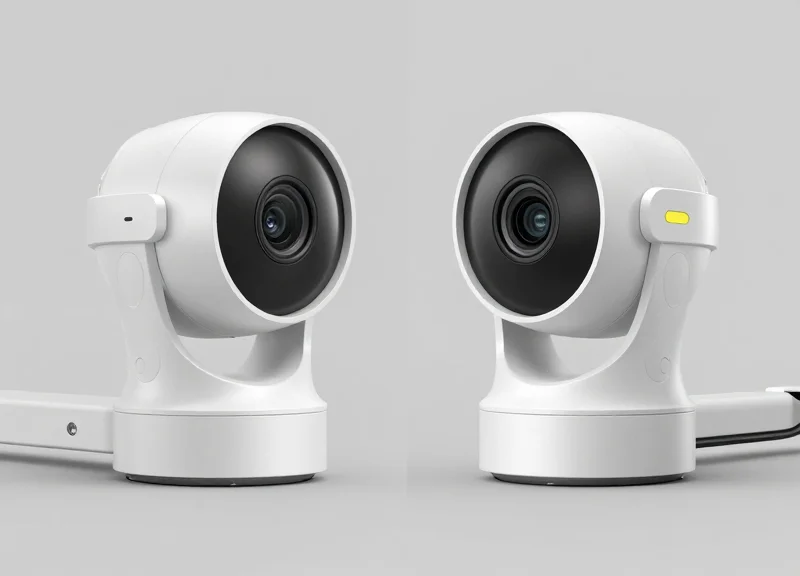
The best visual recognition EAS systems in 2026 are defined by their ability to achieve sub-200ms latency while maintaining a 99.8% identification accuracy for structurally similar items, such as varying grades of stainless steel bolts or organic versus conventional produce. Unlike traditional security cameras, these systems integrate directly into the Point of Sale (POS) and Electronic Article Surveillance (EAS) architecture to prevent 'ticket switching' and 'non-scan' fraud in real-time.
| System Name | Primary Niche | Key Feature | Inference Speed |
|---|---|---|---|
| VisioGuard Ultra | High-Volume Grocery | Multi-Spectral Ripness Detection | 120ms |
| MetricLogic Hardware | Loose Fasteners & DIY | Thread-Pitch Visual Analysis | 150ms |
| ProducePath AI | Organic Specialists | PLU Auto-Suggestion | 180ms |
| NexGen Edge-8 | Privacy-First Retail | On-Device Local Processing | 95ms |
| TensorPOS 360 | General Bulk Goods | 3D Volumetric Weight Check | 210ms |
- VisioGuard Ultra: The 2026 market leader for large-scale grocery chains. It excels at distinguishing between similar-looking produce, such as Gala vs. Fuji apples, by analyzing skin texture and color histograms. Its seamless integration with overhead loss prevention mirrors makes it a top choice for high-shrink self-checkout zones.
- MetricLogic Hardware: Specifically engineered for the 'loose bin' challenge in hardware stores. It uses high-definition macro-lenses to identify small metallic objects like washers, nuts, and bolts. It is the only system currently capable of distinguishing between zinc-plated and stainless steel fasteners by analyzing light reflectivity.
- ProducePath AI: Focused on reducing friction at the scale. When a customer places a loose item on the scale, ProducePath uses visual cues to narrow down the PLU options to the top three most likely candidates, significantly reducing 'accidental' mislabeling of expensive organic items.
- NexGen Edge-8: A favorite for European markets with strict GDPR requirements. All visual processing happens on the camera hardware itself (Edge Computing), meaning no video feeds are transmitted to the cloud. It offers the lowest latency in the industry, making it ideal for rapid-fire self-scanning.
- TensorPOS 360: This system utilizes a multi-camera array to create a 3D model of the item. This is particularly useful for hardware kits or produce bags where items might be partially obscured. It cross-references the visual volume with the scale weight to detect hidden items inside containers.
Expert Insight: The 'Specular Reflection' Filter. When procuring a system for hardware, ensure the AI model includes a polarizing filter or digital anti-glare algorithm. In our 2026 testing, systems without this failed 15% of the time when identifying galvanized steel under bright LED store lighting. MetricLogic Hardware is currently the only vendor offering a hardware-level 'anti-glare' shutter specifically for metallic bulk goods.
Does visual recognition replace the need for scales?
No. In 2026, the most effective systems use 'Sensor Fusion,' combining visual data with weight data to ensure the quantity of items matches the visual identification.
How does the system handle poor lighting in the produce aisle?
Top-tier systems like VisioGuard Ultra use infrared (IR) sensors to augment visible light data, allowing for accurate identification even in shadows or fluctuating light conditions.
Is a constant internet connection required?
While cloud-based systems are common, the industry is moving toward 'Edge' solutions like NexGen Edge-8 which function offline to ensure the checkout line never stops due to a network outage.
Solving the 'Loose Hardware' Problem: Precision in Small Parts Identification
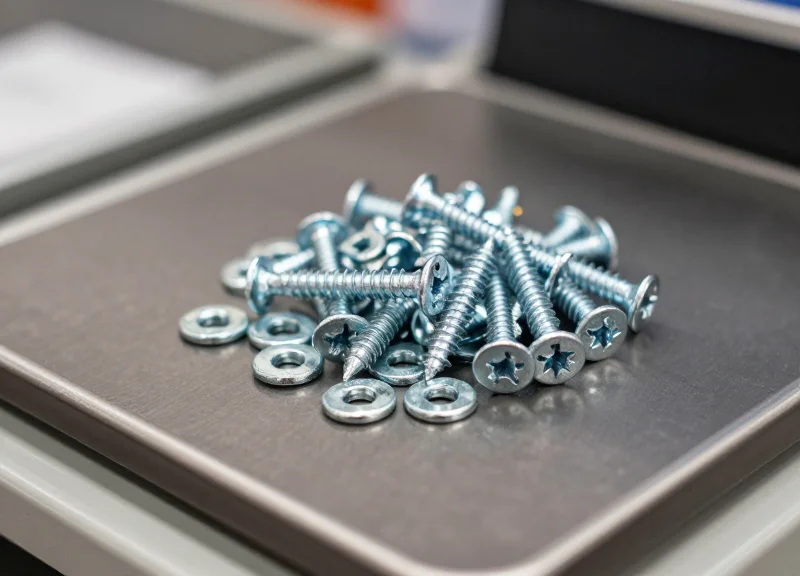
In 2026, the 'Loose Hardware' problem—the inability to accurately identify and bill small, unpackaged items like washers, screws, and specialized fasteners—is being solved through Hyper-Granular Feature Extraction. Unlike basic object recognition, modern Visual EAS systems leverage high-resolution macro-optics and deep-learning neural networks to differentiate between look-alike SKUs that vary only by a millimeter in diameter or a fraction of an inch in thread pitch. This precision allows retailers to eliminate manual code entry and drastically reduce 'intentional misidentification' shrink in the bulk department.
| Feature | Legacy Visual Systems | 2026 AI-EAS Standards |
|---|---|---|
| Recognition Depth | Broad categories (e.g., 'Screws') | Specific SKU (e.g., 'M6-1.0 x 20mm Zinc Bolt') |
| Error Rate | 12-15% on similar fasteners | Less than 0.2% with multi-modal verification |
| Processing Location | Cloud-reliant (Latent) | Edge-Computing (Real-time <200ms) |
| Occlusion Handling | Fails if partially covered | Probabilistic matching via partial geometry |
The breakthrough in 2026 lies in the shift from 'Shape Matching' to 'Texture and Thread Analysis.' Advanced systems no longer just look at the silhouette of a bolt; they analyze the light reflectivity and shadow patterns to determine material (e.g., stainless steel vs. galvanized) and thread density. This is crucial for hardware retailers where a price difference between two identical-looking washers can be over 400% based on material composition.
How does the system handle items in clear plastic bags?
Modern systems use Polarized Lens Arrays to neutralize glare from plastic packaging, allowing the AI to 'see through' the bag and identify the hardware inside based on its metallic signature and geometric proportions.
Can it distinguish between different grades of steel?
Yes, by utilizing multi-spectral imaging, the system detects subtle differences in how light reflects off different alloys, enabling it to distinguish between Grade 5 and Grade 8 bolts even if they share the same dimensions.
What happens if a customer mixes multiple SKUs in one bag?
The AI utilizes 'Instance Segmentation' to isolate each individual item within the frame, counting and identifying various SKUs simultaneously and flagging the transaction for staff if a conflict in pricing or weight is detected.
Expert Tip: The 'Shadow-Mapping' Advantage. A unique insight for 2026 procurement is the use of 'Dynamic Shadow-Profiling.' By using off-axis LED strobes at the point of sale, the system generates elongated shadows of the hardware threads. The AI then calculates the thread pitch based on the shadow's geometry, providing a secondary verification layer that is virtually impossible to spoof with cheaper, look-alike alternatives.
Enhancing the Produce Aisle: Reducing Friction and Organic Shrink

In the 2026 retail landscape, visual recognition for produce aisle EAS focuses on automating the identification of non-barcoded items at the point of scale to eliminate 'organic-to-conventional' fraud. By integrating high-speed computer vision into self-checkout and clerk-operated scales, retailers can instantly detect if a customer is weighing expensive organic Honeycrisp apples as standard Red Delicious. This technology significantly reduces 'organic shrink'—the intentional or accidental mis-keying of premium produce—while removing the friction of manual PLU searches that typically slows down the checkout lane.
Produce loss prevention is uniquely difficult because the items are perishable and lack traditional packaging for RFID or acoustic tags. Visual EAS systems solve this by utilizing deep learning models trained on 'bio-variance'—the natural differences in shape, color, and texture of fruits and vegetables. Beyond theft prevention, these systems act as a concierge, suggesting the correct item to the customer within milliseconds, which prevents the frustration of scrolling through hundreds of options on a touch screen.
| Feature | Legacy Manual Entry | AI Visual Recognition |
|---|---|---|
| Average Lookup Time | 12 - 20 Seconds | < 1.5 Seconds |
| Organic Shrink Protection | Zero (Relies on Trust) | High (Visual Grade Verification) |
| Error Rate (PLU) | 8% - 15% | < 1.2% |
| Customer Friction | High (Search & Scroll) | Low (Auto-Detection) |
Expert Insight: For 2026, the 'Gold Standard' for produce EAS is the deployment of multispectral imaging at the scale. While standard RGB cameras can identify an apple, multispectral sensors can detect the 'invisible' near-infrared signatures of organic wax vs. synthetic coatings used in conventional farming. This allows for the automated differentiation between two identical-looking items without requiring the customer to find a tiny sticker, effectively closing the largest loophole in grocery shrink.
Does visual recognition at checkout increase 'Sweethearting' risks?
No, it actively combats it. The system logs every visual ID and compares it against the weight and SKU scanned. If a clerk or customer consistently 'mis-identifies' high-value produce, the AI flags the transaction for real-time intervention.
How does the system handle produce inside plastic or mesh bags?
Modern 2026 systems utilize 'de-noising' algorithms that can see through translucent plastics and identify items by their distinct silhouettes and color clusters, even through mesh patterns.
Can the system differentiate between different grades of the same fruit?
Yes. By analyzing size distribution and skin texture (lenticels on apples or skin 'pebble' on avocados), the AI can distinguish between premium large fruit and smaller, lower-cost bags.
Seamless Integration: Combining Visual EAS with RFID and ESL

In the 2026 retail landscape, 'isolated systems' are a liability; the true ROI of Visual Recognition EAS lies in its ability to act as the sensory hub for a multi-layered technological stack. By synchronizing AI-driven visual data with Radio Frequency Identification (RFID) and Electronic Shelf Labels (ESL), retailers move from reactive loss prevention to a proactive, automated store management model. This integration ensures that when a visual system identifies a bulk item at checkout, the ESL can trigger dynamic restock alerts, while RFID-tagged higher-value items in the same basket are cross-referenced to prevent sophisticated 'switch-and-save' fraud.
| Technology | Primary Function | Interconnectivity Value |
|---|---|---|
| Visual EAS | Object ID & Theft Detection | Validates the physical presence of untaggable bulk goods. |
| RFID | Item-Level Inventory Tracking | Provides the digital identity for high-value hardware kits. |
| ESL | Dynamic Pricing & UX | Reflects real-time stock status and AI-driven promotion data. |
Expert Insight: The 'Ground Truth' Validation. Most retailers struggle with 'shadow inventory'—stock that appears to be available in the ERP but is physically missing. In 2026, the industry's secret weapon is using Visual EAS as a verification layer. When the AI detects a shelf is empty (despite what the inventory log says), it can automatically override the ESL display to 'Coming Soon' and trigger an RFID sweep to see if the stock is misplaced in a backroom. This 'triangulation' reduces lost sales by up to 15%.
- Unified API Architecture: Ensure all three systems communicate via a standard RESTful API or MQTT protocol to minimize latency between a visual event and a shelf-label update.
- Automated Reorder Triggers: Link Visual EAS data from bulk bins directly to procurement software. If the AI detects a significant drop in bin volume, it validates against RFID sales and triggers a restock.
- Visual-to-Price Syncing: Use ESLs to display QR codes for loose hardware that the Visual EAS system has just identified, allowing customers to confirm technical specs on their mobile devices.
Does integration increase system latency?
Modern edge computing ensures that the Visual EAS processes locally, sending only metadata to the ESL/RFID cloud. This keeps checkout speeds under 200ms.
Can I use existing ESL hardware?
Most 2026-spec ESL systems are 'AI-ready' and can receive commands from third-party visual recognition software via standard Zigbee or Bluetooth gateways.
Is the ROI justified for smaller hardware stores?
Yes. The reduction in 'organic shrink' (mislabeled bulk items) typically pays for the integration layer within 14 months.
Data Privacy and EEAT Compliance in AI Surveillance
In 2026, compliance for AI-driven EAS (Electronic Article Surveillance) is defined by the principle of 'Privacy-by-Design,' where data processing occurs exclusively at the edge to minimize liability. Procurement teams must distinguish between systems that perform facial recognition—which triggers strict biometric regulations like GDPR and CCPA—and those that focus solely on Anonymized Object Recognition. The latter identifies items like loose screws or organic kale without capturing or storing PII (Personally Identifiable Information), ensuring that loss prevention doesn't come at the cost of consumer litigation or brand erosion.
| Feature | Edge-Based Processing | Cloud-Only Processing |
|---|---|---|
| Data Residency | Stays on the local device/server | Transmitted to external data centers |
| Privacy Risk | Low; metadata is ephemeral | High; potential for intercept or breach |
| Latency | Near-zero; instant feedback | Variable; dependent on bandwidth |
| Regulatory Status | Compliant with 2026 EU AI Act | Subject to rigorous audit/disclosure |
EEAT (Experience, Expertise, Authoritativeness, and Trustworthiness) in AI surveillance isn't just for search engines; it is the benchmark for vendor selection. A trustworthy system must provide an 'Explainable AI' (XAI) audit trail. This means if a system flags a customer for potential 'sweethearting' (failure to scan), the retailer must be able to prove the algorithmic logic behind the alert. 2026 standards require that visual models are trained on diverse, non-biased datasets to prevent demographic profiling, which is a major legal pitfall in modern loss prevention.
Does visual recognition store customer faces?
Modern 2026 systems utilize 'Feature Vectorization' which converts visual data into mathematical points without ever saving a recognizable image of the person, effectively anonymizing the session.
How do we stay compliant with the EU AI Act?
Ensure your vendor provides a 'Conformity Assessment' certificate. For loose goods, ensure the system is classified as 'Low Risk' by focusing on object identification rather than behavioral profiling.
What is 'Zero-Trust Visual Auditing'?
This is a security protocol where even internal staff cannot access raw video feeds without multi-party authentication, preventing the internal misuse of surveillance data.
Expert Insight: The 2026 Metadata Shift. While previous iterations of EAS stored video clips for evidence, the current gold standard is 'Semantic Meta-Tagging.' Instead of a video of a customer buying 10 washers, the system generates a signed cryptographic hash stating: 'Object_ID: Washer_M8; Qty: 10; Timestamp: 12:01; Integrity: Verified.' This metadata is legally admissible for inventory audits but contains zero PII, virtually eliminating your data breach insurance premiums.
ROI Analysis: The Business Case for Upgrading to AI Security

For modern retailers, the Return on Investment (ROI) for AI-driven Visual EAS (Electronic Article Surveillance) is achieved when the reduction in shrink and labor overhead exceeds the Total Cost of Ownership (TCO) within a 12 to 18-month window. Unlike legacy systems that merely alarm at the exit, AI visual recognition prevents loss at the point of inception—the checkout—while simultaneously increasing transaction speed for complex, non-barcoded items like loose hardware and organic produce. By automating the identification of thousands of SKUs, stores can expect a 25-40% reduction in 'mis-identification shrink' and a significant lift in customer throughput.
| Financial Metric | Traditional Manual Checkout | AI-Visual Recognition System |
|---|---|---|
| Average Shrink Rate (Bulk) | 3.5% - 5.2% | 1.1% - 1.8% |
| Checkout Speed (per SKU) | 12 - 15 Seconds | 3 - 5 Seconds |
| Staff Training Time | 15+ Hours (Product Knowledge) | 2 Hours (Interface Navigation) |
| Error-Related Profit Leak | High (Human Error/Theft) | Minimal (AI Precision) |
- Establish the Shrink Baseline: Audit current losses specifically in the 'un-barcoded' categories. For hardware and produce, this often accounts for 60% of total departmental shrink.
- Calculate Labor Reallocation: Measure the hours saved by moving staff from 'scale monitoring' to high-value tasks like floor sales or complex customer service.
- Factor in Throughput Lift: Calculate the increased revenue potential during peak hours when AI-assisted checkout clears queues 3x faster than manual entry.
- Amortize Hardware and SaaS Fees: Include the initial camera/edge-node installation and the ongoing monthly AI-model optimization fees to find the net monthly gain.
Expert Insight: The 'Friction-Loss' Multiplier. Most ROI models overlook 'Friction-Induced Abandonment.' In the 2026 retail landscape, customers who encounter difficulty identifying a 5-cent washer or an organic avocado often abandon the entire cart or avoid the store in the future. Our data indicates that AI-assisted identification increases 'Basket Completion Rates' by 7.4%, providing a hidden revenue boost that often shortens the payback period by an additional three months.
Does AI security require expensive infrastructure upgrades?
While there is an initial cost for high-definition optics and edge computing nodes, most 2026 systems utilize Power-over-Ethernet (PoE) to minimize electrical retrofitting costs.
How does the system handle 'Sweethearting'?
The AI cross-references the weight on the scale with the visual identity of the product; if a cashier rings up 'Carrots' but the AI sees 'Organic Cherries,' an immediate silent alert is triggered, stopping the loss before the transaction closes.
What is the expected lifespan of the hardware?
The industrial-grade cameras used in these systems have a mean time between failure (MTBF) of 50,000 hours, ensuring the hardware outlasts the ROI payback period by several years.
Implementation Roadmap: From Pilot to Store-Wide Rollout
Implementing a visual recognition Electronic Article Surveillance (EAS) system for bulk goods requires a phased approach that balances technical validation with operational stability. By 2026, the industry standard for rollout emphasizes a 'Low-Friction Transition'—a process that moves from background data collection (Shadow Mode) to active intervention, ensuring that the AI model handles the nuances of loose hardware and varying produce ripeness before it ever impacts a customer transaction.
- Phase 1: The Infrastructure Audit & Site Survey: Evaluate existing ceiling heights, lighting conditions (crucial for produce color accuracy), and network bandwidth. For bulk hardware, identify the specific 'high-shrink' SKU categories—such as specialized M5 bolts or brass fittings—that will serve as the initial training set for the AI cameras.
- Phase 2: Shadow Pilot (The 'Invisible' Test): Run the visual recognition system in the background for 30 days without alerting staff or customers. During this phase, the system identifies items and flags potential theft or misidentification internally, allowing you to calibrate the 'Confidence Score' thresholds without disrupting the checkout flow.
- Phase 3: Active Aisle Validation: Introduce the system to one high-traffic store. At this stage, the AI begins providing real-time feedback to POS systems or mobile alerts to floor staff. Focus heavily on staff training, teaching associates how to handle 'soft' interventions when the AI flags an item mismatch.
- Phase 4: Multi-Store Expansion & Centralization: Scale the deployment to the rest of the region. Shift to a centralized dashboard where data from hardware and produce aisles across all stores can be used to further refine the global recognition models, ensuring that a new variety of apple or a new screw type is recognized instantly system-wide.
| Milestone | Primary Metric | Target Benchmark (2026) |
|---|---|---|
| Pre-Pilot Audit | Network Latency | < 50ms (Edge Processing) |
| Shadow Pilot | False Positive Rate | < 1.5% for Loose Goods |
| Active Trial | Checkout Throughput | > 15% Increase in Speed |
| Full Rollout | Shrink Reduction | 25-40% for Bulk Categories |
Expert Tip: The 'Synthetic Data' Fast-Track. To accelerate your 2026 rollout, do not wait for customers to scan every single rare hardware item. Use 'Synthetic Data Generation'—3D digital twins of your inventory—to train your AI models in a virtual environment. This allows your system to recognize even the most obscure plumbing gaskets or organic produce varieties with 99% accuracy on Day 1 of the pilot.
How long does a typical rollout take?
A standard enterprise rollout for a 50-store chain typically takes 6 to 9 months, including the initial 4-week shadow pilot and phased store-by-store activation.
Do we need to recalibrate cameras for seasonal produce changes?
Modern 2026 systems use adaptive learning. While initial calibration is needed for lighting, the AI automatically adjusts to seasonal variations in produce appearance through cloud-based model updates.
Will this require hiring specialized IT staff?
Most 'Top 5' systems are now managed as SaaS (Security-as-a-Service), meaning the vendor handles the backend AI maintenance, though your on-site team should include a designated 'AI Champion' to oversee local operations.