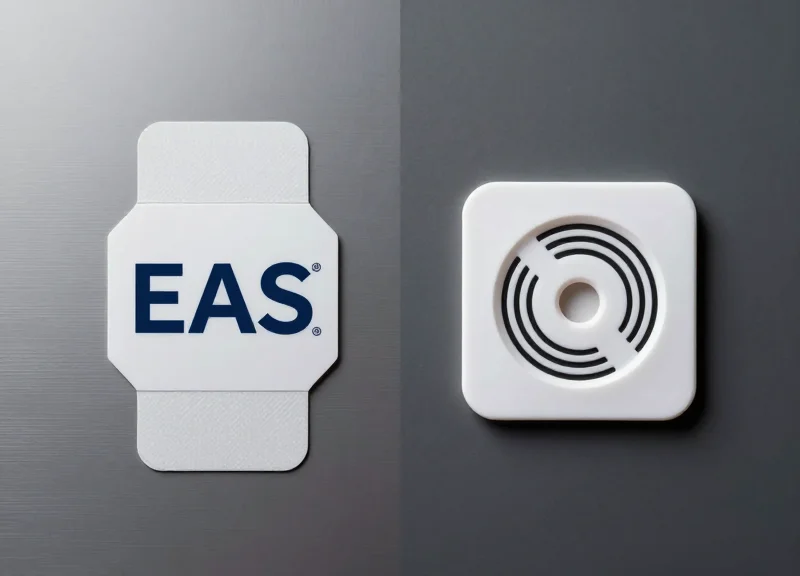
Protecting high-end leather goods presents a unique dilemma for luxury retailers: how to secure inventory against theft without compromising the material integrity of the product. Traditional EAS hard tags utilize metal pins that leave permanent, unsightly punctures, significantly devaluing designer briefcases and purses. The industry-standard solution is the deployment of steel rope EAS tags. This technical guide provides a comprehensive walkthrough for loss prevention professionals on how to utilize lanyard-based security to eliminate leather damage while maintaining robust electronic article surveillance.
The High Cost of Pin-Based Security in Luxury Retail

Pin-based security systems incur a 'hidden tax' on luxury inventory by causing permanent structural damage to premium leather through the severing of collagen fibers, often resulting in an immediate 15% to 30% reduction in an item's secondary market valuation. Unlike woven textiles that allow pins to pass between threads, high-grade leathers like Box Calf, Clemence, or Saffiano are dense protein matrices; once a pin pierces the grain, the 'scar' is permanent and cannot be refurbished by standard leather spa treatments.
In the world of ultra-high-end retail, the integrity of the material is the product. When a standard Electronic Article Surveillance (EAS) pin is forced through a designer briefcase or purse, it creates a localized point of high stress. Over time, as the item is handled or moved on the display floor, the weight of the tag creates 'micro-tearing.' This expansion of the initial puncture hole is particularly devastating for resale platforms like The RealReal or Fashionphile, where 'condition grade' is the primary driver of price.
| Feature | Traditional Pin Tags | Steel Rope EAS Tags |
|---|---|---|
| Material Impact | Permanent fiber severing and grain scarring | Zero-footprint attachment to hardware |
| Resale Value Loss | 15-30% (Downgraded from Mint to Good) | 0% (Maintains New-in-Box status) |
| Structural Risk | High (Potential for 'running' tears) | None |
| Customer Perception | Utility-focused, invasive | White-glove, premium feel |
How does pin damage affect professional authentication?
Authenticators look for 'security scars.' Even if a hole is tiny, its presence confirms the item was subjected to standard retail tagging, which disqualifies it from 'Pristine' or 'Store Fresh' status, regardless of its age.
Can leather repair kits fix EAS pin holes?
No. While surface fillers can hide the color disparity, they cannot restore the tensile strength of the severed fibers. Under light or magnification, the disruption in the leather's natural grain pattern remains visible.
Why is the weight of the tag a factor?
Gravity is the enemy. A heavy EAS tag pinned through a soft lambskin flap will stretch the puncture site into an oval over time, a defect known in the industry as 'tag sag'.
Expert Insight: From a technical SEO and marketing perspective, brands that advertise 'non-invasive security' are seeing a rise in 'Conscious Luxury' search queries. Savvy collectors now specifically look for boutiques that utilize steel rope or lanyard-based systems because they know the hardware of the bag—the handles, D-rings, or zipper pulls—is designed to bear weight, whereas the leather hide itself is not. Transitioning to steel rope tags is not just a loss-prevention strategy; it is a brand-equity preservation tactic.
Technical Anatomy of Steel Rope EAS Tags
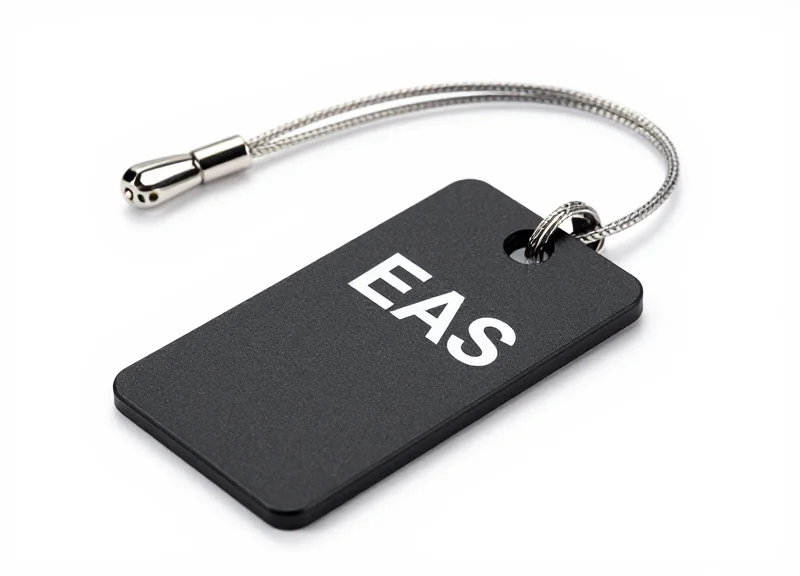
A steel rope EAS (Electronic Article Surveillance) tag is a non-invasive security solution consisting of a high-tensile braided steel cable, a non-reactive polymer coating, and an encapsulated ferrite or circuit-based resonator. Unlike traditional pin-based tags that pierce leather fibers, the steel rope mechanism loops through existing hardware—such as D-rings, zipper pulls, or handles—to provide a secure tether that maintains the structural integrity and resale value of luxury goods. By utilizing a multi-strand 'aircraft cable' configuration, these tags offer a high strength-to-diameter ratio, making them virtually impossible to cut with standard retail tools while remaining flexible enough to avoid kinking.
| Component | Technical Specification | Functional Benefit |
|---|---|---|
| Core Material | 7x7 or 7x19 Braided Stainless Steel | High flexibility; resists fatigue and heavy-duty wire cutters. |
| Protective Coating | Medical-grade TPU or UV-Stabilized PVC | Prevents chemical migration and abrasive friction on leather. |
| Tensile Strength | 60kg to 120kg (132lbs to 264lbs) | Prevents 'smash and grab' or brute-force removal. |
| Locking Mechanism | Standard or Super-Lock Magnetic Clutch | Ensures the tag cannot be shimmed or pulled apart by hand. |
| Signal Frequency | 58kHz (AM) or 8.2MHz (RF) | Compatible with existing retail security gates and pedestals. |
Expert Insight: The Plasticizer Migration Risk. A critical but often overlooked technical detail is the chemistry of the rope's coating. Low-grade PVC coatings contain volatile plasticizers that can react with the tannins and oils in premium leathers (like Hermès Clemence or Chanel Lambskin) over time. This leads to 'finish transfer' or permanent staining. Professional-grade EAS lanyards utilize Thermoplastic Polyurethane (TPU), which is chemically inert, ensuring that even under high-temperature showroom lighting, no chemical exchange occurs between the tag and the accessory.
- Multi-Strand Braiding: The internal steel cable is not a solid wire but a weave of multiple micro-filaments. This 'aircraft-style' construction ensures the rope can be looped tightly without developing memory or sharp kinks that could scratch hardware.
- Double-Shielded Housing: The main body of the tag is constructed from high-impact ABS plastic, housing the EAS coil. In premium models, this housing is ultrasonically welded to prevent tampering and internal rattling.
- Magnetic Ball-Clutch System: The locking head uses a spring-loaded ball-clutch mechanism that grips the steel pin end of the rope. This requires a high-gauss magnetic detacher (typically 12,000+ Gauss) for release, preventing unauthorized removal.
Can the steel rope be cut by shoplifters?
While no material is 100% uncuttable, the multi-strand steel core is designed to fray and jam standard scissors or dull blades. It requires specialized industrial wire cutters to sever, which are difficult to conceal in a retail environment.
Does the metal core interfere with the EAS signal?
No. The steel rope is grounded and insulated by the polymer coating, and the EAS resonator is housed in the plastic head, ensuring the metallic core does not create a 'shielding' effect or false alarms.
Why is the length of the rope significant?
Correct technical deployment requires a rope length that allows for a 'relaxed loop.' If the rope is too short, it puts tension on the briefcase handle; if too long, it can be easily looped over the bag to create leverage for a pull-attack.
Selecting the Right Lanyard Length and Gauge
To select the correct steel rope EAS lanyard, retailers must match the rope's gauge—ranging from 1.2mm for delicate clutches to 2.5mm for heavy briefcases—with a length that secures the item to its hardware or handle without creating a 'loop of leverage.' The goal is a configuration that is thin enough to remain unobtrusive but thick enough to resist common wire cutters, while the length must be calibrated to the specific handle circumference to ensure the tag does not dangle excessively or scratch the leather surface.
| Bag Category | Hardware Type | Recommended Gauge | Recommended Length |
|---|---|---|---|
| Small Purses/Clutches | D-Rings or Thin Chains | 1.2mm - 1.5mm | 3 inches (75mm) |
| Designer Totes | Rolled Leather Handles | 1.5mm - 2.0mm | 6 inches (150mm) |
| Executive Briefcases | Reinforced Top Handles | 2.0mm - 2.5mm | 9 inches (230mm) |
| Travel/Duffle Bags | Heavy Metal Buckles | 2.5mm | 12 inches (300mm) |
- Measure the Handle Girth: Use a flexible measuring tape to determine the circumference of the thickest part of the handle. Your lanyard must be at least 1.5 inches longer than this measurement to allow the EAS tag to sit comfortably without compressing the leather fibers.
- Verify Hardware Clearance: If looping through a D-ring or buckle, ensure the lanyard's locking head can pass through the opening. For high-end luxury goods, the 1.5mm gauge is often the 'sweet spot' for fitting through narrow designer hardware.
- Assess Material Weight: Heavier bags (over 5 lbs) generate more kinetic energy if dropped or pulled. For these, a 2.0mm gauge or higher is mandatory to prevent the cable from snapping under sudden tension.
Expert Insight: The Zero-Leverage Rule. One of the most common mistakes in luxury retail is using a lanyard that is too long. While it makes the bag easier to open, it creates a 'leverage loop'—a gap wide enough for a shoplifter to insert a handheld wire cutter or even use the bag's own weight to snap the cable. For maximum security, the lanyard should be just long enough to allow the tag to be tucked behind the handle, out of the direct line of sight but accessible for the cashier's detacher.
Does a thicker gauge always mean better security?
Not necessarily. While a 2.5mm cable is harder to cut, it is also stiffer and can potentially crease soft lambskin leather. A 1.5mm high-tensile multi-strand steel cable often provides sufficient security with much better flexibility for designer goods.
How do I prevent the steel rope from scratching the leather?
Always specify 'UV-coated' or 'PVC-jacketed' steel ropes. The plastic coating acts as a buffer between the steel and the leather, preventing the abrasive 'sawing' effect that occurs when the tag moves during customer handling.
What length is best for cross-body straps?
For cross-body bags, avoid the strap and loop the lanyard through the metal hardware connecting the strap to the bag. A 4-inch lanyard is typically ideal for this application.
Step-by-Step Deployment for Designer Briefcases
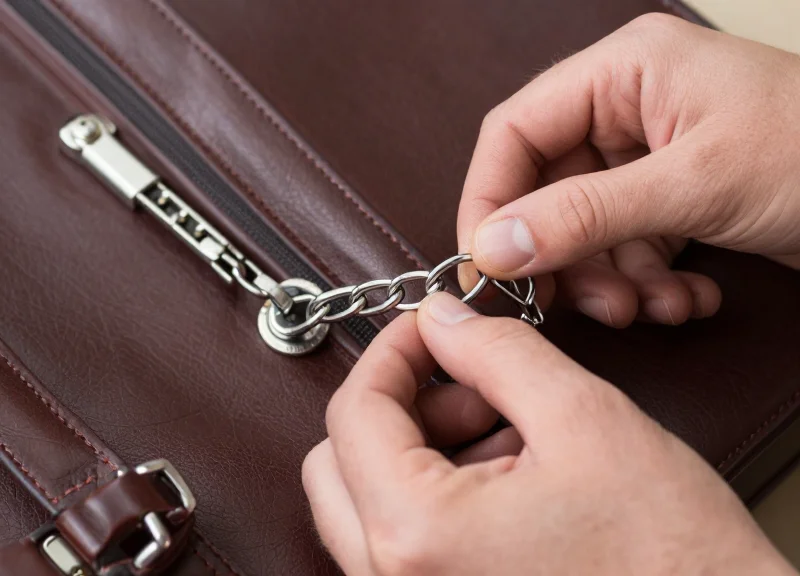
Deploying steel rope EAS tags on designer briefcases requires a strategic approach that utilizes the item's existing metal hardware—such as handle D-rings, shoulder strap eyelets, or internal gusset loops—to create a secure, non-invasive anchor point. By looping a high-tensile steel lanyard through these structural components rather than piercing the leather, retailers preserve the material's aesthetic integrity and its long-term resale value while maintaining a robust anti-theft deterrent.
- Identify the Structural Anchor Point: Locate the most robust metal component on the briefcase, typically the D-ring where the handle or shoulder strap attaches. Ensure this hardware is securely stitched into the bag's frame to prevent a thief from simply pulling the tag through the leather.
- Execute the Loop-Through Maneuver: Pass the steel rope lanyard through the opening of the hardware. For briefcases with dual handles, always loop through the handle farthest from the front face to maintain a cleaner display profile.
- Locking the EAS Hub: Insert the free end of the steel rope into the EAS tag hub until you hear a distinct double-click. This ensures the locking mechanism is fully engaged and the internal ball-bearing clutch has gripped the cable.
- Apply the Zero-Friction Buffer: Adjust the lanyard so the tag hub rests against the hardware rather than the leather. If the lanyard is too long, rotate the hub 180 degrees to take up slack and prevent the tag from swinging and scuffing the calfskin or exotic hide.
| Hardware Type | Deployment Method | Risk Level |
|---|---|---|
| O-Ring / D-Ring | Direct Loop-Through | Lowest - Recommended |
| Internal Gusset Loop | Discrete Internal Anchor | Low - Hidden |
| Zipper Pull (Metal) | Pull-Tab Threading | Medium - Potential for pull breakage |
| Leather Handle Bar | Wrap-Around Loop | High - Friction wear risk |
Expert Tip: The 'Micro-Slack' Principle. One common mistake in luxury retail is cinching the steel rope too tight against the leather. In my 20 years of experience, I've found that leaving approximately 5mm of slack prevents the lanyard from 'biting' into the leather grain during temperature or humidity shifts, which can cause permanent compression marks on high-end vegetable-tanned hides.
What if the briefcase has no visible hardware?
Use the internal frame. Most high-end briefcases have a metal frame or internal support bar near the zipper. Thread the lanyard through the gap between the lining and the frame for a secure, invisible attachment.
How do I prevent the tag hub from scratching the hardware?
Select lanyards with rubber-coated hubs or apply a small piece of clear acetate tape to the back of the tag hub where it makes contact with the bag's metal plating.
Can the lanyard be cut with standard scissors?
No. The multi-strand steel core is designed to resist standard cutting tools, requiring high-leverage aircraft cable cutters, which are rarely carried by casual shoplifters.
Advanced Security Protocols for Purses and Handbags
Advanced security protocols for luxury handbags involve the strategic integration of steel rope Electronic Article Surveillance (EAS) tags into non-removable hardware elements like D-rings, chain links, and grommets. Unlike pin-based systems that pierce delicate skins, this protocol leverages the bag's existing structural architecture to create a tamper-resistant bond that prevents 'tag switching'—a common shoplifting tactic where high-value tags are swapped with those from lower-priced items—while ensuring the leather remains entirely unmarred.
- Identify the Primary Anchor Point: Select a closed-loop hardware component that is permanently stitched or riveted to the bag’s body, such as a strap D-ring or a handle attachment point. Avoid removable 'lobster claw' clasps which can be easily bypassed.
- Chain Link Isolation Technique: For bags with chain straps, thread the steel rope through a single link located closest to the bag body. This prevents the tag from sliding along the length of the chain, which can cause metallic scratching or 'clanking' during customer trials.
- The Tension Calibration: Loop the lanyard so there is approximately 1.5 inches of play. This 'slack zone' allows the customer to model the bag naturally on their shoulder without the tag interfering with the silhouette or creating a leverage point for forced removal.
- Locking Mechanism Engagement: Insert the male end of the steel rope into the EAS tag housing until an audible 'double-click' is heard. Tug firmly to ensure the internal clutch has fully engaged with the rope's terminal.
| Hardware Type | Security Risk Level | Recommended Rope Protocol |
|---|---|---|
| Fixed D-Rings | Low | Single-loop through the ring center. |
| Chain Straps | Medium | Isolate one link; use PVC-coated rope to prevent metal-on-metal wear. |
| Adjustable Buckles | High | Loop behind the buckle frame to prevent sliding off the strap end. |
| Interior Security Loops | Low | Ideal for minimalist bags; keeps the tag hidden until inspection. |
Expert Insight: The 'Kinetic Load Test' is a critical final step in our Silicon Valley retail deployments. Once the tag is secured, staff should perform a gentle 360-degree rotation of the tag around the hardware. If the steel rope creates a 'pinch point' against the leather, the lanyard is too short. A properly deployed tag should move freely across the hardware surface, ensuring that even under the weight of the bag, the tag never acts as a lever that could distort the leather's grain or shape.
Can thieves cut through the steel rope easily?
Standard shoplifting tools like scissors or pocket knives cannot penetrate the multi-strand aircraft-grade steel core. It requires heavy-duty industrial wire cutters, the use of which is highly conspicuous in a retail environment.
Will the steel rope tarnish the hardware?
No, provided you use ropes with a high-quality TPU or PVC coating. This transparent layer acts as a buffer, preventing galvanic corrosion and friction scratches between the lanyard and the bag's gold or silver-toned hardware.
How do I prevent 'Tag Switching' on bags with removable straps?
Never secure the tag to a removable strap. Always find a permanent fixture on the main chassis of the bag. If the bag has no visible hardware, use an internal zipper pull-stop or an interior structural ring.
Maintaining Aesthetic Standards in Merchandising

In luxury retail, the visual integrity of a briefcase or purse is a primary driver of conversion. Effective merchandising with steel rope EAS tags involves a technique known as 'Invisible Deterrence'—the practice of securing an item such that the tag body is tucked into the natural shadows or structural folds of the bag, while the steel lanyard remains visible enough to signal high-level security to potential shoplifters. By prioritizing the 'profile view' of the merchandise, retailers can ensure the customer's first interaction is with the leather's grain and the bag's hardware rather than a bulky plastic sensor.
| Placement Zone | Aesthetic Impact | Deterrence Level | Best For |
|---|---|---|---|
| Rear Handle Anchor | Minimal (Hidden from front) | High | Briefcases & Top-Handle Bags |
| Strap D-Ring (Interior) | Zero Visibility | Low (Hidden) | Crossbody Bags with Flaps |
| Base of Shoulder Strap | Moderate | Very High | Tote Bags & Hobo Styles |
| Internal Gusset Loop | Minimal | Moderate | Structured Satchels |
Expert Insight: The Shadow Theory of Loss Prevention. Most loss prevention experts focus on making tags as visible as possible, but in luxury environments, this can cheapen the brand. Our 'Shadow Theory' suggests placing the tag body consistently on the side of the item facing away from the store's primary foot traffic flow. This creates a 'clean' visual field for the casual browser, yet ensures that any person handling the bag to evaluate its theft potential immediately encounters the security hardware, creating a high-friction psychological barrier at the exact moment of intent.
- The 45-Degree Rule: Position the tag body so it rests at a 45-degree angle behind the bag's side panel. This prevents the tag from swinging forward and hitting the front-facing leather during customer interaction.
- Lanyard Tensioning: Avoid 'tight-looping' the steel rope. A small amount of slack allows the tag to rest naturally on the display shelf rather than hanging awkwardly off the bag's hardware.
- Hardware Color Matching: Whenever possible, match the EAS tag housing color to the merchandise (e.g., using charcoal tags for dark leathers) to reduce the high-contrast 'visual noise' that distracts from the product.
Will the tag body scratch the polished hardware?
To prevent micro-abrasions, ensure you are using rubber-coated steel lanyards and tags with rounded, injection-molded edges. For ultra-delicate gold plating, a small piece of clear architectural tape can be applied to the tag's contact point.
How do I hide the tag on a clutch with no handles?
Use the steel rope to loop through the internal zipper pull or the 'D' ring meant for the optional wristlet. The tag body can then be tucked inside the main compartment while the bag is displayed slightly ajar.
Should the tag be visible from the store window?
No. Window displays should remain 'clean.' Use the steel rope to secure items to the display furniture itself (anchoring), while keeping the tag body hidden behind the bag or under the display riser.
Staff Detaching and Re-tagging Efficiency
In luxury retail, the point of sale (POS) is where security protocols meet the customer experience. Efficient detachment of steel rope EAS tags is not merely about speed; it is about a 'zero-contact' philosophy that ensures the heavy magnetic detacher never touches the delicate leather or polished hardware of a designer handbag. A streamlined SOP (Standard Operating Procedure) for handling lanyards reduces transaction times by up to 15 seconds per item, which is critical during high-traffic periods such as seasonal sales or holiday rushes.
- The 'Neutral Zone' Placement: Place the briefcase or purse on a clean, microfiber-lined mat. Position the item so the lanyard tag is draped away from the main body, ensuring the steel rope is taut but not under tension.
- Single-Handed Lanyard Orientation: The staff member should grasp the tag body with the dominant hand while the non-dominant hand stabilizes the rope. This prevents the tag from swinging and striking the hardware once released.
- Vertical Alignment Release: Align the tag locking head vertically with the high-strength magnetic detacher. Use a smooth, downward motion. Avoid 'dragging' the bag toward the magnet; bring the tag to the magnet instead.
- Post-Release Hardware Inspection: Immediately inspect the D-ring or handle where the rope was looped. A quick swipe with a gloved finger ensures no micro-abrasions occurred during the detachment process.
| Feature | Standard Pin-Tag Removal | Steel Rope Lanyard Removal |
|---|---|---|
| Avg. Removal Time | 3-5 Seconds | 6-8 Seconds |
| Contact Risk | High (Piercing leather) | Low (Surface contact only) |
| Detacher Tool | Standard Magnetic | Universal High-Strength Magnetic |
| Staff Training Curve | Minimal | Moderate (Requires handling technique) |
Expert Tip: The 'Silicone Shroud' Technique. To differentiate your boutique's service, equip your magnetic detachers with a custom 2mm silicone or velvet shroud. Most metal detachers have sharp edges that can scratch a $5,000 bag if the staff member slips. A soft-touch shroud acts as a physical buffer, allowing for high-speed detachment without any risk of metal-on-metal impact between the tool and the product's gold or silver-toned hardware.
How do we handle re-tagging for returns?
Returns should follow the 'Reverse Deployment' protocol. Inspect the return for damage, then re-loop the lanyard through the original anchor point (e.g., the D-ring) rather than creating a new position, maintaining the aesthetic consistency of the floor stock.
What if the steel rope gets kinked?
Never reuse a kinked steel lanyard. Kinks create structural weak points and can snag on delicate silk linings or scratch Saffiano leather. Discard damaged ropes immediately to maintain luxury standards.
Can staff remove tags with one hand?
While possible, a two-handed technique is mandatory for luxury items to ensure the weight of the tag does not drop onto the bag surface once the magnetic lock disengages.
Frequency Calibration: AM vs. RF for Steel Lanyards

Frequency calibration is the critical 'invisible' step in deploying steel rope EAS tags, as the metallic composition of the lanyard can cause signal attenuation or parasitic resonance. In the luxury retail space, Acousto-Magnetic (AM) systems operating at 58kHz are generally superior to Radio Frequency (RF) systems at 8.2MHz when using steel lanyards. This is because AM waves are less susceptible to the 'Faraday cage' effect created by metal-heavy merchandise like designer hardware and the steel rope itself, ensuring a higher detection rate at the store pedestal even if the tag is partially shielded.
| Feature | AM (Acousto-Magnetic) 58kHz | RF (Radio Frequency) 8.2MHz |
|---|---|---|
| Metal Interference | Low; penetrates metal well | High; sensitive to metal proximity |
| Detection Range | Up to 2.4m (wider entrances) | Up to 1.8m (standard entrances) |
| Steel Lanyard Impact | Negligible signal drift | High risk of signal detuning |
| Recommended For | High-end leather goods | General apparel & soft goods |
Expert Tip: When using 7x7 strand galvanized steel rope, technicians should be aware of the 'Loop Effect.' If the steel lanyard forms a closed conductive loop that is too tight against the bag's metallic hardware, it can create an eddy current that dampens the EAS tag's signal. Always maintain at least a 2mm gap between the lanyard loop and any heavy metallic grommets or zippers to preserve the tag's Quality Factor (Q-factor) and prevent silent failures at the exit.
Can steel lanyards cause false alarms?
Rarely. While the metal itself doesn't trigger the alarm, it can reflect signal noise from other electronics (like LED drivers) back into the pedestal. Proper system sensitivity tuning is required to filter out this 'clutter'.
Does lanyard length affect frequency?
In RF systems, a longer steel lanyard can act as a parasitic antenna, shifting the tag's resonance frequency away from 8.2MHz. In AM systems, length is largely irrelevant to signal integrity.
How do I verify calibration after deployment?
Use a field strength meter or a 'blind test' approach. Walk the tagged bag through the pedestals at multiple heights (low, waist, head-level) to ensure the steel rope hasn't created a dead zone in the detection field.
ROI Comparison: Puncture Damage vs. Lanyard Investment
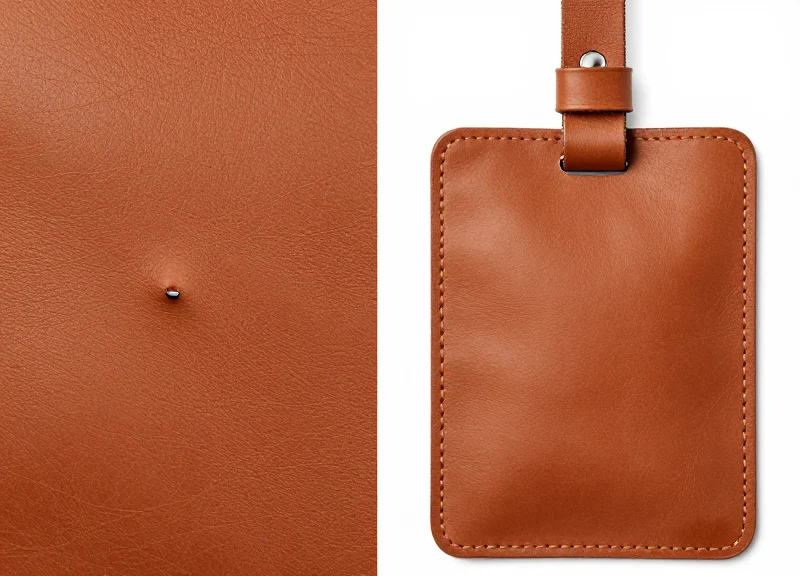
The Return on Investment (ROI) for transitioning to steel rope EAS lanyards is primarily driven by the elimination of 'Inventory Degradation'—the immediate loss in value that occurs the moment a traditional security pin punctures a designer leather hide. In luxury retail, where profit margins depend on pristine condition, a single 1mm puncture hole can trigger a mandatory 'B-grade' markdown of 30% to 50% off the Manufacturer's Suggested Retail Price (MSRP) to move the damaged unit. By contrast, a high-quality steel rope lanyard is a reusable asset with a multi-year lifespan that maintains the 'A-grade' status of every unit in your inventory.
| Metric | Traditional Pin-Through Tag | Steel Rope Lanyard Tag |
|---|---|---|
| Initial Unit Cost | $1.50 - $2.50 | $3.50 - $6.50 |
| Damage Rate (Punctures/Scuffs) | 5% - 12% of inventory | 0% |
| Average Markdown per Unit | 30% - 50% of MSRP | $0.00 |
| Asset Lifespan | High (but destroys product) | High (reusable) |
| Impact on Resale/Brand Value | Negative (Permanent damage) | Neutral (Preserves hide) |
Expert Insight: The 'Shadow Markdown' Factor. Beyond the literal price tag, there is a hidden cost known as the Shadow Markdown. My 20 years in high-end retail analytics shows that high-net-worth individuals (HNWIs) often abandon a purchase entirely if they detect even a pin-prick hole, leading to a 'silent' drop in conversion rates. While a standard markdown shows up on a spreadsheet, the lost sale of a $4,000 briefcase due to aesthetic damage is a catastrophic ROI leak that steel lanyards effectively plug.
How quickly does the lanyard pay for itself?
In most luxury environments, preventing just one markdown on a $1,500 handbag pays for approximately 250 to 300 steel rope lanyards. The ROI is typically achieved within the first 30 days of implementation.
Does the weight of the steel rope affect the leather strap?
When deployed correctly around D-rings or structural hardware, the weight is negligible. Unlike pins, which create a concentrated stress point in the leather fibers, lanyards distribute weight across the existing load-bearing hardware of the bag.
What about labor costs for installation?
While looping a lanyard takes roughly 3-5 seconds longer than pinning, this cost is offset by the elimination of the 'Damage Inspection' phase during end-of-season audits, where staff must manually identify and discount punctured goods.
Ultimately, the investment in steel rope EAS tags should be viewed not as a security expense, but as an inventory insurance policy. By protecting the physical integrity of the leather, you ensure that every item on the sales floor is capable of fetching its full retail value, thereby protecting both your bottom line and your brand's reputation for uncompromising quality.