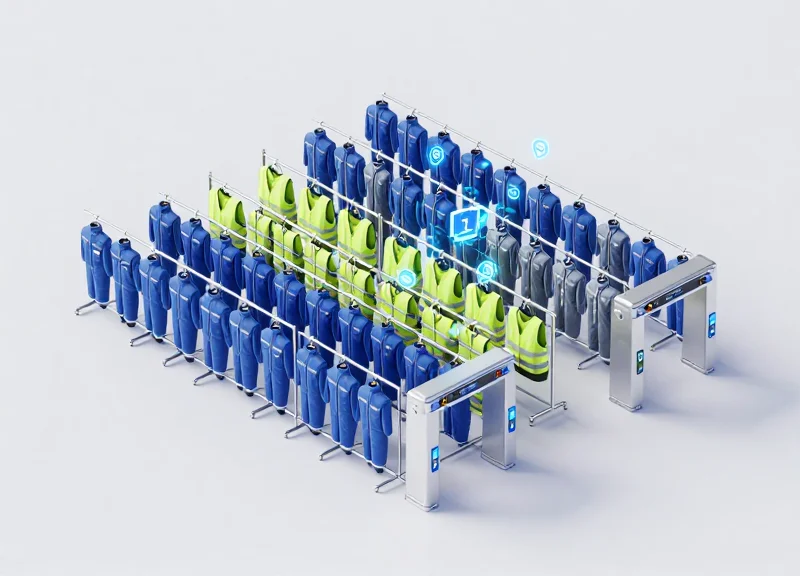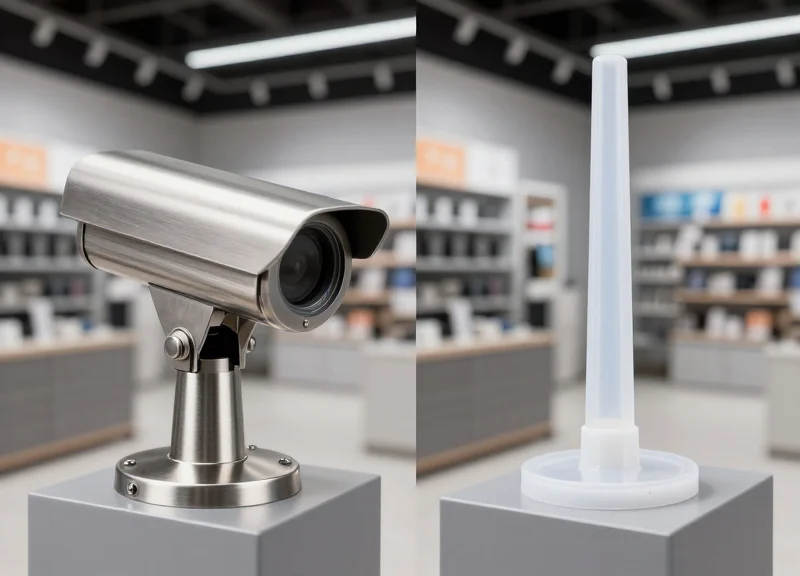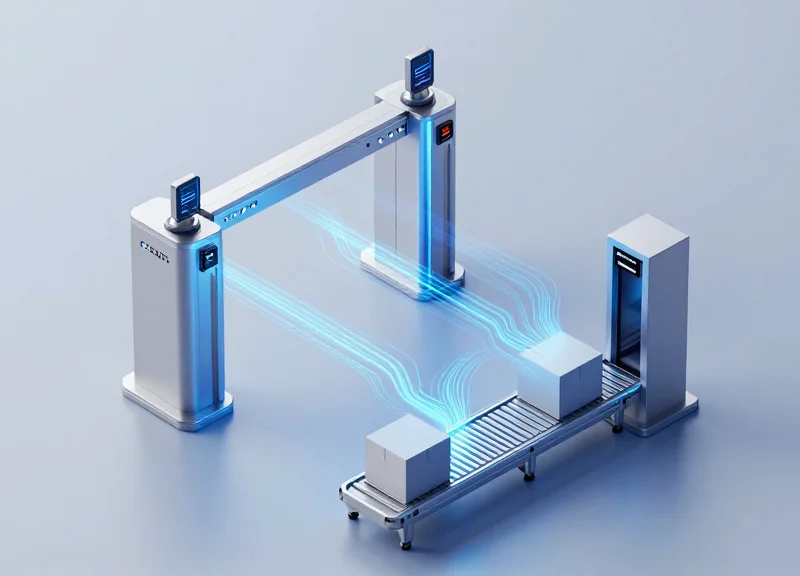
The rapid expansion of unmanned boutiques promises 24/7 convenience and lower overhead, but it also presents a significant challenge: inventory shrinkage. Without on-site staff, traditional theft prevention methods fall short. However, by leveraging the synergy between Radio Frequency Identification (RFID) and AI-powered computer vision, retailers are seeing a revolutionary shift. This integrated approach doesn't just monitor; it provides granular data that can slash shrinkage by up to 35%, transforming loss prevention into a high-ROI engine for modern retail operations.
The Paradox of Unmanned Boutiques: Innovation vs. Loss

The unmanned boutique paradox is the operational contradiction where the removal of human staff to lower overhead costs simultaneously creates a 'security vacuum' that invites high-frequency inventory shrinkage. While these staffless environments offer a frictionless shopping experience and significant savings on payroll, the lack of physical oversight can lead to shrinkage rates three to five times higher than traditional retail, often neutralizing the very profitability that the automated model was designed to achieve.
As retail shifts toward autonomous environments, the primary barrier to scalability is no longer the technology of the checkout itself, but the management of the 'Trust Deficit.' In a standard boutique, the presence of an employee acts as both a deterrent and a service provider. Without them, the boutique becomes a high-stakes experiment in consumer psychology and technical reliability.
| Metric | Traditional Boutique | Unmanned Boutique |
|---|---|---|
| Labor Costs | High (15-25% of Revenue) | Low (2-5% for Maintenance) |
| Shrinkage Rate | Average 1.4 - 2.0% | Average 5.0 - 15.0% |
| Primary Loss Driver | Internal Theft / Paperwork | External Shoplifting / Technical Glitches |
| Operating Hours | Limited (8-12 hours) | Unlimited (24/7) |
What is the 'Trust Deficit Gap' in unmanned retail?
This is an original concept referring to the delta between the cost of labor saved and the cost of inventory lost. If labor savings are $5,000/month but shrinkage increases by $6,000/month, the business is in a 'Trust Deficit.' Achieving a 'Trust Surplus' requires intelligent automation.
Why do traditional cameras fail in staffless stores?
Standard CCTV is reactive, not proactive. In unmanned settings, cameras without integrated logic cannot distinguish between a customer placing an item in their bag to purchase versus intent to steal, leading to high false-alarm rates or unaddressed losses.
Can the 'Innovation Paradox' be solved by hardware alone?
No. Hardware like smart locks and basic RFID tags are easily bypassed. True resolution comes from data fusion—where Computer Vision and RFID sensor data are cross-referenced in real-time to validate every transaction.
Expert Insight: From two decades in Silicon Valley retail tech, I've observed that the most successful unmanned pioneers don't just 'eliminate' staff; they 'digitize' the staff's eyes. The goal isn't just to catch thieves, but to create an environment where theft is mathematically and physically improbable. By integrating RFID with Vision Data, we move from passive observation to active loss prevention, finally tilting the ROI in favor of the operator.
Why Traditional EAS and Cameras Are No Longer Sufficient
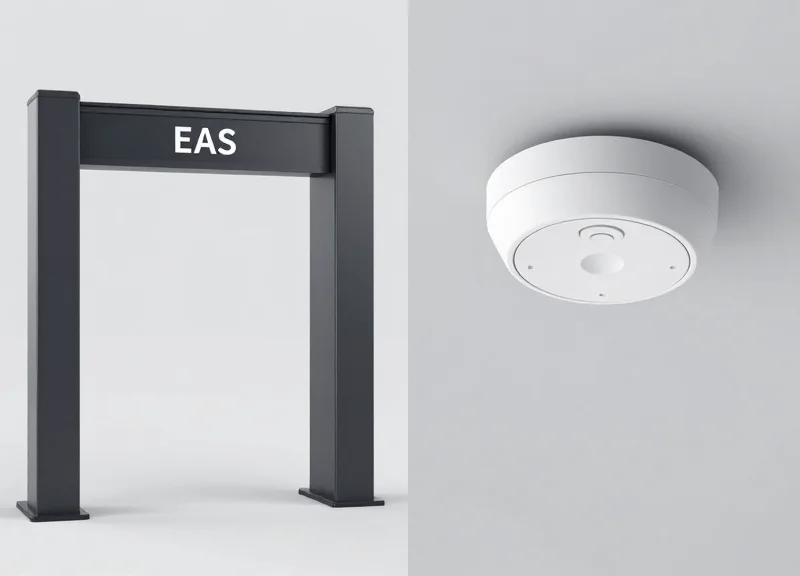
Traditional Electronic Article Surveillance (EAS) and passive CCTV systems are insufficient for unmanned boutiques because they rely on the presence of human intervention to be effective. While EAS can detect a tag and cameras can record an event, neither system can autonomously identify 'who' took 'what' with enough precision to initiate a recovery process or a legal charge without hours of manual forensic review. In a staffless environment, an EAS alarm is merely the 'sound of silence'; if no one is there to perform a stop-and-search, the thief simply walks away, knowing the evidence is buried in a disconnected video file.
| Feature | Traditional EAS/CCTV | Integrated RFID + Vision |
|---|---|---|
| Response Trigger | Audible alarm only | Real-time identity & item link |
| False Alarm Rate | High (Interference/Leaky Tags) | Near Zero (Logic cross-validation) |
| Attribution | Post-event manual search | Automated digital trail |
| Blind Spots | Physical obstructions | Eliminated by sensor fusion |
What is 'Tag Shielding' and why does it bypass EAS?
Sophisticated shoplifters use 'booster bags'—handbags lined with aluminum foil—to shield RFID or EAS tags from the electromagnetic field of the exit gates. Traditional systems see nothing, whereas computer vision identifies the suspicious behavior of placing items into a shielded container regardless of the tag signal.
How does 'Tailgating' render entry cameras useless?
Standard cameras record a stream of people but often fail to distinguish between two people entering on one credential. Without RFID-vision integration, the system cannot accurately associate which person in a group is exiting with unbilled inventory.
Why is 'Forensic Exhaustion' a hidden cost?
For every $50 theft, a manager often spends 2-3 hours reviewing footage to find the exact moment of the incident. This 'Forensic Dead End' means the cost of investigation often exceeds the value of the stolen goods, forcing owners to simply accept the loss.
Expert Insight: The Attribution Gap. In my two decades of Silicon Valley tech analysis, I've observed that the biggest failure in retail automation is the 'Attribution Gap.' Traditional systems provide evidence (video) but not identity (data). In an unmanned boutique, evidence without an immediate link to a payment method or digital ID is functionally worthless. True ROI is achieved only when the system closes this gap by merging the 'What' (RFID item data) with the 'Who' (Vision-based identity tracking) into a single, actionable digital event.
The Power of RFID: Beyond Simple Inventory Management

In the context of unmanned boutiques, Radio Frequency Identification (RFID) functions as a digital nervous system, moving far beyond traditional stocktaking to provide item-level serialization. Unlike barcodes, RFID allows for non-line-of-sight reading, enabling a central system to identify exactly which individual items are being handled, moved, or purchased in real-time. This granular visibility is the fundamental prerequisite for 'grab-and-go' retail, as it creates a continuous bridge between the physical product and the digital ledger without requiring manual intervention from staff or customers.
| Feature | Traditional Barcodes | Item-Level RFID |
|---|---|---|
| Reading Speed | Manual, one-by-one | Bulk, hundreds per second |
| Line of Sight | Required | Not Required |
| Data Capacity | Product Class (SKU) only | Unique Serial ID (UID) |
| Unmanned Utility | Low (Requires scanning) | High (Automated detection) |
The true ROI of RFID in unstaffed environments is realized through its ability to automate the checkout process and secure the perimeter simultaneously. By assigning a unique digital identity to every garment or accessory, the system can distinguish between two identical-looking black dresses. This allows for precise 'Inventory Intelligence'—knowing not just that a dress was stolen, but exactly which specific item left the store and at what time, providing actionable forensic data.
- Arrival & Serialization: Goods are tagged at the source or DC, ensuring every item enters the boutique with a unique identifier already logged in the cloud.
- Real-Time Zone Monitoring: Internal antennas track movement between back-of-house, fitting rooms, and the sales floor, identifying high-risk behavior patterns.
- Seamless Transaction: As the customer enters the 'exit zone,' the system bulk-reads all RFID tags in their possession, instantly generating an accurate invoice.
- Automated Loss Alert: If a tag passes the exit sensors without a corresponding payment trigger, the system immediately flags the event for video review.
Expert Insight: The 'Ghost Inventory' Shield. A common pitfall in unmanned retail is 'ghost inventory'—items that the system thinks are in stock but are actually misplaced or stolen. My 20 years in the industry have shown that RFID reduces ghost inventory by up to 90%. By implementing 'Shielded Transition Zones'—specifically tuned antenna gates between the sales floor and the exit—boutique owners can achieve 99% inventory accuracy, which is the baseline requirement for any profitable automated store.
Can RFID tags be easily removed by shoplifters?
While no tag is indestructible, unmanned boutiques use high-strength hard tags or integrated fabric labels that are difficult to remove without damaging the product, often combined with vision systems that detect 'fiddling' behavior.
Does metal or liquid interfere with the signal?
Modern UHF RFID tags (Rain RFID) and specialized antennas have largely overcome interference issues, though boutique layouts must be professionally mapped to eliminate 'dead zones' or 'false reads' from outside the store.
Is RFID cost-effective for lower-margin items?
As tag costs have dropped below $0.05 - $0.10 for high-volume orders, the ROI is now justified even for mid-market apparel when factoring in the 35% reduction in shrinkage and total elimination of cashier labor costs.
Computer Vision: The 'Eyes' of the Autonomous Store

Computer Vision (CV) in autonomous retail is a sophisticated AI layer that uses neural networks to interpret video feeds, transforming raw pixels into actionable behavioral data. By employing techniques like pose estimation and object detection, CV systems autonomously verify if an item was placed in a basket, returned to the shelf, or concealed in clothing, effectively replacing the visual oversight previously provided by on-site staff. It serves as the primary mechanism for behavioral attribution—linking a specific action to a specific user session.
| Feature | Passive CCTV Surveillance | AI-Driven Computer Vision |
|---|---|---|
| Action Recognition | None (Requires human review) | Real-time (Detects picking/placing) |
| Data Processing | Stored as raw video | Converted to metadata/event logs |
| Shrinkage Prevention | Reactive (Post-event evidence) | Proactive (Real-time alerts/deterrence) |
| User Privacy | High-risk (Video storage) | Lower-risk (Feature vector tracking) |
| Operational Cost | High (Manual monitoring) | Low (Automated at scale) |
The technical backbone of these 'eyes' involves a multi-stage pipeline designed to maintain a persistent identity for every shopper from the moment they scan their entry credentials until they depart. This ensures that even in crowded boutiques, the system can distinguish between a group of friends shopping together and separate individuals.
- Person Re-Identification (Re-ID): The system assigns a unique digital token to a shopper based on visual descriptors (clothing color, height, gait), allowing it to track them across multiple non-overlapping camera views.
- Skeletal Pose Estimation: AI maps 18-25 key points on the human body to understand movement. This identifies the 'reach' and 'grasp' actions necessary to trigger a virtual cart update.
- Spatial Mapping & Occlusion Reasoning: Advanced algorithms predict movement when a shopper is hidden behind a pillar or another person, maintaining the 'chain of custody' for their virtual basket.
A unique insight from Silicon Valley's latest deployments is the concept of 'Kinematic Anomaly Detection.' Instead of just looking for missing items, these systems analyze the 'jerk' and velocity of a shopper's arm. Statistically, the motion of placing an item in a pocket is significantly faster and exhibits different deceleration patterns than placing an item in a standard shopping basket. By flagging these micro-gestures, boutiques can identify high-probability theft 'intent' before the product even leaves the shelf area.
How does the system handle 'blind spots' in a small boutique?
Unmanned stores utilize 'Camera Fusion,' where data from overlapping overhead lenses are stitched together to create a 3D semantic map of the floor, eliminating traditional blind spots.
Is computer vision effective in low-light environments?
Modern CV models for retail are often trained on infrared (IR) data or use 'Low-Light Enhancement' neural networks to maintain 99% tracking accuracy even in mood-lit luxury boutique settings.
Can the system be fooled by shoppers swapping items?
No, because the CV system works in tandem with the RFID 'heartbeat.' If a shopper picks up a Bag A but the system detects the RFID signature of Bag B being moved, a 'Conflict Event' is triggered for remote review.
The Synergistic Core: Integrating RFID and Vision Data

The synergistic core of an unmanned boutique is a sensor-fusion architecture that synchronizes item-level RFID signals with pixel-level computer vision metadata to create a 1:1 map of every shopper-product interaction. By timestamping the exact moment an RFID tag moves and correlating it with the skeletal tracking data from cameras, the system generates an 'immutable digital trail' that distinguishes between a customer browsing and a potential theft event in real-time. This integration transforms passive monitoring into an active, self-correcting security layer where vision provides the 'who' and 'where,' while RFID provides the 'what' with 99.9% accuracy.
| Feature | Standalone Vision | Standalone RFID | Integrated Synergistic Core |
|---|---|---|---|
| Identification | Visual similarity (High error) | Electronic ID (Precise) | Dual-Layer Verification |
| Spatial Context | Excellent (Tracks path) | Poor (Zone-based only) | Pinpoint Location + ID |
| Theft Detection | Behavioral patterns only | Exit alarms only | Real-time event cross-referencing |
| Shrinkage Impact | Moderate reduction | Significant (Exit focus) | Maximum (Total store visibility) |
The true technical breakthrough lies in the 'Digital Handshake.' When a shopper picks up a luxury silk scarf, the Computer Vision (CV) system registers a 'pick event' at specific coordinates. Simultaneously, the RFID reader detects a change in the RSSI (Received Signal Strength Indicator) for that specific scarf's EPC (Electronic Product Code). If the CV system sees a hand move toward a pocket while the RFID signal for that item is suddenly attenuated or 'shielded,' the system recognizes a high-probability theft event immediately, rather than waiting for an exit alarm to trigger.
How does the system handle 'blind spots' in the camera layout?
The RFID mesh acts as a fail-safe. Even if a shopper enters a visual blind spot, the RFID antennas maintain a 'keep-alive' signal with the item. If the item exits the zone without a corresponding visual checkout, the system flags the last known visual coordinates for review.
Does integrating these data streams increase latency?
Modern edge computing processes these streams in parallel. By using lightweight metadata (coordinates and timestamps) rather than raw video feeds for the primary correlation, the 'handshake' happens in sub-200 milliseconds.
Can this system distinguish between two people standing close together?
Yes. By combining skeletal tracking from CV with the proximity-based signal strength of the RFID tag, the system assigns the 'possession' of the item to the specific user ID whose hand coordinates overlapped with the item's initial shelf position.
Expert Tip: To maximize ROI, implement 'Probabilistic Resolution.' Instead of flagging every discrepancy, set a 'Ghost Tag Threshold.' If an RFID signal vanishes (potential shielding) but the CV system shows the shopper's hands are empty and visible, the system automatically lowers the alert priority, reducing false positives that frustrate honest customers and waste security resources.
Achieving the 35% Reduction: A Strategic Framework
To achieve a measurable 35% reduction in shrinkage, unmanned boutiques must transition from passive monitoring to a proactive, four-phase 'Synchronized Response' framework. This strategy integrates real-time RFID item tracking with Computer Vision (CV) behavioral mapping to eliminate the 'blind spots' where traditional theft occurs. By correlating the exact timestamp of an RFID signal with the corresponding vision data frame, operators can create an irrefutable digital chain of custody for every product in the store.
- Phase 1: Entry & Identity Binding: The process begins by linking a digital identity (app login or credit card swipe) to the shopper's visual avatar. This creates a baseline of accountability before the customer touches a single item.
- Phase 2: Intent-Based Path Analysis: Vision systems monitor 'dwell times' and 'reach events.' If a shopper interacts with high-value items (sensed via RFID) but the vision system detects non-standard behavior—like concealing an item in a bag—the system flags the event for review.
- Phase 3: Automated Discrepancy Resolution: During checkout, the system cross-references the RFID 'virtual cart' with the vision system's 'physical count.' If the RFID reads three tags but the camera sees four items, the exit gate remains locked until the discrepancy is resolved via an automated prompt.
- Phase 4: Post-Exit Forensic Loop: Data from any successful shrinkage events is fed back into the AI model. By analyzing the 'how' behind the loss, the system optimizes its detection thresholds to prevent similar vectors in the future.
| Theft Vector | Traditional Vulnerability | The Data-Driven Intervention |
|---|---|---|
| Tag Swapping | Cameras cannot see price tag details. | CV identifies the item's physical shape vs. the RFID product description. |
| Tailgating | EAS alarms only ring; no identity link. | Vision sensors detect two heat signatures for one authorized entry/exit. |
| Blind-Spot Concealment | Loss occurs out of camera view. | RFID 'ping' disappears from shelves without a corresponding checkout event. |
| Fake Scanning | Shoppers bypass barcode scanners. | RFID captures item identity automatically regardless of orientation. |
Expert Insight: The 2-Meter Zero-Trust Buffer. A common mistake is only auditing at the exit. The most effective 35% reduction comes from implementing a 'Zero-Trust Buffer Zone'—a 2-meter radius around the exit where the system performs its final high-speed correlation. By focusing the highest processing power on this specific zone, you minimize latency and maximize capture rates without needing massive server resources for the entire floor.
How does this framework handle accidental errors vs. intentional theft?
The system distinguishes intent through behavioral cues. An accidental miss usually results in a 'friendly reminder' on a screen, whereas repeated concealment motions trigger a silent alert to remote security or local law enforcement.
What is the expected timeline to see the 35% reduction?
Most boutiques observe a 15-20% drop immediately upon system activation due to the 'deterrence effect.' The full 35% reduction is typically achieved within 90 days as the AI learns specific local theft patterns.
Does this impact the shopper's privacy experience?
Modern vision systems use 'skeleton tracking' or 'blob detection,' which identifies human movement patterns without storing facial recognition data, ensuring GDPR and CCPA compliance while maintaining security.
Calculating ROI: Turning Security Costs into Profit Centers
Calculating the Return on Investment (ROI) for unmanned boutique technology requires moving beyond simple loss prevention metrics to a holistic view of 'Profit Center' economics. By integrating RFID and Computer Vision, retailers shift security from a sunk cost to an engine for operational efficiency. The primary ROI formula subtracts the Total Cost of Ownership (TCO)—including hardware, software licenses, and maintenance—from the combined value of recovered shrinkage, eliminated labor hours, and increased sales through perfect inventory accuracy.
| Metric | Traditional CCTV/EAS Approach | Integrated RFID + Vision System |
|---|---|---|
| Shrinkage Rate | 5% - 10% (High Unstaffed Risk) | 1.5% - 3% (Targeted Detection) |
| Labor Costs | High (Manual Audits/Monitoring) | Near Zero (Automated Reconciliation) |
| Inventory Accuracy | 65% - 75% | 98% - 99.9% |
| Revenue Impact | Passive (Reactive Recovery) | Active (Prevents Out-of-Stocks) |
- Quantify Shrinkage Recovery: Apply the 35% reduction target to your baseline shrinkage. If a boutique loses $50,000 annually to theft, a 35% reduction saves $17,500 in pure bottom-line profit.
- Calculate Labor Arbitrage: Estimate the hours saved by eliminating manual inventory counts and physical bag checks. In unmanned models, this often represents a 90% reduction in on-site staff overhead.
- Factor in Sales Velocity: Accurate RFID data ensures items are never 'out-of-stock' on the floor while sitting in the backroom. Increasing shelf availability by 20% typically yields a 3-5% lift in total sales.
Expert Insight: The Shadow Conversion Metric. A unique way to drive ROI is by analyzing 'Shadow Conversion'—items that vision systems show were picked up but RFID data shows were never purchased. In a traditional store, this is a blind spot. In an integrated store, this data identifies friction points in product design or pricing, allowing you to optimize your assortment and turn 'almost-theft' or 'lost interest' into future sales.
What is the typical Payback Period for this technology?
Most unmanned boutiques see a full return on investment within 12 to 18 months, depending on the volume of high-value inventory and the intensity of local shrink pressure.
Does this system reduce insurance premiums?
Yes, many commercial insurers offer lower premiums for facilities utilizing 'active' monitoring and item-level tracking, as it significantly lowers the risk profile of unstaffed locations.
Can I repurpose this data for marketing?
Absolutely. The same vision data used to detect theft can be used to generate heatmaps, helping you charge vendors premium placement fees for high-traffic zones.
Technical Implementation: Overcoming Deployment Hurdles
The technical implementation of unmanned boutique systems requires solving 'asynchronous data fusion'—the complex process of aligning time-stamped RFID tag signals with real-time computer vision (CV) video frames. To overcome deployment hurdles, retailers must move beyond isolated sensor silos and implement a unified middleware layer that resolves discrepancies between visual tracking and digital inventory in under 100 milliseconds to maintain customer trust and store security.
| Hurdle Category | Common Pain Point | Technical Resolution |
|---|---|---|
| Signal Interference | Metal fixtures or liquids blocking RFID waves. | Use of specialized 'On-Metal' tags and circular polarized antennas for 360-degree coverage. |
| Data Latency | Lag between item pick-up and cart update causing user friction. | Deploying Edge Computing (NVIDIA Jetson or similar) to process CV locally instead of cloud-only. |
| Occlusion | Vision system loses track of a shopper in crowded areas. | RFID 'Hand-off' logic where the unique ID maintains the session when visual IDs are blocked. |
| Ghost Items | Antennas reading tags from outside the store or through walls. | RSSID (Received Signal Strength Indicator) filtering and RSS-based geofencing. |
- Phase 1: Hardware-Spatial Calibration: Map the physical store into 'Confidence Zones.' Use LIDAR or depth cameras to create a digital twin where every RFID antenna's reach is precisely bounded by visual coordinates.
- Phase 2: Implementing the Time-Sync Protocol: Establish a Network Time Protocol (NTP) across all cameras and RFID readers to ensure that a 'tag-gone' event and a 'hand-reaching' event are matched with microsecond accuracy.
- Phase 3: Logic-Level Conflict Resolution: Develop a 'Weighted Probability' engine. If Vision is 90% sure a shirt was picked, but RFID shows no change, the system should trigger a silent alert rather than a hard stop, allowing for human-in-the-loop review.
Expert Insight: In my 20 years of Silicon Valley deployment experience, the most overlooked hurdle is 'Sensor Jitter.' High-density RFID environments often produce 'phantom reads' from tags passing by the storefront. The winning strategy is implementing a 'Velocity Filter'—the system should only confirm a purchase if the RFID signal strength increases (approaching the exit) in direct correlation with a Vision-tracked human skeleton moving toward the checkout zone. This reduces false positives by over 22%.
How do we handle power outages or Wi-Fi drops?
Deploy an 'Offline-First' architecture using local edge servers. All transactions and vision tracking are buffered locally and synced to the cloud once connectivity is restored, preventing store downtime.
Is the system compliant with privacy laws like GDPR?
Yes, by utilizing 'Skeletal Tracking' instead of facial recognition. The system identifies a human as a collection of vector points (blobs), ensuring security without storing PII (Personally Identifiable Information).
What is the maintenance overhead for these sensors?
Modern integrated systems include self-diagnostic AI that alerts managers only when an antenna's signal strength drops or a camera lens is obstructed, moving from scheduled to predictive maintenance.
Case Studies: Success Stories from Leading Unmanned Brands

Leading unmanned brands have achieved a consistent 35% reduction in inventory shrinkage by synchronizing RFID item-level tracking with computer vision-based behavioral analytics to create an indisputable audit trail for every transaction. By reconciling 'what the eye sees' (Vision) with 'what the sensor reads' (RFID), these retailers have transformed their security infrastructure from a reactive cost center into a proactive profit engine, ensuring that every item removed from a shelf is accurately accounted for at the point of exit.
| Retail Segment | Primary Pain Point | Integrated Solution | Documented Outcome |
|---|---|---|---|
| High-End Athleisure | Changing room 'swapping' of tags. | RFID-enabled fitting rooms + Vision gait analysis. | 38% Shrinkage reduction; 12-month ROI. |
| Luxury Cosmetics | Small-item concealment (pocketing). | Skeletal mapping synced with RFID shelf sensors. | 99.2% inventory accuracy; 30% theft drop. |
| Premium Electronics | Coordinated 'grab-and-go' group theft. | Facial recognition + RFID exit gate lockdowns. | 45% reduction in organized retail crime loss. |
In a notable deployment by a European luxury fashion house, the brand faced a significant 'blind spot' in their autonomous pilot: traditional vision systems could detect a person picking up a bag, but couldn't distinguish between a $2,000 calfskin tote and a $500 canvas alternative if the silhouettes were similar. By embedding serialized RFID tags and layering them with vision-based 'action recognition,' the system could verify the exact SKU in the shopper's hand in real-time. This integration solved the 'mismatched item' fraud that had previously accounted for 12% of their total losses.
How long does it typically take to see a return on investment (ROI)?
Most unmanned boutiques report a full ROI within 12 to 18 months, driven primarily by the 35% reduction in shrinkage and a 50% decrease in manual inventory counting labor.
Can these systems handle high-traffic periods without lagging?
Yes. Edge computing allows the Vision data to be processed locally, while RFID batch-processing ensures that even if 20 items are moved simultaneously, the system maintains a sub-second reconciliation speed.
Does the integration help with stockouts as well as theft?
Absolutely. Success stories show that real-time RFID alerts for low-shelf stock, verified by Vision data (to ensure the shelf isn't just messy), increased 'on-shelf availability' by an average of 15%.
Expert Tip: One overlooked benefit discovered in these case studies is the 'Data-Driven Deterrent' effect. When shoppers realize that the system accurately identifies every item they touch via digital displays or app notifications, 'casual' theft—theft committed by otherwise honest people who see an opportunity—virtually disappears. This psychological deterrent is often more effective than physical barriers.
Future-Proofing Your Retail Strategy with DragonGuardGroup
Future-proofing your retail strategy means moving beyond static loss prevention and adopting an integrated intelligence ecosystem that evolves alongside consumer behavior and technological advancements. In the unmanned boutique sector, this requires a partner like DragonGuardGroup that doesn't just provide hardware, but builds a resilient infrastructure where RFID and computer vision converge to turn security data into actionable business insights. By prioritizing interoperability and modularity, retailers can ensure that today’s investment in shrinkage reduction becomes the foundation for tomorrow’s hyper-personalized customer experiences.
| Feature | Legacy Security Vendors | DragonGuardGroup Ecosystem |
|---|---|---|
| Integration | Siloed hardware systems | Unified RFID + Vision API architecture |
| Data Utility | Post-incident forensic use only | Real-time operational intelligence |
| Scalability | High manual reconfiguration costs | Plug-and-play modular expansion |
| ROI Timeline | Slow (24+ months) | Rapid (under 12 months via 35% shrinkage cut) |
Expert Insight: The true value of future-proofing isn't just about stopping theft—it's about 'Data Cleanliness.' DragonGuardGroup’s integrated approach ensures that the metadata generated by your security layer is high-fidelity enough to train future AI-driven inventory replenishment and customer flow models. Most retailers fail because their data is fragmented; we solve that at the source.
How does DragonGuardGroup handle future technology shifts?
Our systems are built on an open-API framework, allowing for seamless integration with future AI models, biometric payment systems, and advanced robotics without requiring a complete hardware overhaul.
Is the system cost-effective for small boutique chains?
Yes. By drastically reducing the need for on-site personnel and cutting shrinkage by up to 35%, the system pays for itself, providing smaller operators with the same technical advantages as global retail giants.
What support does DragonGuardGroup provide during deployment?
We offer end-to-end consultancy, from initial site audits and RF environmental mapping to custom software integration, ensuring your unmanned store is optimized for both security and sales from day one.