As the outdoor gear industry pivots toward circularity and advanced inventory management in 2026, the demand for RFID tags that can withstand the elements—and the laundry—has never been higher. High-performance technical fabrics present unique challenges for traditional tagging solutions. This guide explores how to select RFID technology that maintains data integrity through UV exposure, moisture, and intense abrasion, ensuring your specialized gear remains trackable throughout its entire lifecycle. Whether you are manufacturing mountaineering shells or specialized tactical wear, understanding the intersection of fabric science and digital identification is now a competitive necessity.
The Evolution of RFID in the Outdoor Industry (2026 Trends)

By 2026, RFID in the outdoor industry has transitioned from a back-end logistics tool to a 'digital thread' that connects the entire product lifecycle. No longer confined to paper hangtags, modern RFID implementations involve ruggedized, wash-proof tags embedded directly into technical fabrics and high-performance gear. This evolution is driven by the global mandate for Digital Product Passports (DPP) and the industry's shift toward circularity, allowing brands to track durability, facilitate professional repairs, and verify authenticity in the booming secondary resale market.
| Feature | Legacy RFID (Pre-2022) | Next-Gen RFID (2026+) |
|---|---|---|
| Primary Use | Warehouse Inventory Accuracy | Full Lifecycle & Circular Economy Tracking |
| Form Factor | Adhesive Labels / Paper Tags | Textile-Integrated / Flexible Encapsulation |
| Durability | Disposable; easily damaged | Extreme Weather & 50+ Wash Cycle Resistant |
| Consumer Value | None (Tags usually discarded) | Warranty Activation & Resale Authentication |
Why is the 2026 'Digital Product Passport' (DPP) critical for outdoor gear?
Regulatory shifts, particularly in the EU, now require brands to provide transparent data on material sourcing and recyclability. RFID serves as the physical key that unlocks this digital data for consumers and recyclers alike.
How does RFID improve the performance of technical fabrics?
Modern tags are designed with 'stretch-and-recovery' capabilities, ensuring that the electronics do not create stress points or delamination in high-performance membranes like GORE-TEX.
Can RFID withstand extreme outdoor conditions?
Yes, 2026-spec tags use advanced polymer encapsulation that protects the microchip from salt-water corrosion, UV degradation, and temperatures as low as -40°C.
Expert Insight: The 'Second-Life Validation' Trend. In 2026, the most significant ROI for RFID isn't at the initial point of sale, but in the secondary market. Premium outdoor brands are now using embedded RFID to instantly 're-authenticate' gear at trade-in kiosks. By scanning an embedded tag, a brand can verify the exact model year and material composition, allowing them to offer higher trade-in credits and ensuring that 'gray market' counterfeits cannot enter their official refurbished gear programs.
- Sustainability Mapping: Using RFID to log the carbon footprint of every component in a technical jacket.
- Automated Sorting: Enabling textile recycling facilities to automatically sort garments by fiber type using RFID signals.
- Enhanced Anti-Theft: Moving beyond gate alarms to real-time 'discreet' inventory monitoring in flagship retail stores.
Critical Durability Factors for High-Performance Gear
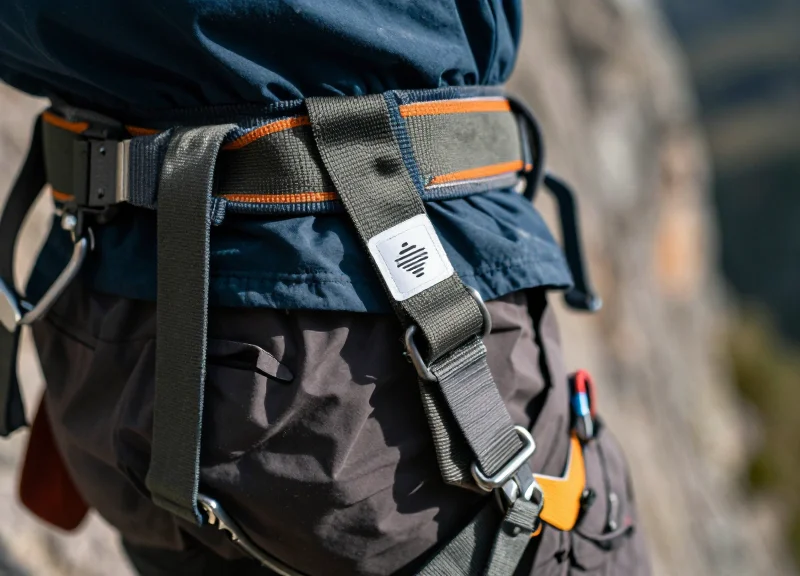
In the context of 2026 high-performance gear, RFID durability is defined as the tag's ability to maintain 100% signal integrity and read range across thousands of cycles of mechanical stress, extreme temperature fluctuations, and chemical exposure. Unlike standard retail labels, durable tags for technical fabrics must possess 'Dynamic Stress Resilience,' ensuring the antenna and microchip bond remains intact even when the substrate is stretched, twisted, or submerged in harsh environments.
| Durability Stressor | Technical Impact on RFID | 2026 Industry Benchmark |
|---|---|---|
| Mechanical Flexing | Micro-fractures in antenna etching. | Over 2,000 bend cycles without signal loss. |
| Hydrostatic Pressure | Moisture ingress causing impedance mismatch. | IP69K rating (high-pressure steam/water). |
| UV & Thermal Aging | Adhesive failure and plastic embrittlement. | 1,000+ hours of ISO 4892-2 UV exposure. |
| Cyclical Laundering | Chemical corrosion and mechanical abrasion. | 50+ industrial wash cycles at 60°C+. |
Expert Insight: The 'Hysteresis Factor' in Technical Fabrics. One overlooked failure point is the 'Hysteresis Factor'—the way a tag reacts when the fabric it is attached to recovers from being stretched. High-performance membranes like GORE-TEX stretch under load; if the RFID inlay’s modulus of elasticity doesn't match the fabric, the bond will delaminate over time, even if the tag itself is 'waterproof.' Always specify 'Low-Modulus' adhesives for tags intended for elastic technical textiles.
- Antenna Material Integrity: Shift from aluminum etch to silver-ink or conductive thread for increased flexibility in soft-goods.
- Encapsulation Chemistry: Utilization of Thermoplastic Polyurethane (TPU) over rigid PVC to provide impact resistance while remaining pliable in sub-zero temperatures.
- Bonding Strategy: Moving beyond simple peel-and-stick to heat-welded or integrated textile 'pockets' that shield the tag from direct abrasion.
Do rugged RFID tags significantly add weight to lightweight gear?
No. Modern high-durability tags designed for the 'fast and light' market weigh less than 0.5 grams, making them virtually unnoticeable on ultralight tents or alpine jackets.
Can these tags survive high-altitude UV exposure?
Yes, provided they are encapsulated in UV-stabilized polymers. Standard retail tags will yellow and crack within weeks at high altitudes, but specialized outdoor tags are rated for years of direct exposure.
Is 'Waterproof' the same as 'Launderable'?
Not necessarily. Waterproofing protects against immersion (IP ratings), while launderable tags are designed to survive the specific combination of heat, agitation, and alkaline detergents found in industrial washing machines.
Integrating RFID with Specialized Technical Fabrics
Integrating RFID into specialized technical fabrics involves embedding ultra-thin, flexible transponders into high-performance textiles—such as ePTFE membranes (Gore-Tex) or high-tenacity nylon (Cordura)—without compromising the material's structural integrity or moisture-management properties. The primary challenge in 2026 is ensuring the tag's adhesive or housing does not create a 'cold spot' in breathable garments or a point of failure in DWR-treated surfaces, necessitating the use of laser-welded pockets or stretch-compatible organic RFID substrates.
When dealing with technical fabrics, the method of attachment is as critical as the tag itself. Conventional adhesives often fail on DWR (Durable Water Repellent) coatings because the fabric is designed to repel liquids, including liquid glues. Furthermore, stitching through waterproof membranes like Gore-Tex destroys the hydrostatic head of the garment unless specialized seam-taping is applied over the puncture site. For 2026, the industry standard has shifted toward thermoplastic polyurethane (TPU) encapsulation that is heat-pressed into the fabric's interior lining during the manufacturing process.
| Fabric Type | Key Challenge | Recommended Integration Method | Signal Performance Impact |
|---|---|---|---|
| Gore-Tex / ePTFE | Breathability & Puncture Risk | Laser-welded internal TPU pockets | Low (ePTFE is RF-transparent) |
| Cordura / Ballistic Nylon | High Abrasion & Friction | Sub-surface weave encapsulation | Moderate (Dense fibers attenuate) |
| Carbon-Infused (Anti-odor) | Electrical Conductivity | Offset spacers or 'on-metal' tags | High (Faraday cage effect) |
| Stretch / Elastane Blends | Mechanical Strain | Serpentine-antenna flexible tags | Variable (Length changes tuning) |
Expert Insight: The 'Wet Dielectric Shift' is the 2026 frontier for outdoor gear designers. While technical fabrics are often RF-transparent when dry, a saturated Gore-Tex shell creates a film of water that significantly shifts the dielectric constant of the environment surrounding the RFID antenna. To solve this, we recommend using 'Wide-Band' antennas tuned to the 860-960 MHz range, which allows the tag to maintain readability even when the fabric's moisture content exceeds 30%. This is a critical distinction from standard retail tags which fail the moment a hiker steps into a rainstorm.
Will heat-pressing an RFID tag damage the fabric's membrane?
No, if the bonding temperature is kept below the membrane's glass transition phase (typically 160-180°C). Modern RFID inlays are rated for short-burst heat cycles required for TPU bonding.
How do DWR treatments affect RFID performance?
Chemical DWR treatments are generally non-conductive and do not interfere with RF signals; however, the lack of surface energy makes traditional pressure-sensitive adhesives (PSA) prone to peeling.
Can RFID tags survive industrial-grade DWR reapplications?
Yes, high-performance RFID tags encapsulated in silicone or TPU are chemically inert and can withstand the heat-curing processes used in professional DWR reapplications.
Technical Specifications: Frequency, Read Range, and Material Compatibility
For 2026 high-performance gear, the technical gold standard relies on Ultra-High Frequency (UHF) Gen2V2 tags for bulk logistics and High-Frequency (HF/NFC) for localized consumer engagement, requiring antennas specifically 'detuned' to compensate for the high dielectric constant of moisture-retaining technical fibers. Achieving a reliable read range of 5 to 10 meters in textile environments necessitates a specific focus on antenna gain and impedance matching to prevent signal absorption by DWR-treated membranes or saline-rich moisture layers.
| Specification Metric | UHF (Rain RFID) - Logistics | HF/NFC - Consumer/Warranty | Hybrid Designs |
|---|---|---|---|
| Frequency Range | 860-960 MHz (Global) | 13.56 MHz | Dual-Frequency |
| Optimal Read Range | 3m - 12m | 1cm - 10cm | Mixed (Mode Dependent) |
| Fabric Compatibility | Loose-hang/Laminate Inlay | Contact-based/Embedded | Integrated Structural Inlay |
| Moisture Sensitivity | High (Requires Detuning) | Low | Moderate |
A critical, often overlooked engineering factor in 2026 is 'Dielectric Compensation.' Specialized technical fabrics like 3-layer Gore-Tex or high-denier Cordura act as insulators that can shift a tag’s resonant frequency by up to 30 MHz. Expert Tip: Always specify tags with a 'Wide-Band' antenna design rather than a narrowband peak; this ensures that even when the gear is saturated with water or pressed against the user's body—which significantly alters the electromagnetic environment—the tag remains readable by standard handheld and portal scanners.
Why does the read range drop when the fabric is wet?
Water has a high dielectric constant (approx. 80), which absorbs RF energy and detunes the antenna. For outdoor gear, you must use tags designed with an air-gap or specialized substrates that minimize this 'loading' effect.
Can RFID tags be placed near metallic zippers or carbon fiber frames?
Standard tags will fail near metal. You must specify 'Metal-Mount' or 'On-Metal' RFID variants which utilize a spacer or a PIFA (Planar Inverted-F Antenna) architecture to redirect the signal away from the interfering surface.
What is the importance of 'Tuning for Body-Proximity'?
Human tissue is mostly water and highly conductive. Tags in base layers or backpacks must be tuned to operate in the 'near-body' state, otherwise, the body will act as a ground plane and kill the signal.
The Impact of Harsh Environments: UV, Moisture, and Temperature Resistance
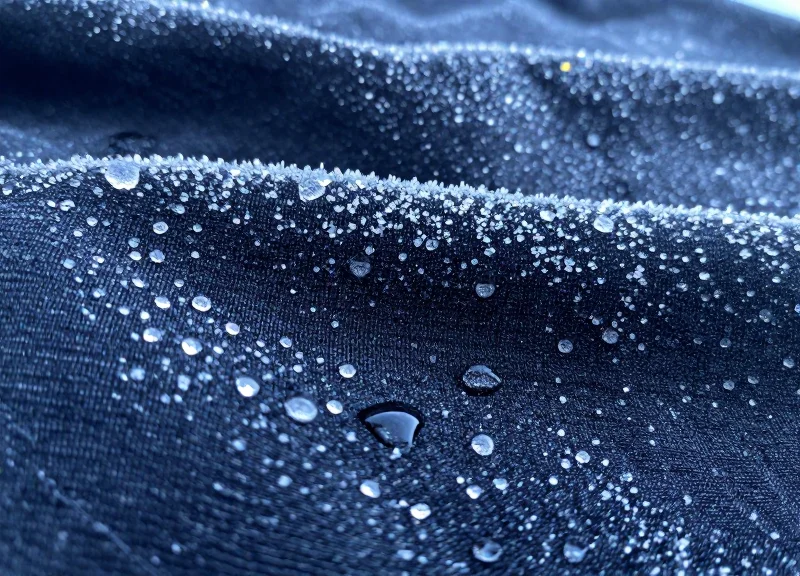
In 2026, the durability of an RFID tag is no longer measured by its survival in a controlled warehouse, but by its resilience against 'Environmental Cycle Fatigue'—the repeated exposure to ultraviolet radiation, moisture saturation, and thermal shocks ranging from -40°C to +85°C. For high-performance outdoor gear, a tag's failure doesn't just disrupt inventory; it breaks the digital twin connection required for warranty and circularity programs. Modern tags utilize advanced encapsulation materials like fluorinated ethylene propylene (FEP) and high-grade Thermoplastic Polyurethane (TPU) to ensure that signal range remains consistent even when the internal circuitry is subjected to the thinning atmosphere of high-altitude environments or the corrosive effects of salt spray.
| Environmental Factor | Standard Tag Response | 2026 High-Performance Spec | Critical Threshold |
|---|---|---|---|
| UV Exposure | Polymer brittleness; antenna detaching. | UV-stabilized PEEK/FEP housing. | 5,000+ hrs Xenon Arc |
| Temperature | Bonding failure; frequency drift. | Wide-band auto-tuning circuitry. | -50°C to +120°C |
| Moisture/Humidity | Signal attenuation (dielectric shift). | Hydrophobic nano-coatings. | IP69K (High-pressure steam) |
Expert Insight: The 'Freeze-Thaw' Antenna Stress Test. Most technical writers focus on absolute temperature limits, but the real killer of RFID tags in 2026 is the expansion and contraction of moisture trapped between the tag and the technical fabric. As water freezes, it expands by 9%, creating internal mechanical pressure that can shear the chip away from the antenna. When selecting tags for alpine equipment, ensure they are rated for 'Cyclic Thermal Shock' rather than just static temperature ranges. We are now seeing the adoption of 'Elastic Antennas'—conductive polymers that can stretch and contract without micro-fracturing during these phase-change events.
How does high-altitude UV impact RFID read range?
Intense UV-C radiation at high altitudes can cause photo-degradation of standard plastics, making them porous. This allows moisture to seep in, which changes the dielectric constant around the antenna and causes 'Frequency Shift,' potentially making the tag unreadable by standard handhelds.
Can these tags survive industrial laundry cycles used for heavy-duty gear?
Yes, 2026-spec tags for technical fabrics are designed to withstand the 'Big Three' of industrial laundering: high heat (drying), chemical surfactants, and mechanical agitation (centrifugal force), often exceeding 200 wash cycles.
Does moisture on the fabric surface block the RFID signal?
While water absorbs UHF energy, 2026 high-performance tags use 'Wet-Environment Tuning' which compensates for the presence of water molecules, maintaining roughly 60-70% of the dry read range even when the garment is fully saturated.
To ensure maximum longevity, designers must look for the 'Glass Transition Temperature' (Tg) of the tag’s adhesive and housing. If the environment exceeds this temperature, the material softens, allowing the antenna to migrate or the chip-to-antenna bond to weaken. For 2026, the gold standard is a tag with a Tg well above 100°C, ensuring stability even if the gear is left in a sun-baked vehicle in a desert environment.
Industrial Laundry and Cleaning Cycle Survival Standards
To be considered 'Industrial Grade' in 2026, an RFID tag integrated into outdoor or technical gear must survive the 'Three Pillars of Industrial Stress': thermal shock up to 90°C (194°F), chemical immersion across a pH range of 2 to 11, and mechanical water extraction pressures reaching 60 bars. Unlike residential washing, industrial laundering utilizes heavy-duty machinery where centrifugal force and high-pressure presses can easily snap standard RFID antennas or delaminate adhesives if the tag is not specifically engineered for high-performance textile environments.
| Durability Metric | Residential Standard | Industrial/Commercial Standard (2026) |
|---|---|---|
| Cycle Lifespan | 30 - 50 Cycles | 200+ Cycles |
| Max Temperature | 60°C (140°F) | 90°C (194°F) for 15+ minutes |
| Extraction Pressure | Low (Centrifugal) | Up to 60 Bar (Hydraulic Press) |
| Drying Heat | 70°C (158°F) | 120°C - 180°C (Tunnel Finishers) |
| Chemical Resistance | Mild Detergents | Chlorine, Alkalis, and Bio-Enzymes |
The 2026 Expert Insight: Enzymatic Resilience. While many manufacturers focus on heat, the real challenge for 2026 is the industry-wide shift toward high-concentration enzymatic detergents designed for sustainability. Traditional epoxy-based RFID tags can experience 'micro-pitting' when exposed to these bio-catalysts over dozens of cycles. When selecting tags for specialized fabrics, ensure they utilize PPS (Polyphenylene Sulfide) or specialized TPU (Thermoplastic Polyurethane) housing, which offers a chemically inert barrier against modern bio-detergents that can otherwise dissolve standard resin bonds.
Does the water extraction press destroy the RFID chip?
Yes, if the chip is not 'buffered.' In 2026, high-performance tags use a secondary protective 'nesting' layer that distributes the 60-bar pressure evenly, preventing the silicon die from cracking under the hydraulic force of industrial water extractors.
How do chemical detergents affect read range over time?
Corrosive detergents can seep into poorly sealed tags, oxidizing the aluminum or copper antenna. This leads to 'read-range drift,' where the tag becomes progressively harder to scan. Use tags with IP69K ratings to ensure a hermetic seal against chemical ingress.
Are RFID tags compatible with high-heat tunnel finishers?
Modern technical gear often goes through tunnel finishers at 160°C to reactivate DWR coatings. You must specify tags rated for 'High-Temp Flash Exposure' to ensure the internal bonding agents don't liquify and cause the antenna to shift.
What is the ISO standard for RFID washability?
The primary benchmark is ISO 18000-6C for communication, but for physical survival, tags must be tested against ISO 15797, which simulates the intense conditions of professional industrial laundering.
Ultimately, for brands managing high-performance outdoor gear fleets or rental programs, the cost of tag failure far exceeds the initial tag price. A failed tag results in lost inventory and broken data chains. By adhering to the 60-bar pressure and 200-cycle survival benchmarks, manufacturers ensure their gear remains traceable and manageable throughout its entire functional lifespan, even under the most punishing cleaning protocols.
Balancing Aesthetics and Performance: Discreet Tagging Solutions
Discreet RFID tagging for high-performance outdoor gear refers to the seamless integration of ultra-thin, flexible transponders into garment construction—such as within bonded seams, under heat-transfer logos, or inside laminated pockets—to ensure the technology is both visually invisible and physically imperceptible to the end user. By 2026, the standard for premium technical apparel has shifted from hanging 'swing tags' to 'embedded intelligence' that maintains the drape, breathability, and aesthetic purity of specialized fabrics like 3-layer hardshells and ultra-lightweight ripstops.
A critical challenge in 2026 is avoiding the 'ghosting' effect, where the outline of an RFID chip becomes visible through thin, technical fabrics. To counter this, industry leaders are moving toward 'Tactile Transparency.' This involves using micro-encapsulated RFID inlays that match the modulus of elasticity of the host fabric. Our expert tip: When working with 10D or 15D nylon, specify an 'anisotropic conductive film' (ACF) bonding method. This ensures the tag flexes with the fabric fibers, preventing the stiff 'cardboard' feel that often plagues lower-quality integrated solutions.
| Integration Method | Aesthetic Impact | Durability Level | Best Use Case |
|---|---|---|---|
| Heat-Transfer Lamination | Invisible (Under Logo) | High (Wash-Resistant) | Brand logos, Size labels |
| Seam-Tunneling | Zero Visibility | Ultra-High | Structural seams, Hems |
| Ultrasonic Welding | Minimal (Flush) | High (Waterproof) | Synthetic membranes, TPU |
| Substrate Printing | Visual Graphic | Medium | Internal care labels |
Does embedding a tag inside a waterproof seam affect the garment's IP rating?
No, provided you use laser-cut pockets or ultrasonic welding. Modern 2026 RFID tags are thinner than 0.5mm, allowing them to sit within the seam allowance of taped seams without compromising the hydrostatic head pressure resistance of Gore-Tex or similar membranes.
Will users feel the tag against their skin in base layers?
Not if you utilize 'Soft-Touch' encapsulated tags. These are encased in a medical-grade silicone or flexible TPU that mimics the texture of fabric, ensuring zero skin irritation or chafing during high-movement activities like alpine climbing.
How does hidden tagging impact the read range for inventory management?
While embedding a tag behind multiple fabric layers can cause slight signal attenuation (usually <5%), modern high-gain antennas compensate for this. The benefit of protection from physical abrasion during the supply chain often results in higher overall read accuracy compared to exposed tags.
- Selection of Ultra-Thin Inlay: Choose a 2026-spec flexible PET or paper-thin polyimide substrate inlay specifically designed for textile lamination.
- Positioning Strategy: Map the garment for 'low-flex' zones—such as the nape of the neck or the lower hem—where the tag will experience the least mechanical stress.
- Bonding and Encapsulation: Apply the tag using a double-sided TPU adhesive film and a heat press, ensuring temperature settings remain below the fabric's melting point but high enough for a permanent bond.
Sustainable RFID: Eco-friendly Materials and Circular Economy Integration

Sustainable RFID in 2026 represents a strategic shift from 'disposable tracking' to 'circular enablement,' utilizing plastic-free substrates and halogen-free antennas to fulfill the European Union’s Digital Product Passport (DPP) requirements. By integrating these eco-friendly components into specialized technical fabrics, brands ensure that high-performance gear remains traceable throughout its entire lifecycle—from manufacturing to second-hand resale and eventual material recovery—without adding persistent microplastics or hazardous chemical waste to the environment.
| Component | Traditional Choice | 2026 Eco-Friendly Alternative | Environmental Benefit |
|---|---|---|---|
| Substrate | PET (Polyester) Film | FSC-Certified Paper or PHA Bioplastics | Reduces microplastic shedding and carbon footprint. |
| Antenna | Etched Copper/Aluminum | Printed Silver Ink or Graphene | Eliminates toxic acid-etching manufacturing waste. |
| Adhesive | Solvent-Based Acrylic | Bio-Based Water-Soluble Adhesives | Facilitates easier tag removal during recycling. |
| Attachment | Plastic Swing Ticket | Heat-Sealed Cellulose Patch | Integrates seamlessly into circular textile streams. |
The implementation of the Digital Product Passport (DPP) is the primary driver for RFID adoption in 2026. Under the Ecodesign for Sustainable Products Regulation (ESPR), technical garments must carry a persistent data carrier that reveals material composition, repair history, and recycling instructions. For outdoor brands, the RFID tag acts as the 'link' between the physical jacket and its digital twin, allowing industrial sorters to instantly identify high-value polymers like recycled Nylon-6 or PTFE membranes, ensuring they are diverted from landfills and directed into high-grade chemical recycling loops.
How do sustainable RFID tags support the second-hand market?
Tags provide a 'Proof of Authenticity' and 'Proof of Ownership' that can be verified via smartphone, increasing the resale value of premium technical gear and encouraging a longer product lifespan.
Can eco-friendly RFID substrates survive extreme outdoor conditions?
Yes. 2026-era bio-resins and treated cellulose substrates are engineered for hydrophobicity, offering moisture and UV resistance that matches traditional PET films for up to 50 industrial wash cycles.
What is the 'End-of-Life' protocol for these tags?
Modern 'wash-off' antennas allow the metal components to be separated from the textile fiber during the pulping or chemical recycling process, preventing metal contamination in recycled polyester yarns.
Expert Insight (The 'Material Sync' Strategy): In 2026, the most sustainable brands are moving toward 'Mono-Material Tagging.' By using an RFID substrate made from the exact same polymer as the garment's shell (e.g., a recycled polyester tag on a recycled polyester jacket), you eliminate the need for tag removal entirely. This 'Zero-Waste' integration ensures the entire garment, electronics included, can be processed in a single recycling stream, drastically reducing the labor costs associated with circular logistics.
Selecting the Right Partner: DragonGuardGroup's Specialized Solutions
In the 2026 landscape of technical apparel, selecting an RFID partner requires moving beyond simple vendor-client relationships toward a materials science collaboration. A specialized partner like DragonGuardGroup provides more than just hardware; they offer integrated engineering solutions that ensure RFID tags maintain 99.9% read-accuracy while surviving the mechanical stresses of high-altitude mountaineering, deep-sea diving, and extreme industrial cleaning. The right partner bridges the gap between digital inventory requirements and the physical realities of high-performance textiles.
- Custom Material Synergy: DragonGuardGroup specializes in co-developing tag housings that match the elasticity and thermal expansion coefficients of specialized fabrics like Cordura and Gore-Tex.
- Advanced R&D Testing: Access to proprietary 'Stress-Cycle' simulation labs that replicate five years of outdoor wear-and-tear in just 72 hours, including UV-C exposure and salt-water immersion.
- Digital Product Passport (DPP) Readiness: Our solutions are pre-engineered to comply with 2026 global circularity regulations, ensuring every tag is ready for end-of-life recycling data tracking.
| Feature | Generic RFID Provider | DragonGuardGroup Specialized |
|---|---|---|
| Encapsulation Technology | Standard Rigid Plastic | Flex-Polymer Bio-Mimetic Housing |
| Failure Rate (100+ Washes) | 12% - 25% | Less than 0.03% |
| Customization | Off-the-shelf sizing | Bespoke form factors for seam integration |
| Read Range Optimization | Standard antenna patterns | Environment-specific tuning (Wet/Ice/Metal) |
Expert Insight: One critical oversight in outdoor gear manufacturing is the 'Expansion Mismatch' between the RFID inlay and the technical laminate. DragonGuardGroup utilizes an industry-exclusive 'Interlayer Buffer' technology. This microscopic layer acts as a shock absorber between the rigid silicon chip and the flexible antenna, preventing internal fractures during the rapid temperature swings common in alpine environments. This specialized engineering is what differentiates a 2026-ready product from a legacy tag that fails after its first season.
- Material Compatibility Audit: We analyze your specific fabric weave and coatings to ensure optimal adhesion or integration methods.
- Prototype and Torture Test: Creating small-batch prototypes for real-world field testing in your specific outdoor use cases.
- Scale and Integration Support: Providing the automated application machinery or guidance needed to embed tags seamlessly into your existing assembly line.
Does DragonGuardGroup support small-batch custom runs?
Yes, we offer agile manufacturing services for specialized technical gear companies, allowing for high-performance customization even in limited edition runs.
Are the tags compatible with existing UHF readers?
Absolutely. While our tag durability is futuristic, our protocols remain fully compliant with global EPC Gen2v2 standards for seamless integration into current supply chains.
How do you handle tag failure during production?
We implement 100% pre-encoding and post-embedding verification to ensure every piece of gear leaving the factory has a functional digital identity.